
For international corporate entities, confronting a foreign legal system can feel like navigating a labyrinth. The rules are distinct, the cadence is unfamiliar, and the procedural expectations can be a world away from those in the US or Europe. This is particularly true when engaging in commercial litigation in Israel. Understanding Commercial Litigation in Israel: A Strategic Roadmap for Foreign Plaintiffs is essential to navigate these complexities effectively.
A comprehensive understanding of this landscape is not merely advantageous; it is the cornerstone of a successful legal strategy. It equips you for the unique challenges and opportunities that lie ahead, demystifying the Israeli court system and its specific procedures. This guide serves as an authoritative roadmap, cutting through legal jargon to focus on the practical realities you will face as a foreign plaintiff.
Understanding the Israeli Legal Landscape: An Overview for Foreign Entities
The initial and most critical question in any legal dispute in Israel is where to begin. The court system is structured with jurisdictional clarity, primarily based on the financial value of the claim and its subject matter. This ensures that every case commences in the appropriate forum.
The Court System Hierarchy: Magistrate vs. District Court
The structure is refreshingly straightforward, determining the court of first instance for your case.
- Magistrate’s Court: This is the entry point for the majority of civil and commercial claims with a value up to NIS 2.5 million (approximately USD 675,000). It handles a wide range of disputes, from contractual disagreements to debt collection.
- District Court: For more substantial disputes exceeding the NIS 2.5 million threshold, the District Court serves as the court of first instance. It also presides over appeals from the Magistrate’s Court and holds exclusive original jurisdiction over specific matters, including corporate law and certain real estate conflicts.
Knowing this tiered system is the first step. However, regardless of jurisdiction, most commercial disputes originate from a contractual disagreement. A firm grasp of the core principles of contract law is therefore indispensable, as this is often the epicenter of the conflict.

Procedural Speed and a Critical Requirement for Foreign Plaintiffs
If you are accustomed to the protracted discovery processes common in the United States or certain European jurisdictions, you will find Israeli civil procedure to be comparatively streamlined and designed for efficiency. While every case proceeds on its own timeline, the system is engineered to move forward at a brisker pace.
However, there is one key procedural step every non-resident plaintiff must anticipate: the requirement to deposit a guarantee for the defendant’s legal costs. This is not a penalty. It is a mechanism designed to ensure fairness, guaranteeing that if the defendant prevails, their legal expenses can be recovered from a party residing outside of Israel’s enforcement jurisdiction. Factoring this requirement into your initial budget and legal strategy is absolutely critical, as it represents one of the first financial hurdles in the litigation process.
This article does not constitute legal advice and is not a substitute for consulting with a qualified attorney. Do not rely on the contents of this article for taking or refraining from taking any action.
Navigating the Israeli Court System

If you’re initiating commercial litigation in Israel, the first and most fundamental question is where to file your claim. Fortunately, unlike some legal systems where choosing a venue feels like a complex chess move, Israel’s court structure is refreshingly straightforward.
This clarity is a huge advantage for foreign investors and international companies. It removes a major layer of uncertainty right from the start. But don’t mistake simplicity for unimportance. Filing in the wrong court is a rookie mistake that leads to an immediate dismissal, forcing you to start over, lose precious time, and rack up needless costs. It’s like having the right key but trying to open the wrong door—it simply won’t work.
Jurisdiction: It’s All About the Money (Mostly)
The main factor that dictates the right court for your commercial dispute is its monetary value. The Israeli judicial system is tiered, designed to route cases to the court best suited for their financial scale and complexity.
Israeli Court Jurisdiction for Commercial Claims
Understanding this tiered structure is the first step in building a sound legal strategy. The table below breaks down the primary courts of first instance for civil matters, clarifying where a claim should be filed based on its value and subject.
| Court Level | Monetary Jurisdiction (NIS) | Typical Commercial Case Types |
|---|---|---|
| Magistrate’s Court | Up to NIS 2.5 million | Contract disputes, debt collection, smaller-scale commercial disagreements, landlord-tenant issues. |
| District Court | Claims exceeding NIS 2.5 million | Major corporate conflicts, complex M&A litigation, intellectual property rights, large real estate disputes, administrative petitions. |
| Economic Department | No specific monetary threshold | Shareholder disputes in public companies, securities class actions, corporate governance, fiduciary duty cases, complex M&A. |
As you can see, the path is clearly defined. The value of your claim points you directly to the correct courthouse, allowing for precise planning from day one.
The Specialist Forum: When Corporate Disputes Get Complicated
For particularly thorny corporate and securities matters, Israel has a specialized venue: the Economic Department of the Tel Aviv District Court. This isn’t just another courtroom; it’s a specialist forum created to handle the most intricate business law disputes.
Think of it as the major league for cases involving:
- Shareholder battles in public companies
- High-stakes M&A litigation
- Securities-related class actions
- Complex cases concerning corporate governance and the duties of officers and directors
The judges here are experts in corporate finance and business law. For an international corporation, this means your case will be heard by adjudicators who are fluent in the language of modern commerce, ensuring a sophisticated and nuanced approach.
The Pace of Litigation and a Key Rule for Foreign Plaintiffs
A common worry for our international clients is how long things will take. Compared to the often drawn-out discovery phases common in places like the U.S., Israeli civil procedure is generally built for efficiency. No system is perfect, but the rules are designed to keep cases moving.
However, there’s one critical procedural hurdle for any non-resident plaintiff: the mandatory deposit of a guarantee for costs (known as Arvon). This is a sum of money you deposit with the court to cover the defendant’s potential legal fees if your claim doesn’t succeed.
It’s a protective measure for the local defendant, ensuring they aren’t left holding the bag for unrecoverable costs after winning a suit brought by a foreign entity. The court decides the amount, and negotiating this deposit is one of the first strategic steps your local counsel will need to handle expertly.
This article does not constitute legal advice and is not a substitute for consulting with a qualified attorney. Do not rely on the contents of this article for taking or refraining from taking any action.
The Real Pace of Litigation in Israeli Courts
For international business leaders, time isn’t just a resource; it’s a critical factor in every strategic decision. When you’re facing commercial litigation in Israel, you need to know what you’re in for. How long will this take? How does it stack up against the notoriously drawn-out legal battles in the United States or parts of Europe? It’s one of the first questions our clients ask.
Let’s be clear: judicial speed can feel subjective. But the Israeli system is built with efficiency in mind. Unlike the American system, which is famous for its extensive and often painfully slow discovery phase, Israel’s Civil Procedure Regulations were specifically reformed to cut the fat. The objective is to keep cases moving forward, avoiding the procedural quicksand of endless preliminary motions and depositions that can bog down disputes for years.
This drive for efficiency couldn’t be more relevant. In a global business environment where legal conflicts are on the rise—with recent surveys showing nearly 50% of corporate counsel bracing for more lawsuits and investigations—a streamlined process is a major advantage. For foreign investors and firms dealing with Israeli real estate or partnerships, the reformed discovery rules are a world away from the marathon timelines common in U.S. litigation. You can discover more insights about these trends and how they play out on the ground in Israel.
What Actually Dictates the Timeline?
While the system aims for speed, reality is always more complicated. It’s crucial to set realistic expectations from day one, because no two disputes are the same. How long your case takes will ultimately come down to a few key variables.
Here’s what really moves the needle:
- Case Complexity: A straightforward breach of contract claim will naturally resolve faster than a multi-party shareholder dispute that requires deep financial forensics.
- The Judge: In Israel, judges are not passive observers; they actively manage their dockets. A proactive judge can dramatically speed things up by setting firm deadlines and shutting down frivolous motions.
- Court Caseload: Like any judicial system, the specific caseload of the court and the assigned judge can create backlogs. The specialized Economic Department, for instance, often handles highly complex matters and operates on a different rhythm.
- The Other Side’s Tactics: The level of cooperation—or conflict—between the parties is a huge factor. If the opposing counsel is committed to “scorched-earth” tactics, they can intentionally drag out the process.
Israel vs. The US and EU: A Practical Comparison
Here’s a good way to think about it. The American litigation process is like a deep-sea exploration: incredibly thorough and exhaustive, but also slow and massively expensive. The Israeli approach, by contrast, is more like a guided expedition with a clear map and destination. The process is still meticulous, but the rules are designed to keep everyone moving toward a resolution.
A key difference you’ll feel immediately is the emphasis on pre-trial hearings in Israel. These aren’t just procedural check-ins. They are substantive meetings where the judge actively pushes for settlement and works to narrow the scope of the dispute, often resolving critical issues before a full trial is even on the table.
This hands-on judicial style is a defining feature of the Israeli system. It empowers judges to trim the procedural fat and force the parties to focus on what really matters. For an international company, this means that while litigation is never instant, the path forward is often clearer and more structured than what you might be used to. Understanding this rhythm is vital for aligning your business goals with the legal realities, and it’s a core part of the cross-border expertise we bring at RNC Group.
This article does not constitute legal advice and is not a substitute for consulting with a qualified attorney. Do not rely on the contents of this article for taking or refraining from taking any action.
Securing Your Claim as a Foreign Plaintiff
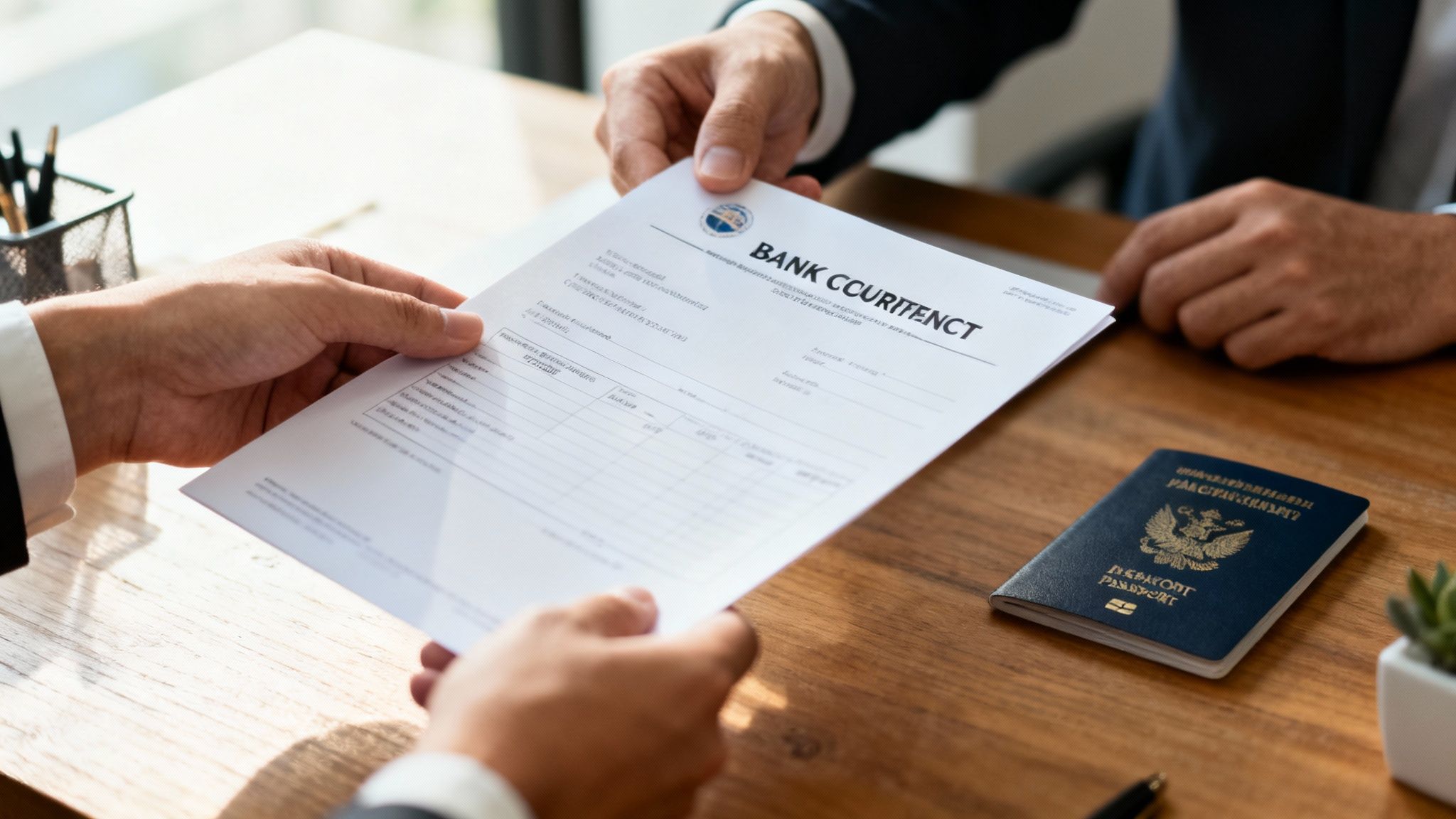
When you’re initiating a lawsuit in Israel as a foreign entity, there’s a unique procedural step that often comes as a surprise: the court will likely require you to deposit a guarantee to cover the defendant’s potential legal costs. This isn’t a penalty or a tactic to discourage your claim. It’s a practical measure rooted in a core principle of judicial fairness.
Think of it from the court’s perspective. If a foreign company sues an Israeli one and loses, the local defendant could be left with a massive legal bill. Chasing down those costs across international borders is a difficult, expensive, and often fruitless endeavor. This guarantee acts as a security deposit, ensuring the Israeli defendant isn’t left holding an unenforceable costs order if you’re outside the court’s immediate reach.
Getting this right isn’t just a procedural box to tick; it’s a critical part of your early litigation strategy. The negotiations around this guarantee can heavily influence your case’s financial planning, which is why having experienced local counsel from day one is non-negotiable.
The Mechanics of Depositing a Guarantee
Early in the proceedings, the defendant’s lawyer will almost certainly file a motion asking the court to order this guarantee. The judge then has the discretion to decide if it’s necessary and, crucially, to set the amount. This is one of the first pivotal moments in your case.
The guarantee itself usually takes one of two forms:
- Bank Guarantee: This is the gold standard. An unconditional guarantee from a recognized Israeli bank is what defendants and courts prefer. It’s secure, straightforward, and provides the most certainty.
- Cash Deposit: The alternative is to deposit the required amount in cash directly into the court’s treasury.
While the process is transparent, the execution has to be flawless. For foreign plaintiffs, this often means using specialized Hebrew document translation services to ensure every legal and financial document is perfectly understood within the Israeli legal system.
How Courts Determine the Guarantee Amount
There’s no magic formula here. The judge weighs several factors, performing a delicate balancing act. They need to protect the defendant without creating an impossible barrier for a plaintiff with a legitimate case.
A judge’s decision on the guarantee amount is a blend of art and science. They’ll look at the anticipated legal costs, considering the case’s complexity and the amount in dispute, while carefully weighing the foreign plaintiff’s fundamental right to access justice.
Key factors a judge will consider include:
- The apparent strength of your claim from the outset.
- The estimated attorney’s fees and court expenses the defendant is likely to rack up.
- Whether you already have assets inside Israel that could be used to satisfy a costs order.
This is where sharp legal arguments make all the difference. An experienced team can frame the situation for the judge, pushing for a reasonable sum that reflects the dispute’s reality without being financially crippling.
Strategic Negotiation and Potential Waivers
While the requirement for a guarantee is standard procedure, the amount is absolutely open to negotiation. This is often the first real battleground in the litigation. Proactive and strategic counsel can dramatically influence the outcome, significantly lowering the financial burden on your company.
In some rare cases, the court might even be persuaded to waive the requirement entirely or reduce it to a token amount. These exceptions are your strategic ace in the hole.
A waiver might be granted if you can prove one of the following:
- Likelihood of Success: You can demonstrate a very high probability of winning based on the initial evidence presented.
- Existing Treaties: A bilateral treaty between Israel and your home country specifically exempts citizens from depositing these guarantees.
- Assets in Israel: You hold significant, unencumbered assets within Israel that could easily cover any potential costs order.
Navigating this critical stage requires a deep, nuanced understanding of Israeli court practices and judicial temperament. At RNC Group, our cross-border expertise ensures our international clients are not just prepared for this requirement but are positioned to negotiate the most favorable terms possible, securing their claim without tying up unnecessary capital.
This article does not constitute legal advice and is not a substitute for consulting with a qualified attorney. Do not rely on the contents of this article for taking or refraining from taking any action.
Think your legal troubles in Israel will be limited to a simple contract dispute? Think again. For international companies, the reality of commercial litigation in Israel is far more complex. The legal minefield extends well beyond straightforward disagreements, throwing high-stakes challenges like class action lawsuits and the thorny process of enforcing foreign judgments into the mix.
If you want to protect your business interests here, a reactive stance just won’t cut it. You need a legal strategy that sees around corners, anticipating threats before they materialize. Getting a handle on these bigger risks is the difference between effective crisis management and a corporate disaster.
The Class Action Explosion in Israel
Let’s be blunt: Israel has one of the most aggressive and plaintiff-friendly class action environments on the planet. For any international company with customers in Israel, this is a massive financial and reputational risk you simply cannot ignore.
Since Israel’s Class Actions Law came into effect in 2006, the courts have been flooded. We’re talking about an average of 1,500 new class actions every single year for the past five years. It’s no surprise they are among the most draining, resource-intensive cases in the entire Israeli legal system. Consumer protection claims are the name of the game, usually targeting alleged false advertising, iffy product labels, or privacy slip-ups. You can explore the full research on this trend and its impact on the Israeli legal system.
What this means for you is that a minor, perceived misstep in marketing, a slightly ambiguous product disclosure, or a data handling error can snowball into a multi-million shekel legal war. A small issue becomes a massive liability overnight, demanding a lightning-fast response from lawyers who have been through this fire before.
Making Foreign Judgments Stick (and Defending Against Them)
Here’s another critical area many international businesses overlook: enforcing court rulings across borders. What happens when you win a judgment against an Israeli company in a London court? And what about the other way around—when a foreign judgment is filed against your Israeli subsidiary?
While Israel is a party to international conventions for enforcing foreign judgments, it’s not a rubber-stamp process. You can’t just show up with a piece of paper from another country. It requires a specific, formal application to an Israeli court to declare that foreign judgment enforceable.
The Israeli court will put the foreign judgment under a microscope, looking at several key factors:
- Jurisdiction: Did the foreign court actually have the right to rule on this defendant, according to Israeli legal standards?
- Finality: Is the judgment final and non-appealable in its home country?
- Due Process: Was the defendant given a real, fair chance to fight their case?
- Public Policy: Does the judgment clash with Israel’s fundamental public policy, core laws, or national sovereignty?
Getting a foreign judgment enforced—or fighting one off—is a specialized skill. It requires a deep understanding of both international treaties and the unique quirks of Israeli procedural law. This is precisely the kind of cross-border work we live and breathe at RNC Group.
Successfully navigating this requires surgical precision in your legal arguments and preparation. For any international company touching commercial litigation in Israel, understanding how judgments travel across borders is absolutely fundamental. It turns your legal strategy from a defensive shield into a powerful business weapon.
This article does not constitute legal advice and is not a substitute for consulting with a qualified attorney. Do not rely on the contents of this article for taking or refraining from taking any action.
Thinking Beyond the Courtroom: Strategic Alternatives to Litigation

While the courtroom has its place, it’s rarely the most strategic or efficient path for a business. The real art of resolving a commercial conflict isn’t just about fighting hard; it’s about knowing when to fight and when to find a smarter solution. This is especially true for international companies, where a long, public legal battle can inflict more damage—in time, costs, and reputation—than any potential victory is worth.
A winning legal strategy looks at every tool in the box, not just the gavel. This means exploring powerful out-of-court alternatives that can save critical resources, preserve important business relationships, and deliver a better outcome much, much faster. For any company facing commercial litigation in Israel, understanding these options is step one in a successful game plan.
Mediation: The Power of a Guided Conversation
Think of mediation as a structured, confidential negotiation. A neutral third-party mediator doesn’t issue orders or pick a winner. Instead, their job is to facilitate a productive conversation, helping both sides find common ground and craft their own settlement. It’s about finding a solution, not winning an argument.
Why is mediation often the first and best choice?
- It’s Cheaper: Mediation is almost always a fraction of the cost of a full trial.
- It’s Faster: You can often reach a resolution in days or weeks, not the months or years a court case can drag on.
- You’re in Control: The parties—not a judge—decide the final outcome. This power is invaluable.
- It’s Confidential: The entire process is private. Your company’s reputation and sensitive business details stay out of the public record.
Arbitration: Your Own Private Courtroom
Arbitration is a bit more formal, like a private trial. Both parties agree to present their case to a neutral arbitrator (or a panel of them) who will then issue a binding decision, known as an arbitral award. The process is shaped by the agreement between the parties and guided by Israel’s modern International Commercial Arbitration Law.
Israel’s Arbitration Law provides an incredibly efficient framework, often more so than in some Western countries. Critically, once an arbitral award is approved by a court, it becomes as enforceable as any court judgment. This unique strength, combined with our firm’s decades of crisis management expertise, allows us to craft sophisticated settlement strategies that are frequently superior to a drawn-out court fight. You can learn more about the impact of international law on Israeli business to see how these legal frameworks create a distinct advantage.
Choosing between litigation, mediation, and arbitration is not just a legal decision—it is a business decision. The right choice depends on your specific objectives, your relationship with the other party, and your appetite for risk.
At RNC Group, our cross-border expertise goes far beyond the courtroom steps. We are seasoned negotiators and strategists who excel at identifying the most effective path forward, whether that means aggressive litigation or a skillfully managed settlement. We believe in arming our international clients with a full spectrum of options to protect their interests efficiently and decisively.
This article does not constitute legal advice and is not a substitute for consulting with a qualified attorney. Do not rely on the contents of this article for taking or refraining from taking any action.
A Few Common Questions From Our Clients
When you’re dealing with commercial litigation from overseas, a lot of questions pop up. It’s only natural. Here are the straight-up answers to some of the queries we hear most often from our international clients.
Can a Judgment from My Home Country Be Enforced in Israel?
The short answer is yes, absolutely. But it’s not a simple rubber-stamp process. Enforcing a foreign judgment requires its own distinct legal proceeding in an Israeli court.
The court will want to see that the judgment is final and non-appealable where it was issued. More importantly, it must not clash with Israeli public policy. It sounds complicated, but with the right legal team guiding you, it’s a very manageable path.
Are Court Proceedings in Israel Held in English?
This is a big one. The official and mandatory language of the Israeli courts is Hebrew. Period. Every single official document—from the initial pleadings to motions and the final judgment—has to be in Hebrew.
Some judges might be flexible and allow English to be spoken during a hearing, but you can’t count on it. It’s entirely at their discretion. This means any evidence you have in another language must be submitted with a certified Hebrew translation. For any company involved in commercial litigation in Israel, having a fully bilingual legal team isn’t just a nice-to-have; it’s essential for getting your point across effectively.
What Do Legal Fee Structures Typically Look Like in Israel?
You have options, which is good news. Fee arrangements for commercial litigation here are quite flexible. The common models you’ll encounter are:
- Hourly Rates: The classic model—you’re billed for the time your legal team spends on the case.
- Fixed Fees: A set price for a specific task or stage of the litigation. This gives you cost certainty.
- Blended or Contingency Fees: Often a hybrid model, combining a lower hourly rate with a success fee based on the outcome.
The final cost really depends on how complex your case is, how long it runs, and the amount of money at stake. Any reputable firm will walk you through a clear and transparent fee agreement before any work begins.
Figuring out these procedural and financial details is exactly where experienced counsel makes all the difference. At RNC Group, we bring the cross-border expertise needed to guide your company through every step of the legal journey in Israel. Drop by our site at https://www.rnc.co.il to see how we can help.
This article does not constitute legal advice and is not a substitute for consulting with a qualified attorney. Do not rely on the contents of this article for taking or refraining from taking any action.