
Investing in Israeli agricultural land presents a compelling opportunity, yet it operates under a legal framework fundamentally different from many Western markets. For corporate entities and business clients, recognizing these distinctions is not merely procedural—it is central to risk management and strategic success. The primary regulatory landscape is divided between privately owned ‘Tabu’ land and the vast majority of territory managed through long-term leases by the Israel Land Authority (ILA), often called the “Minhal.” Understanding this dichotomy is the absolute first step for any serious international investor.
Navigating Israel’s Agricultural Real Estate Landscape
For foreign corporations, acquiring agricultural land in Israel is a venture defined by high-stakes opportunity and complex regulatory hurdles. This market is not straightforward; it demands a professional, nuanced approach that moves beyond surface-level analysis to focus on the critical legal distinctions governing every transaction. This guide is structured to provide a professional overview of this intricate market, offering targeted, actionable insights for corporate entities engaged in Commercial Law, Litigation, and Crisis Management. Our objective is to clarify the process and, more importantly, to flag potential pitfalls before they escalate into costly liabilities.

Core Regulatory Warnings for Foreign Investors
A successful investment in Israeli agricultural property hinges on understanding several key areas that frequently ensnare foreign entities. These are not minor details; they are foundational elements that can determine the viability and security of an investment.
- Ownership Structures: We will dissect the crucial differences between private ‘Tabu’ land and state-administered ‘Minhal’ leases. This distinction has profound implications for asset control, transferability, and long-term security.
- Inheritance Restrictions: The unique ‘Ben Mamshich’ (Continuing Son) principle governing ‘Moshav’ cooperative farms must be understood. This rule can override standard inheritance planning and poses a significant risk to asset succession.
- Re-zoning Speculation: We will address the considerable financial risks involved in speculating on the re-zoning of agricultural land for commercial or residential use. This is a high-risk venture, not a predictable growth strategy.
Investing in Israel’s agricultural sector is not merely a real estate transaction. It is an entry into a legal and cultural system with deep historical roots and strict modern regulations. A lack of specialized knowledge can expose investors to severe financial and legal consequences.
Our purpose is to provide the foundational knowledge required to navigate this landscape with caution and confidence. By understanding these core challenges from the outset, corporate clients can better appreciate why specialized legal counsel is not just advisable—it is essential for structuring a secure, compliant, and defensible investment.
Understanding Israeli Land Ownership Models
Before deploying capital in Israel’s agricultural sector, it is imperative to internalize a fundamental concept that often surprises foreign investors: the land ownership system is built on a sharp divide. Grasping this distinction is not a technicality; it is the difference between a secure investment and a potential minefield of strategic errors and legal entanglements. The framework is split into two classes of assets, each with its own set of rights, limitations, and transactional hurdles.
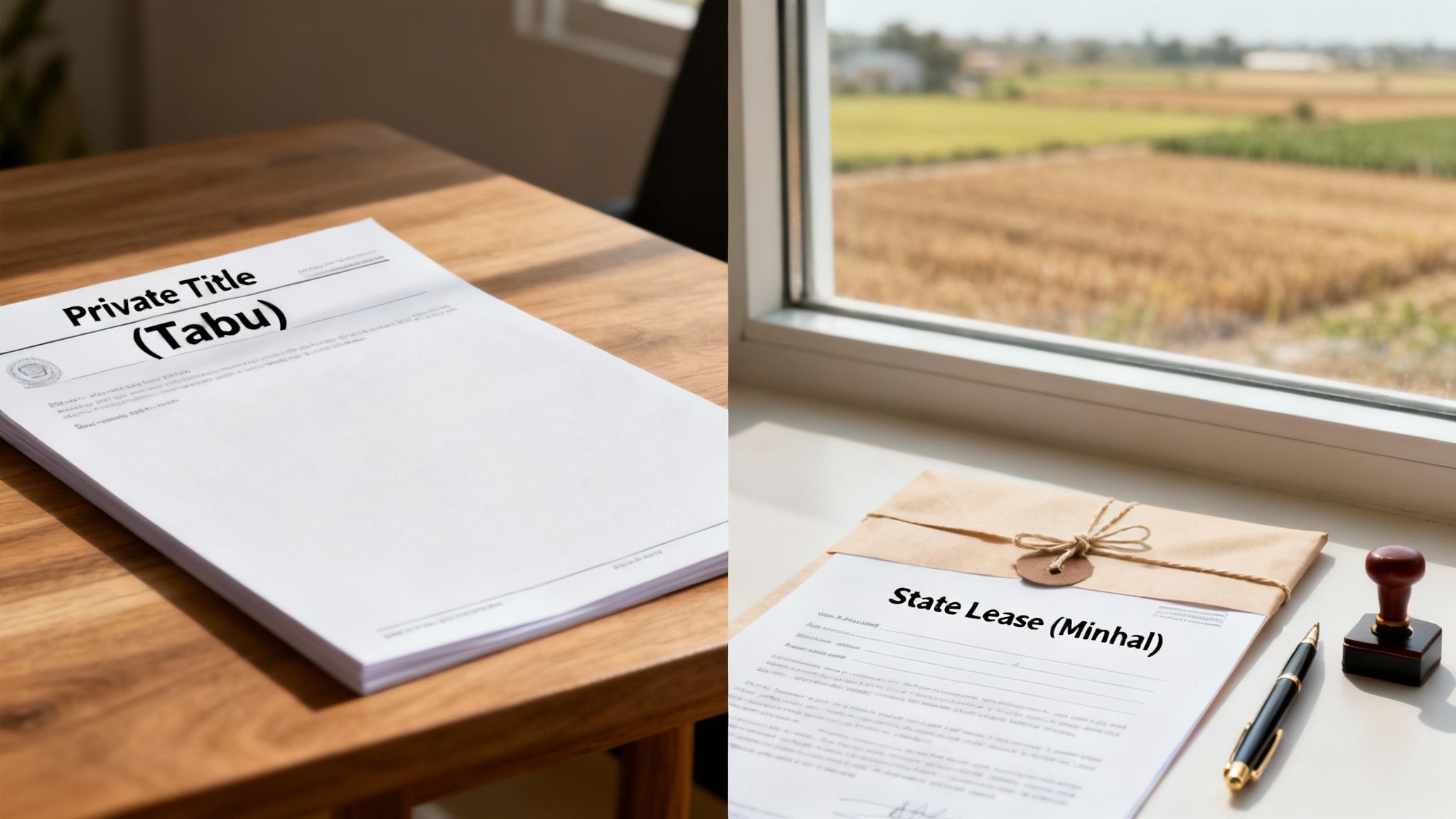
These two categories are Private ‘Tabu’ Land and State-Leased ‘Minhal’ Land. For any foreign corporate entity, the legal and financial gap between them is immense.
Private Land (Tabu): The Exception, Not the Rule
Tabu refers to land under private, freehold ownership, recorded in the Israeli Land Registry Office (the “Tabu”). This model mirrors the fee-simple ownership common in jurisdictions like the United States or the United Kingdom, representing the highest degree of control, security, and transferability. When you own Tabu land, your entity holds the title, providing an unambiguous legal claim that simplifies financing, sales, and succession planning. For a foreign investor, Tabu land is the most secure and transparent route to property acquisition.
However, a critical reality check is required: only about 7% of Israel’s total land area is privately owned. This scarcity means agricultural land registered as Tabu is exceptionally limited, making such parcels both highly desirable and rare.
State Leased Land (Minhal): The Dominant Reality
The other 93% of the country’s land is owned by the state, the Jewish National Fund (JNF), or the Development Authority. This territory is managed by a single government body: the Israel Land Authority (ILA), often known by its former name, the “Minhal.”
When one “buys” Minhal land, one is not actually purchasing the property but acquiring long-term leasehold rights, typically for 49 or 99 years. This is a critical distinction.
The legal status is that of a tenant leasing from the state. This introduces a powerful third party—the ILA—into every major decision regarding the land, from transferring the lease to altering its designated use.
Navigating the ILA and its regulations is notoriously complex. A leaseholder’s rights are strictly defined by the lease agreement, which can contain restrictive covenants and conditions. For foreign entities, the hurdles are even higher. Acquiring lease rights often requires forming an Israeli company and securing direct ILA approval, a process involving intense scrutiny.
Comparing Israeli Land Ownership Types
| Feature | Private Land (Tabu) | State Leased Land (Minhal/ILA) |
|---|---|---|
| Ownership Type | Freehold (Full, direct ownership) | Leasehold (Long-term rental from the state) |
| Percentage of Land | Approximately 7% | Approximately 93% |
| Governing Body | Israel Land Registry (“Tabu”) | Israel Land Authority (“Minhal” or ILA) |
| Transferability | Straightforward; direct sale between parties | Complex; requires ILA approval and consent |
| Foreign Investor Access | Generally accessible (subject to regulations) | Highly restricted; often requires an Israeli entity |
| Land Use Changes | Subject to standard zoning and planning laws | Requires both zoning approval and ILA consent |
| Key Advantage | Maximum control and security | Greater availability of land parcels |
As the table illustrates, the choice between Tabu and Minhal fundamentally shapes the investment strategy, risk profile, and operational freedom. Practical issues such as accessing landlocked property also require careful due diligence regardless of ownership type. This is why expert legal counsel is non-negotiable for any corporate entity serious about investing in agricultural land in Israel.
The Unique Inheritance Rules of Moshav Properties
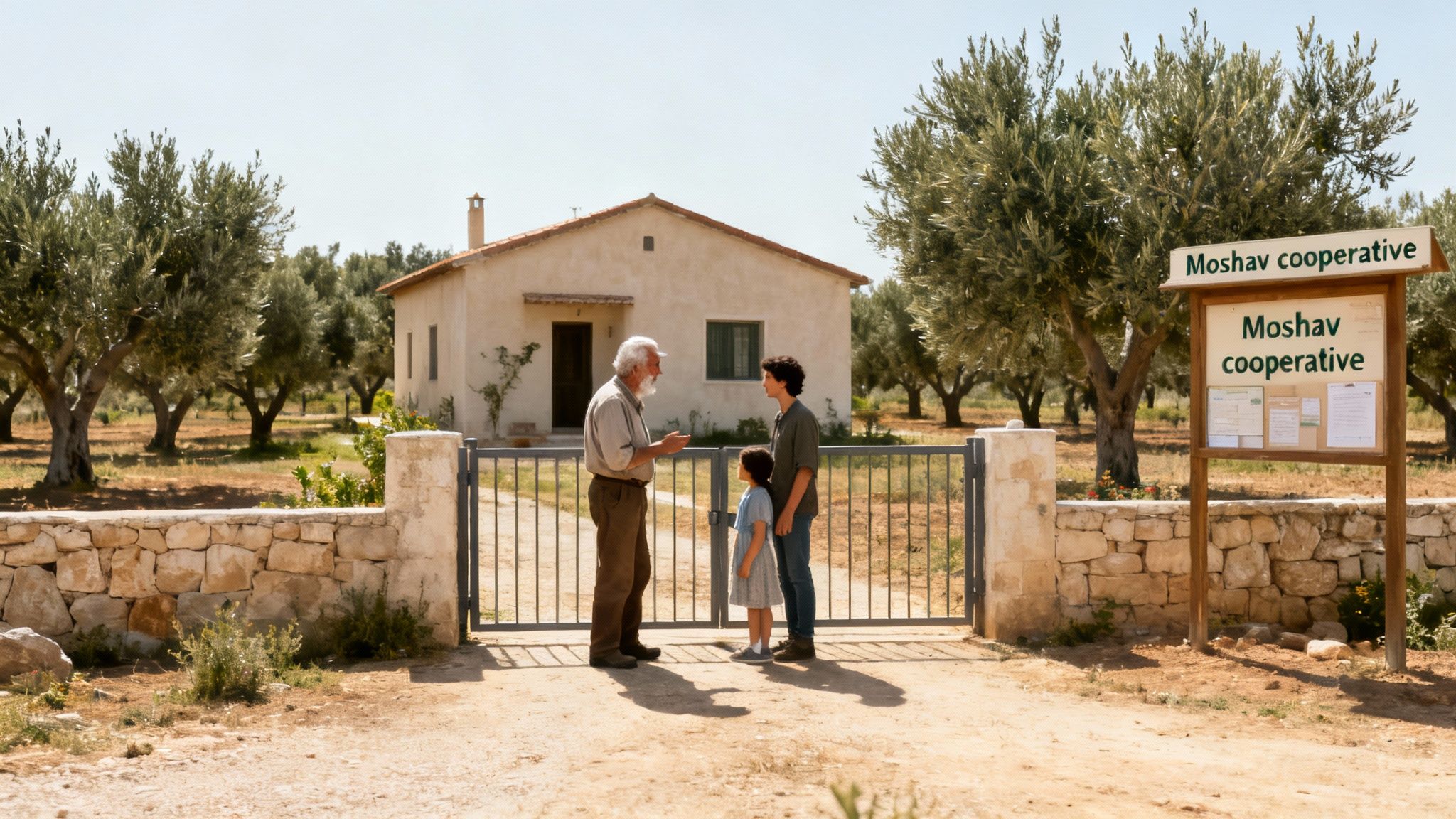
Beyond standard land categories, Israel features a unique type of settlement known as a Moshav. These cooperative agricultural communities can appear attractive to foreign investors but conceal a significant legal trap related to long-term control and asset succession. Property rights in a Moshav are not freehold titles; they are leasehold rights from the Israel Land Authority (ILA), governed by the Moshav cooperative’s internal regulations. This dual layer of oversight is complex, but the primary challenge lies in a succession rule known as the ‘Ben Mamshich’ principle.
Understanding The Ben Mamshich Principle
The term ‘Ben Mamshich’ translates to ‘Continuing Son.’ It is an inheritance mechanism designed to keep a farm as a single, functioning agricultural unit passed to a single, capable heir. The concept is intended to prevent farms from being divided among multiple heirs or falling into disuse. For a corporate entity or a foreign family office, this rule is perilous, as it can override a standard will or testament. Even with a robust estate plan, designated heirs could be legally prevented from taking control of the property. The final authority rests not with the estate but with the Moshav’s committee and the ILA.
In practice, a multi-million-dollar investment in Israeli agricultural land could be diverted from your estate against your explicit wishes. The cooperative holds the power to reject any heir it deems unsuitable to manage the farm.
This veto power introduces substantial risk into any long-term plan. The cooperative assesses a proposed heir based on strict criteria, including:
- Farming Capability: Can the heir work the land and demonstrate the intent to do so?
- Residency: Many Moshavim require the heir to reside on the property.
- Cooperative Membership: The heir must be formally accepted as a member of the cooperative.
The Risk of a Forced Sale
If designated beneficiaries fail to meet these criteria—perhaps due to living abroad or lacking farming experience—the Moshav can refuse to transfer the lease. This rejection can trigger the worst-case scenario: a forced sale of the property. The cooperative may facilitate the sale to a buyer of its choosing. While the estate would receive the proceeds, it loses control over the asset, the timing of the sale, and the price. This legal framework can transform a valuable asset into a liability for an estate, making specialized legal due diligence and proactive succession planning essential.
The High-Risk Gamble of Land Re-zoning
One of the most alluring prospects for foreign investors is purchasing inexpensive agricultural land in Israel with the hope of re-zoning it for lucrative residential or commercial use. While appealing on paper, this is not a reliable investment strategy but an exceptionally high-risk gamble that can immobilize capital for decades with no guarantee of a return. The Israeli re-zoning process is not a straightforward administrative procedure but a complex, multi-layered bureaucratic maze controlled by local, district, and national planning committees.
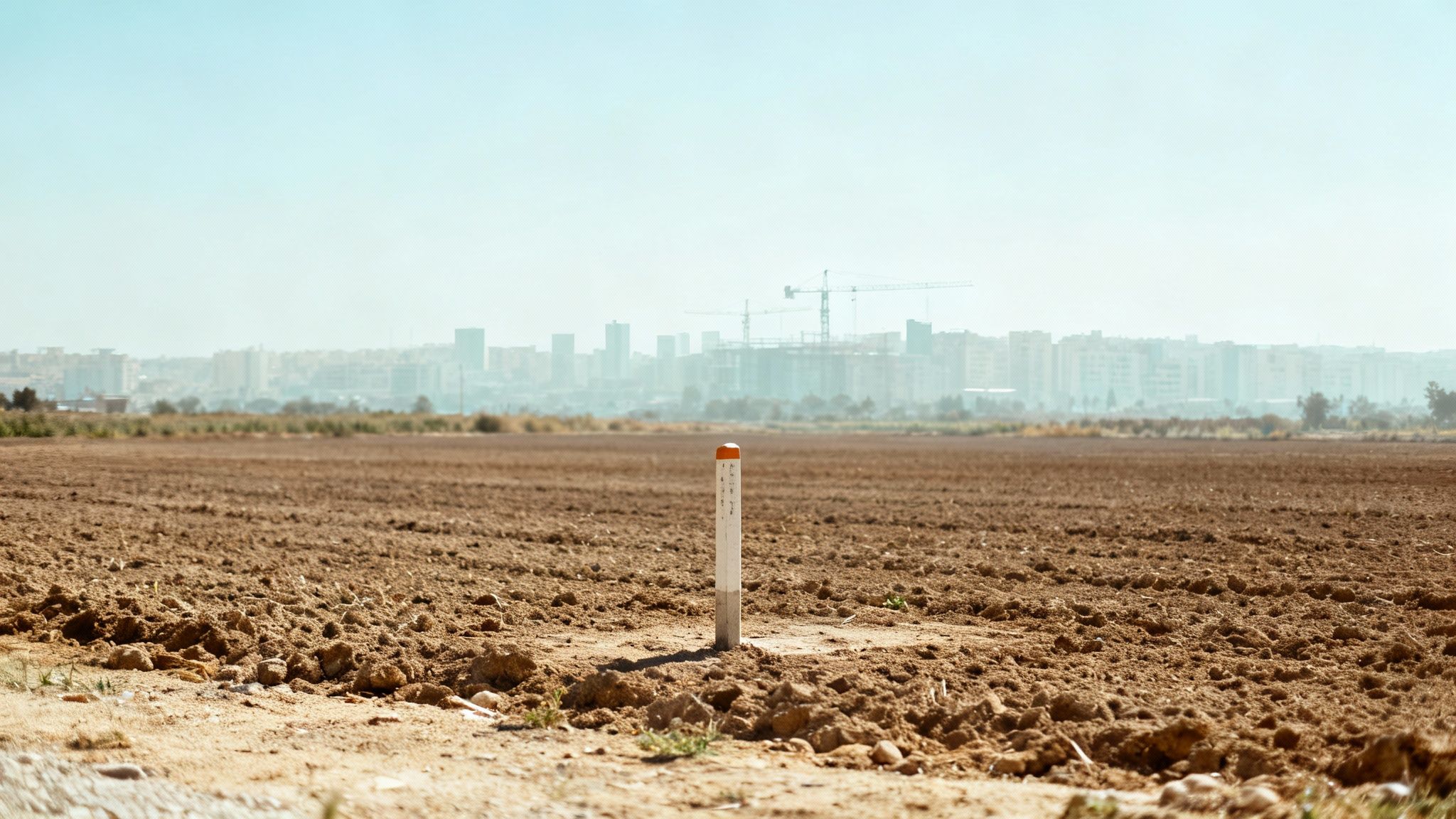
The system is notoriously slow, opaque, and subject to political influence and national planning objectives. There is no clear timeline; an application can remain pending for years or even decades before a decision is rendered.
The Decades-Long Waiting Game
Investors pursuing this path often find their capital frozen in an unproductive, illiquid asset indefinitely. It is not uncommon for a re-zoning application to be rejected after a wait of ten, fifteen, or even twenty years. During this prolonged period, obligations such as municipal and property taxes continue. Furthermore, depending on the land’s classification, the owner might be legally required to actively farm the plot to comply with its designated agricultural use. This creates a situation where the asset generates costs rather than income, all while its future potential remains uncertain.
A fundamental error is viewing Israeli agricultural land through the lens of Western zoning norms. In Israel, preserving farmland is a matter of national strategy. The obstacles to converting agricultural land are intentionally and formidably high.
While limited, Israel’s agricultural land is the foundation of a high-tech export industry vital for food security. As of 2021, agricultural land constituted a significant portion of the country’s total area. You can explore more about Israel’s land use statistics to understand the national context better.
Navigating The Bureaucratic Gauntlet
The re-zoning of agricultural land in Israel is a grueling process involving multiple hurdles, any one of which can terminate the project.
- Local Planning Committee: The process begins with submitting a plan to the local municipal or regional council, which evaluates it based on local needs and master plans.
- District Planning Committee: If approved locally, the plan advances to the district level, where it is assessed against regional development goals and environmental impacts.
- National Planning and Building Council: For major projects, the final decision may rest with the national council, which holds ultimate authority over land use.
At each stage, the plan is subject to public objections from environmental groups, neighboring landowners, and agricultural organizations. A single well-argued objection can trigger years of litigation and appeals, adding to costs and uncertainty. This contentious process makes re-zoning agricultural land a venture suitable only for those with an extreme appetite for risk and the financial resources to sustain a protracted battle with no guaranteed outcome.
Executing a Secure Land Transaction
Acquiring agricultural land in Israel is a complex legal procedure that demands forensic-level due diligence. For a foreign corporate investor, this is the most critical phase for mitigating risk and ensuring the long-term viability of the investment. A thorough examination of every legal and regulatory detail is non-negotiable. The process begins with verifying ownership, which dictates the entire investigative strategy.
Verifying Ownership and Encumbrances
For privately owned Tabu land, the initial step is a comprehensive title search at the Land Registry Office. This involves more than matching the seller’s name to the deed; it requires uncovering any hidden encumbrances—liens, mortgages, third-party rights, or court orders—that could cloud the title.
For ILA lease agreements, the scrutiny must be even more intense. These leases must be reviewed line by line to identify restrictions, conditions on land use, and any clauses that could complicate the transfer of the lease to a foreign-owned company.
Attempting to close a transaction without this foundational legal work is akin to navigating a minefield blindfolded. The potential for catastrophic financial loss from undisclosed liabilities or regulatory pitfalls is immense.
Zoning, Bylaws, and Acquisition Structures
Beyond a clean title, a secure transaction requires verifying the land’s legal status with all relevant planning authorities. We confirm the current zoning designation to ensure it aligns with the intended use. For speculative plays, this step serves as a vital reality check.
For Moshav properties, due diligence expands to include a deep dive into the cooperative’s bylaws, focusing on member obligations, land use rules, and the ‘Ben Mamshich’ inheritance restrictions.
Simultaneously, selecting the appropriate acquisition structure is a critical strategic decision. Whether to purchase the land through a new Israeli company or another vehicle has significant tax implications, affecting liability for:
- Acquisition Tax (Mas Rechisha)
- Capital Gains Tax (Mas Shevach)
- Appreciation Tax (Hetel Hashbacha)
A robust financial due diligence checklist can guide investors through this complex process. By methodically addressing every element—from title searches and ILA contract analysis to zoning verification and tax structuring—foreign investors can navigate the Israeli market and secure a compliant transaction.
Strategic Counsel for a Complex Market
Navigating Israel’s agricultural real estate market is a formidable challenge. The landscape is characterized by complex ownership structures, unique inheritance laws for Moshav properties, and the high-risk gamble of land re-zoning. Success in this environment demands more than capital; it requires a deep, on-the-ground understanding of the laws, bureaucracy, and practical realities. For foreign investors, these hurdles can seem insurmountable without expert guidance.
The Necessity of Specialized Legal Partnership
At RNC Group, we specialize in translating this legal complexity into a clear strategic path for our corporate clients. As a firm focused on cross-border transactions, commercial law, and crisis management, we excel in environments where the stakes are high and the regulations are intricate. Our role is to convert potential liabilities into calculated, manageable risks, structuring acquisitions for maximum security from inception.
A successful investment in Israeli agricultural land is not about finding loopholes. It is about meticulously constructing a transaction that respects the country’s unique legal framework while protecting your corporate interests.
Our team is equipped to manage the entire process, from conducting exhaustive due diligence on Tabu and ILA properties to crafting sophisticated succession plans for Moshav assets that address the ‘Ben Mamshich’ rule. We scrutinize every detail, from clauses in decades-old lease agreements to the long-term tax implications of the acquisition structure.
To discuss a legal strategy tailored to your specific investment goals in Israel, please contact RNC Group for a professional consultation. We are prepared to provide the clarity and security your venture demands.
Investor Q&A: Key Questions Answered
Foreign investors entering Israel’s agricultural land market often have critical questions regarding the unique legal and practical hurdles. Here are answers to the most common inquiries from our corporate clients.
Can a Foreign Company Directly Own Agricultural Land in Israel?
The answer depends entirely on the land’s legal classification. A foreign company can generally purchase privately owned ‘Tabu’ land, which represents the most direct path to ownership. However, the vast majority of Israel’s agricultural land is ‘Minhal’ land, leased from the state via the Israel Land Authority (ILA). Acquiring these leaseholds is highly restrictive for foreign entities and typically requires establishing an Israeli corporate structure and meeting stringent ILA criteria—a complex process necessitating specialized legal counsel.
What Is the Biggest Financial Risk with Moshav Property?
The single greatest financial risk associated with Moshav property is the ‘Ben Mamshich’ succession rule. This principle, designed to ensure a farm remains a single, working unit, can legally override a standard will. In practice, this means the Moshav cooperative committee can reject a designated heir if they are deemed unsuitable to continue farming. Such a rejection can trigger a forced sale of the property, posing a direct threat to long-term investment plans and generational wealth transfer.
The ‘Ben Mamshich’ principle effectively transfers final authority over inheritance from the asset holder to a local committee. Failing to address this with highly specialized estate planning creates a direct risk of losing the asset.
How Long Does Agricultural Land Re-zoning Typically Take?
There is no “typical” timeline, which is precisely the issue. The process to re-zone agricultural land in Israel can range from several years to decades, and many applications are never approved. Re-zoning is a prolonged, bureaucratic, and politically influenced process involving multiple layers of planning committees and public input. It should be treated as a high-risk speculation, not a predictable investment strategy with a clear exit.
The legal landscape for investing in Israeli agricultural property is fraught with unique challenges that require strategic, expert guidance. To ensure your investment is structured for security and success, contact RNC Group for a professional consultation.
This article does not constitute legal advice and is not a substitute for consulting with a qualified attorney. Do not rely on the contents of this article for taking or refraining from taking any action.