

Skipping pre-purchase checks in Israel isn’t just a missed step—it’s like navigating a minefield blindfolded. For international investors, a deep-dive investigation into a property is absolutely non-negotiable before signing any contract. This guide is your checklist for the essential due diligence required to protect your investment from the unique pitfalls of the Israeli real estate market.
Let’s make sure your investment is secure, transparent, and legally sound from day one.
The Due Diligence Checklist: Your Shield Against Risk

When buying property in Israel, the most critical work happens before any contract is signed. This legal investigation, known as due diligence, isn’t a formality. It’s your primary shield against crippling legal fights, hidden debts, and fraud that can turn a dream asset into a financial nightmare. A good lawyer’s job is to go far beyond a simple title search—we dig into building regulations, the seller’s financial standing, and anything else that could jeopardize your ownership.
A revealing survey found that a staggering 28% of buyers discover significant defects after the purchase. These surprises often lead to unexpected repair bills running into tens of thousands of shekels. You can read the full report on homebuyer risks to grasp the financial stakes. This is why professional legal guidance is non-negotiable.
✅ Item 1: Land Registry (Tabu) Analysis
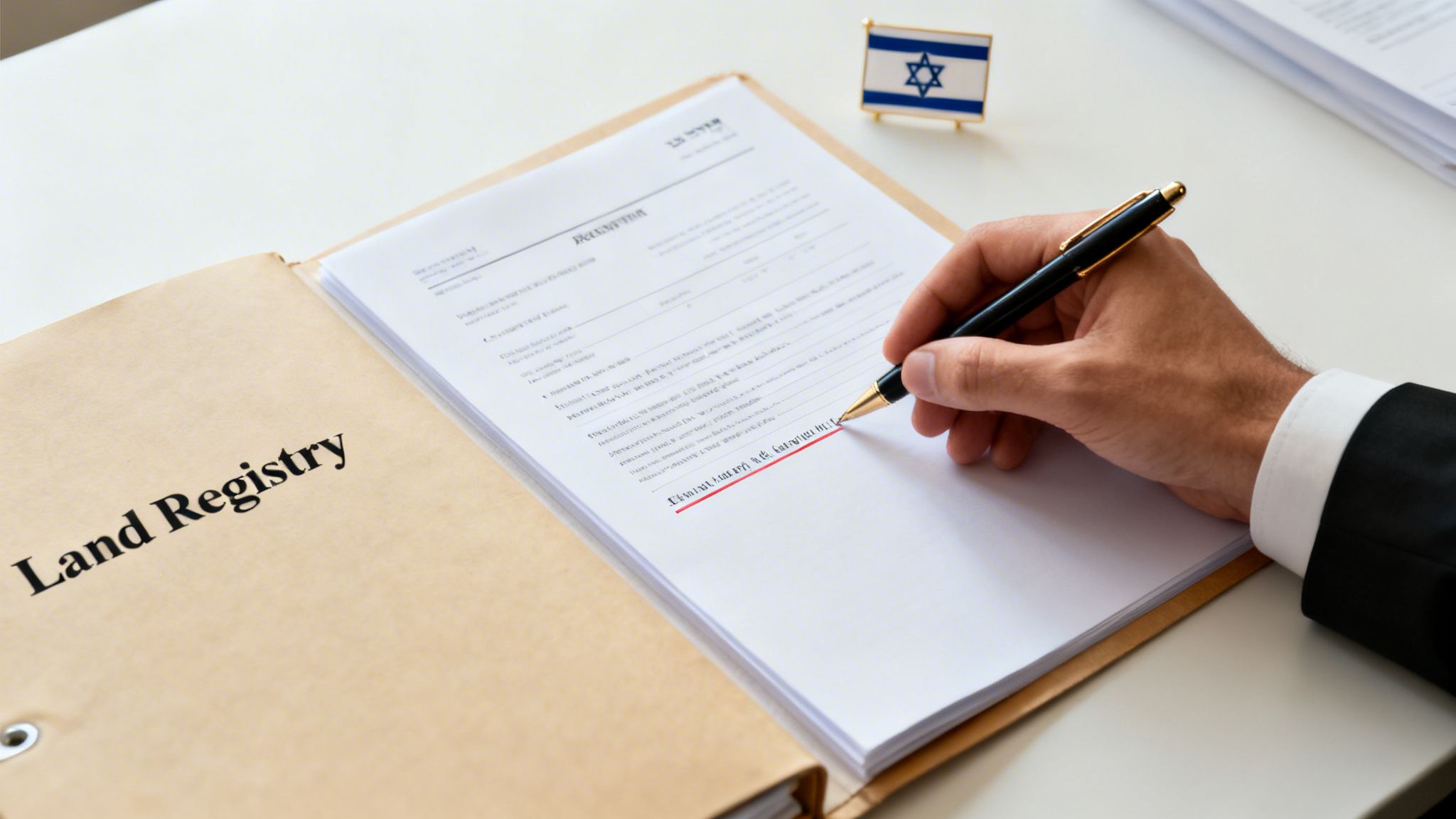
The first step of any serious pre-purchase checks in Israel is analyzing the extract from the Land Registry, known locally as the Tabu. This official record (Nesach Tabu) is the legal pulse of the property.
Your Lawyer’s Investigation Checklist:
- Confirm Ownership: Does the name on the title perfectly match the seller’s official ID? This is your frontline defense against fraud.
- Identify Mortgages (Mashkanta): If the seller has a bank loan on the property, it must be fully paid off before the title can be transferred to you.
- Uncover Liens (Ikul): We search for legal claims from creditors, such as unpaid municipal taxes or court judgments. All liens must be settled to clear the title.
- Flag Cautionary Notes (He’arat Azhara): This is a deal-stopper. It’s a formal warning registered by a third party (like a previous buyer or unpaid contractor) that legally blocks the seller from selling the property until the issue is resolved.
Finding a cautionary note is one of the most serious red flags. It functions like a legal barricade, preventing any transfer of title. We often see these when a seller has tried to back out of a prior agreement, leaving a legal mess that must be cleaned up before you can safely proceed. For overseas buyers, this entire process is often managed by their lawyer using a real estate power of attorney.
✅ Item 2: Municipal File Review for Building Irregularities

Confirming ownership is only half the battle. What you see during a walkthrough isn’t always what the municipality has legally permitted. The next check involves diving into the municipal building file, or Tik Binyan.
Your Lawyer’s Investigation Checklist:
- Verify Building Permits: Does the property’s physical layout match the official architectural plans? Unpermitted additions (like enclosed balconies, pergolas, or basement rooms) are incredibly common and become your liability upon purchase.
- Confirm Occupancy Permit (Tofes 4): This certificate confirms the building was constructed according to approved plans and is safe for occupancy. Its absence is a massive red flag.
- Check for Betterment Levy (Hetel Hashbacha): We obtain a certificate confirming the seller has settled any outstanding levies. This tax is triggered when a municipal planning change increases a property’s value, and you don’t want to be stuck with the bill.
The fallout from ignoring building irregularities can be severe: heavy fines, demolition orders, and difficulty securing a mortgage. A clean municipal file is essential for peace of mind. These steps are a core component of any complete buying property in Israel guide.
✅ Item 3: Seller ID and Solvency Verification

Beyond the property itself, we must investigate the seller. A financially distressed seller can drag your deal down with them, even at the last minute. This part of the pre-purchase check in Israel is about smart risk management.
Your Lawyer’s Investigation Checklist:
- Identity Verification: We meticulously match the seller’s official ID (Teudat Zehut or passport) against the name registered in the Tabu. Any discrepancy must be resolved immediately.
- Bankruptcy Search: We confirm the seller has not filed for bankruptcy, which would put a court-appointed receiver in control of their assets.
- Execution Office (Hotzaa LaPoal) Review: We search Israel’s central debt collection database for active cases against the seller, from bounced checks to major court judgments. New liens can freeze a property sale instantly.
- Tax Clearance: We obtain official certificates confirming the seller is fully paid up on all municipal taxes (Arnona) and has settled their Capital Gains Tax. Knowing your own obligations, like the rates detailed in our purchase tax calculator & rates guide, is equally important for a smooth transaction.
Discovering a seller is in financial trouble doesn’t automatically kill a deal, but it completely changes how we structure it to protect you. These rigorous due diligence essentials ensure you acquire a clean, unencumbered title without inheriting someone else’s problems.
Don’t navigate the Israeli legal system alone. Schedule a consultation regarding your specific case.