
A buyer can no longer treat the confidentiality agreement as a routine entry document. In 2026 cross-border M&A, the central question is sharper. If your diligence team uses AI tools, how do you stop the target’s most sensitive data from being absorbed into a system that may outlast the deal itself?
That issue sits at the center of any serious confidentiality agreement business sale strategy involving Israel. The old assumption was simple. Sign an NDA, open the data room, and move quickly. That assumption now fails in practice because disclosure risks no longer end with the recipient’s inbox or internal deal team.
The NDA should define how the buyer may use sensitive sale information and who may receive it. Further background: this analysis on confidentiality in business sales.
That also explains why diligence hygiene now intersects with broader compliance expectations. Buyers that already operate under strict enterprise customer SOC 2 requirements usually understand this instinctively. Access control, auditability, retention discipline, and vendor scrutiny are no longer technical side issues. They shape whether a seller will trust the buyer enough to release the information that matters.
Introduction A Critical Question for Your 2026 M&A Strategy
The first serious mistake in a business sale usually happens before price negotiations begin. One side assumes the NDA is a formality. The other side assumes enforcement can wait until a breach occurs. In Israeli and cross-border transactions, both assumptions create avoidable risk.
A well-constructed confidentiality agreement business sale framework does much more than block public leaks. It determines who sees what, when they see it, why they may use it, and how quickly the seller can respond if control breaks down. That matters because M&A disclosure is staged, cumulative, and commercially sensitive from the first teaser through final diligence.
Why the preliminary document now carries strategic weight
For a foreign buyer acquiring an Israeli company, the NDA often becomes the first real test of seriousness. Sellers and their advisors read it closely. They don’t only assess legal wording. They assess whether the buyer understands operational sensitivity, internal controls, advisor discipline, and cross-border enforcement realities.
That is especially true in technology, manufacturing, defense-adjacent, medical, and export-driven sectors. In those sectors, customer concentration, code repositories, product roadmaps, pricing logic, and employee retention issues can move transaction value quickly. A weak NDA signals weak process discipline.
Practical rule: In high-stakes M&A, the confidentiality agreement isn’t a gate to due diligence. It is the first due diligence item.
What sophisticated parties now treat as non-negotiable
A serious process usually requires more than boilerplate language. The agreement should align with the deal’s actual information flow, the jurisdictional footprint of the parties, and the tools used by lawyers, accountants, lenders, and diligence vendors.
At minimum, buyers and sellers should pressure-test these issues early:
- Access control: Which individuals, affiliates, and external advisors may review information.
- Use limitation: Whether data may be used only to evaluate the transaction, and for no competitive purpose.
- Digital handling: Whether VDR exports, local downloads, AI review tools, and third-party platforms are restricted.
- Fast remedies: Whether the seller can seek an injunction immediately if the buyer or its representatives overstep.
An NDA that ignores these points may still look polished. It still won’t protect the deal.
The Strategic Role of Confidentiality in a Business Sale
A seller doesn’t disclose sensitive information because trust exists. Trust exists because the process controls disclosure. That distinction matters in any acquisition of an Israeli company, especially where the buyer may also operate in the same market or a related supply chain.
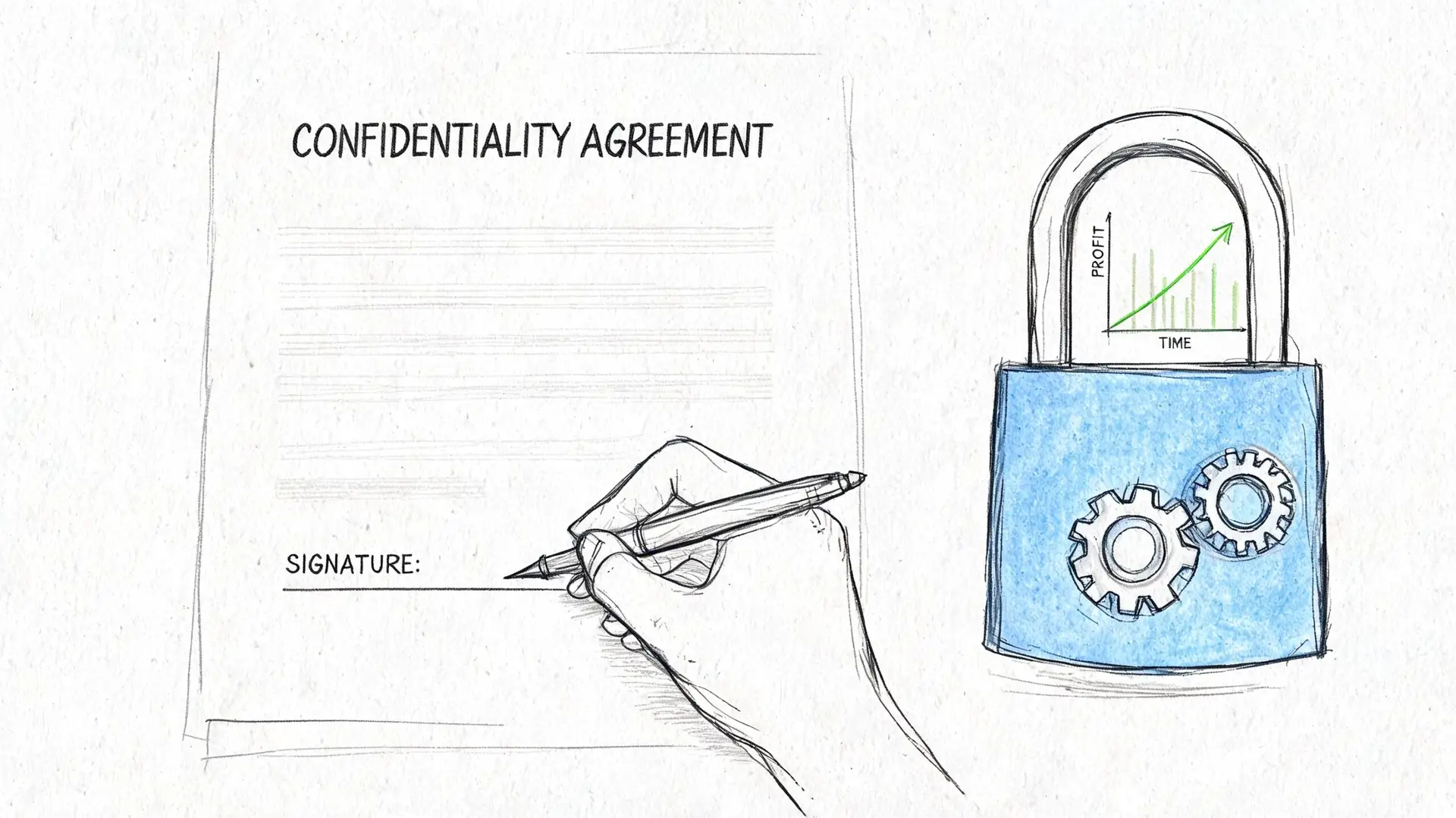
A modern NDA protects more than trade secrets in the narrow sense. It commonly covers financial projections, supplier lists, pricing models, and employee data. It also supports a phased disclosure process, where brokers or advisors release anonymized information first, then detailed financials after signature, and hold back the most sensitive operating data until final diligence with one selected buyer, as described in this discussion of confidentiality as a competitive advantage.
Confidentiality preserves deal value, not just secrecy
In practice, the seller uses the NDA to preserve the business the buyer expects to acquire. If employee anxiety rises, if customers hear rumors, or if a competitor sees enough information to react, the transaction starts losing quality before the SPA is even marked up.
That is why experienced advisers don’t release information in one batch. They stage it. A teaser reveals the category of business without exposing identity. The next package may show enough detail for preliminary valuation. Only a narrower circle gets the operational material that could be weaponized if the deal fails.
This staged approach serves both sides. The seller limits exposure. The buyer receives information in a sequence that matches real diligence needs. The process becomes safer and more credible.
What works and what usually fails
The disciplined model usually includes a secure VDR, named representatives, and a document release calendar tied to milestones. That structure reduces improvisation. It also creates a record of who received information and when.
What usually fails is the opposite model:
- Loose circulation: Teams forward documents by email without a defined recipient list.
- Early over-disclosure: Sellers send customer-level or product-level data before commitment strengthens.
- Unclear advisor coverage: The buyer assumes all consultants are covered, but the NDA doesn’t define them properly.
- Informal outreach: A banker, consultant, or integration lead contacts employees or customers too early.
Sellers don’t fear disclosure in the abstract. They fear disclosure that changes the business before closing.
Why foreign buyers should care
Non-Israeli acquirers sometimes focus heavily on tax, structure, and regulatory approvals. They should. Yet confidentiality discipline often determines whether the process even reaches that stage in healthy condition.
A buyer that accepts strong controls often gains an advantage. The seller sees a counterparty that understands market sensitivity, respects the target’s workforce, and won’t turn diligence into competitive reconnaissance. In contested or proprietary situations, that perception can influence who receives deeper access and who remains on the outside.
Anatomy of an M&A Confidentiality Agreement
A business sale NDA fails when it leaves room for strategic ambiguity. The right draft doesn’t aim for elegant generalities. It allocates risk with precision.
For cross-border transactions, that precision matters even more because each clause affects later enforcement, advisor conduct, and the practical scope of diligence. The drafting discipline expected in carefully crafted commercial contracts under Israeli law applies fully here. A generic template rarely survives contact with a real M&A process.
The clauses that define real protection
The parties should define the protected information, permitted use and duration for each information category, including trade secrets. Further reading: this review of business sale confidentiality agreements.
That starting point leads to several core clauses.
| Clause | Seller’s Preferred Position (More Restrictive) | Buyer’s Preferred Position (Less Restrictive) |
|---|---|---|
| Definition of confidential information | Broad definition covering all written, oral, digital, derivative, and metadata-based information | Narrower definition, often limited to marked or clearly identified materials |
| Permitted use | Evaluation of the specific transaction only, with no competitive, financing, or strategic use outside that purpose | Wider internal evaluation rights, sometimes including affiliates and financing sources |
| Representatives | Limited to named or clearly defined need-to-know advisors under equivalent obligations | Broader disclosure to affiliates, lenders, consultants, and internal teams |
| Non-solicitation | Express ban on contacting or soliciting employees, customers, and suppliers | Narrow or no non-solicitation language, or shorter duration |
| Term | Longer confidentiality period, with perpetual protection for trade secrets | Shorter survival for all information categories |
| Return or destruction | Mandatory return or certified destruction on request, with limited retention carve-outs | Broad archival and backup exceptions |
| Remedies | Right to seek urgent injunctive relief and acknowledgment of the harm from disclosure | Greater emphasis on ordinary damages and procedural defenses |
Definition and permitted use carry the heaviest load
The definition of confidential information does more than identify protected material. It defines the perimeter of the deal. If the clause is too narrow, the recipient may argue that analyses, notes, diligence summaries, or data extracted into software fall outside protection. That argument becomes dangerous in modern diligence.
The permitted use clause then closes the next loophole. It should limit use to evaluating the contemplated transaction. Not market mapping. Not competitive benchmarking. Not hiring strategy. Not product planning.
The agreement should distinguish excluded information from permitted disclosure. Define the treatment of public information and information already lawfully known. Address legally compelled disclosure separately, including notice where permitted, efforts to obtain protective treatment and disclosure limited to what is required.
Non-solicitation and term are usually the hardest negotiations
If the buyer is active in the same space, non-solicitation becomes commercially sensitive. Sellers will want clear restrictions on approaching employees, customers, and suppliers. Buyers usually resist broad language if they fear accidental capture of ordinary market conduct or recruiting through general advertising.
Those concerns can be reconciled through careful drafting. The strongest version isn’t always the broadest. The strongest version is the one a court or arbitral tribunal is likely to enforce.
A clause that looks aggressive in markup but collapses under scrutiny offers less protection than a narrower clause drafted with discipline.
The term raises a similar issue. Some information ages quickly. Some doesn’t. Financial snapshots may lose sensitivity over time. Trade secrets usually don’t. That is why perpetual treatment for trade secrets remains commercially and legally sound.
Remedies should reflect the nature of the harm
If confidential data leaks during a sale, the seller usually needs speed, not a later damages debate. The NDA should therefore preserve the right to seek injunctive relief. Monetary recovery may matter later, but it rarely restores a lost customer relationship, an exposed pricing model, or a shaken management team.
From the buyer’s perspective, that doesn’t justify vague drafting. It justifies disciplined drafting. The parties should know what conduct triggers urgent relief and what conduct belongs in a later merits proceeding.
Timing and Workflow During the Sale Process
The NDA does its best work when it sits inside a controlled workflow. In a disciplined transaction, the document appears early, but never in isolation. It forms part of an escalation path from anonymous interest to narrow, highly restricted access.
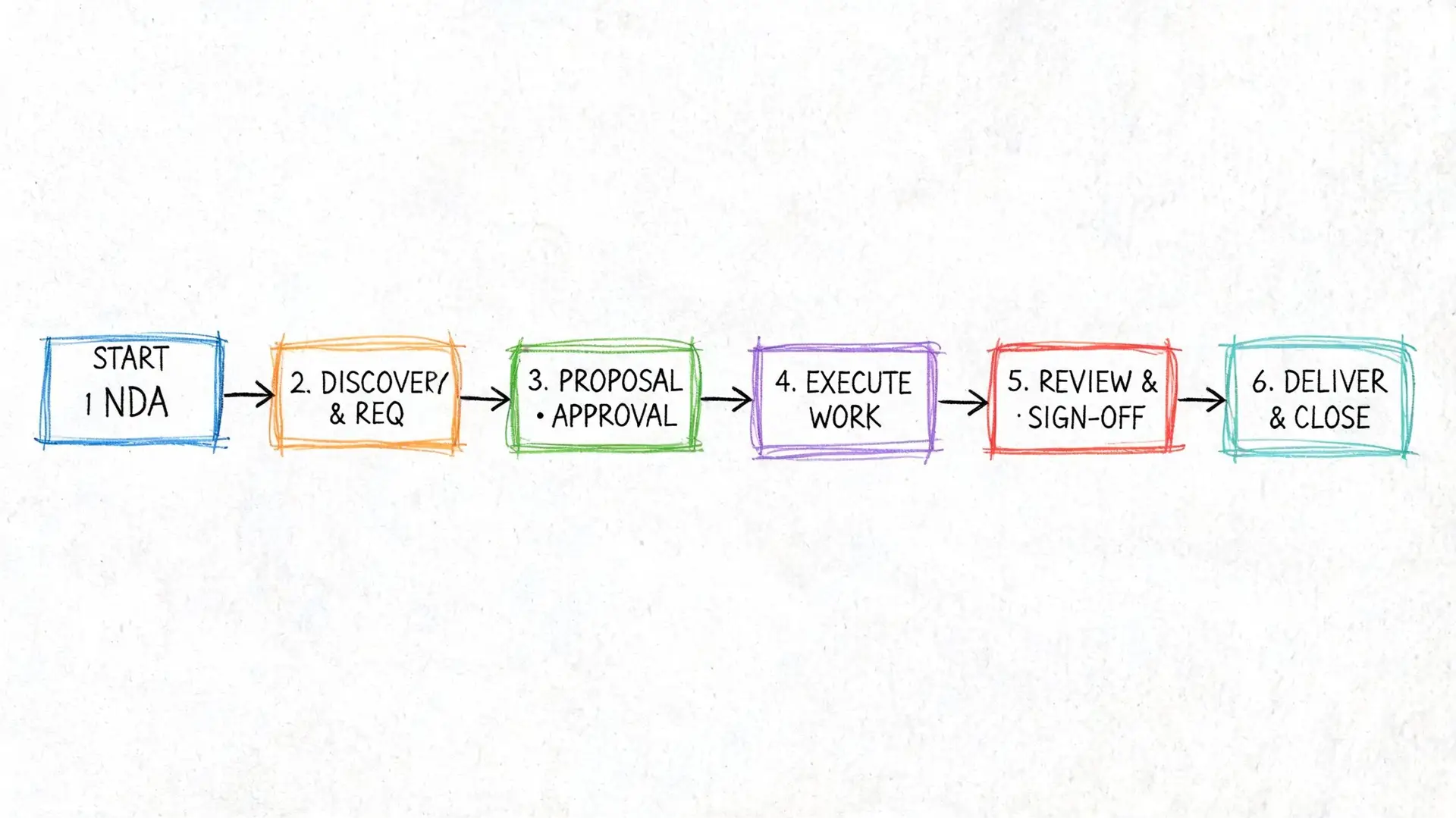
The NDA should identify the permitted advisers and set return or destruction duties. Further process guidance: these best practices for small business sale confidentiality.
The usual sequence in a serious sale process
The process often starts with a blind teaser. The document gives enough information to generate interest, but not enough to identify the company with confidence. If the buyer remains interested, the seller or advisor issues the NDA.
After signature, the seller usually releases a more detailed memorandum. Then, and only then, the buyer may receive controlled VDR access. The scope broadens as credibility and commitment increase.
For Israeli targets, that diligence sequence should align with a transaction-specific review plan such as this overview of M&A due diligence in Israel. The point isn’t bureaucracy. The point is to match each disclosure layer to a reasoned diligence need.
What each phase should achieve
-
Teaser stage
The seller tests market interest while protecting identity and key relationships. -
NDA stage
The parties define access, use, representatives, restrictions on contact, and document handling. -
Initial memorandum and limited VDR stage
The buyer reviews enough material to decide whether to invest more time and resources. -
Indication of interest or LOI stage
Access deepens because the field has narrowed and seriousness has become clearer. -
Final diligence with selected buyer
The seller releases the most sensitive operational information in a much tighter environment.
Operational controls that matter after signing
A signed NDA doesn’t police itself. The buyer must map the internal recipient list immediately. That list should include only those people who need access. External advisors, such as accountants and deal counsel, should receive information under the same confidentiality architecture.
The agreement should also block unsupervised contact with employees, customers, and suppliers. That point is often underestimated by foreign buyers. In a smaller Israeli market, one premature call can expose the transaction quickly.
Use practical controls, not just legal language:
- Named deal team: Identify who may enter the VDR.
- Centralized communications: Route questions through counsel or the sell-side coordinator.
- Document discipline: Avoid downloading sensitive materials unless necessary.
- Exit protocol: Prepare return or destruction steps before exclusivity ends.
The safest NDA is the one supported by a workflow that leaves little room for improvisation.
Navigating Cross-Border Enforcement and Israeli Law
Once a confidentiality breach crosses a border, the elegant wording of the NDA matters less than the enforceability of the response. That is where many foreign buyers and sellers discover that their template assumed a domestic dispute model that doesn’t fit an Israeli transaction.
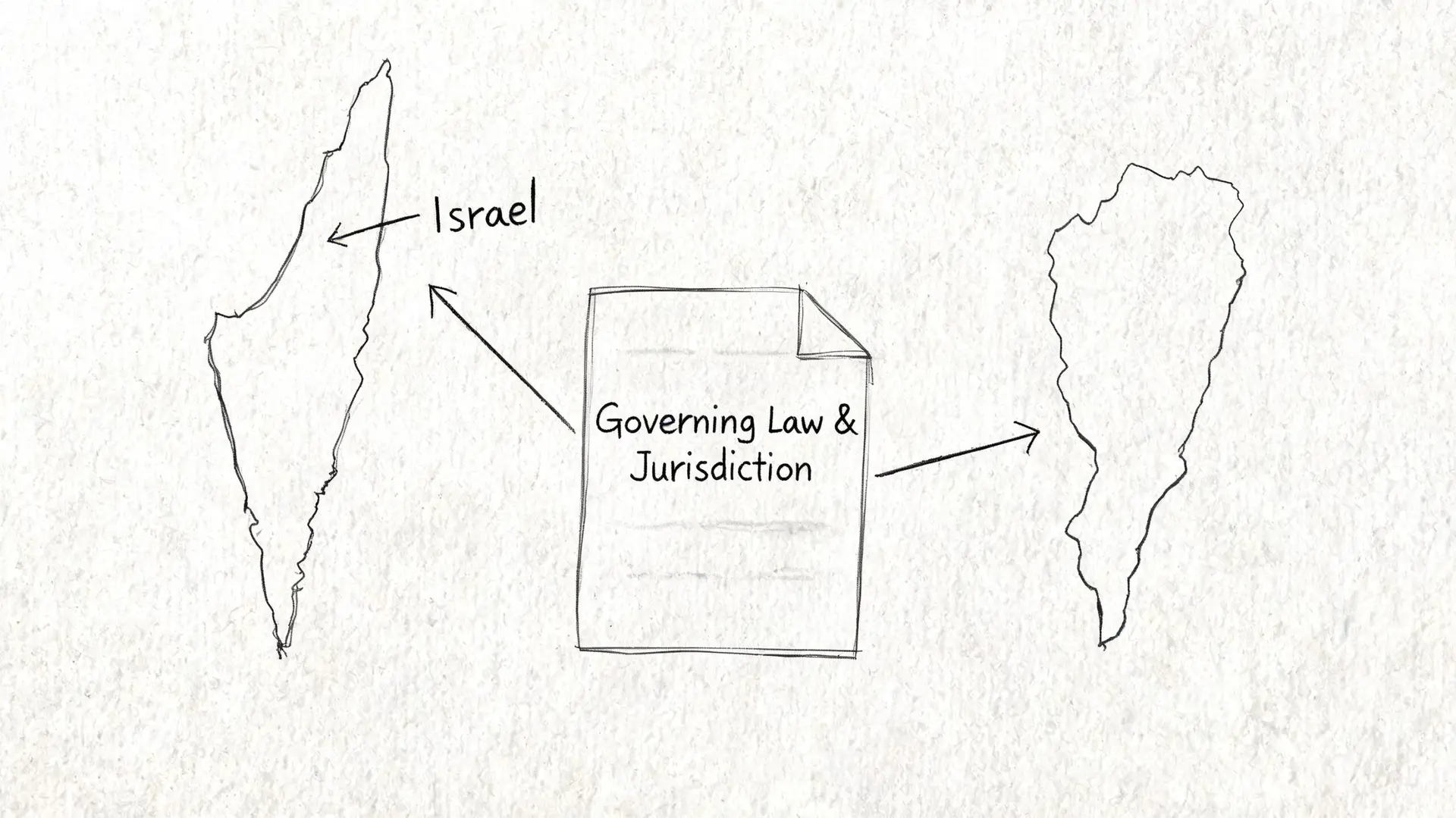
Governing law and forum shape leverage
The governing law clause decides which legal system interprets the agreement. The jurisdiction clause decides where the fight happens. Those are not housekeeping points.
If the target, key witnesses, data custodians, or leaked material are located in Israel, Israeli law and Israeli courts may offer practical advantages for urgent relief. If the buyer is foreign and wants a neutral venue, arbitration may present a workable compromise. The right answer depends on the assets at risk, where disclosure is likely to occur, and how fast emergency action may be needed.
A neutral forum can be commercially attractive. It can also slow early response if the primary evidence and actors remain in Israel. That trade-off should be confronted at the NDA stage, not after a leak.
Speed matters more than rhetorical remedies
The usual first response to a serious breach is not a damages claim. It is a demand for immediate cessation, document control, and injunctive relief. That is especially true if the breach threatens disclosure to employees, customers, regulators, journalists, or competitors.
Where the leak becomes public or develops into a wider reputational event, the problem stops being a narrow contract issue. It becomes a strategic dispute requiring coordinated legal and communications handling. In that setting, a structured escalation model like the one discussed in this article on commercial crisis management becomes highly relevant.
The Israeli cross-border enforcement question
Foreign parties often ask whether a foreign judgment or arbitral award will solve the problem. Sometimes it will. Sometimes it will arrive too late to preserve commercial value. That is why the NDA should be drafted with front-end enforceability in mind.
Key questions include:
- Where are the likely defendants or representatives located
- Where is the data stored or accessed
- Which court can act quickly
- Whether interim relief is available before final merits resolution
- Whether affiliates and advisors fall clearly within the agreement’s scope
For international corporations, networked enforcement capability also matters. Complex transactions often involve parallel actors in several jurisdictions, and coordinated action may be needed on short notice. That becomes more manageable where counsel can work across borders through established relationships rather than ad hoc referrals.
Cross-border NDA enforcement succeeds when the drafting anticipates the first 72 hours after a breach, not the final hearing months later.
Red Flags and Emerging Risks in 2026
The classic red flags still matter. Sellers should worry when a buyer resists a secure VDR. Buyers should worry when a seller distributes material inconsistently or without version control. Both sides should worry when the NDA says little about representatives, retention, or post-termination data handling.
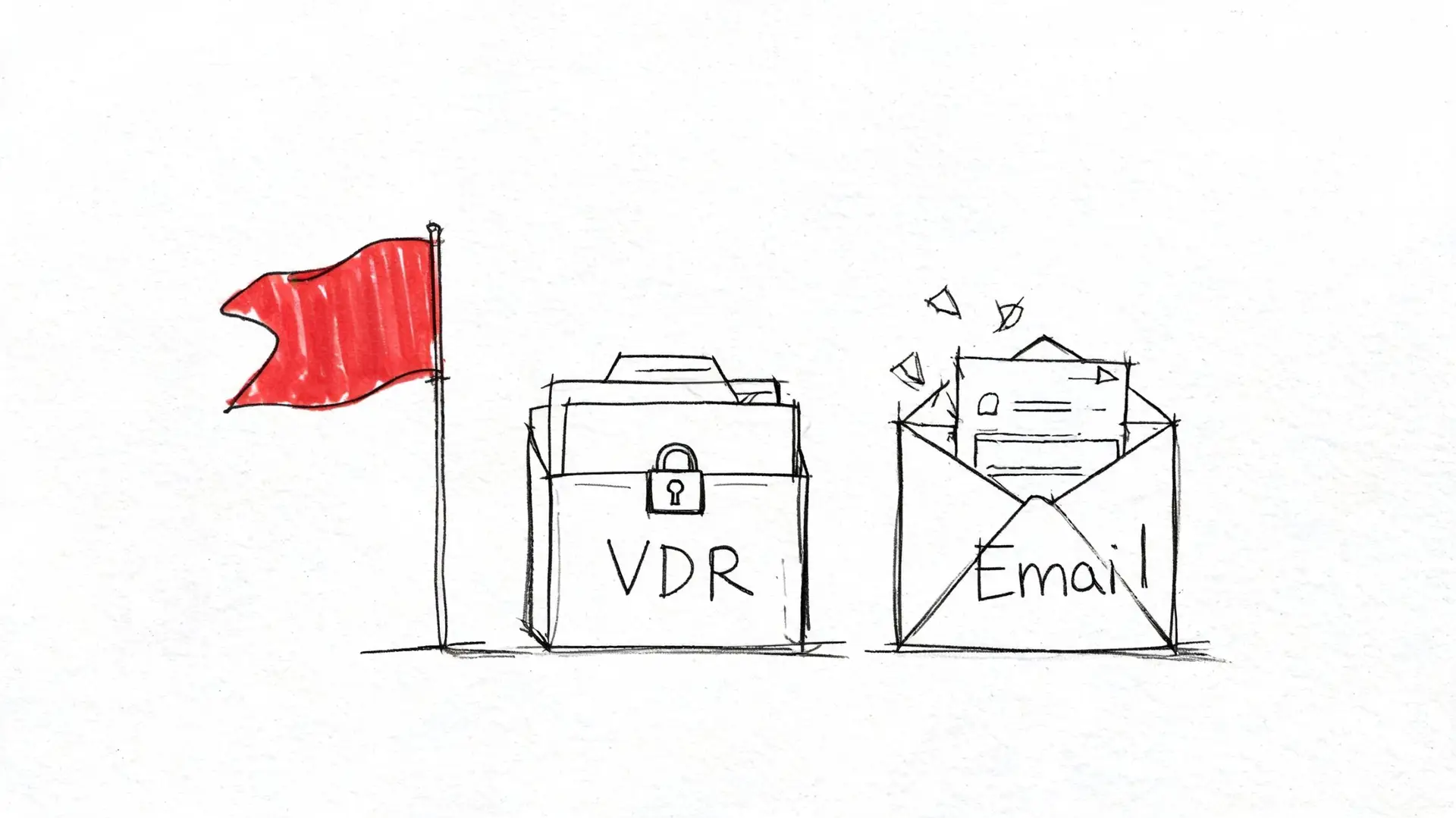
The parties should decide which AI tools may receive transaction information and require approval before uploading it. Further discussion: this review of confidentiality clauses in business sales.
The practical red flags that deserve immediate attention
Some warning signs appear before legal review finishes:
- Email-heavy disclosure: The seller sends sensitive data outside a VDR.
- No-contact silence: The NDA doesn’t restrict outreach to employees, customers, or suppliers.
- Overbroad representative access: The buyer can share information across a large internal and external network.
- Weak exit mechanics: The return or destruction clause says little about backups, extracts, or AI-generated work product.
These flaws don’t always kill a deal. They do signal that the parties haven’t aligned process with risk.
AI changes the meaning of return or destruction
Traditional return or destruction language assumed a manageable world. Documents sat in folders, inboxes, desktops, and backup systems. AI tools complicate that model because information can be ingested, summarized, transformed, and retained in ways that are difficult to verify from the outside.
That is why a modern confidentiality agreement business sale should address AI expressly. Silence now creates ambiguity, and ambiguity invites later conflict.
Useful AI protections often include:
- Platform restrictions: No uploads to third-party AI tools without prior approval.
- Audit rights or disclosure duties: The receiving party must identify the tools used on confidential data.
- Retention controls: The tool must support compliance with return or destruction obligations.
- Output controls: AI-generated summaries, extracts, and analytics remain confidential information.
The real trade-off
An absolute AI ban may sound attractive, but the commercial cost can be real in fast-moving deals. Some tools can improve review speed dramatically. The better answer is usually not prohibition in every case. It is controlled permission.
That means parties should separate approved enterprise tools from unaudited consumer tools. They should also require technical and contractual review before any upload occurs. In EU-linked transactions, transparency and governance concerns become even sharper, so the diligence protocol should reflect that from the outset.
If the NDA ignores AI, the parties are negotiating for a diligence process that no longer exists.
Conclusion A Practical Checklist for Buyers and Sellers
An NDA in a business sale is not ceremonial paper. It is a control system for one of the most delicate moments in corporate life. In Israeli and cross-border transactions, that system must address legal enforceability, operational discipline, and digital handling with equal seriousness.
Experienced parties treat the confidentiality agreement as an early indicator of transaction quality. Good drafting supports good process. Good process protects value, narrows disputes, and lets the parties exchange meaningful information without destabilizing the target.
Buyer checklist
- Review scope carefully: Confirm that confidential information is defined broadly enough to be clear, but not so vaguely that ordinary internal work becomes unmanageable.
- Lock down permitted use: Ensure the agreement limits use to evaluating the transaction and not broader business planning.
- Map representatives early: Decide exactly which executives, lawyers, accountants, lenders, and consultants need access.
- Control digital tools: Check whether the NDA covers VDR exports, local storage, and AI-assisted review.
- Negotiate forum strategically: Choose governing law and dispute forum based on enforcement reality, not habit.
Seller checklist
- Draft the definition expansively: Capture written, oral, electronic, derivative, and analytical material.
- Protect trade secrets properly: Use perpetual confidentiality where the information’s value depends on continued secrecy.
- Include no-contact protection: Restrict outreach to employees, customers, and suppliers without written consent.
- Set a clean exit protocol: Require return or certified destruction, while dealing expressly with digital remnants and AI outputs.
- Preserve urgent remedies: Preserve the right to seek an injunction for threatened or actual breach.
Shared checklist for both sides
The strongest deal processes often turn on disciplined execution rather than dramatic negotiation points. Both parties should therefore align on workflow before the VDR becomes busy.
Use this shared operating list:
- Approve one communications channel: Avoid scattered email threads and undocumented side conversations.
- Maintain a live recipient list: Keep an updated record of every person with access.
- Escalate unusual requests immediately: Customer-level, code-level, or employee-level requests should trigger extra scrutiny.
- Document tool usage: Record whether any platform, plugin, or AI product touches confidential material.
- Prepare for breach response before breach occurs: Draft notices, internal escalation lines, and evidence preservation steps in advance.
The sale process should connect each confidentiality obligation to a defined recipient, permitted purpose and response to breach.
Avoid costly mistakes in a business sale or acquisition involving Israel. The recommended step is to obtain transaction-specific legal guidance before confidential information starts moving. For strategic support on cross-border M&A, enforcement planning, and high-stakes commercial risk management, contact RNC Group now.
Selling a Business? Check Your NDA First.
A weak confidentiality agreement exposes your client list, pricing and know-how before the deal even reaches the table.
Our attorneys prepare and review NDAs for business sales involving Israeli and foreign parties. Send us yours and we will check whether it actually protects you.
This article is for general information only and does not constitute legal advice. Laws and their application depend on the facts and jurisdiction and may change. Although we aim to keep this information accurate and current, we do not guarantee that it is complete or up to date. The article may contain omissions or errors. Reading this article does not create an attorney-client relationship with RNC Group. Before making a decision or taking action, seek advice from a qualified lawyer in the relevant jurisdiction.