
Boards make expensive mistakes in Israeli cross-border disputes at the start, not at trial. They treat litigation as a filing decision instead of a commercial pressure campaign tied to recoverability, timing, banking exposure, and counterparty behavior across jurisdictions.
An effective international litigation attorney does more than plead the claim. Counsel should test, from day one, where assets sit, which forum creates real pressure, what interim measures are realistic, and how far the company is prepared to escalate without damaging a larger commercial position in Israel or abroad.
That early framing affects everything. It shapes document collection, communications discipline, settlement posture, insurance notice, and whether litigation should be used to force a negotiated result rather than limiting its purpose to securing a favorable ruling.
Boards have seen this pattern in other high-stakes matters, including the regulatory impact on banks from lawsuits, where the legal claim quickly became only one part of a broader risk and enforcement problem.
In disputes touching Israel, the right strategy begins before the first letter is sent.
The Enforcement Trap in Cross-Border Israeli Litigation
The first strategic error in a cross-border Israeli dispute is treating a judgment as the finish line. In many cases, judgment is only the midpoint. Recovery depends on where assets sit, how quickly they can move, which courts will support interim relief, and whether pressure can be applied before the defendant reorganizes the risk.

Many companies still run these matters in the wrong order. They identify a breach, retain counsel, file quickly, and assume enforcement can be addressed later. In disputes tied to Israel, that sequence regularly destroys bargaining power. By the time the claimant has a favorable ruling, the useful assets may be outside reach, pledged, transferred, or held by an affiliate that was never brought into the case.
The broader market data supports the point. Analysts cited in Crowell’s earlier-noted overview of international litigation report that 78% of multinational corporations face cross-border disputes, while fewer than 35% successfully enforce foreign judgments in the U.S., EU, or Israel. That gap is the commercial problem boards need to solve.
A strong legal claim does not fix a weak enforcement position.
That is why enforcement predictability should shape the case from day one. Directors should ask different questions at the outset. Which entity holds cash, receivables, inventory, IP, or shares. Which jurisdiction can issue meaningful interim orders. Which forum creates pressure the counterparty cannot ignore. Which filing sequence improves settlement odds instead of hardening resistance.
Israeli matters often make these choices harder. The contract may point to one governing law, performance may have occurred in another country, funds may have moved through a separate banking channel, and the operating company may be distinct from the asset-holding company. Those features are common in technology, distribution, defense-adjacent, and founder-led businesses with Israeli ties. They also create room for defendants to separate liability from recoverability.
Boards also underestimate timing. A rushed filing can feel decisive while weakening the case commercially. If notice goes out before asset tracing, insurance review, banking analysis, and affiliate mapping are done, the company may give the other side time to move value and frame the narrative first.
I have seen the same pattern in banking-sensitive disputes. The pleadings matter, but institutional reaction can matter just as much. Directors should study the wider regulatory impact on banks from lawsuits, because lender behavior, compliance escalation, and account scrutiny can change settlement dynamics long before any final judgment.
The practical question is simple. Can this claim be converted into recoverable value within a timeframe the business can tolerate? If the answer is uncertain, the case strategy is incomplete, no matter how strong the merits look on paper.
Boards that confront that issue early make better decisions. They choose counsel based on execution across jurisdictions, not courtroom style alone. They reserve escalation options. They protect evidence, preserve commercial flexibility, and avoid spending seven figures to win an order that cannot be collected.
Mapping Your Dispute Before Engaging Counsel
The first meeting with counsel shouldn’t start with the story. It should start with a map.

A disciplined pre-engagement review saves time and reduces strategic drift. It also helps management compare lawyers based on judgment, not presentation.
Start with assets, not allegations
The most common early error is obvious once it happens. The claimant sues the entity with contractual exposure, then discovers that another affiliate holds the receivables, inventory, intellectual property, or cash.
That risk is why Harris Sliwoski’s analysis of international litigation enforcement stresses a simple rule. Design the enforcement strategy from day one, identify likely asset jurisdictions early, and evaluate interim remedies before the defendant moves assets.
This changes the intake process. Before instructing an international litigation attorney, management should produce a working asset map, however imperfect. Perfect information isn’t required. Structured information is.
Build a dispute and asset snapshot
A practical snapshot should fit on one page. It should force commercial and legal teams to describe the dispute in operational terms.
Dispute and Asset Snapshot
Counterparty structure: Contracting entity, parent, subsidiaries, guarantors, beneficial owners.
Asset visibility: Known bank relationships, inventory locations, receivables, shares, IP, real estate, and key customers.
Jurisdiction profile: Contract forum, governing law, performance location, likely enforcement venues, and difficult jurisdictions.
Pressure points: Renewal dates, financing events, distributions, licensing dependencies, media sensitivity, and supply chain choke points.
Urgency triggers: Risk of dissipation, employee departures, deleted communications, or transfer of contracts and funds.
This document should remain dynamic. Counsel can refine it, but management should create the first draft internally. That discipline usually exposes weaknesses in the business record before the opponent exploits them.
Check Israeli limitation periods early
Israeli timing rules can affect strategic advantage even before a filing decision. According to the Chambers Litigation guide for Israel, the statute of limitations for civil claims in Israel is seven years, while real estate claims have a 25-year limitation period, or 15 years if the property is unregistered. The period generally begins when the cause of action accrues, though fraud or concealment exceptions may matter.
That means the legal team must classify the claim correctly at the start. A board shouldn’t assume that a long commercial relationship creates extra time. In practice, delay often reduces document quality, witness reliability, and enforcement power even before a limitation defense appears.
Anticipate service problems before filing
Cross-border service looks administrative until it destroys the case. It isn’t enough to know where the defendant sits. Counsel must know how that jurisdiction treats service, translations, local formalities, and any treaty-based process.
A flawed service path can undercut the judgment itself. It can also hand the opponent a procedural defense that survives long after the merits become clear.
For that reason, pre-engagement analysis should include three narrow questions:
- Who must be served: The exact legal entity, not the trading brand or group shorthand.
- Where service must occur: The actual jurisdiction of service, not the place where negotiations happened.
- What formalities apply: Treaty requirements, local court practice, and any translation burden.
A board that arrives with these issues flagged will get better legal advice faster.
How to Vet Your Attorney for Cross-Border Execution
Not every litigation specialist is built for cross-border execution. Some know how to plead. Fewer know how to convert pressure into recovery.
That distinction becomes critical when Israel sits inside a wider dispute architecture. The best adviser doesn’t merely recite procedure. The adviser explains sequencing, predicts resistance, and keeps legal steps aligned with commercial objectives under pressure.
Credentials matter less than operating method
A polished CV can hide a weak execution model. Boards should test how the lawyer thinks when facts are incomplete, jurisdictions conflict, and the counterparty uses delay as a strategy.
That means the interview should focus on decisions, not biography. How does the lawyer identify the critical point of influence. When would they avoid filing first. How do they coordinate local counsel without losing control of message and timing.
A firm’s ability to manage legal conflict alongside commercial turbulence also matters. In high-pressure disputes, the same discipline that shapes a strong litigation response often overlaps with broader crisis management in Israel, especially where lenders, founders, suppliers, or regulators may react before any court does.
Strategic Vetting Checklist for Your International Litigation Attorney
| Vetting Category | Key Interview Question |
|---|---|
| Enforcement mindset | If the defendant’s contractual entity has liabilities but another affiliate holds assets, how would you redesign the case theory? |
| Jurisdiction control | Which forum would you avoid, and why, if recognition risk is higher than pleading convenience? |
| Foreign counsel coordination | How do you run local counsel across several jurisdictions without losing a unified enforcement plan? |
| Service discipline | What is your process for preventing service defects in treaty-based or court-supervised service? |
| Interim remedies | At what stage would you examine freezes, attachments, or other preservation tools? |
| Settlement leverage | How do you show trial readiness without litigating every issue to exhaustion? |
| Commercial alignment | How do you keep the board informed when legal options conflict with deal, financing, or reputational goals? |
| Israeli timing analysis | How do Israeli limitation periods affect the order of claims and the filing calendar? |
A strong answer should sound operational. It should identify facts the lawyer needs, the order in which they’ll test those facts, and the moments when management must decide.
Signals that usually separate strategists from technicians
Some signs appear quickly in an interview.
- They ask about assets before merits. That usually shows commercial realism.
- They distinguish between pressure and noise. Not every aggressive step strengthens their position.
- They discuss communication architecture. Cross-border disputes often fail because business teams, local counsel, and headquarters speak past each other.
- They understand boardroom dynamics. Advice must fit approval chains, insurance positions, and disclosure constraints.
Presentation still matters. In multinational matters, opposing counsel, witnesses, and executives assess authority in real time. For teams that care about how spoken advocacy lands across cultures, resources on executive presence for attorneys can be useful, because delivery often affects negotiation posture even before formal submissions do.
The right international litigation attorney answers with a sequence. The wrong one answers with adjectives.
One more point deserves attention. Israeli disputes often involve claims with very different clocks. The lawyer should explain how they triage old claims, preserve urgent ones, and avoid letting a procedural deadline distort the larger recovery plan.
Aligning Financial Models with Your Strategic Goals
A fee arrangement isn’t an administrative attachment. It shapes behavior.
Boards often compare law firms by headline rate because the number is visible. Yet the cheaper hourly model can produce the costliest outcome when it rewards motion practice, fragmented staffing, or late-stage strategic thinking.
The budget must reflect forum reality
Cross-border disputes involving the United States carry structural cost pressure. According to the Institute for Legal Reform study on international liability costs, the average cost of liability insurance for companies in international litigation in the U.S. is 2.6 times higher than in Eurozone economies and represents 2.6% of GDP, the highest among surveyed countries.
That fact shouldn’t be treated as background economics. It affects forum selection, risk reserves, engagement scope, and the willingness to pursue parallel tactics outside U.S. litigation where lawful and practical. A board that ignores this environment may approve a legal strategy that is technically sound but financially misaligned.
Match the fee model to the objective
Different models fit different dispute profiles.
- Hourly billing: Useful where facts are unstable or emergency measures may expand quickly. However, it needs sharp supervision and clear staffing rules.
- Blended rates: Helpful when the matter requires a team but management wants predictable pricing discipline.
- Flat-fee phases: Often effective for early case assessment, demand strategy, service planning, and defined applications.
- Contingency or success-linked structures: Sometimes attractive in recovery matters, but only if the claim is collectible and the economics don’t encourage premature compromise.
A good engagement letter should also separate core work from optional escalation. That keeps management in control when the case shifts from correspondence to filing, from filing to preservation relief, or from judgment to enforcement activity.
Questions finance teams should insist on
Boardroom rule: Ask what outcome the fee model rewards. If the answer is vague, the incentives are wrong.
Three questions usually expose the issue:
- What work sits inside each phase?
- What event moves the matter into the next phase?
- How does the structure reward efficient recovery rather than procedural volume?
The most effective financial model usually isn’t the cheapest. It’s the one that supports disciplined decisions at the moments that matter.
Your Role in a Phased Escalation Plan
Clients often assume that once counsel is engaged, the legal team takes over. In serious cross-border disputes, that passive model weakens their advantage.
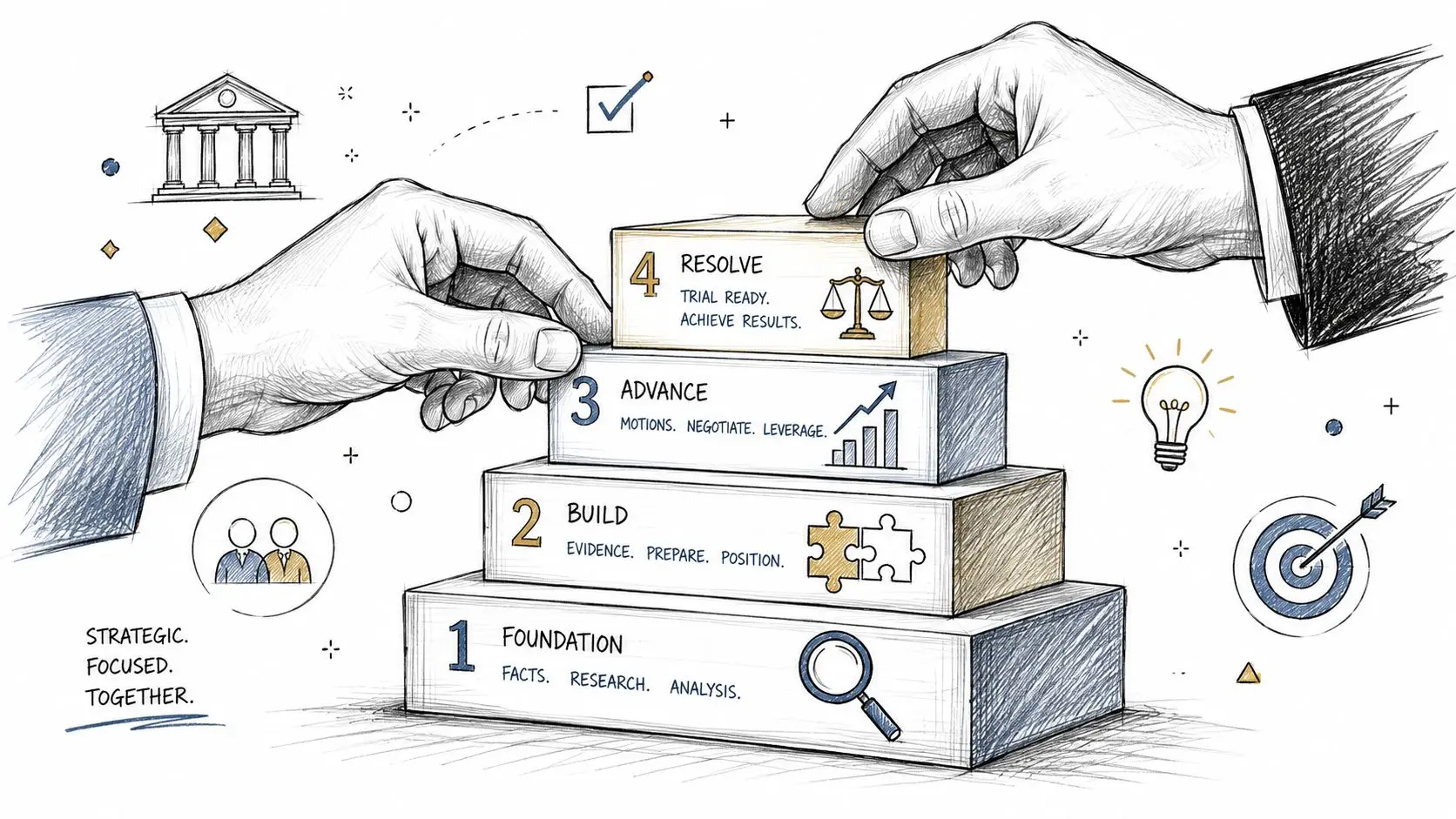
Management holds facts, approvals, commercial pressure points, and timing intelligence that outside counsel can’t manufacture. If those inputs arrive late, the legal strategy becomes slower, noisier, and easier to resist.
Why phased escalation works
Cross-border defendants usually test resolve before they test the merits. They watch whether the claimant is collecting documents, coordinating jurisdictions, and preparing for trial, or merely threatening to settle.
The strategic advantage of preparedness is well documented in the Nature article on litigation readiness and legal operations. Defendants have a higher baseline chance of winning than plaintiffs, more than 93% of international cases never reach trial, and aggressive litigation readiness creates the strongest settlement pressure. If the other side senses that counsel is waiting for settlement, their negotiating power diminishes.
That means a phased plan must signal credible escalation. The phases don’t need theatrical aggression. They need disciplined progression.
A practical escalation sequence
A strong plan often moves through four layers, though the sequence depends on the dispute.
-
Structured demand and evidence preservation
Start with a demand that does more than accuse. It should define the breach, preserve options, set document expectations, and test the opponent’s real decision-maker. -
Targeted pressure on vulnerable points
This may include contractual defaults, guarantor exposure, customer-facing consequences, or time-sensitive transactions. In some matters, immediate attention to bank account restrictions and blockages in Israel becomes central because liquidity pressure can shape negotiation faster than pleadings do. -
Formal proceedings with visible readiness
Filing should communicate preparation, not frustration. The opponent should see that witness planning, document control, and jurisdiction strategy are already underway. -
Recovery-focused execution
At the end of the chain sits the practical objective. In many cases, that means converting legal rights into payment through disciplined commercial debt collection in Israel, enforcement applications, negotiated security, or controlled settlement terms.
Settlement pressure rises when the opponent believes trial preparation is real and enforcement won’t stop at the judgment.
What the client must do during escalation
The legal team can only move as fast as the client’s internal machinery allows. Boards should assign one executive owner and one documentary owner from the start.
Use a simple operating plan:
- Decision authority: Name the person who can approve filings, settlement ranges, and urgent applications.
- Document control: Lock down contracts, messages, board papers, invoices, and financial records.
- Commercial intelligence: Feed counsel updates on financing events, shipment holds, customer complaints, or management changes at the counterparty.
- Communication discipline: Route all external messaging through one approved channel.
- Escalation triggers: Pre-approve what happens if assets move, deadlines expire, or the opponent files first.
Operational note: Every escalation phase should have a clear objective, a decision-maker, and a stop condition.
The client’s role isn’t symbolic. It is part of the influence.
Avoiding Costly Mistakes in Your Israeli Dispute
The most expensive mistake in an Israeli cross-border dispute is treating litigation as a self-contained legal event. It isn’t. It is one instrument inside a broader commercial strategy that must account for enforcement, timing, pressure, and recoverability from the start.
A second mistake is hiring for reassurance instead of execution. Boards need an international litigation attorney who can connect Israeli legal realities with foreign asset risk, service discipline, and commercially intelligent escalation. They also need a fee structure that rewards the right behavior and an internal management process that keeps counsel supplied with fast, usable information.
A third mistake is waiting for clarity that never arrives. Cross-border disputes rarely become simpler with delay. Documents scatter, counterparties reposition, and advantage shrinks.
The recommended strategic path is to seek expert counsel before the dispute hardens into a purely procedural fight. That is how businesses avoid spending heavily to obtain a judgment that cannot be enforced.
Avoid costly mistakes and contact RNC Group now through its contact page if a dispute involving Israel already threatens assets, operations, or board-level decision-making.
This article provides general information only and doesn’t constitute legal advice, a legal opinion, or a substitute for case-specific counsel. Any action or omission based on this material should follow a qualified legal review of the relevant facts, jurisdictions, contracts, and procedural posture.