
A foreign CEO often assumes the global template already covers the exit. In Israel, that assumption can fail at the exact moment control, assets, and influence matter most in 2026.
A partnership dissolution agreement isn’t just a closing document. It is a litigation shield, an asset-control tool, and a cross-border risk map.
Your Dissolution Agreement May Not Protect You in Israel
Does your standard partnership dissolution agreement survive Israeli scrutiny when the other side controls local staff, local accounts, or Israeli real estate? In many cross-border matters, the honest answer is no.
Foreign firms usually import assumptions from New York, London, or Dubai. They expect clean contractual closure, predictable notice mechanics, and limited judicial interference. Israeli law can disrupt that expectation fast, especially when one partner claims bad faith, asks for court intervention, or employs local operational control to exert pressure.
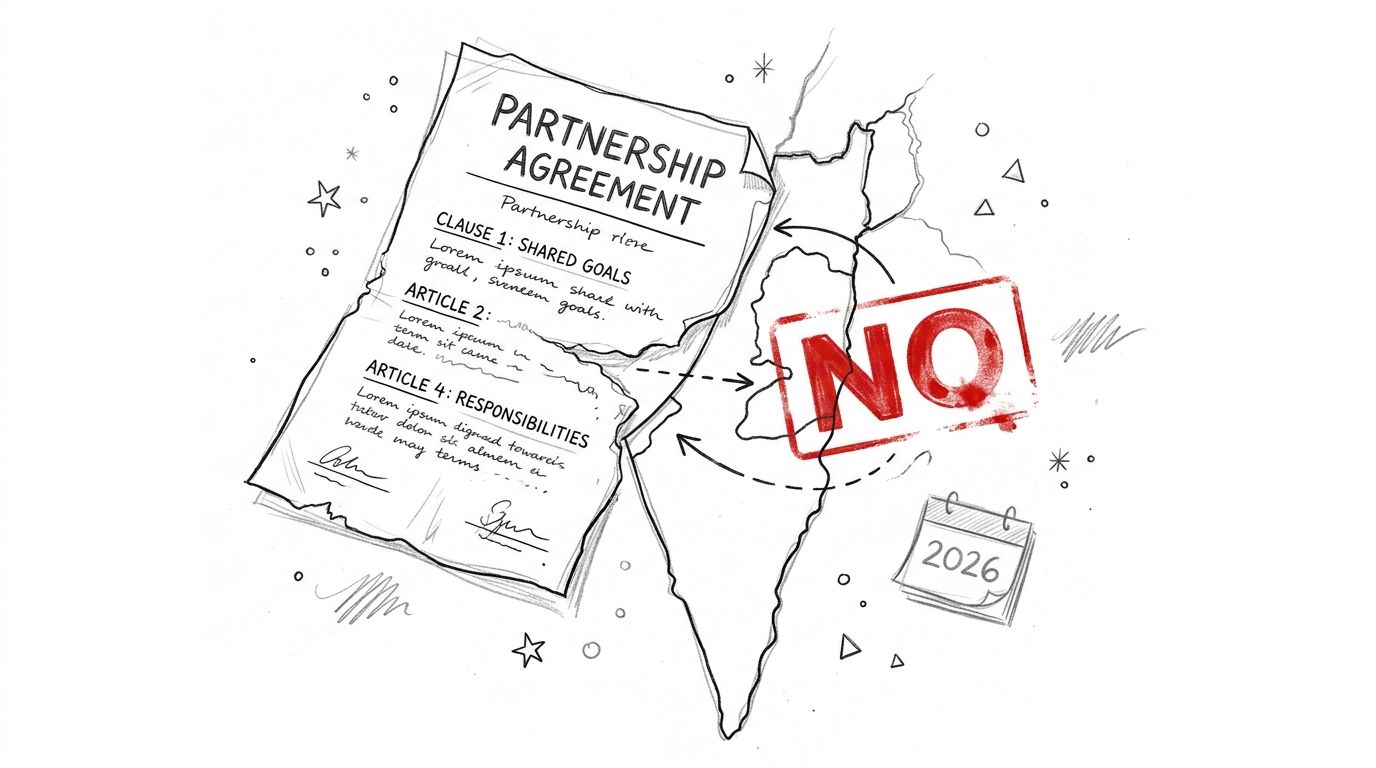
Why foreign templates fail
A foreign template often focuses on economics. Israeli disputes turn on timing, conduct, and enforceability.
Three blind spots appear repeatedly:
- Unilateral exit assumptions: The foreign party assumes no one can end the relationship without a defined vote.
- Court-override risk: The foreign party assumes the contract blocks judicial intervention.
- Local liability drag: The foreign party assumes signature equals closure.
That last point causes the most damage. A signed agreement may end the business relationship on paper while exposure survives in practice through creditor issues, regulatory loose ends, banking friction, or unresolved rights in IP and data.
Practical rule: If Israeli assets or counterparties are involved, the partnership dissolution agreement must be drafted as an enforcement plan, not as a ceremonial separation document.
The Israeli issue international firms miss
Israeli commercial disputes rarely stay inside the four corners of the contract once trust collapses. Partners fight over authority, records, customer access, intellectual property, and who gets to speak for the business during the winding-up phase.
That is why a foreign CEO should treat dissolution in Israel as a controlled separation project. The legal document matters. The surrounding strategy matters more.
Understanding the Israeli Approach to Dissolution
Israel doesn’t treat dissolution as a purely mechanical event. It treats it as a legal process shaped by conduct, fairness, and judicial supervision.
That difference matters immediately for foreign firms that rely on familiar UK or US logic. In the UK, a partnership for an undefined term can be dissolved by a single partner through written notice under the Partnership Act 1890 framework. In the United States, some executives focus on statutory triggers such as the 50% transfer rule within a 12-month period for technical termination in the partnership tax context, as described in this overview of partnership dissolution and termination rules.
Israeli law starts from a different operational reality.
Notice works in Israel, but bad faith can destroy it
Under the Israeli Partnerships Ordinance, if the partnership has no fixed agreed term, a partner may terminate it by notice to the others. However, that right is barred when exercised in bad faith to frustrate the partnership’s commencement or to unlawfully renounce obligations, as explained in this analysis of partner notice under Israeli law.
That qualifier changes everything. The foreign CEO who sends notice at the wrong moment may think the exit is clean. The Israeli partner may answer that the notice itself is abusive because it sabotages launch, financing, customer delivery, or agreed obligations.
The agreement is a strategy document
A strong partnership dissolution agreement in Israel must do more than state who leaves and who pays. It must also define the narrative of good faith.
That means the document should align with actual conduct. If the record shows asset diversion, surprise notice, hidden negotiations, or pressure on employees, the contract won’t repair the damage later.
A foreign firm should assume that every notice, draft, and board instruction may become evidence on motive.
Israeli law keeps the court in the room
Foreign executives often think a tightly drafted agreement removes judicial discretion. That is the wrong assumption in Israel.
A court application can still become a battlefield if one side alleges unfair conduct, deadlock, or practical impossibility. This is especially important when one partner controls local operations and the other controls offshore financing or IP.
For that reason, the correct question isn’t whether the agreement permits dissolution. The correct question is whether the full record supports a defensible dissolution path under Israeli legal standards.
Key Clauses for Cross-Border Dissolution Agreements
A cross-border partnership dissolution agreement should read like a containment plan. If it only allocates assets and recites mutual release language, it is incomplete.
The largest blind spot is post-dissolution exposure. As noted in this discussion of dissolution agreement risk allocation, existing content often ignores the gap between the formal dissolution date and the lingering liability window. Without explicit clauses for future liability indemnification and notice publication to unknown creditors, partners can remain exposed even after the business ends.
Dissolution Agreement Clause Checklist
| Clause Category | Clause Type | Purpose & Cross-Border Consideration |
|---|---|---|
| Core governance | Effective date and trigger mechanics | States exactly when obligations stop, who may issue binding notice, and which approvals remain necessary in Israel and abroad. |
| Economic separation | Asset division | Identifies ownership of cash, receivables, inventory, leases, and local registrations. Israeli operational assets should be listed line by line. |
| Economic separation | Liability allocation | Assigns debt responsibility clearly, including vendor claims, tax exposure, employee claims, and unresolved local service contracts. |
| Risk survival | Future liability indemnification | Protects against debts or claims discovered after closing. This is essential where records, books, or counterparties sit in Israel. |
| Risk survival | Unknown creditor notice clause | Requires publication and documented notification steps so one partner doesn’t inherit hidden exposure later. |
| IP and data | Ownership transfer and use restrictions | Separates code, trade names, customer data, know-how, and local marketing assets. Cross-border businesses should avoid vague joint-use wording. |
| Operational control | Bank account and payment authority | Stops unilateral withdrawals, blocks new liabilities, and defines who may sign during winding up. |
| Dispute control | Interim relief and forum design | Preserves access to court orders, urgent injunctions, or arbitration where asset movement or data misuse becomes a risk. |
| Reputation control | Client and market communications | Prevents conflicting statements to customers, regulators, landlords, and staff. |
| Compliance closeout | Filings and notifications | Allocates responsibility for notices, deregistration, tax finalization, and document retention across jurisdictions. |
What deserves hard drafting
Some clauses should be negotiated aggressively.
- Commercial lease treatment: If the partnership used Israeli premises, the agreement must say who remains liable to the landlord, who delivers possession, and who handles restoration obligations.
- Books and records access: The foreign side should secure immediate copies, not future cooperation promises.
- Payment sequencing: Funds should move only after control items move. That includes passwords, accounting access, customer files, and corporate chops where relevant.
- Mutual releases: They should exclude fraud, concealed liabilities, and obligations that expressly survive.
A useful comparative reference for regional structuring assumptions appears in this guide to UAE Commercial Companies Law. That comparison matters because many international groups use Gulf templates for Middle East ventures, then discover Israeli partnership risk sits on a different legal footing.
Optional clauses that are not optional in practice
Several provisions are often labeled optional. That label is a mistake in Israeli cross-border dissolutions.
Control over transition conduct
Include a standstill on new commitments, staff solicitation, and customer-side blame campaigns. Otherwise, the negotiation can become a race to damage the operating platform before the separation closes.
Authority map during winding up
Specify who may speak to banks, tax advisers, major customers, and counterparties. If authority remains vague, the more aggressive partner usually fills the vacuum.
The safest draft doesn’t assume cooperation. It assumes friction and allocates control accordingly.
Executing the Dissolution Process in Israel
The process in Israel doesn’t start with drafting. It starts with position control.
Israeli law recognizes two primary mechanics for dissolving a partnership: dissolution by partner notice and dissolution by court order. Even if the agreement lists a closed set of dissolution events, a court can still grant dissolution if the agreement doesn’t expressly restrict approaching the court, as explained in this review of dissolution by notice and court order in Israeli law.

Phase one starts before notice
A foreign CEO should first map key operational aspects and exposure. That includes local accounts, signatory rights, employee dependencies, key customers, code repositories, landlord consent issues, and records access.
Then review the partnership agreement against actual conduct. If the contract says one thing and the operating history shows another, the factual record will drive the dispute.
A disciplined first-stage checklist should include:
- Authority audit: Confirm who can bind the partnership today.
- Asset control review: Identify where cash, contracts, data, and credentials sit.
- Notice design: Draft notice language that supports a good-faith record.
- Escalation planning: Prepare for interim applications if the other side reacts aggressively.
Negotiation must follow a control sequence
Most foreign firms negotiate economics too early. That is backwards.
First secure information. Then freeze operational drift. Only then negotiate price, buyout, or split mechanics.
The operational items that move first
- Banking authority: Check who can issue payments, close accounts, or redirect collections.
- Customer messaging: Approve one script and one spokesperson.
- Employee retention risk: Identify staff who can shift value overnight.
- Vendor continuity: Review who may still incur liabilities in the partnership name.
This is also where cross-border operators should think practically about winding-up models in the region. For businesses with parallel Gulf structures, this How to liquidate your business in Dubai reference helps frame how neighboring systems treat closure differently, which often exposes hidden assumptions in multinational exit planning.
Formalizing the agreement is not the finish line
Once terms are agreed, the documentation should sequence deliverables carefully. Signature should not trigger immediate trust.
Use condition-linked obligations. For example, the release should become effective only after records transfer, authority changes, customer notices, and payment completion.
Decision point: If one partner still controls local execution after signing, the transaction hasn’t really closed.
The winding-up period creates the real risk
During winding up, the partnership remains vulnerable to new obligations, mixed messaging, and evidence destruction. The foreign side should assume that unresolved Israeli operational issues can become later claims.
This phase needs active management, not passive monitoring.
What to do during winding up
- Document every communication: Preserve a clean chronology.
- Close authority gaps: Remove old permissions and mandate new signatory rules.
- Notify counterparties carefully: A rushed notice can trigger claims. A delayed notice can preserve liability.
- Control financial instruments: If returned checks or account restrictions become a risk, address them at once through coordinated legal and banking steps.
Israeli real estate partnerships need extra attention. In that area, each partner holds a vested right to seek unilateral dissolution without the others’ consent, and courts may override contractual restrictions after a three-year period from formation, as outlined in this discussion of dissolution in real estate partnerships. A foreign investor who treats a property partnership as contract-locked may find the court sees it differently.
Dissolution Risks in High-Tech and IP-Heavy Partnerships
Standard forms break down fastest in Israeli high-tech disputes. The asset isn’t only cash or equipment. It is code, models, customer data, wallet access, product roadmaps, domain control, and the undocumented know-how inside a founder’s laptop and head.
That changes the entire logic of the partnership dissolution agreement.

A common high-tech failure pattern
A foreign software company partners with an Israeli team. The joint activity holds source code, customer integrations, and AI training materials across several systems. The relationship deteriorates, and one side pushes a quick separation draft built around valuation and mutual release language.
That draft misses the actual battlefield. Who controls repositories today? Who can export the customer database? Who can alter access logs, move tokens, or tell a regulator that the other side misused IP?
The risk is no longer theoretical. Most dissolution guides ignore the rise of forced dissolution linked to cryptocurrency fraud or AI-related intellectual theft, which accounts for over 15% of partnership disputes in high-tech sectors, according to this analysis of modern dissolution disputes. The same source argues that agreements now need emergency escrow mechanisms to prevent asset migration.
Clauses that matter in digital disputes
A high-tech partnership dissolution agreement should include:
- Repository control provisions: Freeze admin rights and create a mirrored evidence set.
- Emergency escrow mechanics: Hold source code keys, tokens, or critical credentials with an agreed neutral mechanism.
- Dispute-triggered arbitration design: Use rapid relief procedures for IP misuse and access fights.
- Data segregation rules: Separate what belongs to the partnership, what belongs to one partner, and what can’t move at all.
- Forensic preservation language: Ban deletion, alteration, and silent migration of digital assets.
A useful comparative lens appears in this PEO Metrics termination clause advice. Although it addresses another contract type, the same drafting lesson applies. Termination language fails when it ignores operational control at the moment of separation.
In Israeli tech disputes, the first party to secure evidence and system control usually shapes the outcome.
The foreign firm’s strategic mistake
International companies often overvalue the final agreement and undervalue interim control. In an IP-heavy split, delay is dangerous. Access rights change in minutes. Evidence disappears faster than paper assets.
So the correct sequence is simple. Freeze, preserve, map ownership, then negotiate.
Choosing Dispute Resolution and Retaining Counsel
When the relationship has already broken down, dispute resolution clauses stop being boilerplate. They become the roadmap for influence.
Foreign executives often default to arbitration because it sounds private and commercial. Sometimes that choice works. Sometimes it strips the party of the speed and coercive tools needed to control Israeli assets or stop damaging conduct.
The right forum depends on the threat
Litigation works better when urgent orders, evidence preservation, or local enforcement matter most. Arbitration works better when confidentiality and specialized decision-making outweigh speed to injunction. Mediation works only when both sides still want a business solution and still respect process.
The mistake is waiting until the conflict explodes.
A practical selection test
- Choose court-focused strategy when accounts, records, premises, or active misconduct require immediate control.
- Choose arbitration-first structure when IP valuation, confidential know-how, or technical accounting issues dominate.
- Choose mediation early only if the counterpart still performs and both sides want a managed separation.
Counsel should enter before the first move
A foreign CEO shouldn’t retain Israeli commercial counsel after the notice goes out. By then, the record may already be compromised.
Counsel should shape the notice, preserve options, and test whether the counterparty is likely to seek court relief. In cross-border dissolutions, that early intervention often decides whether the matter stays commercial or turns into emergency litigation.
The stronger strategic path is proactive. Build the factual record before the conflict narrative hardens. Secure assets before discussing goodwill. Draft the partnership dissolution agreement only after the pressure points are mapped.
Final Checklist and Strategic Next Steps
A partnership dissolution agreement involving Israel should protect control, not just document separation. If the draft doesn’t deal with court risk, future liability, local asset access, and digital control, it is incomplete.

Use this immediate checklist:
- Confirm governing framework: Check whether Israeli law, foreign law, or a split structure applies.
- Test dissolution mechanics: Verify whether notice, court relief, or both remain available.
- Map local assets: Identify accounts, leases, employees, filings, and records in Israel.
- Lock down IP and data: Define ownership, access, and preservation steps before signing.
- Draft survival clauses: Cover indemnities, unknown creditors, and post-closing cooperation.
- Sequence the closing: Link payment, release, authority change, and document transfer in the right order.
- Prepare dispute options: Decide in advance when to mediate, arbitrate, or seek court relief.
A foreign firm that treats Israeli dissolution as a routine template exercise usually loses time first, advantage second, and money last. The disciplined approach is to treat the exit as a controlled legal operation from day one.
Avoid costly mistakes and act before the other side controls the record. For strategic guidance on Israeli partnership disputes, cross-border exits, and high-stakes commercial risk, contact RNC Group now.
This article provides general information only and doesn’t constitute legal advice. It does not replace specific legal analysis, and no reader should rely on it without obtaining advice specific to the relevant facts, documents, and jurisdictions.