
A cross-border estate rarely fails because the will is unclear. It fails because no one can move the assets, satisfy the tax authorities, and convince the banks to release the money at the same time.
That is the key pressure point in cross border inheritance law. A family can have valid documents in one country, a probate file in another, and still sit for months because every institution wants a different proof, in a different format, from a different legal system.
The 2026 question is not which law sounds cleaner on paper. The question is who can collect, pay, and distribute when the deceased lived in one country, owned property in a third, and held accounts in a fourth.
When the Estate Lives in Three Countries at Once
A typical file starts with a simple fact pattern and ends in procedural chaos. The deceased lived in Tel Aviv, kept a bank account in France, held US securities, and left adult children in Israel and the United States. Everyone agrees that the family should inherit, but each institution asks a different question.
The bank asks who has authority. The tax authority asks what was owned, where it was held, and who is liable. The land registry asks for local formalities. Meanwhile, the heirs ask the only practical question that matters.
Practical rule: If no one can move the assets, the estate is not “pending,” it is blocked.
A single-jurisdiction mindset breaks down fast in that setting. A local lawyer may know domestic succession law very well, yet still miss the coordination problem between probate, translation, legalization, and tax clearance. The estate can be valid and still be unusable.
That is why the operational frame matters more than the abstract one. Cross-border succession is really about four functions: identifying the governing law, testing whether the will controls, getting authority to act, and releasing assets. If any one of those steps stalls, the whole administration slows down.
The EU itself treated this as a major policy issue, not a niche dispute. It estimated about 4.5 million deaths a year in the EU, and roughly 1 in 10 successions has an international dimension, with average cross-border estate value at €274,000 and average legal costs at 3%, or around €8,220 per estate on average, according to the EU analysis discussed in the parliamentary material on cross-border succession costs (UK Parliament briefing on cross-border succession costs).
That cost profile explains the core problem. Cross-border inheritance law is not only about who wins. It is about how much time, money, and documentation the family must spend before anyone can touch the estate.
The Core Concepts That Decide Everything Else
Jurisdiction is not the same as governing law
Jurisdiction is the power of a court or authority to deal with the estate. Governing law is the substantive rule set that decides who inherits and on what terms. Those are different questions, and cross-border files fall apart when they get merged.
A court can hear a case yet still apply foreign law. A registry can demand local forms even when a foreign succession rule controls the outcome. That split is why executors often feel trapped in duplicate systems.
Habitual residence, domicile, and situs each do a different job
Under the EU Succession Regulation, the default rule for a cross-border succession is a single applicable law tied to the deceased’s habitual residence at death, and that law governs the succession as a whole, including movable and immovable assets worldwide (EU succession rules summary). That approach reduces fragmentation.
Israel and many common-law systems use different anchors. Israel’s succession framework still looks to the deceased’s last domicile in the domestic sense, while common-law systems often split the analysis between domicile for succession and situs for local assets. The practical effect is simple, one person can be treated differently by different systems at the same time.
Lex successionis decides the estate, but not every local issue
Lex successionis means the law governing succession. It tells the reader, heir, and court which rule set controls the estate itself. It does not automatically erase local property, tax, or filing rules.
The label on the file matters less than the institution that needs to accept it.
That distinction matters because an heir can be fully entitled under the governing succession law and still be unable to register land, release bank funds, or complete local reporting without separate proof. The first task is to identify which rule controls the inheritance. The second task is to identify which authority controls the paperwork.
How Israel, the EU, and Common-Law Systems Pick the Governing Law
A cross-border estate usually fails at the filing stage, not at the level of theory. One registry wants proof of governing law, another bank wants local authority, and a third office wants a document translated and legalized in a form it will accept. The legal question matters, but the operating question decides who can collect assets and move them.
The EU model is relatively structured. The default rule is habitual residence, but the regulation also allows a choice-of-law election in favor of the law of the deceased’s nationality, if that choice is made explicitly and clearly in a will or separate declaration (European Commission guidance on choosing the law of nationality). That election can materially change forced-heirship exposure and the shape of probate, which is why it should be made only after checking how the local assets will be transferred.
Israel sits in a different lane. Domestic succession analysis starts from its own statutory framework, and Israeli practice remains sensitive to whether a foreign element changes the applicable law or the recognition path. For a non-Israeli client, the practical question is whether the Israeli asset can be transferred without a separate local step, because that step often drives timing, cost, and the need for local counsel.
Common-law systems are more fragmented. In the United States, probate is state-based, so a local file may control local assets, while real property or securities held elsewhere can trigger separate administration. Executors often end up filing in more than one place, and every extra filing creates another point where a bank, title company, or transfer agent can slow the estate down.
The carve-outs still matter
The EU Succession Regulation does not cover everything in Europe. Denmark, Ireland, and the United Kingdom sit outside its scope, so cross-border estates touching those jurisdictions still need separate conflict-of-law analysis (cross-border inheritance overview noting EU scope limits).
That single fact changes planning. A family can rely on the EU default for one part of the estate and still need a different analysis for another part. Mixed estates need a jurisdiction-by-jurisdiction map, because banks and land registries do not care that the overall family plan looks tidy on paper.
Choice of law should be used deliberately
A nationality election can help. It can also create friction if the family assumes that one election solves every local issue. Banks, registries, and tax authorities do not treat the election as a master key.
The better approach is to ask three questions before any drafting change. Which law is most likely to control the succession. Which jurisdictions still demand local formalities. Which assets become harder to move if the election is made. Those answers often point in different directions, and the estate plan has to reflect that trade-off.
Forced Heirship and the Limits of a Will
A will sets the direction, but in many civil-law estates it does not control the whole result. Local mandatory succession rules still decide what can pass freely and what must stay inside protected family shares.
That is the point where forced heirship changes the file. In those systems, close relatives may have reserved rights that a will cannot erase, no matter how carefully the document is drafted. Common-law clients are usually the ones caught off guard, because they expect testamentary freedom to be nearly complete.
Why the same will can produce different outcomes
One will can look precise on paper and still fail in part once local mandatory rules are applied. A client may intend to leave everything to one child or a spouse, then discover that the local system still preserves a protected share for other heirs.
The EU guidance on inheritance planning notes that a nationality-based election can change exposure to forced heirship, which is why the drafting choice has consequences before death, not just after it (EU inheritance planning guidance). That is a practical drafting issue, not a theoretical one. It affects how the estate will be administered, which assets remain free to distribute, and how much room the executor has.
Civil-law systems and common-law systems solve different problems
Civil-law systems protect family members through mandatory shares. Common-law systems usually give testators more freedom, but elective-share statutes and marital-property rules still limit complete freedom. The central question is which restrictions apply, and in which jurisdiction they will be enforced.
For executors, the practical test is direct.
- Check the governing law first: A will that works under one system may still be reduced under another.
- Check protected heirs next: Spouses and children often trigger mandatory share issues.
- Check the assets last: Different asset classes can call for different local handling, even when the succession rule is unified.
The value of a nationality election is that it can shift this exposure before death. The risk is that families make the election without checking whether the chosen law and the asset locations can work together. That leaves the document cleaner and the administration harder. For heirs who need to coordinate sale, transfer, or distribution in the United States, it can also affect how quickly they can find Florida inherited property solutions through find Florida inherited property solutions.
Probate and Estate Administration Across Borders
Cross-border administration is slower because the estate must be proved more than once. Courts, banks, and land authorities often want authenticated documents, and often translated ones, before they accept anything from abroad.
A straightforward domestic probate can already take time. A cited California-focused comparison says a straightforward probate may take 9 to 18 months, while international elements can stretch the timeline to 2 to 3 years or more (cross-border probate timing comparison). The reason is not only the law. It is document friction.
The paperwork sequence that usually matters
First, locate the will and any separate choice-of-law declaration. Then gather death certificates, marriage records, birth records, and prior court orders. After that, confirm whether each destination authority wants apostille, legalization, or a local certification path.
Certified translation often becomes the silent bottleneck. One registry may accept a translated set. Another may insist on a specific sworn translator or original paper copies. Banks are often stricter than courts.
The European Certificate of Succession helps heirs prove status across EU member states, and it was built to simplify this exact recognition problem (European Certificate of Succession guidance). It does not eliminate every local step, but it does reduce the number of separate proof exercises inside the EU.
For US real estate, the local path can be different. A practitioner or beneficiary looking for Florida-related inherited property mechanics may find this practical overview useful, find Florida inherited property solutions, because the local transfer problem often sits alongside the inheritance issue itself.
A file is never “ready” until the slowest institution in the chain says it is ready.
That is the point many families miss. Probate may be open, but authority still may not be usable. Administration succeeds only when the documents satisfy the strictest recipient.
Tax Coordination and the Banking Bottleneck
The hard limit in many cross-border estates is not legal entitlement. It is liquidity. A family can know who should inherit and still be unable to pay the tax, satisfy the bank, or release the asset without the right clearance path.
Cross-border estates can face overlapping tax exposure based on situs of assets, residency, and sometimes citizenship. That is why succession law and tax law cannot be handled separately for long. The legal answer and the tax answer often land in different places.
Why banks freeze first and ask questions later
Banks do not want distribution risk. So they often freeze accounts until heirs provide probate documents, tax clearance letters, and, in some cases, apostilled translations. That freeze is not a legal opinion. It is a risk-control decision.
The result is predictable. The estate may own enough value on paper, but no one can access cash to pay professional fees, taxes, or preservation costs. That is why liquidity planning matters as much as inheritance planning.
Reporting duties and sequencing matter
Families with UK or US exposure should expect extra reporting analysis. The UK side can involve foreign-inheritance reporting questions, while the US side can trigger estate-tax analysis tied to residency and asset location. Treaty relief and foreign tax credits can help, but they rarely make the entire burden disappear.
A useful planning lens is to ask which jurisdiction wants information first, which authority will release the money last, and which filing must happen before the others can move. That sequence often decides whether the file stays orderly or stalls.
For practical guidance on foreign-property tax exposure, Browse international property tax guidelines can help frame the conversation before local filings begin.
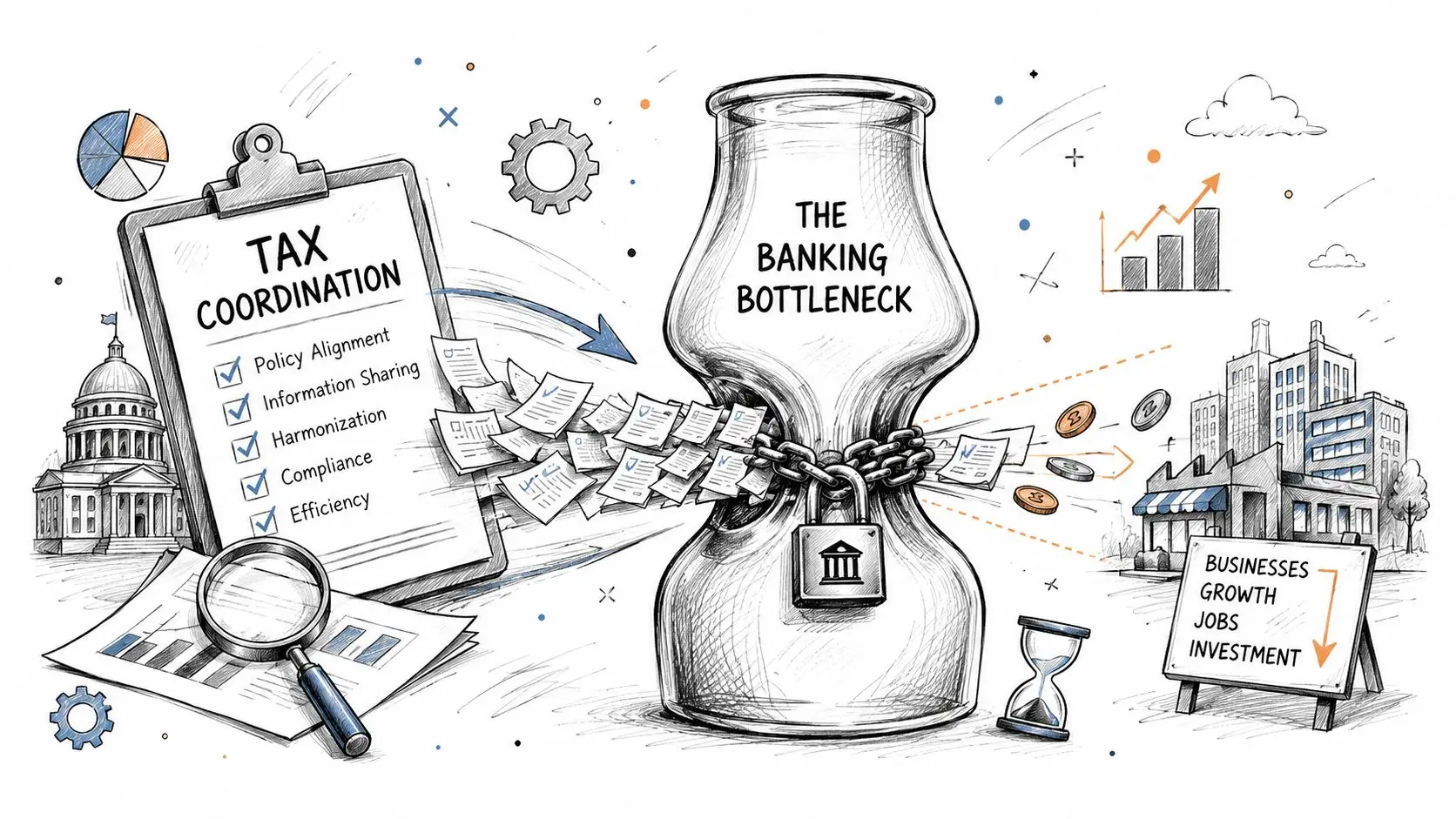
The tax and banking problem is usually the same problem in different clothes. Without a coordinated sequence, the estate has value but no movement.
The Executor and Beneficiary Checklist
Executors should start with authority, not distribution. Confirm the will, identify every jurisdiction touched by assets, and separate assets that need local proof from assets that do not. Then ask whether any bank, land office, or tax authority needs originals rather than scanned copies.
The first steps that save the most time
- Secure the originals: Keep the will, death certificate, civil-status records, and prior court papers together.
- Map the assets: Identify every country where the deceased owned land, accounts, securities, or business interests.
- Check the authority path: Decide where probate, ancillary administration, or a succession certificate is needed.
- Confirm tax timing: Ask each relevant tax authority what it wants before funds can move.
- Track translations early: Do not wait until a bank rejects the file to commission certified translations.
Beneficiaries should stay cautious when families try to settle everything informally. A private agreement can help coordinate expectations, but it cannot always replace statutory filing or local authority. If someone asks a beneficiary to sign away rights before counsel reviews the governing law, that should trigger a pause.
Practical rule: Never trade speed for uncertainty when the estate crosses borders.
Specialized counsel becomes necessary when one jurisdiction uses a different succession rule, when banks demand local proof, when tax exposure may exist in more than one country, or when a foreign will must be recognized in Israel or elsewhere. At that point, a general practitioner can still assist, but the file needs someone who understands document sequencing, recognition issues, and transfer mechanics.
RNC Group is one option for Israeli-side coordination where cross-border commercial assets, blocked accounts, or document enforcement issues overlap with an estate file. The useful value there is not abstract expertise. It is the ability to manage the interface between local institutions and foreign documents.
Frequently Asked Questions and What to Do Next
Can one will cover multiple jurisdictions? Sometimes, yes, but only if the governing law, formal validity, and local recognition rules all line up. If the estate touches multiple systems, a single will may still need separate local steps.
Will a foreign court order be recognized in Israel? Possibly, but recognition is not automatic. The file needs a local analysis of the order, the underlying procedure, and any competing Israeli formalities.
Should a family choose the EU default law or a nationality election? The answer depends on where the assets sit, which heirs are protected by mandatory rules, and how much local administration the family can tolerate. A choice should be made before death, and only after checking the practical consequences.
What if a bank refuses to release funds without a local court order? Do not argue only from entitlement. Ask what document the bank will accept, what tax clearance it wants, and whether an apostilled translation will move the file faster than litigation.
The most expensive mistake in cross border inheritance law is usually delay, not doctrine. Families lose time while they search for the “right” forum, when the main problem is coordination across forums.
If the estate already spans Israel and more than one foreign jurisdiction, the recommended next step is to review the document chain, the tax sequence, and the bank-release requirements before any beneficiary signs or any distribution begins. To avoid costly mistakes and contact RNC Group now, use this contact page.
Disclaimer: This article provides general information only and does not constitute legal, tax, or fiduciary advice. Cross-border estates turn on their specific facts, and readers should obtain jurisdiction-specific advice before acting on any document, filing, or distribution decision.