
A franchise compliance lawyer’s hardest job in 2026 is not drafting the agreement. It is keeping the sale alive while timing, registration, and disclosure rules keep moving under the brand. In the U.S., the FTC Franchise Rule still requires a disclosure document with 23 specific items, and the pre-sale clock still matters more than most founders want to admit, because a late delivery can poison an otherwise clean deal. FTC Franchise Rule
For Israeli licensors and other cross-border brands, that risk gets sharper. The legal failure usually starts before signature, when the seller misses a disclosure deadline, ignores a broker-registration step, or lets a state filing lapse while commercial talks keep moving. The smart response is simple, even if the execution is not, treat franchise compliance as an operating system, not a document.
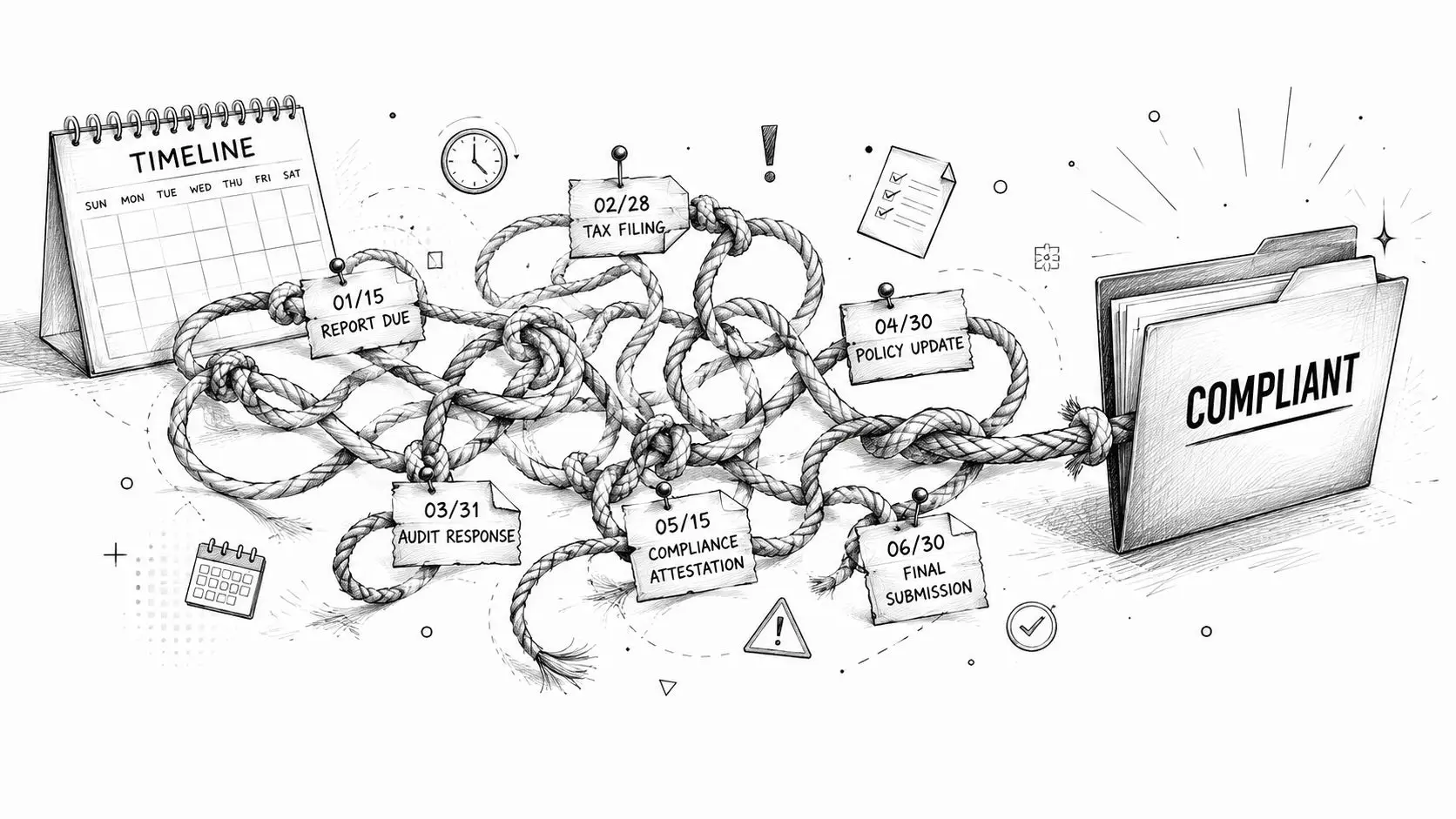
Why Franchise Compliance Is a Timing Problem Before It Is a Drafting Problem
The biggest mistake in franchise expansion is thinking the contract is the danger point. It usually is not. The core exposure sits in the calendar, because the FTC still requires a 14-day pre-sale disclosure window, and that window has to line up with the state filing posture, the broker record, and the version of the FDD in circulation. FTC Franchise Rule
That is why a franchise compliance lawyer earns the fee before anyone signs anything. The lawyer has to control the sequence, not just the wording. If the FDD is ready but the state filing is not, the brand can still stumble. If the broker is active but not properly registered, the deal team can create a problem that contract language will not cure.
The compliance calendar runs beside the deal calendar
Commercial teams usually negotiate first and clean up later. Franchise law punishes that habit. Delivery timing, local registration, advertising review, and version control all move on parallel tracks, so one missed date can make the whole sale unstable.
Practical rule: If the team cannot show when the disclosure went out, who reviewed it, and which jurisdiction controls the offer, the file is not ready.
That is also why international brands need a broader lens. A U.S. framework gives the baseline, but a cross-border brand still has to adapt disclosure and control systems for each market. The lawyer’s job is to keep the commercial launch from outrunning legal readiness.
What this article focuses on
The useful questions are practical. Which tasks belong in the compliance lane. Which ones belong to local counsel. Which controls must sit with one central lawyer. And which failures keep repeating because nobody owns the process. Those are the issues that matter in real franchise expansion, especially when the brand is entering new U.S. states or foreign markets at the same time.
Defining the Role of a Franchise Compliance Lawyer
The FTC’s Franchise Rule gives the job its legal frame. It requires the FDD to disclose 23 specific items about the offer, the franchisor’s leadership, and other franchisees, and it has been the core reference point for modern U.S. franchise disclosure practice in its current form. The rule itself is set out in the FTC Franchise Rule.
That structure tells you what the lawyer does. A serious franchise compliance lawyer does not just clean up wording. The lawyer checks whether the FDD, the franchise agreement, the financial performance language, and the sale process all match the governing rule set. The work is systems control, not document production.
The recurring review list
The baseline review usually covers the FDD, the franchise agreement, financial performance representations, broker materials, state registrations, renewal mechanics, and transfer language. The lawyer also looks for internal inconsistency, because a clean clause in one document can still conflict with disclosure elsewhere. That is where many brands get hurt.
The lawyer also has to know when the work stops being compliance work. Pure sales strategy belongs to the business team. Negotiation psychology belongs to the commercial lead. A litigation-only lawyer may enter after a dispute begins, but that comes too late to prevent a bad filing or a late delivery.
What the role is not
The role is not a branding exercise. It is not a broker function. It is not a one-time transaction clean-up. The lawyer’s value comes from spotting the points where the offer, the filings, and the timing all need to match before the brand goes live.
A compliance file should read like one coherent system, not like separate documents written by separate people.
That distinction matters because franchise risk often hides in the gaps between documents. A lawyer who tracks those gaps becomes an operational asset. A lawyer who only reviews contracts becomes a cost.
The Five Core Disclosure Categories as Compliance Workstreams
The Franchise Rule organizes mandatory disclosures into five core categories, the franchisor and franchise system, financial viability, costs of purchase and operation, relationship terms, and the names and addresses of current franchisees who can independently verify the franchisor’s claims. Franchise disclosure categories
That framework is useful because each category becomes its own workstream. The smart way to run compliance is to treat each bucket as a separate clock, with different triggers and different failure modes. If one clock drifts, the whole offer can become unreliable.
Why each bucket needs its own cadence
The first bucket, the franchisor and franchise system, is where the brand’s structure and operating model have to stay current. The second, financial viability, needs fresh numbers and careful substantiation. The third, costs of purchase and operation, must track the commercial package the buyer is about to assume.
The fourth bucket, relationship terms, is where renewal, transfer, territory, and control issues live. The fifth bucket, current franchisee contact details, matters because those contacts let buyers verify claims independently. If the list is stale, the buyer loses a meaningful diligence path.
A useful operating model
A compliance lawyer should map each category to a named owner and a review date. The legal team should not wait for the annual update to discover that a restriction changed, a cost shifted, or a territory promise no longer matches the system. That creates avoidable drift.
| Workstream | What it covers | Main risk if ignored |
|---|---|---|
| System profile | Brand, structure, leadership | Inconsistent disclosures |
| Financial viability | Financial statements, substantiation | Outdated or incomplete support |
| Purchase and operating costs | Initial and ongoing costs | Understated buyer burden |
| Relationship terms | Renewal, transfer, territory | Contract and disclosure mismatch |
| Current franchisees | Contact list and verification path | Broken diligence trail |
The core lesson is straightforward. Compliance is not one filing. It is five parallel reviews that keep moving while the franchise expands.
Cross-Border Compliance for Israeli Licensors Expanding Abroad
Israeli licensors often underestimate how quickly compliance becomes multi-jurisdictional. The U.S. adds state registration layers and broker-filing sensitivity. Europe adds pre-contractual information duties and local rule variations. APAC markets such as China, Japan, and Australia add their own disclosure and contract expectations. One lawyer cannot safely improvise across all of that.
The right model is a central compliance lead with local counsel in each target market. That central lead sets policy, controls the master file, and keeps the version history clean. Local counsel then pressure-tests the offer against local filing, language, and advertising rules.
Where central control matters most
The core controls should stay centralized. That includes the master FDD logic, approval rights over advertising language, the disclosure calendar, and the escalation plan when a state or market changes its rules. If those controls fragment, the brand starts creating inconsistent offers.
The FTC guide also makes clear that the FDD must disclose the business experience of specified officers and directors over the last five years, territory and sales restrictions, and trademark-registration status for principal marks, which means every offer needs a jurisdiction-appropriate clause-by-clause check before it goes out. FTC compliance guide
The case for local counsel
Local counsel is not optional where filing, language, or registration questions change by jurisdiction. That is especially true when a foreign brand enters the U.S. for the first time, or when a U.S. brand expands into a new state regime with its own process. The central lawyer should never assume a local step is cosmetic.
The same logic applies in reverse. A brand that starts in Israel and moves into the U.S., the EU, or APAC needs one person watching the global architecture. Otherwise, the team gets a patchwork of partial answers.
The strongest structure is not full delegation, it is controlled delegation.
For a practical reference point on building the wider legal search around that structure, a firm or in-house team can also find a law firm SEO partner when it needs targeted visibility for a niche franchise practice. That is a marketing issue, not a compliance fix, but the distinction matters.
Audit and Remediation Workflows That Actually Work
A working compliance program needs a rhythm. Quarterly internal review, annual FDD refresh, and immediate escalation when a new state or market enters the system. Anything less turns the brand into a responder, not a controller.
One brand learned this the hard way after missing the disclosure window on a signed deal. The commercial team had advanced the relationship, but the paperwork moved too late. The practical fix was not a better argument, it was a tighter pre-sale workflow, with the compliance lawyer controlling the release of the disclosure file before any commitment went out.
What a real remediation playbook looks like
A second failure pattern appears when a broker acts in a state without the right registration support. That does not stay a paperwork issue for long. It can trigger notices, hearings, and a long clean-up process that costs more than the original filing ever would have.
A third scenario involves stale financials. A foreign brand can look ready on paper and still fail if the financial disclosure is out of date on the sale date. The compliance lawyer should have already built the annual update rule, the sign-off protocol, and the hold notice that stops sales until the file is current.
The first 30 days after an audit finding matter most. The lawyer should separate the issue into three questions, what failed, who approved it, and what must change before the next offer. That keeps remediation from turning into a blame exercise.
Remediation rule: Fix the process first, then fix the file.
A strong remediation memo should also be plain enough for the business team to use. If sales, finance, and operations cannot follow it, the brand will repeat the same failure. That is why audit response should end with an operating checklist, not just a legal memo.
Choosing the Right Counsel and the Right Engagement Model
The market for franchise legal services is expanding, but analysts do not agree on the base size. One estimate places the global franchise legal services market at about USD 0.33 billion in 2024, projected to reach USD 0.78 billion by 2033 at roughly 11.5% CAGR, while another puts it at USD 2.5 billion in 2025 with growth near 7% CAGR through 2033. Franchise legal services market research
That divergence tells you something useful. The category is still maturing, and the best engagement model is usually the one that keeps timing disciplined and accountability clear. For many mid-size Israeli brands, a boutique franchise team plus local counsel wins on speed and cost predictability.
A quick comparison of engagement models
| Model | Strength | Main Weakness | Best Fit |
|---|---|---|---|
| Large U.S. full-service firm | Deep bench, broad coverage | Slower and less cost-predictable | Very large, multi-practice matters |
| U.S. franchise boutique | Focused knowledge, faster turnaround | May need outside support abroad | Mid-size franchisors and licensors |
| Central compliance lead plus local counsel | Consistent policy, strong timing control | Needs disciplined coordination | Cross-border expansion with multiple filings |
That last model is usually the most defensible for Israeli companies expanding abroad. It keeps the master risk view in one place while letting local lawyers handle local law. It also makes it easier to assign blame when something slips, which is often exactly what a brand needs to stop repeat failures.
How to use counsel intelligently
The better question is not who has the biggest name. It is who will keep the offer clean, the calendar current, and the filings aligned. That is where a franchise compliance lawyer earns trust.
For firms that want a broader commercial and cross-border risk lens, RNC Group is one example of a legal practice that works across international commercial agreements and crisis response, which can matter when franchise compliance overlaps with contract disputes or expansion pressure. It is not a substitute for local filing counsel, but it can serve as the central strategic layer.
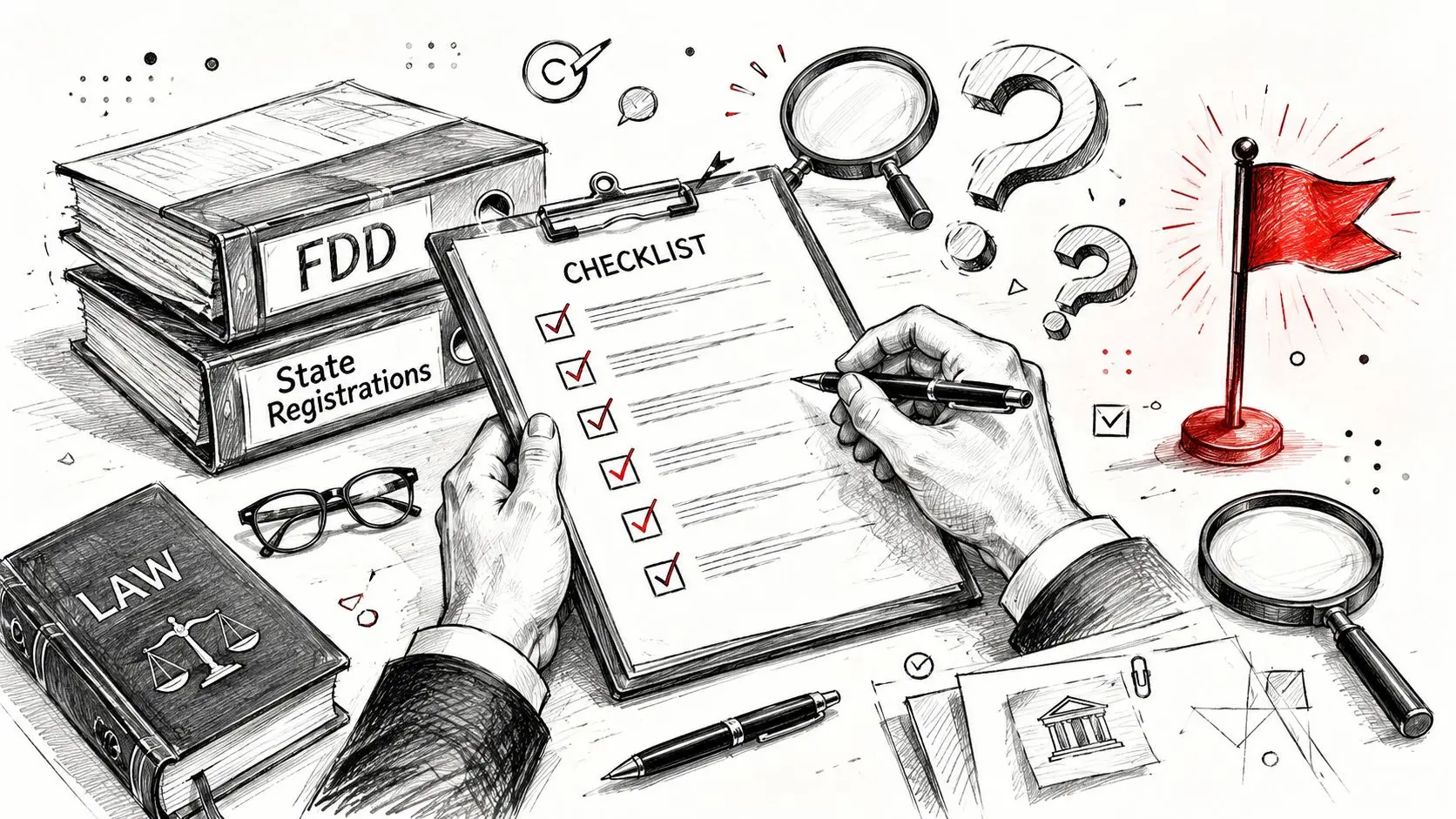
Engagement Checklist and Red Flags When Hiring Counsel
A franchisor should interview counsel like it is buying a control system, not a logo. Ask for recent FDDs the lawyer has handled, the jurisdictions covered, and the process used to keep filings current. Then ask how the lawyer tracks broker filings, renewal dates, and state-specific changes.
Questions and documents to request
- Recent matters: Ask which FDD updates the lawyer handled in the last cycle and which states or countries were involved.
- Tracking process: Ask how the lawyer monitors state registrations, broker filings, and annual update deadlines.
- Samples: Request sample FDD markups, sample audit reports, and a redacted registration list.
- Coordination protocol: Ask how the lawyer works with local counsel when the brand enters a new market.
Red flags that should end the discussion
- No annual update process: If the lawyer cannot describe a documented refresh cycle, the process is weak.
- No broker-tracking method: If broker filings live in email inboxes, the system will fail.
- No cross-border protocol: If the lawyer has no coordination plan for local counsel, the global file will drift.
- No audit response model: If there is no remediation playbook, every problem becomes a crisis.
The franchisor side needs a hard look too. A competent lawyer should flag mismatched outlet data, missing renewal disclosures, and trademark coverage gaps in target markets during the first review pass. Those are not minor issues.
For buyers comparing franchise opportunities, even a consumer-facing search like find a gym franchise to buy still benefits from the same discipline, because the legal package behind the offer matters more than the marketing language. The right counsel should make that obvious fast.
Next Steps and Risk Outlook for 2026
The best next move is not another redraft. It is governance. Appoint one central compliance lead, calendar the annual FDD refresh and every state renewal now, and build a one-page dashboard that tracks FDD version, broker registrations, and audit findings by jurisdiction.
That structure matters more in 2026 because timing failures are still the easiest way to break a franchise rollout. A document-only approach invites missed deadlines, stale filings, and avoidable disputes. The strategic path is to treat franchise compliance as a named, ongoing program, not a one-off legal deliverable.
RNC Group advises Israeli and cross-border businesses on franchise agreements, commercial expansion, and crisis response when timing or disclosure failures threaten a deal. If the next phase of growth includes new jurisdictions, the firm can help structure the compliance layer before the file becomes a problem. Visit RNC Group to discuss the expansion plan.
Disclaimer: This article provides general information only and does not constitute legal advice. Franchise rules, filing requirements, and disclosure duties change by jurisdiction and by deal structure, so any business should obtain specific advice before acting on this material.