
A breach of warranty claim rarely turns on the promise alone. It usually turns on who documented the defect first, who gave notice clearly, and who can prove the loss with evidence that survives cross-examination.
That is why these disputes often feel counterintuitive. In both M&A and goods cases, the winning side is usually the side that treated the claim like an evidentiary record from day one, not a complaint written after the business damage had already spread.
Why Most Breach of Warranty Claims Fail Before Trial
The first mistake is assuming the breach speaks for itself. It doesn’t. A tribunal or court still needs proof of what warranty existed, how the facts departed from it, when notice went out, and why the loss followed from that breach.
The claim usually dies in the paperwork, not the contract
In commercial disputes, the contract language often looks strong enough on its face. The weak point appears later, when the claimant cannot tie the alleged promise to the transaction record, or cannot show that the defect was identified in time. That problem is especially acute when the buyer waits to collect evidence until the relationship has already turned hostile.
Practical rule: the best warranty file is built before anyone starts posturing for litigation.
Timing matters because breach-of-warranty disputes often surface early. Aon’s claims study found that claims were made on 22% of policies placed between 2013 and 2017, and that the majority of alleged breaches, 63%, were filed within 12 months after close. The same study reported that notifications rose from 18.6% on 2014-issued policies to 25.3% on 2016-issued policies. Aon’s 2019 claims study shows why a party that waits too long often loses advantage before the merits are even tested.
The second mistake is overestimating the power of a general complaint. “The business underperformed” is not the same thing as a breached warranty. The claimant has to identify a specific mismatch, a specific notice path, and a specific loss mechanism.
What makes these cases hard from the start
Cross-border matters add another layer. The seller may argue that the warranty was limited by the transaction documents, while the buyer may be forced to prove the claim across different languages, accounting standards, and disclosure conventions. That is why the strongest files read like an audit trail, not a grievance memo.
The market data reinforces that point. Aon reported more than $525 million in total loss recognized, an average claim payment of $10.7 million in 2019, and 26% of all claims paid that year exceeded $10 million. Those numbers show why process failures matter so much. Once a seller spots a notice defect, or a valuation gap, the case can become much harder to settle on favorable terms.
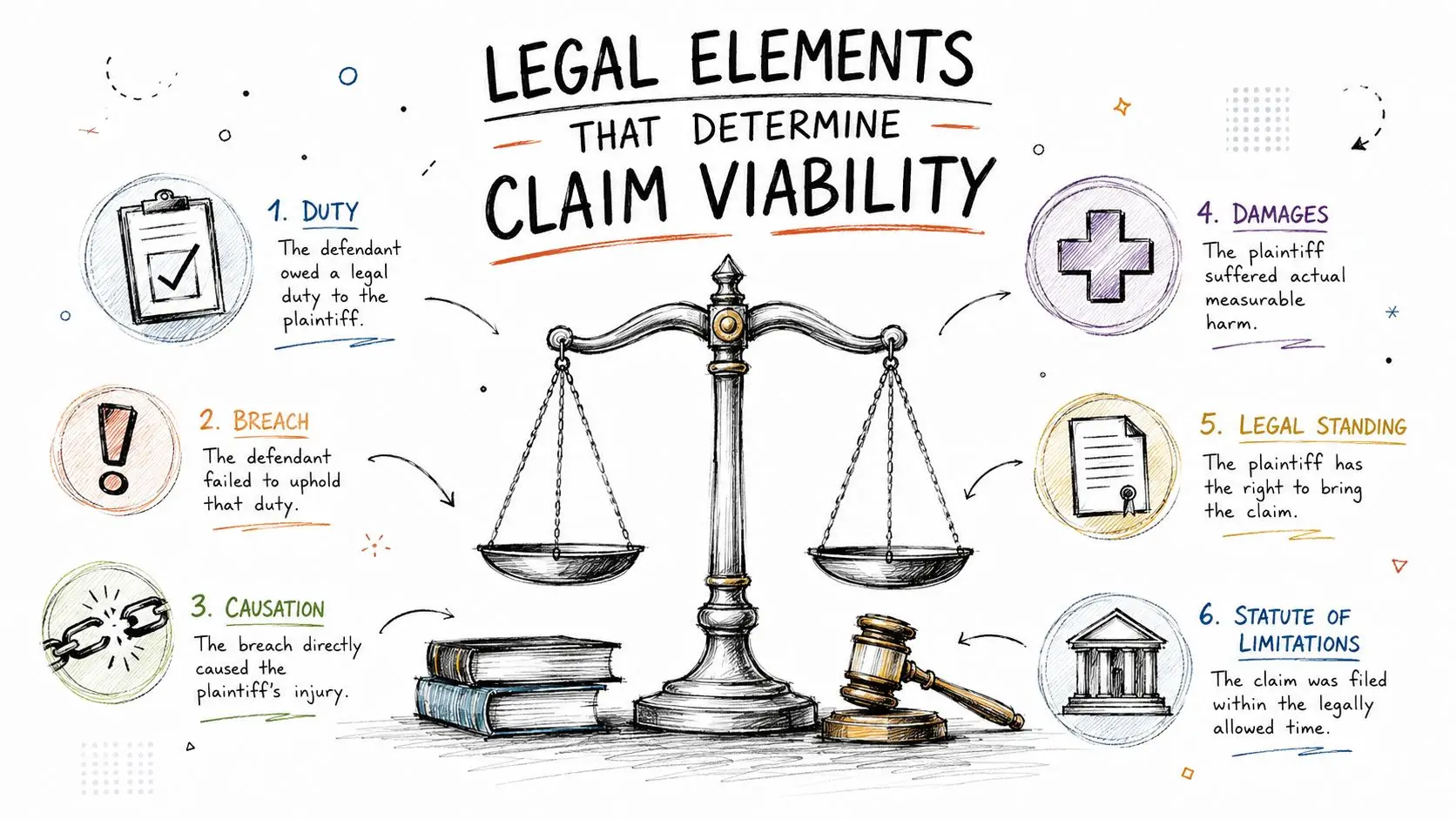
Legal Elements That Determine Claim Viability
A viable breach of warranty claim usually stands or falls on four proof points. The claimant must show a warranty existed, the goods or target did not conform, notice was timely, and damages followed from the breach. Miss one of those, and the claim weakens fast.
Express and implied warranties work differently
An express warranty comes from a seller’s affirmation of fact, description, or promise. It must become part of the basis of the bargain, which is why vague sales talk often fails. If the statement is too general, or if the buyer cannot show reliance or transaction-linked adoption, the warranty may not be enforceable.
An implied warranty works differently. It arises by law, often around merchantability or fitness for a particular purpose. In practice, that means the seller can create exposure even without a written promise, provided the statutory conditions are met.
For commercial goods, courts and UCC-style regimes still care about the same core sequence. The seller makes the promise, the goods fail to conform, the buyer gives notice, and the buyer proves loss. That sequence is why product files matter so much.
Software-heavy products change the breach analysis
Modern disputes are harder when goods depend on firmware, embedded software, updates, or service support. The legal fight often shifts to whether the promise covered performance over time or only freedom from defects at delivery. That distinction affects accrual, notice, and the date the breach is said to have occurred.
A practical file should include purchase records, product literature, acceptance materials, inspection notes, and any written notice sent to the seller. Those records matter because they help establish the promise, the nonconformity, and the transaction chain. They also help answer the question courts ask constantly, which is whether the defect caused a measurable loss or just an operational annoyance.
A warranty claim rarely succeeds on a theory alone. It succeeds when the record links the promise, the failure, and the financial impact.
Claims Data Reveals Where Disputes Actually Cluster
Warranty disputes are not evenly spread across all representations. They cluster around a few predictable categories, especially tax, financial statements, and deal-specific disclosure. That pattern matters because those are the areas where buyers should preserve evidence earliest and sellers should expect the most scrutiny.
The categories that create the most exposure
Aon’s EMEA claims analysis found that tax was the number-one breach type by frequency, followed by financial statements, litigation, compliance with laws, disclosure of information, and material contracts. It also reported that financial-statement breaches represented the highest proportion of loss at 27%. Aon’s EMEA breach-types analysis shows that the market keeps returning to the same fault lines.
Howden’s EMEA claims report found that 47% of all breaches stemmed from financial statements and tax warranties combined. It also reported that material contracts, litigation, and employment warranties together made up 37% of notifications. Those figures tell deal teams where the valuation risk concentrates, and they explain why those warranties need especially careful drafting and disclosure support.
| Breach of Warranty Claim Patterns by Category and Timing | |||
|---|---|---|---|
| Claim Category | Frequency Rank | Loss Proportion | Typical Notification Window |
| Tax | Number one by frequency in Aon’s EMEA analysis | Not separately quantified in the verified data | Often within the first 18 months, based on the timing cluster below |
| Financial statements | High frequency, second in the Aon sequence | 27% of loss | Often within the first 18 months |
| Litigation, compliance, disclosure, material contracts | Follow the first two categories | Not separately quantified in the verified data | Often within the first 18 months |
| Financial statements and tax combined | Combined exposure category | 47% of all breaches in Howden’s EMEA report | Usually within 18 months |
| Material contracts, litigation, employment | Notification cluster | 37% of notifications combined | Usually within 18 months |
Timing is part of the merits
Howden reported that notifications were most often made within 18 months. Its timing breakdown showed 37% in 0 to 6 months, 28% in 6 to 12 months, 25% in 12 to 18 months, 5% in 18 to 24 months, and 4% after 24 months. That pattern is useful for both sides, because it tells them when to expect pressure and when silence becomes strategically meaningful.
The practical implication is simple. Buyers should preserve accounting records, board materials, and disclosure schedules immediately after signing or closing. Sellers should do the same, because a later notice often turns on what was already in the record at the time of completion.
Building the Evidentiary Foundation for Success
The most common notice failure is vagueness. Many contracts require written notice that identifies the nature of the breach with enough specificity for the seller to understand the claim, and some clauses also require the amount claimed if practicable. UK SPA guidance makes that expectation plain. Pinsent Masons’ guidance on warranty claims is useful because it reflects the drafting standard many sellers now enforce.
Notice has to do real work
A notice letter should identify the warranty provision, the factual mismatch, the affected entity or product, and the loss theory. It should not read like a holding email or a commercial complaint. A vague allegation can fail even when the underlying defect is real.
Useful standard: write the notice so the other side can investigate without guessing what happened.
The evidentiary package should be built around documents, not impressions. That means contract versions, disclosure schedules, purchase orders, invoices, inspection reports, test results, email chains, board decks, and the first written notice to the seller. Those items help prove that the seller made the promise, the promise was breached, and the buyer reacted in a legally recognizable way.
Damages need a valuation story
In cross-border M&A and commercial-contract disputes, damages are usually measured as a difference-in-value loss. The claimant has to show the value expected if the warranties were true, minus the value received after the breach. A valuation model, forensic accounting, and contemporaneous disclosure records often carry more weight than a narrative about disappointment.
That point is critical because some claims are easy to state but hard to monetize. A discrete mismatch, such as an undisclosed liability or inaccurate financial statement, can often be converted into a specific valuation haircut or indemnifiable loss. Broader complaints about poor performance often cannot.
For a disciplined evidence review, many counsel teams use a structured assessment process before they send notice or escalate. One useful example is uncover the truth in 2026, because it reflects how early fact triage can shape the rest of the dispute.
Common Defenses and How to Preempt Them
Sellers usually fight warranty claims on familiar ground. They argue that the promise was too general to count, that the goods matched the contract at delivery, that notice was late or vague, or that the damages are speculative. Each defense can be weakened if the claimant builds the right file early.
The usual defenses
If the seller says the warranty was only marketing language, the claimant needs the signed contract, the product description, the email record, or the disclosure schedule that turned the statement into a bargain term. If the seller says the goods conformed at delivery, the claimant needs inspection data, expert testing, or contemporaneous complaint records showing that the defect existed when it mattered.
If the seller attacks notice, the claimant should be ready with dated correspondence and a written chronology. If the seller attacks damages, the claimant needs a valuation bridge, repair invoices, replacement costs, or a reasoned explanation of lost value tied to the breach.
Cross-border disputes add procedural friction
Israeli and international transactions can layer in jurisdiction, choice-of-law, and multilingual interpretation issues. A warranty sentence that looks clear in one language can carry a different commercial meaning in another. That is why the drafting file and the translation file should be managed together, not separately.

A seller will also test whether the buyer acted consistently after discovery. If the buyer kept trading, kept accepting deliveries, or kept quiet while gathering advantage, that sequence can affect credibility. The better response is usually controlled, documented, and immediate.
Strategic Action Plan for Claimants and Defendants
Claimants should move in phases. First, preserve the documents, the product data, the disclosure records, and the communications that expose the mismatch. Next, draft notice with precision, then align valuation support with the legal theory before the dispute hardens.
Defendants should do the same kind of triage, but from the opposite direction. They should test whether the warranty exists at all, whether the notice complied with the contract, and whether the claimed loss is traceable to the alleged breach. That review protects settlement negotiation power and prevents unnecessary admissions.
The practical sequence on both sides
- Preserve immediately. Freeze the contract set, disclosure schedules, emails, board materials, and technical records.
- Map the warranty language. Identify the exact clause, qualifier, disclosure carve-out, and notice requirement.
- Test causation early. Separate genuine breach loss from ordinary business underperformance.
- Engage valuation support. Build the numbers before the other side does.
- Control communications. Every letter should assume it may later be read by a judge, insurer, or counterparty.
The winning side usually narrows the dispute before it expands into a full commercial crisis.
That discipline matters in regulated or bank-sensitive matters too. Even outside warranty litigation, institutions often react first and investigate later, as seen in the broader banking debates reflected in banks challenge new CRA rules. The same caution applies when a warranty dispute could spill into financing, covenants, or continuity planning.
Contract Drafting and Risk Mitigation Strategies
The best warranty dispute is the one that never becomes one. That starts with drafting that defines the scope of the warranties, the disclosure mechanics, the notice format, and the valuation method for any future claim. Ambiguity here usually becomes litigation later.
Draft for the claim you do not want to litigate
Warranty language should say what is covered and what is not. It should also define how disclosures work, how notices must be served, and what the buyer must include in a claim letter. If the parties can agree on the valuation standard in advance, they reduce a major source of post-closing dispute.
Cross-border deals need extra care. Choice-of-law clauses, jurisdiction clauses, and multilingual drafting should be aligned, not treated as boilerplate. If the transaction involves Israeli counterparties, foreign counterparties, or translated schedules, the translation should preserve commercial meaning, not just literal wording.
Prevention steps that actually reduce exposure
- Use precise scope definitions. Tie each warranty to a known risk area, not a catch-all phrase.
- Set written notice mechanics. State where notice goes, what it must contain, and who must receive it.
- Coordinate disclosure schedules. Make sure the schedules are complete, consistent, and version-controlled.
- Address valuation methodology. Decide whether a future claim uses difference-in-value, repair cost, or another agreed metric.
- Match insurance to the drafting. Warranty and indemnity insurance only helps when the policy language and the SPA language work together.
The parties that spend time on these points usually spend less time in disputes later. That is especially true in M&A, where an incomplete disclosure schedule or a loosely worded qualifier can turn a manageable issue into a high-value claim.
RNC Group advises Israeli and international clients on high-stakes commercial disputes, cross-border transactions, and warranty-risk planning with the same disciplined approach reflected here. For support on a breach of warranty claim, contract drafting, or a dispute that has already escalated, visit RNC Group and contact the firm today.
The information in this article is general in nature and does not constitute legal advice, formal opinion, or a substitute for advice on specific facts. Legal outcomes depend on contract wording, governing law, evidence, and jurisdiction, so readers should obtain advice before acting on any warranty dispute.