
A routine contract can become a cash crisis overnight in 2026. A bank notice, an unclear earn-out formula, or a delayed demand letter can change control before management understands the trigger.
The usual assumption is wrong. Business legal advice isn’t document drafting. It’s the sequencing of containment, evidence, negotiation, and escalation. Courts and media remain available, but they should serve a strategy rather than replace one.
The global legal services market reached about $790.14 billion in 2024 and may reach $1.025 trillion by 2029, reflecting a 5.35% CAGR, according to this 2026 legal-services market analysis. Corporate and commercial law represented 32.69% of global legal-services revenue in 2025, while large businesses generated 46.26% of end-user demand, according to the same analysis.
Why Business Legal Advice Decides Outcomes in 2026
Business legal advice now determines how quickly a company contains risk, maintains its position, and reaches a workable outcome. Cross-border pressure reaches ordinary operating decisions. A multinational with Israeli suppliers, data, employees, assets, or customers may face contract, privacy, banking, and enforcement issues at the same time.
The first legal question is practical: What must management protect today, and what can wait until tomorrow? That answer sets the order of action, controls cost, and reduces the chance that a manageable issue becomes a court-driven crisis.
A threatened claim may require evidence preservation, privilege protection, insurer notice, cash stabilization, and a measured letter before proceedings begin. A returned check may require banking intervention and debt-enforcement planning in parallel. Counsel should sequence those actions around the business objective, not begin with document production.
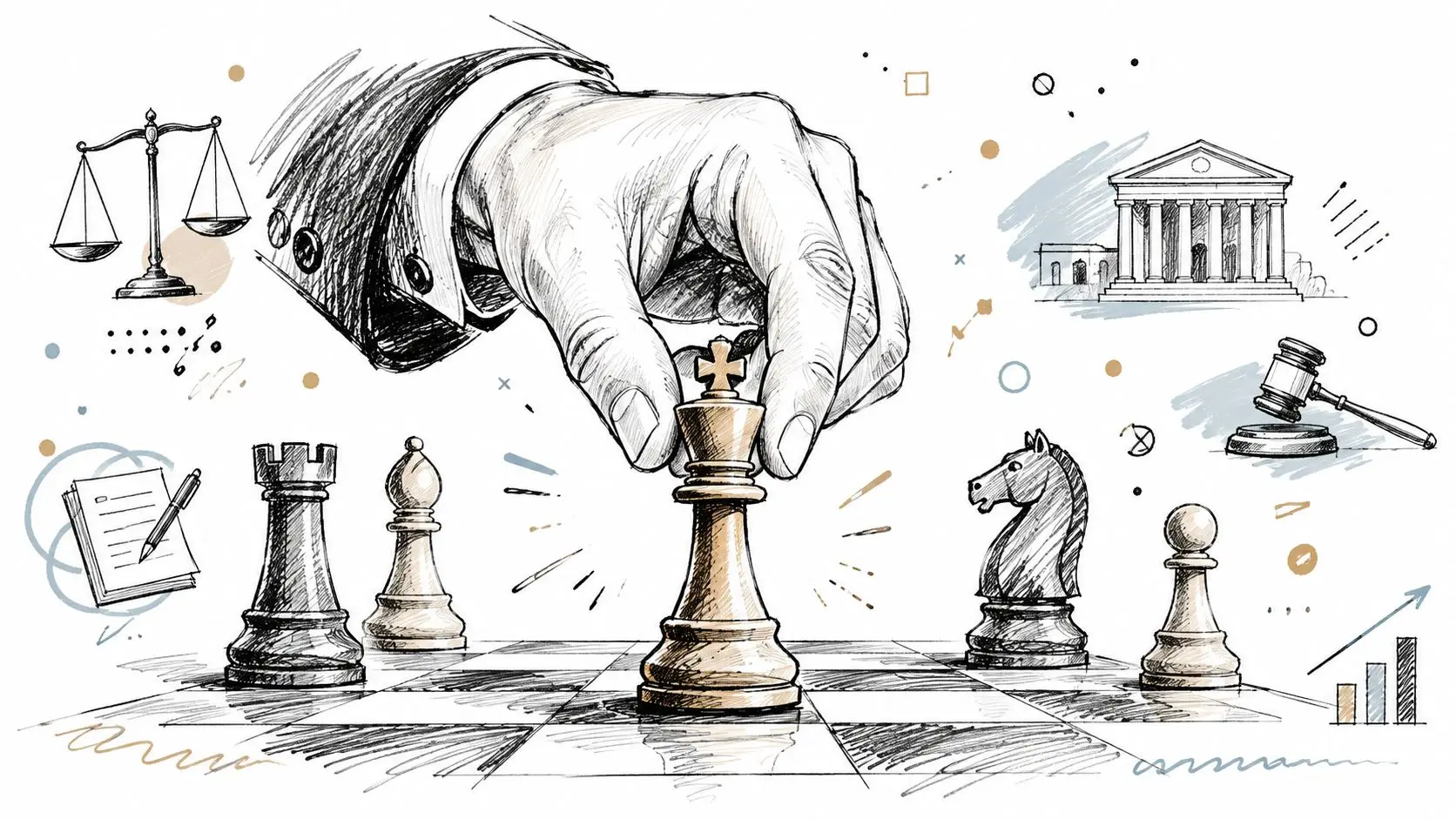
Courts should support the commercial objective
Litigation can protect rights, but it consumes attention, information, and negotiating flexibility. A phased strategy keeps alternatives available:
- Contain the immediate harm. Protect funds, operations, data, evidence, and relationships.
- Define the legal position. Identify obligations, authority, remedies, deadlines, and forum.
- Test resolution. Use correspondence, negotiation, mediation, or structured settlement where appropriate.
- Escalate deliberately. Prepare proceedings only when escalation improves the company’s position or protects its business.
This approach applies to M&A, commercial leases, partnerships, franchise arrangements, licensing, management agreements, and bank restrictions. It also gives executives a fast, decision-ready answer instead of a long memo.
The strategic target is swift, favorable resolution without premature escalation. Reaching it requires disciplined review of the client, counterparty, documents, business context, and available pressure points.
The 2026 service model is increasingly technology-enabled
Businesses need advice that functions across boardrooms, digital evidence systems, foreign counsel, and local procedures. In-person delivery still represented 66.06% of legal-services use in 2025, while fully digital or virtual delivery is growing at an 8.52% CAGR through 2031, according to the market analysis.
The strongest advisor treats legal risk as an operating decision, not a final approval exercise. Management should receive a clear sequence: what to preserve, whom to notify, which pressure to apply, and when court action will improve the outcome.
What Business Legal Advice Really Covers
Business legal advice starts with the commercial objective. A company may want to enter a market, secure distribution, acquire a business, license technology, or preserve liquidity. Legal counsel then converts that objective into rights, obligations, controls, deadlines, and remedies.
A document alone doesn’t create that architecture. The parties must also manage authority, negotiation records, approvals, translations, performance evidence, and escalation triggers.
Four layers of commercial protection
Transactional advice shapes the deal before signature. It addresses pricing, scope, representations, warranties, indemnities, limitations, termination rights, governing law, dispute forums, and payment security.
Ongoing counsel monitors what happens after signature. It tracks notices, approvals, renewals, service levels, change orders, compliance duties, and breaches. This layer often prevents a minor disagreement from becoming a formal dispute.
Crisis management begins when the business faces a demand, default, investigation, account restriction, or threatened proceeding. Counsel must preserve evidence, control communications, protect privilege, and identify the fastest route to commercial stability.
Dispute strategy connects the facts to the case. It asks which forum can provide useful relief, where assets sit, whether enforcement will work, and whether a negotiated outcome can outperform judgment.
For foreign businesses considering Israel or another jurisdiction, local legal architecture matters. A resource on mainland company setup law UAE can help compare formation and operating considerations in the UAE, but Israeli exposure still requires Israeli-specific analysis.
Cost levers and control levers
A legal budget often focuses on cost levers, such as standard forms, approval thresholds, and outside-counsel management. A strategic advisor also identifies control levers, such as signatory authority, information rights, audit rights, escrow, step-in rights, and suspension mechanisms.
Practical rule: Every material obligation needs an owner, a verification method, a deadline, and a consequence for non-performance.
That rule keeps drafting tied to operations. For example, a service agreement should define acceptance, reporting, remediation, payment withholding, and termination steps. A partnership agreement should address deadlock, transfers, financing, dilution, exit rights, and access to records.
This approach differs from reactive review. The recommended strategic path is to identify the decision that creates exposure, then build a proportionate legal process around it.
Common Legal Needs That Create the Biggest Risk
Everyday commercial instruments create serious exposure because businesses sign them repeatedly and often rush the final details. The danger rarely sits in the headline term. It sits in definitions, exceptions, authority, timing, and remedies.

M&A provisions need measurable mechanics
Earn-outs and working-capital adjustments illustrate the problem. A Harvard Business Law Review study examined contingent pricing mechanisms, while a Grant Thornton survey of 2023 M&A disputes recorded 515 disputes from 1,981 deals with earn-out adjustments and 965 disputes from 2,678 deals with working-capital adjustments, as reported through this M&A dispute resource.
Those figures represent roughly 26% of earn-out deals and 36% of working-capital-adjustment deals. The lesson is direct. Parties must define accounting principles, access to information, valuation procedures, expert authority, notice requirements, and dispute consequences before signing.
A formula without an agreed process invites conflict. The agreement should also prevent one party from manipulating operations, records, staffing, revenue recognition, or expense allocation after closing.
Partnerships and collaborations need governance
Founders and partners should address more than ownership. They need decision rights, reserved matters, capital calls, information access, fiduciary expectations, transfer restrictions, deadlock, departure, competition, and dispute escalation.
Franchise and licensing arrangements require the same discipline. The parties should define territory, quality control, approved suppliers, intellectual-property use, audits, reporting, sublicensing, local compliance, and termination assistance.
Employment-related obligations may also affect regional operations. Businesses comparing frameworks can review material on termination and gratuity in DIFC when assessing a DIFC employment structure, while separate Israeli advice remains necessary for Israeli employees and operations.
Leases and services hide operational traps
A commercial lease can allocate taxes, maintenance, insurance, fit-out duties, restoration, permitted use, assignment, access, and interruption risk. A management or services agreement should address deliverables, dependencies, acceptance, service failures, data access, subcontractors, transition support, and payment disputes.
Multilingual execution adds another risk. A translation must preserve defined terms, commercial assumptions, limitation language, notice mechanics, and hierarchy between language versions. The business should retain the negotiation history and confirm which version controls.
Banking continuity deserves separate attention. A returned check can create immediate payment pressure, reputational harm, and enforcement exposure. Management should treat banking notices as legal events, not routine administration.
Cross Border Enforcement and Dispute Strategy
Cross-border enforcement is decided before a claim is filed. The business must know where the counterparty’s assets sit, which forum can grant effective relief, and how evidence can be collected without breaching privacy or confidentiality rules.
International arbitration is a mainstream response to that problem. The ICC reported 881 new cases under its Arbitration Rules in 2025, with a cumulative caseload value of US$299 billion and disputes spanning 147 jurisdictions, according to its 2025 dispute-resolution statistics. Forty-one percent of those cases involved amounts no greater than US$4 million, showing that arbitration also serves mid-market disputes.
Enforcement begins before filing
Build the enforcement plan around four questions:
- Assets: Where are the bank accounts, receivables, inventory, shares, and property?
- Evidence: Which contracts, messages, financial records, technical files, and board materials must be preserved?
- Forums: Should the business use arbitration, courts, interim relief, or several routes in sequence?
- Constraints: Do sanctions, privacy, confidentiality, privilege, or parallel proceedings restrict the plan?
Cross-border evidence often determines whether a sound claim can be proved. Records may sit in Europe, Israel, and the United States, while different rules govern their transfer and disclosure. The EU moved in 2025 to streamline GDPR cross-border enforcement through procedural deadlines and an early-resolution mechanism. The U.S. Department of Justice also created explicit restrictions in 2025 for certain bulk transfers of sensitive personal data to countries of concern. Counsel should therefore align discovery, evidence preservation, and merits analysis from the start.
Settlement advantage develops through preparation
A dataset covering 3,642 international commercial arbitration cases found that 58.8% settled or were withdrawn before conclusion, while only 13% reached a final hearing, according to this empirical arbitration settlement analysis.
Use that pattern to set the sequence. Preserve evidence, calculate realistic exposure, send a calibrated letter, and prepare a credible filing route. Then test whether the counterparty will resolve the dispute before full adjudication.
A business negotiating a PEO relationship should assess how to renegotiate PEO contract terms before positions harden. The same principle applies to international contracts. Advantage comes from preparation, not from threatening proceedings without an enforcement plan.
When to Seek Counsel and How to Choose the Right Firm
Seek counsel before the decision becomes expensive to reverse. Bring a lawyer in before signature when a deal creates unusual liability, applies foreign law, involves material data use, imposes nonstandard payment terms, or could become difficult to unwind. The objective is to set an escalation plan before a drafting problem becomes a bank restriction, operational dispute, or cross-border enforcement fight.
A first demand letter also warrants immediate review. The recipient must preserve evidence, avoid admissions, identify insurance and contractual notice duties, and choose whether to negotiate, deny, request information, or reserve rights. Delay can narrow those options and give the sender control of the factual record.
Banking warnings require the same urgency. Do not wait for a restricted account. Review returned checks, presentment dates, notices, available funds, and collection options as soon as the warning arrives. A counsel who understands banking procedure can help contain the disruption while the company assesses its wider contractual and regulatory exposure.
Test the firm before a crisis
A suitable firm should answer practical questions clearly:
- Who will lead the matter? The business needs a senior decision-maker with authority, availability, and direct access to the client.
- How will the firm sequence escalation? The plan should separate containment, correspondence, negotiation, interim relief, and proceedings, with a reason for each step.
- Can the firm work across languages and borders? Translation, local representation, foreign coordination, and enforcement should fit one strategy.
- How will the firm protect evidence and privilege? The response should identify documents, custodians, systems, and communication controls.
- What outcome does the firm recommend? A credible advisor should explain the commercial path, not only list legal risks.
The firm should also examine the opponent and the surrounding business situation. Ownership, financing, customers, reputation, regulatory exposure, and settlement constraints may matter as much as the contract wording. Ask how those factors would change the recommended sequence.
Evaluate resolution discipline
Counsel must distinguish a strong claim from a collectible claim. The analysis should identify whether immediate action can preserve cash, prevent asset movement, protect operations, or improve settlement terms.
Earlier arbitration analysis shows that many international commercial disputes resolve before a final hearing. Use that finding as a planning discipline, not as a reason to delay. Preserve evidence, calculate realistic exposure, issue a calibrated letter, and prepare a credible filing and enforcement route before testing settlement.
A firm that starts with the court filing may miss the cheaper opportunity to control the dispute before filing.
Choose counsel who combines commercial judgment, persistence, discretion, multilingual execution, and trusted international relationships. RNC Group handles Israeli and international commercial matters and connects clients through the ADVOC network, which includes partners and business contacts across more than 73 countries.
Israeli Commercial Context Every Foreign Business Should Understand
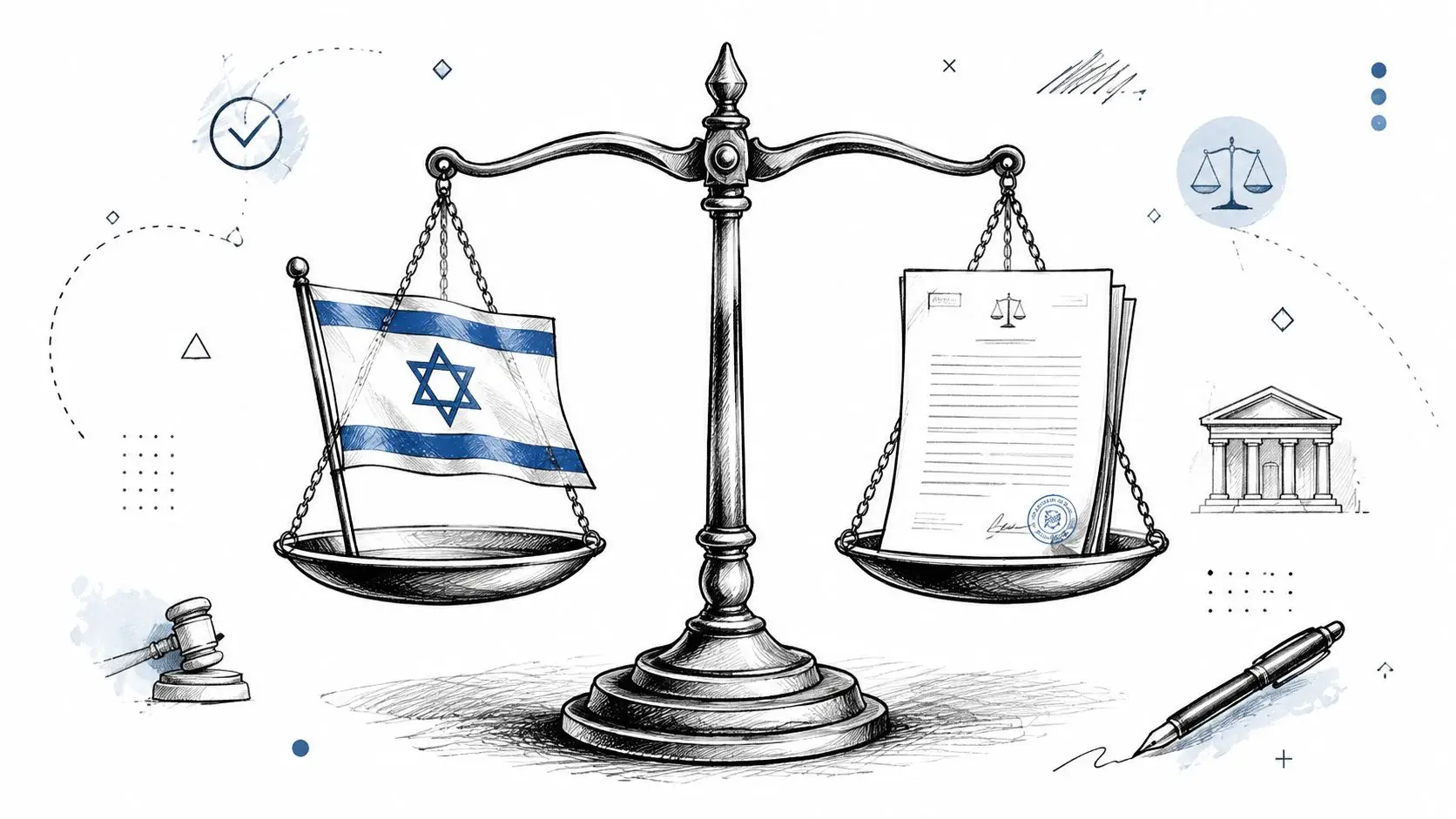
Foreign businesses often assume that a signed document controls every Israeli commercial dispute. Israeli law requires a more careful approach because commercial contracts generally don’t need a written form for enforceability.
Israeli commercial contracts primarily rely on the Contracts (General Part) Law 1973 and the Contracts (Remedies for Breach of Contract) Law 1970. Consequently, evidence of consent, authority, negotiations, performance, and shared assumptions can become decisive when parties dispute formation or scope.
Negotiations can become evidence
Consider a foreign company that agrees commercial terms with an Israeli distributor through email and messaging. The parties then begin performance before signing a final agreement.
That company should preserve approval records, authority evidence, drafts, pricing discussions, delivery records, invoices, and performance communications. A later dispute may focus less on formal execution and more on whether the parties formed an agreement and what terms governed it.
Israeli commercial litigation commonly proceeds in Magistrates’ Courts or District Courts. Specialized disputes may also reach labor courts, the Restrictive Trade Practices Court, or the Standard Contracts Tribunal.
Procedure can move quickly
Israeli procedure includes fast-track routes, summary procedure, and originating motions. In ordinary civil procedure, the plaintiff generally submits case-in-chief affidavits first, while the defendant usually files affidavits about 60 days later, followed by cross-examination, according to this primer on commercial litigation in Israel.
That sequence makes early document control essential. A party shouldn’t wait for disclosure requests before identifying witnesses, preserving records, testing translations, and preparing the factual chronology.
Returned checks create two linked problems
A refused check means the bank declined payment, including because the account lacked sufficient funds. The holder may pursue collection through the Enforcement and Collections Authority or file a civil action against the drawer, according to the Bank of Israel guide on insufficient funds.
A restricted account arises automatically when 10 or more checks return for insufficient funds within 12 months, with at least 15 days between the first and last refused check, according to the Israeli restricted bank accounts guide. Management should therefore track presentment dates, bank notices, returned-check reasons, available funds, and cure actions immediately.
Practical Checklist and Next Steps to Protect Your Business
Business legal advice works best when management turns it into operating discipline. The following actions create a practical first response.
- Review critical contracts: Check governing law, forum, payment security, termination, liability caps, notice clauses, audit rights, and language priority.
- Preserve negotiation evidence: Keep drafts, approvals, messages, meeting notes, invoices, delivery records, and authority documents.
- Map escalation triggers: Define when a missed payment, service failure, data incident, demand letter, or bank notice reaches counsel.
- Check partnership governance: Confirm decision rights, deadlock procedures, transfer restrictions, funding duties, information access, and exit mechanics.
- Audit leases and services: Identify hidden pass-through costs, restoration duties, renewal dates, service levels, dependencies, and transition obligations.
- Control translations: Assign responsibility for defined terms and confirm which language version governs.
- Monitor bank activity: Record every refused check, presentment date, bank notice, reason code, and proposed cure.
- Prepare dispute files: Build a chronology, identify witnesses, secure data, assess assets, and evaluate settlement authority.
- Coordinate jurisdictions: Align Israeli counsel, foreign counsel, forensic support, privacy advisors, and communications personnel.
This week, management should identify its highest-value contracts, open disputes, banking warnings, and upcoming deadlines. This quarter, it should implement approval controls, contract playbooks, document-retention rules, and escalation ownership.
The recommended strategic path is clear. Don’t wait for a court filing, account restriction, or failed closing to discover that the business lacks evidence and negotiating power.
Legal advice is cheapest at the decision, not at the dispute.
Contract structure, liability exposure and regulatory duties are set when you decide, not when you litigate. A short consultation early replaces a long proceeding later.
We advise businesses on daily legal decisions, from contracts to disputes. Reach us on WhatsApp or by email.
RNC Group provides strategic commercial counsel, multilingual correspondence, negotiation support, bank-account restriction assistance, and international dispute coordination for businesses facing Israeli and cross-border risk. To avoid costly mistakes and establish a phased response before escalation becomes unavoidable, contact RNC Group now.
This article provides general information only and doesn’t constitute legal advice, a legal opinion, or a substitute for advice on specific facts. Laws, procedures, deadlines, and enforcement outcomes vary by jurisdiction and matter, so readers should obtain advice from qualified counsel before acting.
This article does not constitute legal advice and is not a substitute for consulting with a qualified attorney. Do not rely on the contents of this article for taking or refraining from taking any action.