
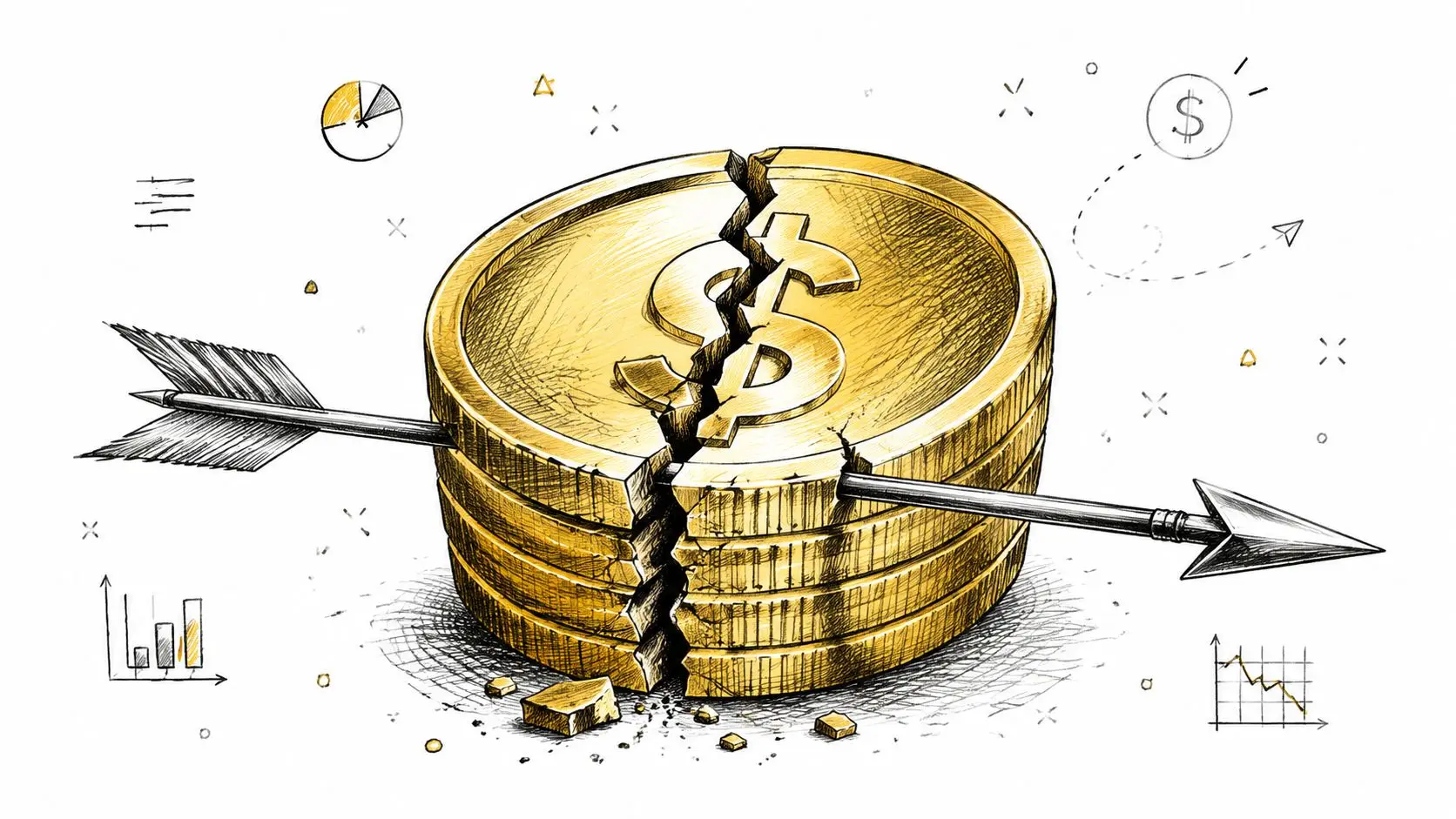
A contract can destroy value after signature, even when its drafting looked flawless. Research estimates that weak governance can reduce up to 40% of a contract's value through missed obligations, unfavorable renewals, and overlooked protections (contract management risk data).
That makes contract risk management a revenue-protection system, not a filing exercise. In 2026, international companies must connect clause design, legacy-contract review, AI oversight, and enforcement planning before a disputed term becomes a balance-sheet problem.
Why Contract Risk Management Is a Revenue Question
A signed contract is a revenue forecast with liability attached. Contract risk management identifies, prices, allocates, and monitors those exposures from intake through renewal or termination. The discipline matters because negotiated value can disappear through weak controls, missed obligations, or rights the business cannot prove.
Research estimates that poor contract management destroys about $2 trillion in global economic value each year. It also estimates that organizations lose 9.2% of annual revenue through contract mismanagement, while top performers limit leakage to about 3% (contract management risk data). Those figures point to operational failures: a missed renewal window, an unfavorable price adjustment, or an indemnity weakened by a conflicting priority clause.
Practical rule: Treat every signed agreement as a forecast of future cash and future liability.
The post-signature exposure
Legal review that ends at signature leaves the main control problem unsolved. Obligations change through performance, amendments, renewals, and disputes, so the contract portfolio needs continuous ownership and measurement.
A portfolio may contain silent auto-renewals, unclear service levels, uncapped liability, weak termination rights, and missing data protections. Legacy contracts create added exposure when paper files are scattered, clauses are unindexed, and teams cannot identify the rights or obligations still in force. Use AI-assisted review to extract key terms and flag anomalies, then require lawyers and business owners to validate the results.
Responsibility also crosses departments. Procurement negotiates pricing, finance tracks payments, operations manages delivery, and legal holds the signed agreement. Put these records and owners into one control system. For cross-border deals, record governing law, dispute forums, currency exposure, and enforcement steps before a breach occurs.
Why CEOs should care
Contract leakage reduces margin and cash flow, weakens negotiating power, and can lower acquisition value. A buyer reviewing a target's portfolio will test whether the target can prove its rights, obligations, renewal dates, and liability positions.
The move from paper files to formal contract lifecycle management systems reflects this operational requirement. Some mid-market companies manage 20,000 to 40,000 contracts, yet only 11% of businesses rate their contract management as “very effective” (contract management statistics).
Set owners for material obligations, rank exposures by expected loss, and track outcomes such as missed renewals, unresolved exceptions, and recovered value. That turns contract risk into a revenue-protection system rather than a one-time review.
The Six Categories of Contractual Risk
Contractual risk rarely arrives in one category. A pricing clause can create commercial exposure, a governing-law clause can complicate enforcement, and a data provision can trigger regulatory consequences.
Commercial risk
Commercial risk concerns the money attached to the relationship. It includes price changes, foreign-exchange exposure, payment timing, creditworthiness, and unexpected cost allocation.
Example: “The supplier may increase fees whenever its costs rise” creates an uncontrolled pricing position. A stronger clause defines the adjustment mechanism, evidence requirements, and termination consequence.
Legal risk
Legal risk arises when the agreement cannot reliably produce the intended result. Ambiguous termination rights, conflicting governing-law provisions, and unenforceable indemnities can leave the business with a paper right but no practical remedy.
Example: “Either party may terminate for cause” becomes dangerous when the agreement never defines cause or provides a cure process.
Regulatory risk
Regulatory risk covers sanctions, export controls, anti-bribery duties, licensing requirements, and sector rules. Cross-border contracts need clear responsibility for approvals, compliance evidence, and regulatory changes.
Example: “The distributor shall comply with applicable law” may fail to allocate responsibility for sanctions screening, local licensing, or third-party conduct.
Performance risk
Performance risk concerns delivery, quality, milestones, service levels, and acceptance. Vague standards make breach difficult to prove and remediation difficult to demand.
Example: “The provider will respond promptly” gives no operational protection. A service level should define the response window, escalation path, remedy, and evidence record.
Insolvency risk
Insolvency risk appears when a counterparty enters financial distress, changes control, or stops performing. The agreement should address termination, step-in rights, security, notice, and access to essential materials.
Example: “The customer may terminate following a change of control” matters when an acquisition transfers the relationship to an unwanted owner.
Enforcement and data-privacy risk
Cross-border enforcement and data handling require separate attention. Judgment recognition, arbitration mechanics, forum selection, GDPR obligations, and international data transfers can determine whether a contractual right has practical value.
Example: “Disputes shall be resolved in the courts of the seller's jurisdiction” may force litigation far from the buyer's assets and witnesses.
| Category | Typical Trigger | Example |
|---|---|---|
| Commercial | Price movement or payment failure | “Fees may increase at the supplier's discretion.” |
| Legal | Ambiguous rights or unenforceable language | “Either party may terminate for cause.” |
| Regulatory | Sanctions, licensing, or anti-bribery exposure | “The distributor shall comply with applicable law.” |
| Performance | Missed milestones or weak service levels | “The provider will respond promptly.” |
| Insolvency | Bankruptcy or ownership change | “Termination follows a change of control.” |
| Enforcement and data privacy | Forum, recognition, or data-transfer conflict | “Disputes belong in the seller's courts.” |
The recommended approach maps each clause to a business consequence. Legal teams should not catalogue risks merely because they appear unusual. They should identify which provision can delay revenue, increase cost, restrict exit, or prevent recovery.
An End-to-End Framework for Contract Risk
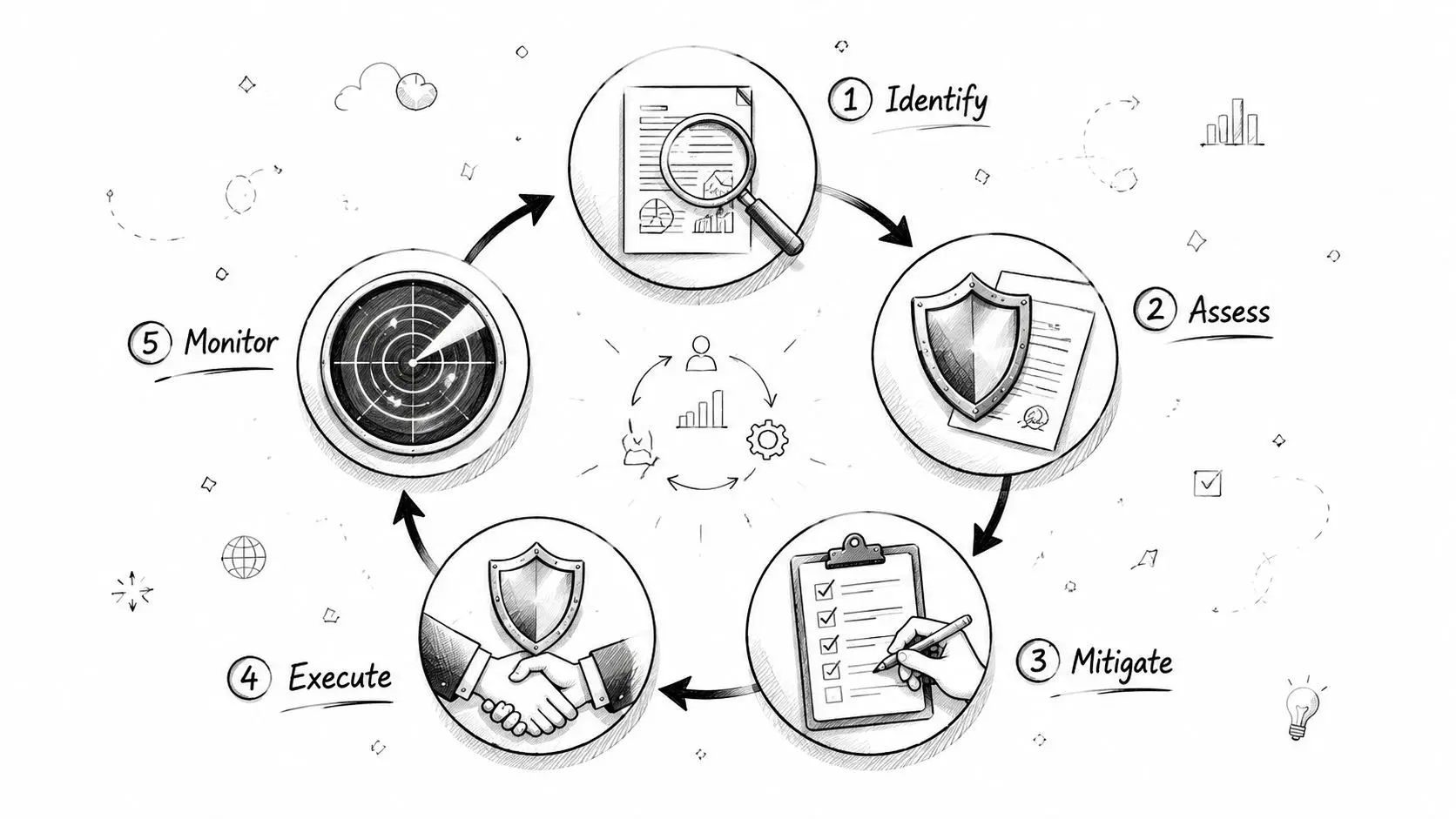
Contract risk management should operate as a measurable revenue-protection system, not a one-time legal review. Apply five connected stages to every live agreement, including legacy contracts. Each stage creates information for the next, while monitoring feeds new findings back into identification.
Identify the exposure
Build a clause-level risk register for every agreement. Extract obligations, deadlines, dependencies, approval rights, renewal dates, termination triggers, insurance requirements, and reporting duties.
Assign each item to a business owner. Finance may own payment milestones, operations may own service levels, and compliance may own certification duties. Legal should coordinate the register, not carry every operational responsibility.
Assess expected loss
Rank each exposure by likelihood, financial impact, and detectability. This gives the CFO an auditable basis for deciding which risks threaten revenue, cash flow, delivery, or recovery.
Clause-level analysis can support the ranking. A construction-contract text-mining model used a rule-based lexicon with probability and impact estimation to assess clause uncertainty against project objectives (construction contract risk modelAE.1943-5568.0000489)).
Mitigate through four levers
For each exposure, management must choose whether to avoid, reduce, transfer, or accept it.
- Avoid: Remove an unacceptable obligation or reject the transaction structure.
- Reduce: Add caps, cure periods, approval controls, escrow, or precise service levels.
- Transfer: Use indemnities, insurance, guarantees, or security.
- Accept: Record the residual exposure and obtain approval from the responsible executive.
Match the remedy to the deal economics. A liability cap may fit a routine vendor agreement but leave the business exposed to a data breach, intellectual-property infringement, or deliberate misconduct.
Draft precise allocation
Use approved playbooks and fallback positions. Define how the parent agreement, purchase order, online terms, statement of work, and amendments interact. This prevents conflicting documents from changing commercial rights without deliberate approval.
Give priority to indemnity triggers, liability exclusions, insurance evidence, confidentiality, data processing, governing law, dispute forum, and termination rights. In cross-border deals, test whether the chosen forum and governing law support practical enforcement.
Monitor and improve
Run obligation extraction, deviation alerts, and renewal triggers continuously across new and legacy contracts. Monitoring should identify new risks, record remediation, and update the clause taxonomy.
Use dispute outcomes to improve the system. A recurring dispute can change the playbook, a failed approval can change the escalation rule, and a missed renewal can change the alert design. That feedback turns contract review into ongoing revenue protection.
Drafting, Benchmarking, and AI-Assisted Clause Review
Clause language protects revenue only when the business can measure its deviation from an approved commercial position. For each contract type, define its purpose, identify material clause families, estimate exposure, and set fallback positions before negotiation begins. Apply the same controls to legacy contracts, because inherited wording can carry unresolved liability long after the original deal team has left.
Benchmarking gives negotiation a defensible reference point. AXA XL's contract review service reports empirical scores for 11 key contract terms and compares customer contracts with peer groups and a baseline of more than 200 industry contracts (AXA XL contract review benchmarking). Ask how far the proposed clause departs from the accepted position, which risk that departure creates, and what commercial concession would justify accepting it.
Human judgment remains essential
AI can accelerate first-pass review by flagging missing protections, unusual indemnities, conflicting definitions, inconsistent fallback positions, and deviations from a clause library. Route those findings to a lawyer who can test them against commercial intent, jurisdiction, counterparty profile, deal value, and enforcement conditions.
AI cannot decide whether a liability cap fits a strategic transaction or whether an indemnity trigger protects the party controlling the relevant risk. It can identify language. Counsel must decide its consequence.
A separate automated study reviewed 486 clauses from five real construction contracts with eight domain experts, then trained a neural model to predict risk rank and likely impact (automated construction contract risk analysisAE.1943-5568.0000489)). The practical lesson is structured expert labeling. Build review rules from documented judgments, then test model outputs against those rules.
For termination communications, use guidance from Paradigm International Inc. to maintain a clear record of breach, notice, cure, and the stated termination position.
| Clause Family | Risk Managed | Benchmark Cue | AI Priority Weight |
|---|---|---|---|
| Liability | Uncapped financial exposure | Approved cap and exclusions | High |
| Indemnity | Third-party and regulatory claims | Trigger and defense control | High |
| Insurance | Unfunded loss allocation | Coverage and evidence requirements | High |
| Data protection | Privacy and transfer exposure | Required processing safeguards | High |
| Termination | Exit and continuity risk | Cure periods and triggers | Medium |
| Governing law | Enforceability and forum risk | Approved jurisdiction positions | Medium |
AI governance must address hallucinated suggestions, confidential-data leakage, bias, and cross-border compliance. A 2026 third-party risk survey found that financial institutions ranked AI risk alongside cybersecurity as a leading external concern, while 72% reported only partial awareness of which vendors use AI, and no organization reported extreme confidence in managing vendor AI risk (contractual disputes and AI risk lessons). Store approvals, override reasons, and review outcomes so the system improves without replacing accountable legal judgment.
Industry Applications in M&A, Franchising, and Banking
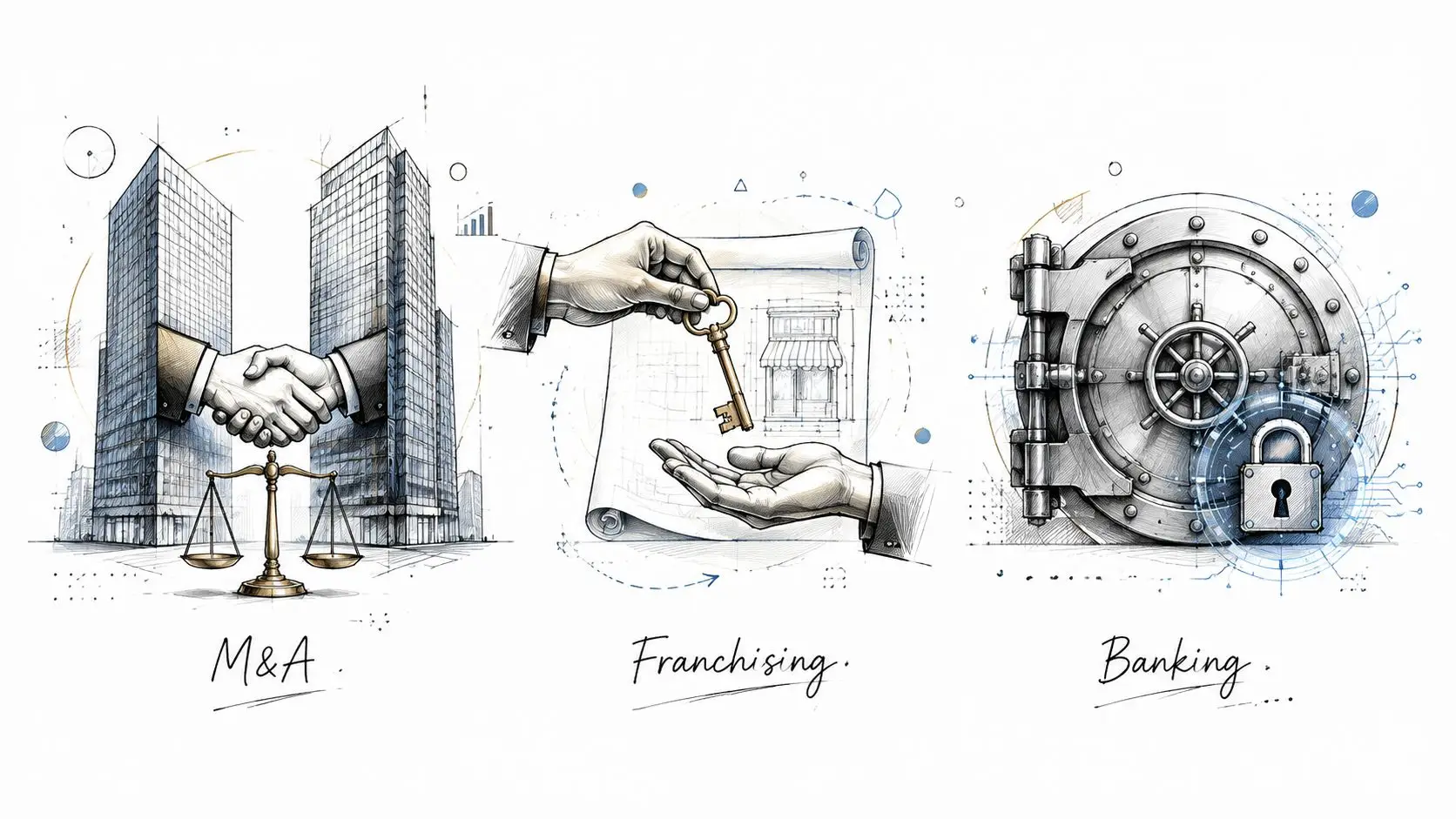
The framework stays consistent across industries, but clause weighting changes sharply. A buyer, franchisor, and lender face different failure points.
Cross-border M&A
An Israeli company acquires a foreign target. The buyer relies on representations and warranties, an earn-out, and indemnities for pre-closing liabilities.
The risk register should capture disclosure schedules, tax exposure, intellectual-property ownership, customer concentration, change-of-control consents, and earn-out measurement. Assessment should focus on proof, timing, and recovery. Mitigation may require escrow, specific indemnities, survival periods, and a cap structure that distinguishes general claims from fundamental breaches.
The buyer shouldn't accept a broad indemnity cap without testing the target's insurance, assets, and disclosure quality. Enforcement planning should begin before closing.
International franchising
A U.S. brand enters Europe through an Israeli master franchisee. Territorial exclusivity, brand standards, supply restrictions, local compliance, and termination rights determine unit economics.
The team should define the territory precisely and reserve rights for digital sales, institutional customers, and future channels. It should also connect brand-standard breaches to cure periods, inspection rights, and proportionate remedies.
A practical overview of franchise-agreement structures appears in the Franchise Foundry 2026 guide. The legal team should use that type of overview only as a starting point, then adapt the agreement to governing law, disclosure duties, tax, competition rules, and local enforcement.
Syndicated lending
A syndicated facility combines covenant packages, security perfection, reporting, payment mechanics, and regulatory requirements. A lender may hold strong contractual rights but still face practical delay if security remains unperfected or the borrower's assets sit across jurisdictions.
The risk review should test financial covenants, information undertakings, event-of-default language, intercreditor provisions, guarantees, and enforcement venues. Banking restrictions can create additional pressure for Israeli account holders. Under Israel's Checks Without Cover Law, an account becomes restricted for one year when 10 or more checks return unpaid for insufficient funds within a 12-month period, provided at least 15 days separate the first and tenth returned checks (Bank of Israel guidance on restricted accounts).
The bank must warn the account holder after five returned checks, and a restricted customer cannot open a new checking account at any Israeli bank during the restriction period. Contract teams should therefore connect payment monitoring with immediate escalation.
A Dispute Escalation and Enforcement Playbook
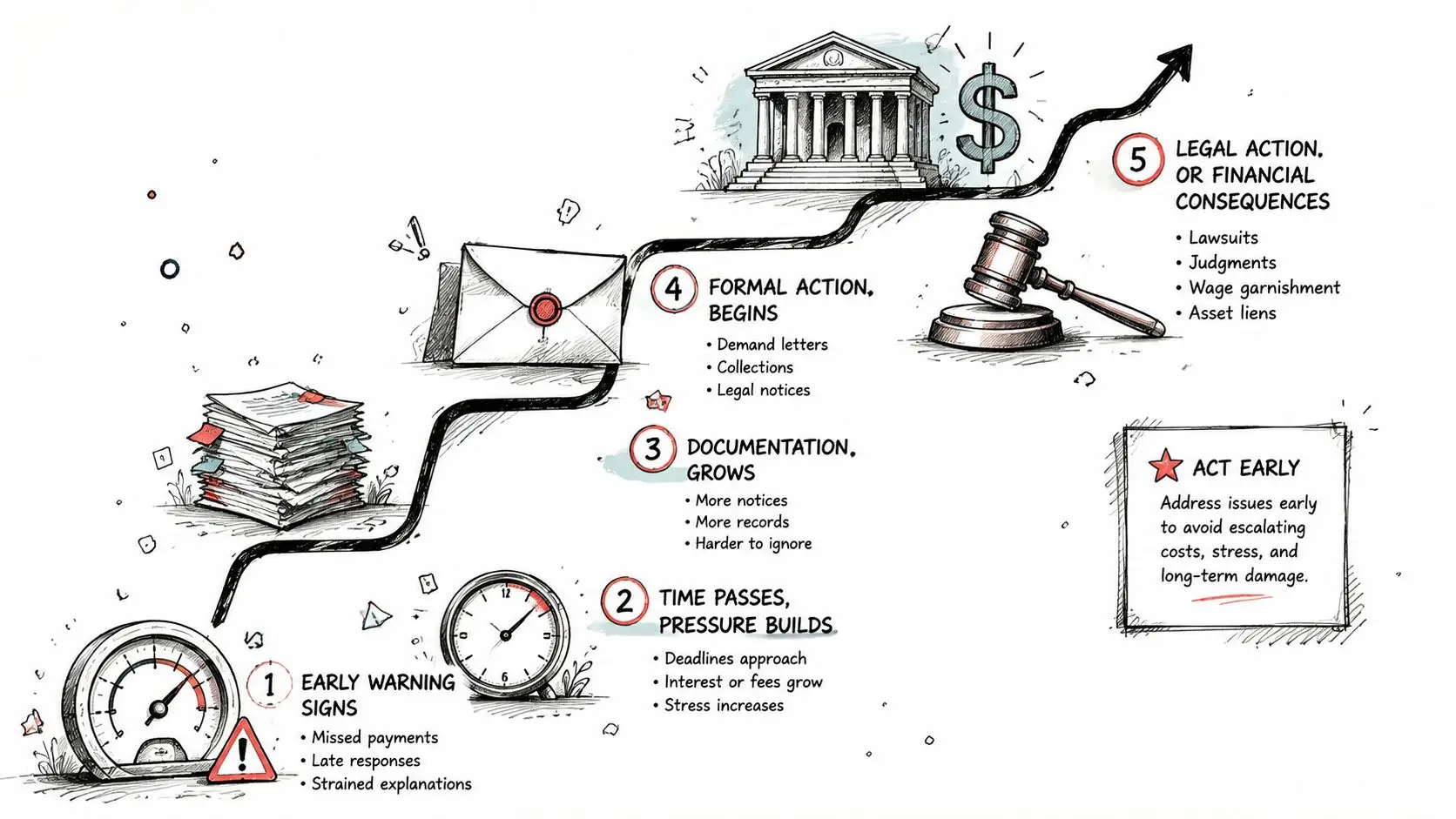
A dispute becomes expensive when the business waits for certainty. Early indicators often include missed service levels, delayed payments, scope creep, unexplained quality failures, and repeated requests for informal extensions.
Escalate in controlled stages
The recommended sequence is operational notice, senior commercial engagement, structured negotiation, mediation, and formal enforcement. Each stage should preserve evidence and avoid language that accidentally waives rights.
- Record the breach: Preserve the agreement, amendments, correspondence, delivery records, invoices, and performance data.
- Issue a focused notice: Identify the obligation, breach, cure requirement, deadline, and reservation of rights.
- Escalate commercially: Put senior decision-makers in the room before positions harden.
- Choose a forum: Compare courts and arbitration against assets, governing law, witnesses, confidentiality, speed, and enforcement prospects.
- Prepare recovery: Trace assets, seek interim measures where available, and plan recognition before filing.
Israeli arbitration awards require court confirmation before enforcement. Once confirmed, an award has the force of an Israeli court judgment. Domestic awards generally proceed under Section 23 of the Arbitration Law, while foreign awards usually proceed under Section 29A and the New York Convention (Israeli arbitration law and enforcement).
Select the forum strategically
Choose Israeli courts when the defendant or assets sit in Israel and court measures offer a practical advantage. Choose institutional arbitration when confidentiality, specialist procedure, or cross-border recognition matters more.
Israel's International Commercial Arbitration Law, created in 2024, provides a modern framework for international commercial arbitration (Chambers Israel litigation guide). A motion to appoint an arbitrator generally goes to the district court where the defendant lives or where the events occurred.
Israeli monetary litigation also carries a filing fee of 2.5% of the claimed amount, with half due at filing and the balance due 20 days before the evidentiary stage (Israeli commercial litigation primer). That cost should influence settlement timing and forum selection.
Governance, KPIs, and the Legacy Contract Trap
A contract risk programme needs executive authority. The recommended structure includes a contract risk committee, a clear RACI for legal, finance, procurement, compliance, and operations, plus a central repository with clause-level metadata.
The board needs more than a count of stored documents. It needs evidence that the company knows its exposure, assigns remediation, and controls renewal decisions.
Build a board-ready dashboard
| KPI | Owner | Threshold | Reporting Cadence |
|---|---|---|---|
| Contracts with identified risk flags | Legal operations | Escalate material gaps | Monthly |
| Mean time to remediate | Legal and business owner | Escalate overdue actions | Monthly |
| Value at risk | Finance and legal | Board review for material exposure | Quarterly |
| Dispute frequency | General counsel | Investigate recurring causes | Quarterly |
| Renewal-cycle slippage | Procurement and operations | Escalate missed approvals | Monthly |
These thresholds should reflect the company's risk appetite. A multinational group may set different escalation rules for a strategic acquisition, a routine supplier, and a regulated financial service.
Investigate the legacy portfolio
Legacy contracts often contain uncapped liability, missing data provisions, weak audit rights, outdated governing law, or indemnities that don't match current operations. The danger sits in agreements that nobody actively reviews because the business relationship appears stable.
Survey data identifies this concern clearly. 62% of teams report concern about unknown risks in older agreements, while 57% identify missed obligations as a top risk heading into 2026 (CLM Trends 2026 report).
The recommended next step is a targeted remediation sprint. Digitize the portfolio, rank contracts by value and exposure, and review the highest-priority legacy agreements first. Management should then renegotiate, amend, terminate, or formally accept the residual risk.
RNC Group offers strategic characterization and risk mapping for commercial agreements, including red-line identification before drafting. Its broader practice covers cross-border commercial contracts, franchise arrangements, M&A, bank-account restrictions, and international disputes.
RNC Group advises international companies on contract risk management, clause allocation, legacy-contract remediation, and cross-border enforcement. Businesses facing a high-value agreement or emerging dispute should visit RNC Group now to define the exposure and select a controlled legal strategy.
This article provides general information only and doesn't constitute legal advice. Contract enforceability, regulatory duties, filing requirements, and enforcement options depend on the agreement, facts, jurisdictions, and current law, so readers should obtain advice on their specific circumstances before acting.