
A document can look decisive and still fail before the court considers its substance. In cross-border commercial litigation, the question is often not how to present evidence in court, but whether the evidence survived preservation, authentication, translation, disclosure, and provenance review.
The risk has become sharper for digital records and synthetic media. Official Massachusetts guidance addresses screenshots, email copies, USB or video formats, metadata, legibility, and chain-of-custody explanations for digital evidence, while recent legal analysis describes stricter scrutiny of AI-generated material. Massachusetts digital-evidence guidance therefore deserves attention whenever a dispute involves foreign systems, cloud platforms, messaging applications, or machine-generated content.
Why Most Evidence Fails Before the Judge Speaks
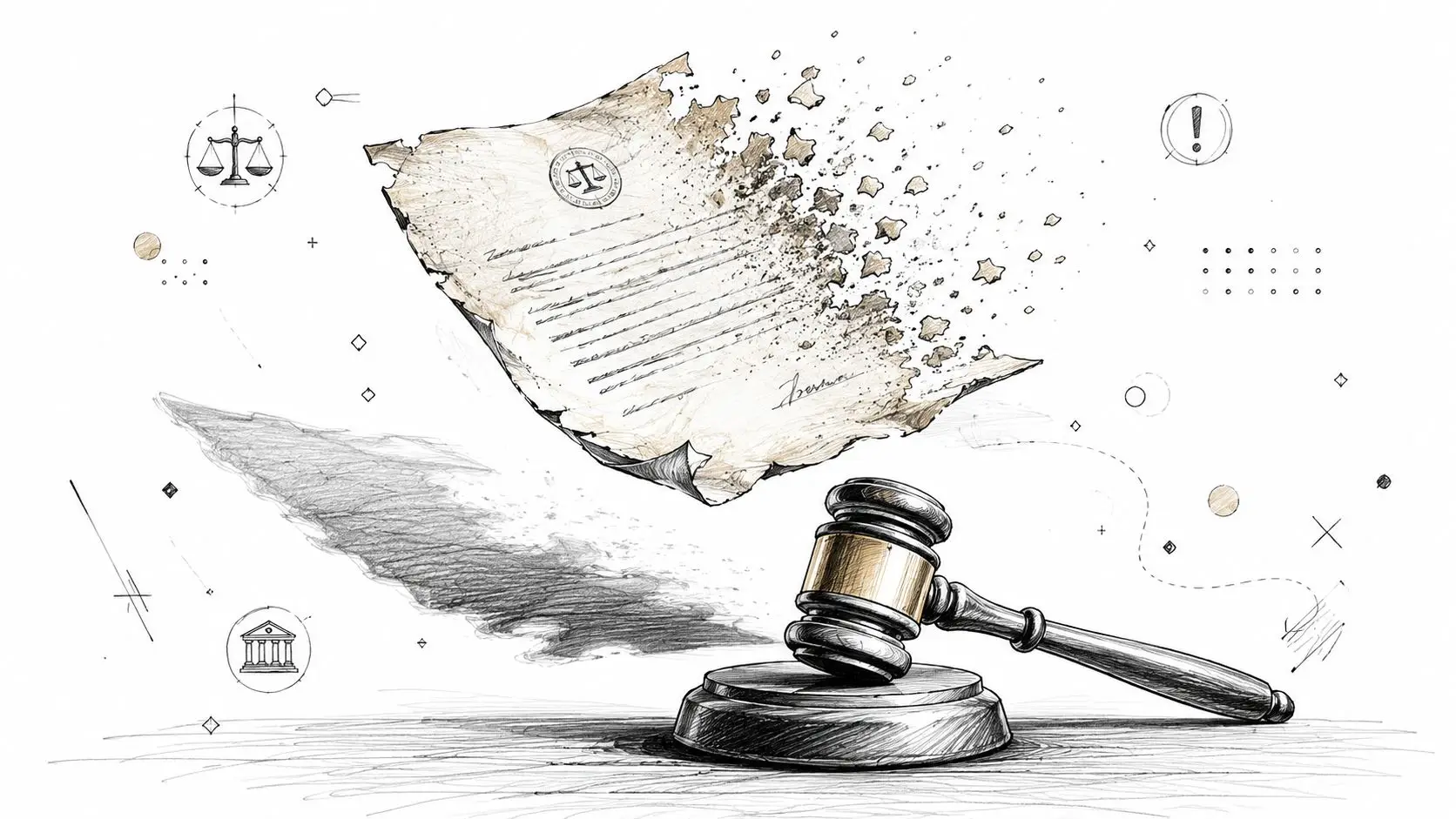
Most evidence fails long before a judge rules on relevance. Preservation gaps, authentication defects, and disclosure mistakes often prevent a party from presenting the exhibit effectively at all.
The modern U.S. framework reflects a broader shift toward structured proof. Congress enacted the Federal Rules of Evidence on January 2, 1975, after the Supreme Court transmitted proposed rules on February 5, 1973. The rules replaced a scattered system of case law and statutes with consolidated standards for relevance, admissibility, and expert testimony. The U.S. Courts’ Federal Rules of Evidence resource records that the rules were last amended in 2024.
Evidence works as a chain
A commercial exhibit must usually pass through several practical stages:
- Preservation: The company identifies a likely dispute and stops routine deletion.
- Collection: Counsel or an appropriate specialist gathers the relevant records without altering them.
- Authentication: A witness, certification, metadata record, or other foundation connects the item to its claimed source.
- Disclosure: The party produces the material under the applicable procedural framework.
- Presentation: Counsel offers a clear, legible exhibit and answers objections without overstating its meaning.
A defect at any stage can damage the next stage. For example, a screenshot without source information may create an authentication problem, while a properly sourced message may still face relevance, hearsay, privilege, or translation objections.
Three recurring corporate failures
First, companies often issue litigation holds too late. Employees may delete emails, chats, or files through ordinary retention settings before anyone identifies the relevant custodians.
Second, foreign-originated documents often arrive without the authentication chain required by the forum. A useful affidavit can become unusable when the required notarization, consular certification, or apostille is missing.
Third, teams collect digital material as ordinary business files rather than forensic evidence. A copied message, exported chat, or cloud screenshot may omit metadata, account information, timestamps, or the surrounding conversation.
Practical rule: Treat evidence presentation as a continuous process, not a task reserved for the hearing.
Historical development supports that approach. Modern evidence law emerged after courts moved away from ordeals, battle, and compurgation toward structured proof practices. The legal history of evidence also identifies Frye v. United States in 1923 as an important milestone for expert evidence and traces the best-evidence principle to English authority concerned with the reliability of copies.
Preserving and Collecting Evidence Before Dispute Breaks Out
The strongest collection process begins before pleadings. Corporate counsel should identify the moment when a dispute becomes reasonably foreseeable, then preserve relevant information before ordinary systems change it.
That trigger may involve a regulatory inquiry, a third-party demand, a threatened claim, a failed transaction, or an internal investigation. The company should record the trigger and identify the people who understand the relevant business process.
Build the preservation system
A defensible hold should identify custodians, systems, repositories, and subject areas. It should cover email, chat platforms, document-management systems, cloud storage, mobile devices, collaboration tools, and outside vendors where appropriate.
The legal team should communicate with:
- Business custodians: Identify conversations, accounts, projects, and devices that hold relevant material.
- Information technology personnel: Suspend auto-deletion, account migration, device replacement, and repository cleanup.
- Outside providers: Confirm retention settings and preservation options for hosted platforms.
- Management: Allocate responsibility and document compliance decisions.
The notice should explain the dispute in practical terms. A vague instruction to “keep everything” creates confusion and weakens later credibility. A narrow notice that ignores the relevant project team creates an obvious gap.
Document every collection decision
Collection methods should match the evidentiary risk. Targeted exports may suit ordinary email or known files. Forensic imaging may suit a disputed device. Custodian interviews can reveal informal channels, personal devices, or systems that the initial map missed.
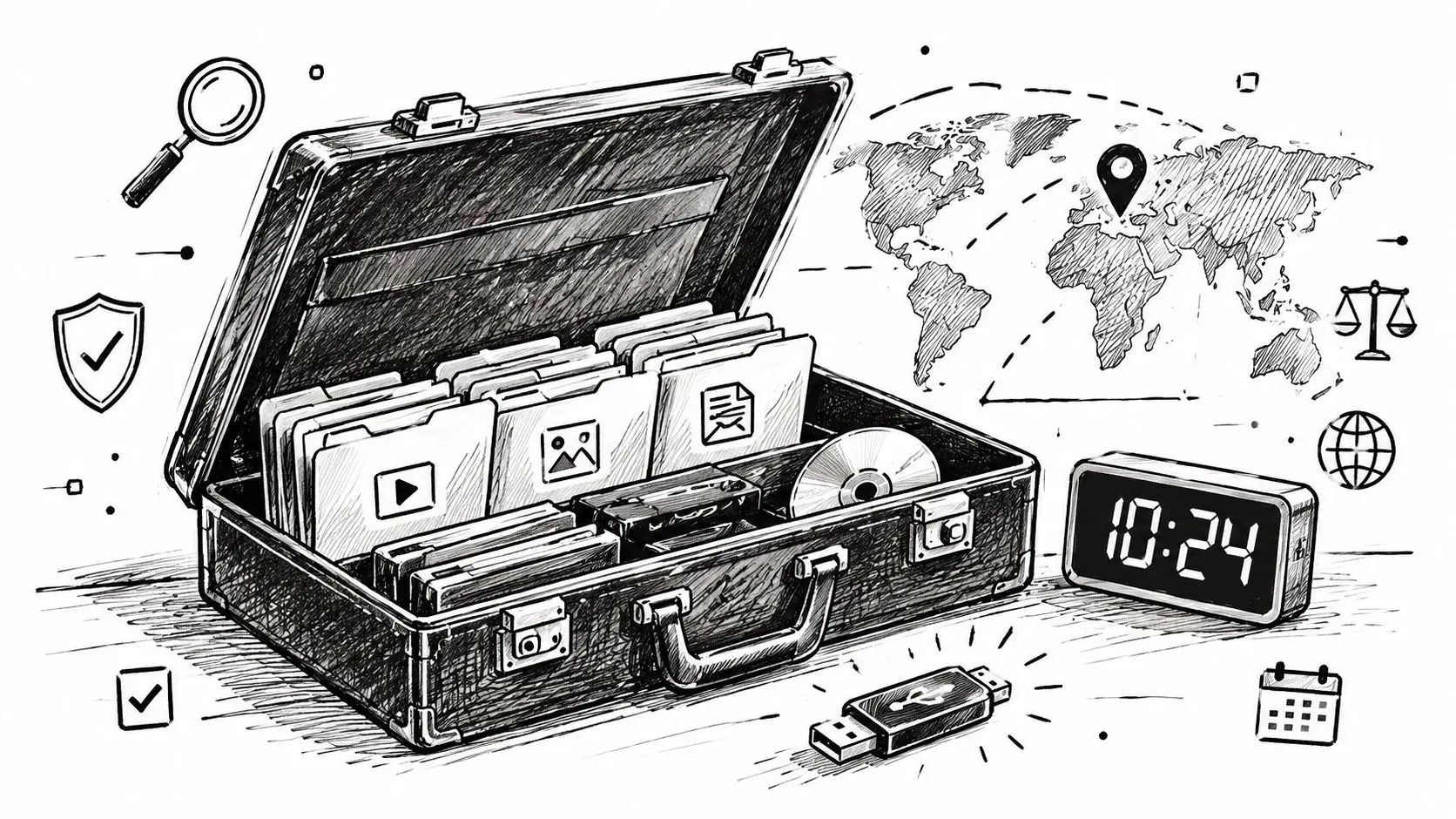
The process should preserve:
- Collection dates: Record when each source was identified and collected.
- Technical identifiers: Preserve hash values or comparable integrity records where appropriate.
- Chain-of-custody logs: Identify each person who handled the material and each transfer.
- Collection memoranda: Explain the method, scope, exclusions, and technical limitations.
- Tracking spreadsheets: Map custodians, sources, collection status, and production decisions.
The precise technical method matters less than the ability to explain it clearly. A court should understand why the team selected a source, how it preserved the source, and whether the process treated relevant information consistently.
Link collection to admissibility
Federal practice provides a useful planning model. Rule 901 addresses authentication, while Rule 902 permits certain self-authenticating materials. Comparable Israeli practice may require earlier procedural preparation, especially when documentary evidence enters through affidavits and witnesses later face oral cross-examination.
Statistical evidence requires the same discipline. A practical methodology identifies the observation, frames competing propositions, gathers relevant data, applies an analytical method, and communicates the inference in understandable terms. The statistics primer for science and law warns against introducing a conclusion without connecting the method, data, and expert competence.
The recommended strategic path is simple. Preserve first, collect transparently, record the process, and test the foundation before anyone drafts the exhibit list.
Authentication and Chain of Custody Across Jurisdictions
Authentication answers a focused question: Is this item what the offering party claims it is? Admissibility asks a broader question: Can the court consider it after applying relevance, hearsay, privilege, expert, and other exclusionary rules?
Counsel should keep those questions separate. A signed contract may be authentic but irrelevant to the pleaded issue. An email may be relevant but lack a sufficient foundation. A technical report may identify a reliable dataset but still require expert qualification.
Compare the governing systems
U.S. federal practice usually gives counsel several routes. A witness with personal knowledge may identify an email or contract. A custodian may establish a business-record foundation. A certification may support self-authentication under an applicable rule, including Rule 902(11) for qualifying domestic records.
Israeli civil practice places greater emphasis on verified evidence and hearing mechanics. In Israeli civil litigation, parties generally submit testimony through written affidavits rather than live direct examination. The deponent then faces oral cross-examination at the evidentiary hearing, and attendance remains mandatory.
| Authentication Element | U.S. Federal Practice, FRE 901-902 | Israeli Civil Practice, Evidence Ordinance |
|---|---|---|
| Basic foundation | A witness or other evidence must support the claim that the item is what the proponent says it is. | Documentary evidence commonly requires a verified affidavit and later witness availability for cross-examination. |
| Business records | A custodian or qualified witness may establish the record’s creation and maintenance. Certain records may qualify for certification under Rule 902(11). | The party must plan the documentary foundation alongside affidavit evidence and hearing attendance. |
| Foreign documents | Counsel may use applicable certification, testimony, or self-authentication routes. | Foreign affidavits and documents generally require formal authentication before admission. |
| Translation | Counsel must establish accuracy and address objections to meaning or completeness. | Foreign-language material should receive an authenticated translation suitable for filing and examination. |
| Chain of custody | The proponent should show that the item remained substantially unchanged and reliably connected to its source. | The party should document custody and origin so the court can evaluate reliability within the applicable evidentiary framework. |
Manage foreign execution carefully
A foreign affidavit filed in Israel generally requires authentication. One recognized method involves execution before an authorized Israeli embassy or consulate official. Another uses a consular chain, where the consular official certifies the local notarization and intermediate certifications. The primer on commercial litigation in Israel describes these routes and their importance for multinational parties.
Apostille treatment may apply where the relevant states participate in the applicable international arrangement. Otherwise, consular legalization may control. Counsel should confirm the route before the witness signs, because correcting a defective chain later can require delay, additional certification, or court permission.
Authentication proves origin. It doesn’t automatically defeat hearsay, relevance, privilege, or expert-evidence objections.
Israeli procedure also makes drafting consequential. Once affidavits are filed, the witness and expert become part of the hearing plan. An omitted fact may not receive a simple repair later, particularly when the opposing party has prepared cross-examination around the filed version.
Managing Disclosure Requests and Discovery Strategy
Disclosure strategy changes with the forum. U.S. federal discovery generally gives parties broad, party-driven tools, including document requests, interrogatories, depositions, and electronically stored information protocols. Israeli civil procedure tends to operate through narrower, court-supervised mechanisms, including document production, interrogatories, and pretrial evidentiary summaries.
The difference affects strategic advantage. A request drafted for U.S. litigation may appear excessive or unfocused in Israel. An Israeli request may fail to secure the technical detail needed for a U.S.-style ESI dispute.
Separate relevance from opportunity
Counsel should map each request to a pleaded issue, a custodian, a data source, and a likely privilege position. That map prevents broad requests from becoming expensive fishing exercises.
| Dimension | U.S. Federal Discovery | Israeli Civil Procedure |
|---|---|---|
| Scope | Broad discovery usually targets relevant, proportional information. | Production tends to follow court-supervised procedural mechanisms and defined issues. |
| Depositions | Depositions can test witnesses and corporate knowledge before trial. | Written affidavits commonly provide evidence-in-chief, followed by oral cross-examination. |
| Interrogatories | Parties use interrogatories to obtain written factual or procedural responses. | Interrogatories operate within the Israeli procedural framework and may require focused drafting. |
| Electronic evidence | Parties often negotiate ESI formats, search terms, custodians, and metadata fields. | Commercial courts may accept structured electronic protocols when parties explain their necessity. |
| Privilege | Parties must identify protected material and manage privilege logs or equivalent disclosures. | Counsel must protect privilege while complying with court-directed production obligations. |
| Cross-border transfer | Counsel may need Hague Convention procedures, privacy analysis, and restrictions on international transfer. | Israeli proceedings may require coordination with foreign data laws and the requested forum’s evidence rules. |
Use staged disclosure
Staged production can preserve proportionality and strategic advantage. Counsel may begin with core contracts, decision-maker communications, system records, and documents that directly support the pleaded issues. Later stages can address broader custodians or technical repositories if the first production reveals a genuine need.
Trade secrets require particular care. The producing party should identify sensitive categories, propose redactions or protective measures, and explain why the protection remains necessary. A blanket refusal can damage credibility, while unrestricted production can expose commercially valuable information.
Cross-border cases also require coordination with privacy and blocking rules. The Hague Evidence Convention may provide a route for obtaining evidence abroad, while GDPR restrictions can affect transfers involving European data subjects. The recommended strategic path is to align the production protocol with both the forum’s procedural expectations and the location of the data.
Preparing Witnesses, Experts, and Demonstrative Exhibits
In a cross-border contract dispute involving delivered goods, the decisive witness is rarely the person with the largest document archive. Counsel must match each witness to the evidentiary task, then build a presentation that accounts for Israeli affidavit practice, U.S. federal standards, and language differences.
Select witnesses by evidentiary function
A logistics manager may authenticate purchase orders, delivery records, inspection reports, and related communications. The witness should identify the participants, systems used, relevant transaction stage, and the reason each important document was created. A sales executive may explain contractual expectations, while a warehouse employee may address condition, quantity, or timing at delivery.
The corporate representative requires a separate preparation plan. U.S. counsel may prepare the representative for Rule 30(b)(6) questioning, while Israeli counsel may prepare the witness for affidavit evidence and later cross-examination. Those formats should be reconciled before drafting. Inconsistent descriptions of the same event can become impeachment material, particularly when testimony has been translated.
A witness preparation matrix can assign each topic to a person:
- Logistics manager: Authenticates delivery records and explains operational events.
- Corporate representative: Speaks for the organization on identified subjects.
- Technical or industry expert: Explains inspection methods, product specifications, and competing technical conclusions.
- Translator or language specialist: Addresses terminology, meaning, and translation choices.
Witness preparation should test the source, not merely the story. Counsel should ask whether the witness saw the event, received the information from someone else, or inferred it from a record. That distinction affects personal knowledge, hearsay analysis, and credibility.
Build the expert opinion around method
An expert should explain the materials reviewed, the inspection or analytical method, relevant assumptions, and limitations. A conclusion that rests on translated records or incomplete delivery data should identify those dependencies rather than present them as established facts.
U.S. counsel may face a Daubert-style challenge to reliability, testing, application, and helpfulness. Israeli counsel may present a technical havat da’at, or expert opinion, within an affidavit-based hearing structure. In both settings, the expert must distinguish observed records from interpretive conclusions and disclose where terminology has more than one plausible meaning.
A demonstrative timeline can connect the contract milestone, shipment, inspection, notice, and claimed commercial consequence. Each visual should communicate one proposition. It should also identify the underlying exhibit numbers, so the judge can move from the summary to the source without treating the graphic itself as independent proof.
The exhibit should reduce the court’s work, not display the lawyer’s archive.
Counsel should rehearse the sequence with the witness and technology operator. courtroom presentation guidance recommends simple symbols, one thought per slide, readable placement, suitable display equipment, and a full run-through. The opposing side and judge should see the exhibit before counsel formally seeks admission.
Introducing Exhibits and Handling Modern Objections
Exhibit presentation should follow a controlled sequence. Counsel should identify the item, establish its foundation, address the expected objection, request admission, and publish the exhibit only after the court permits that step.
The sequence may vary by judge and forum, but the preparation should remain constant. Counsel needs a witness who can answer the foundation questions, a clean exhibit copy, a translation where needed, and a short response to the likely objection.
Start with the basic objections
Relevance provides the first screen in U.S. federal practice. Rule 401 defines relevance as evidence having “any tendency” to make a fact more or less probable, while Rule 402 generally makes relevant evidence admissible unless another rule excludes it. Counsel should connect the exhibit to a pleaded proposition rather than rely on broad claims about background.
Hearsay requires a separate analysis. A business record may qualify under an exception, but counsel must establish the record’s creation, maintenance, and reliability. A witness should explain the business process instead of labeling the document a business record.
Best evidence concerns the reliability of the form offered. Counsel should use the original or an acceptable duplicate when the contents matter, and should explain why a copy accurately reflects the source.
For preparation against questioning tactics, the resource on paralegal deposition objections offers a useful practical reference. It doesn’t replace forum-specific advice, but it helps teams recognize recurring objection patterns before the hearing.
Treat digital provenance as substantive preparation
A screenshot may show a message while hiding the account owner, surrounding conversation, time zone, or original metadata. Counsel should preserve the native file where possible, record the source system, and identify the witness who can explain collection and account control.
Digital evidence should remain legible and reviewable. Official guidance specifically addresses sender, date, time, color, metadata, screenshots, email copies, USB formats, and video formats. Courts shouldn’t reject digital evidence merely because it remains on a device, but the offering party must explain its origin and integrity.
AI-generated material creates a different problem. A 2025 Louisiana law required attorneys to exercise reasonable diligence before offering evidence, while federal rulemaking discussions have considered reliability-style treatment for machine-generated evidence. Counsel should therefore preserve prompts, source files, system versions, processing steps, human review, and independent corroboration.
Address foreign language and synthetic media
A translated document needs more than a convenient internal translation. Counsel should identify the translator, preserve the original, explain certification, and complete the applicable apostille or consular chain before tender.
Synthetic audio or video requires provenance evidence. Counsel should identify the original device or platform, preserve the file in its native form, document any conversion, and retain a qualified expert when the court must understand detection or verification methodology.
If the court sustains an objection, counsel should ask whether a limited offer of proof or proffer can preserve the issue. The response should target the precise defect rather than argue that the exhibit feels persuasive.
Practical Checklists and Next Steps for Cross-Border Cases
A cross-border evidence plan should assign ownership before the hearing. The following checklists convert the main risks into operational tasks.
Preservation checklist
- Identify the trigger: Record the demand, inquiry, failed transaction, or other event that makes a dispute reasonably foreseeable.
- Map custodians: Identify executives, project managers, finance personnel, technical staff, and outside providers.
- Suspend deletion: Address email, messaging, cloud repositories, devices, and vendor-controlled systems.
- Record compliance: Keep notices, acknowledgments, preservation logs, collection memoranda, and tracking records.
- Protect foreign data: Review privacy, employment, transfer, and blocking restrictions before collection.
Authentication checklist
- Classify the item: Separate contract, email, chat, screenshot, expert output, recording, and system-generated record.
- Choose the foundation: Identify the witness, custodian, certification, metadata, or technical evidence required.
- Confirm execution formalities: Decide between apostille and consular legalization before a foreign witness signs.
- Certify translation: Preserve the original and obtain a translation suitable for filing and examination.
- Preserve integrity: Log collection details, hash values where appropriate, custody transfers, and technical conversions.
Hearing checklist
- Label exhibits: Use a consistent numbering and naming convention across the hearing bundle.
- Prepare objections: Draft short responses on relevance, hearsay, best evidence, privilege, translation, and authenticity.
- Sequence demonstratives: Put one proposition on each visual and connect it to a witness or expert.
- Test technology: Rehearse file locations, playback, display, audio, and backup access.
- Protect the record: Request clarification or a proffer when the court excludes a material item.
Post-hearing checklist
- Review corrections: Compare the transcript or hearing record against admitted exhibits and witness answers.
- Address gaps: Identify whether supplemental evidence or authority requires permission.
- Reassess settlement: Update risk analysis after the court tests the evidence.
- Secure the file: Preserve admitted, excluded, translated, native, and demonstrative materials together.
- Prepare the next forum: Maintain an evidence binder template customized to each likely jurisdiction.
Choose the right coordination model
Local counsel may suffice when the evidence, witnesses, and data remain in Israel. A coordinated cross-border team becomes necessary when the case involves foreign affidavits, overseas custodians, conflicting privacy rules, or U.S.-style discovery demands.
A special master or comparable neutral may help when parties dispute search terms, privilege, technical formats, or production sequencing. The decision should follow the evidence risk, not the convenience of the current litigation team.
RNC Group provides guidance on digital evidence, including authentication of WhatsApp messages and recordings, service documentation, multilingual legal correspondence, and international commercial disputes. The recommended strategic path is to assemble the evidence map before the next procedural deadline and obtain coordinated advice through RNC Group, with a direct route available through RNC Group’s contact page.
This article provides general information, not legal advice. Evidentiary rules, authentication requirements, translation standards, privacy obligations, and court procedures vary by jurisdiction and case posture, so readers should obtain advice on the specific facts before preserving, collecting, disclosing, or presenting evidence.