
Most boards still treat a corporate crisis as a communications sprint. That approach ignores the legal gates that can close before a spokesperson finishes a holding statement.
A crisis management law firm should first secure forum choice, evidence, privilege, and regulator sequencing. Public messaging follows that legal posture. It doesn’t create it.
Harvard’s Center on the Legal Profession reports that over half of the top 50 AmLaw firms publicly list practice areas containing “crisis” in the title, including named groups at Sidley Austin and WilmerHale (Harvard’s crisis-management discussion). The market has moved beyond ad hoc emergency support. Boards now need a coordinated legal operating model.
Why Crisis Management Is a Legal Sequencing Problem, Not a PR Problem
A crisis rarely begins with a press conference. It begins with a regulator’s request, a bank restriction, an employee allegation, a search, a threatened injunction, or a foreign enforcement demand.
Yet many companies still brief communications advisers first. They issue a holding statement, contact selected journalists, and call litigation counsel after the public narrative has formed. That sequence can narrow the available defenses before counsel assesses the facts.
The first hours create legal decisions that public relations cannot reverse. Counsel may need to preserve evidence, identify reporting duties, protect privileged communications, seek interim relief, or prevent inconsistent positions across jurisdictions. A statement that sounds reassuring may later contradict a regulator filing or an affidavit.
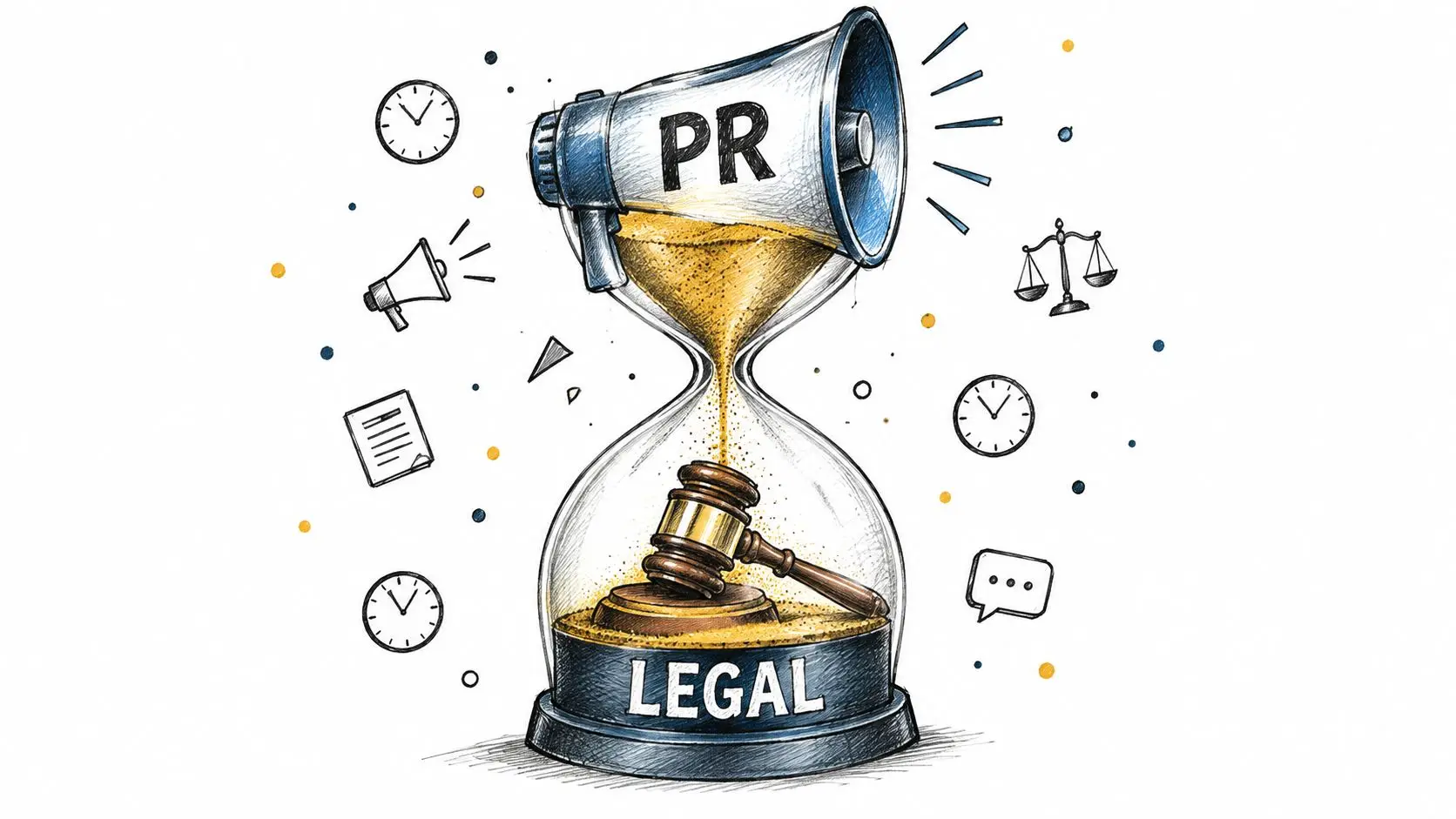
The legal posture comes first
A practical crisis plan should run four linked workstreams:
- Legal control: Counsel selects forums, protects evidence, structures privilege, and assesses civil, criminal, and regulatory exposure.
- Media discipline: Communications advisers prepare language that doesn’t concede facts or compromise defenses.
- Financial continuity: The team protects liquidity, reviews insurance, traces assets, and addresses banking restrictions.
- Cross-border coordination: Foreign counsel manages service, disclosure, local procedure, and enforcement risk.
The workstreams operate together, but one lead partner must control sequencing. Otherwise, the company can make four reasonable decisions that conflict with one another.
Board rule: No public statement should leave the legal lead without a documented review of its factual and procedural consequences.
The Harvard market shift matters because it reflects client demand for integrated response capabilities. A 2024 report found that 89% of Am Law 100 firms reference “crisis” in practice descriptions, while 49% advertise crisis management as a top-line practice (2024 crisis-management industry report). However, only 2% report crisis communications professionals on staff, and 15% hold a Chambers ranking for crisis management, according to the same report.
That gap separates a genuine crisis practice from a label attached to a conventional litigation group. The right adviser builds the legal record before the company builds the public narrative.
What a Crisis Management Law Firm Actually Does in 2026
A crisis management law firm coordinates legal decisions across regulatory defense, investigations, cross-border litigation, and insolvency or recovery. It doesn’t merely defend a lawsuit after the damage occurs.
The practice must identify who can compel information, freeze assets, impose personal exposure, or affect the company’s ability to operate. It must then assign each decision to the right forum and adviser.
The operating model
A serious crisis team normally includes:
- A single lead partner who owns the decision sequence.
- A mapped deputy who can assume control if the lead becomes unavailable.
- Israeli counsel with authority to manage local proceedings.
- Foreign-qualified counsel in the jurisdictions that can affect the matter.
- Forensic accountants who can reconstruct transactions and trace funds.
- E-discovery specialists who can preserve, collect, and review data.
- Communications advisers who understand legal exposure.
Cross-border disputes and investigations require coordinated strategy because parallel proceedings can affect one another. Counsel must map procedural advantages, align local teams, and sequence filings so one jurisdiction doesn’t undermine another (cross-border disputes and investigations capability).
That structure matters for Israeli companies expanding abroad and multinational groups facing Israel-related disputes. A local response can fail if a foreign regulator, correspondent bank, court, or enforcement agency acts first.
What clients should test
The firm should demonstrate a standby mandate, a privileged triage process, and practical response drills. It should also explain how it would coordinate legal, forensic, financial, and communications work under one reporting line.
Operational discipline matters outside law as well. A useful overview of incident management procedures can help corporate teams formalize intake, escalation, ownership, and communications during an unfolding event.
The critical distinction is execution. A marketing rebrand talks about crisis. A functioning crisis team identifies the decision-maker, preserves the record, and moves the matter into the forum that offers the strongest advantage.
The Four Workstreams That Run in Parallel During a Live Crisis
A live crisis creates simultaneous demands. The board may need an answer for employees, the bank may demand documents, a regulator may set a production timetable, and foreign counsel may recommend an urgent protective filing.
Treating those demands as separate projects creates avoidable friction. The lead partner must run them as one matter.

Legal and media must move together
The legal workstream preserves evidence, assesses privilege, chooses forums, and manages parallel civil and criminal exposure. The media workstream then translates approved facts into language that doesn’t foreclose legal positions.
A communications adviser shouldn’t promise that an allegation is false before counsel reviews the underlying documents. The same adviser shouldn’t describe a regulator’s request as routine if counsel plans to challenge its scope.
For cyber incidents, management should also consult a practical cyber-attack response guide. The legal lead must still decide which disclosures, notices, and statements fit the company’s jurisdictional duties and litigation posture.
Financial and cross-border work create leverage
The financial workstream protects payroll, supplier payments, receivables, insurance rights, and accessible cash. It also screens sanctions and traces transactions that may explain a bank’s action.
Bank restrictions can become operational emergencies. Israeli law permits a bank-account restriction for one year when ten or more checks return for insufficient funds within a 12-month period, subject to the statutory exclusion where the first and tenth returned checks fall within fewer than 15 days (Bank of Israel guidance on returned checks).
The cross-border workstream coordinates local counsel, service, evidence requests, foreign judgments, and protective motions. A foreign filing may preserve an advantage, while a local filing may protect immediate operations.
Practical rule: The financial team must know what the legal team will say, and the legal team must know which payment flows the business cannot lose.
The handoff points deserve written control:
- Media conflict: A public statement contradicts a regulator submission.
- Insurance conflict: An insurer’s subrogation notice triggers a freeze or disclosure issue.
- Privilege conflict: An internal investigation distributes sensitive findings across an uncontrolled group.
- Forum conflict: Local counsel responds before foreign counsel secures protective relief.
The lead partner should maintain one chronology, one issue register, and one approval path. That discipline prevents each workstream from creating a new crisis.
Three Crisis Case Types and How the Phased Plan Plays Out
The phased plan becomes clearest through representative matters. Each example below shows the decisions counsel should sequence, without assuming that every matter will reach litigation.
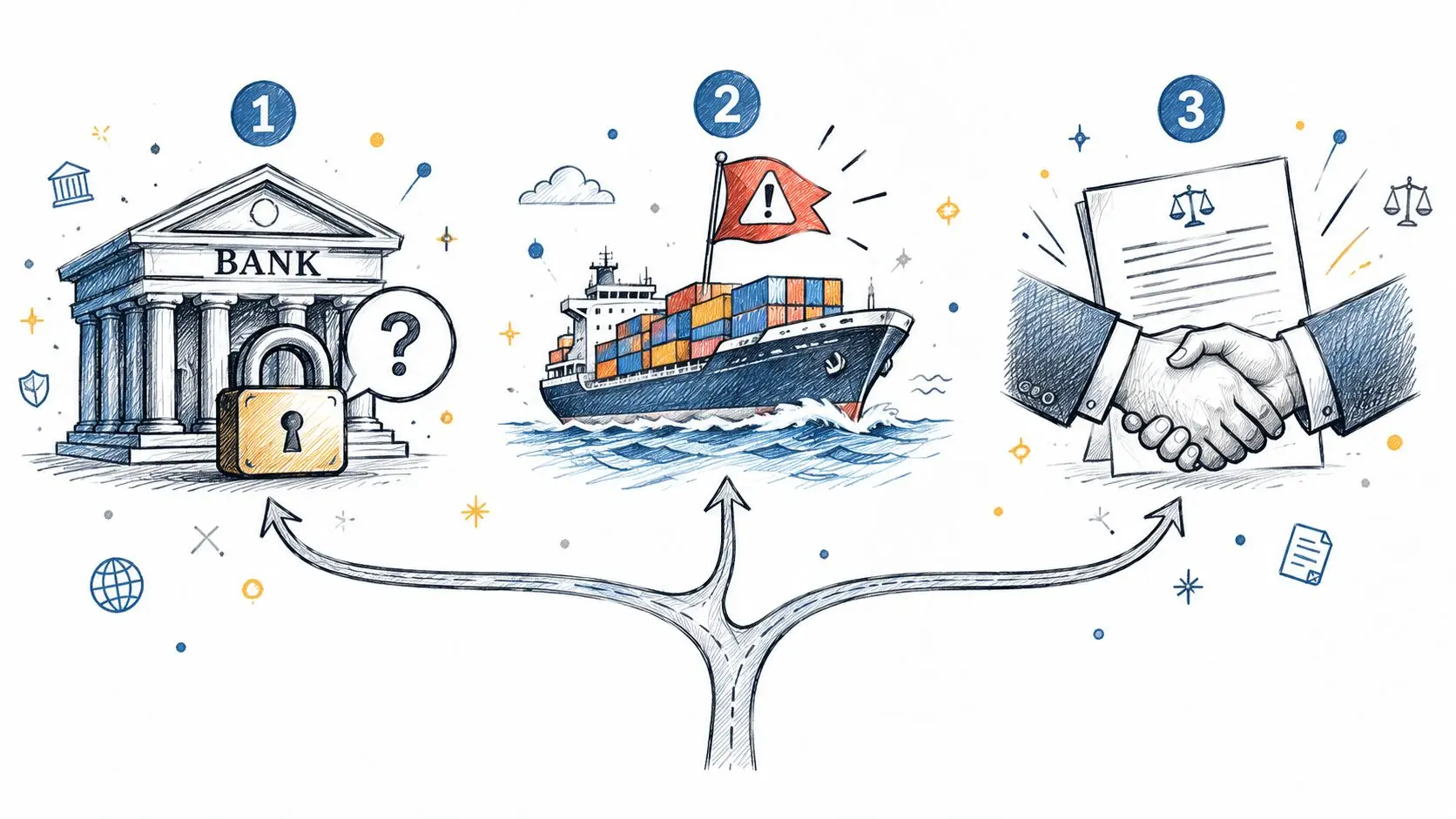
Overseas bank-account freeze
The first call should go to the legal lead, not the public-relations adviser. Counsel should identify the freezing authority, obtain the bank’s stated basis, preserve account records, and separate disputed funds from ordinary operating cash.
Within the first day, counsel should issue an evidence-preservation instruction covering payment files, customer correspondence, onboarding documents, invoices, and beneficial-ownership records. Financial forensics should then reconstruct transactional provenance and identify the narrowest remedy.
The remedy may proceed through a formal representation, a targeted court application, and emergency relief. Courts may consider partial operation, limited withdrawals, or release of non-disputed amounts before final resolution, depending on the record and applicable procedure (legal remedies for Israeli bank-account freezes).
The communications adviser should prepare a controlled statement but hold publication until counsel understands the bank’s concerns. A premature accusation can harden the bank’s position and damage later negotiations.
Regulatory investigation
An investigation by the Israel Securities Authority or an antitrust authority creates a different sequence. Counsel should first identify the demand’s scope, the officers facing personal exposure, and the documents that require immediate preservation.
The legal lead should establish a privileged investigation structure. Separate counsel may represent the company, individual officers, or both, depending on conflicts. Counsel should document any joint-defense or common-interest arrangement before sharing sensitive analysis.
The team should then build a regulator timetable. It should challenge overbroad requests where appropriate, produce responsive material in a controlled sequence, and keep the board informed without distributing unnecessary investigative detail.
Public messaging should remain narrow. The company can acknowledge the process without characterizing the evidence or predicting the outcome.
Cross-border enforcement
A foreign regulator may seek asset disclosure, cooperation, or extradition support. The first counsel call should activate the foreign-forum team before local counsel makes substantive representations.
The team should preserve records, identify custodians, map assets, and assess whether a protective motion can limit disclosure or protect individual rights. Israeli counsel should coordinate the domestic response rather than operate independently.
That sequencing protects consistency. A local filing that concedes jurisdiction or describes facts inaccurately can weaken a foreign motion.
The public statement should address business continuity, not the merits. The board needs a single approved narrative while counsel protects the company’s procedural position.
How to Evaluate a Crisis Management Law Firm Before You Sign
A board should assess capability through evidence, not branding. The firm must show who will answer, which jurisdictions it can reach, and how it will preserve privilege under pressure.
The following matrix gives general counsel a practical shortlist.
Crisis Management Law Firm Evaluation Matrix
| Evaluation Criterion | What to Ask For | Red Flag |
|---|---|---|
| Live crisis availability | Request a named partner, deputy, and response protocol | Shared inbox with no accountable lead |
| Cross-border reach | Identify owned offices and local counsel in relevant jurisdictions | Unmapped referral contacts |
| Sector experience | Ask for anonymized descriptions of defended enforcement matters | Advisory work presented as crisis defense |
| Forensic and e-discovery depth | Identify forensic accountants, review platforms, and data specialists | Litigation lawyers performing every technical task |
| Regulator experience | Ask which authorities the proposed team has represented clients before | Broad claims without named team experience |
| Fee structure | Require retainer terms, initial cap, billing triggers, and approval controls | Unclear emergency pricing |
Questions that expose a rebrand
Ask the proposed lead partner to explain the first operational decisions. The answer should cover evidence preservation, conflicts, privilege, forum selection, regulator contact, and communications control.
Ask who replaces that partner during illness, travel, or another live matter. A crisis service without substitute counsel creates a single point of failure.
Two warning signs should disqualify a firm:
- No named crisis lead: The engagement letter must identify the accountable partner.
- No privileged triage call: The firm should agree to a protected preliminary assessment before signature, subject to conflicts and professional rules.
RNC Group offers one model for this type of cross-border coordination. Its commercial practice addresses international disputes, bank-account restrictions, commercial agreements, and multilingual representation, while its ADVOC network connects clients with legal partners across more than 73 countries (RNC Group’s international law-firm profile).
The selection decision should focus on control. A firm that cannot explain its first call, first filing, and first evidence instruction won’t improve under pressure.
The Engagement Checklist for Israeli Companies and Multinationals
Procurement should convert crisis readiness into contractual obligations. The engagement letter should define access, authority, escalation, and cost before an incident creates bargaining pressure.
Pre-crisis phase
The company should require the firm to:
- Name the lead: Identify the responsible partner and deputy.
- Define triage: Set a privileged intake route and conflicts process.
- Set early costs: Establish a fee ceiling for the first response period.
- Map escalation: Identify Israeli counsel, foreign counsel, forensic accountants, and communications advisers.
- Test access: Record emergency contact details and backup communication channels.
The company should also provide a corporate structure chart, key contracts, regulator inventory, insurance details, and prior enforcement history. Counsel can’t sequence a response without knowing which entities, agreements, and authorities matter.
Engagement phase
The representation letter should define the client entities and individuals. It should address conflicts, joint privilege, common interest, data access, document preservation, regulator communications, and media approval.
The company should require a written timetable for regulator responses. It should also agree on a media hold posture with communications advisers, including who can approve a statement.
A separate evidence-preservation memo should identify custodians, systems, devices, and retention risks. The memo should apply across the corporate group where appropriate.
Post-stabilization phase
The firm should deliver a lessons-learned memorandum and a regulatory follow-up calendar. It should also manage insurance recovery filings, remaining disclosures, remediation, and retainer renewal terms.
Engagement instruction: Require every emergency decision to have an owner, a deadline, an approved information source, and a documented escalation path.
This checklist helps a general counsel compare firms on operating substance. It also prevents the company from buying an impressive presentation without securing usable crisis infrastructure.
Preventative Risk Management and Long-Term Partnership Posture
A firm that appears only after a subpoena functions as a litigation vendor. A strategic crisis partner maintains readiness before the incident.
The relationship should include privileged risk reviews, exposure mapping across jurisdictions, regulator-response templates, and simulation exercises for senior management. These reviews should test the company’s actual decision paths, not merely discuss hypothetical risks.
What the firm should maintain
Counsel should keep current:
- Corporate maps: Show ownership, control, subsidiaries, and decision-makers.
- Contract registers: Identify termination rights, indemnities, governing law, and dispute forums.
- Regulator inventory: List authorities that can investigate, fine, freeze, or compel disclosure.
- Enforcement history: Record prior inquiries, settlements, notices, and remediation.
- Response tree: Show who activates counsel, forensics, finance, insurance, and communications.
The client should expect a named partner, a 60-minute response SLA, and a tested escalation tree. Those service terms should appear in the retainer rather than remain informal assurances.
Prevention also reduces duplicated work. Counsel who already understands the structure, contracts, and risk profile can select a forum faster and avoid rebuilding the factual record during the emergency.
Regulatory scrutiny now drives many crisis decisions before litigation begins. A June 2026 review reports that 67% of surveyed in-house lawyers cite regulatory or political scrutiny as a top concern, ahead of cybersecurity and privacy, while discussing expanded corporate criminal liability, anti-corruption enforcement, deferred prosecution developments, and AI use by competition authorities (Travers Smith crisis-management and investigations review).
The cheapest hour of crisis work is the hour billed before the incident occurs. Boards should fund preparation while the company still controls the timetable.
RNC Group offers cross-border crisis planning, commercial dispute strategy, bank-account restriction work, multilingual legal coordination, and international litigation support. Companies facing a live matter should avoid costly sequencing errors and contact RNC Group now to establish a controlled response plan.
This article provides general information only and doesn’t constitute legal advice. Laws, procedures, deadlines, privilege rules, and regulatory duties vary by facts and jurisdiction, so readers should obtain advice from qualified counsel before acting.