

Real estate scams in Israel pose a severe threat to corporate and international investors unfamiliar with local legal protocols. The most financially devastating risks stem from seller impersonation using forged documents and the audacious fraud of double-selling a single property to multiple buyers. Therefore, neutralizing these threats requires a forensic level of due diligence. This standard far exceeds the standard practices in Western markets.
Understanding The Risks In Israel’s Property Market
Israel’s real estate market is a powerful engine for investment, drawing in global capital with its promise of significant growth. However, for corporate entities and international business clients, this dynamic landscape conceals sophisticated traps fundamentally different from those in North American or European markets. Your standard due diligence checklist, while a necessary start, is often insufficient. It cannot detect the calculated fraud tactics deployed here.
The core vulnerability lies in navigating a system with unique legal frameworks and property registration procedures. This knowledge gap is precisely what criminal elements seek to exploit. In fact, an investor can execute their conventional process, believing all bases are covered. However, they may later discover that a single oversight—unique to Israeli law—has jeopardized their entire capital investment.
Common Fraud Tactics Targeting Foreign Entities
These are not random acts of crime; they are calculated schemes designed to prey on specific procedural weaknesses. In Tel Aviv’s high-stakes property market, for instance, scams targeting foreign buyers have surged, with seller impersonation leading the charge.
Fraudsters often pose as absentee owners or heirs residing abroad. They use expertly forged documents to manufacture pressure for a rapid deposit. Their objective is to secure your funds before you have the opportunity to conduct proper verification with the official land registry, known as the Tabu. For further reading, you can find more real-world examples of these prevalent real estate scams in reports from Semerenko Group.
This is why a proactive, expert-led legal strategy is not merely advisable—it is an absolute necessity. Understanding the threats you face is the foundational step toward constructing an impregnable defense.
A classic scam involves creating a false sense of urgency. Criminals will invent narratives about competing buyers or an impending deadline to rush an international investor into wiring funds. Any pressure to act before full legal verification is complete is a significant red flag demanding immediate scrutiny.
Primary Real Estate Scam Threats in Israel
To effectively protect your investment, you must recognize the architecture of these scams. Each is designed to target a different phase of the transaction, from initial engagement through to the final transfer of funds.
Here is a breakdown of the most common threats you will encounter.
| Scam Type | Primary Tactic | Vulnerable Target |
|---|---|---|
| Identity Theft / Seller Impersonation | Using forged ID documents and powers of attorney to pose as the legitimate property owner. | Investors targeting properties owned by non-residents, the elderly, or complex family estates. |
| Double-Selling of Property | Executing separate, legally binding sales contracts with multiple buyers for the identical property. | Buyers who delay the registration of a Cautionary Note (Hearat Azhara) at the Land Registry. |
| Investment Scheme Fraud | Using a legitimate-appearing property deal as bait to channel capital into unregulated, fictitious financial schemes. | Investors pursuing high-yield, off-market deals who are then upsold on fraudulent side ventures. |
Successfully investing in Israeli real estate demands more than just capital; it requires specialized legal counsel with deep, demonstrable expertise in the local market. Acknowledging these foundational risks is critical before committing to any transaction. It establishes the framework for the specific protective measures you must implement.
How Identity Theft and Double-Selling Scams Unfold
When it comes to Israeli real estate, the most catastrophic losses almost invariably trace back to two brutally effective scams: identity theft and double-selling. These are not opportunistic crimes but meticulously orchestrated operations, specifically designed to exploit the distance, unfamiliarity, and trust of foreign investors. The first step in building a formidable defense is understanding exactly how these schemes are executed.

These fraudsters are masters of psychological manipulation. They prey on the fear of missing out, fabricating a sense of urgency. The investor is led to believe they have secured a rare opportunity that requires an immediate wire transfer, thereby pressuring them to bypass the very due diligence that would have exposed the fraud.
The Anatomy of an Identity Theft Scenario
Real estate identity theft is a calculated act of impersonation. Fraudsters specifically target properties whose owners are not actively engaged—elderly individuals, heirs residing abroad, or any non-resident landlord who is not closely monitoring their assets.
The scam unfolds in a predictable, devastating sequence:
- Targeting the Vulnerable: The perpetrators identify a desirable property, typically through public records. They then research the legitimate owner, focusing on those living thousands of miles away.
- The Forgery Factory: Next, they produce a highly convincing set of forged documents. This almost always includes a fake Israeli ID card (Teudat Zehut) and, crucially, a forged power of attorney that appears to grant them the legal authority to sell the property on the owner’s behalf.
- Applying Pressure: Posing as the owner or their legal representative, they engage a potential buyer. They invent a compelling reason for a quick, below-market sale—a sudden family emergency, an urgent need for liquidity—anything to rush the investor into transferring a substantial deposit.
- The Disappearance: As soon as the deposit is credited to their account, the fraudulent seller vanishes. The funds are often rapidly funneled through a series of accounts and withdrawn, leaving the investor with a significant financial loss and no legal claim to the property.
The sophistication of modern forgeries is alarming. From official-looking government stamps to flawlessly replicated signatures, these documents can easily deceive an untrained eye. Only rigorous, independent verification by a legal professional intimately familiar with Israeli documentation can reliably detect the fraud.
The Double-Selling Scheme: An Exploitation of Process
The double-selling scam is an act of sheer audacity. In this scenario, a legitimate property owner or developer exploits the critical time gap between the signing of a sales contract and the official registration of the transaction with the authorities.
The seller enters into separate, legally binding sales agreements with multiple buyers for the very same property. In addition, they collect a substantial deposit from each unsuspecting party. They capitalize on the window of time before any single buyer can file the necessary paperwork to publicly secure their claim.
By the time the buyers discover the deception, the seller has often absconded with multiple deposits. This leaves a complex legal battle where multiple parties must litigate their claims to a single property that only one can legally own. It is one of the most prevalent real estate scams israel investors fall victim to.
The Critical Role of the Cautionary Note (“Hearat Azhara”)
Both of these scams depend on a single point of failure: the time lapse before a buyer’s interest is legally recorded in the official Israeli Land Registry (the Tabu). In both identity theft and double-selling schemes, the fraudster’s entire strategy is to seize the funds before any public record of the sale exists.
This is precisely why the immediate registration of a Cautionary Note (Hearat Azhara) is the single most powerful defense an investor possesses. This straightforward legal filing acts as a public lien, effectively blocking the seller from executing any further transactions on that property. Failing to register it the moment a contract is signed is a critical error. It leaves the door wide open for these devastating schemes.
The “Hearat Azhara”: Your Indispensable Legal Shield
Having dissected the anatomy of scams like identity theft and double-selling, we now pivot from the problem to the solution. Within the intricate world of Israeli property law, one instrument stands paramount as your most powerful line of defense: the Cautionary Note, known in Hebrew as the Hearat Azhara.
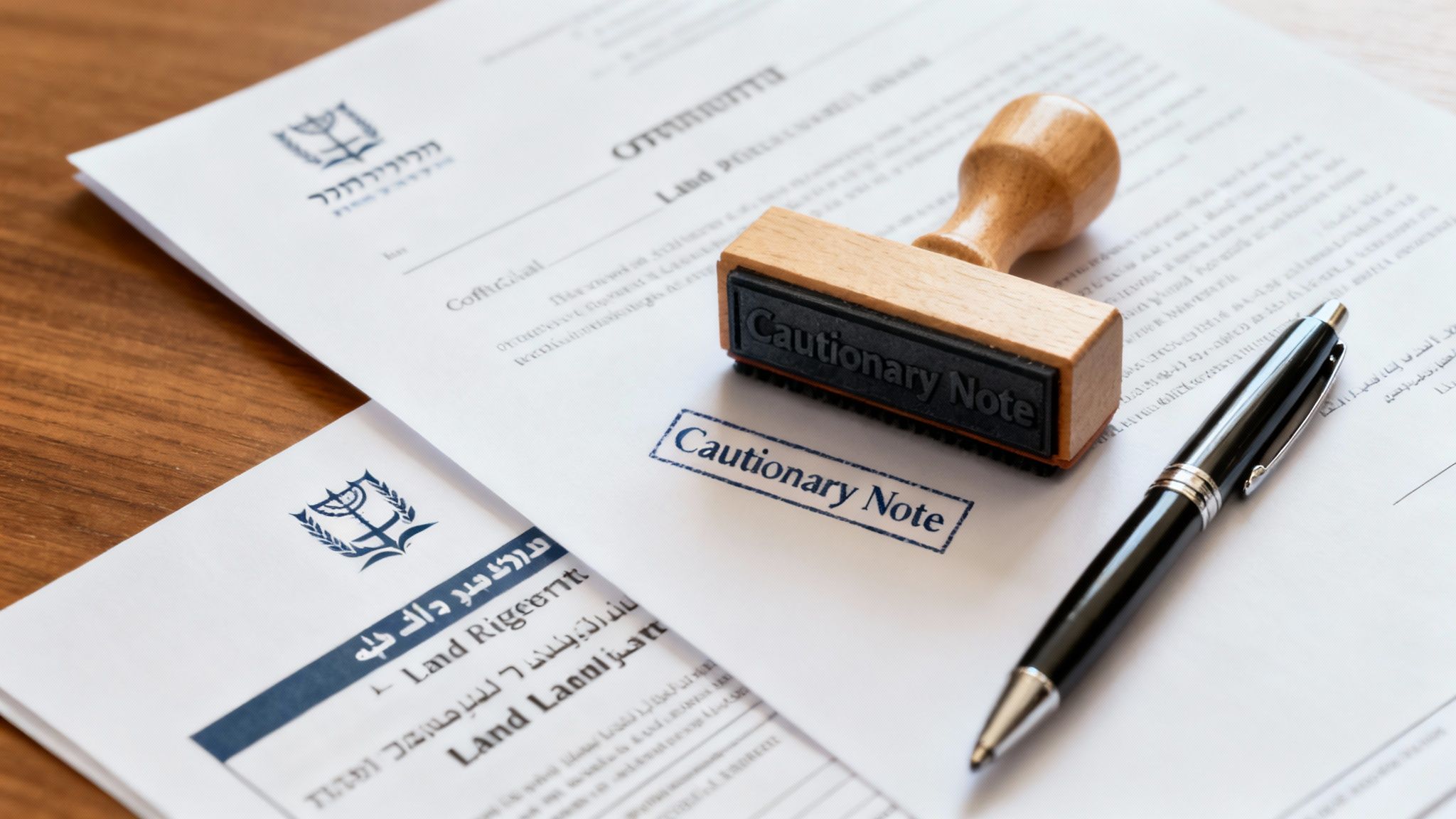
Understanding and utilizing this tool is not a mere technicality; it is an absolutely non-negotiable step for any entity serious about securing a real estate investment in Israel. To clarify, this simple registration is the legal mechanism that transforms your private purchase agreement into a publicly recorded, enforceable stake in the property.
Think of the Israeli Land Registry Office (the Tabu) as the definitive public ledger for all property rights. Without a Cautionary Note, your signed contract—while binding between you and the seller—is invisible to the rest of the world. Therefore, this is the precise blind spot that fraudsters rely on to sell the same apartment to multiple victims.
How The Cautionary Note Acts as a Legal Shield
The moment a Hearat Azhara is registered against a property’s title, it creates a powerful public lien. It effectively freezes the property’s transactional status at the Land Registry.
It serves two immediate, critical functions:
- It Blocks Conflicting Transactions: The note legally prevents the owner from entering into any other conflicting agreements. This means they cannot sell it to another party, execute a conflicting lease, or secure another mortgage against it.
- It Serves as a Public Warning: It acts as an official, public notice to any other potential buyer, bank, or creditor that you hold a legally recognized interest in that property.
Filing the Note is your definitive legal bulwark. As a result, any subsequent attempt by the seller to transact on the property will be immediately blocked by the Land Registry. It neutralizes the threat of a double-selling scam before it can even begin.
A Cautionary Note establishes your priority. In the event of the seller’s bankruptcy or insolvency, a buyer with a registered Note gains preferential status over other unsecured creditors, protecting your investment from their financial distress.
The Imperative of Speed
The most significant mistake an investor can make is delaying the registration of the Cautionary Note. The window of time between signing the purchase agreement and filing the Note is your period of maximum vulnerability. Every hour of delay is an open invitation for fraud.
Any competent legal counsel will insist on filing the Note on the same day the agreement is signed, if not simultaneously. This decisive action slams the door on criminals who depend on this procedural gap. Otherwise, failing to act immediately is a catastrophic oversight, akin to leaving a bank vault open overnight.
Furthermore, many sophisticated scams begin with social engineering. A solid understanding of phishing attack prevention is a crucial part of your defense. It protects the sensitive communications and documents that precede the transaction. While vigilance is vital, the Cautionary Note is the legal instrument that provides real, enforceable protection against Israel’s most common real estate scams.
Spotting Red Flags in Investment Schemes
It may begin with an inquiry about a Tel Aviv apartment, but it can end in a complete loss of capital.
Direct property scams—such as a seller who does not hold legal title—are a significant threat, but they are often merely the opening act. For sophisticated criminal networks, a straightforward real estate transaction is the perfect entry point into the much larger, more dangerous world of investment fraud.
It is crucial for corporate entities and seasoned investors to recognize when a property deal is merely a pretext, a carefully crafted lure designed to pull them into a far more complex and unregulated scheme.
These operations are masters of the “bait and switch.” The initial conversation feels solid and tangible, centered on a desirable asset—a luxury condominium with sea views or a commercial building with excellent yield potential. This builds a foundation of credibility. Once they sense your trust, the conversation subtly pivots from concrete real estate to abstract, high-return financial products that are entirely fictitious.
The Pivot from Property to Speculative Products
The shift is often seamless. The individual you believe to be a real estate broker or investment manager will suddenly introduce an “exclusive” opportunity tied to the property. For example, it could be a fractional ownership scheme, a real estate investment trust (REIT) that is nothing more than a sophisticated website, or a cryptocurrency venture supposedly backed by their property portfolio.
The promises are always extraordinary, dangling returns completely disconnected from market realities. This is your first and most critical red flag. Legitimate real estate yields are predictable and grounded; fraudulent schemes promise the impossible.
Watch for these classic tactics:
- High-Pressure Sales Tactics: If you encounter demands for an immediate decision, claims of “only two spots left,” or warnings that the opportunity will vanish by tomorrow, you must disengage. Legitimate investments always allow adequate time for thorough due diligence.
- Guaranteed High Returns: Any investment that “guarantees” returns of 20%, 30%, or more with “no risk” is almost certainly a scam. All markets, especially real estate, carry inherent risks.
- Unregulated Platforms: The conversation will quickly steer towards wiring funds to an unfamiliar online trading platform or a foreign entity with no clear regulatory oversight. They want your money out of the traditional, regulated banking system as quickly as possible.
A common ploy involves presenting a professional-looking prospectus for a “real estate development fund.” The documents appear impressive and the projections stellar, but the entity behind it is a shell corporation designed solely to collect funds and disappear.
Israel as a Hub for Sophisticated Online Scams
International investors must understand the broader context. For years, Israel has unfortunately been a significant center for complex online investment fraud operations that target a global audience. These are not small-time criminals; they are highly organized, technologically advanced networks skilled in psychological manipulation.
A landmark investigation by the Organized Crime and Corruption Reporting Project (OCCRP) exposed a sprawling network dubbed the ‘Scam Empire,’ with deep operational roots in Tel Aviv. Leaked data revealed that between January 2021 and December 2024, nearly 27,000 victims from over 30 countries wired more than $247 million to these fraudulent operations. Furthermore, many of them used real estate as the initial lure to build trust.
You can explore the full investigation into these massive investment scams on OCCRP.org.
This highlights the industrial scale of the threat. The “agent” on the phone may not be a lone operator but a small part of a large, criminal syndicate. You must scrutinize the origin of any proposal and maintain professional skepticism toward any venture that deviates from a standard, verifiable property transaction.
If a deal sounds too good to be true, it invariably is.
A Step-by-Step Due Diligence Protocol
Understanding scams is one thing; building a practical, institutional-grade defense is another. For corporate entities and international investors, the Israeli real estate market demands a disciplined, forensic verification process. Importantly, this is not a generic checklist but a precise protocol designed to neutralize the specific tactics employed by local fraudsters.
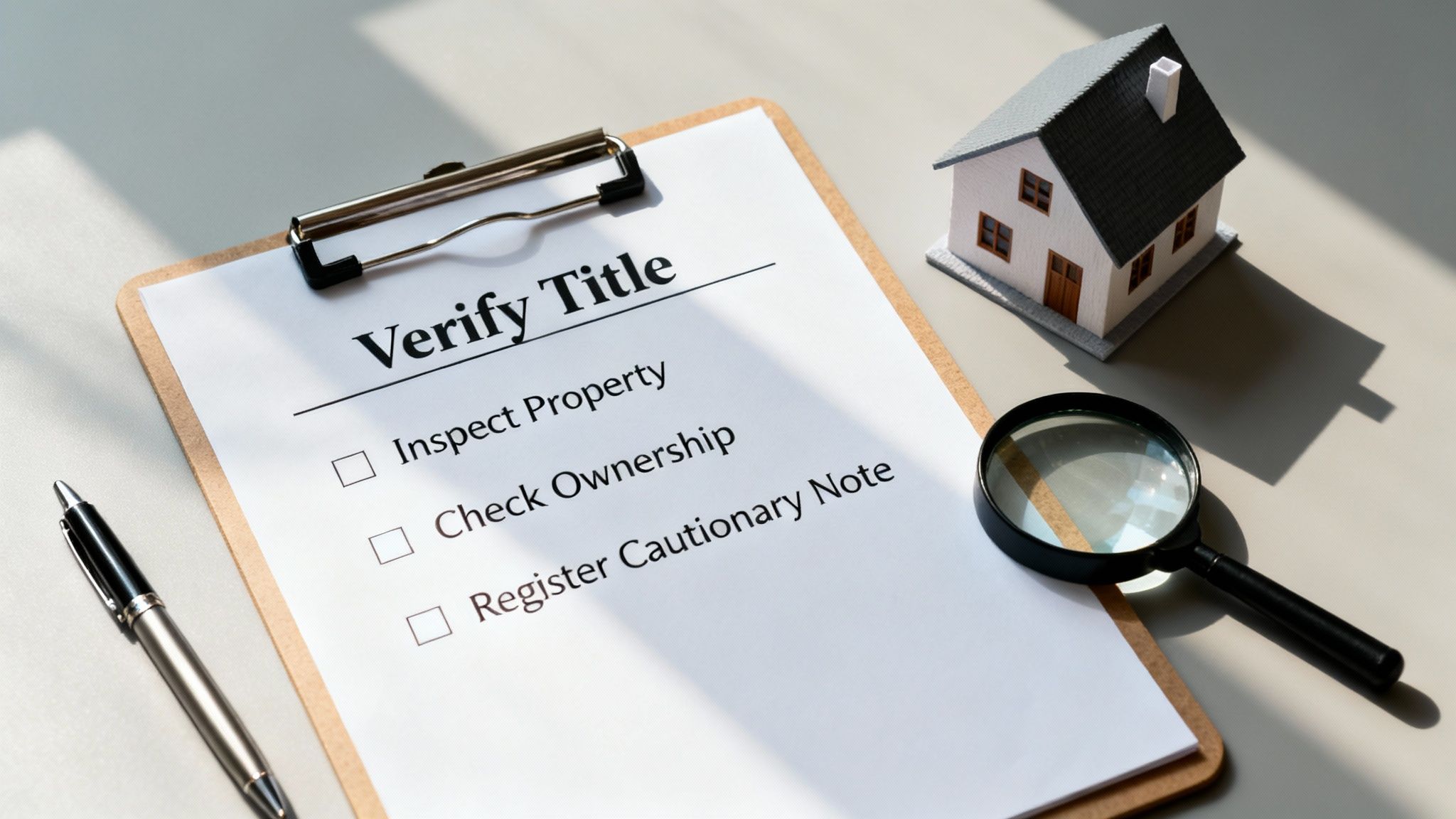
This protocol is about establishing a verifiable chain of ownership and legitimacy that you control. Each step functions as a critical firewall against the types of real estate scams Israel-based criminals favor. It ensures your capital is committed only after every detail has been independently confirmed.
Stage 1: Independent Title and Identity Verification
The absolute foundation of any secure transaction is independent ownership verification. Never rely on documents provided by the seller or their representatives, regardless of their apparent authenticity. Instead, your legal counsel must obtain records directly from the official Israeli Land Registry, the Tabu.
This stage involves two non-negotiable actions:
- Obtaining an Official Title Extract (Nesach Tabu): This is the property’s definitive legal biography. It lists the registered owner(s), any mortgages, liens, third-party rights, and—critically—any registered Cautionary Notes (Hearat Azhara).
- Cross-Referencing Identity: The owner’s name and ID number on the Nesach Tabu must be painstakingly matched against the seller’s official identification documents. This single check is your primary shield against the sophisticated identity theft and impersonation scams that plague foreign buyers.
Stage 2: Corporate and Municipal Scrutiny
When dealing with corporate structures, you must look beyond the immediate seller. If a property is held by a corporation or trust, it is essential to investigate the ultimate beneficial ownership. In other words, who truly stands to profit from this sale?
Simultaneously, your physical inspection of the property must be reconciled with official municipal records. This includes:
- Reviewing Municipal Plans: Does the constructed building match the blueprints filed with the municipality? Unpermitted additions or illegal renovations are latent liabilities that can result in significant legal and financial consequences.
- Checking for Encumbrances: Investigate any potential orders against the property. This includes demolition orders, zoning violations, or unpaid municipal taxes (Arnona), all of which can become your responsibility post-acquisition.
A classic trap for the unwary is the failure to check for an outstanding Betterment Levy (Hetel Hashbacha). This is a tax imposed when municipal zoning changes increase a property’s value. If the seller has not settled this liability, the bill can become a substantial and unexpected expense for the new owner. Your lawyer must verify its status before closing.
Stage 3: Contractual Safeguards and Final Steps
With ownership and the property’s legal status confirmed, the focus shifts to securing the transaction itself. Therefore, the purchase agreement must be more than a standard template; it requires specific protections for a foreign buyer, such as ironclad timelines, clear default clauses, and explicit representations of a clean title.
Then comes the final, most urgent step: registering a Cautionary Note.
The instant the purchase agreement is signed, your attorney must file a Hearat Azhara with the Land Registry. As previously discussed, this action puts the world on notice of your claim to the property. It legally blocks the seller from attempting to sell it to another party in a double-sale scam. Delaying this by even a single day leaves your entire investment exposed.
Due Diligence Checklist for Foreign Investors
Having a clear, actionable checklist makes the process foolproof. In sum, this table summarizes the protocol, transforming theory into a practical defense against fraud. Use it to ensure no detail is overlooked before any funds are transferred.
| Verification Stage | Action Required | Critical Purpose |
|---|---|---|
| Title & Identity | Pull official Nesach Tabu from the Land Registry. | Independently verify the legal owner and property status. |
| Title & Identity | Match Nesach Tabu details with seller’s official ID. | Prevent identity theft and impersonation fraud. |
| Corporate Scrutiny | Investigate corporate ownership structures to find the ultimate beneficial owner. | Uncover hidden stakeholders and complex legal entities. |
| Municipal Scrutiny | Compare the physical property to official municipal plans. | Identify illegal construction and future liabilities. |
| Municipal Scrutiny | Check for municipal liens, orders, or unpaid taxes (Arnona, Hetel Hashbacha). | Avoid inheriting the seller’s debts and legal problems. |
| Contractual Safeguards | Draft a purchase agreement with specific foreign buyer protections. | Secure the transaction with clear terms and default clauses. |
| Immediate Action | File a Hearat Azhara (Cautionary Note) the moment the contract is signed. | Legally block the seller from attempting fraudulent double sales. |
This systematic approach is not merely about reviewing paperwork; it is an active defense. By implementing these layers of security, you create a fortress around your capital that is essential for any significant cross-border investment in Israel.
Building Your Legal Shield in the Israeli Market
Venturing into Israeli real estate without specialized legal counsel is akin to navigating a minefield blindfolded. It is not merely about standard diligence; it is about engaging a team that comprehends the local landscape, its unique legal traps, and how to manage a crisis when circumstances deteriorate. The scams we observe—from sophisticated identity theft to brazen double-selling schemes—are specifically designed to prey on the unfamiliarity of foreign investors. For this reason, the only viable defense is a proactive one: retaining a dedicated legal team before a problem arises to construct a fortress around your capital.
Part of this fortress is a rigorous adherence to regulatory requirements. Adopting a mindset of proactive security compliance is not exclusive to tech companies; it is a core principle for any secure investment framework.
Secure Your Venture with Expert Guidance
In Israel, instruments like the Cautionary Note (Hearat Azhara) and a deep-dive due diligence protocol are not just formalities. Instead, they are the very bedrock of a secure transaction. Every step, from pulling an official title extract directly from the Land Registry (Tabu) to investigating municipal records and untangling corporate ownership structures, functions as a critical firewall. Importantly, omitting even one can expose your entire investment to a catastrophic loss.
For corporate decision-makers and high-net-worth individuals, the margin for error is nonexistent. The layers of complexity in cross-border transactions demand a legal partner who not only identifies the risks unique to the Israeli market but is also prepared to neutralize them with immediate, decisive action.
Protecting your capital in a foreign market is not a DIY endeavor; it requires a strategic legal partner with proven crisis management experience. If you are considering a real estate investment in Israel, ensure your interests are defended by a firm with extensive cross-border experience. To discuss your specific needs and how our tailored due diligence can secure your transaction, consult with our international real estate attorneys.
Got Questions? We’ve Got Answers
Investing in Israeli real estate from abroad can be a complex undertaking. It is prudent to be cautious. Here are direct answers to the questions we most frequently hear from foreign buyers concerned about the real estate scams israel is known for.
What’s the Single Biggest Mistake Foreign Buyers Make?
Without question, the most critical error is delaying the registration of a Cautionary Note (Hearat Azhara) at the Land Registry Office, or Tabu.
Any delay between signing the purchase agreement and filing this note creates a window of opportunity for a fraudster to execute a double-selling scam or other illicit transactions. This action must be executed immediately upon signing.
How Can I Be 100% Sure the Seller Is the Real Owner?
Never accept documents from the seller or their agent at face value. Your legal counsel’s first and most crucial task is to independently obtain an official title extract (Nesach Tabu) directly from the Land Registry.
This document is the sole source of truth for legal ownership. It must be meticulously compared against the seller’s official identification to detect sophisticated impersonation scams before they can cause harm.
Modern forgeries can be exceptionally convincing. A professional who handles Israeli documents daily can spot the subtle red flags—an incorrect stamp, a slight deviation in a signature, or improper formatting—that a newcomer would easily overlook.
Are High-Pressure Sales Tactics a Common Red Flag?
Absolutely. If you feel you are being rushed, it should be considered a significant warning. A classic indicator of many real estate scams in Israel is the creation of manufactured urgency.
Scammers invent narratives about competing buyers or “limited-time” offers to pressure you into transferring funds before completing your due diligence. However, a legitimate transaction will always allow sufficient time for proper legal and financial verification. Treat any attempt to force a hasty decision as a serious red flag.
At RNC Group, our cross-border litigation and commercial law expertise is your shield against the unique risks of the Israeli property market. We provide the rigorous, meticulous due diligence and strategic legal advice necessary to protect your investment from day one. Consult with our international real estate attorneys and ensure your transaction is secure.
This article does not constitute legal advice and is not a substitute for consulting with a qualified attorney. Do not rely on the contents of this article for taking or refraining from taking any action.