
Most companies still treat intellectual property like a filing exercise. That approach fails in cross-border business, and it fails faster in 2026. If a company can’t prove ownership, control access, and enforce rights across jurisdictions, its IP strategy isn’t an asset. It’s a liability.
Non-Israeli companies entering Israel often focus on market entry, distributors, tax, and employment. They should focus on control. IP disputes in Israel rarely begin with a patent filing problem alone. They usually begin with a broken handoff, a weak contractor agreement, an unguarded code repository, a reseller using the wrong brand assets, or a partner claiming rights that were never assigned cleanly.
The strategic question isn’t whether a business has intellectual property. It does. The critical question is whether that business can identify it, lock it down, and deploy it during conflict without losing speed.
Is Your 2026 IP Strategy a Liability
A weak IP position creates operational risk before it creates a legal dispute. It undermines fundraising, licensing, M&A diligence, channel expansion, and crisis response. That is why serious management teams should treat IP as part of corporate defense.
In 2023, more than 3.5 million patent applications were filed worldwide, and the technology sector accounted for 40% of all applications, according to this analysis of global patent filing trends. That volume signals direct pressure. Competitors are filing early, reserving territory, and turning product development into legal position.
Filing Is Not the Strategy
Many founders still ask the wrong question. They ask, “Should the company file a patent?” The better question is, “Which rights matter most to commercial control, and what fails first if a dispute starts tomorrow?”
A registered right can still become commercially useless. That happens when inventorship records are weak, when software was built by freelancers without assignment language, or when confidential know-how was disclosed too broadly. Rights collapse when governance collapses.
Critical point: IP protection starts long before enforcement. It starts when the company decides who may access key assets, who owns improvements, and which disclosures require approval.
For non-Israeli businesses, the Israeli market raises another issue. Local partnerships move quickly. Distribution relationships can expand informally. Product localization can create derivative materials, translated interfaces, modified packaging, and adapted marketing copy. Each of those changes can trigger ownership and use questions if contracts don’t answer them in advance.
Corporate Control, Not Legal Formality
The strongest companies use IP to control strategic advantages. They don’t just register names, code, designs, and inventions. They connect each asset to a commercial objective.
That means asking direct questions:
- Market access: Which asset blocks a copycat from entering first?
- Negotiation strength: Which right improves bargaining power with a distributor or investor?
- Crisis response: Which documents prove ownership within hours, not months?
- Exit value: Which rights survive diligence and justify valuation?
A company that can’t answer those questions is exposed. It may still own valuable rights. But it won’t be able to use them under pressure.
For that reason, anyone serious about how to protect intellectual property should stop thinking like a filer and start thinking like a crisis planner. The legal work matters. The sequencing matters more.
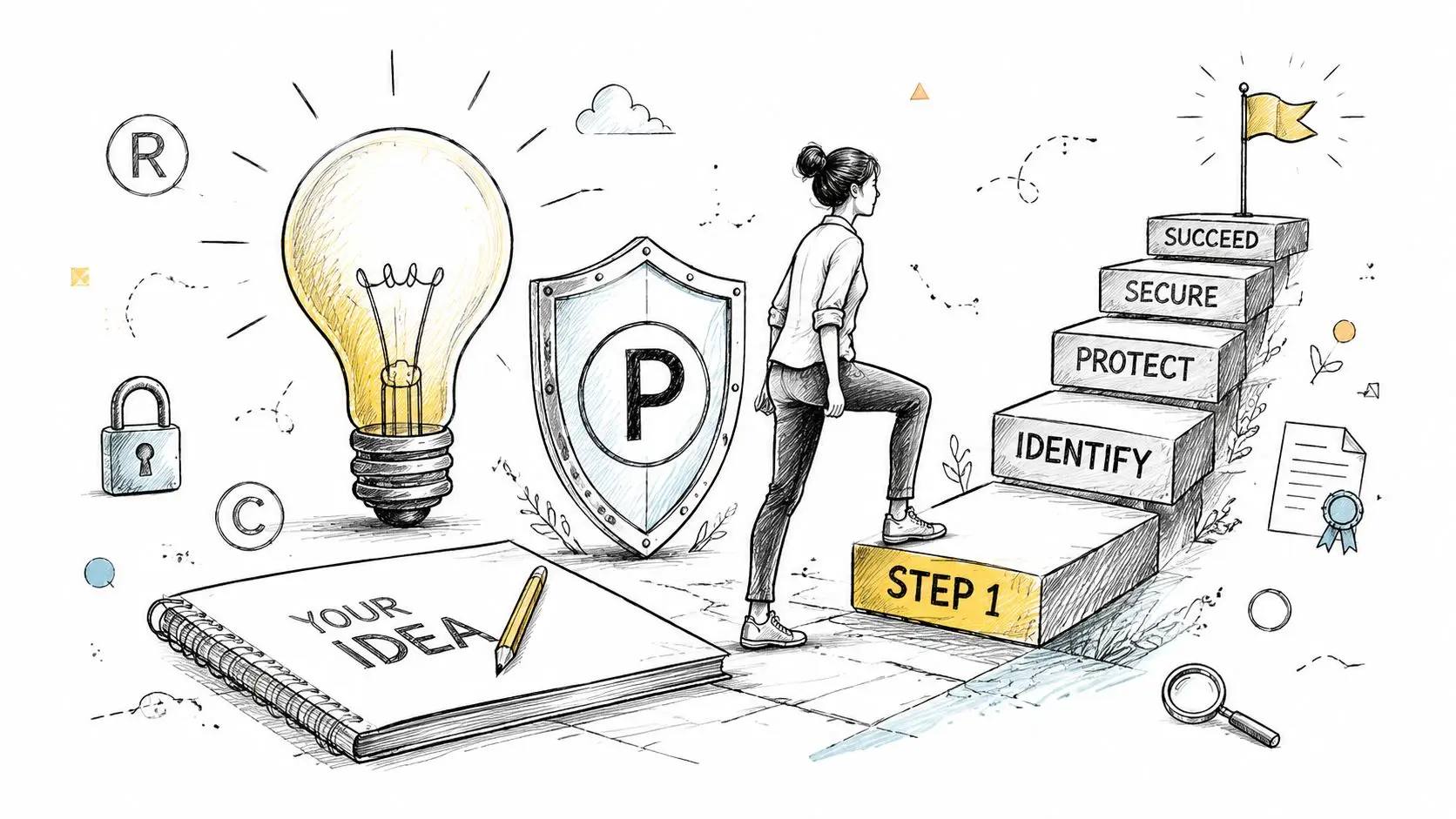
Your First Step in IP Protection
The first move is not registration. It’s visibility. A business can’t protect assets it hasn’t identified, classified, and linked to ownership records.
An effective workflow starts with a formal IP audit, then maps each asset to the correct protection mechanism, and hardens it with policies, NDAs, and access controls. For trade secrets, that active management is a legal requirement for enforcement, as explained in this guidance on corporate IP protection strategy.
Build an IP Inventory
An IP audit should produce a live inventory, not a static memo. It should list what the company owns, who created it, where it sits, how it is used, and what legal wrapper fits it best.
That inventory should include obvious assets and hidden ones.
- Registered-facing assets: patents, patentable inventions, trademarks, logos, product names, domain-linked brand material.
- Creative assets: source code, documentation, training manuals, website copy, product videos, UI text, translated materials.
- Confidential assets: algorithms, pricing logic, customer segmentation models, product roadmaps, deployment methods, internal playbooks.
- Relationship-linked assets: licensed content, co-developed materials, white-label packaging, reseller brand kits, and partner-created derivatives.
Most companies underestimate the last two categories. That’s where disputes often start.
Match the Asset to the Correct Shield
Not every asset should be registered, and not every asset should be disclosed. Some should stay secret. Others should be filed early. The discipline lies in choosing correctly.
An effective first-pass review should answer these points:
- What is the asset doing? If it drives brand recognition, trademark analysis comes first. If it delivers technical functionality, patent analysis may matter. If secrecy gives the edge, disclosure may be the wrong move.
- Who owns it on paper? Employee creation, contractor work, and joint development need clean assignments. If ownership is blurred, protection is already compromised.
- Where is it exposed? Public demo decks, sales calls, beta testing, and outsourced development can destroy confidentiality if controls are weak.
A disciplined audit often reveals that the most valuable IP never sat in the patent folder. It sat in Slack threads, vendor statements of work, design files, and product documentation.
This is also where cyber hygiene becomes legal hygiene. Trade secrets survive only if the company can show reasonable confidentiality controls. That is why security teams and legal teams must stop operating in separate lanes. Companies that want practical ways to strengthen that side of the framework can explore Canadian cybersecurity solutions as part of a broader confidentiality and access-control review.
Set Ownership Before Growth Accelerates
The audit should end with decisions, not observations. Assign ownership gaps to legal. Assign access restrictions to IT. Assign training duties to management. Then set a review cycle tied to product launches, hiring, fundraising, and market expansion.
If leadership waits until infringement appears, the record will already be incomplete. At that point, the company isn’t protecting IP. It’s reconstructing history.
A Strategic Guide to IP Protection Types
Most businesses don’t need more definitions. They need sharper choices. The right protection tool depends on whether the company values disclosure, speed, secrecy, branding, or durability most.
Understanding the timeline matters. In major legal systems, patents typically last 20 years, design rights can last up to 25 years, and trademarks can be renewed indefinitely, as noted in this overview of IP protection timelines. Those timelines shape portfolio design across the life cycle of a product, platform, or brand.
IP Protection Mechanisms At a Glance
| Protection Type | What It Protects | Key Advantage | Strategic Consideration |
|---|---|---|---|
| Patent | Technical inventions and functional innovation | Strong exclusion right over defined invention claims | Requires disclosure, careful timing, and disciplined inventorship records |
| Trademark | Brand names, logos, and source identifiers | Supports long-term market recognition and renewal-based continuity | Loses force if the business uses marks inconsistently or expands without filing in key markets |
| Copyright | Code, documentation, content, visuals, and creative expression | Arises quickly for fixed works and supports control over copying | Doesn’t protect the underlying business idea or technical concept by itself |
| Design right | Product appearance and visual features | Useful where look and product presentation drive buyer choice | Protection is narrower than founders expect if competitors alter appearance strategically |
| Trade secret | Confidential know-how, processes, formulas, and non-public methods | Can remain valuable as long as secrecy holds | Fails fast if the company doesn’t maintain real confidentiality measures |
Choose Based on Exposure, Not Habit
Too many companies default to patents because patents feel serious. That can be a mistake. If the invention is easy to reverse engineer and central to product differentiation, patent review may make sense. If value depends on an internal process that outsiders can’t inspect, secrecy may be stronger.
Trademark work often gets pushed down the agenda. That is shortsighted. In many commercial disputes, the immediate damage comes from brand confusion, channel misuse, and unauthorized marketing. A company with strong technical rights but weak brand control may still lose sales momentum.
Copyright deserves more strategic respect in software and digital businesses. It can support enforcement around copied code, interface elements, manuals, and commercial materials. But it should not carry the full burden alone. Copyright helps. It rarely solves the whole conflict.
Portfolio Logic Beats Single-Right Thinking
A disciplined company builds an IP portfolio like a layered defense model.
- Use patents when disclosure is worth the exclusivity.
- Use trademarks when market trust and channel control matter.
- Use copyright to secure the expression embedded in software and content.
- Use trade secrets when secrecy creates the edge and internal controls are realistic.
- Use design protection when appearance drives purchasing decisions.
Board-level rule: one asset, one analysis. One product, multiple rights.
That mindset changes decision-making. A mobile application may contain copyrightable code and content, trademarkable branding, patent-relevant technical functionality, and trade-secret operational logic. Treating it as only one category leaves value unprotected.
The practical lesson for anyone deciding how to protect intellectual property is simple. Stop asking which single filing is required. Start asking which combination maintains advantage through the product’s full commercial life.
Securing IP Through Agreements
Most IP losses don’t begin in the registry. They begin in contracts. A company may have a valid filing and still lose control because an employee agreement was sloppy, a contractor retained background rights, or a distributor gained practical freedom the business never intended to give.
That is why agreements define the perimeter. Registration gives rights. Contracts decide who can touch them.

The Clauses That Matter Most
A proper IP contract framework should cover creation, use, return, enforcement, and post-termination restrictions. Anything less invites argument.
The minimum contractual architecture should include:
- Assignment language: The agreement should state clearly that IP created within scope belongs to the company. Future-tense promises to assign are weaker than present-tense assignment mechanics.
- Confidentiality obligations: NDAs should define confidential information broadly enough to cover technical, commercial, and operational knowledge, but precisely enough to enforce.
- Moral rights and waiver issues: Creative and design work often raises attribution and modification issues that businesses ignore until a dispute surfaces.
- Improvement rights: Joint work, pilots, and integrations often create enhancements. The contract should state who owns those improvements.
- Exit obligations: Access revocation, document return, deletion protocols, and certification duties should activate immediately at termination.
Boilerplate Causes Expensive Damage
Boilerplate fails because the commercial relationship is never boilerplate. A startup using external developers, a foreign brand using an Israeli distributor, and a manufacturer co-designing packaging each create different ownership and leakage risks.
Consider a common scenario. A foreign software company hires an external team to localize a platform for Israel. The vendor modifies interface text, workflows, and user guidance. Later, the relationship breaks down. If the contract never assigned derivative materials and localized content back to the company, the business may face a messy ownership fight over assets it assumed it controlled.
If a contract leaves room for competing ownership narratives, the dispute starts before the first demand letter is sent.
That same problem appears in reseller and licensing arrangements. A channel partner may begin using brand assets outside approved territory, alter promotional language, or create lookalike sub-brands for local sales. By the time the rights holder notices, the partner may already claim implied permission based on conduct.
Contractual Hygiene Is Risk Management
A strong agreement does three things. It allocates ownership clearly. It limits misuse before it starts. It produces evidence that can be deployed fast in negotiation or court.
For non-Israeli businesses, this matters even more when working through local representatives, Hebrew-language materials, and cross-border performance chains. Translation errors, informal amendments, and conflicting signature authority can all undermine enforcement later.
Companies that treat agreements as procurement paperwork usually discover the cost during conflict. Companies that treat agreements as security instruments keep control when pressure hits.
Expanding Your IP Shield Across Borders
What happens if your company enters Israel with a product launch plan, distributor pipeline, and brand budget, but no jurisdiction strategy for IP? You hand competitors, former partners, and local opportunists a cleaner opening than they deserve.
IP does not travel with ambition. It travels with filings, recordkeeping, and controlled disclosure. Rights are territorial. Control is territorial too. If a non-Israeli company treats Israel as just another sales destination, it misses a critical issue. Market entry creates a new conflict environment. Your IP plan has to be built for pressure, not paperwork.
Software, devices, brands, content, and internal know-how need different forms of protection. Copyright may cover code and materials. Patents may cover technical features. Trademarks protect market identity. Trade secrets protect what should never enter the public domain. This guide to types of intellectual property protection explains the categories. The strategic point is simpler. No single right gives you control over the full commercial stack.
Build the Filing Map Around Exposure
Start with exposure, not theory. File where revenue, manufacturing, licensing, hiring, and disclosure give other parties an advantage. U.S. trade guidance on protecting intellectual property abroad makes the same point in practical terms. Prioritize the jurisdictions that can hurt you.
For a foreign company entering Israel, that usually means four pressure points. Sales. Local partners. Product disclosure. Brand visibility.
A filing program should match those points of risk:
- Commercial routes: cover the jurisdictions tied to manufacturing, import, sales, and distribution.
- Copying risk: cover markets where counterfeits, clone products, or unauthorized resellers are likely to surface.
- Transaction timing: align filings with fundraising, M&A planning, and major partner negotiations.
- Disclosure timing: secure key rights before demos, technical reviews, pilot programs, and diligence access.
This is not administrative hygiene. It is pre-positioning for dispute.
Use International Systems to Buy Time and Preserve Options
Patent strategy fails when management confuses speed with sequence. The Patent Cooperation Treaty exists to give companies more time to decide where national filings deserve real budget. The World Intellectual Property Organization reports annual PCT activity in the hundreds of thousands, which confirms how heavily companies use that system to preserve cross-border options rather than rush into scattered national filings. See WIPO’s PCT Yearly Review.
That matters in Israel because foreign companies often enter the market while product scope, channel structure, and technical disclosures are still shifting. A badly timed filing burns cash. A delayed filing can wipe out priority or weaken your negotiating position when a local rival files first.
Trademark mistakes are just as expensive. A home-country registration does not secure your brand in Israel. It does not clear local conflicts. It does not stop a distributor, reseller, or third party from claiming space around your mark if you arrive late. The broader business case for protecting IP for international expansion is simple. International growth without filing discipline creates avoidable disputes.
Cross-border IP strategy decides who controls the asset when the market gets crowded, the partnership turns, or the copycat appears first.
Israel Requires Precision
Israel moves fast. That speed attracts foreign companies. It also compresses risk. Product demos happen early. Partnerships form quickly. Marketing assets get adapted at speed. Technical information often moves across borders before legal teams finish their review.
That is why foreign companies need a tighter rule set for Israel than they use in easier markets. Decide which rights must be filed before launch. Decide which materials can be shared only under controlled access. Decide which assets stay secret, even during serious commercial talks. Then enforce those decisions internally.
Companies that treat cross-border IP as a filing checklist lose control in pieces. Companies that treat it as crisis prevention keep room to act when the conflict starts.
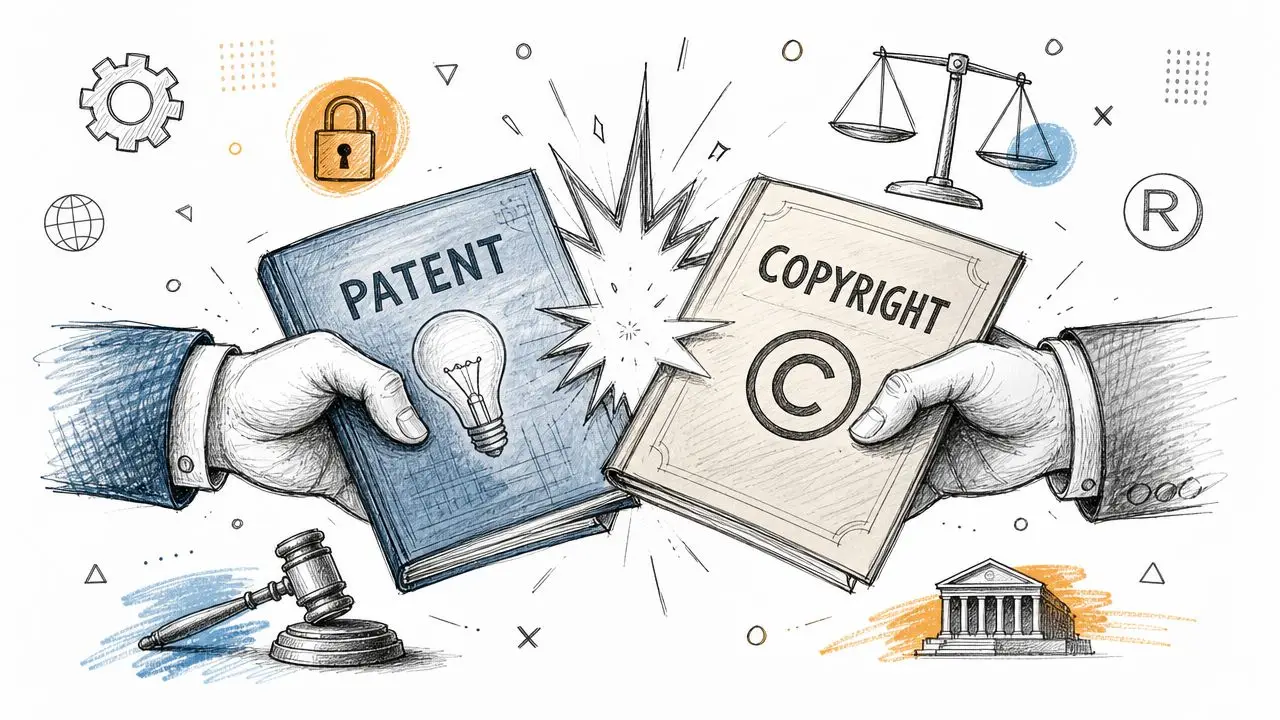
When IP Protection Becomes IP Conflict
What happens when your IP plan meets a hostile distributor, a departing employee, or a copycat that moves faster than your legal team?
Conflict is the ultimate test of IP control. Registration matters, but it does not resolve a live dispute by itself. The company that wins usually has something more important: evidence, decision rights, and a prepared response path.
Disputes rarely arrive as neat legal questions. They show up as unauthorized listings, copied interface text, ex-partner misuse, employee exits, parallel imports, counterfeit packaging, or technical mimicry designed to stay just inside the line. In Israel, those problems escalate quickly because products, partners, and market signals all move fast.
Phase One Means Detection and Containment
A company cannot enforce rights it does not monitor. Monitoring should cover marketplaces, app stores, reseller behavior, partner channels, social media branding, website copy, and customer complaints that point to confusion or imitation.
The first response must be disciplined.
- Preserve evidence immediately. Capture listings, pages, ads, packaging, metadata, and correspondence before the other side edits or deletes anything.
- Verify the rights position. Confirm which registrations, contracts, assignments, policies, and internal records support the claim.
- Set the business objective. Decide whether the goal is takedown, payment, territory limits, supply-chain pressure, settlement, or an injunction.
Marketplace sellers should also understand the pressure points built into each platform. Teams dealing with unauthorized reseller activity should review strategies for Amazon brand protection to improve detection and response.
Phase Two Means Tactical Legal Pressure
A cease-and-desist letter is not a ritual. It is an instrument of control. It should identify the rights at issue, attach proof, define the breach precisely, preserve options, and push the other side toward your chosen commercial outcome.
Precision changes the dispute. Sloppy accusations invite delay. A sharp letter can force a distributor to stand down, push a platform to act, or frame the record for court within days.
Litigation is not the strategy. Creating a tactical advantage is the strategy. Litigation is one tool for doing that.
Alternative dispute resolution can serve a business well when confidentiality matters or a relationship still has value. Court action is the correct move when delay will damage the asset, the channel, or the market position. Non-Israeli companies need to make that choice fast in Israel, where commercial facts often shift before internal teams finish debating process.
Phase Three Means Preventing Recurrence
A closed dispute should trigger internal correction. If a contractor exploited a drafting gap, fix the contractor documents. If a distributor exceeded brand permissions, tighten channel terms and approval controls. If a trade secret escaped during offboarding, cut access earlier and document the exit better.
Mature companies separate themselves through their handling of infringement. They treat each infringement matter as a stress test of corporate control.
For non-Israeli firms in Israel, that discipline protects more than legal rights. It protects negotiating power, channel stability, and room to act during a crisis. The companies that prepare an enforcement protocol before trouble starts move faster, press harder, and give up less.
Disclaimer: The articles and information provided in this publication are for informational and educational purposes only and do not constitute legal advice. Reading this article does not create an attorney-client relationship. Readers should consult a qualified attorney for advice on any specific legal matter.