
A legal demand letter often looks routine. In cross-border business, it rarely is. For companies dealing with Israeli counterparties, suppliers, founders, licensees, or debtors, that first formal letter can shape settlement advantage, evidence strategy, reputational exposure, and forum selection before anyone files a claim.
Most generic guidance asks what a demand letter should include. That question is too small. The harder question in 2026 is whether the letter is drafted to work across jurisdictions, survive scrutiny, and pressure the other side without creating new risk for the sender.
The Unspoken Threat in Your 2026 Inbox
What does a formal demand email from abroad signal in 2026. A serious attempt to settle, or the opening move in a dispute designed to control forum, timing, and commercial pressure?
For companies dealing with Israeli counterparties, the answer often turns on details that generic guides ignore. A demand letter can shape how the dispute is understood inside the recipient’s business before outside counsel is even appointed. It may trigger board escalation, insurer notice, document holds, lender questions, and internal reviews across more than one jurisdiction.
Demand letters are a standard pre-suit step in many systems, as explained by Cornell Law School’s Legal Information Institute on demand letters. That legal baseline matters. The practical point matters more. The first letter is often the first document drafted with litigation in mind.

Good letters do more than demand payment or performance. They define the dispute on the sender’s terms, preserve room for settlement, and test whether the recipient is organized enough to respond with discipline. Poor letters do damage in the other direction. They overstate the claim, invite a harder defense, create unnecessary admissions issues, or read as empty pressure.
That risk is sharper in cross-border matters.
An Israeli-facing dispute may involve Hebrew and English documents, competing assumptions about prejudice and settlement communications, and different expectations about how direct legal correspondence should be. A letter that feels appropriately forceful in one market can look careless, threatening, or strategically premature in another. In my experience, that mismatch is one of the fastest ways to lose control early.
The legal consequences can also be more than rhetorical. In some claims, a demand letter functions as a statutory trigger rather than a mere warning. The commercial team therefore should not treat it as routine collections correspondence or another step in an email chain.
Three questions usually determine whether the first letter helps or hurts:
- Does it frame the right dispute? The letter should identify the breach, unpaid amount, misuse, or non-compliance with enough precision to matter later.
- Does it support the business objective? A letter aimed at payment should look different from one aimed at injunctive pressure, evidence preservation, or board-level settlement.
- Does it travel well across borders? The wording should anticipate how the document will be read by Israeli counsel, foreign courts, counterparties, insurers, and sometimes regulators.
That is why strategic companies review demand letters as risk instruments, not templates. Businesses that want a plain-language overview of the basics can start with Kons Law’s demand letter advice. The harder question is whether the letter improves the sender’s position if the matter stays commercial, and if it does not.
Strategic Timing When to Deploy a Demand Letter
Sending too early can harden positions. Sending too late can forfeit momentum. Timing decides whether the letter works as pressure, evidence, or both.
A legal demand letter should not be the default first move in every disagreement. It should follow a commercial objective. Sometimes the objective is payment. Sometimes it is compliance, evidence preservation, or a fast test of whether the other side is serious.

When a letter helps
A demand letter usually earns its place when the sender needs a formal pivot from informal business dialogue to structured legal positioning.
Common examples include:
- Contract breach: The sender needs to define the breach, demand cure, and reserve rights.
- Commercial debt: The sender wants payment pressure without immediate court action.
- IP misuse: The sender needs the conduct to stop quickly and needs a written record.
- Founder or shareholder conflict: The sender must show resolve while preserving room for settlement.
Used well, the letter narrows ambiguity. It also prevents the recurring mistake of letting a long email chain substitute for legal positioning.
When a letter can hurt
Not every strong claim benefits from immediate formal pressure.
A demand letter can be counterproductive when:
| Scenario | Risk of sending too early | Better immediate move |
|---|---|---|
| Ongoing strategic negotiation | The recipient freezes commercial dialogue | Internal evidence review |
| Sensitive fraud suspicion | The target destroys leverage or changes story | Quiet fact collection |
| Multi-party dispute | One letter triggers defensive coordination | Party mapping and sequence planning |
| Regulatory overlap | The wording creates avoidable exposure | Jurisdiction-specific drafting review |
Companies frequently get the sequencing wrong. They write first, investigate second. In serious disputes, that order should often be reversed.
Modern demand letters can trigger real financial exposure
The old view treats demand letters as ceremonial. Current enforcement patterns show otherwise.
An academic discussion in the ALWD materials on demand letters notes a study context in which average payout levels fell from $68,368 to $18,594 while average costs and fees per claim dropped from $47,252 to $12,023, illustrating how pre-suit negotiation can compress dispute values. The same source also points to a far more aggressive modern setting. In California, online tracking lawsuits grew from about 200 in 2023 to nearly 4,000 in 2024, largely driven by demand letters and arbitration filings. It further notes statutory damages of $5,000 per violation and typical 20 to 30 day response windows.
That example matters even for companies outside California. It shows how quickly a demand letter can become a financial trigger rather than a soft opening. Once statutes, class theories, platform claims, or privacy allegations enter the picture, a short deadline can force legal review, insurer notice, and executive escalation within days.
A demand letter is most effective when it follows a file review, not an emotional event.
A useful timing test for executives
Before sending, management should ask four questions.
- What outcome is desired? Payment, cure, termination advantage, or evidence for court.
- What does the recipient fear most? Public filing, business interruption, costs, or precedent.
- What facts are already provable? The letter should rest on documents, not assumptions.
- What happens if the recipient ignores it? A letter without an escalation path usually weakens the sender.
This timing analysis becomes even more important in Israeli and cross-border matters, where one letter may need to support later action in more than one forum.
Drafting for Impact A Tactical Checklist
Most failed legal demand letters are not too short. They are too vague, too emotional, or too clever.
The better approach is disciplined drafting. The letter should look measured enough for a judge, strong enough for a business decision-maker, and narrow enough to preserve options later.
The required structure
Practical guidance collected by Texas Law Help on how to write a demand letter recommends a structured sequence. State the facts chronologically. Reference supporting evidence. Specify an exact demand. Set a reasonable response deadline, including at least seven business days as a practical floor. State the intended legal consequence if the demand is not met.
That sequence works because it mirrors how disputes are assessed later. Decision-makers look for timeline, proof, remedy, deadline, and consequence. When any of those elements are missing, the letter reads like frustration instead of strategy.
A tactical drafting checklist
- Open with the dispute, not with outrage: Identify the parties, the relationship, and the specific event or failure that triggered the letter.
- Tell the facts in order: Chronology reduces argument. It also limits the recipient’s ability to recast the timeline.
- Point to evidence without over-disclosing: Mention signed agreements, invoices, correspondence, screenshots, delivery records, or notices. Do not volunteer every exhibit.
- State one exact demand: If payment is sought, state the amount. If performance is required, describe the action precisely.
- Set a realistic deadline: Deadlines should create pressure, not comedy. A rushed deadline often signals weakness.
- Describe the next step: State that legal proceedings, arbitration, or other remedies may follow if the recipient fails to comply.
What strong drafting sounds like
The tone should be neutral and controlled. That does not mean soft. It means the letter relies on facts and consequence, not adjectives.
The strongest demand letters sound like documents that can be attached to an affidavit tomorrow.
That point is often missed when executives draft first versions internally. Angry language may feel satisfying, but it tends to do three unhelpful things. It inflames the recipient, muddies the facts, and gives opposing counsel material to attack the sender’s judgment.
What not to include
Some recurring drafting mistakes appear in high-stakes corporate disputes.
- Threats that go beyond the civil claim: Do not use criminal, disciplinary, or reputational pressure as bargaining shortcuts.
- Alternative demands that contradict each other: Demanding contract termination and immediate future performance in the same paragraph creates confusion.
- Legal conclusions without factual support: Conclusions should follow evidence, not replace it.
- Template leftovers: Wrong party names, wrong dates, and mismatched clauses destroy credibility fast.
A growing number of legal teams now use drafting tools to speed first drafts, issue spotting, and chronology assembly. Used carefully, those systems can save time. Used carelessly, they reproduce mistakes at scale. For firms assessing that shift, this discussion of the future of AI for law firms is a useful operational read. The governing rule remains simple. Technology can assist structure. Lawyers still control judgment, tone, and risk.
A compact review matrix before sending
| Element | Strong version | Weak version |
|---|---|---|
| Facts | Dated, ordered, documented | General accusations |
| Demand | Specific and measurable | Vague call to “resolve” |
| Deadline | Firm and defensible | Arbitrary and unrealistic |
| Consequences | Lawful next steps | Improper threats |
| Tone | Neutral and credible | Emotional and personal |
If a legal demand letter cannot survive that review, it is not ready to send.
Beyond Borders Navigating Israeli and International Law
What happens if the letter you send to create pressure in London, New York, or Singapore gives the Israeli counterparty a procedural advantage instead?
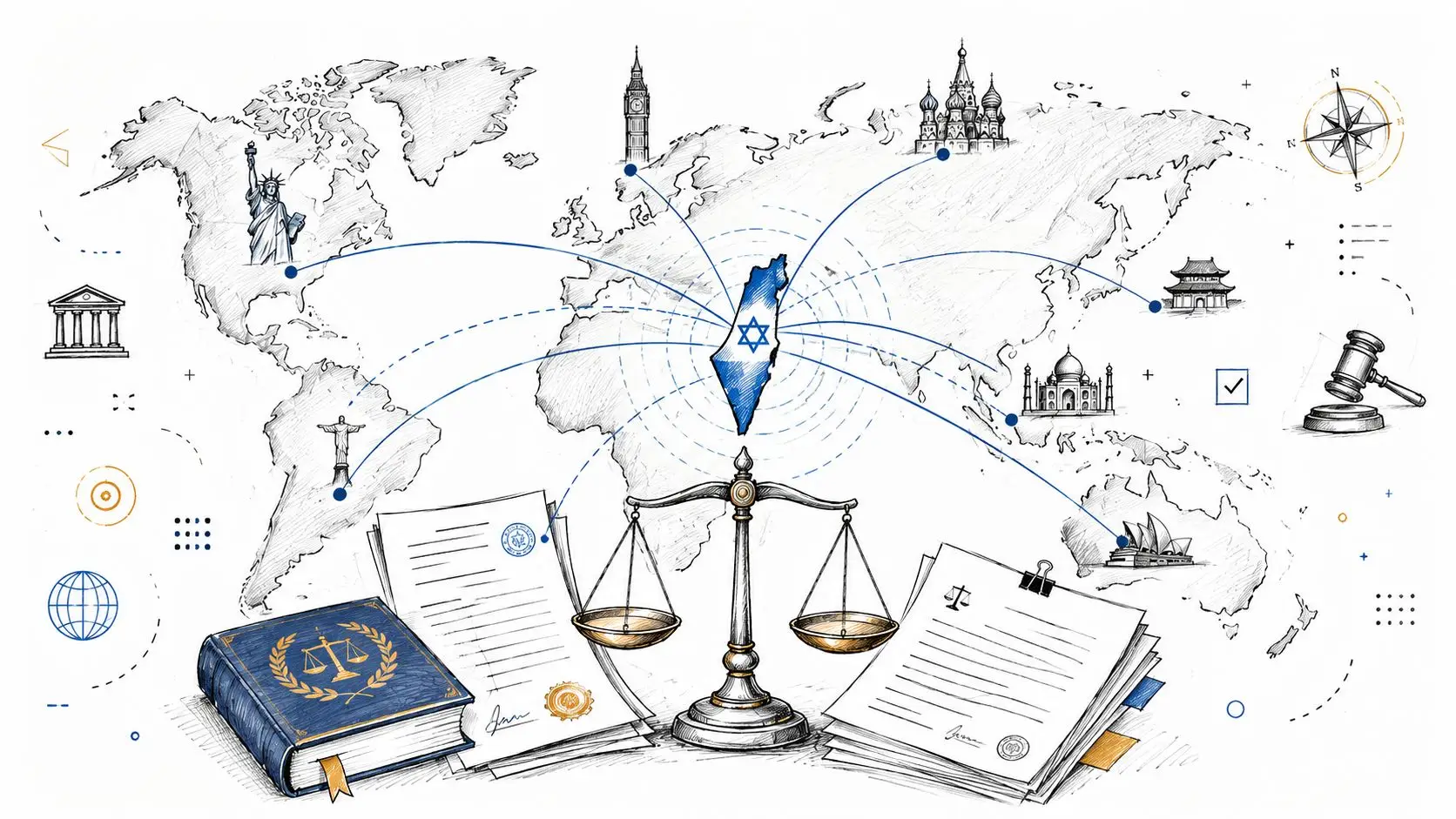
A cross-border demand letter is never just a warning shot. In disputes involving Israeli entities, it often becomes the first document later examined by judges, arbitrators, insurers, lenders, auditors, and board members. That gives the letter two jobs at once. It must press the claim. It must also preserve room to enforce, negotiate, and escalate without handing the other side avoidable defenses.
The first cross-border mistake
The first mistake is treating the letter as a domestic template with foreign names inserted. That approach ignores the points that usually determine strategic advantage early. Which forum will hear the dispute. Which language will control if the parties later disagree on meaning. How service will be proved. Whether the recipient is likely to route the letter through local counsel, management, a financing bank, or a controlling shareholder before anyone responds.
These are judgment calls, not formatting choices.
The legal risk is obvious. Poor wording can complicate later jurisdiction arguments or invite complaints that the sender crossed the line from civil pressure into improper coercion. The commercial risk is often larger. A letter that is legally plausible but poorly calibrated for an Israeli recipient can harden internal positions, trigger defensive reporting obligations, or push a business dispute into a governance fight.
The caution on improper threats is not theoretical. The San Diego County Bar Association discussion referenced in the verified data explains why demand-letter language tied to criminal or disciplinary consequences can create serious problems when used to gain civil advantage. In a cross-border matter, that risk multiplies because the sender may be judged by more than one legal culture at once.
Questions that should be answered before the letter is sent
Before sending a demand into Israel, counsel should resolve a small set of issues that directly affect outcome:
- Forum and enforcement path: If the contract points to Israeli courts, foreign litigation threats may carry little weight. If the award or judgment will need to be enforced in Israel, the letter should be drafted with that endgame in mind.
- Language and translation control: English may be the deal language, but a Hebrew version can matter for clarity, internal circulation, and later disputes over meaning.
- Service proof: Email may start the conversation. It is not always enough to end the argument over receipt, authority, or timing.
- Recipient mapping: The named addressee is not always the actual decision-maker. In founder-led or closely held Israeli companies, control may sit outside the formal inbox.
- Privilege assumptions: Labels such as “without prejudice” do not carry identical practical effect in every jurisdiction, and they should never substitute for careful drafting.
A good letter answers these points before they become objections.
Israeli context changes the drafting strategy
In Israeli commercial disputes, concise writing usually outperforms theatrical writing. A letter built around the contract, the chronology, the payment trail, and the remedy sought is harder to dismiss than a document full of indignation. That is especially true where the recipient expects the matter to move quickly from correspondence to injunction work, arbitration, debt collection, or a shareholder application.
Audience matters as much as doctrine. The formal recipient may be a company secretary or external counsel, but the people who shape the response often include founders, finance officers, local accountants, insurers, and directors. Effective cross-border demand letters are written for those readers as well. They should understand what happened, what cure is still available, and what the sender will do next if the breach remains unaddressed.
I often advise clients to draft for two files at once. One file is the eventual record before the court or tribunal. The other is the internal decision file on the other side. If the letter fails in either file, its effectiveness diminishes.
This broader inheritance and family-business context can also matter in private company disputes, especially where ownership history, probate, or succession records affect standing or control. For readers who encounter that overlap, this clear guide on Israel’s inheritance process helps explain one area where foreign assumptions often fail.
Why generic templates break down in Israeli-facing disputes
Templates fail because they assume a single legal environment and a predictable escalation path. Cross-border disputes involving Israel rarely offer either.
| Generic template habit | Cross-border problem |
|---|---|
| Aggressive threat language | Can provoke resistance, invite allegations of impropriety, or weaken settlement credibility |
| Email-only delivery | May leave room to dispute receipt, authority, or timing |
| Single-language drafting | Can create ambiguity or reduce pressure on the real business audience |
| Broad factual assertions | Can produce inconsistencies once local counsel tests the record |
The trade-off is straightforward. A tougher-sounding letter may satisfy internal stakeholders who want visible action. A disciplined letter usually performs better where enforcement, interim relief, or negotiated recovery are realistic options. In international work, control beats volume.
Controlled escalation matters more across borders
A strong cross-border demand letter is part of a sequence. Counsel should know before sending it whether the next move is a negotiated standstill, an application for urgent relief, arbitration commencement, debt proceedings, or action against specific counterparties or guarantors. That planning matters even more where the dispute touches operations, financing relationships, or board-level reporting.
As noted earlier, crisis situations often require legal pressure, commercial containment, and message control to be managed together. The demand letter should fit that broader plan rather than operate as an isolated document.
The Escalation Path From Letter to Resolution
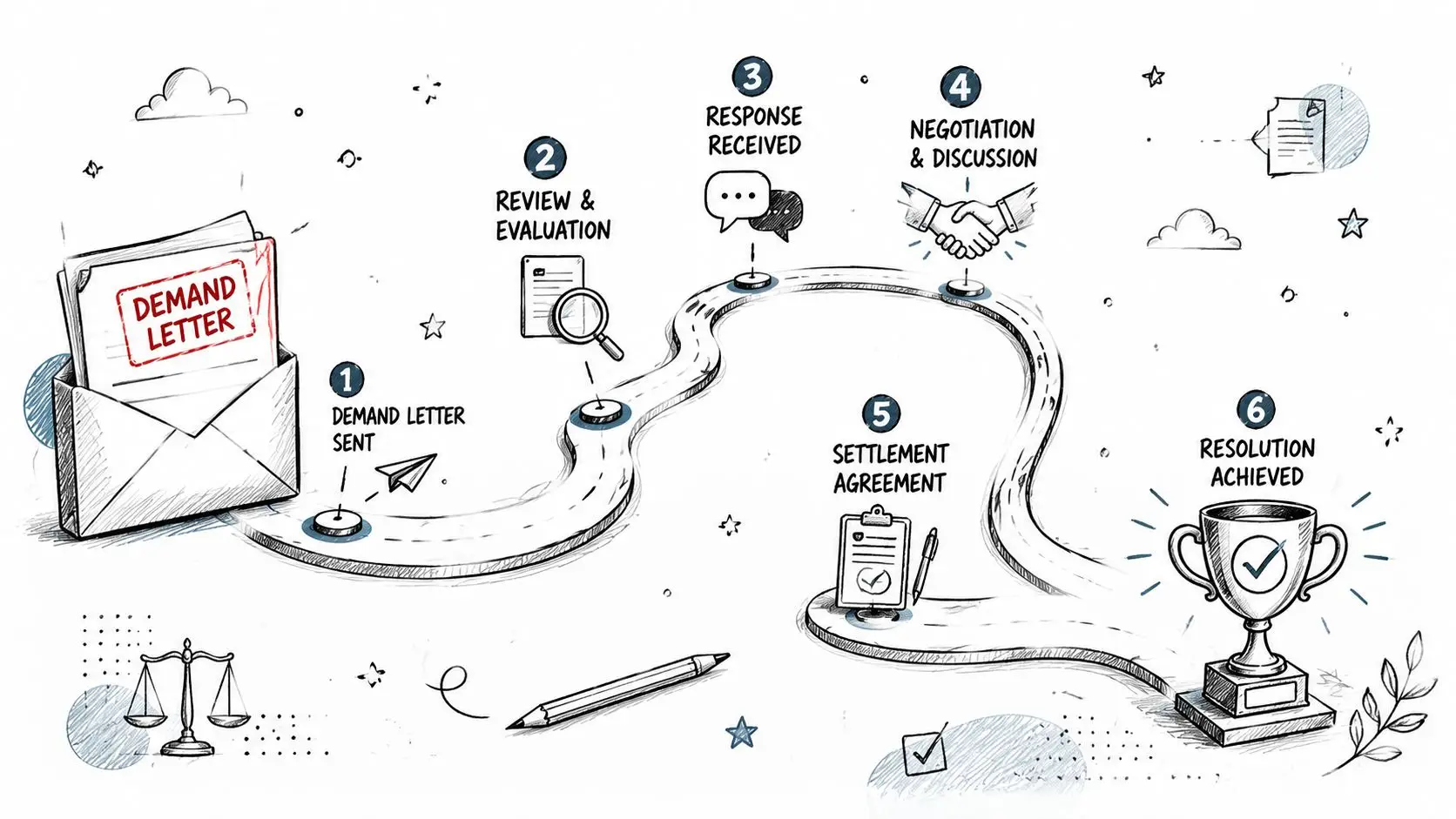
After the letter goes out, the actual work starts. Silence, denial, and partial concession each demand a different response.
Many companies assume that once they send a legal demand letter, the burden shifts entirely to the other side. That is not how effective disputes are managed. The sender needs a live response plan from the moment service is confirmed.
Four common response patterns
The first response usually falls into one of four categories.
- No response: This often signals disorganization, tactical delay, or a test of the sender’s resolve.
- Flat denial: The recipient rejects both facts and liability.
- Low-value offer: The recipient wants to settle cheaply before the sender mobilizes.
- Constructive engagement: The recipient asks for documents, proposes talks, or raises a procedural issue.
Each pattern carries information. Silence may justify the next step faster than a lengthy exchange does. A low offer may still show that the recipient wants containment. An aggressive denial may reveal the defense theme that will later appear in pleadings.
A phased path works better than improvisation
A practical escalation path usually looks like this:
- Confirm service and preserve the file.
- Assess the reply against the original objectives.
- Decide whether negotiation still serves the business goal.
- Prepare the next formal move before announcing it.
That discipline prevents common overreactions. Companies often receive a sharp response and answer immediately with a sharper one. That exchange usually produces heat, not advantage.
A demand letter should begin a process, not end one.
Resolution does not always mean court
The most useful next step may still be settlement. However, settlement should be structured, documented, and tied to performance. If the recipient asks for time, the sender should know whether delay helps or harms. If the recipient proposes mediation, management should ask whether mediation is likely to produce payment or only postpone filing.
In other files, escalation becomes operational. A debt dispute may affect payment channels, security rights, or access to accounts. Businesses that underestimate how quickly a commercial conflict can spread into banking friction should understand the practical consequences described in RNC’s discussion of bank account restrictions in Israel.
The best demand letters improve the sender’s position whether the matter settles or proceeds.
Common Pitfalls and How to Avoid Them
The most damaging mistakes in legal demand letters are often administrative, not intellectual. A valid claim can lose force because the sender handled service badly, set the wrong deadline, or failed to keep records.
Operational guidance collected by People’s Law on demand letter tips warns against weak service and poor recordkeeping. It recommends certified mail with return receipt requested, because email-only delivery can be missed or denied. The same guidance notes that a two-week response window is often seen as optimal for pressure.
The avoidable errors
- Relying only on email: Email is useful, but by itself it may weaken proof and reduce bargaining power later.
- Using a deadline that no serious business can meet: Unrealistic timing invites non-compliance and makes the sender look performative.
- Writing as if the case will never be reviewed by a court: Hostile language ages badly.
- Keeping scattered records: If the file later becomes litigation, missing correspondence creates preventable evidentiary problems.
A commercial lease dispute shows how quickly this goes wrong. The landlord sends an angry email, the tenant replies emotionally, and then someone sends a formal demand without attaching the right notices or preserving service proof. The legal position may still exist, but their advantage diminishes. For a concrete commercial setting where this often matters, see RNC’s discussion of commercial lease agreements in Israel.
The safer approach is simple. Draft carefully. Serve properly. Preserve everything. Then escalate on purpose.
Avoid costly mistakes before a routine dispute becomes a larger commercial problem. For guidance on Israeli and cross-border legal demand letters, contact RNC Group through its contact page.
This article provides general information only and does not constitute legal advice, a legal opinion, or a substitute for case-specific review. Cross-border disputes depend on jurisdiction, contract language, service method, facts, and timing, so no action should be taken in reliance on this article without obtaining qualified legal advice.