

Your home is your sanctuary. However, what happens when a neighbor’s disruptive behavior shatters your peace? This is where Israel’s neighbor nuisance law provides a legal framework. It protects your right to the quiet enjoyment of your property. Understanding these laws is vital for resolving civil disputes effectively in 2026.
What Is A Nuisance Under Israeli Law?
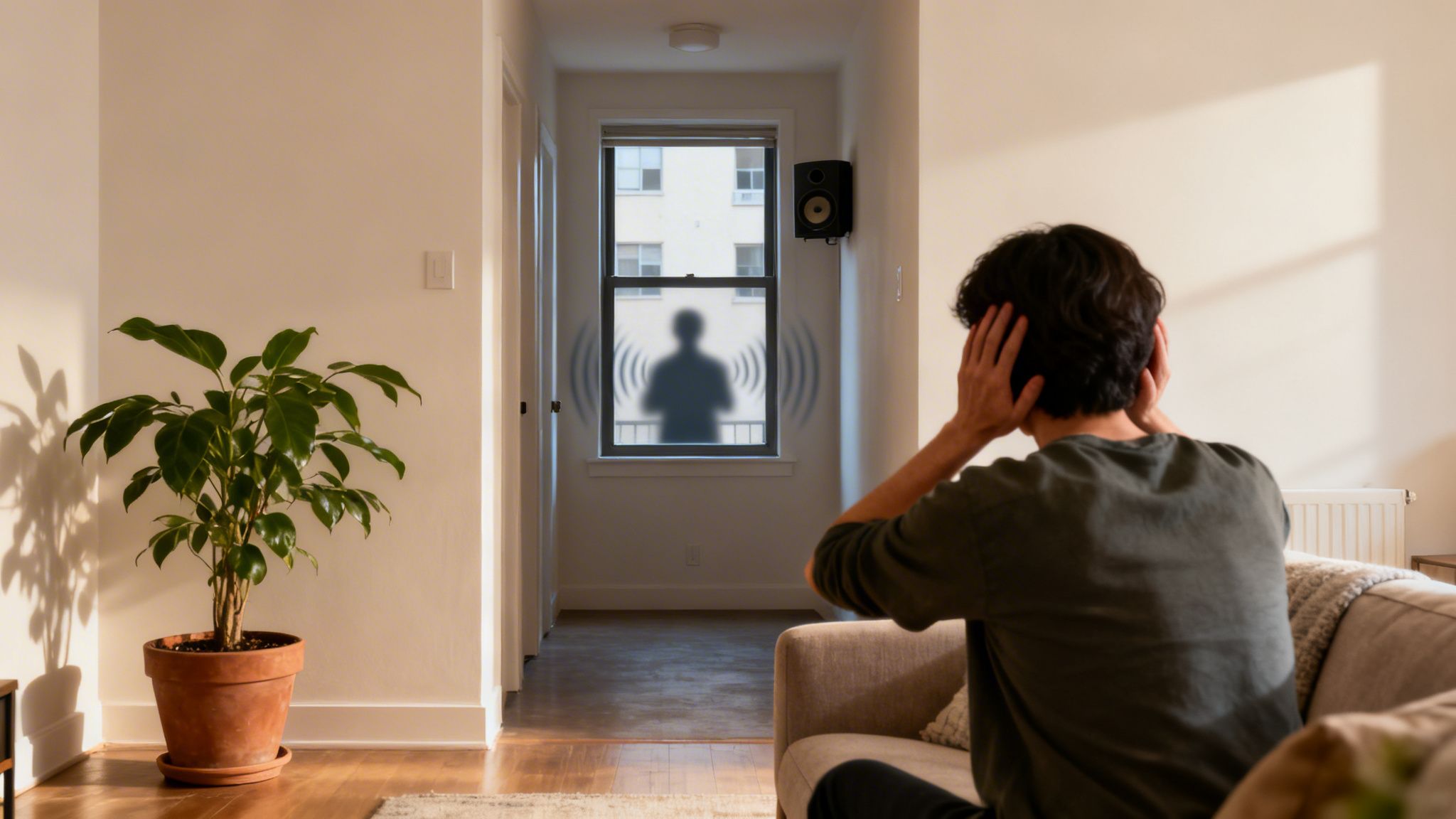
Under Israeli law, a “nuisance” is a substantial and unreasonable interference with your property’s use and enjoyment. This concept is the bedrock of any neighbor dispute. The core question is whether the neighbor’s conduct crosses a legal line. This interference can take many forms.
Common grounds for a legal claim include:
- Persistent Noise: Loud music at all hours, a constantly barking dog, or construction work outside permitted times.
- Pervasive Odors: Strong smells from cooking, garbage, or chemicals that infiltrate your home.
- Water Leaks: Damage from a neighbor’s apartment impacting your own is a frequent source of disputes.
- Disruptive Vibrations: Constant shaking from machinery that rattles your windows and nerves.
The Standard of Reasonableness
The heart of any nuisance case is the “standard of reasonableness.” Israeli courts do not use a simple checklist. Instead, they weigh the harm you suffer against the social utility of your neighbor’s actions. The court’s assessment is highly contextual. It considers the neighborhood, time of day, and the disturbance’s intensity and duration. This determines if the interference is unreasonable.
For example, noise acceptable in a busy commercial district is not acceptable in a quiet residential suburb. A loud party ending by 11 PM on a Friday is viewed differently than one at 4 AM on a Tuesday. This flexible approach allows judges to apply fairness. It moves beyond subjective complaints to an objective legal standard.
The challenge of defining where a legal nuisance begins is universal. This is crucial knowledge for homeowners and businesses. For example, business operations involved with Company Registration Israel can both cause and be affected by these issues. Ultimately, Israeli neighbor nuisance law enforces mutual respect. It provides a clear legal path when a neighbor’s actions become unreasonable.
Stopping Unreasonable Noise And Odors With An Injunction

When polite requests fail, Israeli neighbor nuisance law offers a powerful tool: the injunction. An injunction is a court-issued order. It legally forces your neighbor to stop their disruptive activity. It elevates your complaint from a personal plea to an enforceable command. This is known as seeking injunctive relief.
An injunction is a decisive move. You make it when a neighbor’s actions, like relentless noise or invasive smells, substantially interfere with your quiet enjoyment. The objective is to get immediate relief. This process involves a formal application to the court. It is a crucial part of any effective Commercial Litigation strategy where property rights are violated. Judges do not grant these orders lightly. Your success depends on the strength of your evidence.
Building The Case For An Injunction
To convince a court to intervene, you must present a documented case. Vague complaints are not enough. You need concrete proof.
Your evidence file should be built with discipline:
- A Detailed Disturbance Log: This is your foundational document. Record every incident with the date, time, duration, and a precise description.
- Audio and Video Recordings: Capturing the noise or documenting the source of an odor provides objective proof.
- Witness Testimony: Statements from other affected neighbors are very powerful. They corroborate your claims.
- Official Complaints: Keep records of calls to the police or municipal authorities. This shows you tried other channels first.
In complex cases, an expert opinion can be a deciding factor. An acoustician’s report measuring decibel levels provides hard data. Similarly, an appraiser’s report can be essential where a nuisance causes property damage.
Temporary Versus Permanent Injunctions
The legal process offers different types of injunctions. Understanding the difference is vital.
A temporary injunction provides immediate, emergency relief. It acts as an emergency brake to halt egregious nuisances while the case proceeds.
A permanent injunction is the final word. It is granted after the court hears all evidence. This order permanently prohibits the neighbor from continuing the nuisance. To secure a temporary injunction, you must prove the harm is immediate and irreparable. You must also show the “balance of convenience” is in your favor. This means the harm you face without the injunction is greater than the inconvenience it would cause your neighbor. Pursuing this path is a serious legal undertaking. Whether you seek temporary relief or a permanent solution, a strong evidentiary foundation is key.
How To Force A Neighbor To Repair Water Leaks
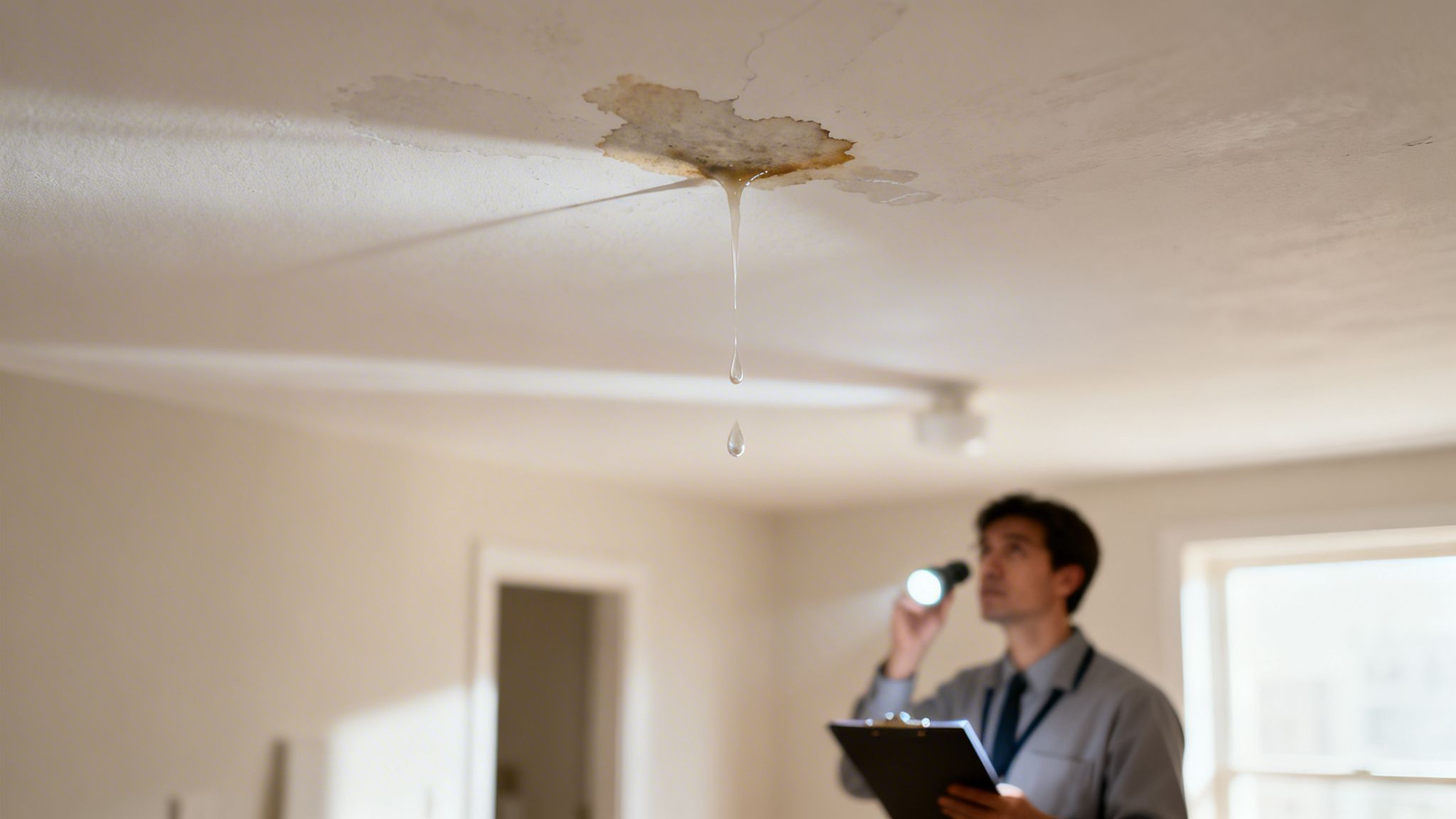
A spreading water stain on your ceiling threatens your property’s value. When the leak comes from a neighbor’s apartment, you are not helpless. Under Israeli law, every property owner has a duty to maintain their internal plumbing. They cannot let their negligence cause damage to others. Forcing repairs of water leaks is a common and necessary legal action.
If your neighbor refuses to cooperate, you have a defined legal path. The process is designed to compel the negligent party to act.
The Initial Legal Steps
First, have a lawyer send a formal written demand. This professional step often resolves the issue. A letter from a law firm shows you are serious about enforcing your rights. If they ignore the demand, your next step is filing a lawsuit. This legal action has two goals. First, you can seek financial compensation for all damages. This includes repairs, mold remediation, and ruined personal belongings.
More importantly, you can request a mandatory injunction. This is a court order that legally forces your neighbor to make repairs by a deadline. Disobeying a court order has severe consequences. This makes it an effective tool.
The Crucial Role Of Expert Evidence
The foundation of a successful water damage claim is solid proof. You must prove their property is the source of the leak. An expert report is your most valuable asset.
You’ll need to hire a qualified engineer or plumber for an inspection. Their job is to:
- Use diagnostic equipment to trace the water to its origin.
- Document the full extent of the damage with photos.
- Provide a formal written opinion identifying the neighbor’s faulty plumbing as the cause.
This report is your primary evidence in court. It gives the judge the objective validation needed to issue a mandatory injunction and award damages. Bringing in a waterproofing expert can also be vital.
This data underscores why strong enforcement of neighbor nuisance laws is critical for property investors. Unresolved issues lead to tenant turnover and asset devaluation. This is especially true when dealing with high-value assets, which might be linked to other business operations requiring services like Company Registration in Israel. Don’t let a neighbor’s negligence compromise your investment.
Choosing The Right Venue: Court vs. Condominium Inspector
When facing a neighbor dispute in Israel, choosing where to file your claim is critical. You can file in the Magistrate’s Court or before the Inspector of Condominiums. This decision defines the trajectory of your case and the remedies you can pursue. Understanding each venue’s jurisdiction is the first step in a winning strategy under Israel’s neighbor nuisance law.
The Condominium Inspector: A Specialized Tribunal
The Condominium Inspector, or Mefakeach, is a specialist. Its authority is defined by the Condominiums Law. It handles disputes within a shared building, or bayit meshutaf.
The Mefakeach is the right authority for:
- Conflicts over shared property use and maintenance.
- Arguments about house committee (va’ad habayit) dues.
- Disagreements on unapproved structural changes.
- Clashes stemming from the building’s official regulations.
The Mefakeach’s jurisdiction is specific. The process is typically faster and less formal than court. However, its power is limited. The Inspector can order a neighbor to fix a leak. But it generally cannot award significant monetary damages for things like emotional distress.
The Magistrate’s Court: The Arena for Broader Claims
The Magistrate’s Court has much wider jurisdiction. It is the proper venue for civil tort claims, including nuisance. If your goal is substantial financial compensation, the court is where you need to be.
The Magistrate’s Court is where you file a claim for monetary damages resulting from a nuisance, such as compensation for diminished property value or emotional distress.
This is also the right venue for complex cases. The court can grant powerful remedies. This includes prohibitory and mandatory injunctions. It can do this while also awarding significant financial damages. This broad power makes it the default choice for most serious neighbor nuisance claims.
Comparing Your Options: Court vs. Mefakeach
Deciding between these venues is a strategic calculation. Here’s a comparison of their key features.
| Feature | Magistrate’s Court | Inspector of Condominiums (Mefakeach) |
|---|---|---|
| Jurisdiction | Broad; handles all civil torts, including nuisance claims for monetary damages. | Narrow; limited to disputes defined by the Condominiums Law (shared property issues). |
| Available Remedies | Injunctions (prohibitory and mandatory), significant monetary damages, declaratory relief. | Primarily orders for action/inaction (e.g., repairs). Cannot award most damages. |
| Typical Use Case | Seeking substantial compensation for damages or complex injunctions. | Disputes over shared maintenance, fees, and building regulations. |
| Process | Formal, follows civil procedure rules. Can be slower. | Faster, less formal, and more streamlined process. |
The “right” venue depends entirely on your objective. Are you trying to stop a noisy renovation, or be compensated for sleepless nights? The answer dictates your path. Navigating this choice requires expert legal analysis. For those involved with Foreign Investors Real Estate, the stakes are even higher. An incorrect filing can lead to dismissal, forcing you to start over.
Gathering The Evidence To Build A Winning Case

In any Israeli neighbor dispute, success hinges on who can prove their case. A judge will not act on your word alone. The court demands objective proof. To win a neighbor nuisance law claim, you must become a meticulous evidence gatherer. Your claim is only as strong as your documentation.
Start Your Documentation Today
Do not wait for the situation to escalate. Effective evidence gathering needs to start immediately. Each piece of proof transforms a complaint into a concrete legal claim.
Here’s a practical checklist for what to collect:
- Create a Detailed Incident Log: This is your most important tool. Log every incident with the date, start and end times, and a specific description.
- Capture Photos and Videos: Digital evidence is powerful. Take timestamped photos of damage. Record videos that capture unreasonable noise.
- Preserve All Communications: Keep organized copies of every email, text, or formal letter sent to the neighbor.
This detailed record-keeping turns an argument into a documented pattern of behavior. It gives the court a timeline and proves the nuisance is ongoing.
The Power Of Third-Party Validation
Evidence from neutral, third-party sources elevates your case. It powerfully corroborates your claims. It also removes any perception of personal bias.
An expert report is often the most persuasive piece of evidence. It provides the court with an objective, professional analysis that is hard to dispute.
Think strategically about involving others. You can build an ironclad case with:
- Witness Statements: Ask other affected neighbors to provide signed, written statements.
- Expert Testimony: An engineer can pinpoint a leak’s source. An appraiser can quantify how the nuisance diminished your property’s value.
- Official Reports: Get copies of official police or municipal inspector reports.
Gathering proper evidence can be critical in preventing wider financial issues. For example, it can help avoid having assets tied up in Restricted Bank Accounts. By methodically building proof, you create an irrefutable case. It protects both your rights and your investment.
Why Expert Legal Counsel Is Crucial In Neighbor Disputes
A neighbor dispute seems straightforward. However, turning a complaint into a legal victory is a complex journey. Trying to handle it alone is risky. A missed filing deadline or inadmissible evidence can be fatal to your case. This is why professional legal counsel is a necessity. An experienced attorney forges your grievances into a powerful legal action.
An Attorney Adds Value At Every Stage
An attorney’s guidance is non-negotiable in these key steps:
- Legally Defining the Nuisance: An attorney frames the argument in a way the court will accept.
- Seeking an Injunction: They prepare applications for temporary or permanent injunctions to stop the behavior.
- Forcing Necessary Repairs: A lawyer can seek a mandatory injunction to compel action like fixing leaks.
- Choosing the Correct Venue: They analyze whether the Court or the Condominium Inspector is the right forum.
Professional legal counsel ensures your case is about being effective, not just being right. An attorney anticipates arguments and builds a case designed to withstand scrutiny.
For investors, the stakes are even higher. A persistent nuisance can torpedo asset value. Decisive legal action is vital. These cases can quickly spiral into broader issues needing expertise in Commercial Litigation.
Protecting Your Investment And Peace Of Mind
A neighbor dispute attacks your fundamental property rights. An expert attorney ensures your case is treated with seriousness. They manage the legal process, allowing you to focus on your life. This proactive approach helps prevent severe financial fallout. Our firm has deep experience in these matters, including challenges faced by investors dealing with Company Registration Israel and the complexities of Foreign Investors Real Estate. If you are dealing with a difficult neighbor, we invite you to Contact Us for a consultation.
Disclaimer: The information in this article is for general informational purposes only and does not constitute binding legal advice. Reliance on this content is at the reader’s sole responsibility.