
If your Israeli co-founder loses legal capacity tomorrow, who controls the shares, signs the banking documents, and keeps the joint venture alive under the regulatory expectations that will define 2026 risk planning?
Many foreign companies still treat אפוטרופוס as a family-law issue. That assumption is dangerous. Public guidance in Israel focuses mainly on elderly parents, disability, and basic procedure, while offering little practical direction on cross-border assets, business ownership, and international commercial contracts, creating a real guidance gap for multinational actors dealing with Israeli exposure as noted in this Israeli guardianship overview.
For a non-Israeli board, lender, or investor, the commercial question is simple. Can the business still act when the relevant Israeli individual no longer can? In practice, that question touches shareholder voting, beneficial ownership, escrow releases, guarantees, banking authority, and litigation strategy at the same time.
When an Israeli Partner Is Incapacitated
Foreign companies usually model insolvency risk, sanctions risk, and tax risk. They often don’t model capacity risk. Yet an Israeli shareholder’s incapacity can interrupt approvals, stall payments, and weaken enforcement across a structure that looked stable on paper.
The overlooked problem is control. A founder may hold shares personally, sign side letters personally, guarantee obligations personally, and sit on the board personally. Once capacity fails, those decision points may no longer function through ordinary corporate process.
The hidden point of failure
A cross-border business can tolerate commercial disagreement. It struggles when nobody has clean authority to act. That is where אפוטרופוס stops being a private family term and becomes a crisis-management issue.
Two assumptions usually fail first:
- Contract continuity assumption: A foreign counterparty assumes the Israeli individual can still approve waivers, transfers, or amendments.
- Corporate separateness assumption: The company assumes personal incapacity won’t affect company operations.
- Banking access assumption: The finance team assumes signatures and authorizations will stay valid during a medical or cognitive crisis.
Those assumptions break down fast when authority depended on one person.
Businesses rarely collapse because the law lacks a mechanism. They stumble because the existing mechanism was never integrated into the deal documents.
Why foreign clients misread the risk
Many international clients know how to handle death, resignation, and default. They don’t build for partial incapacity, contested capacity, or interim periods before a court order stabilizes authority. That gap matters most in founder-led ventures, family-owned groups, and guarantee-heavy structures.
The commercial effect can spread beyond Israel. A foreign parent may need board approvals in one country, share transfer compliance in another, and recognition of an Israeli status order in a third. Without advance planning, the business faces delay exactly when speed matters most.
What Is an Apotropos Under Israeli Law
Under Israeli law, an Apotropos is a person or entity appointed by a court to manage the affairs of someone who can’t do so independently. The appointment is governed by the Legal Capacity and Guardianship Law, as described in this Israeli legal overview of apotropos appointments.
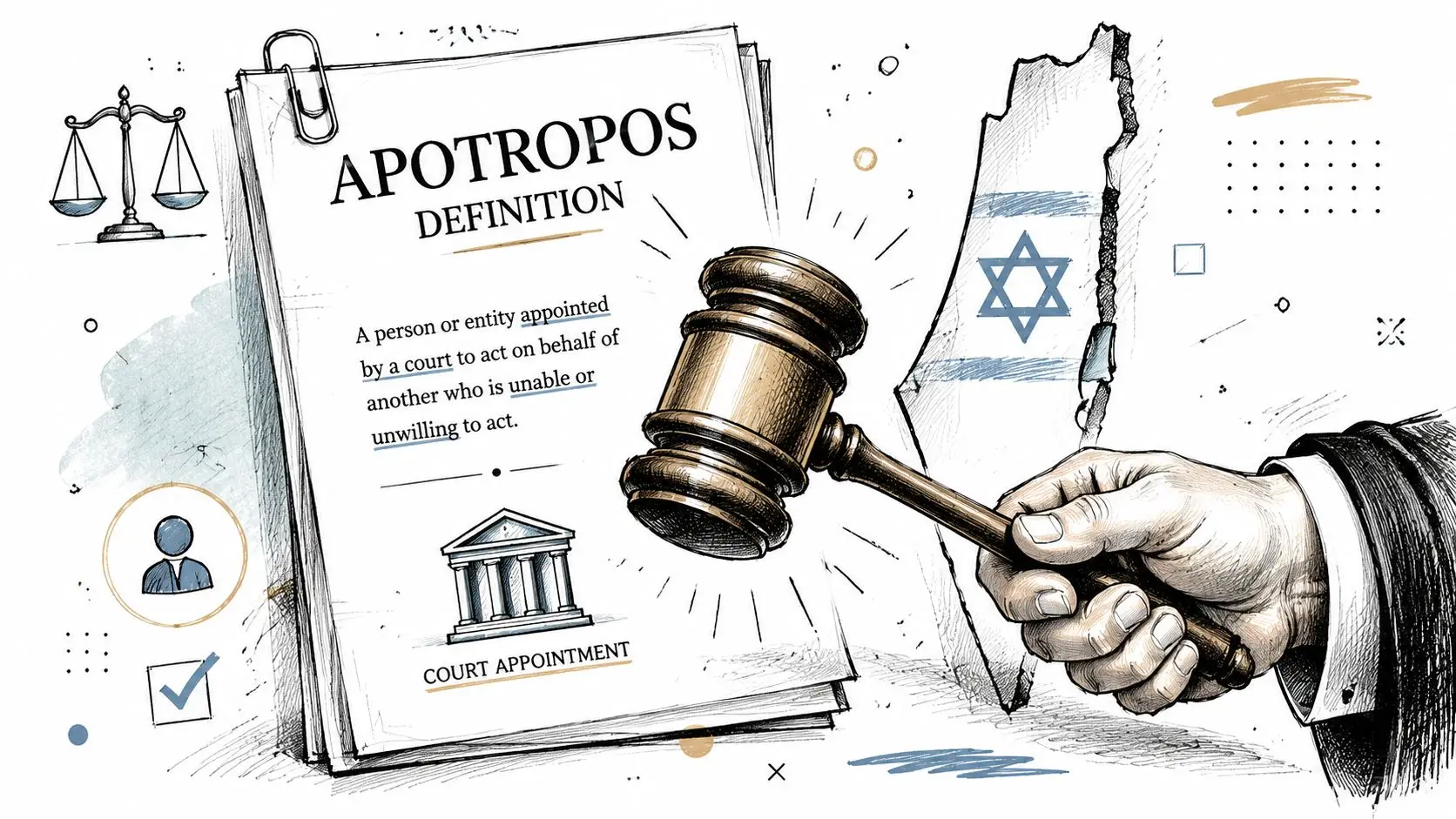
For an international audience, the closest comparison is a court-appointed guardian, conservator, or custodian. However, the Israeli mechanism has its own procedural and supervisory logic. A foreign client shouldn’t assume that a power of attorney, board resolution, or family understanding will substitute for a valid Israeli court appointment when legal capacity is impaired.
Court authority, not private convenience
The first commercial point is authority. An Apotropos derives power from a court order, not from business custom or internal company preference. Therefore, the exact wording of the order matters.
Israeli practice allows the court to define the mandate narrowly or broadly. The appointment may cover financial issues only, personal matters, property matters, or a wider combination. It may also be temporary, matter-specific, or open-ended, depending on the order.
That creates a practical drafting issue for companies. If the order is too broad, transactions can attract more scrutiny and filings. If the order is too narrow, the parties may need amendments later, which can slow a live transaction.
Why this differs from ordinary delegation
A valid power of attorney works because the principal had capacity when granting it. Guardianship exists because that assumption no longer holds, or no enduring arrangement governs the situation. That difference changes the risk profile.
A foreign company should distinguish between these roles:
| Mechanism | Source of authority | Typical commercial risk |
|---|---|---|
| Power of attorney | Prior private appointment | It may not solve a later capacity dispute |
| Board mandate | Corporate governance documents | It may not reach personal assets or personal shareholding |
| Apotropos | Court order | Scope may be limited and supervised |
Commercial rule: Never ask only whether a guardian exists. Ask what the order authorizes, what it excludes, and what still needs approval.
That question matters most where the Israeli individual holds shares directly, controls a pledge, signs personal guarantees, or sits in a contractual chain outside the company itself.
How an Apotropos Is Appointed in Israel
An appointment in Israel starts with a petition to the Family Court. The process is legal, formal, and document-heavy from the outset. For foreign businesses, that means the issue becomes operational long before the final order lands.
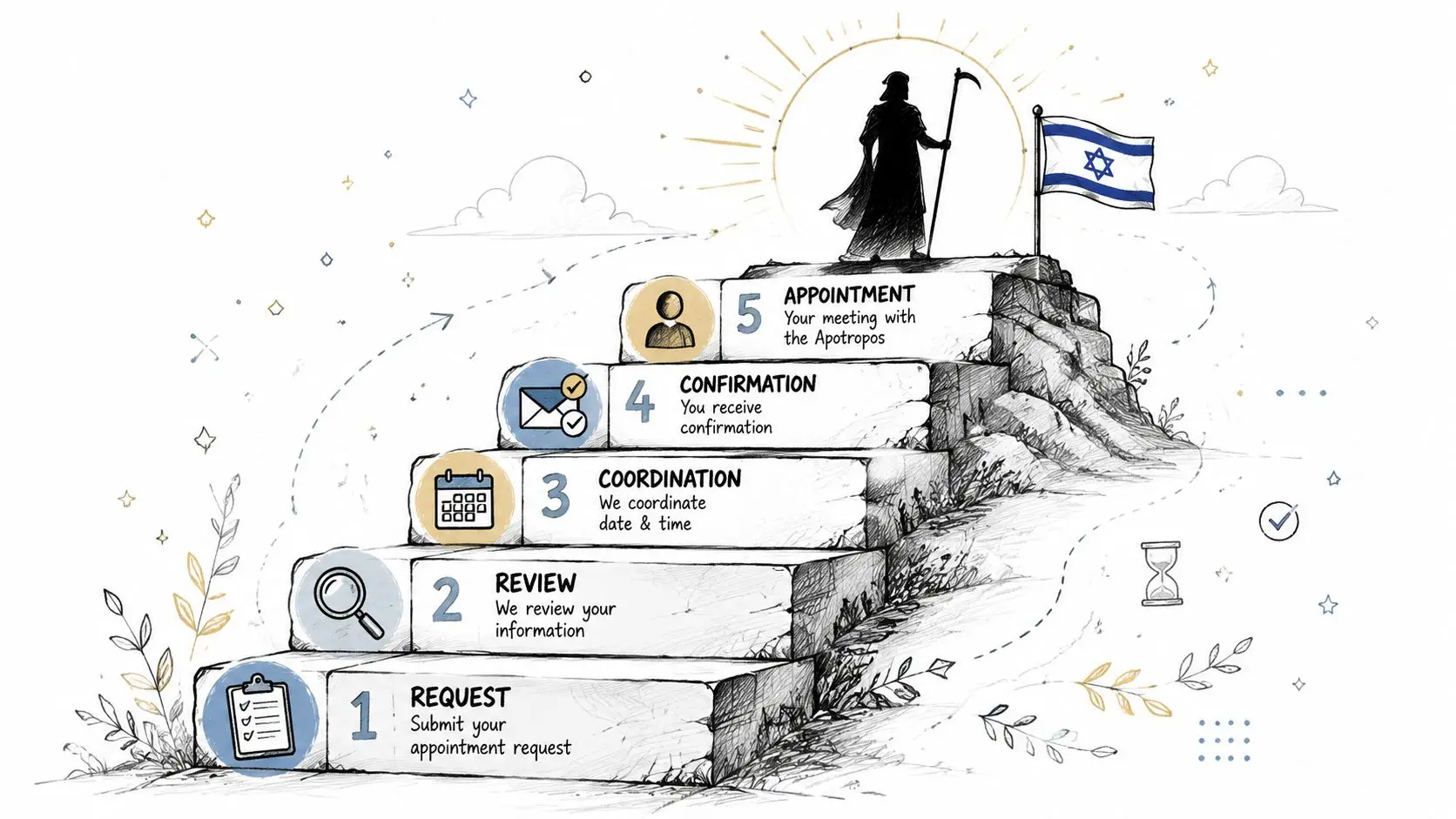
The petition must include a notarized or lawyer-sworn affidavit verifying the facts, together with a psychiatric or primary-care physician’s written opinion assessing whether the proposed ward is fully or partially capable of managing his or her affairs, according to this practical Israeli guide on the guardianship petition process.
What the filing requires
The filing burden is easy to underestimate. Petitioners must file the original and at least one copy of the petition, plus additional copies for each respondent beyond the legal advisor to the Government. In practice, that usually means at least two petition copies per case.
If those copies and certifications are missing, the court may delay or return the filing. In a busy court calendar, that can prolong the process by several weeks. For a company facing a closing date, covenant deadline, or liquidity pressure, that isn’t a technical inconvenience. It’s a transaction risk.
What the court can appoint
Israeli law allows several appointment models, and that matters commercially. The court may appoint a spouse, parent, child, sibling, another relative, an unrelated person, an attorney, or a legal entity such as a foundation or trust company. The court may also appoint multiple co-guardians or combine individuals and institutions where the asset mix or cross-border exposure requires broader oversight, as reflected in this overview of eligible guardians and appointment structure.
That flexibility has strategic consequences. A relative may understand the person’s wishes but lack the sophistication for complex holdings. An institutional guardian may manage process better but lack commercial agility. Co-guardian structures can improve control, yet they can also create internal bottlenecks.
What foreign companies should do immediately
When a key Israeli individual shows signs of incapacity, the reader’s legal and business teams should move in parallel.
- Map every dependency. Identify where that individual sits in the ownership, guarantee, and approval chain.
- Separate corporate authority from personal authority. Board mandates may preserve some operations, but they won’t automatically solve personal shareholding issues.
- Collect the needed evidence early. Medical opinions, signed records, and corporate documentation are easier to organize before conflict escalates.
- Review transaction timetables. A filing defect can derail a signing or funding sequence.
A company that waits for the court file to clarify everything usually reacts too late.
The Apotropos and Corporate Control
The most serious mistake is to assume that guardianship affects only personal welfare. In reality, the appointed guardian may intersect directly with ownership, management rights, and litigation posture. Once that happens, a corporate matter can become a control contest.
Under the verified framework, the guardian’s powers can be broad and may cover finances, medical decisions, and legal representation, while remaining subject to periodic judicial review. Israeli case law also frames the role through duties of diligence, skill, loyalty, and without negligence, as noted in this summary of the guardian’s powers and duties.
Where business paralysis begins
A company doesn’t need a hostile actor to become stuck. It needs one blocked decision. If an incapacitated person holds voting shares, director appointment rights, a veto right, or signing authority over a pledge release, the transaction path may freeze.
Typical flashpoints include:
- Shareholder approvals: Can the guardian vote on reserved matters under the articles or shareholder agreement?
- Asset transactions: Does the proposed sale exceed the practical comfort level of the court or supervising bodies?
- Litigation decisions: Who instructs counsel if the incapacitated person is also a claimant, guarantor, or controlling shareholder?
- Banking authority: Will the bank accept the order as sufficient for the specific account activity requested?
A non-Israeli client should never assume that general management language resolves all of those points.
Property power doesn’t mean unlimited freedom
In Israeli practice, managing property can include real financial control. Yet high-impact acts often face tighter scrutiny, and some transactions may require additional approval depending on the wording of the order and the nature of the asset. That tension matters in business.
A guardian may have enough authority to preserve value, pay obligations, and maintain ordinary affairs. The same guardian may face obstacles when asked to approve a major disposal, reorganize a holding chain, or support a disputed exit. That’s where legal analysis shifts from abstract guardianship to corporate conflict.
For broader context, foreign executives often find it helpful to compare approaches in other systems. The discussion in Can a guardian control your business? shows how quickly personal incapacity can spill into governance and ownership questions, even outside Israel.
A guardian can stabilize a vulnerable person’s affairs and still unsettle a company’s control structure.
The dispute path often looks like litigation
When parties disagree about scope, purpose, or timing, the guardianship issue stops being administrative. It becomes evidence-driven and adversarial. At that stage, the matter often overlaps with injunction strategy, document control, and strategic advantage assessment commonly seen in complex commercial litigation in Israel.
Foreign investors should also remember that the conflict may not be between the company and the guardian alone. It may involve family members, co-shareholders, lenders, and counterparties who all read the same incapacity event differently.
What works and what doesn’t
| Approach | Usually works | Usually fails |
|---|---|---|
| Narrow authority review | Yes, because it identifies real decision limits | No issue here |
| Generic reliance on company bylaws | Sometimes, but only for internal governance points | It fails where personal rights or assets drive the outcome |
| Last-minute closing pressure | Rarely | Courts and supervised actors don’t move faster because a deal team wants speed |
The disciplined approach is to test every planned act against the actual order, the underlying asset, and the transaction’s risk profile.
Navigating International Guardianship Challenges
Cross-border recognition is where foreign clients usually feel least certain. They want to know whether an Israeli appointment will be accepted abroad, and whether a foreign protective measure will be respected in Israel. The answer depends on forum, asset type, and the legal instrument involved.
At the international level, the Israeli concept parallels the legal guardian or custodian recognized under private international law instruments such as the Hague Convention on the International Protection of Adults. As of 2024, 37 states have ratified this Convention, according to this reference to the Hague Convention ratification count.

Recognition is legal, but still practical
International recognition doesn’t mean automatic commercial usability. A foreign registry, bank, transfer agent, or corporate secretary may still demand translated orders, apostilles, legal opinions, or proof that the guardian holds equivalent powers in the relevant jurisdiction.
That creates a two-track problem. First, counsel must confirm that the appointment can be recognized. Second, the business must confirm that the target institution will implement the requested act within the needed timeframe.
The assets matter as much as the order
Different assets create different friction points. Shares in a private Israeli company raise one set of issues. A foreign brokerage account, offshore holding company, or lender-controlled security package raises another.
A disciplined cross-border review should cover:
- Jurisdiction of the asset: Where is the share register, bank account, or title record maintained?
- Nature of the act: Is the guardian preserving value, receiving income, voting shares, or disposing of an asset?
- Operational gatekeeper: Which bank, registrar, board, or foreign court must accept the authority?
Cross-border warning: Recognition in principle doesn’t guarantee execution in practice.
The strongest strategy is to analyze the authority chain before a crisis. That review should cover Israeli law, the governing law of the relevant contracts, and the internal rules of the foreign institution that must act on the appointment.
Proactive Strategies to Protect Your Business
The best outcome is to avoid emergency improvisation. Businesses that treat incapacity planning as part of corporate governance usually preserve more control and lose less time.

This requires more than a generic clause in a template agreement. It requires legal design across ownership, authority, compliance, and evidence.
Build incapacity into the deal documents
Foreign clients often negotiate death, bad-leaver status, and insolvency. They should also negotiate incapacity. A strong shareholder or founder arrangement can address temporary incapacity, long-term incapacity, voting suspension mechanics, replacement authority, valuation procedures, and dispute escalation.
Where ownership is shared, a carefully drafted partnership agreement strategy in Israel can reduce deadlock by assigning decision rules before a court process interrupts ordinary authority. That drafting discipline matters even more where one founder personally holds critical IP, customer relationships, or banking access.
Use preventative authority tools where available
A court-appointed guardian is a formal remedy. It shouldn’t be the first plan if lawful advance planning can reduce the need for public proceedings. For business leaders with Israeli exposure, the smarter path often includes enduring incapacity planning under Israeli-compatible documents, plus aligned foreign-law documents where the group operates.
That planning must fit the actual structure. A founder with direct personal shareholding needs one analysis. A group using holding vehicles, nominee arrangements, or family trusts needs another.
Treat guardian-facing operations as compliance work
If a business must deal with an appointed guardian, the company should document every material step. That isn’t just good hygiene. It’s necessary because an apotropos managing property or financial affairs in Israel must file periodic reports with the General Guardian, supported by documentation such as bank records, receipts, invoices, and major transaction records, and unexplained deviations can trigger inspections or even formal investigation, as summarized in this guide to Israeli guardian reporting obligations.
That reporting logic should shape the company’s own conduct.
- Use segregated records. Keep a clean file for guardian-related approvals, invoices, and payment support.
- Add pre-approval filters. High-value or unusual transactions should be reviewed before execution, not explained afterward.
- Match narrative to documents. If the transaction protects the ward’s interests, the paperwork should prove that clearly.
- Calendar reporting points. Don’t assume the guardian alone carries the compliance burden if the company controls the transaction trail.
Link crisis planning to dispute planning
An incapacity event often surfaces through correspondence before litigation begins. That’s why boards should align guardianship planning with escalation documents, evidence retention, and communication protocols, including disciplined legal correspondence and demand letter strategy in Israel.
The companies that manage this well don’t rely on broad goodwill. They build a paper trail that survives scrutiny from courts, regulators, banks, and hostile counterparties.
When Guardianship Becomes Commercial Litigation
Guardianship can become a pressure tactic in a wider control struggle. A petition may affect reputation, banking relationships, and negotiating power long before the final legal merits are resolved. That risk is particularly acute for founders and family-owned international groups.
Israeli informational resources rarely address how to mitigate reputational risk or how to design proactive incapacity planning that reduces the need for public court-appointed guardianship, leaving entrepreneurs and multinational-facing companies without clear guidance on protecting control and reputation, as observed in this discussion of the reputational dimension of guardianship.
The commercial lesson is straightforward. אפוטרופוס issues belong inside board-level risk mapping, not outside it. When the relevant Israeli individual sits at the center of ownership, guarantees, or approvals, incapacity can trigger a legal and operational contest at the same time.
The recommended strategic path is early structuring, precise documentation, and immediate action once warning signs appear. Delay hands control to procedure, and procedure rarely protects business value on its own.
Avoid costly mistakes before a capacity dispute reaches the court file or the bank. RNC Group advises Israeli and international businesses on cross-border corporate control, shareholder protection, crisis management, and high-stakes commercial disputes. For a specific assessment of an Israeli guardianship risk, cross-border enforcement issue, or founder incapacity scenario, contact the firm now.
This article provides general information only. It does not constitute legal advice, does not create an attorney-client relationship, and should not be relied on without a fact-specific review of the relevant Israeli and foreign law, court orders, corporate documents, and transaction structure.
SEO Title: Apotropos (אפוטרופוס) in Israel: A Commercial Risk Guide
Slug: apotropos-israel-commercial-risk-guide
Meta Description: Learn how אפוטרופוס in Israel can affect shareholders, corporate control, cross-border assets, and business continuity for international companies.
Focus Keyphrase: Apotropos in Israel
Synonyms: אפוטרופוס, Israeli guardianship, guardian in Israel, Israeli legal guardian, corporate incapacity risk
Schema Type: Article