
Most executives still treat the intellectual property assignment agreement as closing paperwork. That assumption fails in high-stakes transactions, especially when IP can represent 70-90% of company value in tech companies during M&A review according to analysis of assignment failures in due diligence. In 2026, the greater danger isn’t theft. It’s discovering too late that the company never owned the asset it built, bought, or tried to sell.
A cross-border buyer rarely fears a missing clause in the abstract. It fears broken title, unenforceable rights, a founder dispute, or a contractor who can block a launch, lawsuit, or exit. Under U.S. federal law, patent assignments must be in writing under Title 35, and copyright ownership transfers for exclusive rights must also be in writing under Title 17. Oral understandings don’t fix that problem, even when everyone believed they had a deal.
Why Your IP Assignment Is a 2026 Corporate Asset
A serious buyer values ownership, not optimism. If the chain of title fails, the balance sheet changes instantly.

The intellectual property assignment agreement is therefore not administrative clutter. It is the document that turns code, designs, inventions, branding, and know-how into a transferable corporate asset. Without it, the company may only control use in practice, while ownership remains with a founder, employee, or contractor.
That distinction matters most when the company faces pressure. A financing round, infringement claim, restructuring, or acquisition forces every weak document into view. At that point, a missing assignment often stops being a legal housekeeping issue and becomes a broader operational problem that may require structured crisis management planning to contain commercial fallout.
Why valuation turns on paperwork
Investors and acquirers don’t pay premium value for assets with disputed ownership. They discount for uncertainty, delay for clarification, or insist on escrow protection. Even before litigation begins, weak assignments can narrow the company’s negotiating power because the other side knows the title file is vulnerable.
Practical rule: If the company can’t show signed, written transfers for its core IP, it should assume a buyer will treat that IP as encumbered.
The problem also crosses borders badly. A company may operate from Israel, contract through the U.S., market in the EU, and outsource development elsewhere. Each step adds another potential break in ownership. In practice, the assignment agreement becomes the bridge between creation and commercialization.
What works and what fails
What works is disciplined early execution. Founders assign pre-incorporation IP to the company. Employees sign invention and confidentiality documents before work starts. Contractors sign express assignments tied to deliverables, payment, and future cooperation.
What fails is reliance on assumptions. Many companies still rely on offer letters, invoices, board minutes, Slack messages, or “everyone understood” narratives. None of those substitute for a valid written transfer where the law requires one.
For companies that expect a sale, joint venture, or global licensing program, an intellectual property assignment agreement belongs in the same category as cap table hygiene and tax structuring. It supports value only when it is complete, signed, and capable of surviving hostile review.
IP Assignment vs License Understanding the Core Difference
Many commercial disputes begin with one basic misunderstanding. The parties thought they were transferring ownership, but they only granted permission to use.
An assignment transfers ownership. A license permits use while ownership stays with the original holder. The simplest analogy remains the best one. An assignment is like selling a house, while a license is like renting it.
The legal and commercial difference
If a business receives an assignment, it should hold the asset itself and control how to exploit it, enforce it, sell it, or relicense it. If it receives a license, its rights depend on the contract’s limits. Duration, territory, exclusivity, modification rights, termination rights, and sublicensing all become central.
That difference affects day-to-day operations fast. A software company that thinks it owns source code may try to modify, sell, or pledge that code in a transaction. If it only has a license, each of those actions may breach the contract or exceed the granted scope.
A license can support a business model. It can’t replace ownership where a transaction requires clean title.
Practical examples businesses get wrong
A branding agency creates a logo for a foreign parent company. If the contract grants a license for use in marketing materials, the agency may still own the copyright. The company may use the logo, but it may not own the underlying asset.
A patent developer transfers “use rights” in a product line to a manufacturing partner. That may allow commercialization, yet it may not allow the partner to sue infringers in its own name or transfer the patent portfolio later.
A software founder signs a collaboration agreement that permits the startup to use code in its platform. That may keep the product live. It may still leave the founder with ownership, which becomes a major problem during fundraising or sale discussions.
A quick comparison
| Issue | Assignment | License |
|---|---|---|
| Ownership | Transfers to assignee | Stays with licensor |
| Permanence | Usually intended as complete transfer | Usually limited by term and scope |
| Enforcement position | Stronger if title is valid | Depends on license rights |
| Exit readiness | Better suited to sale or M&A | Often triggers consent and scope issues |
| Risk if drafted badly | Title disputes | Scope disputes |
The solution isn’t to prefer one structure in every deal. Many businesses should license, not assign. Franchises, technology collaborations, white-label arrangements, and territorial distribution models often depend on licensing. The point is accuracy.
If the commercial aim is full transfer, the drafting must say so clearly. If the commercial aim is limited use, the contract should define those limits without pretending ownership changed. Businesses usually get into trouble when the document tries to sound flexible and ends up saying neither thing well.
Drafting Indisputable IP Assignment Agreements
A template rarely survives serious due diligence without heavy revision. Cross-border transactions expose every vague definition, every missing schedule, and every clause that assumes the court will “understand what the parties meant.”

The enforceable intellectual property assignment agreement uses exact drafting. It doesn’t gesture toward ownership. It proves it.
Identify the asset with precision
The transferred property must be described so clearly that an outside reviewer can tell what moved and what did not. For patents, that usually means patent numbers, titles, filing details, and jurisdictions. For trademarks, it means registration details and the associated goodwill. For copyrights, it means the work itself, registration details where applicable, versions, authors, and related materials.
According to guidance on assigning intellectual property to a business, precise identification is a core requirement because ambiguity undermines enforceability. In practical terms, “all software created for the project” is often too loose. A better agreement lists repositories, modules, versions, deliverables, documentation, and related know-how.
Use complete transfer language
A valid assignment should say what it does in unmistakable terms. The safest formulation expressly conveys “all right, title, and interest” in the identified IP. It should also avoid language that sounds like a limited right of use.
Partial language creates co-ownership arguments and operational paralysis. Expert legal drafting guidance notes that complete transfer language, paired with moral rights waivers, helps avoid disputes that can erode asset value by up to 50% in litigation-heavy markets according to specialist analysis of assignment clause failures.
Build the clauses that buyers expect
A buyer’s counsel will usually search for a specific set of protections. If those protections are missing, the legal team starts asking whether the company owns only part of what it is selling.
The agreement should usually address:
- Ownership warranty: The assignor states it owns the rights being transferred and has authority to transfer them.
- No conflicting rights: The assignor discloses liens, prior licenses, security interests, and disputes.
- Further assurances: The assignor must sign future documents needed for recordation, enforcement, or prosecution.
- Indemnity structure: The parties allocate risk if ownership claims later prove false.
- Post-termination cooperation: The assignor must assist with filings, declarations, and litigation support when necessary.
Cover future developments carefully
Many assets don’t stay static. Software changes, brands evolve, patents generate continuations, and product teams create improvements after the original engagement ends. If the agreement ignores those later developments, ownership can fragment over time.
That risk is especially acute with founders and technical contractors. A startup may own version one of a platform but not later modules, improvements, or documentation if the contract never captured future developments. Good drafting therefore ties the transfer to improvements, derivative works, updates, related inventions, and all associated rights arising from the same workstream.
Due diligence view: Buyers don’t just ask who created the first asset. They ask who owns each layer added afterward.
Address moral rights and recordation
Copyright-heavy businesses often miss moral rights until they need to modify or localize content. Yet a waiver of moral rights can be essential for full commercial use, especially in jurisdictions where those rights remain significant. The same specialist guidance stresses that an effective agreement should include a waiver of moral rights, including under Israel’s Copyright Act §47, where needed for practical exploitation.
Recordation also matters. The strategic approach is to sign first, then record where appropriate. In cross-border portfolios, counsel should consider recordation with the relevant office, including the USPTO or Israel Patent Office, to strengthen the public chain of title and reduce later arguments.
A drafting checklist that actually helps
| Clause area | What strong drafting does | What weak drafting causes |
|---|---|---|
| Asset description | Lists exact IP and related materials | Scope fights and ambiguity |
| Transfer language | Conveys all right, title, and interest | License versus ownership disputes |
| Future rights | Captures updates and improvements | Split ownership over later versions |
| Moral rights | Waives where legally appropriate | Limits modification and commercialization |
| Cooperation | Requires future signatures and filings | Delays in enforcement and registration |
For deals that may later move into mergers and acquisitions, these clauses aren’t refinement. They are transaction infrastructure.
Avoiding the Future Promise Trap in Your Agreement
One of the most damaging errors in this field is also one of the smallest on the page. The contract says the creator “will assign” rights later. The company reads that as ownership now. A court may read it as a promise to sign another document in the future.
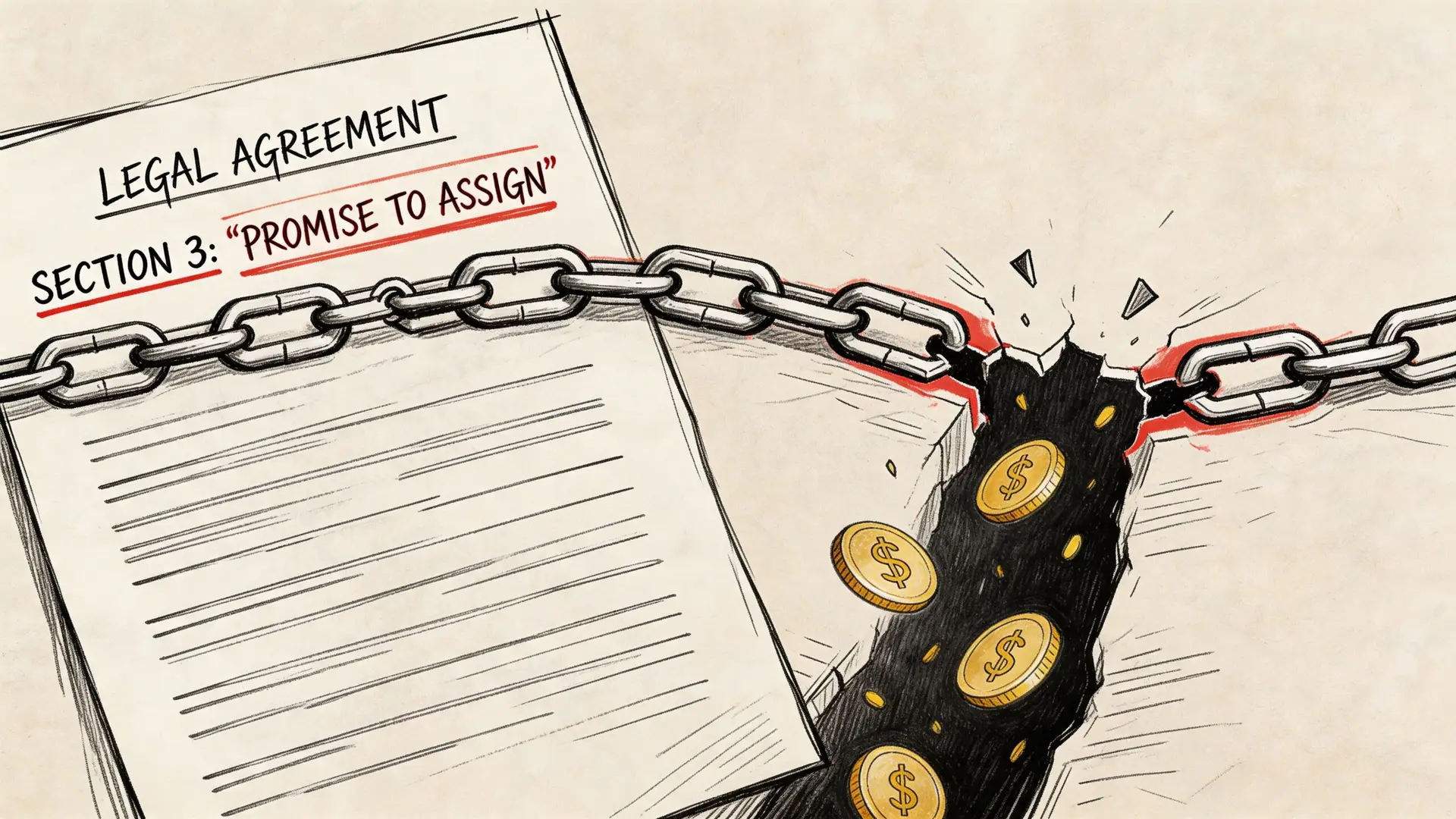
That drafting gap can destroy standing in patent litigation and weaken title in a transaction. The company thought it had automatic ownership. It had only a contractual expectation.
The cautionary example from U.S. litigation
Recent Federal Circuit authority made the point with unusual force. In Omni Medsci, Inc. v. Apple, Inc. (2021), the court held that language stating an employee “will assign” inventions created only a future promise, not an automatic present transfer, as discussed in analysis of the Omni ruling and present assignment language. Because the clause did not self-execute, the inventor could assign rights elsewhere.
That result shocks non-specialists because the commercial expectation feels obvious. The employer funded the work, supervised the project, and believed it owned the inventions. The court still focused on the verbs.
Why this trap hurts cross-border companies
Foreign companies often assume a local employment agreement will travel well into U.S. enforcement. That assumption is unsafe. In U.S. litigation, standing turns on title. If title depends on an agreement that only promises a future assignment, the claimant may not be able to sue in its own name.
This issue also reaches M&A. A buyer reviewing a patent-heavy portfolio won’t stop at checking whether an employment agreement exists. Counsel will read whether the transfer occurs in the present tense and whether future rights vest automatically.
A weak present assignment clause can leave a company operating a valuable invention that it cannot cleanly enforce or sell.
Language that works better
The strategic drafting path uses self-executing language. Phrases such as “agrees to assign and hereby assigns,” or other present-tense formulations that operate immediately, usually do far more work than softer future language. The clause should also capture future inventions tied to the defined work or employment scope.
A strong clause usually sits beside other mechanisms:
- Further assurance obligations so the inventor must later sign formal instruments if needed.
- Power-of-attorney backup language where permitted, for filing support if the inventor becomes unavailable.
- Defined scope limits so the company captures relevant inventions without inviting unnecessary disputes over unrelated side projects.
The commercial lesson is simple. Businesses lose ownership through adjectives and definitions. They also lose ownership through tense.
Securing IP from Founders Employees and Contractors
Ownership breaks most often at the human level. In cross-border disputes and M&A diligence, the problem is rarely that a company failed to build valuable IP. The problem is that title does not sit cleanly with the company across founders, employees, and contractors.
The law treats employees and contractors differently regarding IP ownership. That distinction matters for any Israeli company selling abroad, raising foreign capital, or preparing for acquisition by a non-Israeli buyer that will test chain of title under more than one legal system.
Under Israeli law, Copyright Act §35 generally places employee-created IP with the employer. Contractors are different. Unless the contract transfers ownership in writing, the contractor will often keep it. In the U.S., the “work made for hire” doctrine is also much narrower for contractors than many management teams assume, particularly for software and technical deliverables, as explained in discussion of contractor assignment mistakes and Israeli-U.S. ownership gaps.
Diligence becomes costly. A company may have paid for the work, directed the product roadmap, and integrated the output into its platform, yet still lack legal title to the code, designs, or documentation it is selling.
Founders require their own paper trail
Founder-created IP creates a separate chain-of-title problem because much of it exists before incorporation. Code is written on a personal laptop. A logo is commissioned informally. A provisional filing, dataset, algorithm, or product architecture starts life before the company has legal capacity to own it.
If that transfer into the company never happens properly, the business can operate for years on assets it does not fully own. The issue usually surfaces at the worst moment. A financing round, infringement claim, or share sale puts counsel into the files, and the missing founder assignment becomes a valuation issue instead of an administrative cleanup item.
A founder with incomplete transfer documents also has an advantage in practice, whether or not anyone planned it that way.
A practical comparison
| Creator | Default risk | Best protection |
|---|---|---|
| Founder | Pre-incorporation ownership remains personal | Written founder assignment into the company |
| Employee | Scope and carve-out disputes can arise | Employment IP agreement with present assignment wording |
| Contractor | Default ownership often stays with contractor | Standalone written assignment tied to deliverables |
The operational fix
Documentation should match how the work is produced. If a business uses contractors, it cannot rely on assumptions that apply to employees. If it uses consultants through agencies, foreign development shops, or hybrid roles that later become employment, each contractual layer should pass title to the company in writing.
That is also why worker status should be reviewed early, not after a dispute or diligence request. Misclassification can create labor exposure and can also complicate ownership analysis, especially where foreign buyers want certainty on both employment status and IP chain of title. Companies dealing with that risk should address ensuring proper contractor classification at the same time they clean up assignment language.
Board-level takeaway: Every person who creates value should sign the correct IP document before work starts, while the company still has timing, access, and bargaining control.
The best systems are repetitive on purpose. Collect founder assignments at formation. Make signed invention and confidentiality documents a condition to onboarding. Tie contractor statements of work to assignment clauses and acceptance mechanics. Store signed copies where deal counsel can find them quickly. In a domestic dispute, poor recordkeeping is a nuisance. In a cross-border lawsuit or acquisition, it can become a direct challenge to ownership, standing, and price.
Israeli Law and International Due Diligence
A weak Israeli IP assignment file can derail an international deal even when the business, product, and revenue story are strong. Foreign buyers do not pay for assumptions. They pay for assets they can own, enforce, finance, and defend in court across multiple jurisdictions.
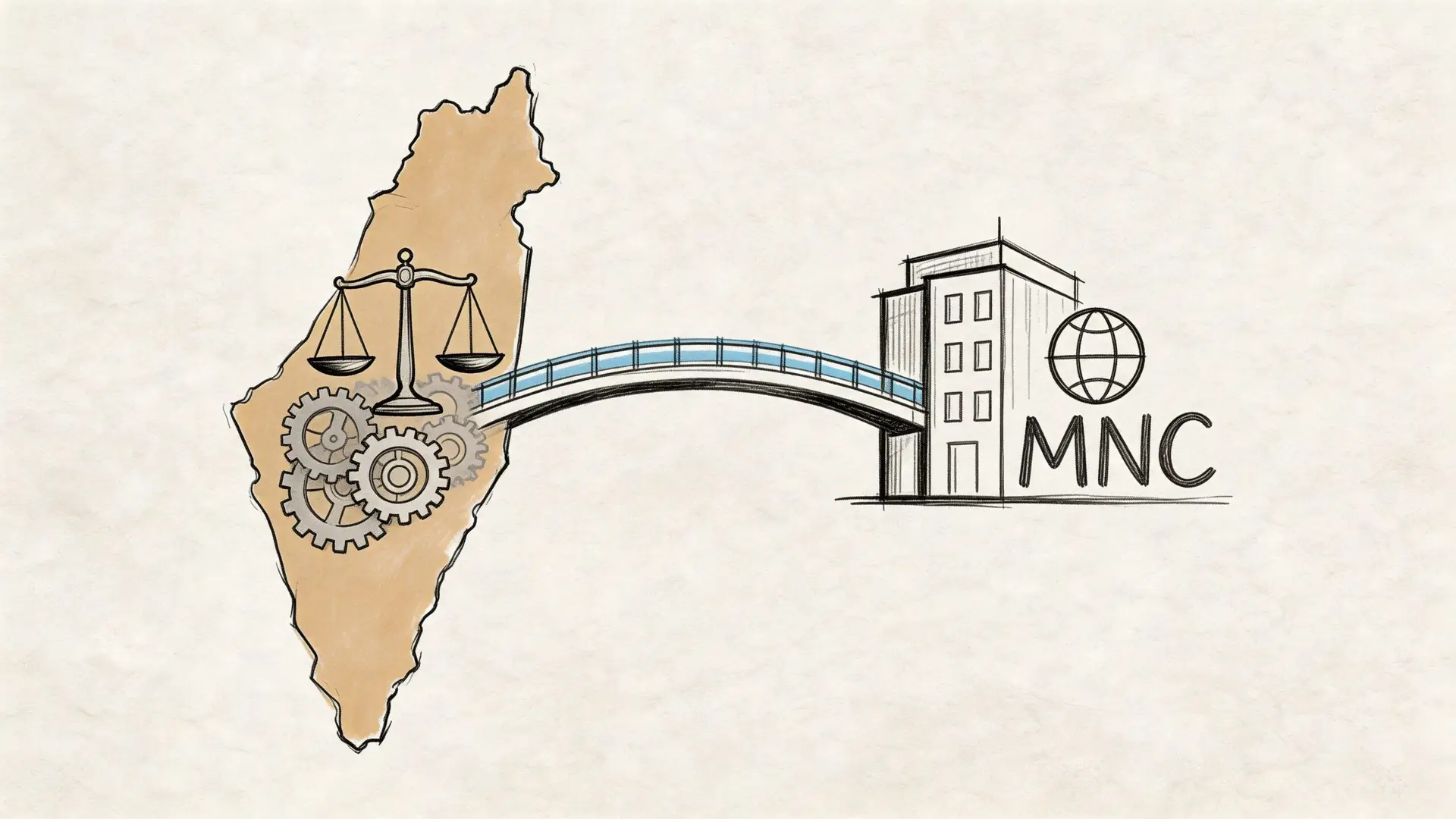
For cross-border transactions involving Israeli targets, the legal question is rarely limited to whether an IP right exists under Israeli law. Diligence counsel for a U.S., UK, or EU buyer will test whether ownership was transferred in writing, whether the correct entity received the rights, whether the language captures present and future rights in a legally effective way, and whether the record supports standing in the forum where litigation is most likely to happen.
That is where many deals start to weaken.
U.S. law, for example, treats patents and copyrights with formalities that matter in litigation and in diligence. An Israeli company that has relied on informal founder understandings, HR onboarding shortcuts, or vendor paperwork drafted for procurement rather than IP transfer may discover that it cannot show a clean chain of title in a form a foreign acquirer accepts. At that point, the issue is no longer clerical. It becomes a pricing issue, an escrow issue, or a signing condition.
What foreign diligence teams actually test
Experienced buyers ask for more than a folder of signed agreements. They examine whether the assignment language is operative, whether pre-incorporation IP was transferred after formation, whether contractor and subcontractor rights were captured at every level, whether any local law concepts such as moral rights still create limits on use, and whether registrations, licenses, security interests, or side letters conflict with the company’s ownership position.
They also compare the paper trail against reality. If the product was built by a mix of founders, former consultants, agency personnel, and offshore developers, diligence counsel will look for each handoff. One missing signature can force a buyer to ask whether the target owns core source code, training data, product designs, or patentable inventions at all.
This is why Israeli companies selling abroad need documents that work under Israeli law and also survive review by foreign litigators and deal counsel.
The Israeli cross-border pressure points
Several issues recur in transactions involving Israeli businesses:
- Pre-company development: founders often created code, algorithms, designs, or patentable concepts before the company existed. If those rights were never assigned into the company after incorporation, the company may be operating on licensed or disputed assets without saying so.
- Contractor chains: Israeli startups often use freelancers, boutique studios, and foreign development teams early. If the direct contract sits with an agency, but the actual creator never signed an assignment that passes rights through to the company, title can fail in the middle of the chain.
- Moral rights and adaptation rights: ownership of economic rights does not always end the analysis. Buyers may ask whether the company can modify, localize, combine, or anonymize creative works without later objection from the creator.
- Recordation and notice: in some transactions, unrecorded assignments create avoidable arguments over priority, notice, or enforceability. That does not always kill a deal, but it gives buy-side counsel a reason to demand corrective filings and holdbacks.
- Encumbrances: broad licenses, lender security packages, and old collaboration agreements can dilute exclusivity or restrict transfer. Buyers and lenders treat those issues as title problems, not commercial footnotes.
These points often surface late because the company has been operating without challenge. M&A diligence changes the standard. The buyer is not asking whether the target managed to use the IP so far. The buyer is asking whether it can enforce that IP after closing, free of founder claims, contractor claims, insolvency claims, and third-party consent problems.
If ownership uncertainty spreads into a broader dispute, the consequences can reach banking and enforcement exposure as well as valuation. In serious cases involving distressed counterparties or asset freezes, the practical pressure can resemble issues discussed in bank account restrictions and blockages in Israel.
Preparing before a buyer finds the problem
The right time to repair chain of title is before fundraising, sale discussions, or foreign expansion. Once diligence starts, every missing assignment becomes more expensive to fix. Former founders may ask for money. Contractors may have disappeared. A foreign buyer may insist on special indemnities, escrow retentions, or deferred consideration until the defect is cured.
A disciplined pre-transaction review usually covers four workstreams:
- Asset mapping. Identify the IP that drives value, including patents, patentable inventions, source code, data rights, trademarks, content, trade secrets, and product documentation.
- Creator mapping. Match each asset to every person or entity that contributed, including founders, employees, contractors, agencies, and subcontractors in Israel and abroad.
- Chain-of-title repair. Obtain confirmatory assignments, waivers, consents, and corporate approvals. Review whether registrations and recordations should be updated in relevant jurisdictions.
- Deal file assembly. Organize signed documents, schedules, invention disclosures, employment materials, and cap-table-era founder transfers so a buyer can verify ownership quickly.
I have seen experienced buyers tolerate many operational imperfections. They are far less forgiving when the target cannot prove who owns the code, the inventions, or the brand. In a cross-border acquisition involving Israeli assets, that failure can move the issue from legal diligence to deal viability.
To avoid valuation cuts, signing delays, escrow holdbacks, and post-closing claims, contact RNC Group.
Disclaimer: This article provides general information only and does not constitute legal advice. Any reader should obtain advice on the specific facts, jurisdictions, and transaction structure involved before relying on it.