
A dispute often fails long before the first hearing. It fails when counsel assumes the named company is the actual decision-maker, asset holder, or pressure point.
That assumption is more dangerous in 2026. Beneficial ownership verification now shapes litigation strategy, banking access, settlement advantage, and cross-border crisis response. In disputes touching Israel, the party that verifies control early usually gains the stronger map of the battlefield.
Your Counterparty Is Not Who You Think
Commercial litigators often receive a neat corporate chart, a polished signature block, and a confident statement about who owns the business. None of that proves who controls the entity, who can move assets, or who is directing the dispute.
For non-Israeli corporations, that gap matters immediately. If the wrong entity receives notice, service strategy weakens. If the visible shareholder is only a nominee, enforcement planning becomes distorted. If control sits elsewhere, settlement discussions may target the wrong person entirely.
Control matters more than labels
Beneficial ownership verification is usually framed as a banking or onboarding exercise. In serious disputes, it serves a different function. It identifies the humans who can instruct counsel, approve transfers, restructure holdings, or frustrate recovery.
That changes how a general counsel should view diligence. The question isn’t only whether a file satisfies compliance. The question is whether the legal team can prove who stands behind the counterparty when urgency arrives.
A corporate structure can look orderly on paper and still conceal the only person who matters in a dispute.
The same principle appears outside classic financial services work. Property professionals reviewing practical advice for letting agents already know that dealing with a company means looking past the registered tenant and understanding who stands behind it. Litigation demands the same discipline, but the cost of getting it wrong is far higher.
What fails in practice
Teams usually stumble in three places:
- They trust self-description: The counterparty provides an ownership chart, and no one tests it.
- They separate compliance from litigation: One team gathers KYC files, while another team builds a dispute strategy with different facts.
- They verify too late: By the time asset tracing starts, key documents have changed, directors have moved, or the structure has been recast.
In high-stakes matters, beneficial ownership verification is intelligence work. It helps counsel decide whom to pressure, where to seek records, how to preserve evidence, and which jurisdiction may matter. That is why it belongs near the start of dispute planning, not at the end of a compliance checklist.
The Global Legal Mandate for Verification
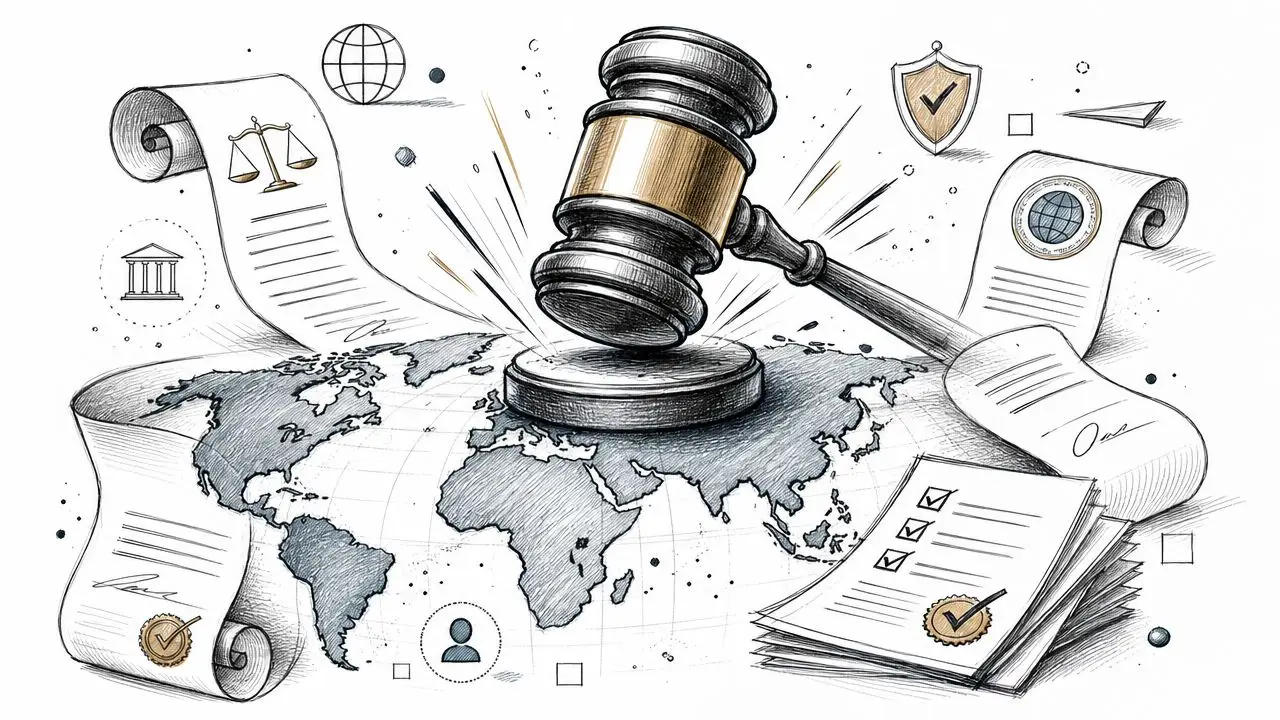
What happens when a counterparty’s real controller surfaces for the first time in an injunction application, an asset freeze, or a sanctions review?
That is why beneficial ownership verification now sits inside legal risk management, not only compliance administration. Across major markets, authorities expect companies and regulated firms to identify the natural persons who own or control legal entities, and commercial counterparties increasingly apply the same expectation before they extend credit, close a transaction, or engage in a contested matter.
The U.S. framework has become one of the clearest reference points. The FinCEN BOI FAQs explain that the Corporate Transparency Act requires reporting companies to identify individuals who exercise substantial control or own at least 25% of ownership interests. That same ownership-and-control logic has shaped how banks assess legal-entity customers. As a result, U.S. standards now influence diligence expectations well beyond U.S. filings.
For general counsel, the point is strategic. A structure that cannot be explained in terms a bank, regulator, or judge will accept creates delay at exactly the wrong moment. In litigation, that delay affects service strategy, interim relief, settlement pressure, and recovery planning. In a cross-border crisis, it affects who can instruct, who can bind the entity, which assets may be exposed, and which jurisdiction can be used effectively.
This matters in Israel-related and other international matters where counterparties, lenders, and institutional partners expect clear control data early. If the legal team cannot show who holds ownership, who exercises control, and where that control sits in practice, the company loses credibility and bargaining position before the merits are even argued.
The market has responded by treating verification as an operating discipline, not a filing exercise. Reviews of anti-money laundering solutions reflect that shift. Institutions are using systems that compare registry data, corporate records, control indicators, and ongoing changes that may affect risk.
That change has a legal consequence. Verification must be defensible. A signed declaration still has value, but on its own it rarely answers the questions that matter in a dispute: who can move assets, who benefits from the structure, who sits behind nominees or intermediaries, and whether the ownership story remains true after the deal closes or the dispute begins.
The mandate is therefore broader than technical compliance. It is a framework for preserving optionality. Counsel who verify beneficial ownership properly can choose the right forum faster, frame allegations with more precision, test conflicts and sanctions exposure earlier, and put pressure on the individuals who control the commercial outcome.
A Phased Process for Defensible Verification
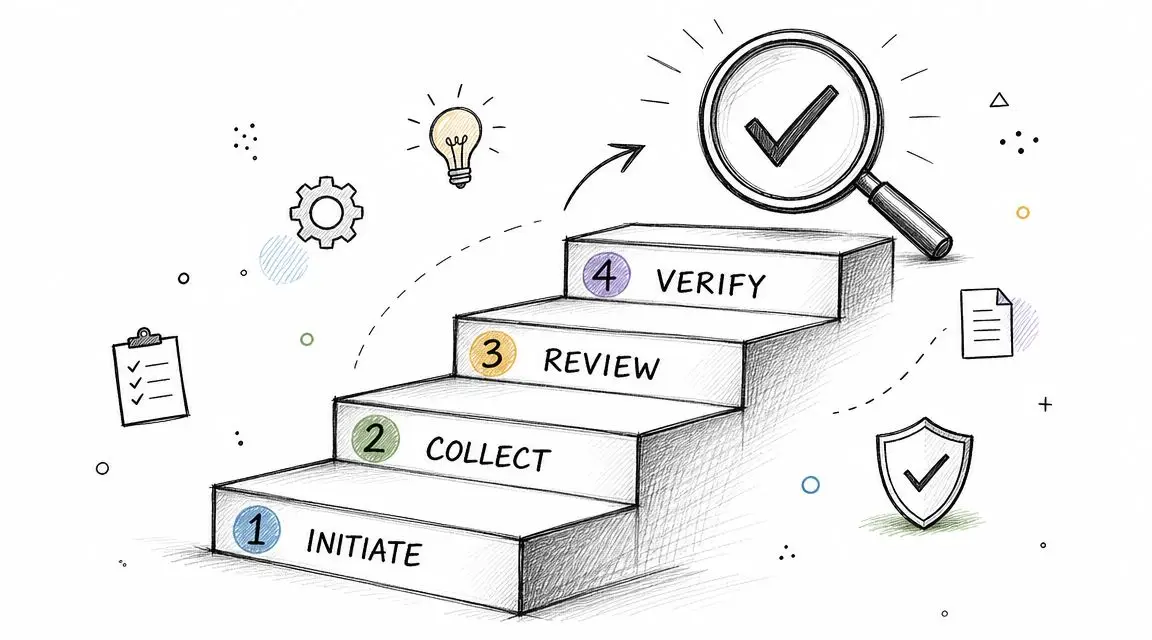
What would your team be able to prove about control if an injunction application had to be filed tomorrow?
A defensible verification process starts with that question. In a high-stakes dispute, beneficial ownership verification is not an administrative exercise. It is how counsel identifies pressure points, tests asset recovery options, and decides which individuals or entities belong inside the litigation strategy from the outset.
Phase one begins with scoping
Risk-tier the counterparty before requesting documents. Jurisdiction, ownership complexity, offshore vehicles, trust involvement, nominee indicators, sanctions touchpoints, and the commercial setting all belong in the opening assessment.
The point is not to collect more paper. The point is to decide how much doubt the business can tolerate.
A local operating company with a plain ownership chain can usually be verified on a narrower record. A counterparty tied to distressed assets, shareholder conflict, or multiple holding layers requires a wider mandate and closer scrutiny. That distinction affects budget, timing, and litigation posture. It also affects whether counsel can move quickly if the matter turns hostile.
The same discipline supports contractual risk review in transactions tied to major assets, including commercial lease agreements, where a party’s real control and resilience may matter as much as the wording of the lease itself.
Phase two requires targeted collection
Document requests should follow the existing structure, not a standard intake list. Start with incorporation and constitutional records, shareholder registers, director and officer records, trust or nominee materials where relevant, and identification records for the natural persons presented as ultimate owners or controllers.
The response process often reveals as much as the documents themselves. A cooperative counterparty usually produces a coherent package with a consistent explanation of ownership and authority. A reluctant one tends to produce fragments, delay on the sensitive layers, or answer only the questions that are easiest to answer. In contentious matters, that conduct is part of the risk analysis.
Ask for enough material to test control in practice, not just ownership on paper. Board appointment rights, veto rights, financing control, side letters, powers of attorney, and trustee instructions can matter more than a shareholder percentage if the commercial objective is to identify who can settle, move assets, or block disclosure.
Phase three is validation, not file assembly
Many in-house legal teams stop once they have a signed ownership chart and a declaration. That file may satisfy an intake checklist. It rarely survives hostile scrutiny.
The better standard is cross-checking. Compare the counterparty’s account against registries, corporate filings, court records, enforcement history, media reporting, and other independent datasets. Teams handling fragmented public records across several jurisdictions often use tools that unblock web data with an API to collect records efficiently, but the legal value comes from disciplined comparison and judgment, not from automation alone.
A useful working rule is simple. If an ownership claim cannot be corroborated, treat it as provisional.
That matters in litigation. A mismatch between the declared shareholder and the person exercising actual control can reshape service strategy, disclosure requests, freezing applications, settlement authority analysis, and even forum choices. Beneficial ownership verification gives counsel a clearer map of the actual decision-makers before positions harden.
The record becomes defensible when independent checks confirm the ownership story or when the file explains, with reasons, why the inconsistencies do not change the conclusion.
Phase four creates an audit trail
A conclusion without a record is hard to defend. The file should show what was requested, what was received, what was checked independently, where inconsistencies appeared, and why counsel reached a reasonable view on ownership and control.
That record has legal and strategic value. It helps defend the adequacy of the verification process if a bank, regulator, tribunal, or opposing party later challenges it. It also allows the business to refresh the analysis when control shifts, sanctions risk changes, litigation begins, or new facts cast doubt on earlier assumptions.
A practical workflow usually includes these controls:
- Scoping memo: Record why the counterparty received its risk tier and what dispute or transaction risks drove that decision.
- Source log: Track each registry, filing set, public record source, and third-party database consulted.
- Control analysis note: Separate legal ownership from practical control, and identify the individuals who can direct the commercial outcome.
- Conflict memo: Explain inconsistencies, gaps, and the basis for resolving them.
- Refresh triggers: Tie re-verification to ownership changes, enforcement events, sanctions developments, litigation milestones, or reliability concerns.
Done properly, this process gives the legal team more than a compliant file. It gives counsel a position that can be defended under pressure and used offensively when the dispute turns on who really controls the counterparty.
Essential Documents and Evidence Checklist
The weakest verification files usually look complete at first glance. They contain incorporation papers, a passport copy, and a signed declaration. Then the dispute begins, and the documents don’t answer the core questions about control, authority, or inconsistency.
A better approach is to collect evidence with a specific purpose in mind. Every document should help establish identity, ownership path, control rights, or credibility. If it does none of those things, it may add volume without adding certainty.
What the checklist should actually prove
Consider a routine cross-border supply dispute. The contracting entity produces a certificate of incorporation and a shareholder summary. Later, counsel learns that a trust sits above the holding company and that the listed shareholder has no real decision-making role. The initial file wasn’t false in a narrow sense. It was incomplete in the way that matters most.
That is why the evidentiary question should always be framed this way: does the file support a reasonable belief about the true owner and controller? If not, the file isn’t ready.
| Evidence Type | For Individuals (UBOs) | For Corporate Entities | Verification Purpose |
|---|---|---|---|
| Identity document | Passport or national ID | Not applicable | Confirms core identity of the natural person presented as a beneficial owner |
| Proof of address or comparable identifying record | Current personal address record where available | Registered office evidence and principal business details | Tests whether identity data aligns with declared residence or business presence |
| Ownership declaration | Signed statement describing direct or indirect interest | Signed corporate ownership chart | Establishes the starting narrative for the ownership chain |
| Constitutional documents | Not applicable | Certificate of incorporation, articles, bylaws, equivalent formation records | Confirms legal existence and internal governance framework |
| Shareholder register or equivalent | Not applicable | Current register of members, share ledger, or equivalent internal record | Shows formal ownership positions inside the entity |
| Director and officer records | Personal role confirmation where relevant | Board records, director extracts, management appointments | Identifies who manages or directs the entity |
| Trust documentation where relevant | Trustee, settlor, protector, or beneficiary details if applicable | Trust deed excerpts or related control documents if ownership is trust-held | Tests whether apparent ownership is separated from effective control |
| Registry extracts | Match personal data where public records exist | Corporate registry searches in each relevant jurisdiction | Compares self-declared information against official records |
| Authorizing resolutions or powers | Evidence of signing authority where relevant | Board or shareholder approvals, powers of attorney | Confirms who can bind the entity in practice |
| Adverse information file | Publicly available litigation, sanctions, or risk-related material where relevant | Same for each entity in the chain | Identifies conflicts between formal ownership and real-world risk indicators |
How counsel should read the file
The most important review isn’t mechanical. It is comparative. Names should match across records. Dates should align. Control rights should make sense when compared against board records, shareholder rights, and actual behavior in the relationship.
Missing documents matter less than unexplained contradictions.
Where records are unavailable, counsel should document the gap and explain the alternative evidence used. That matters far more than pretending certainty where none exists. A transparent file with stated limits is usually more defensible than a polished file built on assumptions.
Identifying Red Flags and Risk Indicators

Most legal teams still over-focus on percentages. That creates a blind spot. A structure can satisfy a formal threshold analysis and still conceal the person who matters.
The sharper question is whether the ownership picture behaves like a genuine commercial arrangement. If it doesn’t, counsel should assume the file needs deeper work.
Red flags in the structure itself
Some warning signs appear in the documents. Others appear in the architecture.
- Fragmented holdings: Ownership sits across affiliates or individuals in a pattern that obscures who acts in concert.
- Nominee features: The visible holder appears detached from the commercial substance or decision-making history.
- Trust opacity: A trust appears in the chain, but the file doesn’t identify who exercises practical control.
- Registry conflict: Public records and internal documents tell different stories.
- Circularity or unexplained layering: The chain adds entities without a clear commercial reason.
FinCEN’s guidance on obtaining and retaining beneficial ownership information notes that when ownership is obscured by trusts, trustees can be considered beneficial owners, and verification must go beyond declared information and cross-match data from various sources to establish a reasonable belief of the true owner’s identity, especially when data sources conflict, as set out in its beneficial ownership guidance. For litigators and corporate counsel, that matters because trust language often gives false comfort. The trust may explain legal form, but it may still conceal practical control.
Behavior often reveals more than paperwork
A cooperative party doesn’t always mean a low-risk party. Still, conduct during verification often tells counsel where pressure points sit.
Watch for these signals:
- Delayed responses: The entity asks for repeated extensions on basic ownership requests.
- Selective production: It sends polished summaries but avoids primary documents.
- Last-minute amendments: Directors, shareholders, or signatories change during a financing, dispute, or enforcement phase.
- Authority mismatch: The person negotiating appears different from the person formally authorized to act.
These signals become especially important when a dispute is already destabilizing operations. Sudden structural changes can spill into financing relationships, payment flows, and internal controls, which is one reason legal teams facing ownership opacity often also monitor risks tied to bank account blockages.
Warning sign: If the counterparty changes the structure during the dispute, counsel should ask who benefits from the timing.
What works and what doesn’t
What works is comparative verification. Test declarations against registries, authority documents, litigation history, and commercial behavior. Then document the discrepancies.
What doesn’t work is accepting a threshold-based answer as though it ends the inquiry. Beneficial ownership verification fails when teams treat 25% as the destination rather than the opening screen. In complex disputes, control often hides in governance rights, trust positions, indirect influence, or simple human reality. One person gives the instructions, even when the cap table looks fragmented.
Navigating Cross-Border Complications

What happens when the ownership file that satisfied onboarding is useless in court, rejected by a bank, and incomplete under local privacy rules?
That is the core cross-border problem. Beneficial ownership verification breaks down when legal teams assume one package of evidence will satisfy every audience. It rarely does. A regulator may focus on formal thresholds, a bank on source-of-funds risk, and a litigation forum on who directed the conduct in dispute.
The stakes rise fast in Israel-related matters involving offshore holding chains, nominee arrangements, trusts, or jurisdictions with weak public records. At that point, the question is no longer whether the business collected documents. The question is which evidentiary standard will hold under pressure, and whether the file can support injunction strategy, enforcement planning, service decisions, and communications with financial institutions.
For multinational businesses, the safest course is usually to set one high internal standard and apply it across the structure, subject to local law constraints. That approach reduces internal contradictions and avoids a common error. Teams often relax the inquiry to match the thinnest jurisdiction in the chain, then discover during a dispute that the weakest record now governs the whole matter.
A stronger cross-border process improves more than compliance. It gives counsel options. If the ownership analysis already ties together control rights, authority documents, registry extracts, trust positions, and refresh triggers, the company enters a dispute with a file that can support urgent relief, challenge credibility, and expose pressure points on the other side.
Cross-border verification also fails when teams stop at the corporate chart.
In contested matters, the chart is only a starting point. The harder work is reconciliation: matching company disclosures against independent registries where available, local filings, signatory authority, litigation records, and the practical pattern of who gives instructions. That exercise often reveals the facts that matter most in a crisis. The nominal owner may differ from the person directing settlement posture, asset movement, or document production.
Data handling requires equal discipline. Cross-border beneficial ownership verification often requires collecting personal information across several legal regimes, each with its own limits on access, storage, transfer, and retention. Counsel should settle those rules before the file becomes urgent. Decide who can collect the data, where it will sit, who can review it, how privilege will be preserved, and what event triggers a refresh.
A cross-border framework that holds up under dispute usually includes:
- Central governance: One decision-maker or committee sets the ownership standard, escalation thresholds, and recordkeeping rules.
- Local evidence collection: Jurisdiction-specific checks fill gaps where registries are outdated, incomplete, or inaccessible.
- Event-driven reassessment: Ownership is retested when litigation, sanctions exposure, financing stress, or management changes create new control risk.
- Crisis coordination: Legal, compliance, banking, and communications teams act from the same ownership record and escalation plan.
This matters in practice because ownership disputes rarely remain technical for long. They become banking problems, disclosure problems, enforcement problems, and reputational problems at the same time. Companies need a response structure that connects verification work to broader crisis management decisions.
Handled properly, cross-border beneficial ownership verification gives the business a strategic advantage. It sharpens pleading strategy, improves settlement posture, reduces avoidable banking friction, and helps counsel identify who controls the risk. In high-stakes disputes, that is not administrative hygiene. It is case strategy.