
A business continuity plan can fail long before servers go down. If legal authority, payment access, and contractual power collapse first, the plan becomes evidence of false confidence, not resilience.
That risk is acute in Israel-linked cross-border operations. Many multinational executives still treat business continuity planning as an IT recovery document. The better view is harsher and more useful. It is a control system for keeping the company legally operable, financially liquid, and contractually positioned during stress.
Is Your Business Continuity Plan an Asset or a Liability
A plan becomes a liability when management assumes that documentation equals readiness. It doesn’t. A widely cited benchmark says 61% of businesses worldwide have a business continuity plan, while fewer than 20% have one that is fully documented in practice, according to global business continuity benchmarks compiled by Invenio IT.
That gap matters more in cross-border trade than in domestic operations. A document may describe alternate sites and data backups, yet say nothing useful about frozen payments, disrupted collections, contradictory local instructions, or a counterparty that uses crisis conditions to renegotiate by pressure.
The false comfort of the IT-only plan
The weakest plans usually share one flaw. They assume the main interruption will be technical. That assumption fails quickly in Israeli commercial matters, where a crisis often moves through contracts, banking controls, vendor behavior, and decision rights before it appears in infrastructure dashboards.
A generic plan also creates dangerous internal misunderstandings. Finance thinks treasury can improvise. Legal assumes operations will escalate issues in time. Local management assumes headquarters already approved emergency authority. By the time those assumptions collide, the company has already lost room to maneuver.
Practical rule: If the continuity plan doesn’t answer who can move funds, sign emergency amendments, preserve privilege, and instruct the bank, it isn’t a working plan.
What actually holds under pressure
An effective plan has to preserve control in three directions at once:
- Operational continuity: Which functions must continue, in what sequence, and under whose authority.
- Financial continuity: How the company protects liquidity, payment channels, receivables, and payroll capability.
- Legal continuity: How the company keeps rights intact, documents decisions, manages notices, and avoids accidental waiver.
That last point is where multinationals often stumble. They build process continuity but neglect position continuity. During a live disruption, a badly phrased email, an unauthorized concession, or silence after a notice default can damage the company more than the original event.
For Israel-facing businesses, the strategic question isn’t whether a continuity plan exists. The critical question is whether the plan maintains advantage when a supplier fails, a bank escalates compliance concerns, or a local dispute spills into operations.
The BCP Lifecycle From Risk to Recovery
Business continuity planning only works when management treats it as a cycle. The modern framework is not a one-time drafting exercise. A review in the NIH/PMC literature describes four main stages of business continuity management: initiation, planning, implementation through testing and exercising, and ongoing operational management through maintenance and updates, as outlined in the NIH/PMC review of business continuity management.
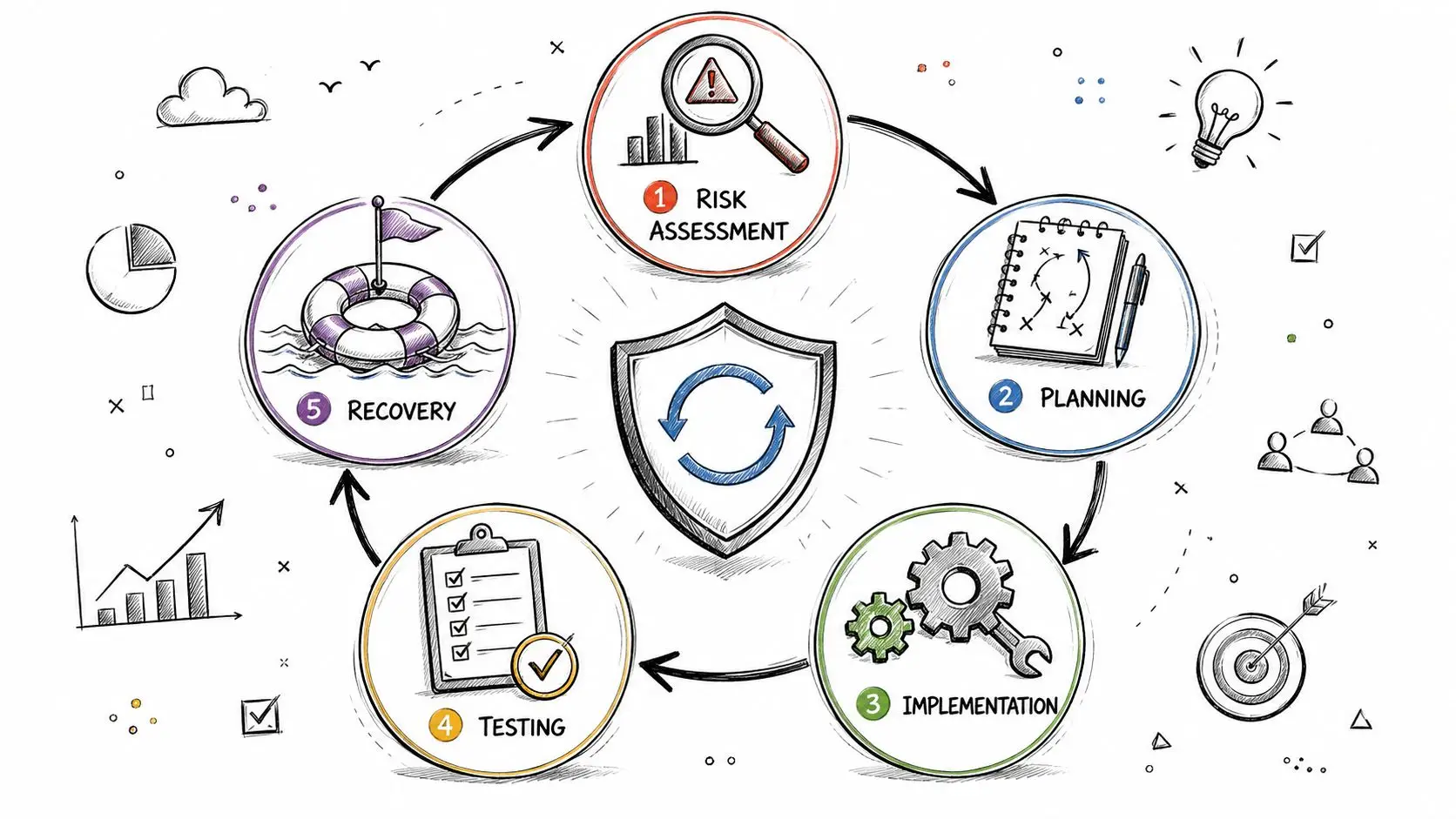
That structure matters because it forces discipline. It also stops the common drift where a company writes a respectable plan, files it, and discovers during a crisis that half the named people changed roles, key suppliers changed terms, and nobody tested authority lines.
Four stages that executives can govern
A workable lifecycle looks like this:
| Stage | What management must decide | What usually goes wrong |
|---|---|---|
| Initiation | Scope, leadership, critical jurisdictions, and decision owners | The project gets pushed to IT or compliance alone |
| Planning | Priorities, dependencies, legal constraints, and recovery logic | Teams list assets but don’t rank business functions |
| Implementation | Exercises, escalation drills, and documentation rollout | Staff read the plan but never practice it |
| Operational management | Updates, post-incident revisions, and annual review discipline | The plan ages faster than the business |
Why the lifecycle matters in Israel-linked operations
Cross-border pressure punishes stale plans. A multinational may have the right legal entity, but the wrong signatory matrix. It may have backup systems, but no preapproved path for urgent notices in Hebrew and English. It may have alternate vendors, but no contract language that lets procurement switch without triggering new disputes.
A continuity program fails quietly first. It fails in ownership, approvals, and assumptions before it fails in operations.
The strongest programs assign named owners for each stage. They also require legal and finance review before final approval, not after activation. That discipline turns business continuity planning into a management capability rather than a compliance artifact.
For executives, the test is simple. If the plan can’t survive personnel turnover, supplier change, and a jurisdiction-specific dispute, it isn’t in operational management. It’s still in draft form, even if the board approved it months ago.
Risk Assessment and Business Impact Analysis
Risk assessment asks what might happen. A business impact analysis, or BIA, asks what each interruption would cost the business in legal, operational, and financial terms. That distinction decides whether business continuity planning becomes a strategy or stays a checklist.
A technically sound plan should rest on a BIA that quantifies interruption across financial, operational, and legal exposure, then converts those findings into recovery priorities and recovery time objectives, according to Cloudian’s guidance on business continuity planning standards and technologies.
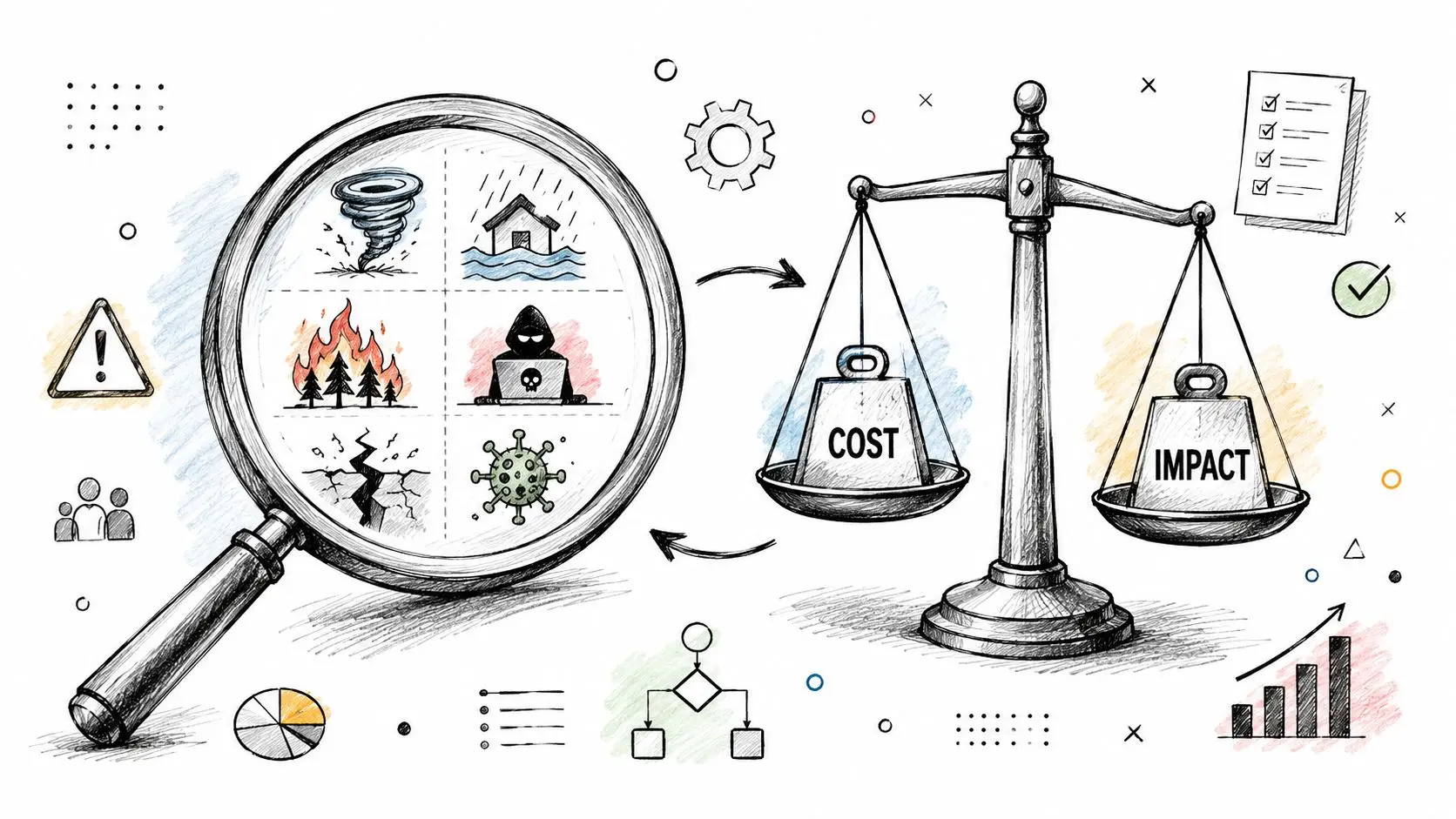
Without that analysis, companies tend to protect what is visible instead of what is decisive. They overfund systems that are annoying to lose and underprotect processes that trigger legal breach, lost collections, blocked shipments, or irrecoverable approvals.
What a serious BIA looks at
A useful BIA maps business functions to their dependency chain. It asks which process must resume first, which person can authorize fallback action, and what contractual or legal consequence follows if the function stops.
For Israel-related operations, that usually means examining more than systems. It means reviewing payment channels, contract notice clauses, importer or distributor dependencies, local signatory powers, language requirements, and customer concentration. The point isn’t volume of paperwork. The point is identifying where one failure can force three others.
A practical BIA should answer questions like these:
- Revenue exposure: Which customer-facing functions can’t stop without immediate commercial damage.
- Legal exposure: Which interruptions trigger breach, missed notice windows, or compliance problems.
- Operational sequencing: Which process must recover first because other teams depend on it.
- Authority exposure: Which fallback actions require board, treasury, or local director approval.
- External dependence: Which supplier, cloud provider, shipper, or bank can halt recovery even when internal systems work.
Third-party dependency is often the real risk
Many continuity exercises assume the company controls its own recovery. Often it doesn’t. A strong BIA should map dependencies across workplace, workforce, third parties, and technology, and continuity planning should be updated after activations and at least annually, as emphasized in Bryghtpath’s guidance on business continuity planning success.
That point becomes sharper in Israeli commercial practice. The operational problem may sit outside the company entirely. A cloud platform may restore access on its own timeline. A logistics partner may prioritize other routes. A distributor may become unresponsive. A bank may request clarifications that slow urgent payments.
The most dangerous dependency is the one management assumes is “somebody else’s issue” until it becomes the company’s outage.
Legal review strengthens the BIA. Contracts reveal whether a fallback vendor can be engaged, whether service credits are useful or cosmetic, and whether notice, exclusivity, or jurisdiction clauses will hinder a rapid shift.
Designing a Resilient Continuity Strategy
A BIA only matters if management converts it into choices. Those choices should produce a continuity design that the business can fund, execute, and legally defend. In practice, that means selecting fewer priorities and protecting them properly instead of writing broad promises that nobody can operationalize.
The strategy should cover internal operations and external enforceability. If the company needs alternate suppliers, remote execution authority, emergency payment routes, or temporary service substitutions, contracts must support those moves. Otherwise, the continuity plan conflicts with the legal architecture of the business.
Strategy that survives contact with reality
Resilient design starts with uncomfortable trade-offs. Not every process deserves the same recovery speed. Not every market needs the same fallback structure. Management should ask which functions preserve enterprise control, then build around them.
The strongest continuity strategies usually include a combination of the following:
- Supplier diversification: A second source only helps if onboarding, specifications, and approval rights are ready before the crisis.
- Contractual flexibility: Service agreements, distribution terms, and management arrangements should allow substitutions, urgent notices, and defined escalation paths.
- Authority design: Local managers need clear written power for emergency acts that can’t wait for cross-border committee review.
- Payment resilience: Treasury should know which channels, entities, and approvals support continued operations during disruption.
- Communication discipline: Stakeholders need one message chain, not parallel improvisation by country managers, outside vendors, and finance teams.
Contracts decide whether the strategy is real
Many executives still separate continuity planning from commercial drafting. That’s a mistake. A company cannot claim continuity readiness while using agreements that block replacement vendors, restrict transfer of responsibilities, or create ambiguity around notice, default, and cure rights.
That issue appears often in Israeli market entry and expansion. Distribution arrangements, franchise terms, service contracts, and joint commercial structures can either preserve flexibility or trap the business. For context on structuring commercial relationships that hold under pressure, it helps to review how commercial agreements in Israel allocate rights, obligations, and enforcement mechanics.
A similar logic applies to governance design. If a local platform or affiliate lacks the right authority lines, continuity decisions slow down exactly when speed matters. That problem often begins at setup stage, which is why corporate formation in Israel should be treated as part of resilience planning, not merely an incorporation task.
Navigating the Israeli Legal and Banking Gauntlet
The continuity risk that catches foreign companies off guard is often not operational. It is financial and legal. The company may have functioning staff, data, and customers, yet still lose continuity because payment access tightens, local banking friction escalates, or nobody knows who has authority to answer under pressure.
Recent guidance increasingly treats continuity as an integrated governance problem. Plans should include financial impact assessment, liquidity review, legal consultation, and regular communications, while departmental plans define authority lines, dependencies, and recovery priorities, as discussed in Protiviti’s analysis of an all-hazards approach to business continuity planning.
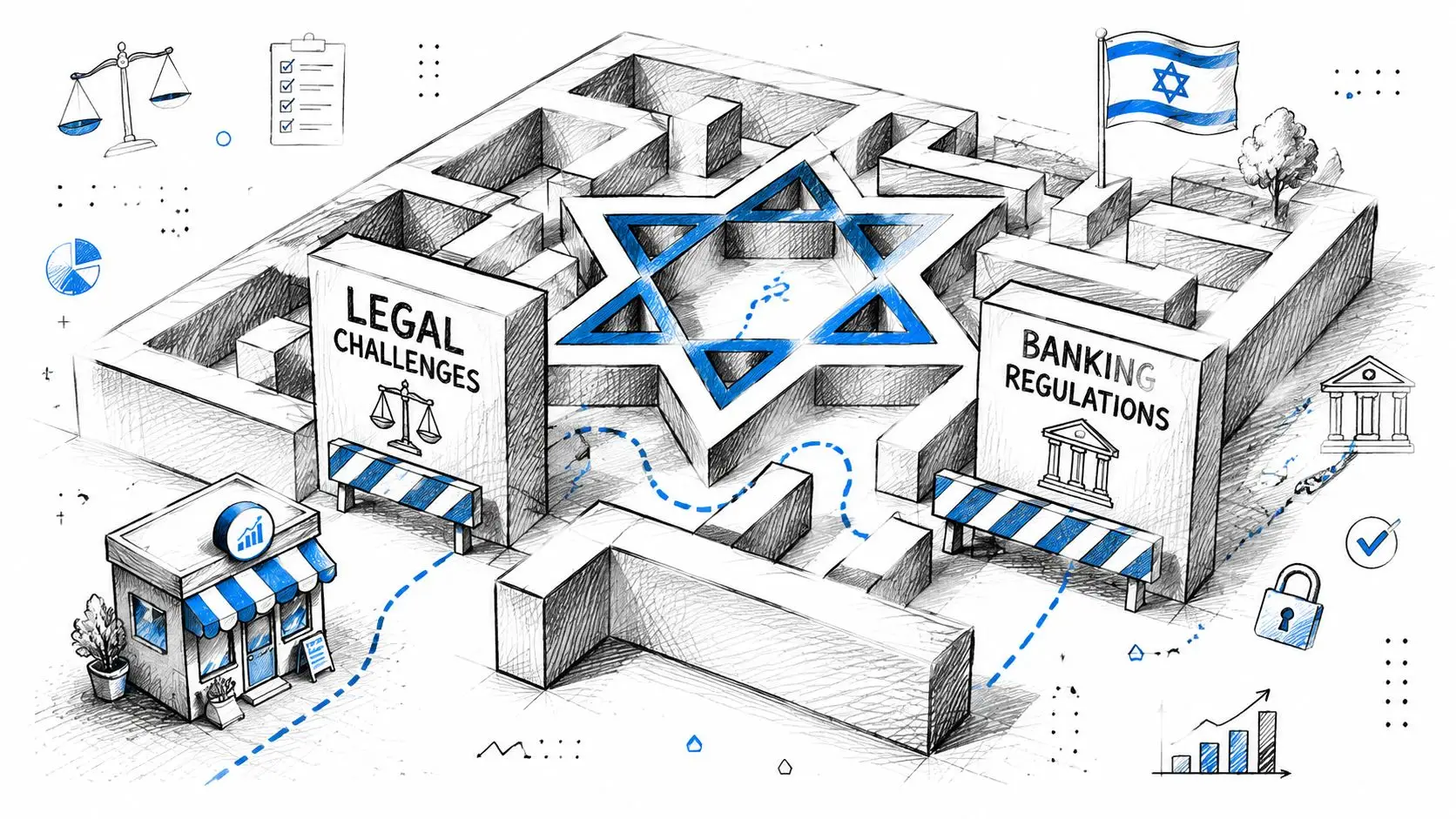
In Israeli commercial settings, that insight has immediate force. A continuity plan can fail because executives don’t control who speaks to the bank, who validates source-of-funds documentation, who approves urgent account restructuring, or who handles a dispute that spills into banking scrutiny.
Banking friction can neutralize a strong operating plan
Foreign executives often underestimate how quickly banking pressure changes the operating picture. A restriction, delay, or enhanced review can impair payroll, supplier payments, collections, and customer confidence at once. The legal team then inherits an emergency that operations cannot solve alone.
This is why liquidity review belongs inside the continuity framework. It is also why the plan must identify substitutes and escalation paths before a crisis begins. If the first serious bank issue triggers a search for signatories, explanations, and old compliance files, the company is already behind.
A practical Israel-facing continuity playbook should define:
- Escalation ownership: Name the executive, treasury lead, local signatory, and counsel who coordinate the response.
- Document readiness: Keep corporate records, contracts, transaction explanations, and supporting files organized for immediate production.
- Payment triage: Rank which obligations must move first to preserve operations and legal position.
- Communication control: Align messages to the bank, counterparties, employees, and group management.
- Dispute posture: Decide early whether the issue is operational clarification, formal objection, or pre-litigation conflict.
Legal response must start before outright failure
A company should not wait for paralysis. Many cross-border problems begin as “temporary review,” “additional clarification,” or “routine delay.” Those labels can create dangerous passivity. Management needs predefined thresholds for involving counsel and documenting the record.
That is especially important where account restrictions or returned payment issues can trigger broader commercial harm. For executives assessing this risk, a focused review of bank account restrictions in Israel due to insufficient funds and returned checks helps frame the operational consequences and dispute posture.
The same principle applies to legal correspondence. During a continuity event, every notice matters. A rushed email can concede facts, waive timing arguments, or inflame a bank or counterparty unnecessarily. That is why legal correspondence and demand letters in Israel belong inside the crisis toolkit, not outside it.
Cross-border continuity breaks when the company loses control of money, message, and mandate in the same week.
The Israeli legal and banking environment doesn’t make continuity impossible. It makes improvisation expensive. Executives who build a banking and legal escalation playbook into business continuity planning are better positioned. Those who don’t often discover too late that their plan protected systems but not the business.
Testing Governance and Involving Legal Counsel
A plan isn’t operational because it exists in a shared drive. It becomes operational when management tests it against realistic friction, updates it after each exercise, and assigns ownership that survives staff changes.
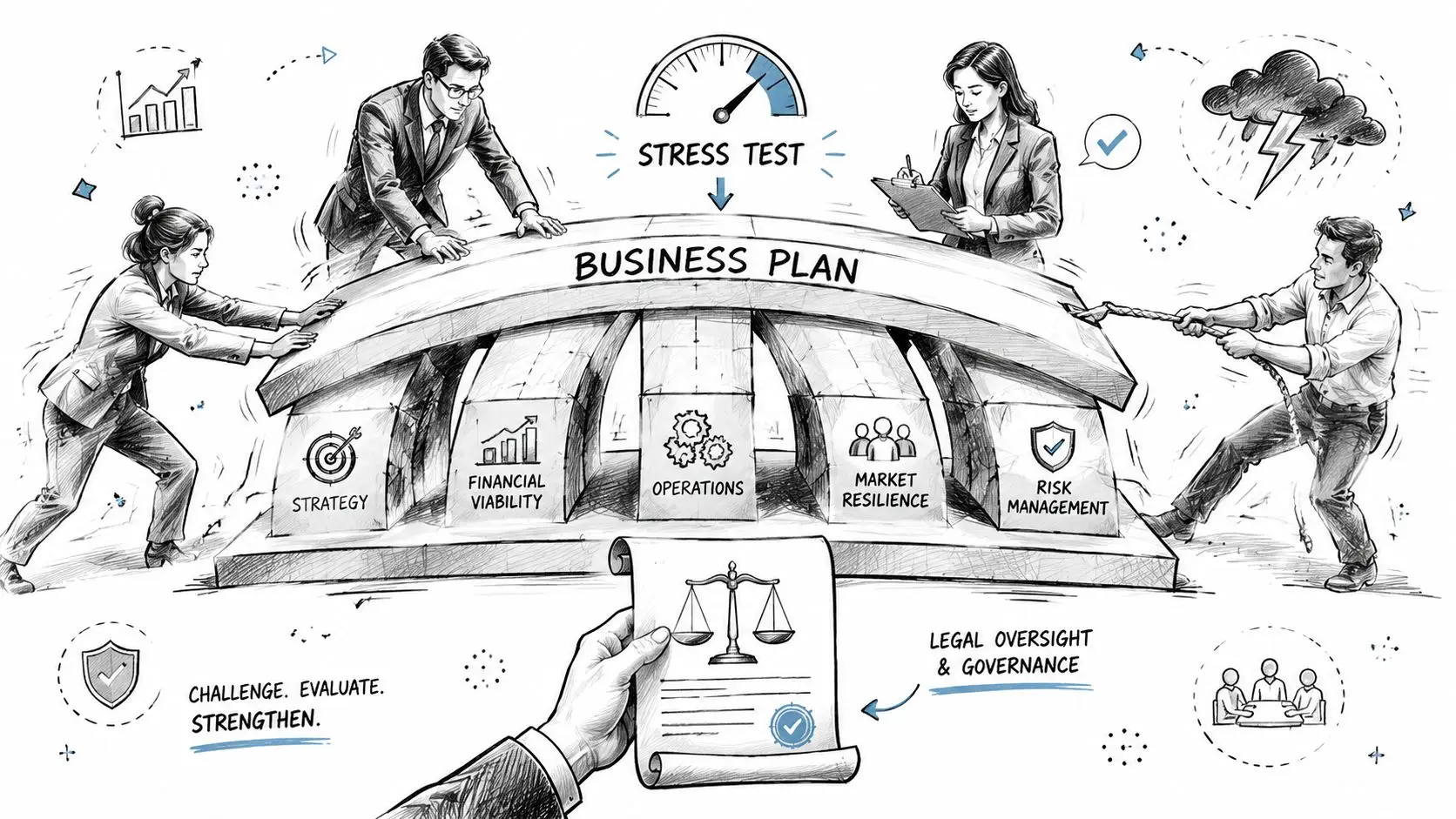
Testing must go beyond technical recovery. The useful question isn’t only whether systems return. The useful question is whether the company can make valid decisions, communicate consistently, preserve rights, and document actions under pressure.
What to test instead of what looks impressive
Many organizations run exercises that are too clean. Participants know the scenario, legal issues stay abstract, and no one pressures finance, procurement, or country management with conflicting demands. Those sessions create familiarity, not readiness.
A better testing program includes messy facts. A bank asks for urgent clarification. A supplier misses delivery and denies responsibility. Local management wants to reassure customers before legal review. Headquarters pushes for speed while nobody can confirm who may sign the workaround.
Use at least these exercise formats:
- Tabletop sessions for executive decision-making, legal escalation, and communications control.
- Functional drills for treasury, procurement, and operations to test real handoffs.
- Activation reviews after any live incident, even if the event looks small at first.
- Document audits to confirm authorities, contact chains, contract summaries, and local records remain current.
Test the plan against human delay, legal ambiguity, and supplier resistance. Those are the conditions that usually break it.
When counsel must be inside the room
Legal counsel should enter continuity work at three points.
First, during drafting. Counsel can identify where agreements, board resolutions, signature rules, and dispute clauses undermine the intended recovery model. Second, during testing. Legal participation exposes notice risks, waiver traps, privilege issues, and messaging errors before they matter. Third, at activation. Counsel helps preserve the record, frame communications, and protect the company’s strategic position.
Governance must also force maintenance. Annual review is the minimum discipline. Material changes in suppliers, leadership, banking arrangements, entity structure, or market footprint should trigger interim updates. Otherwise, the company rehearses a structure that no longer exists.
For disputes that escalate beyond internal control, continuity and litigation readiness begin to converge. At that point, complex commercial litigation in Israel is no longer a separate issue from continuity planning. It becomes part of preserving its advantage while the business keeps operating.
Your Strategic Path to True Resilience
Business continuity planning is not a document management exercise. It is a governance discipline for keeping the enterprise controllable when counterparties hesitate, payment channels tighten, and local legal realities interrupt global assumptions.
For Israel-linked multinationals, the central lesson is clear. A plan that protects systems but ignores contracts, authority, banking access, and legal escalation will fail at the first serious cross-border shock. Real resilience depends on disciplined impact analysis, enforceable commercial design, tested authority lines, and a response model that treats legal and financial continuity as core operating functions.
Executives should act before pressure arrives. They should review critical contracts, map banking choke points, test escalation authority, and align legal, treasury, and operations around one crisis logic. That work is less dramatic than emergency response. It is also far more effective.
To avoid costly mistakes and strengthen an Israel-facing continuity strategy, contact RNC Group now.
Businesses confronting Israeli cross-border risk should avoid relying on generic templates or late-stage improvisation. RNC Group handles high-stakes commercial crises, banking restrictions, cross-border disputes, and continuity-sensitive legal strategy for international clients operating in or through Israel.
This article is provided for general informational purposes only. It does not constitute legal advice, does not create an attorney-client relationship, and should not be relied upon as a substitute for advice on any specific facts, transaction, dispute, or regulatory issue.