
A company can expand into new markets, hire global talent, integrate foreign software, and still commit an export violation without moving a single box. That gap in thinking is where serious legal exposure begins.
For 2026 planning, the central board question isn’t whether the shipping team follows customs rules. It’s whether the business understands that export control compliance governs products, software, technical data, internal access, and cross-border collaboration. For companies with U.S., Israeli, or broader international exposure, that issue belongs in governance, not in logistics alone.
Is Your 2026 Global Strategy an Unwitting Crime
Many executives still treat export control as an operations problem. That approach fails when engineers share controlled files, HR hires foreign nationals into sensitive roles, or sales teams discuss technical capabilities before legal review.
The risk is not abstract. Unlawful export of controlled information can carry up to 20 years in prison, with monetary penalties up to $1,000,000 per criminal violation, and civil penalties that can exceed $370,000 for each administrative breach, according to FIU export control guidance. Those figures change the boardroom conversation very quickly.
Why the old model breaks down
A narrow shipping model assumes compliance begins at dispatch. In practice, the legal event often starts much earlier. It may begin in R&D, contract negotiations, product demos, cloud access settings, or vendor onboarding.
That matters because global companies now move information faster than physical goods. Technical support tickets, shared repositories, remote debugging, and procurement exchanges can create controlled transfers long before a shipment appears in an ERP system.
Board-level reality: Export control failures often start as ordinary business decisions with no export label attached to them.
This is why prudent companies stop asking one question. They stop asking, “Did anything ship?” Instead, they ask whether any controlled item, software, or technical knowledge moved to a restricted destination, restricted party, or foreign person without the required internal review.
Where governance actually sits
The practical ownership model cuts across departments:
- R&D and engineering: Technical drawings, source code, specifications, and troubleshooting support can trigger control issues.
- HR and management: Hiring, role design, and access permissions affect who can lawfully view controlled information.
- Sales and business development: Product pitches, diligence questionnaires, and customer end-use statements create early risk points.
- M&A and investment teams: Acquisitions often import legacy classification gaps, unresolved licensing issues, and weak records.
For non-Israeli businesses dealing with Israeli entities, these concerns often intensify during joint development, manufacturing transfers, and post-acquisition integration. The legal question isn’t just whether the target sells controlled items. It’s whether the target can prove what it classified, screened, licensed, restricted, and documented.
A mature program therefore treats export control compliance as part of enterprise risk management. It belongs beside sanctions, anti-corruption, cybersecurity, and transaction diligence.
Navigating the Tri-Jurisdictional Minefield
The legal challenge rarely sits in one country. A single transaction can trigger overlapping obligations across U.S. rules, local law in Israel, and destination-country restrictions in Europe or the UK.
The starting point remains the U.S. framework. The modern system is built around the Export Administration Regulations (EAR) and the International Traffic in Arms Regulations (ITAR). Those rules don’t only govern physical shipments. They also regulate re-exports, technology transfers, and disclosures to foreign persons within the U.S., as explained in this overview of EAR and ITAR compliance architecture.

One transaction can carry several legal identities
A product may have one engineering description and several regulatory identities. That’s where multinational companies get trapped.
A U.S.-origin component may remain subject to U.S. controls after integration into a larger product abroad. A technical file developed in one country may still carry restrictions when shared with a partner in another. A software feature may look commercial to a product team but still require legal analysis before transfer.
This is why compliance teams need a transaction map, not just a rule summary.
| Decision point | Core legal question | Typical business owner |
|---|---|---|
| Product design | What exactly is the item or technology? | Engineering |
| Customer engagement | Who receives it, directly or indirectly? | Sales |
| Collaboration setup | Who can access the data? | IT and HR |
| Transfer approval | Is a license or restriction required? | Legal and compliance |
Israel sits in the middle of many cross-border structures
Israel often appears in export-controlled transactions as a development hub, acquisition target, manufacturing partner, or regional distributor. That creates a practical issue for foreign companies. They must assess not only local commercial execution, but also whether upstream U.S. controls continue to follow products, software, and know-how into the Israeli operation.
That issue becomes more complicated in sectors where digital regulation and data localization concerns already affect system design. Companies that work across sensitive jurisdictions often find it useful to compare export controls with other state-driven controls on information flow, such as the analysis in Throughwire on China internet regulations.
Cross-border regulation now follows data, access, and intent. It doesn’t wait for a freight movement.
What boards should require
Directors don’t need to classify products themselves. They do need to insist on a disciplined legal map that answers four practical questions:
- Which regime applies to the item, software, or technical data.
- Which countries touch the transaction through development, hosting, support, resale, or use.
- Which people gain access during performance, not just at closing.
- Which internal controls prove the company reviewed the transfer before it happened.
Without that map, companies confuse legal scope with geography. Export control law doesn’t work that way.
The Single Point of Failure Classifying Goods and Technology
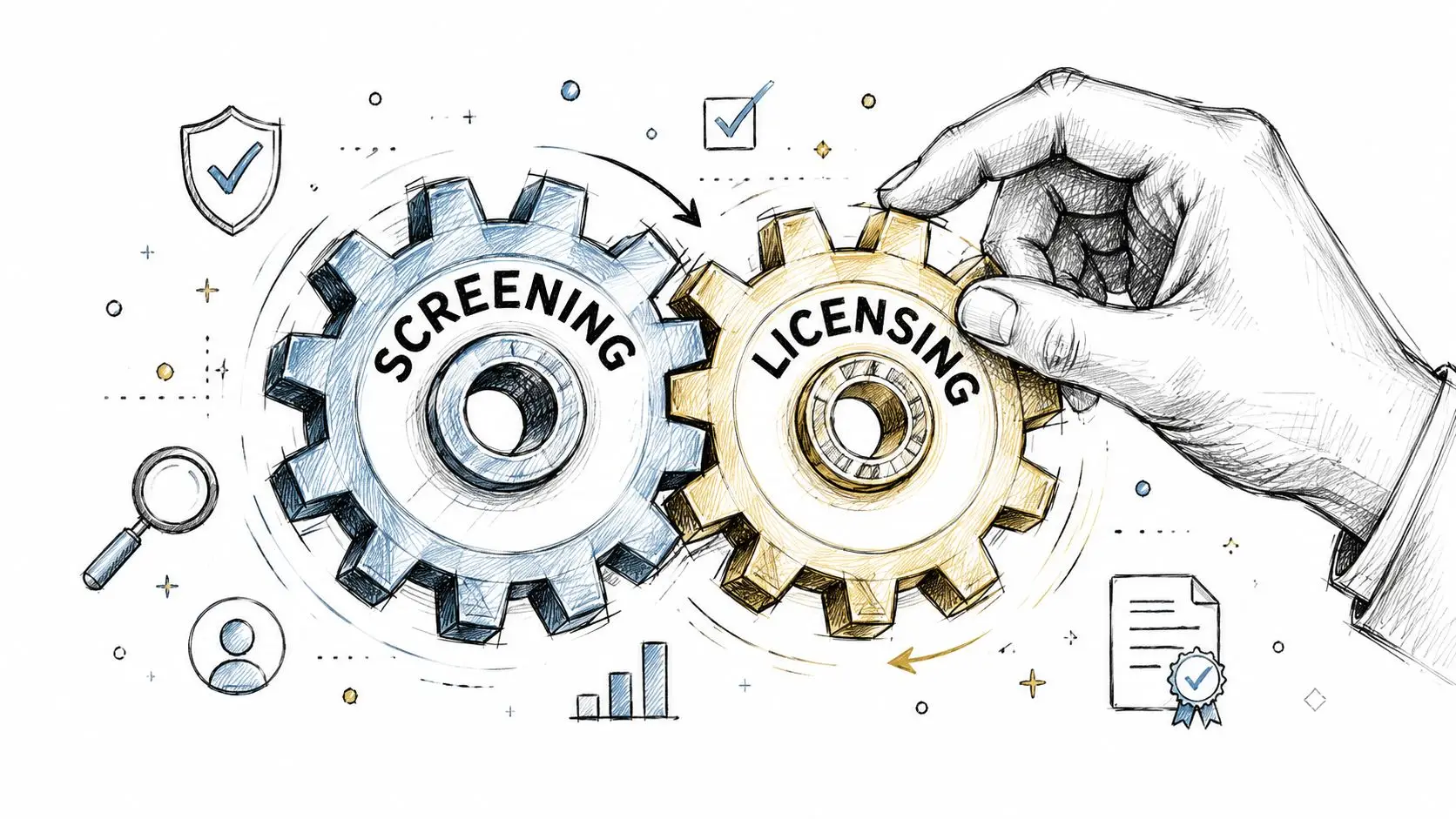
Most compliance breakdowns begin with one flawed assumption. The company believes it can screen customers and manage licenses later, even though it hasn’t classified the product or technology correctly.
That sequence doesn’t work. If the classification is wrong, every downstream decision becomes unstable. Screening may be misapplied. Licensing decisions may rest on the wrong premise. Internal access controls may protect the wrong material and ignore the underlying problem.
Why classification collapses in real companies
Classification sounds technical, so management often delegates it too far down. Engineers describe function. Product managers describe use. Sales describes market fit. None of those answers is the legal classification.
That gap grows over time. Many firms have thousands of items lacking current classifications, and that backlog makes licensing and screening unreliable until the highest-risk items are remediated first, according to this guidance on common export compliance mistakes.
The operational damage is easy to recognize:
- Legacy portfolios drift: Old SKUs stay in circulation after design changes.
- Software moves faster than review: Updates, patches, and embedded features outpace legal sign-off.
- Acquired businesses import disorder: Product files arrive without defensible classification histories.
- Technical support creates hidden exports: Teams share controlled know-how during troubleshooting.
A board-ready remediation model
Companies usually fail when they try to classify everything at once. A stronger approach starts with triage and evidence.
Start with risk, not volume
Review the highest-risk items first. Focus on products tied to sensitive destinations, military or dual-use functions, advanced software, technical support exposure, or active foreign-person access.
That approach produces legal control faster than a spreadsheet exercise across the entire catalog.
Require a classification file
A useful classification decision doesn’t live in someone’s inbox. It should sit in a controlled record that explains what the item is, what technical facts mattered, what jurisdictional logic was applied, and who approved the result.
Practical rule: If legal cannot explain the classification months later, the classification isn’t finished.
Build change triggers into operations
Classification must refresh when the product changes. That includes modified hardware, new firmware, revised performance thresholds, added encryption features, and support workflows that expose more technical detail than the original sale.
What doesn’t work
Several habits create recurring failure:
- Copying an old classification: Similar products often diverge in legally important ways.
- Treating engineering labels as legal answers: Technical precision helps, but it doesn’t replace jurisdictional analysis.
- Ignoring software and technology releases: Companies often classify physical goods and forget the knowledge around them.
- Waiting for a regulator or customer to ask: By then, the backlog usually contaminates existing transactions.
Classification isn’t an administrative opening step. It’s the load-bearing decision for the entire control system.
From Policy to Practice An Internal Compliance Playbook
A written policy doesn’t control exports. People, systems, permissions, and approval paths do. That distinction matters most when the risk involves deemed exports, because the transfer often happens inside ordinary collaboration.
Export controls cover more than shipments. They also govern transfers of information, software, and technology, and access to controlled data by foreign persons can require prior authorization even within the same country, as noted by the U.S. International Trade Administration’s export controls guidance.
Deemed exports usually hide in routine work
Most companies don’t miss deemed export risk because they ignore the law. They miss it because the workflow doesn’t look like an export.
Consider a common pattern. A U.S. engineer uploads a controlled schematic to a shared project space. An Israeli colleague accesses the file for debugging. Procurement then forwards part of the technical package to a vendor for manufacturing review. No one sees a shipment, yet several legal touchpoints may already exist.
That is why policy language must follow actual business process.
The internal playbook that works
A functioning compliance program usually rests on a few operational disciplines rather than a thick manual.
Map where controlled information moves
Start with business activities, not legal categories. Review sales demos, product development, cloud repositories, ticketing systems, procurement exchanges, and post-sale support. Then identify where foreign persons, external vendors, or cross-border teams can access controlled material.
Assign access by need and legal status
Role-based access matters more than broad confidentiality language. Sensitive folders, source materials, and technical decision trails should not be open by default to multinational teams because collaboration is easier that way.
Train by scenario
Generic annual training rarely changes behavior. Functional teams need examples tied to their own work:
- Engineering: sharing code, drawings, and test data
- HR: onboarding foreign nationals into sensitive roles
- Sales: product demos and technical proposals
- Procurement: supplier qualification and technical exchange
- IT: access controls, repository permissions, and audit logs
A company doesn’t have an internal compliance program if employees can’t identify the moment a normal task becomes a regulated transfer.
Tie contracts to operational reality
Commercial contracts should support the compliance model. Distributor terms, development agreements, consulting scopes, and licensing arrangements must align with who can access technology, where work occurs, and what approvals come first. For businesses structuring joint ventures, licensing flows, or multi-party development, this issue often overlaps with broader commercial agreement strategy in Israel.
The governance question behind the playbook
Boards should ask one uncomfortable question. If a regulator reviews internal collaboration records, can the company show that access to controlled data was designed, limited, monitored, and approved?
If the answer depends on informal practice, the program isn’t mature enough. Export control compliance becomes credible only when policy, systems, and managerial accountability point in the same direction.
Active Transaction Controls Screening and Licensing
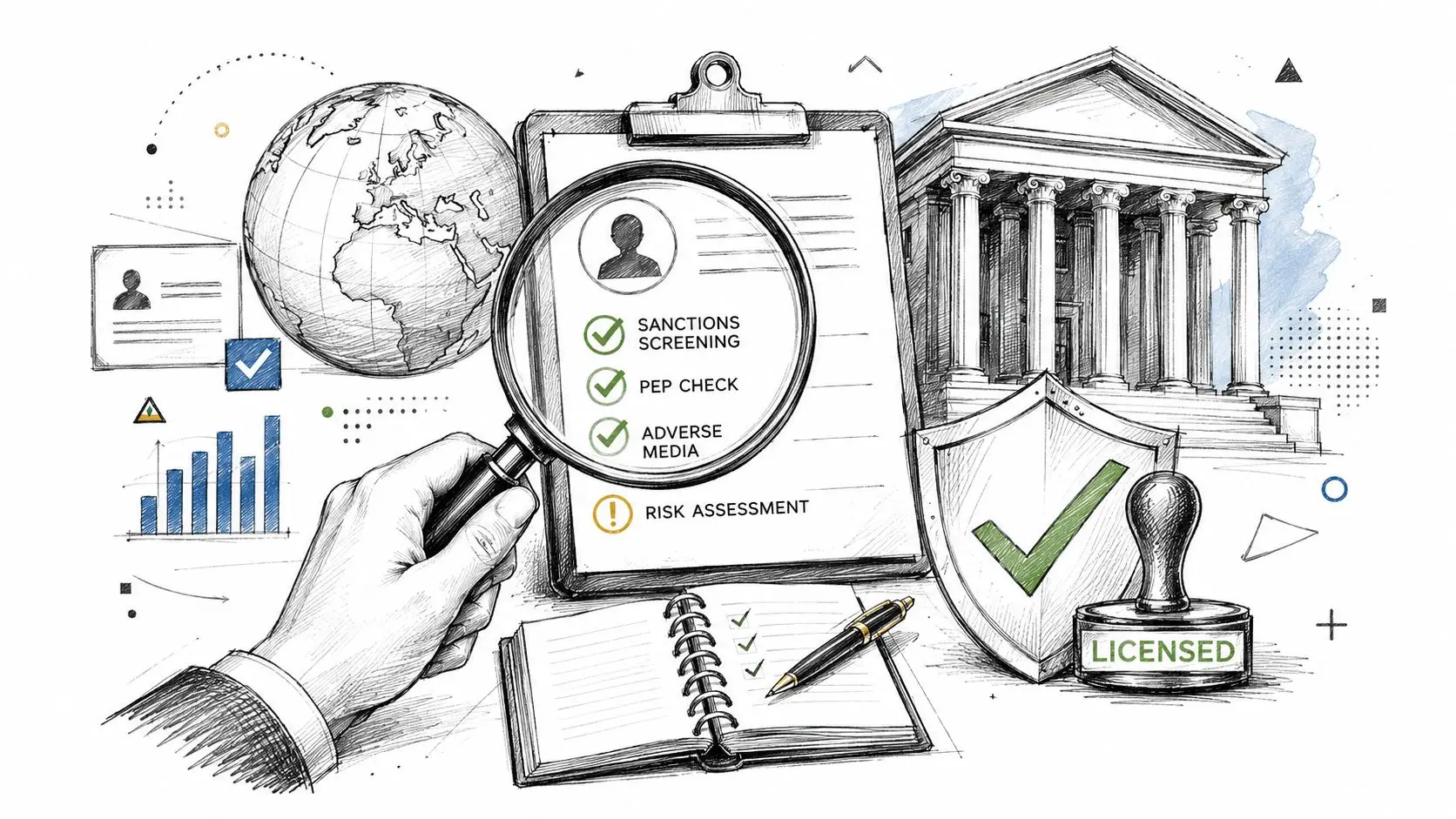
Every live transaction should pass through active controls before transfer. That process isn’t elegant, but it is effective. Companies that automate invoicing, sales approvals, and logistics while leaving export review informal create predictable blind spots.
A compliant workflow requires three gates. First, classify every item correctly. Second, screen all counterparties against restricted lists. Finally, verify the end-use and end-user before any transfer occurs, as summarized in this guidance on maintaining export compliance controls.
Screening has to cover the whole deal
Companies often screen only the immediate customer. That leaves obvious gaps. Intermediaries, freight forwarders, agents, beneficial owners, and known end-users may all matter.
A practical transaction review asks:
- Who buys the item
- Who receives it
- Who pays for it
- Who installs, integrates, or supports it
- Who ultimately uses it
If those answers don’t line up, the file needs more scrutiny. Mismatched identities, vague technical requests, or unusual routing patterns should stop release until someone resolves them.
End-use review separates routine trade from diversion risk
End-use review matters because many transactions look ordinary on paper. The issue often appears in how the customer plans to apply the item, not in the item description alone.
A useful review examines whether the stated use is commercially coherent, whether the customer’s technical environment matches the requested product, and whether the proposed destination creates additional concern. Sales pressure often pushes teams to accept broad customer assurances. Legal discipline requires more than that when facts don’t align.
A simple operating model
| Gate | Question | Stop sign |
|---|---|---|
| Classification | Do we know what this is legally? | No current or defensible classification |
| Screening | Do any parties create a restriction concern? | Match, escalation, or unresolved ownership issue |
| End-use and user | Does the transfer fit a lawful purpose and destination? | Vague use, inconsistent facts, or suspicious routing |
Licensing decisions need ownership
Licensing often fails for administrative reasons, not legal complexity. Teams don’t know who decides, who prepares the file, who tracks conditions, or who stops shipment when approval is still pending.
That problem becomes more severe after a red flag appears. Financial institutions, counterparties, and internal finance teams may all react defensively once a transaction is questioned. In serious cases, the commercial fallout can overlap with wider financial disruption, including issues similar to bank account blockages and restrictions.
The stronger model is simple. One function owns the licensing decision. Another function confirms operational conditions. The business cannot override either one without documented escalation.
Surviving Scrutiny Audits Incident Response and Fortifying Defenses
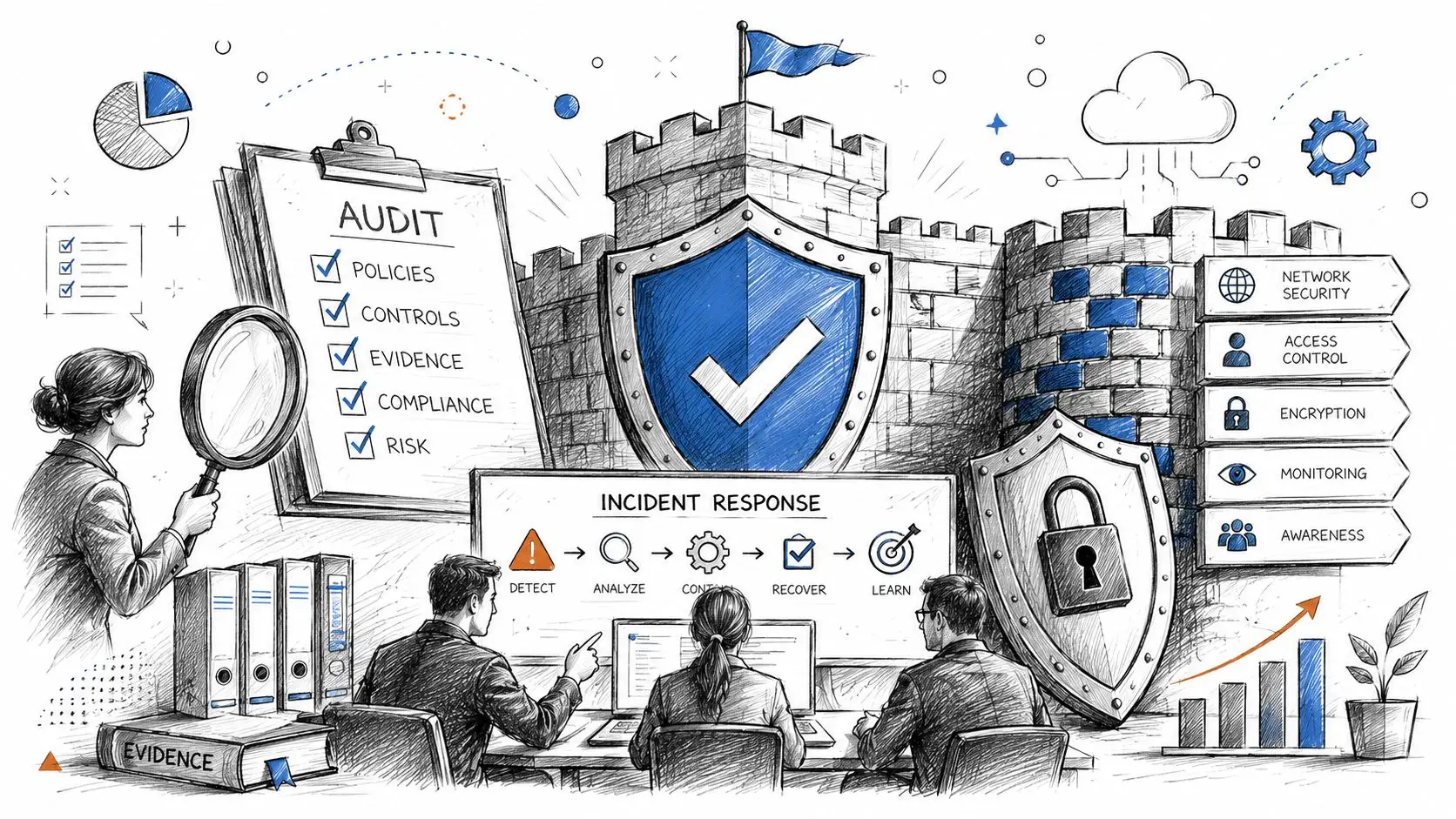
A regulator won’t be impressed by a policy binder if the company can’t produce the records behind its decisions. In export control compliance, proof often matters more than intention.
Training materials in the field stress that exporters must demonstrate compliance through meticulous records. If records can’t be produced, non-compliance is often presumed. The absence of a clear audit trail, including classification memos, screening logs, and license decisions, can decide the investigation, as emphasized in this export compliance training discussion.
Evidence architecture beats policy theater
Many companies overinvest in policy drafting and underinvest in evidence design. That imbalance becomes obvious during an audit.
A credible record set usually includes:
- Classification support: technical descriptions, legal analysis, and approvals
- Screening proof: results, date stamps, escalations, and resolution notes
- License files: decision basis, applications, conditions, and expiry tracking
- Transfer records: shipment documents, access approvals, and internal sign-offs
- Change history: updates when products, software, ownership, or destinations change
If the file can’t tell the story on its own, the company is relying on memory. Memory won’t survive scrutiny.
Incident response needs legal and operational discipline
Potential violations should trigger a structured response, not an improvised search for emails. The company needs a hold on relevant records, a factual investigation, a legal assessment of scope, and a decision process for remediation.
That work usually turns on sequence and control:
- Contain the activity so additional transfers don’t occur.
- Preserve evidence across email, repositories, ticketing systems, and shipment records.
- Reconstruct the timeline of classification, access, screening, and approvals.
- Assess disclosure options with counsel and decision-makers.
- Fix the control failure so the same event can’t repeat.
When the issue escalates into a wider corporate event, the response often overlaps with governance, communications, and regulator management. In those moments, businesses often need the kind of structured escalation planning discussed in commercial crisis management.
What directors should demand before trouble starts
The board should require periodic internal testing, not just annual certifications. Audit samples should test whether the company can retrieve evidence for selected transactions and technical data transfers within a reasonable time.
That single exercise often reveals the truth. Some programs are compliant in practice and merely need cleanup. Others are compliant only in presentation.
Export control failures rarely begin as dramatic misconduct. They usually begin as routine growth decisions that nobody mapped correctly. The recommended strategic path is early classification discipline, cross-functional access control, transaction-level screening, and audit-ready documentation before expansion, integration, or dispute pressure exposes weaknesses. To avoid costly mistakes and discuss a customized legal strategy, contact RNC Group.
This article provides general information only and doesn’t constitute legal advice, a legal opinion, or a substitute for fact-specific counsel. Export control obligations depend on jurisdiction, item classification, end-use, end-user, transaction structure, and current enforcement posture. Readers should obtain professional advice before acting or refraining from action based on this content.
SEO Title: Mastering Export Control Compliance for 2026
Slug: mastering-export-control-compliance-2026
Meta Description: Export control compliance in 2026 demands board-level oversight. Learn how classification, deemed exports, screening, licensing, and audit-proof records reduce cross-border risk.
Focus Keyphrase: export control compliance