
Will your company’s digital records in 2026 protect its position in court, or destroy it?
For non-Israeli businesses facing complex commercial litigation involving Israel, that question often gets answered before the first pleading lands. It gets answered when an employee leaves with a laptop, when a cloud account syncs after a dispute begins, or when a manager forwards key emails instead of preserving the underlying data.
Most companies still treat digital evidence preservation as an IT housekeeping issue. That approach fails in cross-border disputes. Courts, opponents, regulators, and forensic experts examine process, not just content. When preservation fails, the problem isn’t abstract. Common mistakes such as delayed forensic imaging and weak chain of custody documentation cause up to 45% of digital evidence to be deemed inadmissible in court due to integrity challenges, according to guidance on digital evidence preservation.
The 2026 Digital Battlefield
In complex Israeli litigation, the decisive record rarely sits in a signed paper binder. It usually sits in mailboxes, collaboration platforms, mobile devices, cloud repositories, server logs, and archived chats. A non-Israeli corporation that enters a dispute with Israel exposure must therefore assume that every byte may become evidence.
That assumption changes behavior immediately. It means the business can’t wait for outside counsel to “start discovery.” It must preserve first, analyze second, and argue third. Otherwise, critical records will keep changing through routine system activity.
The strategic error most companies make
Many executives believe preservation means saving relevant files to a folder. That practice often strips context, breaks metadata continuity, and creates avoidable questions about authenticity. In a hard-fought commercial case, opposing counsel won’t just ask what a document says. They’ll ask who touched it, when it moved, and whether its original state survived.
That’s why the strongest organizations treat digital evidence preservation as a litigation readiness function. The legal team, internal security team, and forensic specialists must work from one command structure. Fragmented responses create inconsistencies that become cross-examination material later.
Practical rule: If a dispute touches Israel, preserve first as if trial were certain, even if settlement still looks likely.
The risk becomes sharper in regulated sectors and healthcare-adjacent operations. Technical testing disciplines, including HIPAA penetration testing services, show why control environments matter. The same mindset applies here. An organization needs documented, repeatable procedures that stand up to scrutiny, not improvised reactions after the fact.
What works and what fails
A defensible response usually includes three immediate moves:
- Freeze routine deletion: Suspend auto-delete rules, mailbox cleanup scripts, and rotating log retention where legally appropriate.
- Identify custodians fast: Name the executives, employees, vendors, and systems most likely to hold relevant records.
- Escalate to forensic handling: Move from ordinary IT access to controlled evidence preservation before anyone opens, copies, or migrates data casually.
By contrast, several habits fail repeatedly.
- Forwarding files to legal by email: That copies content, but it doesn’t preserve the source environment.
- Letting managers “review” devices first: That invites alteration, however innocent the intent.
- Mixing business continuity and evidence collection: Restoring systems and preserving evidence require different protocols.
For non-Israeli companies, the legal and operational stakes are higher because data often sits across several jurisdictions. One team may hold documents in Europe, another in the United States, and another on Israeli-facing systems. If preservation starts late, the company loses not just efficiency, but control over the narrative.
Immediate Containment and Isolation
The first hour after a triggering event often determines whether later forensic work remains credible. A triggering event might be a fraud allegation, a sanctions-related inquiry, a departing executive, a cyber incident, or formal notice of Israeli litigation. In each scenario, the first principle is simple. Stop change.
Experienced teams separate incident response from ordinary IT troubleshooting. The aim isn’t to “fix” anything yet. The aim is to preserve the device, account, and surrounding environment in the state in which the event was discovered.
The first-hour checklist
A forensic bit-by-bit imaging methodology requires immediate power management differentiation. If a device is off, never turn it on to avoid altering boot logs. Moreover, failure to isolate network connectivity creates a documented 30% increase in evidence corruption risks due to remote wiping or cloud synchronization, as noted in Cellebrite’s digital evidence collection guidance.
That creates a short, disciplined checklist:
- Isolate network access immediately. Disconnect wired devices, disable wireless connectivity where appropriate, and use airplane mode or shielding methods for mobile devices.
- Record the condition before handling. Photograph screens, note visible applications, and document date, time, user, and location.
- Separate powered-on from powered-off devices. A live system and a dormant device require different handling.
- Secure the physical scene. Limit access to named personnel only and move devices into controlled custody.
A fast but sloppy response usually destroys more evidence than the original incident.
What legal teams should demand from operations
Legal teams shouldn’t accept vague assurances such as “IT has secured everything.” They need a contemporaneous record. That includes who isolated each asset, what steps they took, whether the device was on or off, and whether any user interacted with it after the issue surfaced.
The same discipline belongs inside a larger crisis management framework. A dispute involving Israel often expands quickly into regulatory, banking, employment, and reputation issues. Therefore, evidence containment must align with board reporting, privilege planning, and external communication controls from the start.
A practical distinction matters here. Normal IT staff often focus on availability. Forensic teams focus on integrity. Those objectives can conflict. Restarting a server may restore operations, but it may also wipe volatile evidence. Letting a user “check one thing” on a phone may answer a business question, but it may also compromise admissibility later.
Forensic Imaging and Metadata Integrity
Once the scene is contained, collection must follow forensic logic, not office convenience. Copying visible files from a laptop or shared folder doesn’t preserve the full evidentiary picture. It misses deleted material, system artifacts, unallocated space, and the metadata that often anchors timeline disputes.
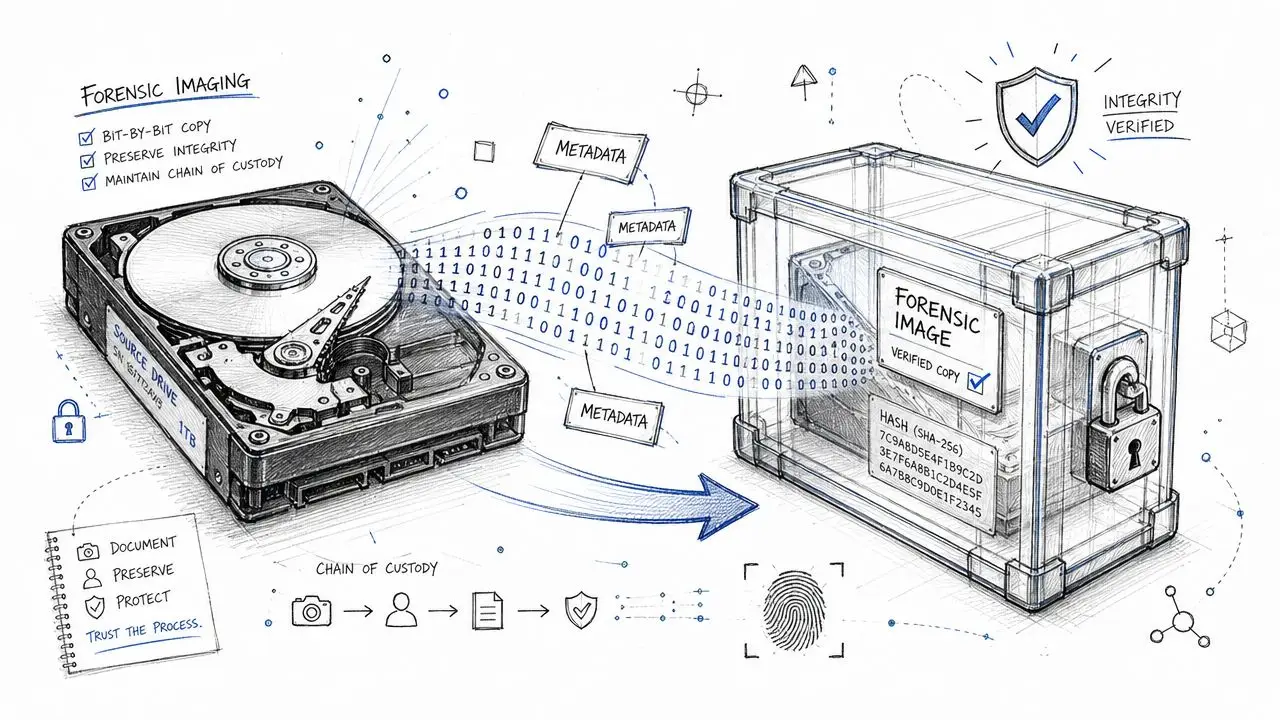
That’s why a proper case strategy uses forensic imaging, not casual duplication. The purpose is to create an exact bit-by-bit replica while preserving the original source untouched.
Why file copying loses the case you might otherwise win
A copied folder may preserve content. It often doesn’t preserve the evidentiary environment. That distinction matters in fraud claims, trade secret disputes, shareholder conflicts, and distributor or joint venture litigation involving Israeli parties. The timeline often lives in metadata and system traces, not in the face of the document.
A defensible approach uses hardware write blockers and forensic imaging tools in a read-only process. It also validates the image with cryptographic hashing. Under Rule 901 of the U.S. Federal Rules of Evidence, digital evidence must be authenticated before admission, and hash algorithms commonly serve as the mechanism proving the evidence is what the proponent claims it is, as explained in this discussion of Rule 901 and digital authentication.
The technical steps that matter legally
The legal team doesn’t need to operate F-Response or Helix personally. It does need to insist that the forensic provider follows a method that a court can understand and trust.
| Step | What the team should require | Why it matters |
|---|---|---|
| Original access | Use a hardware write blocker | Prevents modification of original media |
| Imaging | Create a bit-by-bit forensic image | Preserves deleted and hidden artifacts |
| Validation | Hash the acquisition with SHA-256 and other selected methods where appropriate | Establishes integrity baseline |
| Working copy | Analyze a verified copy, not the original | Protects source evidence from change |
Courtroom reality: If the other side can show that your team merely exported files, they’ll argue you preserved convenience, not evidence.
The trade-off clients often underestimate
Forensic imaging takes more discipline, more time, and often more cost than ordinary collection. However, that cost is almost always lower than the cost of defending a compromised record. In cross-border commercial litigation, opposing parties frequently attack process first because process attacks can exclude highly damaging material without reaching the merits.
That’s especially true when evidence spans laptops, mobile devices, cloud drives, messaging platforms, and backup repositories. A piecemeal approach creates gaps. A forensic imaging protocol creates a coherent evidentiary package that can withstand detailed challenge.
Maintaining an Unbroken Chain of Custody
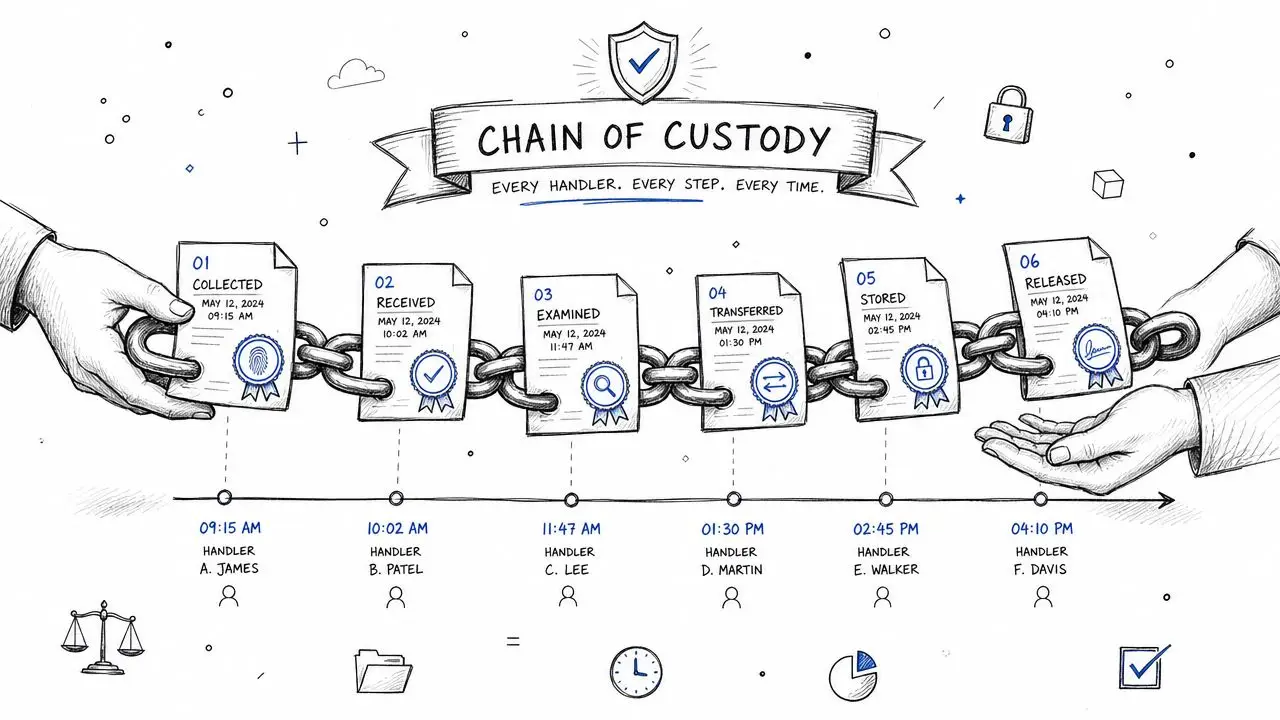
Perfect imaging won’t rescue a case if nobody can explain who handled the evidence. Courts don’t infer integrity from good intentions. They expect proof. In practice, the chain of custody is the narrative that ties technical preservation to legal admissibility.
For non-Israeli corporations, this point becomes acute when data moves between offices, vendors, jurisdictions, and outside experts. Every transfer creates a challenge opportunity. Each undocumented handoff gives the other side room to argue uncertainty, contamination, or selective handling.
What a defensible record includes
At the moment of acquisition, digital evidence preservation requires three mandatory technical elements: cryptographic hashes using SHA-256, a digital signature with a qualified timestamp, and a documented chain of custody tracking every access, as described in this guide to mandatory acquisition elements for digital evidence.
That requirement means the chain log can’t be generic. It should identify the item, the custodian, the recipient, the time, the purpose, and the condition of the evidence. A vague note such as “sent hard drive to analyst” isn’t enough.
Useful operational models often come from asset disposition and secure transfer disciplines. For example, Beyond Surplus ITAD documentation insights illustrate how rigorous transfer records reduce dispute over possession and condition. Litigation preservation demands the same seriousness, but with tighter legal scrutiny.
Why this paperwork decides outcomes
Consider the common challenge. A company produces a damaging set of emails from an employee laptop. The forensic image appears valid. Then opposing counsel asks who transported the drive from Frankfurt to Tel Aviv, where it was stored overnight, and whether anyone accessed it before imaging. If the log is incomplete, the court may doubt the entire chain.
A strong chain of custody should capture details such as:
- Unique identification: Device make, model, serial number, bag number, and seal reference.
- Transfer specifics: Date, time, location, sender, recipient, and purpose of transfer.
- Access history: Every viewing, imaging, analysis step, and storage movement.
- Condition notes: Whether the device was powered, sealed, damaged, or otherwise unusual.
The strongest legal teams treat custody records as advocacy documents created in real time. They aren’t clerical appendices. They’re the proof that the evidence presented later is the same evidence collected at the beginning.
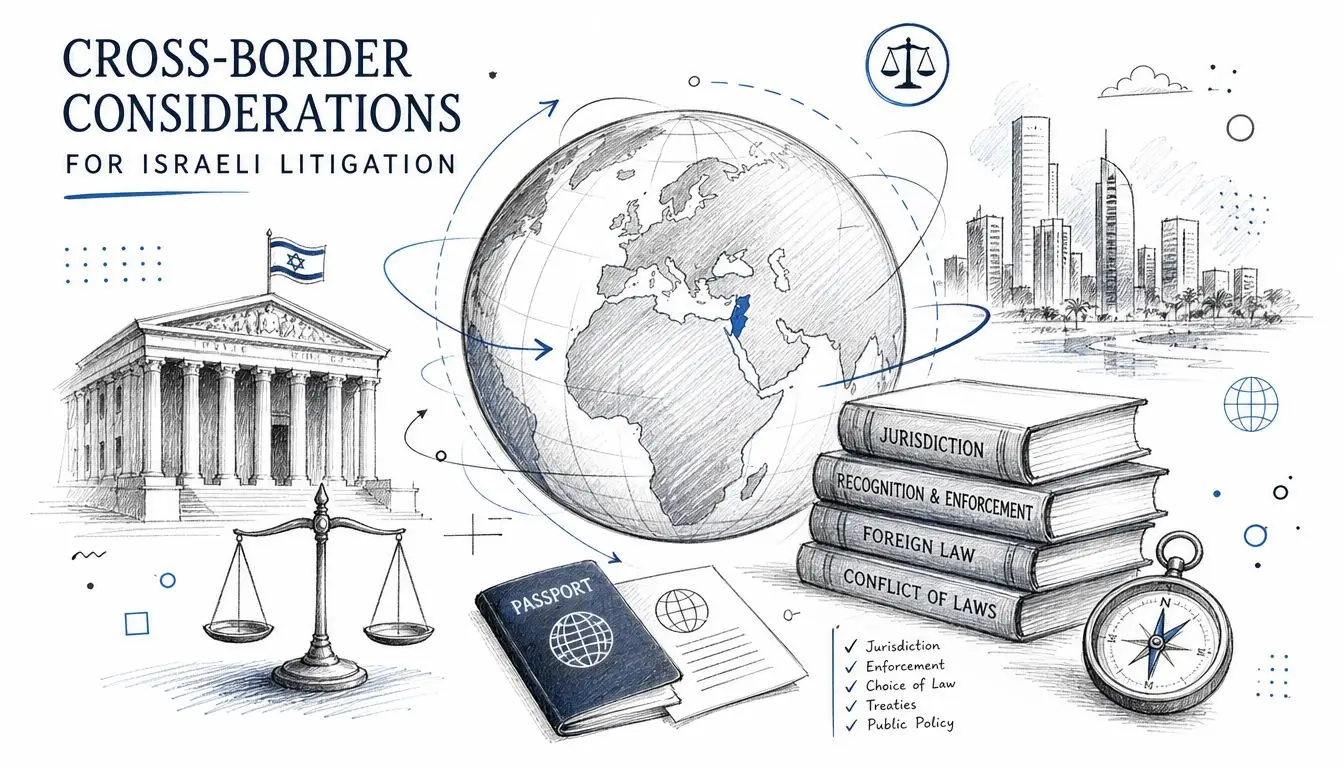
Cross-Border Considerations for Israeli Litigation
Digital evidence preservation becomes more difficult when the dispute touches Israel but the data sits elsewhere. A multinational may hold relevant material on European employee devices, U.S. cloud systems, Asian backups, and Israeli business communications. Preservation then stops being a single-country exercise. It becomes a legal architecture problem.
The complexity isn’t only technical. Privacy rules, employment constraints, banking sensitivity, data transfer restrictions, privilege issues, and local court expectations all press on the same evidence set. A company that ignores those intersections may preserve data successfully in technical terms, yet still make it unusable or risky in legal terms.
Why prevalence changes the strategy
Digital evidence is no longer peripheral. Approximately 30% of prosecutors and 20% of investigators report encountering digital evidence in 20 to 80% of their cases, according to this study on digital evidence prevalence. That prevalence matters for cross-border disputes because it means courts and adversaries increasingly expect professional preservation discipline.
A non-Israeli company should therefore assume that email headers, device artifacts, collaboration logs, and access records may become central proof. It should also assume that inconsistent handling across jurisdictions will be noticed.
A practical cross-border framework
A disciplined response usually follows a sequence of legal decisions rather than one broad instruction to “hold everything.”
First, map the data. Identify where relevant devices, accounts, backups, and custodians sit physically and legally. Data location determines which transfer rules and privacy obligations may apply.
Second, classify the data. Separate corporate records from employee personal data, regulated information, banking records, and privileged legal communications. The preservation method may stay similar, but the review and transfer rules may differ sharply.
Third, define the review path before movement occurs. In many matters, local collection with controlled remote review is safer than immediate export. That can reduce privacy friction while preserving evidence integrity.
Fourth, issue a legal hold that matches the actual system architecture. Broad, generic hold notices often fail because they ignore collaboration tools, ephemeral messages, local device caches, and third-party hosted data.
Cross-border preservation fails when legal, technical, and operational teams each solve only their own piece.
Israel-specific commercial pressure points
Israeli disputes often overlap with sensitive commercial facts. Evidence may reveal sanctions concerns, internal control failures, shareholder conflict, distributor misconduct, or suspicious payment flows. In some matters, the preserved record may also intersect with issues that later affect banking access, including circumstances similar to bank account blockages.
That overlap is why preservation decisions shouldn’t happen in isolation. Counsel must assess not only whether evidence exists, but how handling it may trigger parallel exposure. An overbroad export can create privacy issues. An underinclusive hold can create spoliation risk. A local forensic review, followed by a staged transfer protocol, often provides the strongest balance.
For companies involved in complex commercial litigation, the winning approach is usually phased and documented. The business needs one defensible record of what was preserved, where it sits, who can access it, and under which legal basis any transfer will occur.
Long-Term Retention and Defensibility
Collection is only the midpoint. Complex commercial disputes often continue through interim motions, appeals, enforcement steps, and related proceedings in more than one jurisdiction. If preserved evidence degrades, disappears, or becomes unverifiable during that period, the company may lose the value of a strong initial response.
Long-term digital evidence preservation therefore requires infrastructure, policy, and periodic validation. Storage isn’t enough. The organization must preserve defensibility.
What retention should look like in practice
In the absence of specific statutes, NIST best practice guidelines recommend retaining digital evidence for a time frame defined by the organization, such as five years after the case has been adjudicated, and backing it up to a location unlikely to be impacted by events like fire at the primary site, according to NIST guidance on digital evidence retention.
That recommendation reflects a core litigation reality. The case may be over on paper, but it may not be over in consequence. Appeals, follow-on claims, regulatory inquiries, or cross-border enforcement efforts often emerge later.
A retention model that survives scrutiny
A defensible model usually includes the following components:
- Primary preserved image: Stored in a secure, access-controlled environment with clear custody logging.
- Off-site backup: Maintained in a separate location to protect against physical loss at the primary site.
- Read-only controls: Limit interaction with preserved evidence and force analysis onto verified working copies.
- Integrity checks: Reconfirm stored evidence against original hash values at defined intervals.
Organizations that are still building these systems often benefit from operational guidance on implementing robust document retention strategies. The point isn’t to adopt a generic records policy. It’s to align litigation preservation, security controls, and business retention schedules so they don’t undermine each other.
The real risk in long cases
The biggest long-term failure usually isn’t dramatic misconduct. It’s administrative drift. People change roles. Vendors change platforms. Storage locations multiply. Old evidence gets mislabeled, migrated informally, or left on systems that nobody monitors properly.
The cure is governance. Assign ownership, fix the retention rules in writing, maintain the evidence register, and verify integrity periodically. A company that does this can present evidence years later with confidence. A company that doesn’t will spend years arguing about reliability instead of substance.
Conclusion Your Strategic Imperative
In 2026, digital evidence won’t sit at the edge of complex commercial litigation involving Israel. It will often sit at the center. For non-Israeli corporations, that means preservation must start before the first tactical mistake, not after it.
The companies that protect themselves do a few things consistently. They isolate devices without altering them. They use forensic imaging instead of casual copying. They maintain an unbroken custody record. They structure cross-border preservation around actual legal constraints, not assumptions. Then they store and validate preserved evidence for the long life of the dispute.
This discipline isn’t bureaucratic excess. It’s case strategy. A strong record gives counsel room to press the merits. A compromised record forces counsel to defend process under pressure. In Israeli-related commercial disputes, where banking, privacy, reputational, and multinational issues can intersect quickly, that distinction matters.
Avoid costly mistakes before they harden into evidentiary failures. The recommended strategic path is to assess preservation exposure early and build a defensible protocol before a dispute escalates. Contact RNC Group now if a matter involving Israel requires immediate legal and forensic coordination.
This article provides general information only and doesn’t constitute legal advice. Reading it doesn’t create an attorney-client relationship, and any action should follow legal advice adapted to the specific facts, jurisdictions, and systems involved.