
Fair value is not a number waiting to be discovered. It’s a number parties fight to define, support, and enforce. In cross-border M&A, appraisal proceedings, and insolvency contests, the winning valuation usually depends less on spreadsheet sophistication than on the evidence chain behind the assumptions.
That makes fair value determination a legal strategy, not merely an accounting exercise. Counsel and CFOs who delay methodology decisions often surrender control over the valuation date, market assumptions, expert instructions, and admissible evidence before the dispute reaches trial.
Why Fair Value Determination Is a Battlefield in 2026
The common assumption that fair value produces one objective answer is dangerous. IFRS 13 was issued in May 2011 and became effective for annual periods beginning on or after 1 January 2013, creating the first IFRS framework for fair value measurement and consolidating guidance previously spread across individual standards (IFRS Foundation). Yet a framework doesn’t eliminate disputes. It defines the battlefield.
In 2026, parties increasingly place the same business before different tribunals, auditors, regulators, and experts. Each forum may scrutinize the measurement date, market access, forecast reliability, currency assumptions, and treatment of strategic benefits. Post-pandemic normalization, volatile financing conditions, AI-supported revenue forecasts, and sustainability-related cash-flow assumptions create more opportunities for attack.

The number follows the procedure
A valuation report can look technically impressive and still fail under cross-examination. The opposing side will ask who selected the assumptions, when the assumptions changed, which documents supported them, and whether management shaped the model to fit a desired outcome.
Litigation reality: The party that controls the valuation record often controls the range of plausible outcomes.
The evidence file therefore matters as much as the model. Counsel should preserve contemporaneous forecasts, board materials, transaction communications, market snapshots, and earlier valuations before witnesses reconstruct events from memory.
Why methodology decides the dispute
A DCF model can reward optimistic forecasts. A market approach can reward carefully selected comparables. An asset approach can suppress going-concern value in a distressed setting. Each method embeds a theory of the business, the market, and the relevant buyer.
The strategic choice begins before expert reports. Parties must define the legal question, identify the valuation date, establish the applicable standard, and decide which assumptions belong to market participants. Fair value determination becomes contested because those choices affect the answer before arithmetic begins.
The Legal Definition of Fair Value Under IFRS 13 and ASC 820
IFRS 13 and ASC 820 anchor fair value in an exit-price model. Fair value means the price received to sell an asset, or the price paid to transfer a liability, in an orderly transaction between market participants at the measurement date (SEC filing describing the exit-price model).
That definition excludes a party’s private intentions. A buyer’s unique synergies, a seller’s emotional attachment, or management’s preferred strategic plan cannot automatically establish fair value. The expert must identify assumptions that independent market participants would use, while accounting for the principal market, or the most advantageous market where no principal market exists.
The hierarchy does not answer every legal question
IFRS 13 and ASC 820 broadly converge around market-participant assumptions and exit price. However, they can differ in presentation, disclosure detail, and treatment of particular inputs, including counterparty credit considerations. Those differences matter when parties rely on filings prepared under different reporting regimes.
| Feature | IFRS 13 | ASC 820 |
|---|---|---|
| Core objective | Market-participant exit price | Market-participant exit price |
| Measurement date | Current conditions at the measurement date | Current conditions at the measurement date |
| Market reference | Principal market, or most advantageous market where relevant | Principal market, or most advantageous market where relevant |
| Input hierarchy | Level 1, Level 2, and Level 3 | Level 1, Level 2, and Level 3 |
| Litigation issue | Application of IFRS assumptions and disclosures | Application of U.S. GAAP assumptions and disclosures |
For property disputes, counsel may also need a transparent market-data process. A practical reference point is the discussion of AVM tools for property valuation, especially when parties challenge comparable selection, property characteristics, or automated estimates.
Accounting fair value is not always statutory fair value
Statutory appraisal regimes can pursue a legal remedy rather than an accounting presentation. Under section 338 of the Israeli Companies Law, compulsory tender offers raise the fair-value question for minority shareholders. The relevant court may need to determine whether the valuation reflects the shareholder’s legal entitlement, rather than reproducing an IFRS measurement.
Delaware appraisal proceedings under Section 262 create a similar warning. The governing statute, case law, transaction evidence, and expert methodology can shape the result differently from an accounting standard. Counsel must therefore identify the legal measure before commissioning the financial model.
The Four Valuation Approaches Compared
Method selection is a strategic decision. An expert should not choose a method merely because management already uses it for reporting.
A discounted cash flow approach works best when the business generates predictable cash flows and the forecast has documentary support. It becomes vulnerable when revenue projections depend on untested AI outputs, uncontracted growth, unstable margins, or a terminal value that dominates the result. Opposing counsel will target the discount rate, terminal assumptions, working-capital treatment, and forecast changes after the dispute began.
The market approach tests value against comparable companies or transactions. It offers persuasive external evidence when the comparables share relevant business, risk, scale, and market characteristics. However, thin comp sets, distressed transactions, strategic premiums, and inconsistent disclosure can make the comparison artificial.
Choosing the method before choosing the expert
The asset-based approach fits asset-rich businesses, holding companies, liquidation scenarios, and insolvency disputes. It can fail when the company’s value rests on relationships, intellectual property, workforce capability, or future earning capacity that the balance sheet understates.
The income approach, including capitalized earnings or residual methods, suits stable businesses with maintainable earnings. It loses force when earnings fluctuate sharply, ownership rights differ, or the analyst cannot defend the normalization adjustments.
| Approach | Best Use Case | Primary Litigation Risk |
|---|---|---|
| DCF | Mature, cash-generating businesses | Forecast, discount-rate, and terminal-value attacks |
| Market | Businesses with reliable comparables | Poor comparability or distorted transaction pricing |
| Asset-based | Distressed or asset-heavy businesses | Failure to capture going-concern value |
| Income | Stable mid-market companies | Unsupported earnings normalization |
For property-related proceedings, counsel should separate legal valuation questions from market-data mechanics. The guidance on appraisal for the Texas tax appeal process illustrates why valuation evidence must match the governing forum and the disputed property measure.
Recommended position: Lock the primary method, cross-check method, and assumption boundaries before the expert engagement letter becomes evidence.
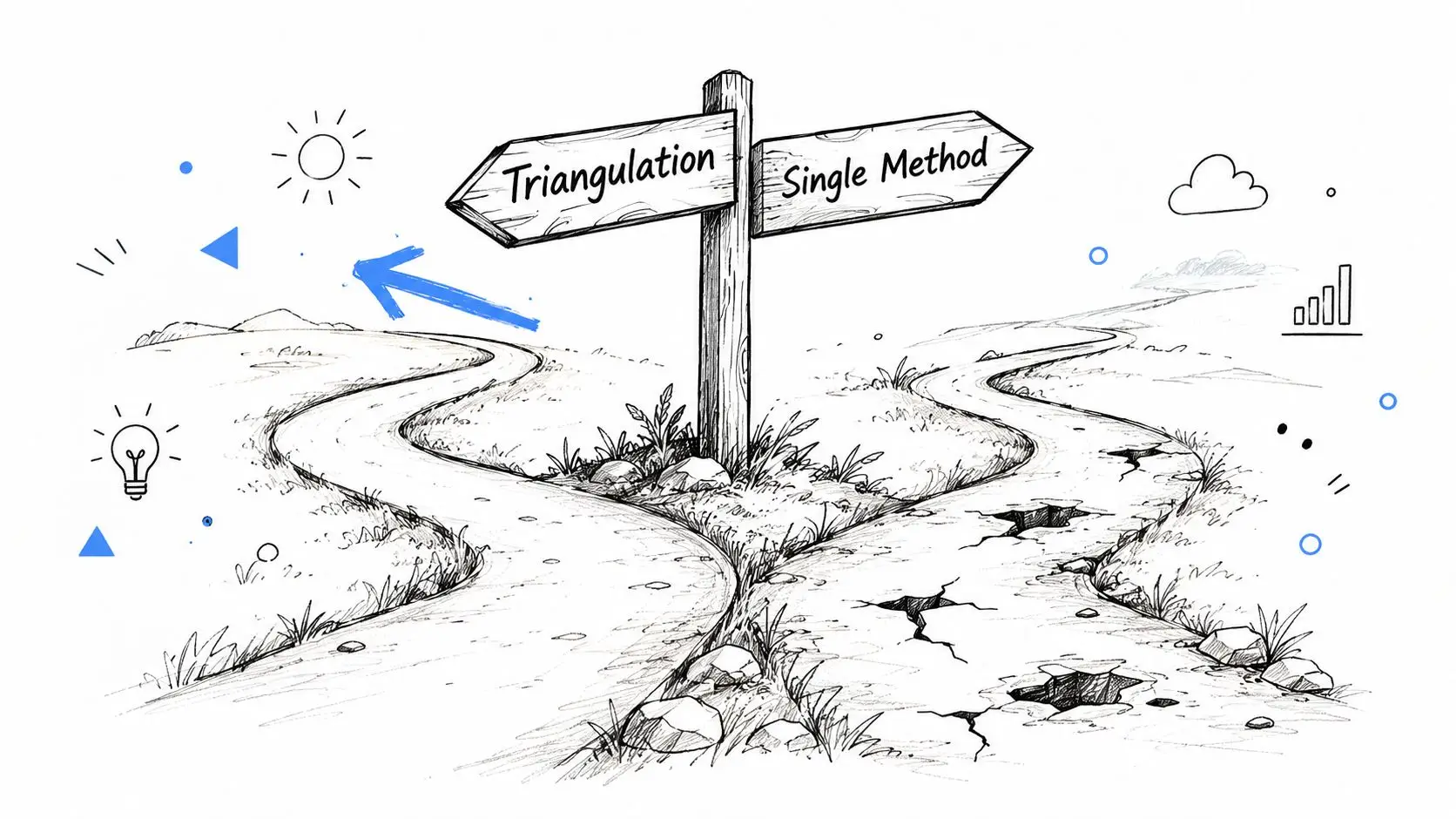
A strong report can use triangulation without pretending that every method deserves equal weight. The expert should explain why one method leads, why another corroborates, and why a rejected method fails.
The Fair Value Hierarchy as a Litigation Control
The hierarchy is more than a compliance ladder. It determines where subjectivity enters the dispute and which party must defend it.
Level 1 uses unadjusted quoted prices in active markets for identical assets or liabilities. Level 2 uses observable inputs other than Level 1 prices. Level 3 relies on unobservable inputs. The U.S. Securities and Exchange Commission describes Level 1 as the most objective and Level 3 as the least objective and most subjective (SEC hierarchy disclosure).
The lowest significant input controls
A valuation receives the level of its lowest-level input that is significant to the measurement. Therefore, one critical unobservable assumption can move an otherwise market-supported valuation into Level 3 territory (IFRS 13 text).
| Level | Input Type | Evidential Weight | Common Attack Vector |
|---|---|---|---|
| Level 1 | Unadjusted quoted prices for identical items | Strongest market evidence | Market activity or identical-item challenge |
| Level 2 | Observable indirect inputs | Moderate, subject to adjustment | Comparability, liquidity, and risk-premium disputes |
| Level 3 | Unobservable assumptions | Most judgment-dependent | Forecasts, weighting, calibration, and bias |
Level 2 disputes often focus on whether the input remains observable, whether the comparable market is sufficiently active, and whether adjustments introduce hidden judgment. Level 3 disputes go further. Counsel should demand the complete assumption set, scenario weights, model versions, sensitivity analysis, and calibration evidence.
Treat Level 3 as an evidence problem
Management projections cannot carry the case without independent corroboration. The expert should compare forecasts with contemporaneous budgets, customer contracts, pipeline records, financing documents, and market conditions known at the valuation date.
Counsel should also examine expected returns carefully. An assumption about a projected return does not guarantee performance, a point developed in expected return is not a promise. The expert must show whether the assumption reflects market-participant expectations or merely management optimism.
Switching hierarchy levels during the case damages credibility. Parties should identify the hierarchy level at the outset, document every significant input, and explain any later change with contemporaneous evidence.
Fair Value in Disputes, Appraisal Actions, and Insolvency
Fair value determination changes character across proceedings. The valuation date may remain central, but the legal question controls which assumptions survive.
In an Israeli appraisal action under section 338 of the Companies Law, minority shareholders may challenge the value offered in a compulsory tender setting. The academic framework discussed by the Runi Law Review applies Arbitrage Pricing Theory to construct a synthetic portfolio that replicates the security being valued. That approach illustrates the core issue. The court needs an economically defensible value, not a market quote selected without analysis.

Three settings, three records
Counsel should frame each proceeding separately:
- Appraisal proceedings: Deliver the transaction documents, shareholder rights, control facts, market evidence, and valuation-date materials. The expert must address whether the legal framework permits or rejects minority and marketability discounts.
- M&A price disputes: Start with the contract. Earn-out true-ups, material adverse change provisions, working-capital adjustments, and post-closing mechanisms may define the accounting measure or override it.
- Insolvency contests: Identify the hypothetical transaction, buyer assumptions, asset condition, creditor rights, and relevant valuation date. Secured lending value, cram-down fairness, and preference-period analysis can demand different economic perspectives.
A contract may require a specific accounting policy while a court may apply a statutory measure. Parties should never assume that GAAP automatically governs a contractual price adjustment.
The valuation date controls the narrative
Post-event evidence can clarify what parties knew, but it cannot automatically rewrite the valuation date. The 2025 IPEV update emphasizes calibration to the first subsequent measurement date, rejection of hindsight, and reliance on external evidence rather than party-specific expectations, as discussed in Burford’s analysis of fair value disputes.
The expert should separate information available at the valuation date from later performance. Counsel should preserve that distinction in pleadings, instructions, and cross-examination.
Working With Expert Valuers and Building the Evidence File
The expert relationship should begin with litigation architecture, not a request for a favorable number. Selection, instructions, documents, and quality control must all support one coherent theory of value.
Select for independence and courtroom performance
A technically qualified valuer may still be unsuitable if prior work creates an independence problem. Counsel should assess:
- Technical competence: Confirm experience with IFRS 13, ASC 820, the relevant asset class, and the applicable legal remedy.
- Adversarial experience: Review prior cross-examination, expert conferences, and testimony under pressure.
- Independence: Identify audit relationships, valuation-desk ties, management connections, and prior work for the opposing party.
- Working discipline: Require a reproducible model, source log, version history, and clear explanation of judgment calls.
Israeli valuation firms describe fair value work as relevant to financial reporting, courts, and regulators, which confirms that the same analysis can affect several proceedings (Israeli fair value assessment practice).
Build the file before the report
The evidence file should include:
- Management projections and every saved version.
- Board presentations, budgets, and financing materials.
- Market-data snapshots showing dates and sources.
- Comparable-company and transaction logs.
- Customer, supplier, and pipeline evidence.
- A contemporaneous basis-of-preparation memorandum.
- Communications explaining forecast or assumption changes.
The engagement letter should define the opinion’s scope, valuation date, primary methodology, alternative methodology, assumptions, and treatment of new facts. It should also preserve a clear reservation of rights for material evidence discovered later.
Cross-examination test: If the expert cannot reproduce the model from the working file, the opponent will supply the missing narrative.
Counsel should compare the report with reply evidence and joint-expert statements. Narrative drift, undisclosed weighting changes, and reliance on unverified management cases can undermine an otherwise defensible conclusion.
Cross-Border Considerations and Choice of Law
A valuation report that persuades one forum may fail in another. Cross-border fair value disputes require counsel to coordinate substantive law, accounting standards, currency treatment, and evidence rules before experts write their opinions.
The first lever is the governing-law clause in the share purchase agreement, shareholder deed, financing document, or valuation mechanism. The second is the accounting standard that anchors the measurement, such as IFRS 13, ASC 820, Ind AS 113, or Chinese CAS. The third concerns currency translation and the treatment of economies experiencing severe inflationary conditions. The fourth concerns whether the forum will admit and enforce a foreign expert report.
Lock the legal and evidential architecture
| Lever | What to Lock Early | Failure Consequence | Mitigation |
|---|---|---|---|
| Governing law | Contract and statutory valuation rules | Wrong legal measure | Obtain jurisdiction-specific advice |
| Accounting standard | Applicable reporting framework | Inconsistent assumptions | Align experts before modeling |
| Currency | Currency, date, and translation method | Distorted cash flows | Pre-clear currency assumptions |
| Expert evidence | Admissibility and procedural rules | Report excluded or weakened | Prepare local appendices |
| Market access | Principal market and transaction conditions | Unsupported exit price | Preserve market evidence |
Israeli, European, and U.S. courts can reach different results for the same target when they apply different statutory regimes, contractual standards, or evidentiary rules. Parties must therefore examine the Hague Evidence Convention position, UK CPR Part 35 requirements, Israeli evidence rules, and any local expert-certification requirements.
Use jurisdiction-specific appendices
The primary report should state the financial methodology clearly. Separate appendices should address local law, admissibility, currency, tax consequences, and procedural terminology. That structure prevents the core model from becoming overloaded with assumptions that only one forum recognizes.
The recommended sequence is direct:
- First, lock choice of law.
- Next, align the accounting standard.
- Then, approve currency and market assumptions.
- Finally, commission local expert appendices.
Cross-border enforcement should shape the report from the first instruction. Retrofitting admissibility arguments after disclosure usually creates avoidable gaps.
Common Pitfalls and the Recommended Strategic Path
Eight recurring failures destroy fair value arguments:
- Single-method dependence: One model leaves every dispute concentrated in one set of assumptions.
- Hindsight contamination: Later performance replaces what market participants could know at the valuation date.
- Compromised independence: An expert tied to the audit relationship may face credibility attacks.
- Discount confusion: Minority and marketability discounts require legal and economic analysis, not automatic inclusion or exclusion.
- Inconsistent discount rates: Related proceedings can expose incompatible risk assumptions.
- Poor contemporaneous records: Missing documents force the expert to rely on reconstructed explanations.
- False reliance on fairness opinions: A fairness opinion doesn’t automatically establish the legally required valuation.
- Conference concessions: Counsel can lose scope, assumptions, or alternative theories during the joint expert conference.
The first 60 days decide the case
The recommended strategic path starts immediately:
- Define the legal measure: Identify the statute, contract, remedy, valuation date, and permitted discounts.
- Preserve the evidence: Collect model versions, market data, board records, and transaction communications.
- Commission dual analysis: Obtain a primary expert report and an independent challenge report from the instruction stage.
- Lock assumptions: Record market, currency, forecast, discount-rate, and scenario assumptions.
- Triangulate value: Use a supporting method to test the primary conclusion.
- Protect scope: Reserve a separate damages expert where valuation and loss calculations diverge.
- Control the conference: Concede only points that advance the legal theory.
RNC Group handles international commercial disputes, M&A conflicts, shareholder claims, and cross-border litigation strategy. Its recommended strategic path combines legal framing, evidence preservation, expert coordination, and phased dispute escalation.
RNC Group helps companies structure fair value disputes before methodology and evidence choices become irreversible. To avoid costly mistakes in appraisal actions, M&A price disputes, or insolvency contests, contact RNC Group now for a focused assessment of the valuation date, governing law, expert strategy, and evidence file.
This article provides general information only. It doesn’t constitute legal, accounting, valuation, tax, or financial advice, and readers shouldn’t rely on it without obtaining advice on the specific facts, documents, jurisdiction, and applicable law.