
Will your AI company be compliant in the Israeli market by 2026? This question is critical. Success depends on mastering new AI policies. It also requires understanding established tech laws.
This guide analyzes the legal frameworks you must understand. It covers draft AI legislation and existing privacy rules. This is your essential briefing on compliance challenges.
Understanding the Landscape of AI Law and Tech Regulation in Israel

Israel has not passed a single, all-encompassing AI act. Instead, its approach to tech regulation israel is a fluid mix. This includes existing laws and forward-looking policies.
The foundation for AI law is already set. Israel has robust laws governing data privacy and cybersecurity. Consequently, any AI system must meet these standards immediately.
At the same time, the Israeli government is developing its AI strategy. Policy drafts suggest a risk-based model. This means a lighter touch for low-risk AI.
The Global Context of Israeli AI Policy
Israel does not develop its AI rules in a vacuum. Therefore, global benchmarks like the EU AI Act offer insight. Israel’s draft policies are clearly influenced by its principles.
The recommended strategic path is to build internal AI governance to meet high global standards now. This prepares a company for Israeli pre-compliance. Additionally, it makes the company resilient for new legal frameworks anywhere.
This approach is critical given the U.S.-Israel AI research partnership. The 2026 collaboration will create opportunities. However, it also brings tighter export controls for dual-use models.
Key Israeli Regulatory Bodies And Their AI Focus
Navigating this landscape means knowing the key players. Several government agencies shape and enforce AI rules. Thus, understanding them is crucial for your AI business.
Here is a breakdown of the primary Israeli regulatory bodies. This explains what they mean for foreign AI companies.
| Regulatory Body | Primary Mandate | Relevance to AI Regulation |
|---|---|---|
| Ministry of Justice | Oversees legal policy, including data protection. | Leads AI policy development, focusing on ethics, privacy (via the PPA), and liability. |
| Privacy Protection Authority (PPA) | Enforces Israel’s privacy laws. | Audits AI systems for compliance with data protection rules, especially regarding personal data. |
| Israel National Cyber Directorate (INCD) | Manages national cybersecurity defense. | Sets security standards for critical infrastructure and high-risk AI systems to prevent cyber threats. |
| Israel Innovation Authority (IIA) | Fosters and funds the national tech ecosystem. | Sets grant conditions that impact IP ownership, R&D location, and technology transfer for AI firms. |
| Israel Competition Authority (ICA) | Ensures fair market competition. | Monitors AI-driven market concentration, algorithmic collusion, and monopolistic practices. |
Understanding each authority’s role is crucial. For instance, a PPA-compliant action might still concern the Competition Authority. This can happen if it stifles market access.
Israel’s Unique Innovation Ecosystem
Israel’s “Startup Nation” status adds another layer. It is a top-tier hub for AI innovation. It was home to over 850 AI firms by 2023.
However, government support heavily fuels this ecosystem. The Israel Innovation Authority (IIA) is a primary source. Consequently, IIA grants come with serious strings attached.
These obligations can become major roadblocks during M&A deals. Ignoring them can lead to huge financial penalties. This risk is especially high in sectors like healthtech.
Decoding Israel’s Emerging AI Legislation
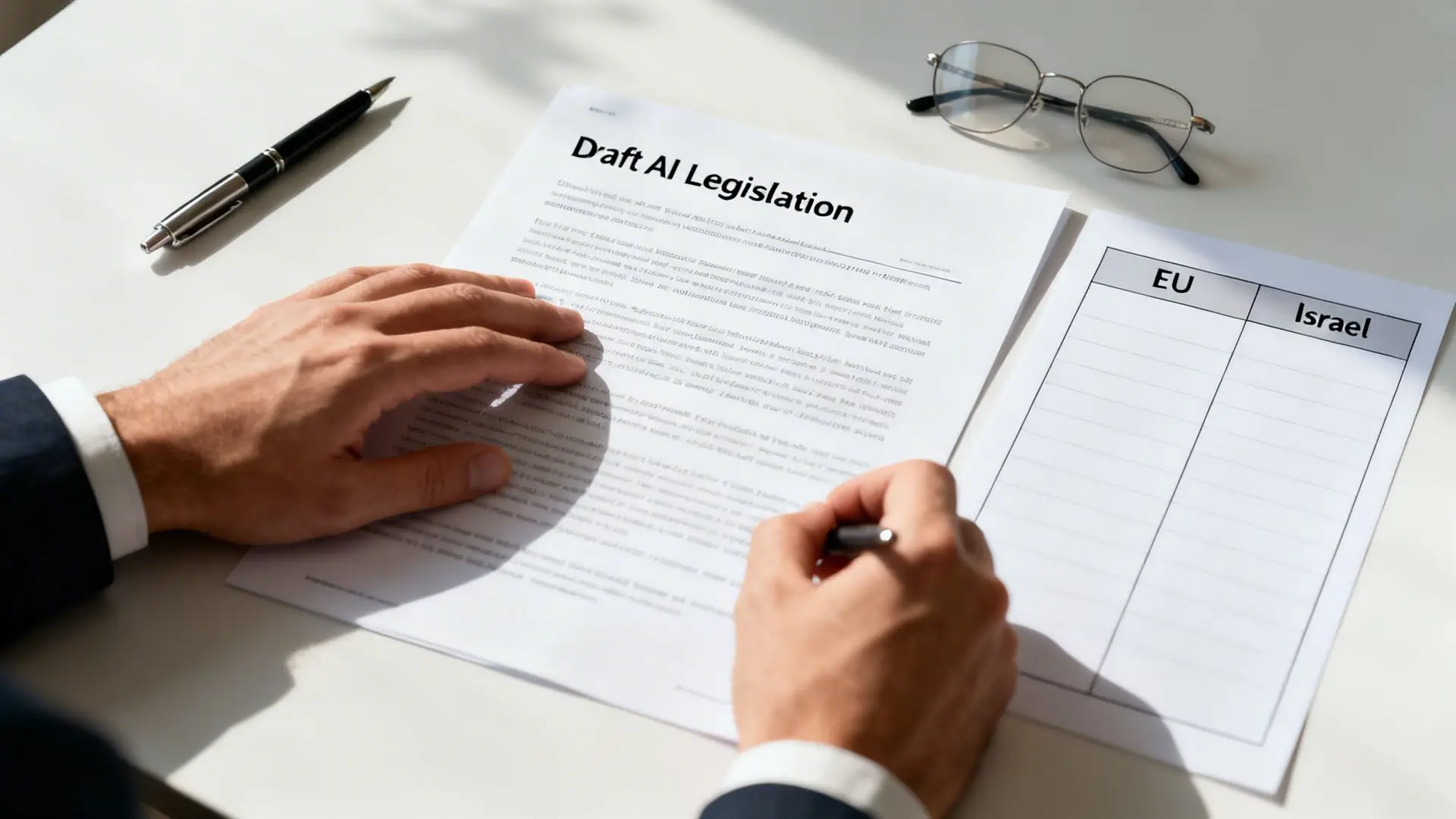
Will your AI system be legally compliant in Israel by 2026? This is a present-day strategic imperative. Companies must comply with laws that are still being written.
This new legal framework extends Israel’s robust regulatory environment. Global standards heavily influence it. The recommended path is to align internal governance now.
Core Principles of Israel’s AI Policy
Policy papers from the Ministry of Innovation preview future ai law israel. They are a blueprint for the final legislation. Three pillars consistently stand out.
These pillars are human oversight, transparency, and accountability. In short, high-stakes AI systems require a human in the loop. Moreover, companies must explain how their AI models make decisions.
The Risk-Based Regulatory Model
The proposed tech regulation israel features a risk-based model. This concept is borrowed from frameworks like the EU’s AI Act. It tailors the regulatory burden to potential harm.
This is a tiered system for AI applications.
- Minimal Risk: Systems like spam filters will face few new rules.
- Limited Risk: Chatbots must disclose that a user is interacting with an AI.
- High-Risk: AI in healthcare or finance will face the toughest regulations.
- Unacceptable Risk: AI systems deemed a clear threat will be banned.
This structure allows low-risk innovation to flourish. Conversely, it places a heavy burden on high-risk AI developers. The first step is determining where your technology falls.
The crucial takeaway is that companies deploying high-risk AI must prepare for intensive documentation. This includes detailed records of training data. Anticipating these demands is a key risk mitigation strategy.
Comparing Israeli Drafts to Global Standards
Israel is aligning with global trends. However, do not expect a carbon copy of another country’s law. The final legislation will be tailored to Israel’s unique needs.
The EU AI Act serves as a great benchmark. It sets specific criteria for high-risk systems. Israel will likely adopt similar ideas adapted for local needs.
This means EU AI Act compliance provides a head start. Yet, compliance in Brussels does not guarantee compliance in Tel Aviv. A detailed gap analysis will be essential.
Actionable Steps for Proactive Compliance
The soundest strategy is to prepare for the strictest plausible rules. A proactive stance now prevents major disruption later. It builds a resilient compliance framework before it is required.
Here are the immediate steps a company must take.
- Conduct a Risk Assessment: Classify your AI systems based on the likely risk-based tiers.
- Establish Human Oversight Protocols: Implement and document procedures for meaningful human supervision.
- Develop Transparency Mechanisms: Create documentation that explains your AI model’s logic.
- Strengthen Data Governance: Review data practices to meet existing and anticipated requirements.
Taking these steps transforms a regulatory change into a manageable process. This is the groundwork for long-term success.
Understanding the Israel Innovation Authority’s Dual Role

Will a partnership with an Israeli AI startup accelerate growth by 2026? Or will it trigger a hidden regulatory crisis? The answer often hinges on the Israel Innovation Authority (IIA).
The IIA is central to Israel’s tech ecosystem. It acts as both a growth engine and a regulator. Its grants are the lifeblood for countless startups.
These obligations are not just administrative hurdles. They directly impact a company’s operational freedom. Understanding the IIA’s dual role is essential for survival.
The IIA as an Innovation Enabler
The IIA’s core mission is to keep Israel at technology’s forefront. It injects non-dilutive funding into the ecosystem. This allows early-stage companies to pursue ambitious projects.
For a foreign investor, an IIA-backed startup is attractive. It signals the venture has passed a grueling vetting process. Its technology is considered strategically important to the nation.
This government stamp of approval effectively de-risks an investment. The grants provide a financial cushion. This fosters the innovative AI firms targeted for acquisition.
The IIA as a Strict Regulator
When a company accepts IIA funding, its path changes. Those grants come with serious regulatory strings. They are designed to anchor the IP within Israel’s economy.
These commitments are legally binding and have a long tail. They can complicate or even derail a future M&A transaction. Thus, foreign investors must perform meticulous due diligence.
A common pitfall is underestimating the IIA’s control over a company’s IP. The rules are structured to prevent the seamless transfer of Israeli-funded technology abroad. This factor can dramatically alter deal terms and valuations.
The fierce competition for talent in Israel deepens these ties. An analysis found AI specialists in 2026 can command high salaries. This demand makes startups reliant on funding sources like the IIA. You can read more about these industry salary trends on The Jerusalem Post.
Key Commitments and Their Strategic Implications
When evaluating an IIA-backed company, several requirements need attention. These are not just contractual line items. They are major strategic roadblocks that can impact valuation.
Three core obligations present the biggest challenges.
- Local R&D and Manufacturing: The funded IP must often be developed and manufactured inside Israel.
- Restrictions on IP Transfer: Moving IIA-funded IP outside Israel requires the authority’s explicit approval.
- Royalty Repayments: The company must make royalty payments back to the authority.
Ignoring these rules can be catastrophic. An unapproved technology transfer can trigger huge repayment liabilities. This is why proactive legal due diligence is non-negotiable.
Actionable Steps for Risk Mitigation
The recommended path is to treat IIA funding as a major risk factor. Proactive diligence is the only way to protect an investment. This is a crucial objective guide.
Here is a straightforward guide to mitigating this risk.
- Verify IIA Funding Status Early: The first question should be about any past IIA grants.
- Analyze Grant Agreements in Detail: Obtain all grant documents for a legal team to dissect.
- Model the Financial Impact: Calculate the total potential cost of these commitments.
- Structure Deals to Accommodate IIA Rules: Build M&A agreements to comply with IIA regulations.
By embedding this analysis into due diligence, you can navigate ai law israel confidently. This turns a potential deal-breaker into a manageable part of your strategy.
Of course. Here is the rewritten section, crafted to sound completely human-written and natural, following your provided style guide and requirements.
Navigating Sector-Specific AI Regulations
So, you’ve built a powerful AI model trained on public data. Is it compliant with Israeli law? Thinking you’re in the clear after ticking the boxes on a general AI law in Israel framework is a common and costly mistake. That’s just the starting line. True compliance means navigating a maze of rules specific to high-stakes sectors, each with its own gatekeeper.
For foreign companies, the reality of tech regulation in Israel quickly becomes clear: it’s not one single rulebook. It’s a collection of specialized mandates, each enforced by a different authority. What satisfies the privacy regulator might raise red flags for the cybersecurity directorate, creating a complex and often contradictory compliance puzzle.
Think of it this way: your AI system isn’t just one product; it’s a bundle of regulatory concerns. The data it ingests falls under privacy law. Its architecture is under the microscope of national security agencies. Its core function might even be classified as a controlled military technology.
Privacy and Data Protection in AI
The Privacy Protection Authority (PPA) sits at the very center of AI data governance in Israel. Their guidance and enforcement actions directly shape how companies are allowed to train and deploy AI. At the heart of the PPA’s mission is one core principle: the lawful use of personal data. This isn’t just a guideline; it’s a cornerstone of Israeli law.
Any AI system that touches personal information needs a rock-solid legal basis for doing so, especially when it comes to training large language models. The PPA will want to know precisely where that data came from, if it was collected fairly, and whether it was used only for its intended purpose.
The only way to win this game is to prepare from day one. Build a rigorous data governance framework that documents your data sources, consent mechanisms, and anonymization techniques. When the PPA comes knocking, this preparation is what separates a smooth audit from a regulatory nightmare.
Cybersecurity Mandates for AI Systems
Beyond privacy, the security and integrity of the AI system itself is a matter of national importance. This is where the Israel National Cyber Directorate (INCD) steps in. The INCD sets the security standards, and they are particularly stringent for any AI used in critical infrastructure, from finance to energy.
The INCD’s rules demand that high-risk AI systems be hardened against manipulation, including sophisticated threats like data poisoning and adversarial attacks. The objective is simple: to ensure that AI-driven decisions are not just smart, but also secure and trustworthy.
For any foreign company entering the market, this means cybersecurity can’t be an afterthought. INCD security protocols must be baked into the system’s design from the very first line of code. Trying to bolt on these protections later is exponentially more difficult and expensive.
The Complexity of Dual-Use Technologies
Perhaps the most challenging regulatory hurdle is dual-use AI—technology with both civilian and potential military applications. Israel’s Ministry of Defense maintains a tight grip on the export of these systems, and the definition can be surprisingly broad.
If your AI touches on advanced surveillance, sophisticated encryption, or autonomous operations, you’ll likely need an export license. Securing one is a meticulous, often lengthy process. Getting this wrong can lead to crippling penalties and severe damage to your company’s reputation.
The global regulatory environment adds another layer of complexity. Tech regulation in Israel for 2026 mandates proactive legal strategies as funding from the Israel Innovation Authority often entails operational limits and approvals for IP sales. This web of rules ties directly into AI law compliance, especially in sectors like traumatech, privacy, and defense-tech exports. Discover more about the key issues shaping Israel’s technology sector from Barlaw.
Cross-Border AI Compliance: A Comparison
For global companies, Israeli regulations don’t exist in a vacuum. Understanding how they stack up against major international frameworks like the EU AI Act is critical for building a unified, efficient compliance strategy. This comparison highlights the key pressure points where Israeli rules may align with or diverge from global standards.
| Regulatory Area | Israel (Anticipated) | EU AI Act | U.S. (California Example) |
|---|---|---|---|
| Risk Classification | Likely to adopt a risk-based approach, focusing on high-risk sectors like defense, finance, and health. | Formal four-tier risk model (unacceptable, high, limited, minimal) with strict obligations for high-risk systems. | Focuses on automated decision-making impact assessments, particularly concerning bias and fairness. |
| Data Governance | Strong emphasis on data minimization and lawful basis for processing under existing privacy laws (PPA). | Strict requirements for training data quality, documentation, and human oversight, especially for high-risk AI. | Governed by CPRA, requiring transparency about data use in automated systems and providing opt-out rights. |
| Transparency | Expected to require clear disclosure when individuals interact with AI systems, especially in sensitive contexts. | High-risk AI must have clear instructions for use. Deepfakes and chatbots must be clearly identified as AI-generated. | Mandates disclosure for automated decision-making and requires explainability of outcomes. |
| Cybersecurity | INCD mandates for system resilience, security-by-design, and protection against adversarial attacks. | High-risk AI systems must be robust, accurate, and secure throughout their lifecycle. | Regulations are emerging, but generally focus on “reasonable security” standards to protect personal data. |
This table makes it clear that while themes like risk assessment and transparency are universal, the specific obligations will differ. A company compliant with the EU AI Act will have a strong head start in Israel, but will still need to address the unique focuses of local regulators like the INCD and the Ministry of Defense.
Actionable Steps for Sector-Specific Compliance
A generic, one-size-fits-all compliance checklist is doomed to fail in Israel. The only effective strategy is a tailored risk assessment that addresses each regulatory domain head-on.
Key Risk Mitigation Actions:
- Conduct a Data Provenance Audit: Don’t just use data; vet it. Trace and document the origin and legal basis for every piece of training data to meet the PPA’s exacting standards.
- Implement INCD Security Frameworks: Build security in, don’t bolt it on. Integrate cybersecurity-by-design principles into your development lifecycle, with a sharp focus on defending against adversarial attacks.
- Perform a Dual-Use Technology Assessment: Ask the tough questions early. Determine if your AI could fall under export control regulations and, if so, start the licensing dialogue immediately.
- Develop Sector-Specific Internal Policies: Your team is your first line of defense. Create clear, practical guidelines for employees working with AI in sensitive sectors like finance, healthcare, or security.
This focused approach does more than just keep you out of trouble. It transforms compliance from a defensive burden into a powerful strategic advantage, demonstrating a deep respect for the Israeli market and building essential trust with regulators, partners, and customers.
An Actionable Checklist for Compliance and Risk Mitigation
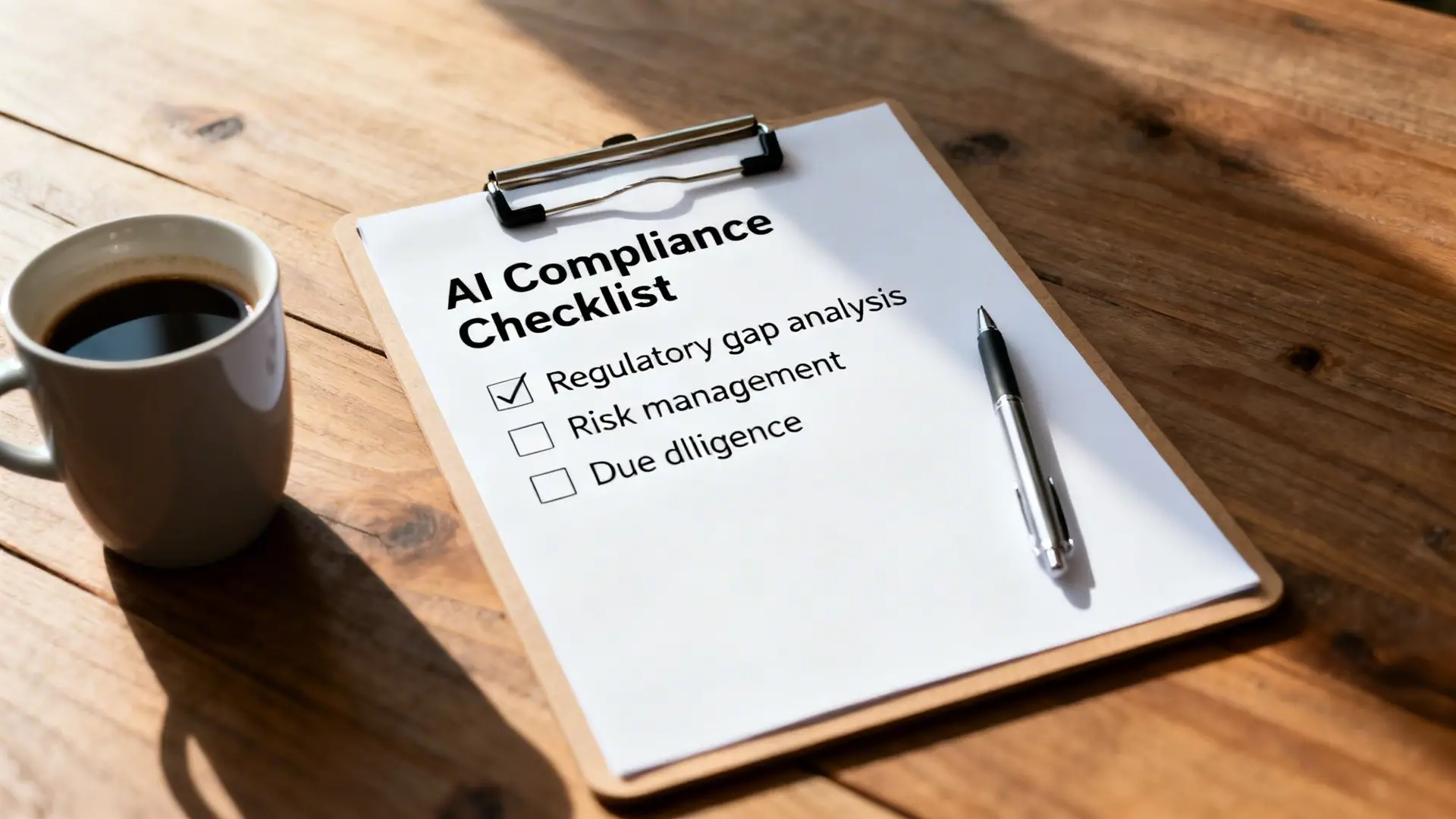
Will your AI systems pass an Israeli regulatory audit by 2026? If the answer is not a confident “yes,” you are already behind. A reactive approach to compliance is a failed strategy.
The only sound path is to turn knowledge into action. This checklist is an objective guide for foreign companies. It helps mitigate risks in Israel’s evolving legal environment.
Stage 1: Foundational Audits and Analysis
A problem cannot be fixed if it cannot be seen. The first step is to map your current regulatory exposure. This requires a detailed and honest assessment.
It all begins with a thorough regulatory gap analysis. This identifies where your AI systems fall short of tech regulation israel. The result should be a clear, prioritized list of vulnerabilities.
Next, a comprehensive data-flow audit is necessary. This traces how data moves through your AI models. Each step must align with the Privacy Protection Authority’s (PPA) requirements.
This foundational analysis is non-negotiable. Data practices once considered standard may now be high-risk under Israel’s framework. Finding these gaps early is the most effective risk management.
To manage this complexity, new tools can help. Many firms explore how AI for regulatory compliance can automate these audits. This makes workflows more accurate.
Stage 2: Implementing Governance and Risk Frameworks
With a clear picture of risks, it is time to build internal structures. This means embedding compliance into the company’s DNA. It requires a cultural shift, not just a new policy.
First, establish an AI ethics and governance committee. This must be a cross-functional team. It should include legal, technical, and business leaders.
At the same time, implement a documented risk management framework. This system must classify AI applications based on Israel’s risk model. For high-risk systems, the framework must outline mitigation protocols.
Stage 3: Contractual and Partnership Due Diligence
Your internal house can be in perfect order. However, legal obligations extend across your business ecosystem. This reality of ai law israel often ensnares unprepared companies.
A critical step is to update all commercial agreements. Contracts in Israel must include specific clauses. These should address AI liability, data processing, and audit rights.
Furthermore, you must execute rigorous due diligence for local partnerships. This is especially true if a company received Israel Innovation Authority (IIA) funding. Uncovering IIA-related obligations before a deal closes is essential.
Immediate Action Items for Your Legal and Tech Teams:
-
Initiate Regulatory Gap Analysis:
- Compare current AI governance policies against Israel’s draft legislation.
- Document all discrepancies and create a remediation plan.
-
Launch Data Provenance Audit:
- Map the entire lifecycle of training data for every AI model.
- Verify and record the legal basis for all personal data processing.
-
Establish an AI Governance Body:
- Appoint members from legal, engineering, and product departments.
- Draft a clear charter defining the committee’s authority.
-
Review and Amend Commercial Contracts:
- Integrate clauses that assign responsibility for AI system failures.
- Ensure all agreements align with Israeli consumer and privacy laws.
-
Develop an IIA Due Diligence Checklist:
- Create a standardized process for investigating a partner’s funding history.
- This checklist must cover IP transfer restrictions and royalty obligations.
Taking these deliberate steps moves an organization from a reactive to a proactive posture. This prepares for today’s laws. It also builds resilience for tomorrow’s regulatory challenges.
Building a Strategic Path for Long Term Success
Will your company’s AI strategy withstand the regulatory shifts of 2026? Simply reacting to new laws is a recipe for failure. Long-term success in Israel demands a proactive approach.
This is not about defensive box-ticking. It is about transforming compliance into a strategic advantage. The goal is continuous adaptation, starting with regulatory monitoring. Active monitoring of PPA and INCD guidance is essential.
Cultivating a Culture of Ethical AI
Beyond tracking rules, the foundation for resilience is a culture of ethical AI. This means embedding principles of transparency, fairness, and accountability. It applies to every stage of the AI lifecycle.
It also requires ongoing training for engineering and product teams. They must understand the nuances of ai law israel. This culture empowers people to spot potential compliance issues early.
An organization that internalizes ethical AI as a core value is simply more resilient. It makes smarter product decisions and builds deeper trust. This approach is a powerful form of long-term risk mitigation.
Actionable Steps for Strategic Integration
To make this strategy a reality, foreign companies must take specific steps. The objective is to make regulatory foresight a natural reflex. It should not be an isolated legal function.
Here are the required actionable steps.
- Integrate Regulatory Forecasts: Weave an analysis of potential AI regulations into your strategic planning.
- Establish Cross-Functional Teams: Create working groups with members from legal, engineering, and business.
- Engage with Policymakers: Participate constructively in policy consultations and industry forums.
Ultimately, by weaving regulatory intelligence into your business strategy, you are not just prepared for risks. You are positioned to seize new opportunities. This proactive adaptation is the blueprint for sustained success.
Your Questions Answered: Navigating Israel’s AI Laws
Foreign companies often have critical questions about Israel’s legal landscape. The answers are not always simple. However, understanding the terrain is the first step to mitigating risk.
Here is a breakdown of what you need to know.
What Is the Current Legal Status of AI Regulation in Israel?
As of 2026, there is no single “AI Act” in Israel. Instead, companies navigate a patchwork of existing laws. This includes draft bills and influential policy papers.
The Ministry of Innovation is steering toward a risk-based framework. This is similar to the one in the EU. The recommended path is to maintain strict compliance with current laws.
How Does the Israel Innovation Authority Affect M&A Deals?
The Israel Innovation Authority (IIA) is a major factor in any M&A transaction. If an Israeli company received IIA grants, the buyer inherits obligations. These often include major restrictions on transferring intellectual property.
This can lead to significant royalty repayments. For any foreign buyer, IIA commitments must be a primary focus. Uncovering these liabilities directly impacts the company’s valuation.
The recommended strategic path is to treat IIA funding as a primary checkpoint in any due diligence process. Overlooking these commitments can introduce unforeseen costs and operational constraints post-acquisition, eroding the value of the deal.
What Are the Main Data Privacy Concerns for AI in Israel?
The primary concern is Israel’s Privacy Protection Law. It operates in a spirit similar to Europe’s GDPR. Any AI company processing personal data must have a clear legal basis.
Beyond that, companies must uphold the rights of data subjects. They must also implement robust security measures. The Privacy Protection Authority (PPA) has made it clear that using anonymized or synthetic data is a key risk-reduction strategy.
Does Israel Have Export Controls for AI Technology?
Yes, they are particularly strict for dual-use AI. This is technology with potential civilian and military applications. Israel’s Ministry of Defense requires specific export licenses.
This is a critical checkpoint for foreign companies. If partnering with an Israeli firm in sensitive fields, you must navigate this regime. Failing to do so can lead to severe legal penalties.
For a detailed analysis and strategic guidance on navigating Israel’s complex regulatory landscape, contact RNC Group.