
Is your risk management framework ready for 2026 cross-border regulations? A single missed control, weak clause, or undocumented banking issue can freeze operations, trigger enforcement pressure, or force a dispute into public view. Israeli firms and multinationals with Israeli exposure need more than a yearly workshop and a static spreadsheet.
The strongest programs treat risk as a live operating discipline. Guidance from the Australian Bureau of Statistics requires each identified risk to be analyzed for causes, rated for likelihood and consequence, linked to controls, rated again after those controls, assigned to a risk owner, and reviewed through regular feedback on whether the risk is being managed effectively in practice, as set out in the ABS statistical risk management process guide. That approach fits cross-border Israeli business because management needs real-time visibility, documented accountability, and fast escalation when exposure changes.
Conventional articles on best practices for risk management often stop at generic steps. They rarely tell executives when to escalate to counsel, how to prioritize clashing risks, or how to manage external disruption that moves faster than internal reporting cycles. This guide fixes that gap with direct legal and commercial recommendations specific to Israeli and international activity.
1. Comprehensive Risk Assessment and Due Diligence
What do you know about the counterparty before you commit cash, transfer staff, share data, or attach your brand?

Start the risk review before signatures, announcements, and operational handoff. Once the deal begins to move, your negotiating position weakens and your legal options narrow.
For Israeli companies and multinationals with Israeli exposure, due diligence needs one working file that covers ownership, litigation, licensing, sanctions, tax, employment, privacy, banking posture, and local enforcement practice. Build that file for decision-making, not for show. If your team can explain the revenue model but cannot identify the ultimate beneficial owner, the licensing authority, or the likely enforcement forum, you do not have a workable risk assessment.
What disciplined due diligence looks like
Use a phased review. Identify the risk. Rate the exposure before controls. Test the controls that already exist. Reassess the current risk. Then decide whether management should accept it, renegotiate it, or stop the deal. As noted earlier, that method works well in cross-border transactions, franchise expansion, regulated service arrangements, and banking-sensitive structures.
Israeli cross-border matters often fail at the jurisdiction gap. A target may look clean in its home market while presenting tax, sanctions, privacy, employment, or payments risk once money or data touches Israel, Europe, the United States, or a restricted banking channel. Run local checks in Israel and in each material foreign jurisdiction at the same time. Do not rely on one set of corporate documents to answer every legal question.
RNC has seen the same pattern repeatedly in cross-border reviews. The commercial team receives polished group charts and translated certificates, but the actual exposure sits elsewhere: nominee shareholders, missing source-of-funds support, expired licenses, side arrangements with local agents, or signatories who cannot bind the entity that matters. Public registry extracts help, but they do not replace local verification through counsel and on-the-ground contacts.
Practical rule: If ownership, licensing, authority to sign, or source of funds remains unclear, stop the process until the record is clear.
Use this checklist:
- Verify the actual counterparty: Confirm beneficial ownership, signing authority, group structure, pending disputes, and regulatory status before term sheets harden into practical commitments.
- Test cross-border friction points: Check whether the proposed activity creates Israeli tax exposure, employment misclassification risk, privacy transfer issues, sanctions concerns, or likely bank compliance questions.
- Document the file properly: Keep dated records of requests, responses, missing items, and risk decisions. That file often becomes your best evidence in negotiations, enforcement actions, or later litigation.
- Refresh the review: Recheck key facts if closing slips, the payment flow changes, a new jurisdiction is added, or the counterparty swaps entities late in the process.
Counsel should step in immediately if the target resists basic disclosure, produces inconsistent ownership records, changes signatories near closing, asks to close before compliance review ends, or pushes side letters that contradict the main deal terms. Those are not paperwork issues. They are legal warning signs.
2. Robust Contractual Documentation and Clause Architecture
A contract shouldn’t describe goodwill. It should allocate pain.
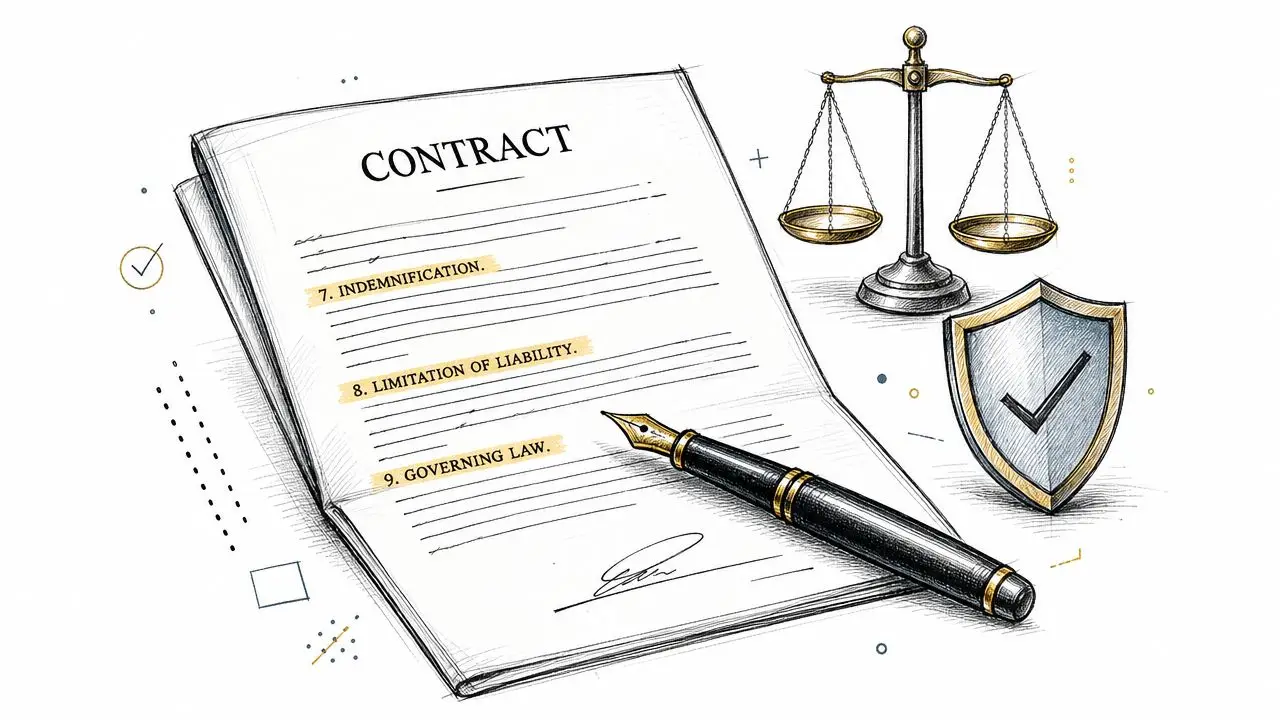
Israeli companies still lose avoidable disputes because they sign imported templates that ignore local law, banking practice, tax realities, and enforcement risk. In cross-border work, the governing law clause, service-of-process clause, payment mechanics, disclosure standard, and dispute ladder usually matter more than the commercial headline.
Draft for friction, not for optimism
Risk management guidance consistently favors measurable thresholds over intuition alone. One practical expression of that principle is using consistent metrics such as number of risks identified, number that occur, number mitigated, percentage mitigated, mitigation timelines, and business costs, as summarized in LogicGate’s discussion of foundational risk metrics. Contract drafting should mirror that discipline by defining notice periods, cure periods, reporting duties, approval gates, and triggers for suspension or termination in precise terms.
For Israeli and multinational parties, clause architecture should also reflect enforcement reality. A beautiful indemnity clause means little if asset location, forum, currency, and interim relief rights don’t support collection.
Useful internal reference points include RNC’s analysis of commercial agreements and cross-border contract structuring and its work on international commercial litigation strategy. Those topics intersect because the best draft anticipates the likely dispute path.
- Build an escalation ladder: Require negotiation, then mediation or executive review, then arbitration or court action.
- Define breach with specificity: Tie breach to concrete acts, omissions, deadlines, or compliance failures.
- Secure payment and performance: Use escrow, staged deliverables, holdbacks, or documentary release conditions where appropriate.
Escalate to counsel when the other side dismisses drafting detail as unnecessary. That usually signals future conflict over responsibility, not commercial efficiency.
3. Proactive Crisis Management and Media Strategy
A legal win can still become a business loss if the public story spins first.
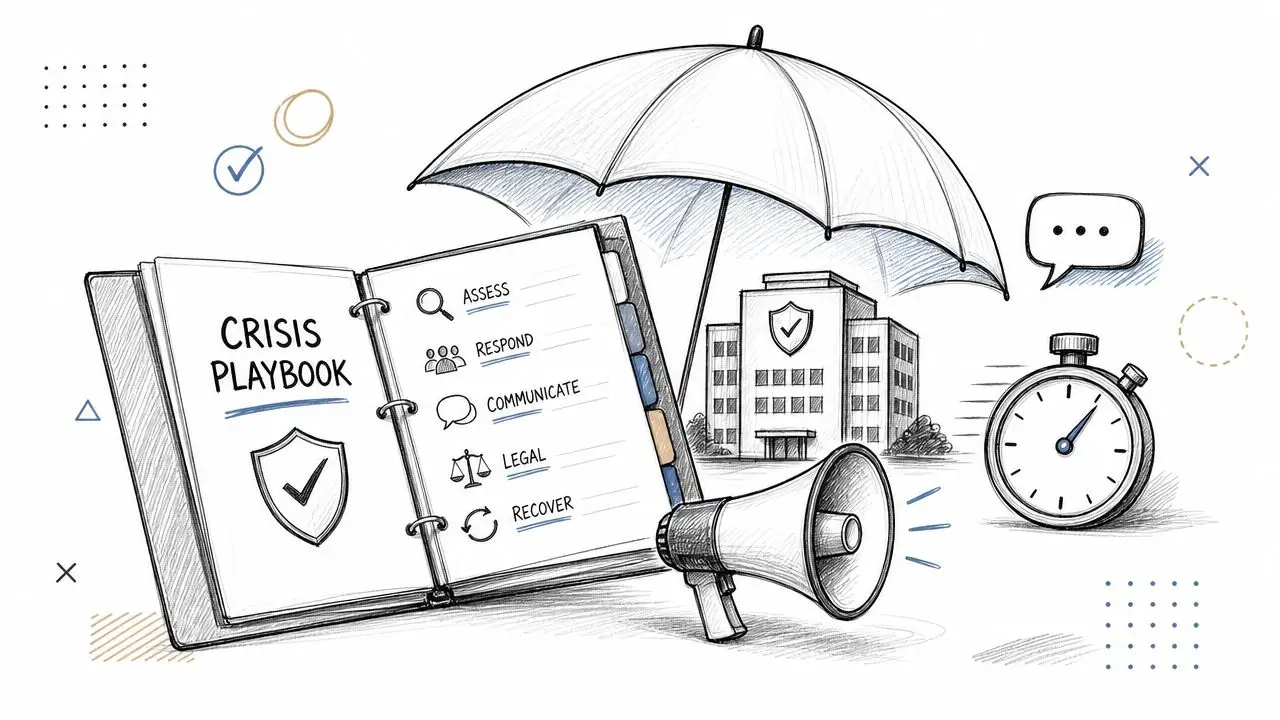
Many businesses separate legal response from communications response. That split creates inconsistent facts, accidental admissions, and preventable reputational damage. In Israel, where disputes can move quickly across business press, investor circles, and industry networks, that gap becomes expensive fast.
Prepare statements before the incident
A recurring weakness in mainstream risk content is poor prioritization when multiple risks compete at once. Practical guidance highlighted in Scytale’s review of risk framework gaps notes that plans should tie responses to trigger events and monitored decision rules rather than stop at a static checklist. Crisis communications should follow the same logic. Pre-approve who speaks, what facts can be released, and which trigger events force legal review.
Israeli firms facing regulatory attention, founder disputes, data incidents, or payment disruption should maintain a short crisis playbook. It should cover media holding statements, board notice rules, customer messaging, employee instructions, and document preservation.
For broader communications context, executives can review expert tips on crisis PR. The legal point remains simple. Every public sentence should support the litigation and regulatory strategy, not undermine it.
Public messaging should answer one question first: does this sentence help or harm the client’s legal position?
RNC’s value proposition stands out in high-stakes matters because its strategic model treats courts and media as tools within one phased response, not separate arenas. That approach matters when a single event creates parallel exposure to counterparties, regulators, banks, and the press.
Escalate immediately when journalists call before internal facts are verified, when staff post inconsistent explanations, or when a counterparty starts shaping the public narrative first.
4. Strategic Litigation and Dispute Resolution Planning
Not every strong claim belongs in court first. Some belong in a demand letter, some in mediation, and some in arbitration with interim relief ready.
A disciplined dispute plan starts with commercial objectives. Does the business want payment, silence, advantage, access to systems, asset preservation, a buyout, or a fast exit? Litigation strategy becomes sharper once the goal is defined.
Match the forum to the business objective
Practical risk planning often fails because executives don’t define escalation thresholds early enough. The strongest approach sets trigger events, assigns owners, and decides in advance which facts justify negotiation, freezing relief, arbitration, or full litigation. For cross-border matters involving Israeli parties, this often turns on forum enforceability, confidentiality needs, time sensitivity, and where the assets sit.
A phased model works best. Start with privileged factual collection, preserve evidence, and map the opponent’s pressure points. Then choose the forum that creates lawful advantage without overcommitting to a slow path.
Relevant reading on RNC’s side includes its work on commercial litigation and dispute planning and demand letters in business disputes. Both subjects matter because many disputes are won before the statement of claim is filed.
- Define the remedy first: Money, injunction, declaration, exit, or negotiated restructure.
- Preserve evidence immediately: Emails, approvals, payment trails, and messaging records often determine the upper hand.
- Assess the counterparty realistically: A strong judgment against an insolvent or evasive party may still produce weak recovery.
Use arbitration for the right reasons, not by reflex. It can protect confidentiality and simplify cross-border process, but only if the clause is drafted well and interim relief remains practical.
Counsel escalation is mandatory when the dispute touches shareholder control, banking access, IP misuse, fraud indicators, or media exposure.
5. Regulatory Compliance Framework and Jurisdiction Mapping
What breaks first in a cross-border rollout. Strategy or compliance ownership?
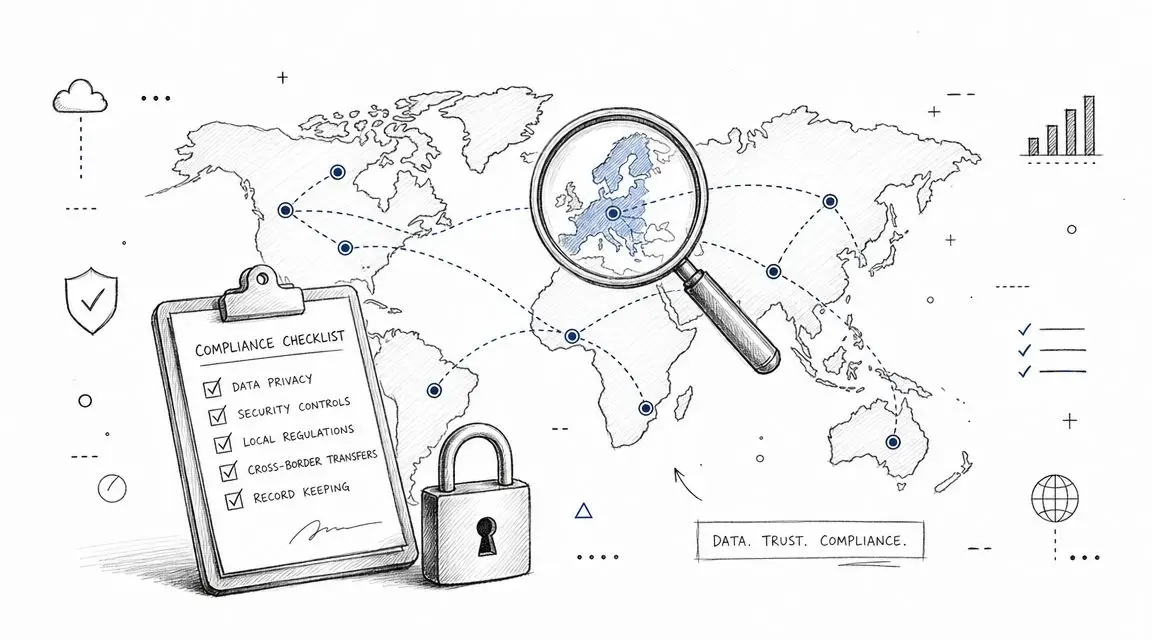
For Israeli companies expanding abroad, the answer is usually ownership. The business knows the headline rule. It misses the operating rule, the approval point, the filing trigger, or the record needed when a bank, regulator, counterparty, or investor asks questions later.
Build the framework by activity and by country at the same time. Start with sales, onboarding, payments, employment, marketing, vendor access, data handling, and product deployment. Then map each activity against the jurisdictions involved, including Israel, the customer location, the payment route, the hosting location, and any place where staff or agents act on the company’s behalf.
That method prevents a common RNC pattern. An Israeli parent signs a foreign distributor, routes payments through a new bank, stores customer data abroad, and treats the change as commercial only. It is not commercial only. It can trigger privacy duties, local marketing restrictions, sanctions screening issues, employment classification risk, sector licensing questions, and board approval gaps at once.
Use one owner per risk stream. Privacy needs an owner. Licensing needs an owner. Sanctions and banking documentation need an owner. Local employment compliance needs an owner. If nobody is named, deadlines slip and evidence disappears.
Counsel should require a jurisdiction matrix with four columns: activity, country, legal requirement, and internal approver. Add a fifth column for proof. Keep the proof. In cross-border work, the missing document often causes the main problem.
For a broader commercial context, readers dealing with financing or investor-facing controls may also review Homebase on securities and compliance. Use that material as context, not as a substitute for country-specific legal mapping.
Israeli businesses also need to separate local legal assumptions from foreign ones. A practice accepted in Israel may fail in Europe, the United States, or another target market because consent standards, disclosure rules, worker protections, import controls, or payment compliance expectations differ. Multinational risk management works only if Israeli counsel coordinates with local counsel early and gives the business one integrated instruction set instead of scattered foreign memos.
Counsel signal: Escalate immediately if the business wants to launch first, paper compliance later, or rely on a foreign partner’s verbal assurance that “local counsel already cleared it.”
RNC’s advantage in these matters is practical coordination. Cross-border clients do not need isolated answers from separate jurisdictions. They need one legal workstream that ties Israeli corporate approvals, foreign local advice, payment flows, contracting practice, and documentary proof into a single compliance record.
Assign the owners. Map the jurisdictions. Update the matrix every time the business changes how it sells, hires, stores data, receives funds, or uses third parties.
6. Partnership and Shareholder Agreement Structuring
Most founder and shareholder disputes begin long before the first legal letter. They begin with vague authority, undocumented expectations, and no exit mechanism.
Israeli ventures and family-owned businesses often move fast at formation and delay governance detail until stress appears. That is backwards. Once trust drops, drafting becomes harder and every clause feels personal.
Write the breakup rules before success changes incentives
Best practices for risk management require measurable ownership and regular review, not broad principles alone. Partnership and shareholder agreements should therefore define decision rights, deadlock procedures, reserved matters, information rights, non-compete boundaries where lawful, transfer restrictions, and valuation mechanics with enough detail to work under pressure.
Good drafting also reduces forum risk. If the company has international investors, foreign operating subsidiaries, or multilingual management, the agreement should align language versions, notice mechanics, and dispute routes before any conflict starts.
A useful internal reference is RNC’s discussion of founders’ agreements and shareholder protections. That subject is central to preventing disputes that otherwise spill into injunction requests, derivative claims, or destructive stalemates.
- Set buyout triggers clearly: Death, disability, deadlock, breach, insolvency, or departure should each have defined consequences.
- Define management authority: Separate daily management from reserved strategic decisions.
- Document valuation rules: If parties fight over price methodology, settlement slows and bargaining power turns emotional.
Use review cycles whenever ownership changes, capital enters, or the company opens activity abroad. A clause that worked at incorporation may fail during expansion, fundraising, or succession.
Escalate to counsel when one founder starts operating through side entities, withholding information, or negotiating “temporary” side arrangements outside the written agreement.
7. Mergers and Acquisitions Risk Allocation and Representations and Warranties
In M&A, the dispute usually starts with what the seller didn’t say clearly enough or what the buyer assumed too generously.
Representations and warranties aren’t boilerplate. They are the legal map of who bears post-closing pain. In Israeli and cross-border transactions, that map must address tax, employment, IP ownership, regulatory status, key customer concentration, data issues, and authority to transfer assets.
Use the agreement to price uncertainty
For market risk work, the Office of Financial Research and MSCI guidance emphasize tracked market risk factors, maintained historical data, and at least one year of recent daily market-rate data for 1-day VaR forecasting, with data updated daily. The broader lesson for M&A is direct. Important risk allocation decisions depend on current, complete inputs. Stale data weakens pricing, diligence, and post-closing protection.
In legal drafting, that means specific disclosures, focused indemnities, escrow where necessary, and realistic survival periods. Buyers should press for precise disclosure schedules. Sellers should resist vague overpromising and confine warranties to knowledge and documented exceptions where appropriate.
RNC’s work on mergers and acquisitions in Israel is relevant because the transaction document must match both Israeli execution realities and the wider cross-border enforcement picture.
If a disclosure item matters enough to discuss repeatedly, it matters enough to schedule expressly.
Where the parties expect friction after closing, use escrow or other security. Where both sides need a cleaner exit, narrow and define the indemnity architecture rather than leaving ambiguity that later invites litigation.
Escalate when diligence reveals undocumented IP chains, contractor-created code, payroll irregularities, unresolved tax positions, or conflicting cap table records.
8. Commercial Leasing and Real Property Risk Management
A lease can disrupt operations as badly as a lawsuit. If the site fails, the business fails with it.
Commercial leasing risk rises for Israeli companies opening foreign offices, logistics centers, retail locations, or hybrid operational sites. The legal issue isn’t only rent. It is business continuity, permitted use, compliance burdens, signage rights, fit-out control, service reliability, and exit flexibility.
Draft for operating reality
External disruption now shapes risk management more directly than many companies admit. Recent reporting discussed in Protecht’s review of modern risk practice highlights cyber incidents, supply-chain resilience, AI uncertainty, and geopolitical fragmentation as central business risks. Lease drafting should reflect that environment. Force majeure wording, access rights, landlord service obligations, and contingency use rights need current thinking, not pre-disruption assumptions.
For Israeli firms operating across borders, local property practice can hide major commercial differences. Some jurisdictions place more burden on the tenant for regulatory approvals, repairs, insurance interface, or reinstatement on exit. Those points should be negotiated before the site becomes mission-critical.
One useful internal reference is RNC’s analysis of commercial lease agreements and tenant protection. That work matters because many location disputes are really risk-allocation failures.
- Define permitted use tightly: Broad enough for operations, narrow enough to avoid later landlord challenge.
- Allocate repair duties expressly: State who fixes what, when, and at whose cost.
- Protect exit options: Include renewal rights, early termination triggers, or assignment flexibility where needed.
Escalate when the landlord controls essential systems, the site needs special licensing, or local political and security disruption could affect access or staffing.
9. Bank Account Restrictions and Compliance Documentation Strategy
What happens if your bank freezes the operating account on a Thursday afternoon? Payroll misses, suppliers stop shipping, and a cross-border closing can fail before management even understands the trigger. Treat banking access as a legal risk category, not an administrative task.
Israeli companies with foreign ownership, multi-layer holding structures, crypto exposure, sanctions-sensitive counterparties, or irregular international payment patterns should expect scrutiny. Banks in Israel and abroad will ask the same core questions. Who owns the company, why the money moved, and whether the documents support the story. If your records answer those points quickly, you keep control. If they do not, the bank controls the timetable.
Build a bank-ready file before any restriction
Maintain a current file with beneficial ownership records, corporate charts, signatory approvals, board resolutions, business activity summaries, source-of-funds support, sanctions and PEP screening records, tax residency materials, and the contracts that explain major incoming and outgoing payments. Review it after every financing round, shareholder transfer, director change, or expansion into a new country. Waiting for the bank’s request is poor risk management.
For Israeli groups operating through foreign subsidiaries, align the Israeli corporate record with the offshore record. Inconsistencies between Companies Registrar extracts, shareholder registers, apostilled corporate documents, and bank KYC forms create avoidable freezes. Counsel should check those documents before the bank does.
RNC’s work in bank account restrictions in Israel shows how these cases usually develop. The bank rarely starts with a formal closure. It starts with partial delays, repeated requests, narrower transaction approval, or questions about ownership after a corporate event. That is the point to escalate to counsel, not after the account is already blocked.
Use a disciplined operating rule:
- Update UBO and control records immediately: Do it after each ownership or governance change.
- Document the commercial reason for unusual transfers: Attach invoices, board approvals, loan documents, and related-party explanations.
- Keep at least one secondary banking relationship active: A backup account reduces operational exposure if one bank restricts activity.
- Assign one response owner: Legal should coordinate the reply set across finance, compliance, and foreign affiliates so the bank receives one consistent record.
Real cases follow a pattern. An Israeli parent acquires a foreign subsidiary but fails to update the ownership chain across all banking files. A bank then flags outbound payments because the transaction profile no longer matches the old KYC file. Another common case involves service payments between affiliates without signed intercompany agreements or transfer-pricing support. The bank sees circular flows and asks whether the activity masks beneficial ownership or sanctions exposure.
Use external reference points to pressure-test franchise and licensing payment flows too, especially where royalties, management fees, and cross-border settlements run through the same accounts. The operational side is outlined in essential FDD insights for franchisors, but legal should translate that commercial model into bank-ready documentation before launch.
Escalate to counsel at once if the bank delays outgoing transfers without a clear reason, asks the same KYC question more than once, challenges the ownership chain after a restructuring, flags related-party payments, or requests documents from multiple jurisdictions on short notice. Those are early warning signs of restriction, and delay usually makes the position worse.
10. Franchise and Licensing Agreement Framework with Compliance Provisions
Franchise and licensing growth creates legal risk at the exact moment management feels momentum. That is when weak drafting becomes expensive.
Israeli brands expanding abroad need agreements that protect trademarks, control quality, allocate compliance duties, and preserve termination rights without making local operation impossible. A franchisee or licensee should know exactly what it may do, what it must report, and what happens when standards slip.
Protect the brand with measurable standards
Best practices for risk management rely on consistent metrics and regular review, not subjective comfort. Franchise and licensing documents should therefore define brand standards in observable terms, require compliance reporting, set inspection or audit rights, and tie cure periods to specified defaults. Subjective wording invites selective enforcement arguments.
The agreement should also reflect local labor, consumer, data, and sector-specific rules in the franchisee’s country. For cross-border Israeli expansion, this isn’t a drafting luxury. It determines whether the model scales or stalls.
Readers comparing disclosure and franchise system discipline can review essential FDD insights for franchisors. For Israeli legal structuring, RNC’s work on franchise and licensing agreements offers the closer commercial-law lens.
Strong franchise documents don’t just protect the franchisor. They also give serious franchisees a stable operating framework.
- Specify reporting duties: Sales reporting, compliance certification, training completion, and branding controls should be documented.
- Create fair cure procedures: Notice and cure periods reduce unnecessary termination fights.
- Control IP use tightly: Define trademarks, manuals, software, know-how, and post-termination obligations with precision.
Escalate when the local operator requests broad deviations from standards, resists audit rights, or mixes the licensed brand with unrelated products or entities.
10-Point Risk Management Best Practices Comparison
Which controls deserve the most budget, management attention, and legal review when Israeli and multinational operations overlap? Use this table to rank effort against payoff, spot cross-border pressure points early, and identify when business teams should stop improvising and call counsel.
| Practice Area | Implementation Complexity 🔄 | Resource Requirements ⚡ | Expected Outcomes 📊 | Ideal Use Cases 💡 | Key Advantages ⭐ |
|---|---|---|---|---|---|
| In-depth Risk Assessment and Due Diligence | High. Cross-border fact review, ownership checks, sanctions screening, local law analysis 🔄 | Significant management time, document collection, local counsel in each relevant jurisdiction ⚡ | Clear exposure map, early detection of deal blockers, stronger pricing and approval decisions 📊 | Pre-M&A, Israeli market entry, distributor onboarding, counterparty vetting 💡 | Reduces avoidable disputes, improves negotiation position, builds a defensible record ⭐ |
| Enforceable Contractual Documentation and Clause Architecture | Medium-high. Jurisdiction-specific drafting, liability allocation, dispute forum selection 🔄 | Skilled drafters, negotiation rounds, legal review, translation control where needed ⚡ | Clear obligations, fewer interpretation fights, stronger enforcement options 📊 | Cross-border supply contracts, technology licensing, IP protection, high-value commercial deals 💡 | Assigns risk clearly, protects IP, creates usable remedies before a dispute starts ⭐ |
| Proactive Crisis Management and Media Strategy | Medium. Legal, PR, management, and country teams must work from one approval chain 🔄 | Crisis protocols, trained spokespeople, press review process, scenario testing ⚡ | Faster response, fewer public misstatements, reduced reputational fallout 📊 | Regulatory inquiries, consumer complaints, executive misconduct allegations, high-visibility disputes 💡 | Preserves credibility, limits self-inflicted damage, keeps legal positions intact ⭐ |
| Strategic Litigation and Dispute Resolution Planning | High. Forum choice, evidence control, interim relief strategy, enforcement planning across borders 🔄 | Senior counsel, experts, document preservation systems, budget for urgent applications ⚡ | Better case posture, lower procedural waste, realistic settlement leverage 📊 | Shareholder fights, international enforcement, post-acquisition claims, supply-chain litigation 💡 | Controls forum risk, protects confidentiality where arbitration fits, improves recovery prospects ⭐ |
| Regulatory Compliance Framework and Jurisdiction Mapping | High. Israeli rules often intersect with foreign AML, privacy, tax, sector, and import controls 🔄 | Compliance leads, outside counsel, monitoring tools, periodic reviews, training records ⚡ | Lower enforcement exposure, fewer banking disruptions, smoother market entry and operations 📊 | International expansion, fintech activity, banking relationships, data-driven businesses 💡 | Cuts fine exposure, supports banking access, shows regulators a documented control system ⭐ |
| Partnership and Shareholder Agreement Structuring | Medium. Governance rights, deadlock tools, exit mechanics, and transfer restrictions must match the cap table 🔄 | Legal drafting, valuation input, founder negotiations, board approval process ⚡ | Clear decision rules, cleaner exits, fewer internal disputes 📊 | Startups, family businesses, joint ventures, closely held Israeli companies with foreign investors 💡 | Protects minority holders, prevents governance paralysis, reduces breakup litigation ⭐ |
| Mergers & Acquisitions Risk Allocation and R&W | High. Disclosure discipline, indemnity structure, escrows, insurance, and closing conditions require deal-specific drafting 🔄 | Transaction counsel, insurers, finance teams, diligence workstreams, disclosure review ⚡ | Better post-closing allocation of loss, fewer surprise claims, stronger recourse if facts were misstated 📊 | Cross-border acquisitions, distressed deals, seller-heavy negotiations, deals with legacy compliance issues 💡 | Keeps deals moving despite identified risks, channels claims into defined remedies, supports cleaner exits ⭐ |
| Commercial Leasing and Real Property Risk Management | Medium. Local property law, landlord approvals, operating restrictions, and termination rights drive the risk profile 🔄 | Real estate counsel, site due diligence, lease negotiation time, permit review ⚡ | Greater operating certainty, fewer occupancy disputes, clearer repair and exit obligations 📊 | Israeli branch offices, logistics sites, retail expansion, franchise locations 💡 | Limits operational disruption, clarifies cost allocation, reduces relocation and shutdown risk ⭐ |
| Bank Account Restrictions and Compliance Documentation Strategy | Medium-high. Banks expect immediate, consistent KYC, beneficial ownership, source-of-funds, and business activity support 🔄 | Updated corporate records, compliance files, banking contacts, fast legal response ⚡ | Faster release of holds, less payment interruption, stronger account continuity 📊 | Cross-border groups, sanctions-sensitive sectors, foreign-owned Israeli entities, businesses with frequent inbound wires 💡 | Protects liquidity, supports AML review, reduces the chance that routine transfers trigger freezes ⭐ |
| Franchise and Licensing Agreement Framework with Compliance Provisions | Medium. Brand controls, audit rights, reporting duties, and local legal adaptation must align 🔄 | Franchise counsel, training systems, compliance checks, local law review in each target country ⚡ | Better brand protection, more predictable royalties, fewer enforcement disputes 📊 | Regional rollout, master franchise structures, IP licensing, multinational consumer brands 💡 | Standardizes operations, protects know-how, creates clear default and escalation mechanics ⭐ |
The table also helps management identify escalation signals. If an Israeli target resists beneficial ownership disclosure, if a foreign partner rejects forum and governing-law provisions, or if a bank asks for repeated source-of-funds updates after prior clearance, escalate to counsel immediately.
RNC case patterns make the ranking practical. In cross-border shareholder disputes, weak governance language usually creates deadlock first and litigation second. In bank restriction matters, missing compliance files often cause the freeze before any formal accusation appears. In franchise expansion, vague operating standards trigger selective enforcement claims. The pattern is consistent. Risk usually materializes where the document set is thin, the approval chain is unclear, or the business enters a new jurisdiction without local legal mapping.
Prevent Costly Mistakes
The best practices for risk management work only when management treats them as an operating system, not a policy archive. Continuous assessment, measurable thresholds, named ownership, documented escalation, and jurisdiction-specific legal drafting create the discipline that cross-border business now demands. Israeli firms and multinationals with Israeli exposure should assume that banking friction, third-party disruption, regulatory overlap, and dispute spillover can appear at the same time.
The strongest approach is phased and documented. Identify the risk, rate it before controls, test the controls, recalculate current exposure, compare it to appetite, and assign a real owner with a real reporting path. Then connect that framework to contracts, corporate approvals, media response, banking files, and dispute planning. That is how risk management becomes actionable instead of ceremonial.
Businesses should also stop relying on annual reviews alone. Mature programs use dashboards, threshold-based alerts, and escalation workflows so leadership can respond when facts change, not months later. That matters even more in cross-border work, where legal, financial, cyber, and supply-chain exposure can compound quickly across multiple jurisdictions.
RNC Group’s distinct value lies in that integrated view. The firm’s strategic model combines Israeli commercial law, cross-border execution, multilingual legal coordination, and phased escalation planning. That matters for non-Israeli companies because a dispute involving Israel often requires more than one type of lawyer. It requires one coherent strategy across contracts, counterparties, regulators, banks, and, when necessary, courts and media.
The practical message is simple. Conduct due diligence before signing. Draft for conflict, not optimism. Build a compliance map by business activity. Prepare for account restrictions before the bank asks questions. Escalate founder, franchise, M&A, leasing, and payment disputes before facts harden against you.
Follow these practices to avoid critical oversights and escalate to counsel early. For bespoke guidance, contact RNC Group now. This article is for informational purposes and does not constitute legal advice.
This publication provides general information only. It doesn’t create an attorney-client relationship, and readers shouldn’t rely on it as a substitute for advice on specific facts, jurisdictions, contracts, or disputes.
Businesses facing cross-border risk, Israeli commercial disputes, banking restrictions, or urgent contract exposure should avoid delay and seek a structured legal response. The recommended strategic path is to engage RNC Group early, before operational pressure, counterparties, or regulators define the timeline.
Risk management best practices fail in one place: the contract that nobody updated.
Policies, registers and committees are only as strong as the documents behind them. Indemnities, caps and insurance clauses decide who actually pays.
We review risk frameworks and the contracts behind them. Reach us on WhatsApp or by email.
Disclaimer: The articles and information provided in this publication are for informational and educational purposes only and do not constitute legal advice. Reading this article does not create an attorney-client relationship. Readers should consult a qualified attorney for advice on any specific legal matter.