
A non-Israeli executive often learns about a partnership breach at the worst possible moment. A payment fails, a customer mentions a side company, or an Israeli manager signs a commitment no one approved.
At that point, the partnership agreement stops being a formality. It becomes the control document that decides who still holds authority, who can stop further damage, and which remedies remain available before assets, evidence, or advantage disappear.
When a Partnership Promise Breaks
A common scenario begins subtly. A foreign investor enters the Israeli market through a local partnership. The structure looks efficient, the relationship looks stable, and the agreement appears adequate until one partner diverts an opportunity, withholds records, or spends company funds outside the agreed process.
The legal problem is only part of the crisis. The commercial problem arrives first. Management loses visibility, counterparties receive mixed instructions, and internal trust collapses before the board has even defined its legal position.
That is why breach of partnership agreement remedies matter far beyond compensation. They shape control. They also determine whether the business can continue with a revised structure or whether the dispute will force separation.
Why sophisticated businesses treat breach as a litigation risk
Partnership disputes are not rare outliers. Breach of contract claims are the most common causes of action in partnership and shareholder disputes worldwide, often involving ownership interests, management duties, and profit allocation, as discussed in this analysis of partnership and shareholder disputes.
That matters to international companies operating in Israel because the pattern is familiar across major markets. The trigger may be local, but the dispute logic is global. Documents, approvals, payment trails, and decision records usually decide who controls the narrative.
Practical rule: The first party to organize the record often gains the strategic advantage.
What breaks first in a cross-border partnership
In cross-border matters, the breach usually affects one of four pressure points:
- Authority: A partner acts beyond approved signing power, board authority, or delegated management limits.
- Money: Funds move without approval, capital contributions don’t arrive, or profits are allocated contrary to the agreement.
- Information: One side withholds financial data, customer records, or internal communications.
- Loyalty: A partner pursues self-dealing, competes indirectly, or captures a corporate opportunity.
Israeli and foreign stakeholders often react differently to the same event. One side may still hope to preserve the venture. The other may already be preparing for expulsion, injunction relief, or an emergency filing. The discipline lies in diagnosing the breach correctly before taking a step that can’t be reversed.
Identifying the Breach and Its Legal Standing in Israel
A serious partnership dispute in Israel rarely turns on emotion. It turns on classification. The company must determine whether the conduct is a minor operational failure, a material contractual breach, a fiduciary breach, or a combination of all three.
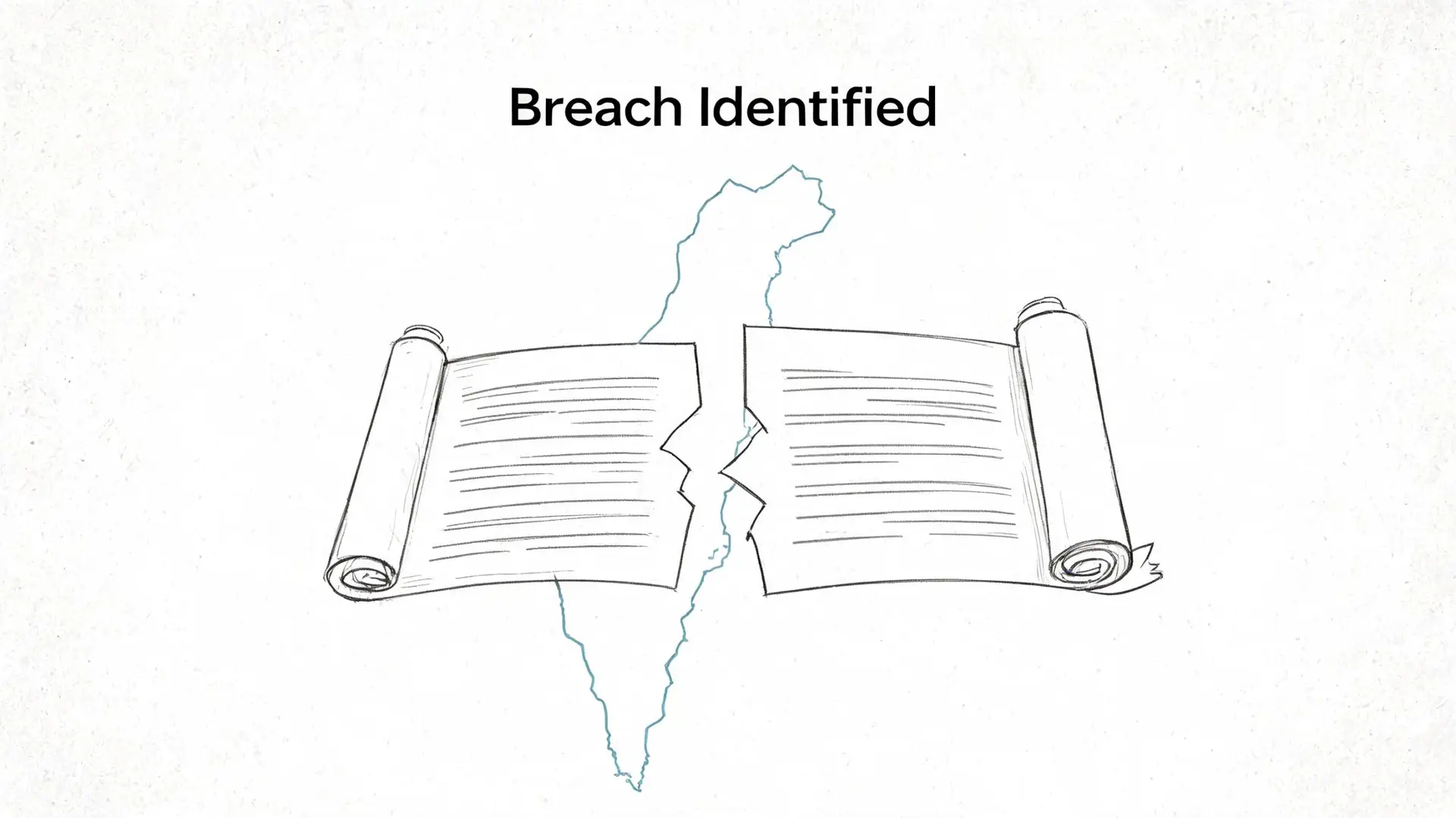
That distinction matters because the wrong label produces the wrong remedy. If management overstates a minor dispute, it may trigger avoidable escalation. If it understates a fiduciary breach, it may allow further asset movement and weaken later relief.
Start with the agreement, not the grievance
The first question is simple. Which clause was breached?
In practice, the analysis usually begins with authority provisions, capital obligations, profit distribution terms, reporting duties, non-compete language, confidentiality undertakings, and dispute resolution clauses. If the agreement is thin, Israeli legal analysis will also consider the broader duties that arise from the relationship itself, especially duties of loyalty, disclosure, and good faith in commercial conduct.
A useful working method is to build a clause-by-clause matrix:
| Contract area | What to check | Warning sign |
|---|---|---|
| Decision-making | Approval thresholds and reserved matters | Unilateral commitments |
| Finance | Contribution duties and spending rules | Unapproved transfers |
| Governance | Access to books and reporting obligations | Missing records |
| Loyalty | Non-compete and conflict restrictions | Side vehicles or diverted clients |
This exercise often exposes a second problem. Many disputes presented as “performance issues” are control issues. The partner hasn’t merely underperformed. The partner has ignored a governance boundary.
Material breach versus business friction
Not every disagreement justifies aggressive remedies. A late report, a disputed invoice, or a poorly documented expense may support a claim, yet not every failure warrants termination or removal.
The stronger cases usually involve conduct that strikes at the center of the bargain. Examples include concealed conflicts, unauthorized contracts, diversion of customers, misuse of partnership funds, or repeated refusal to provide records needed for management and oversight.
The legal standing of the breach depends on proof that links conduct, clause, loss, and causation.
That proof should be assembled early. Emails, board minutes, payment records, WhatsApp messages used for approvals, signed resolutions, draft term sheets, and bookkeeping records often matter more than broad allegations.
Fiduciary conduct needs separate analysis
In Israeli-facing partnership disputes, foreign companies often focus first on contractual language. That is necessary, but it is not sufficient. A partner may comply with some operational terms while still breaching fiduciary obligations through hidden self-interest, selective disclosure, or appropriation of business opportunities.
Typical indicators include:
- Parallel entities: A hidden company receives opportunities that should have gone to the partnership.
- Personal benefit: A partner approves transactions that benefit related parties.
- Information asymmetry: Management requests go unanswered while operational decisions continue.
- Shadow control: Employees receive instructions outside approved reporting lines.
Where these facts appear, the legal strategy should treat the matter as more than a routine contract dispute. The remedy analysis changes because the business may need immediate control measures, not only eventual damages.
Your Arsenal of Legal Remedies Explained
A foreign parent company usually reaches this stage after the commercial damage has already started. The Israeli partner has moved funds, signed around governance controls, blocked records, or shifted customers. At that point, the legal question is not abstract. It is which remedy gives the company control fast enough to protect the business, preserve enforcement options, and contain spillover across jurisdictions.
Remedies should be chosen as part of a crisis plan, not pleaded as a shopping list. In cross-border disputes, the best legal position on paper can still fail commercially if the order comes too late, cannot be enforced against the actual decision-maker, or triggers a wider operational breakdown in Israel.
Evidence determines how much pressure each remedy can create
Remedy analysis starts with proof quality. Courts and tribunals are far more likely to grant meaningful relief where the record shows dates, instructions, account movements, board approvals, and a clear mismatch between authority and conduct, as discussed in LegalVision’s review of practical steps after a partnership agreement breach.
For non-Israeli companies, that usually means one immediate discipline. Build a file that can be understood by Israeli counsel, local management, foreign headquarters, and if necessary an overseas enforcement court. A messy record weakens every remedy. A structured record increases settlement pressure before the first hearing.
The main remedies and the commercial trade-offs behind them
Monetary damages
Damages are the standard remedy where the company can prove loss caused by the breach. They are useful when the financial harm can be measured with reasonable confidence, for example diverted revenue, unauthorized payments, overcharges, or loss tied to a specific transaction.
They are less effective as a first move if the immediate problem is ongoing control of cash, records, staff, or customer relationships. A damages claim may be correct and still be strategically secondary.
For international businesses, another point matters. A damages award is only as strong as the route to collect it. If assets sit outside Israel, or the breaching partner has already shifted value into related entities, the company should assess recoverability before treating damages as the main solution.
Injunctive relief
An injunction is often the most important early remedy because it can freeze the situation before the facts deteriorate further. That may include stopping unauthorized signatures, restraining transfers, preserving access to bank accounts, blocking misuse of confidential information, or preventing interference with books and systems.
Speed matters here.
If the other side is still acting, waiting for a full merits determination can turn a manageable dispute into a business extraction exercise. In many Israeli disputes involving foreign investors, the first objective is not compensation. It is to stop unilateral action long enough to regain decision-making discipline.
The company should also consider what the order must say in practical terms. A vague restraint order may look useful but leave room for evasion. The better application identifies the person, account, system, contract, or decision that must be frozen or preserved.
Accounting and disclosure orders
Where one partner controls the information flow, accounting relief can change the case. It forces the production of records and can expose whether the problem is poor administration, unauthorized withdrawals, related-party dealing, or deliberate concealment.
This remedy often has outsized value in cross-border matters because foreign management is usually operating with partial visibility. Once records, ledgers, payment trails, and internal approvals are produced, the dispute stops being anecdotal and becomes provable.
Boardroom insight: If the other side controls the books, the first objective may be to secure information before arguing about valuation or final damages.
Accounting relief also helps the company make better downstream decisions. It may support a damages case, justify injunctive relief, trigger an exit mechanism, or confirm that dissolution is the least harmful option.
Expulsion or forced exit under the agreement
If the partnership agreement contains a clear removal, buyout, or compulsory transfer mechanism, that can be the most commercially sensible remedy. It allows the business to continue while removing the source of disruption.
This option succeeds or fails on drafting. The agreement must identify the breach threshold, notice procedure, valuation method, timing, voting mechanics, and authority needed to complete the exit. If those steps are vague, the attempted removal may create a second dispute on process.
For multinational companies, there is another layer. The exit structure must also be checked against local corporate records, tax consequences, banking mandates, and any foreign approvals needed at parent level. A technically valid expulsion can still create operational paralysis if implementation has not been mapped in advance.
Specific performance
Specific performance is narrower, but it remains useful where a partner must do a defined act that money cannot realistically substitute. Common examples include signing a transfer document, delivering original corporate records, complying with an agreed governance step, or completing a registration needed to protect the business.
It is usually a poor fit where the relationship has collapsed beyond repair and the court would be asked to supervise ongoing cooperation. Still, for targeted obligations, it can be the shortest path to restoring legal control over a key asset or process.
Dissolution
Dissolution is the final remedy when the partnership cannot continue safely. Sometimes that is the right answer. If trust is gone, governance has failed, records are compromised, and each side is using the business structure against the other, preserving the partnership may only increase loss.
But dissolution carries heavy business costs. It can disrupt employees, regulatory filings, financing arrangements, customer contracts, tax planning, and group reporting. Foreign companies often underestimate how much value is lost because the operating platform in Israel is thrown into uncertainty.
That is why experienced clients usually test less destructive options first, especially injunctions, disclosure, and an enforceable exit.
Comparison of Key Remedies for Partnership Breach
| Remedy | Primary Objective | Best Used When |
|---|---|---|
| Damages | Recover financial loss | The loss is measurable and causation is clear |
| Injunction | Stop ongoing harm | Assets, authority, or customers are at immediate risk |
| Accounting | Obtain records and trace conduct | One partner controls information or finances |
| Expulsion or buyout | Remove the breaching partner | The agreement contains a workable exit mechanism |
| Specific performance | Enforce a defined obligation | The act required is unique and still useful |
| Dissolution | End the relationship | The business cannot continue safely |
Mistakes sophisticated companies still make
The first is choosing the largest theoretical claim instead of the remedy that changes control on the ground. In a live Israeli dispute, an order preserving accounts or compelling disclosure may matter more than a broad pleading for long-term damages.
The second is ignoring enforcement design. A remedy is only useful if it can be implemented against the people, assets, and systems that matter.
The third is overestimating contractual wording. A buyout clause may look strong in the agreement and still fail under pressure if the valuation procedure is disputed, signatories are blocked, or local records do not match the contractual structure.
For related thinking on contract structure in international deals, readers dealing with hybrid ventures may also compare issues raised in commercial collaboration agreements in Israel.
The Strategic Choice Litigation vs Alternative Dispute Resolution
The most important process decision isn’t whether the company is angry enough to sue. It is whether litigation will produce better control than mediation or arbitration.
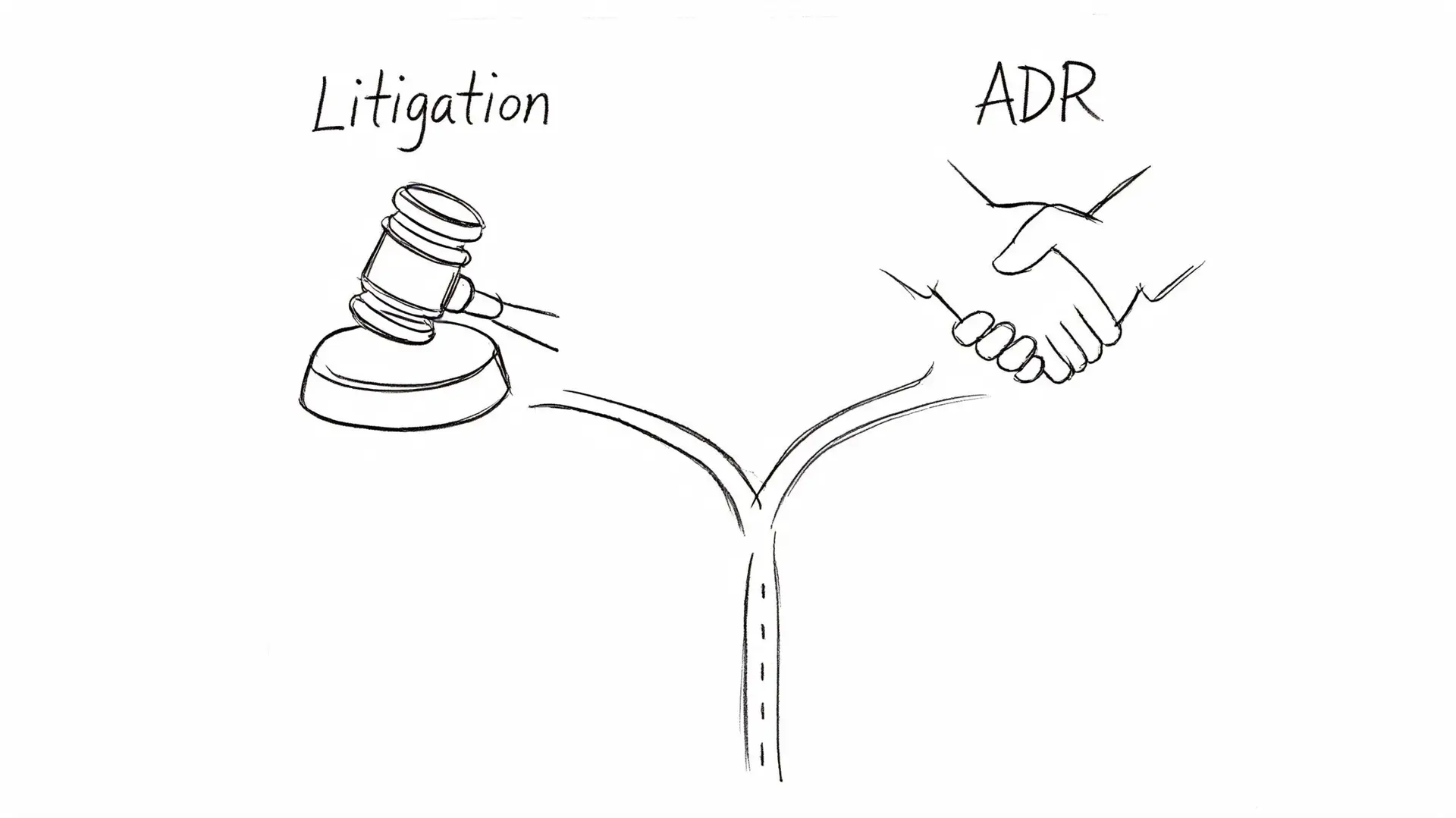
That choice should never be ideological. It should follow the facts, the agreement, the urgency of the harm, and the countries where enforcement may be needed.
When litigation is the better tool
Litigation becomes necessary when the company needs compulsory powers. If the opposing partner holds records, controls a local bank relationship, or keeps acting despite formal objections, a court process may be the only route that forces disclosure and imposes restraint.
Litigation also helps when the other side is using delay as a strategy. A party that refuses documents, ignores notices, or manipulates governance often becomes more cooperative only after formal proceedings start.
Yet litigation has costs beyond legal fees. It is public in many settings, demanding on management time, and harder to contain commercially once pleadings circulate among investors, lenders, and business partners.
When ADR creates better outcomes
Mediation works best when the parties still share an interest in preserving value. That may mean restructuring management rights, agreeing on a buyout path, or separating business lines without public escalation.
Arbitration is often stronger than court litigation for cross-border commercial relationships because it offers procedural flexibility and a more enforcement-friendly end product in many jurisdictions. It can also suit disputes involving sensitive trade information, licensing arrangements, or investor relationships that benefit from confidentiality.
A useful mindset is to treat the dispute as a controlled crisis, not a moral contest. For executives building response discipline under pressure, some of the same leadership principles discussed in mindset shifts for starting a law firm are surprisingly relevant. Clear judgment, role definition, and controlled escalation matter just as much in a partnership breakdown.
A phased escalation model usually works best
The strongest strategy often follows a sequence rather than a single leap:
- Preserve evidence immediately: Secure records, approvals, and access logs.
- Send a focused legal notice: State the breach, reserve rights, and demand defined action.
- Test settlement channels: Use negotiation or mediation if they can produce control quickly.
- Escalate to arbitration or court: Move fast if assets, authority, or evidence remain at risk.
A rushed lawsuit can harden positions. A delayed lawsuit can surrender leverage.
For companies evaluating dispute pathways in a broader emergency context, related thinking appears in commercial crisis management in Israel. The legal route should support the business objective, not overshadow it.
Navigating Cross-Border Enforcement and Jurisdictional Issues
An Israeli remedy has limited value if the partner’s assets, records, or operating vehicles sit elsewhere. That is why cross-border planning should begin before filing, not after judgment.
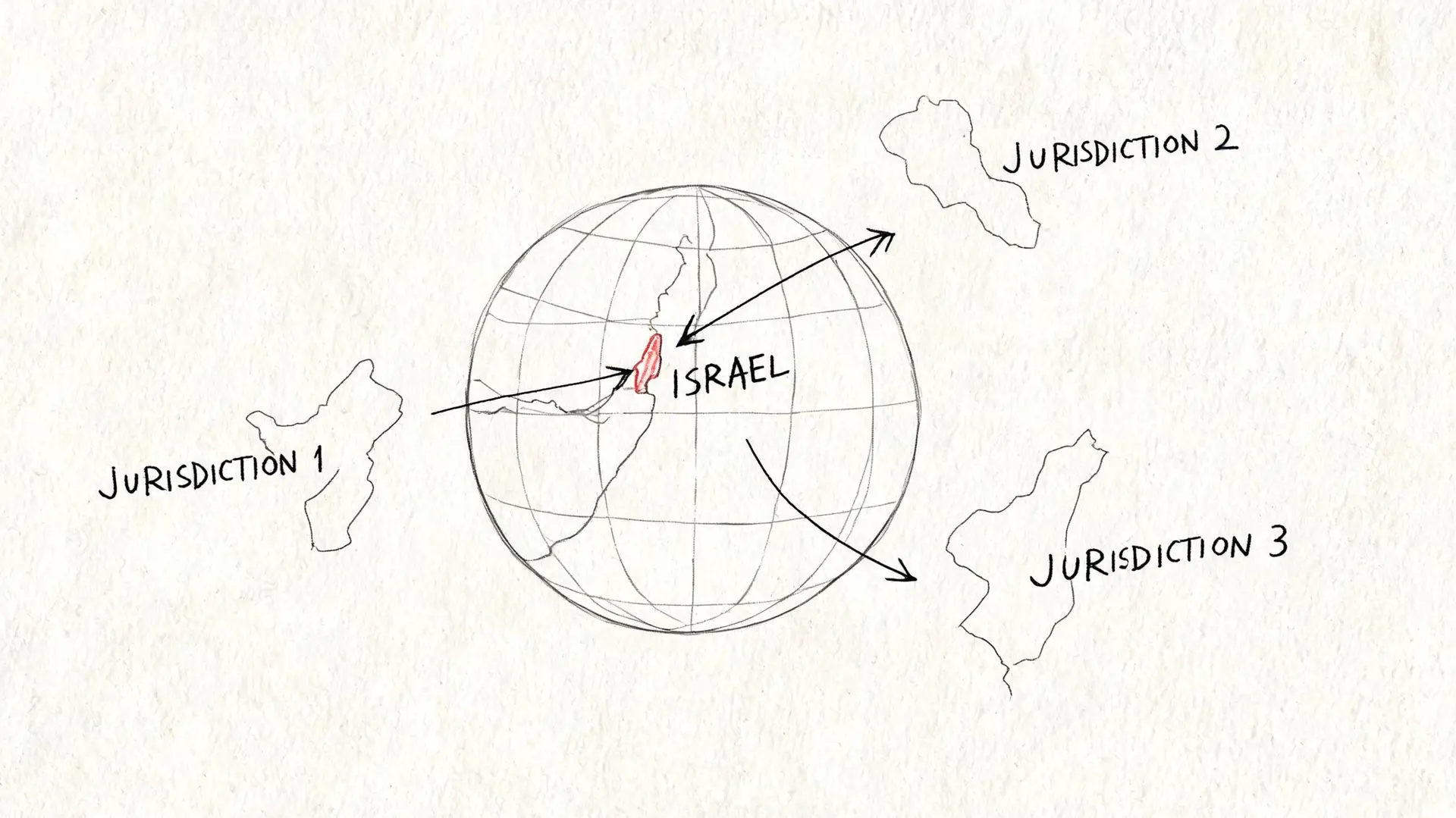
The first practical questions are straightforward. Where are the bank accounts, customers, IP rights, directors, and holding entities? Which country’s courts or tribunals can issue effective orders against them? Which instrument will be easier to recognize abroad, an Israeli judgment or an arbitral award?
Jurisdiction is not a boilerplate issue
Many cross-border partnership agreements use generic governing law and venue clauses copied from unrelated transactions. That approach fails when the dispute requires urgent asset protection or parallel steps in more than one country.
The differences between jurisdictions are not academic. In Texas, courts frequently grant temporary injunctions within days to stop harm after a breach, and a Houston construction case involved a swift injunction after a partner signed unauthorized contracts using the company’s license, as described in this discussion of Texas remedies for partner breach. That same source notes other remedies such as forced buyouts and receivership.
For an international company tied to Israel, the lesson is clear. The remedy map changes by jurisdiction. A clause that looks acceptable in a calm negotiation may become dangerous in a live dispute if it points the company to a forum with slower relief or weaker interim powers.
Enforcement planning should start with assets and counterparties
Cross-border enforcement usually turns on a few operational points:
- Asset location: Identify where money, shares, receivables, and core contracts sit.
- Entity map: Confirm whether the breaching partner acts personally, through an Israeli company, or through foreign affiliates.
- Award type: Decide whether a court judgment or arbitral award will be easier to enforce where recovery is likely.
- Interim measures: Consider whether urgent local relief is needed in a second jurisdiction while the main dispute proceeds.
For arbitration clauses, the New York Convention often becomes central because it supports recognition and enforcement of arbitral awards across many jurisdictions. For court judgments, enforceability depends more heavily on the law of the country where enforcement is sought.
Why international coordination changes the outcome
Cross-border disputes are lost when legal teams act in sequence instead of in concert. Israeli counsel may understand the merits, but enforcement counsel abroad may need a different record, different interim relief, or faster corporate intelligence.
An international network holds significant importance. Its coordination across jurisdictions allows the claimant to align notices, filing strategy, evidence preservation, and recognition steps before the opposing party reorganizes assets.
For companies reviewing structural risks before a dispute matures, the issues often overlap with international commercial litigation in Israel. The best time to solve an enforcement problem is before the wrong forum is chosen.
Proactive Strategies and Your Next Steps
At 8:30 a.m. in Tel Aviv, your local team learns that an Israeli partner has instructed a supplier, contacted a bank, or circulated a position to customers without approval. By noon, headquarters abroad wants answers, a commercial response, and a legal path that does not make enforcement harder in Israel or elsewhere. In that moment, remedies are only part of the job. Control is the job.

The strongest position is built before the dispute turns public. For non-Israeli companies, that means drafting the partnership arrangement for stress, not for optimism. If the agreement does not tell management who controls money, information, deadlock, exit, and forum selection under pressure, the company has left the hardest decisions to a crisis.
The preventive work is practical:
- Authority controls: Specify who can bind the business, for what amounts, and with which approvals.
- Information rights: Set reporting schedules, inspection rights, document access, and audit cooperation in terms that can be enforced.
- Conflict management: Regulate related-party transactions, competing interests, and use of business opportunities.
- Exit mechanics: Define buyout triggers, valuation process, payment timing, and what happens if one side obstructs the transfer.
- Dispute procedure: State the sequence for negotiation, mediation, arbitration, or court proceedings with enough precision to work under time pressure.
- Cross-border operating terms: Fix governing law, venue, language, notice method, signatory rules, and service arrangements with later enforcement in mind.
International businesses should also test whether the paper matches the operating reality in Israel. I have seen well-drafted agreements undermined by informal side understandings, local signatory practices, and bank mandates that were never brought into line with the contract. Those gaps are where expensive disputes begin.
When suspicion appears, the first response window is short. The aim is to secure the record, protect the business, and avoid tactical mistakes that strengthen the other side.
- Preserve records immediately: Emails, messaging apps, accounting exports, board materials, approvals, and access logs should be secured before narratives start shifting.
- Verify external authority: Confirm who still has signing rights with banks, suppliers, landlords, customers, and regulators.
- Match conduct to obligations: Tie each disputed act to a clause, fiduciary duty, corporate approval failure, or misuse of assets.
- Centralize communications: One internal team should manage messaging. Loose accusations and inconsistent explanations create evidentiary problems.
- Send formal notice with purpose: Demand disclosure, performance, suspension of disputed action, or a standstill, depending on the commercial objective.
- Keep more than one path open: Settlement discussions can proceed while pleadings, interim relief papers, or arbitration filings are prepared.
A disciplined record often decides the early stages of an Israeli partnership dispute.
Companies handling diverted funds, blocked transfers, or irregular account activity should also assess related pressure points such as commercial debt collection in Israel and bank account restrictions in Israel. Those issues often sit beside the core breach and can affect bargaining power, recovery, and timing.
Management teams should resist the instinct to treat every dispute as a pure legal contest. In cross-border matters, the better question is which action preserves options in two or more jurisdictions at once. A notice drafted for Israeli proceedings may later be read by an arbitral tribunal or an enforcement court abroad. An internal investigation run without privilege planning may solve one problem and create another. Strategy has to account for the full chain.
That same discipline appears in other professional settings, including the mindset shifts for starting a law firm. The useful point here is simple. Early structure shapes later outcomes.
Costly errors usually occur in the first days, when management acts before the facts, documents, and authority lines are organized. To assess the right breach of partnership agreement remedies in Israel, and to coordinate the legal and commercial response across borders, contact RNC Group now through the firm’s contact page.
This article provides general information only and does not constitute legal advice. Any response should be based on the specific agreement, the facts, the relevant jurisdiction, and the enforcement position.