
A disrupted operation doesn’t start with accounting. It starts with a legal question. Is the claim being prepared as a routine request for payment, or as the opening record in a commercial fight that may cross borders, experts, and forums in 2026?
That distinction matters for any multinational with activity in Israel. A business interruption loss can begin with a fire, a cyber event, a supplier failure, or a government restriction. Yet the dispute rarely stays operational for long. It turns into a contest over wording, causation, valuation, mitigation, disclosure, and timing.
For non-Israeli companies, the risk is sharper. Israeli operations often sit inside regional supply chains, shared service structures, franchise networks, licensing frameworks, and financing arrangements. One interruption can trigger insurance issues, contract defaults, banking pressure, and board scrutiny at the same time. In practice, business interruption claims should be managed as part of a broader complex commercial litigation strategy, not as an isolated insurance file.
Is Your Claim a Request or the First Move in a Fight
A large business interruption claim is rarely handled by the insurer as a clerical exercise. The insurer usually sees a significant exposure, identifies pressure points, and begins testing causation, scope, and quantum immediately. The insured should respond with the same discipline.

The market context supports that posture. Business interruption ranked the #2 global risk in the Allianz Risk Barometer 2025 and had remained in the top two for a decade according to Allianz Risk Barometer 2025 on business interruption. That consistency matters because it shows the issue isn’t peripheral. Boards already treat it as a durable enterprise exposure.
Why the passive approach fails
A reactive insured usually makes three early mistakes. It assumes the insurer will fill evidentiary gaps fairly. It lets operational staff control the factual narrative without legal discipline. It also treats the first submission as a draft rather than as a foundational statement that may later be tested by outside counsel and experts.
That approach sacrifices an advantage. Once a company sends inconsistent explanations, incomplete numbers, or unguarded internal emails, it becomes harder to restore credibility later. In cross-border matters, the adverse effects are magnified because different entities may describe the event differently across jurisdictions, languages, and reporting lines.
Practical rule: Assume the first notice, the first spreadsheet, and the first management email may later appear in a coverage dispute, a commercial arbitration, or a court file.
What a strategic posture looks like
A stronger position starts with control. The company should identify one decision-maker, one legal workstream, and one evidence protocol. Finance, operations, risk, and local management must work from a single chronology and a single theory of the loss.
This is especially important in Israel-facing disputes involving leases, franchise systems, or commercial collaborations. The insurance claim may overlap with upstream supplier breaches, landlord obligations, or service failures. Businesses that already operate through structured agreements often benefit from reviewing adjacent exposure in parallel, such as commercial contracts and cross-border risk allocation, instead of waiting for those issues to surface later.
A disciplined claim file does more than support recovery. It also shapes settlement dynamics. The company that controls facts, timing, and expert support often controls the range of realistic outcomes.
Decoding Policy Triggers and Latent Exclusions
Coverage disputes usually begin with a short phrase in the policy and end with a long argument over what that phrase means in practice. The central issue is often the trigger for coverage. In many policies, business interruption only activates after a covered cause of loss causes a suspension of operations tied to direct physical loss or damage.
That sounds simple until modern losses arrive. Cyber incidents can halt systems without obvious physical destruction. A supplier failure can shut an Israeli manufacturing line without damage at the insured premises. A government restriction can block access even when the building remains intact. Those events create the battleground.
The trigger isn’t the whole story
Neutral industry guidance notes that business interruption is usually bundled into property coverage and often tied to physical damage. At the same time, civil authority, contingent business interruption, and cyber-related extensions may change the analysis, as described in the NAIC overview of business interruption coverage and policy extensions. Many buyers still miss that distinction.
That gap drives avoidable disputes. Management teams often report the event in commercial language. The insurer evaluates it in policy language. Those aren’t the same thing. “Our site couldn’t operate” doesn’t answer whether the shutdown arose from a covered peril, an excluded peril, off-premises disruption, public authority action, or a combination of causes.
Boilerplate that becomes decisive
Several provisions deserve immediate review:
- Insuring clause language. Does the wording require direct physical loss or damage at the insured location, or does it extend beyond the site?
- Civil authority wording. Access restrictions matter, but so do proximity requirements, causation wording, and time limits.
- Contingent business interruption terms. Named suppliers, unnamed suppliers, ports, logistics hubs, and key customers can all alter scope.
- Cyber exclusions and carve-backs. A cyber event may sit inside a property policy exclusion, a standalone cyber policy, or both.
- Period of restoration language. The phrase looks procedural, but it often becomes a major valuation fight.
A useful starting point for executives who need a plain-language framework for interpreting insurance policy coverage is to separate the insuring grant, conditions, exclusions, endorsements, and definitions before discussing quantum. That sequence prevents an expensive error. Teams often build a detailed damages model before checking whether the trigger is satisfied.
The strongest early coverage analysis doesn’t ask only, “What happened?” It asks, “Which exact words in the policy convert that event into covered loss?”
Latent exclusions in Israeli commercial settings
Israeli operations add another layer. A tenant may suffer interruption after damage to a building controlled by a landlord. A franchisee may lose sales after a system failure outside its direct control. A distributor may be hit by border, transport, or access restrictions. Each scenario can sit uneasily between property loss, contractual risk allocation, and contingent interruption wording.
The legal task isn’t just reading the policy. It’s mapping the operational event to every relevant contract and then identifying where the insurer may try to reframe the loss as a non-covered commercial problem.
Preserving Your Claim in the First 48 Hours
The first two days often decide whether the claim will later look coherent or improvised. Evidence created in that period shapes causation, valuation, and credibility. It also affects related disputes with counterparties, lenders, and regulators.
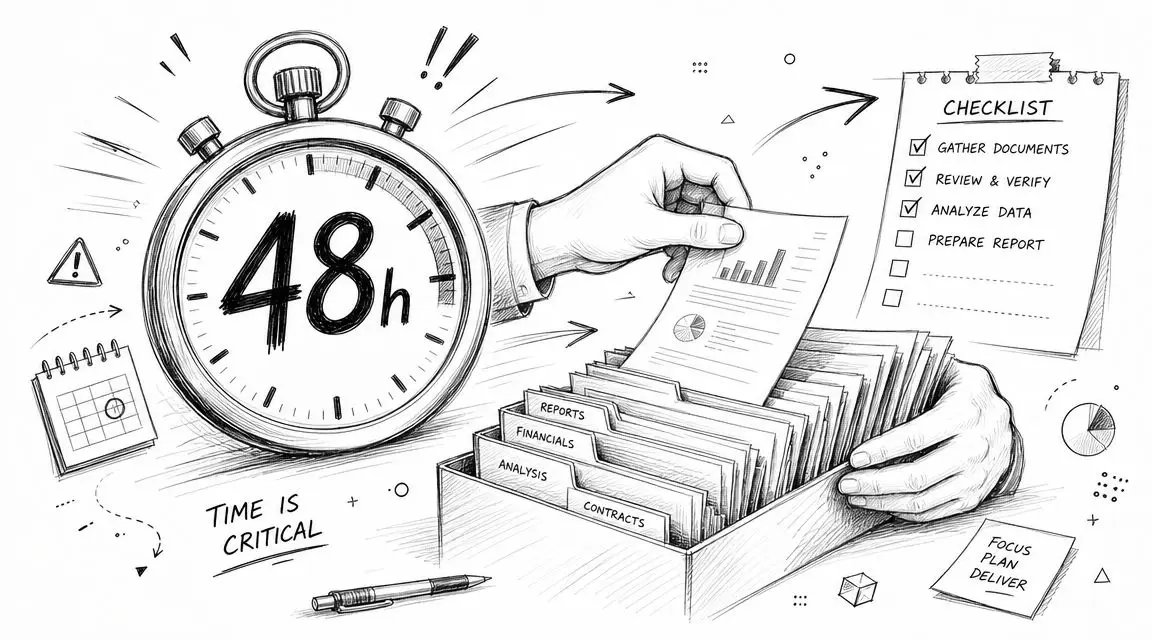
Guidance on the mechanics is clear. Causation analysis sits at the center of a business interruption claim, and coverage often extends to fixed expenses such as rent and payroll only when the causal link is properly documented from the moment of the event, as explained in this discussion of causation in business interruption claims. That means the first 48 hours aren’t administrative. They’re evidentiary.
Immediate actions that protect the file
The company should act on several tracks at once.
-
Issue formal notice
Send notice under every potentially relevant policy. Don’t summarize the cause loosely. State known facts, reserve rights, and avoid speculation. -
Freeze the narrative
Appoint a single internal coordinator. Require that all outward statements to insurers, brokers, landlords, suppliers, and customers route through a controlled process. -
Build a time-stamped chronology
Record when the event occurred, when operations slowed, when they stopped, and what prevented recovery. Save emails, alerts, system logs, production records, access restrictions, photographs, and board updates. -
Create dedicated accounting codes
Segregate extra expense, mitigation spending, temporary relocation costs, freight changes, payroll continuation, and professional fees from ordinary operating entries. -
Preserve digital and physical evidence
Don’t allow clean-up, system restoration, or vendor intervention to erase evidence without capture and logging first.
Communications discipline matters
Informal language creates formal problems. A well-meaning employee who writes “sales were already soft” or “we probably could have reopened earlier” may hand the insurer a future causation argument. The same risk appears in multinational groups when country managers use different terms for the same event.
A company under financial stress should also monitor collateral consequences. Interruption can disrupt receivables, liquidity, and covenant compliance. In Israel, those pressures can spill into payment failures and banking friction. Businesses facing operational shock should review related exposure, including bank account restrictions and returned checks in Israel, before a claims delay creates a second crisis.
Record facts, not theories. Teams can refine theories later. They can’t undo bad language once it enters the file.
What doesn’t work
Three habits regularly weaken the claim. First, collecting documents without indexing them. Second, letting each business unit track costs differently. Third, treating mitigation expenses as operational noise rather than as evidence of reasonable response.
The insurer doesn’t need chaos to deny a claim. It only needs enough inconsistency to question whether the shutdown flowed from a covered event and whether the losses were measured on a reliable basis.
Mastering Claim Valuation and Evidentiary Proof
Valuation is where many business interruption claims become unstable. The policyholder must prove a counterfactual. What would the business have earned but for the covered event, and which continuing expenses or extra expenses fall within the policy wording? That’s a forensic exercise, not a bookkeeping task.
That challenge becomes acute when the business was already volatile. Guidance on disputed claims notes that quantification is especially difficult for businesses that were unstable, seasonal, or partially remote, and that of 201,285 coronavirus-related business interruption claims in the United States, 164,178 were closed without payment, 34,106 remained open, and only 3,001 were paid, according to analysis on navigating a business interruption insurance claim. The lesson isn’t limited to pandemic claims. Courts and insurers scrutinize the but-for baseline hard when external market conditions also moved.
The baseline is where disputes begin
Insurers attack the baseline from multiple directions. They may say the business was already declining. They may argue that demand weakened for broader economic reasons. They may challenge whether post-event recovery was delayed by uninsured causes rather than the insured peril.
That means the insured should assemble evidence in layers:
- Historical performance with monthly and, where useful, weekly patterns
- Pre-loss forecasts that were prepared before the event
- Operational records such as production schedules, inventory, staffing, and customer orders
- Mitigation evidence showing what management did to reduce loss
- External context used carefully and only to explain, not to speculate
For many disputes, external forensic support becomes indispensable. Businesses that need a practical view of how specialists approach the records can review NW Claims Management’s forensic accounting as an example of the type of analysis often required in contested loss measurement.
Comparing valuation methods
| Valuation Method | Calculation Basis | Best For | Common Dispute Point |
|---|---|---|---|
| Gross earnings approach | Revenue less specified non-continuing costs under policy wording | Businesses with stable revenue streams and clearer variable cost patterns | Which costs truly ceased during the interruption |
| Net profit plus continuing expenses | Lost net income plus fixed expenses that continued | Service businesses, office-based operations, and claims centered on overhead continuity | Whether claimed expenses were truly continuing and necessary |
| Production-based model | Output loss tied to units, capacity, and constrained throughput | Manufacturing and processing businesses | Whether inventory, overtime, or alternate sourcing reduced the real loss |
| Site-by-site contribution model | Contribution of each affected entity, location, or channel | Multinationals with intercompany dependencies | Transfer pricing, internal allocations, and double counting |
Proof needs structure, not volume
A weak claim often includes many documents and little logic. A strong claim shows how each document supports one proposition. For example, a purchase order log supports expected sales. A payroll record supports continuing expense. A relocation invoice supports mitigation. A board memo may support why the recovery period extended.
Litigation test: If an opposing expert isolated one schedule from the claim pack, could the company still explain exactly what that schedule proves and why it matches the policy wording?
For Israeli or Israel-connected groups, valuation can also collide with the corporate structure. One entity may hold the policy. Another may employ staff. A third may invoice customers. Unless the loss model addresses those relationships cleanly, the insurer may argue that the claimed loss belongs somewhere else.
This is one reason larger files often require coordination with the underlying contractual architecture. Revenue pathways, management services, licensing arrangements, and intercompany cost allocations can all affect proof. Where the interruption also exposes partner or counterparty misconduct, the dispute may need to be framed alongside complex commercial litigation in Israel rather than as a narrow insurance disagreement.
Navigating the Israeli and Cross-Border Dispute Landscape
A business interruption event linked to Israel often spans more than one legal system. The insured may be incorporated elsewhere. The affected site may be in Israel. The supplier may sit in Europe or Asia. The policy may contain foreign governing law, arbitration wording, or jurisdiction clauses. Meanwhile, the operational evidence may sit across several languages and entities.
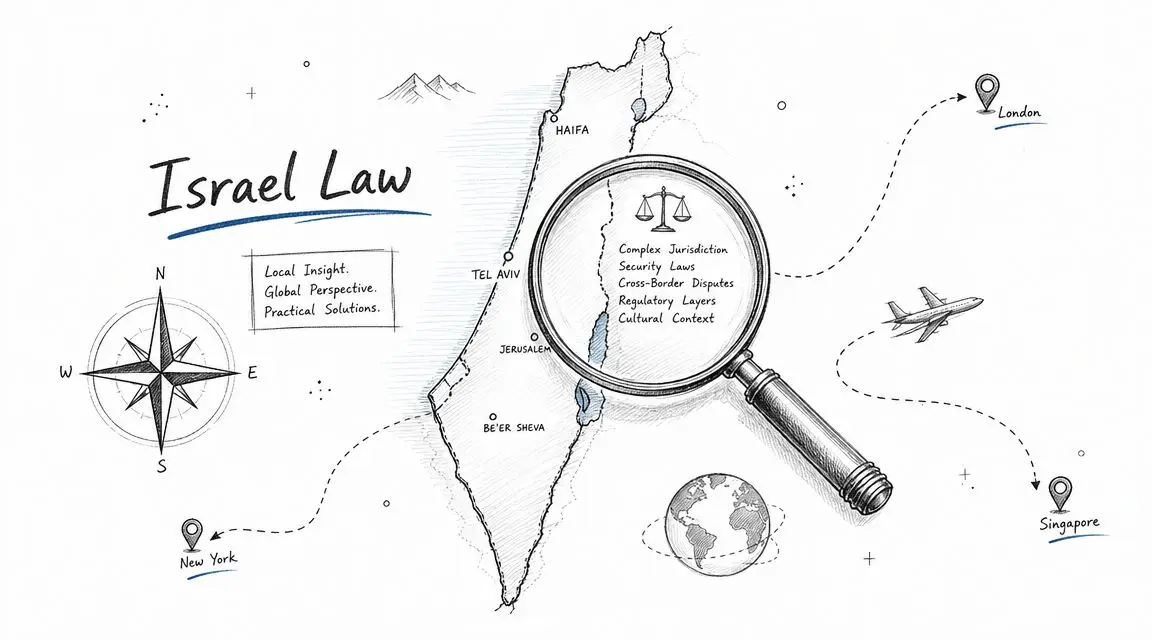
The commercial backdrop is also unforgiving. Worldwide natural disasters caused an estimated $320 billion in economic losses in 2024, of which only $140 billion was insured, leaving roughly 56% uninsured, according to reporting on 2025 claims trends and natural-disaster losses. For cross-border businesses, that protection gap often spills into disputes over contingent loss, recovery timing, and who bears the uninsured segment.
Jurisdiction and governing law shape leverage
These files can turn on threshold procedural choices. Which court or tribunal hears the dispute? Which law governs the policy? Can the insured pursue related claims against suppliers, landlords, or service providers in the same strategy, or must those claims proceed separately?
A multinational should answer those questions early because they affect evidence collection and settlement posture. Some forums may handle expert evidence differently. Some systems may treat policy construction, causation, or disclosure obligations in ways that materially alter bargaining power.
Israeli realities that foreign clients often underestimate
Foreign clients sometimes assume the insurance claim can be managed centrally while local issues wait. That’s risky. Israeli operations can involve local leases, distribution contracts, labor exposure, tax reporting, and Hebrew-language records that become relevant to causation and loss measurement.
Several practical issues deserve immediate coordination:
- Document language and translation. The legal effect of a technical Hebrew record may matter, especially where timing or authority is disputed.
- Entity mapping. The insured entity, operating entity, and contracting entity may not align neatly.
- Parallel pressure points. A delayed claim can trigger notices of default, payment disputes, or urgent correspondence that must be handled with precision.
- Enforcement planning. A good merits position means less if the final award or judgment creates collection friction across jurisdictions.
For that reason, the legal response often sits inside a broader crisis protocol. Companies dealing with disrupted operations, counterparties, and reputational pressure should coordinate the insurance file with effective crisis management in Israeli commercial disputes, not after the fact.
Cross-border claims are won by orchestration. Local procedure, contract architecture, and evidentiary discipline need to move together.
Strategic Pitfalls That Weaken Your Position
Many companies lose their advantage long before anyone rejects the claim formally. They weaken their own file through preventable tactical errors. The problem usually isn’t a single dramatic mistake. It’s a pattern of undisciplined decisions that gives the insurer room to narrow, delay, or reframe the claim.
The evidentiary standard is demanding. A strong business interruption claim depends on a time-stamped loss narrative and dedicated accounting codes because insurers typically require historical sales data, pre-loss forecasts, profit-and-loss statements, production records, inventory reports, and proof of mitigation expenses, as outlined in guidance on preparing and documenting a business interruption claim. Without that structure, even a genuine loss becomes vulnerable.
Five errors that repeatedly damage strong claims
-
Treating adjuster communications as informal
Adjuster calls feel operational. They aren’t. Each answer can shape the later coverage theory. -
Sending disorganized data dumps
Volume doesn’t equal proof. Unindexed spreadsheets and unlabeled attachments invite selective interpretation. -
Accepting internal inconsistency
If finance, operations, and local management describe the interruption differently, the insurer will exploit the mismatch. -
Separating legal and accounting workstreams
A claim model built without legal framing can miss policy definitions, exclusions, and causation limits. -
Taking early money without strategic review
An early payment can look attractive during cash stress. It may also narrow rights, distort the valuation baseline, or weaken related commercial claims.
What disciplined teams do differently
Strong teams prepare as if the insurer’s expert will test every assumption. They keep a controlled chronology. They preserve drafts. They explain variances. They reconcile accounting records to operational facts.
They also invest in the right experts at the right time. In a serious file, forensic accountants, coverage counsel, technical consultants, and local commercial litigators shouldn’t work in sequence. They should work together from the start.
A further error appears in multilingual and cross-border matters. Companies often underestimate the legal significance of translation quality in notices, position papers, and witness-facing documents. Where precision matters, especially in disputes tied to Israeli counterparties or authorities, it may be necessary to manage the record through multilingual legal translation and commercial correspondence support.
The broader point is simple. A business interruption claim becomes weaker when the company behaves as if proof can be assembled later. By then, key records may be incomplete, narratives may have diverged, and their negotiating advantage may already be gone.
Your Strategic Checklist for Claim Success
Is your business interruption claim being managed as an administrative filing, or as the opening position in a contested recovery process? In serious Israeli and cross-border matters, that choice shapes the result early. By the time the insurer, its adjuster, local counterparties, lenders, and regulators begin acting on partial facts, the company is already either controlling the record or reacting to someone else’s version of events.
Senior management needs a checklist that works under pressure and preserves room to maneuver if the claim turns into litigation, arbitration, or parallel commercial proceedings.
The core checklist
-
Appoint one decision-making team immediately
Combine legal, finance, risk, operations, and local management in a single controlled process with clear authority and reporting lines. -
Issue notice under every policy that may respond
Keep the notice accurate and rights-preserving. Do not overstate the loss before the facts and policy wording have been tested. -
Fix the chronology early
Record the disruption, shutdown points, mitigation steps, communications, and recovery constraints with dates, time stamps, and source documents. -
Open separate accounting treatment from day one
Track interruption losses, extra expense, and mitigation costs separately so later valuation is built on clean records rather than reconstruction. -
Preserve evidence before operations overwrite it
Secure emails, logs, images, access data, internal reports, vendor communications, and board or management materials before routine restoration or cleanup removes them. -
Read the policy against the facts before building the claim model
Coverage strategy depends on trigger language, exclusions, endorsements, waiting periods, sublimits, indemnity periods, and causation wording. -
Prepare a valuation that can withstand hostile review
Every assumption should tie back to accounting records, operational data, and the policy language being invoked. -
Pressure-test the file from the insurer’s side
Identify the likely attacks on causation, period of loss, mitigation, pre-loss performance, and alternative causes before those points harden into the insurer’s formal position. -
Coordinate Israeli issues with foreign exposure in one plan
The insurance claim may intersect with supply contracts, financing documents, shareholder pressure, local correspondence, and enforcement strategy. Those issues should be handled together, not in separate silos. -
Treat settlement timing as a strategic decision
Early money can help liquidity. It can also narrow rights, anchor valuation too low, or damage related claims against other parties.
A disciplined checklist does more than improve claim administration. It protects litigation position, keeps cross-border options open, and reduces the risk of avoidable admissions in the Israeli record.
For specialized guidance on Israeli and cross-border commercial disputes, contact RNC Group now.
Disclaimer: The articles and information provided in this publication are for informational and educational purposes only and do not constitute legal advice. Reading this article does not create an attorney-client relationship. Readers should consult a qualified attorney for advice on any specific legal matter.