
A foreign CEO closes a Teams call thinking the dispute is over, then a new demand letter lands three weeks later. That sequence is common because a business settlement agreement only ends the fight when the paper is signed, the release is precise, and the enforcement path is real. In 2026, the real test is not whether people sounded aligned on video. The test is whether the settlement survives pressure, default, and cross-border execution.
In practice, many deals fail at the first step because the parties treat settlement as a mood, not a contract. That is a mistake in any market, and it is worse when one side sits in Israel and the other sits abroad. A loose agreement may buy calm for a moment, but it rarely buys finality.
For businesses that need a real closure model, a useful market reference point is a backlink marketplace. The point is not publicity. The point is that a settlement must be built to survive scrutiny, not to sound agreeable.
Why a Verbal Handshake Is Not a Settlement
A handshake settles tempers. A signed instrument settles claims. That difference matters because the legal effect usually starts after execution, not after the conversation. Without a written agreement, each side keeps room to reinterpret what was said.
Practical rule: If the concession is important, put it in writing before anyone celebrates.
That rule becomes critical across borders. A foreign executive may think a Teams call creates closure, while the Israeli counterparty expects a formal draft, a release, and a payment date. Those are not the same event. They are not even close.
The settlement agreement is the document that converts a temporary accommodation into enforceable closure. Under UK employment practice, for example, the agreement must be in writing, must identify the complaints or proceedings being resolved, and must confirm independent legal advice. The commercial lesson is broader, because informal emails and verbal consensus rarely carry the same finality. The safer path is always the documented one, especially where one party may later claim a different understanding.
A written settlement also protects against strategic drift. Parties get tired, commercial pressure rises, and memories get selective. The document stops that drift by fixing the exchange, the release, and the end point.
What a Business Settlement Agreement Actually Does
A business settlement agreement works like a bilateral trade. One side gives value, and the other side gives closure. The value can be money, a performance commitment, an operational concession, or a governance change. The closure comes through a release and discharge clause that extinguishes defined claims.
The three elements that make it work
First, the release must be precise. Expert drafting guidance stresses that the scope of waived claims drives whether old disputes stay dead or come back to life. A vague release leaves room for later argument, and later argument means renewed exposure.
Second, the exchange of value must be documented. That usually means a payment amount, a payment method, and a due date. It can also mean a structured act, such as withdrawal of proceedings or a board-related commitment in a governance dispute. The agreement must show what each side gives and when.
Third, the signer must have valid authority. A settlement signed by the wrong person can fail even if the commercial terms looked settled. In a corporate context, that problem appears when a negotiator assumes authority that the board never granted.
A practical template usually adds confidentiality, non-admission, warranties and representations, costs, governing law and jurisdiction, and execution. Those clauses are not decoration. They turn an idea into a contract that can be enforced and defended.
The same structure appears in commercial, employment, and shareholder contexts. The settlement is not a moral apology. It is a transactional closing. If the release is narrow, the closure is narrow. If the authority is uncertain, the entire deal becomes fragile.
Essential Clauses and the Drafting Checklist
The first drafting mistake is usually the easiest to spot. The payment clause says too little. It may mention a sum, but leave the method, currency, tax treatment, or due date unclear. That is how a settlement turns into a payment dispute.
Clause by clause, the failure mode it prevents
- Settlement amount and payment mechanics, these prevent arguments about what was owed, how it was paid, and when it was late.
- Release and discharge, this prevents the same claim from being refiled under a new theory.
- Warranties and representations, these protect against unauthorized signature, hidden insolvency issues, or undisclosed restraints.
- Confidentiality, this protects business reputation, but it must keep carve-outs for truthful testimony, tax reporting, counsel communications, and enforcement.
- Non-admission of liability, this stops the payment from being spun as an admission.
- Indemnities and costs, these allocate who pays if the settlement creates a tax or procedural issue.
- Governing law and jurisdiction, these identify the legal system that will interpret the text and the forum that will hear a dispute.
- Execution formalities, these prove who signed, when, and with what authority.
A well-drafted release does more than say “all claims.” It identifies the exact disputes being waived and the parties bound by the waiver. That matters because a loose release can leave residual claims alive, especially where affiliates, directors, or related entities were part of the underlying problem.
Cross-border settlements need another layer. Authority and confidentiality carve-outs matter more when the parties operate in different regulatory environments. A clause that looks elegant in one country may block lawful disclosure in another.
A useful drafting habit is to treat every clause as a failure-proofing device. If a clause does not prevent a real breakdown, it probably needs work. That mindset keeps the agreement focused on closure rather than rhetoric.
Drafting insight: The safest settlement is the one that already answers the dispute the day after signature.
Settlement Types and How They Differ in Practice
Settlement architecture changes with the stage of the dispute. A pre-litigation deal, an in-litigation deal, and a governance-style deal solve different problems. They also carry different pressure points, so the same template rarely fits all three.
| Type | When Used | Core Structure | Primary Risk |
|---|---|---|---|
| Pre-litigation | After a demand letter, before filing | Short release, payment or corrective action, confidentiality | A weak draft leaves the dispute open |
| In-litigation | After proceedings begin | Release, dismissal terms, timing for payment or withdrawal, forum language | Court or tribunal issues delay closure |
| Governance-style | In shareholder or control contests | Board appointments, standstill obligations, limits on further action | The deal becomes an operating regime, not just a release |
Pre-litigation settlements move faster because both sides still control the pace. They often stay lean, confidential, and highly practical. That is useful when the client wants to stop a dispute before it becomes public or expensive.
In-litigation settlements carry more procedural weight. A court or tribunal may still need to approve dismissal mechanics, and the agreement often needs careful payment timing. In those cases, the clause order matters because procedure can outlive negotiation.
Governance-style settlements are different again. In the shareholder-activism market, settlement agreements have become a measurable governance tool, and in 2022, only 25% of completed activist campaigns ended in settlement agreements as of August 31, compared with 29% in 2021 and 32% in 2020. That history shows these agreements can shape board appointments, standstill obligations, and limits on further activism. The deal is no longer just about ending a claim. It is about managing future control pressure.
For a reader who drafts across sectors, a useful outside reference point is the structure used in an essential ghostwriting contract. The commercial lesson is the same. A settlement needs a clear allocation of rights, duties, and future restrictions, or the document becomes unstable.
Phased Negotiation and Escalation Strategy
Strong settlements rarely start with a draft. They start with analysis. The first phase is mapping the client, the opponent, and the cross-border environment. That means corporate structure, jurisdictional exposure, contract language, prior conduct, and financial position.
Phase one through four
Phase one, analysis. Identify who really controls the dispute. In cross-border work, the signatory is not always the decision-maker, and that gap causes delays. Language also matters because the draft must track the contract ecosystem that already exists.
Phase two, calibrated demand. The demand should match the critical point. A weak demand creates noise. A demand tied to real exposure forces a response.
Phase three, negotiation. The agreement’s structure should reflect the power dynamic. A strong non-admission clause, for example, usually survives only when the opposing side gets something meaningful in return. The same is true for confidentiality carve-outs and payment security.
Phase four, enforcement and recurrence prevention. Settlement should end the dispute and reduce the chance of a repeat event. That means planning for default, breach, and future contact before the signature lands.
The hard lesson is simple. Negotiation strategy and clause drafting are one workstream. If the demand phase is sloppy, the draft will be weak. If the advantage is real, the contract can be tighter. The best settlements are designed before the first draft is exchanged, because the first draft only reflects the pressure that already exists.
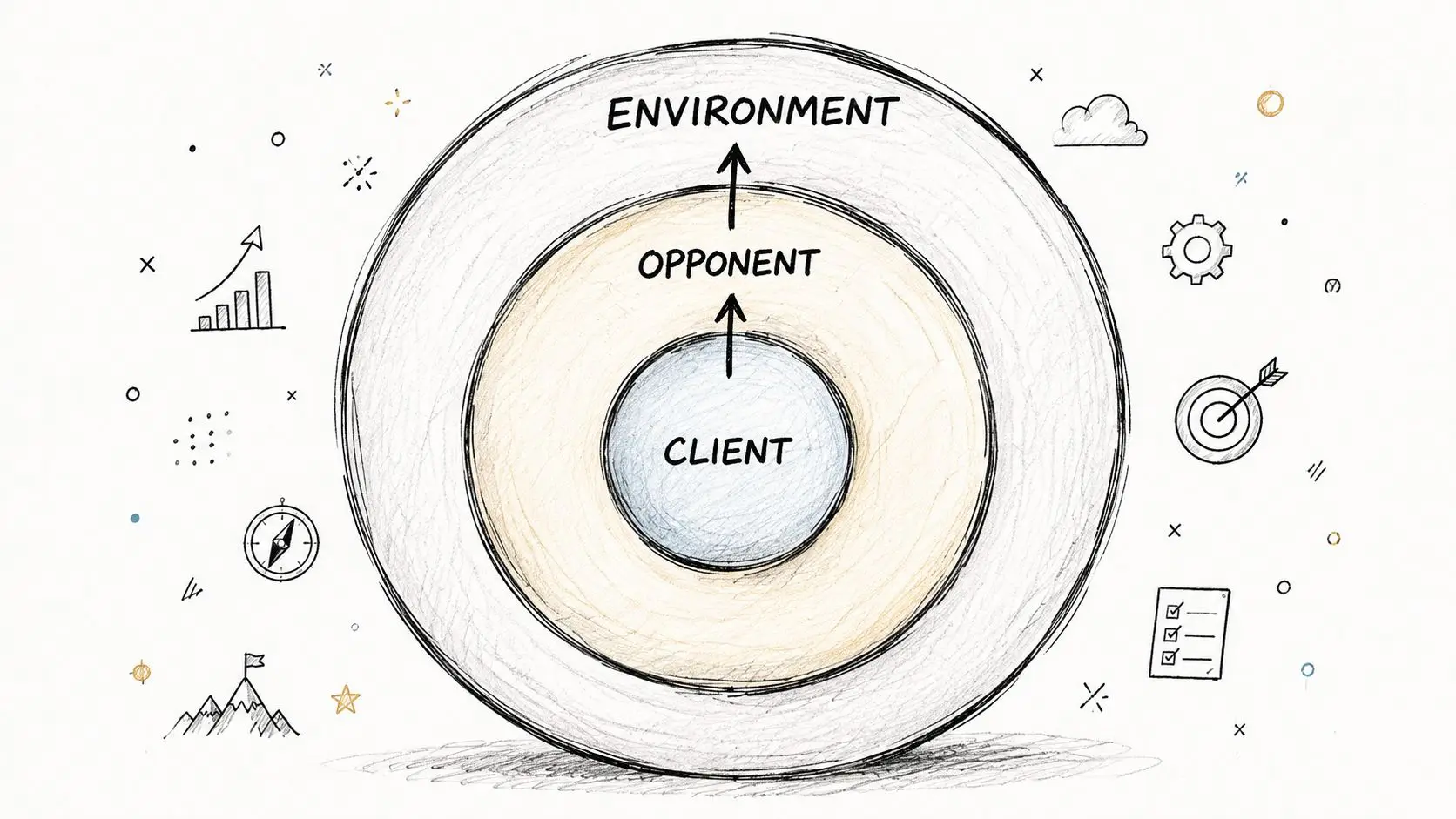
A practical settlement plan therefore starts with facts, not formulas. The side that understands the opponent’s structure usually negotiates the better closure. The side that guesses usually ends up redrafting under pressure.
Enforcement, Choice of Law, and Cross-Border Execution
A settlement can look complete and still fail at enforcement. That risk is highest when the parties choose a governing law without thinking through the forum that must enforce it. Choice of law answers which legal rules interpret the contract. Choice of jurisdiction answers where a dispute gets heard.
Those are different decisions. A clause can give one country’s law control over interpretation, while sending disputes to another forum for enforcement. That works only if the enforcement path is practical. If the chosen forum cannot act on local assets, the paper victory may stall.
The enforcement questions that matter first
- Will the forum recognize the settlement mechanism?
- Can the forum reach assets where they sit?
- Does the local court need a recognized judgment or arbitral award first?
- Does the contract identify the governing law clearly enough to avoid ambiguity?
In Israel, execution against local assets often depends on a recognized Israeli judgment or arbitral award. That matters because bank account restrictions and similar execution steps rarely follow from wishful drafting. They follow from recognized legal process. If a foreign settlement is not engineered for that path, the creditor may hold a valid claim and still struggle to collect.
Cross-border settlements also need authority and confidentiality care. A signatory must have clear power to bind the entity, and confidentiality must allow truthful testimony, tax reporting, regulator disclosure, legal-counsel communications, and enforcement actions. Those carve-outs prevent the agreement from collapsing under legal duty.
The safest sequence is to design enforcement before signature. That means choosing the law, the forum, and the collection route together. Anything else leaves the client with a settlement that looks final but still needs another fight to become real.
Common Pitfalls and What Actually Causes Settlements to Fail
Most settlement failures begin with one of four defects. The first is a vague release. If the release does not identify the disputes and claims being waived, the opponent may later frame a “new” claim around the same facts.
The second is missing or contested authority. A negotiator may push the deal over the line, but if that person lacked authority, the signing can unravel. Corporate counterparties should always confirm who can bind the entity, and they should do it before the final redline.
The third is overbroad confidentiality. A confidentiality clause that blocks lawful disclosure can become self-defeating. It may also create friction with regulators, tax reporting, or truthful testimony obligations. That kind of clause often causes trouble later, not because secrecy is bad, but because secrecy was drafted without carve-outs.
The fourth is tax-blind payment language. If the settlement does not address withholding, reporting, and payment allocation, the tax issue becomes a new fight. A payment that looks clean in negotiation can become messy in implementation.
Common failure pattern: The parties sign first, then discover they never agreed on the parts that matter most.
A fifth problem appears in cross-border work. The governing-law clause may look polished, but the enforcement route may be empty. If the winning party cannot translate the contract into local execution, the settlement becomes a delay device rather than a closure device.
The practical answer is to audit the document against real failure modes, not abstract drafting ideals. Ask where the claim could survive, where the payment could stall, and where the authority could be attacked. If any of those answers are unclear, the draft is not ready.
Decision Checklist and How to Move Forward
A useful settlement checklist is short, but it has to be strict. Confirm authority first. Then lock the release scope, the payment mechanics, the confidentiality carve-outs, and the governing law and enforcement path. Finally, make sure the execution layer can hold up if the other side hesitates.
Decision rule: If the settlement cannot be enforced cleanly, it is not finished.
That sequence matters because a settlement is not a single act. It is a phased process that starts with analysis, moves through demand and negotiation, and ends with enforcement planning. The parties that respect that sequence usually avoid expensive re-litigation and avoid the false comfort of a signed but fragile deal.
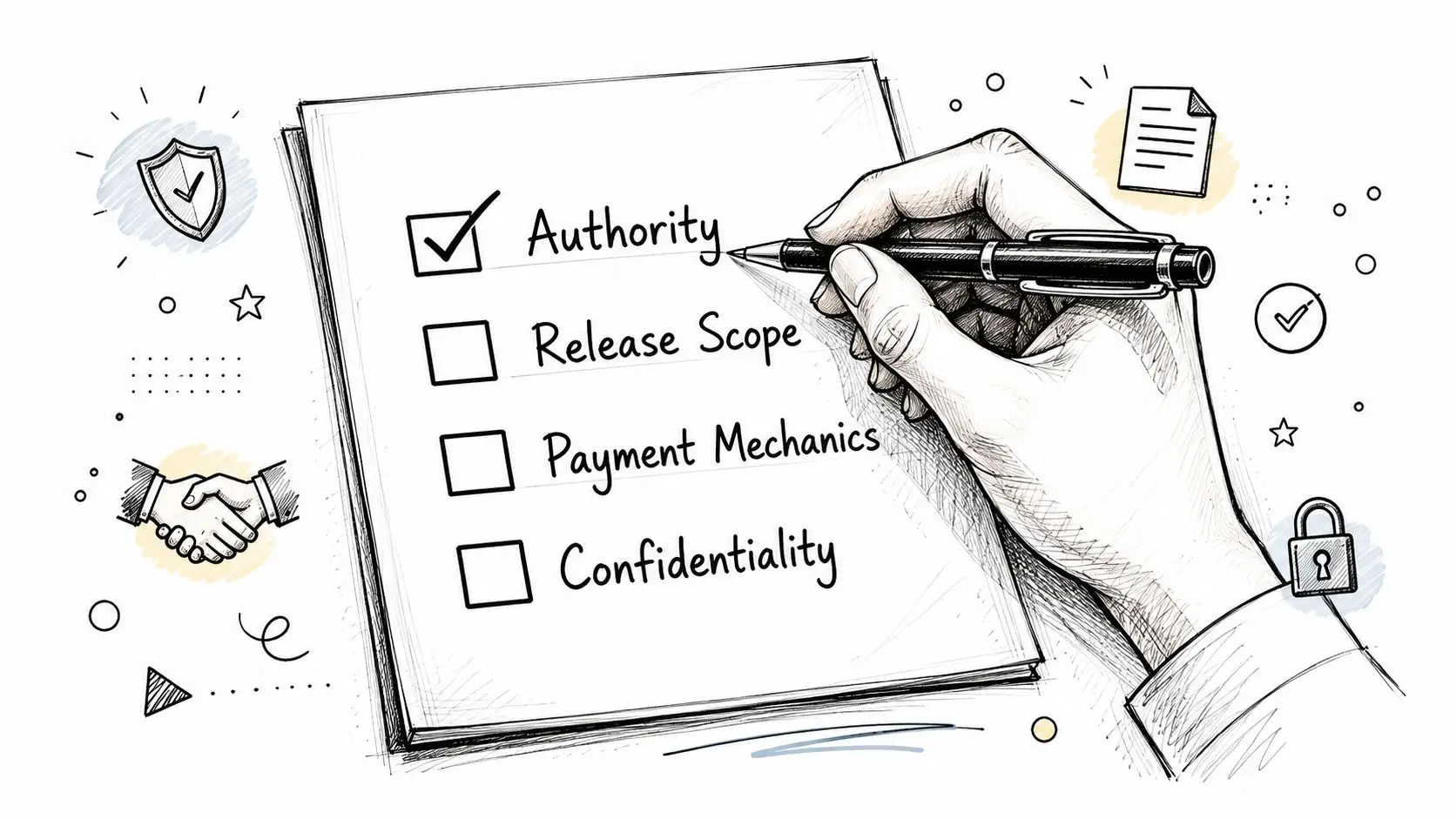
Businesses should treat the final draft as a control document, not a courtesy letter. The recommended strategic path is to review the settlement as if the other side will test the weak points on day one. That is usually what happens.
Avoid costly mistakes by speaking with counsel that can run analysis, negotiation, and enforcement as one coordinated process. Visit RNC Group to start that conversation with a team that handles cross-border commercial disputes, structured settlements, and execution risk with the discipline these matters demand.
This article provides general information only and does not constitute legal advice. Settlement outcomes depend on the facts, documents, jurisdiction, and enforcement posture of each matter, so parties should obtain advice suited to their specific situation before signing or relying on any draft.
RNC Group designs and negotiates business settlement agreements for Israeli and foreign companies that need finality, not another round of conflict. The firm’s cross-border litigation practice aligns release language, payment mechanics, and enforcement planning so the settlement can hold under pressure. For a practical assessment of your dispute and the fastest path to closure, contact RNC Group.