

In Israel, a combination deal, or Iskat Kombinatzia, is a sophisticated real estate transaction. It offers a powerful alternative to a conventional cash sale for landowners. The structure is unique because instead of selling land for a one-time payment, the landowner transfers the property to a developer. In return, the owner receives a predetermined number of finished units within the new building.
It represents a strategic pivot from a simple liquidation of an asset to a long-term investment. This transaction allows landowners to transform a passive plot of land into a portfolio of active, high-value, and potentially income-generating assets.
Understanding the Israeli Combination Deal
At its core, a combination deal is a strategic swap. You contribute your land as an equity stake in a new development. Thus, you acquire a share of the final, appreciated project. In addition, you transition from being a mere seller to a de facto partner with the developer. This positions you to capitalize directly on the value created through construction and market appreciation.
This guide serves as a strategic framework for corporate entities and business clients navigating one of the most effective, yet complex, real estate transactions in the Israeli market.
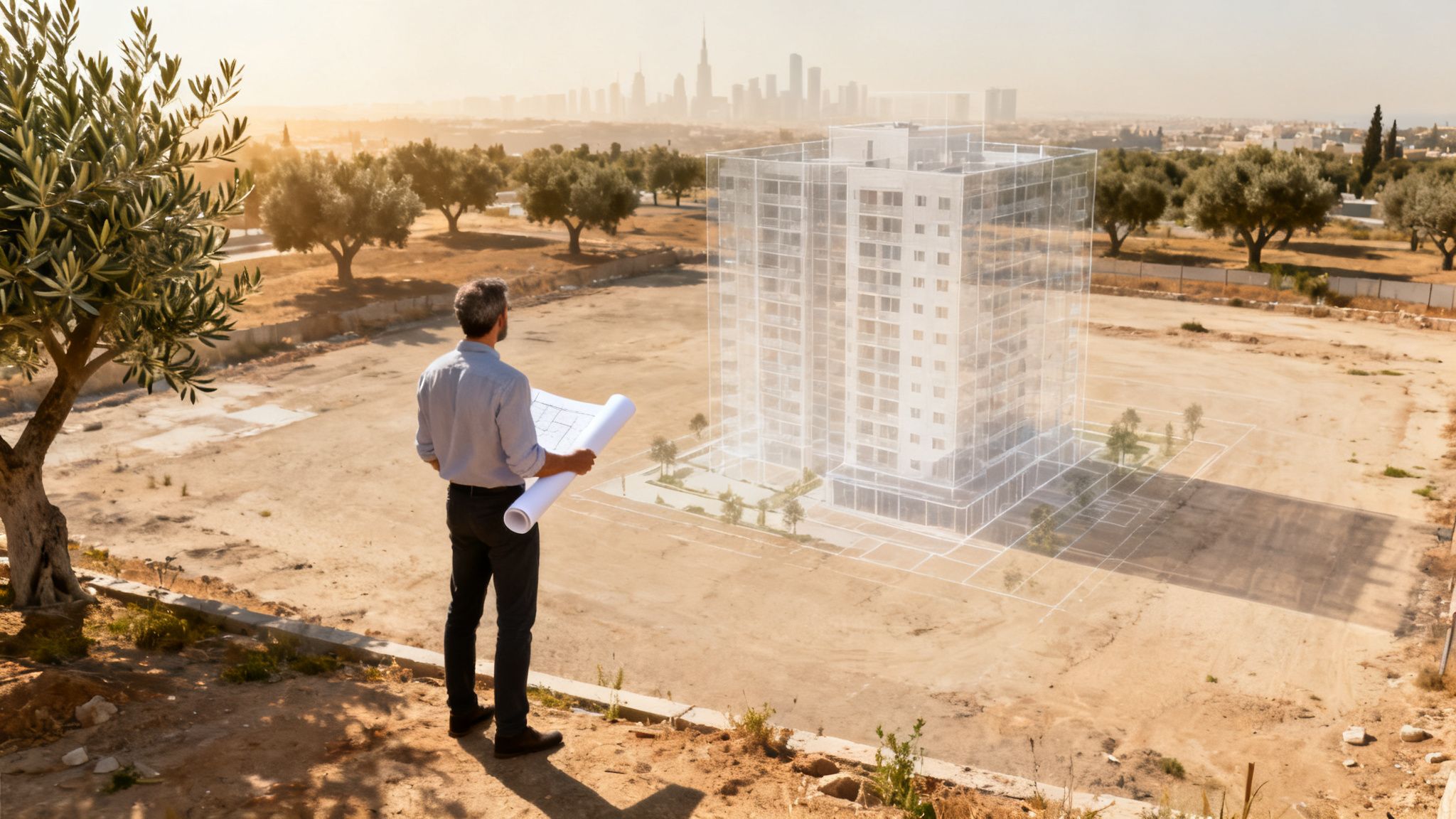
While the potential upside can significantly exceed that of a straight sale, the structure introduces layers of legal and financial complexity. Therefore, these layers demand expert legal counsel. A successful Iskat Kombinatzia is built upon meticulous planning, strategic foresight, and ironclad legal protections designed to safeguard the landowner’s interests.
The Core Components of the Deal
Every combination deal is fundamentally defined by three critical elements. A thorough command of these areas is non-negotiable for any landowner seeking to protect and maximize their investment:
- Valuation and Exchange: The transaction commences with a precise, independent appraisal of the land to establish its market value relative to the developer’s proposed project. This calculation is the basis for determining the percentage of the finished building the landowner will receive. Consequently, the accuracy of this valuation underpins the entire financial viability of the deal.
- Tax Implications: These transactions carry unique and significant tax consequences. The most prominent is the Value Added Tax (VAT) levied on the construction services. From the perspective of the tax authority, the landowner is “purchasing” the construction of their future units from the developer. Therefore, structuring the agreement for optimal tax efficiency from the outset is absolutely critical.
- Security and Bank Guarantees: This is the paramount consideration for the landowner. Securing an unconditional, irrevocable bank guarantee serves as an essential financial shield. This instrument protects the landowner against the most substantial risk in the transaction: developer insolvency, default, or failure to complete the project.
A combination deal is not a sale; it is a long-term strategic alliance with a developer. Success necessitates a shift in mindset from seller to project partner, where every contractual clause is engineered to safeguard future assets.
Ultimately, this structure enables landowners to defer the immediate and often substantial tax liability associated with a cash sale. Instead, they participate directly in the value creation that development brings. In the sections that follow, we will delve into the strategies for managing risk and maximizing rewards. This approach transforms your property into a true legacy asset.
How a Combination Deal Swaps Land for Built Assets
An Israeli combination deal, or Iskat Kombinatzia, facilitates the transformation of a static land plot into an active equity stake in its future development. In this structure, it is a sophisticated exchange. Instead of cash, you receive a portion of the final, constructed project.
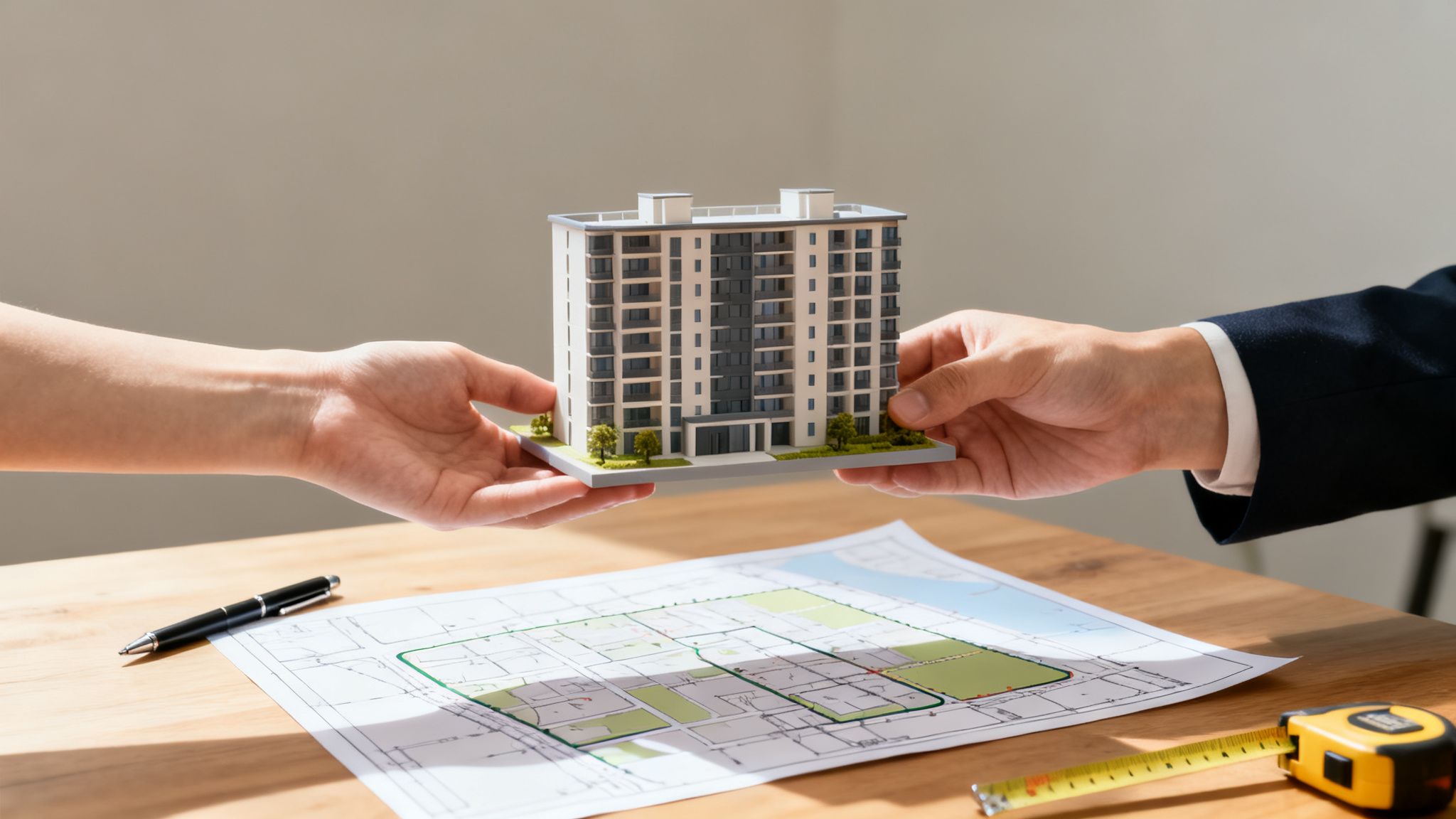
The process begins with valuation, the bedrock of the entire agreement. The landowner and the developer must agree upon the land’s precise market value. This figure directly dictates the percentage of the finished building the landowner will ultimately own.
Typically, landowners receive between 30% and 50% of the newly constructed units. This percentage is the core of the negotiation and reflects the land’s contribution to the project’s overall potential. Therefore, obtaining a robust, professional appraisal is not merely advisable; it is a non-negotiable prerequisite for establishing a fair and equitable partnership.
Gross vs. Net: The Two Dominant Models
Once a valuation is established, the focus shifts to the deal’s structure. In Israel, combination deals are predominantly categorized into two models, distinguished by the allocation of tax and levy responsibilities. Understanding this distinction is critical for accurately forecasting the net return on your asset.
The first model is the “Net Deal.” In this structure, the developer assumes responsibility for all major project costs, including Land Appreciation Tax (Mas Shevach), VAT on construction services, and various municipal fees. For the landowner, this model provides clarity and financial predictability. You receive your agreed-upon apartments “net” of these significant expenses.
The alternative is the “Gross Deal.” In this arrangement, the landowner is responsible for the taxes and levies associated with their share of the land and the new units. While this structure may offer a higher percentage of the project on paper, it also entails greater financial liability and operational complexity for the landowner.
Comparing the Deal to a Cash Sale
Opting for a combination deal over a straightforward cash sale represents a significant strategic decision with divergent implications for risk, cash flow, and long-term wealth creation. A cash sale is clean and immediate—you receive funds and exit the transaction. However, it also triggers an immediate and often substantial capital gains tax liability. Additionally, you forfeit any participation in the property’s future appreciation.
The combination deal, conversely, is a strategy for greater wealth creation.
By retaining an ownership stake in the developed property, you position yourself to benefit from market appreciation post-completion. You are effectively deferring a major tax event and converting a one-time payout into a portfolio of high-value assets capable of generating income for years.
The following table outlines the core strategic trade-offs for a landowner at this critical juncture.
Combination Deal vs. Cash Sale: A Landowner’s Perspective
| Factor | Combination Deal (Iskat Kombinatzia) | Traditional Cash Sale |
|---|---|---|
| Financial Outcome | Receive a percentage of completed units (e.g., apartments). | Receive a one-time lump sum of cash. |
| Cash Flow | No immediate cash; potential for future income from rent or sale of units. | Immediate liquidity upon closing. |
| Tax Implications | Tax liability is often deferred and structured differently (e.g., VAT on construction services). | Immediate Land Appreciation Tax (Mas Shevach) is due upon sale. |
| Risk Exposure | Higher risk tied to developer performance, project completion, and market fluctuations. | Lower risk; exposure ends upon completion of the sale. |
| Long-Term Upside | Significant potential for wealth appreciation as property values rise. | No participation in the future value created by the development. |
Ultimately, a combination deal israel is a more intricate and demanding undertaking, yet it holds the potential for far greater rewards. It requires a fundamental shift in mindset. You are no longer a seller but a strategic partner in a major development. Navigating the path from initial negotiation to receiving the keys to your new units is a complex process. Moreover, this process demands expert legal and financial guidance to protect your interests at every stage.
Unpacking the Tax and VAT Obligations
Additionally, navigating the financial success of a combination deal is inextricably linked to Israel’s complex tax landscape. While the prospect of converting land into high-value apartments is compelling, an unforeseen tax liability can severely erode returns. Furthermore, understanding these obligations is not merely an administrative task—it is a core component of your investment strategy.
In an Iskat Kombinatzia, the Israel Tax Authority perceives two simultaneous transactions. The first is the transfer of land rights. Consequently, the second transaction is a “deemed purchase” where the landowner is effectively buying construction services from the developer.
This “deemed purchase” is the trigger for the primary tax considerations in these deals.
The VAT on Construction Services: A Primary Hurdle
The most immediate and significant liability is the Value Added Tax (VAT) on these construction services. The value of the developer’s labor, materials, and project management allocated to your specific units is considered a taxable service provided to you.
This results in a substantial VAT payment, calculated based on the construction cost of your portion of the apartments. Mismanagement of the timing and payment of this liability can create a significant cash flow challenge. Therefore, strategic planning is essential to structure the payment schedule in alignment with project construction milestones.
In a combination deal, one must transition from the mindset of a simple seller to that of a project partner actively acquiring newly built assets. This conceptual shift is fundamental to anticipating and planning for the ensuing tax liabilities, particularly VAT.
Navigating Land Appreciation Tax
The next major tax consideration is the Land Appreciation Tax (Mas Shevach). This is effectively a capital gains tax levied on the portion of the land that is “sold” to the developer—the part exchanged for the construction of your units. The tax is calculated on the increase in the land’s value from the date of acquisition to the date the combination agreement is signed.
A common misconception is that this tax is not applicable because no cash changes hands. However, Israeli law treats the transfer of development rights as a taxable event. The “payment” received is not currency but the value of the construction services rendered for your apartments.
Key considerations for Mas Shevach include:
- Valuation: The official property appraisal is paramount, as it establishes the “sale price” that tax authorities will use for their calculation.
- Exemptions: Depending on the property’s history and the owner’s status, certain exemptions or deductions may be applicable.
- Timing: The tax liability is typically incurred shortly after the agreement is signed, necessitating liquid funds to be available.
A meticulously structured deal can mitigate this liability, but it requires specialized expertise. For tailored guidance on the tax implications of an Israeli combination deal, consulting with expert tax accountants is not merely recommended; it is essential for fiscal prudence.
Special Considerations for Foreign Landowners
For international investors and non-resident landowners, the tax framework acquires an additional layer of complexity. While the core obligations of VAT and Land Appreciation Tax remain, international tax treaties and residency status can influence their application and administration.
Foreign landowners must exercise extreme diligence regarding potential double taxation and ensure compliance with reporting requirements in their home country. Israel maintains tax treaties with numerous nations to prevent such issues. However, navigating their intricacies requires cross-border legal and financial expertise. Furthermore, the transfer of funds internationally to satisfy these tax obligations must be managed flawlessly to comply with both Israeli and international banking regulations.
Structuring the combination deal Israel for maximum tax efficiency is a delicate balance of legal strategy and financial foresight. It demands a profound understanding of how Israeli tax authorities view these transactions and a proactive compliance plan.
Securing Your Investment with Bank Guarantees
While a sound tax strategy is vital in a combination deal israel, the paramount objective is the protection of your core asset: the land. The single greatest risk a landowner faces in an Iskat Kombinatzia is developer insolvency during construction.
Your primary defense against this catastrophic risk is the bank guarantee, or Arvut Bankait. This instrument is not a contractual amenity but an absolute necessity. It functions as a financial fortress, protecting you if the developer defaults, becomes insolvent, or fails to complete the project. Without it, your asset is dangerously exposed. This could potentially become ensnared for years in protracted bankruptcy proceedings.

Why an Autonomous Guarantee Is the Gold Standard
It is critical to understand that not all guarantees are created equal. The only acceptable form is an autonomous bank guarantee. This distinction is of utmost importance. An autonomous guarantee operates independently of the underlying agreement. Essentially, it is a direct and unconditional obligation from the bank to you.
An autonomous guarantee operates independently of the underlying combination agreement. It is, in essence, a direct and unconditional obligation from the bank to you. If the developer breaches a fundamental term of the contract—such as filing for bankruptcy or missing a critical construction deadline—you can “call” the guarantee. The bank is obligated to pay you the full specified amount immediately, without investigating the merits of the dispute. This feature is crucial, as it prevents the developer from using litigation as a delaying tactic and provides you with immediate financial recourse.
An autonomous bank guarantee functions as an emergency lever. It shifts the burden of proof and litigation away from the landowner. You receive the capital first, providing the resources to engage a new contractor or mitigate losses, while any legal disputes can be resolved subsequently.
Calculating the Guarantee Amount
A pivotal point of negotiation is determining the value of the guarantee. The amount must be sufficient to restore your financial position in a worst-case scenario.
The calculation is typically pegged to the greater of two values:
- The Market Value of Your Land: This ensures that if the project fails entirely, you are compensated for the value of the asset you have committed.
- The Construction Costs of Your Units: This covers the precise amount required to hire a new builder to complete your specific apartments if the original developer abandons the project.
By securing a guarantee based on the higher of these two figures, you establish a robust financial safety net. This ensures that regardless of the nature of the developer’s default, you possess the necessary capital to either revert to your original position or see the project through to completion.
Crafting an Ironclad and Enforceable Guarantee
The efficacy of a bank guarantee rests on the precision of its legal language. Ambiguity is the landowner’s greatest enemy, both in the guarantee itself and in the main combination agreement. The contract must explicitly define the “trigger events” that permit you to call the guarantee.
Your legal counsel must insist on clauses that render the guarantee:
- Unconditional: The bank’s obligation to pay is triggered solely by your formal demand.
- Irrevocable: The developer cannot unilaterally cancel the guarantee without your express written consent.
- Linked to Project Milestones: The guarantee must remain in full force and effect until the developer has fulfilled all key obligations, particularly the delivery of your finished units and their official registration in your name.
Finally, the procedure for calling the guarantee must be direct and unambiguous. Any attempt by the developer to introduce complex procedural steps or require third-party approvals should be viewed as a significant red flag and rejected outright. In the high-stakes environment of a combination deal israel, the bank guarantee is your ultimate backstop.
Essential Contract Clauses and Due Diligence
A bank guarantee, while powerful, is only as effective as the contract that underpins it. In a combination deal, the agreement is not merely a legal formality; it is the architectural blueprint for the entire venture. Meticulous drafting and exhaustive due diligence are the foundational pillars supporting the transaction. Any deficiency in these areas can compromise the entire structure.
This is the stage where abstract understandings are converted into precise, legally binding obligations. Vague contractual language creates dangerous loopholes that can be exploited in a dispute, almost invariably to the landowner’s detriment. Your legal counsel’s primary objective is to construct an impenetrable agreement that leaves no ambiguity regarding timelines, quality standards, and responsibilities.

Non-Negotiable Contractual Safeguards
Certain clauses are fundamental to protecting a landowner’s interests in a combination deal in Israel. These are not negotiable points but critical mechanisms designed to ensure developer accountability from groundbreaking to final handover.
Your contract must meticulously define the following:
- Firm Project Timelines: The agreement must incorporate a detailed construction schedule with fixed, enforceable deadlines for every key milestone, including securing permits, commencement of construction, completion of the structural frame, and final delivery of your units.
- Enforceable Penalty Clauses: The contract must specify clear financial penalties for delays, typically calculated on a daily or weekly basis. These clauses serve as a powerful financial incentive for the developer to adhere to the agreed-upon schedule.
- Detailed Technical Specifications: The quality of your future assets cannot be left to interpretation. The contract must include a comprehensive technical annex (Mifrat Techni) detailing everything from the brand of fixtures and type of flooring to the precise layout of the units. This prevents developers from substituting specified materials with cheaper, substandard alternatives.
- Clear Dispute Resolution Mechanisms: The agreement should specify the exact process for resolving conflicts upfront, whether through mandatory mediation or arbitration in Israel. This can provide a more efficient and cost-effective path to resolution than protracted court litigation.
The Critical Due Diligence Process
Prior to signing any agreement, a thorough vetting of your potential development partner is imperative. A developer’s marketing materials are meaningless without a proven track record and a solid financial foundation. This requires verification, not trust.
Your due diligence should constitute a forensic examination of the developer’s history and capabilities. The power of a well-defined agreement is evident even at the highest levels of international commerce. For example, the U.S.-Israel Free Trade Agreement, signed in 1985, succeeded because it was built on a clear, structured framework. In the subsequent 30 years, U.S. exports to Israel increased by over 450%. This demonstrates that a strong agreement unlocks immense value—a principle equally applicable to a private real estate deal. You can explore detailed insights on U.S.-Israel relations to understand the impact of such strategic partnerships.
A developer’s past performance is the most reliable predictor of their future conduct. Due diligence is your opportunity to look beyond the sales pitch and confirm you are partnering with a reputable, financially stable, and competent company.
Your investigation must include reviewing financial statements and credit histories, scrutinizing their project portfolio by visiting past developments, and—most importantly—speaking with landowners from their previous combination deals. Finally, verify their legal standing by checking for ongoing litigation or past judgments. This rigorous process places you in a position of strength at the negotiating table. You will be confident that your partner can deliver on their promises.
What Are Your Next Moves as a Landowner?
We have examined the mechanics of the Israeli combination deal, a powerful but intricate method for unlocking the value of your land. A successful transaction depends on three pillars. These are a comprehensive understanding of the deal structure, a proactive tax strategy, and robust legal protections anchored by a solid bank guarantee.
The time has now come to transition from theory to action. Your first two moves are critical: commission a professional, independent valuation of your land, and engage legal counsel specializing in Israeli real estate law.
Your First Strategic Actions
Embarking on a combination deal is analogous to constructing a building; one would not proceed without a detailed blueprint and a structural engineer. Your initial professional consultations serve this exact purpose—they are the most crucial investment you can make to ensure a profitable and secure outcome.
Your starting point should be:
Commission a Land Valuation: Before engaging with any developer, you must obtain an independent, comprehensive appraisal of your property. This valuation report is the foundation of your entire negotiation, establishing the concrete value you bring to the partnership and serving as the key determinant of your percentage share in the final project.
Engage Legal Counsel—Early: Retain an experienced law firm before entering into substantive discussions. A common error is to wait until a deal is already on the table. The right legal team does not merely review contracts; they structure the deal from the outset, transforming abstract risks into calculated, manageable variables and protecting your interests from the very first conversation.
A combination deal is not a simple sale; it is the inception of a long-term business partnership. Approaching it with a robust legal and financial strategy is the only way to protect your asset and ensure it generates the wealth it is capable of.
Taking these foundational steps places you in a position of strength. Supported by seasoned professionals, you are not merely reacting to a developer’s proposal. You are proactively shaping the terms of the engagement. This turns potential risks into a strategic advantage and ensures your land works for you.
Your Questions About Combination Deals, Answered
Venturing into a combination deal in Israel will naturally raise crucial questions. As a landowner, you are committing your most valuable asset to a long-term, complex development. Obtaining clear, authoritative answers before proceeding is non-negotiable.
Here are the most common inquiries from landowners.
What Percentage of the Project Should I Expect to Receive?
There is no standard percentage; this is the core of the negotiation. The landowner’s final share is determined almost exclusively by the land’s location, its existing zoning rights, and its raw market value.
For a prime parcel in a high-demand area like central Tel Aviv or Jerusalem, a landowner can realistically negotiate for 40-50% of the finished apartments. For land in a more peripheral location where values are lower, a share of 30-35% is a more common starting point. The only way to enter this negotiation with confidence is by first commissioning a professional, independent appraisal. That report provides the data-backed leverage needed to establish your land’s true contribution to the project’s value.
What Happens If the Developer Goes Bankrupt?
This is the most critical risk, and it is precisely why a robust, autonomous bank guarantee is an absolute necessity. If this guarantee is structured correctly and the developer defaults, you do not need to await a court order. You can call upon the guarantee immediately and access the secured funds.
This capital is your financial lifeline. It provides you with the resources to either hire a new contractor to complete the project or to compensate yourself for your land’s value, allowing you to exit the deal financially intact. Without such a guarantee, your asset is dangerously exposed to protracted and costly legal battles with little prospect of recovery.
Can a Foreign Landowner Enter a Combination Deal in Israel?
Yes, foreign nationals who own land in Israel are legally permitted to enter into combination deals. However, the transaction involves additional layers of complexity, including international tax treaties, cross-border fund transfer regulations, and specific compliance rules that do not apply to Israeli residents.
For any non-resident landowner, it is imperative to engage legal counsel with specific and proven expertise in representing international clients in the Israeli real estate market. This is the only way to ensure the entire process—from negotiation to completion—is secure, compliant, and executed smoothly.
This article does not constitute legal advice and is not a substitute for consulting with a qualified attorney. Do not rely on the contents of this article for taking or refraining from taking any action.