
Discovering a major defect in a newly acquired Israeli property can escalate from a frustrating problem to a full-blown legal battle with alarming speed. For corporate entities and international investors, resolving construction disputes in Israel is not about lodging complaints. Instead, it’s about executing a strategic, evidence-driven case grounded in local law. Successfully holding a contractor accountable requires a precise understanding of legal timeframes. It also requires the marshalling of expert evidence, and a comprehensive approach to securing full compensation.
Navigating Construction Defect Claims in Israel

This guide provides a practical framework for navigating litigation against Israeli contractors, focusing specifically on claims arising from construction defects. We will dissect the process into actionable steps, from identifying your rights under Israeli law to constructing an unassailable case for court. This is a blueprint for managing the dispute, mitigating risk, and steering your claim toward a successful commercial outcome.
The Sales Law (Apartments): Your Primary Legal Shield
The foundation of any defect claim concerning a new property is Israel’s Sales Law (Apartments). This powerful piece of consumer protection legislation establishes mandatory warranty periods that contractors cannot legally circumvent. Mastering these timelines is the first critical step in any successful claim.
The law establishes a two-tiered warranty system for buyers:
- The Bedek Period (Inspection Period): This initial warranty period covers a comprehensive list of potential issues and lasts from one to seven years, depending on the specific component of the building.
- The Achrayut Period (Responsibility Period): Following the Bedek period, this secondary warranty provides longer-term coverage, primarily for fundamental defects affecting the building’s structural integrity.
A critical error is delaying formal notification to the contractor. Israeli law is stringent on this point. Missing the statutory deadline for providing written notice of a defect can result in the forfeiture of your right to file a claim, regardless of its severity.
Expert Opinions: The Cornerstone of Your Case
In an Israeli court, an unsubstantiated claim holds no weight. To transform a legitimate grievance into a viable legal action, two forms of expert evidence are essential.
First, an expert opinion from a qualified construction engineer is non-negotiable. This is not a cursory inspection but a forensic analysis that must meticulously document each defect. The expert must also identify its root cause, specify a precise method for remediation, and provide a detailed cost estimate for the repairs. This report forms the evidentiary core of your lawsuit.
Second, for defects that permanently diminish the property’s market appeal, you can advance a claim for “Drop in Value” (Yeriadat Erech). This sophisticated legal argument seeks compensation not just for the cost of repairs, but for the long-term erosion of the property’s market value. This loss must be quantified and substantiated by a licensed property appraiser in a separate expert report.
Your Rights Under The Israeli Sales Law for Apartments
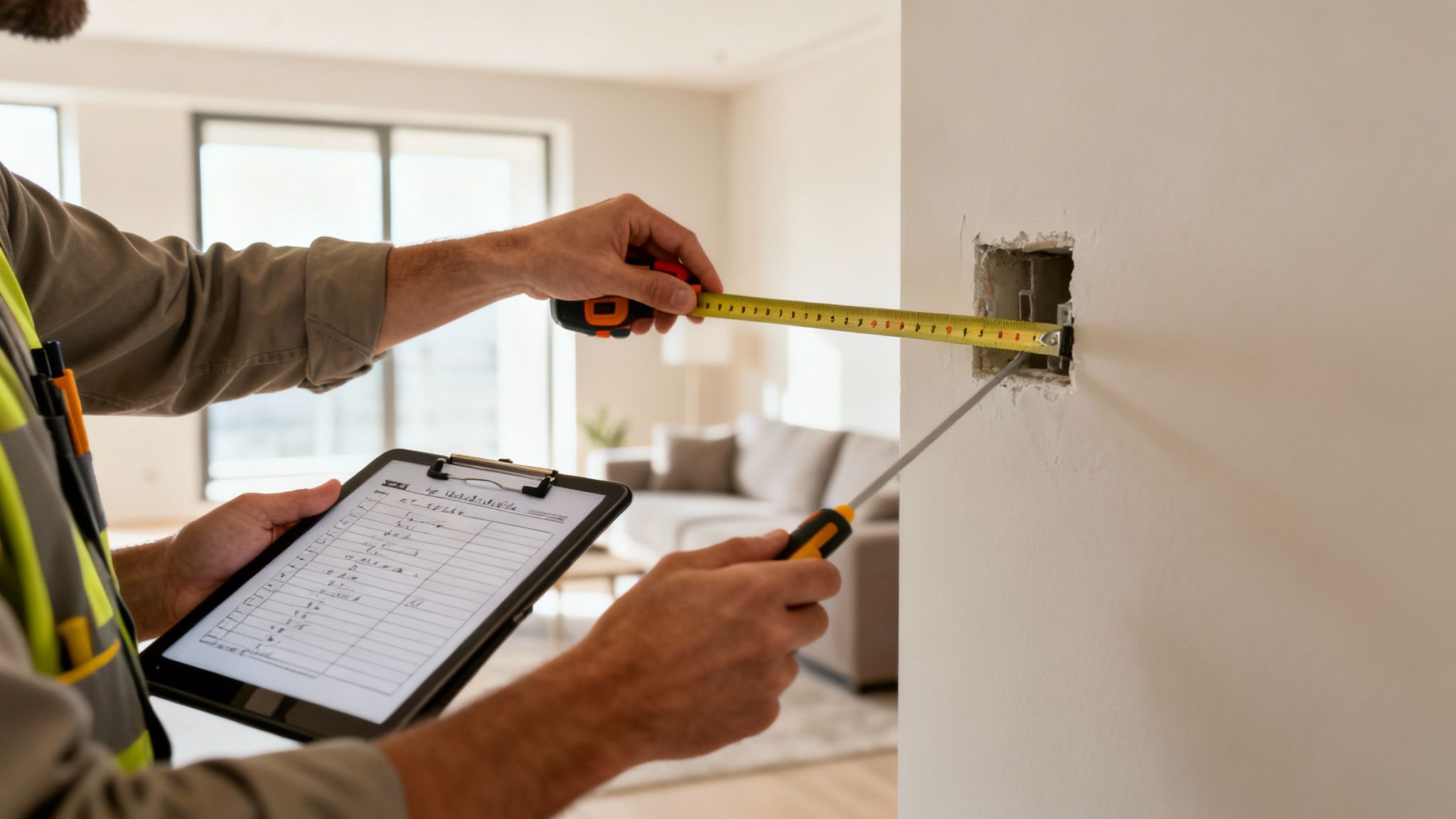
When confronting construction defects in Israel, your most formidable asset is the Sales Law (Apartments). This legislation imposes strict, non-negotiable obligations on contractors, providing a clear legal framework for buyers. A thorough understanding of its mechanisms is crucial for transforming a defect into an actionable legal claim. The law’s primary feature is its two distinct warranty periods. These are the Bedek period and the Achrayut period.
The Bedek period (inspection period) functions as a comprehensive warranty for a new property, covering a wide array of potential flaws. Following its conclusion, the Achrayut period (responsibility period) acts as a long-term guarantee for the building’s core structural elements. Together, they offer robust protection. However, their efficacy depends on strict adherence to their respective rules and deadlines.
The Bedek Period: A Closer Look
The Bedek period commences the moment the buyer takes possession of the apartment. Its duration is not uniform; it ranges from one to seven years, contingent on the specific building component where the defect is found.
The most significant advantage of the Bedek period is the reversal of the burden of proof. If a defect is discovered during this time, the law presumes the contractor is at fault. The onus is on the contractor to prove they are not responsible—a substantial tactical advantage for the buyer. This legal presumption simplifies the process of addressing defects that emerge shortly after handover.
Examples of specific Bedek warranty durations include:
- Two years for issues with motors and boilers.
- Three years for moisture penetration in roofs, walls, and shelters.
- Four years for failures in external wall cladding.
- Seven years for failures in the sealant of building expansion joints.
For corporate investors, the directive is clear: conduct an exhaustive inspection immediately upon receiving the property. Every issue documented during the Bedek period becomes a potent piece of evidence, significantly strengthening your position in any potential construction disputes in Israel.
The Achrayut Period and Latent Defects
Upon the expiration of the Bedek period for a specific component, the Achrayut period begins. This period typically extends for an additional three years. During this phase, the burden of proof reverts to the buyer. You must now demonstrate that the defect arises from the contractor’s faulty design, substandard materials, or defective workmanship.
This is where the concept of “latent defects” becomes paramount. A latent defect is a flaw that could not have been reasonably discovered during a standard inspection, such as a fundamental error in the foundation that only manifests years later through structural cracking. The Achrayut period provides the legal mechanism for holding contractors accountable for such hidden deficiencies.
As international investors navigate Israel’s dynamic real estate market, a firm grasp of these local laws is indispensable. The complexities of Israeli planning and land regulations often diverge from Western norms, introducing unique risks for foreign entities.
Warranty Periods Under The Israeli Sales Law for Apartments
To clarify the practical application of these warranties, the table below outlines the key distinctions between the Bedek and Achrayut periods.
| Attribute | Bedek Period (Inspection Period) | Achrayut Period (Warranty Period) |
|---|---|---|
| Duration | 1 to 7 years from handover, depending on the specific building component. | Follows the Bedek period, typically lasting for an additional 3 years. |
| Scope of Coverage | Broad coverage for a wide range of specified defects (e.g., plumbing, electrical, cladding, moisture). | Focused on fundamental structural and foundational defects. |
| Burden of Proof | On the contractor. The defect is presumed to be their fault unless they can prove otherwise. | On the buyer. You must prove the defect stems from the original design, materials, or workmanship. |
| Key Purpose | To address issues that appear shortly after construction is completed. | To provide long-term protection against hidden, significant structural flaws (latent defects). |
Understanding this legal distinction is vital. The Bedek period offers the best opportunity to resolve a wide range of issues with minimal legal friction, while the Achrayut period serves as a crucial long-term safeguard for the property’s structural integrity.
Why an Engineer’s Expert Opinion is Non-Negotiable
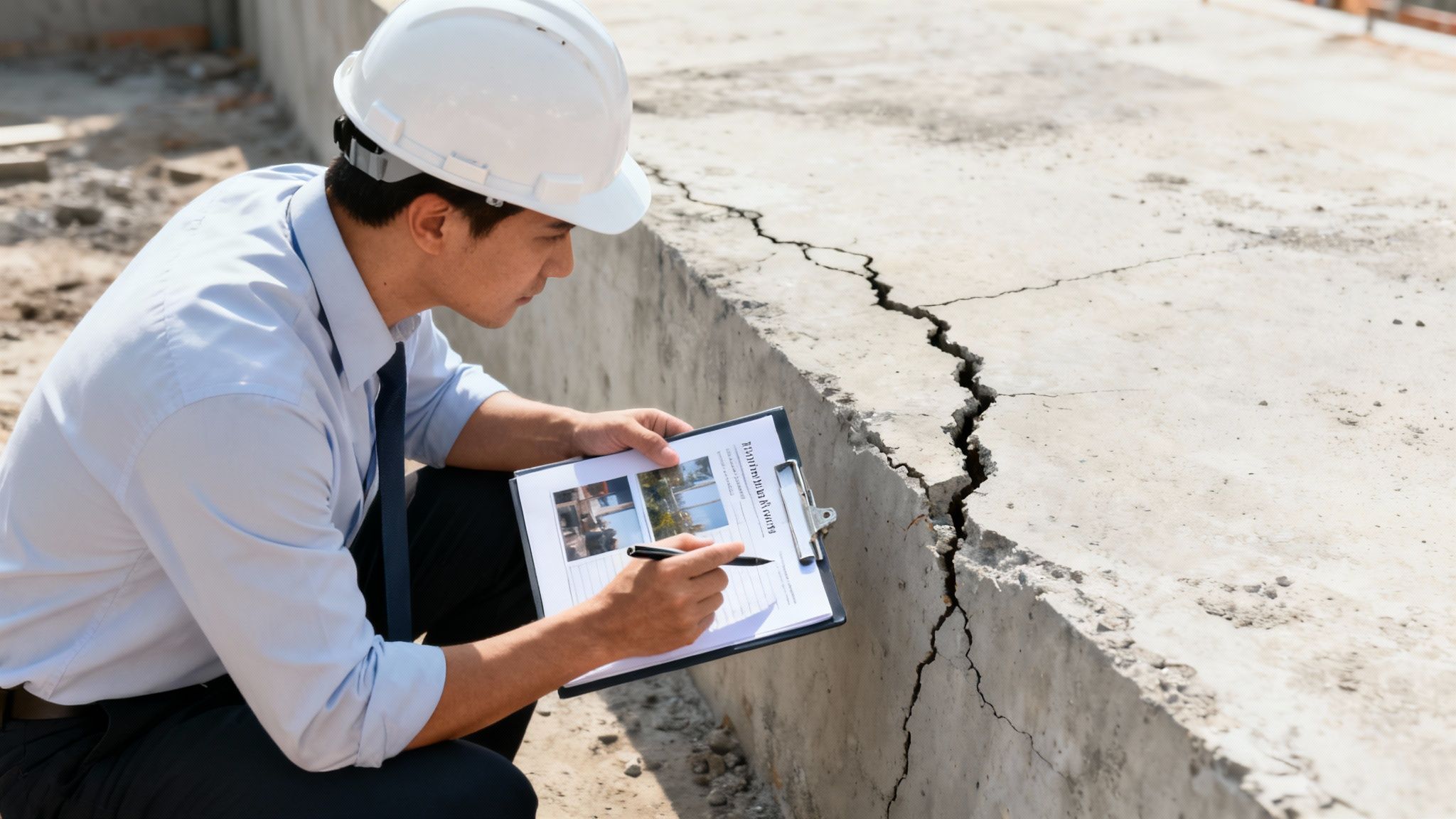
In the arena of Israeli litigation concerning construction disputes in Israel, the engineer’s expert opinion is the definitive piece of evidence. Filing a claim for construction defects without this foundational document is a procedural fatality. The court will almost certainly dismiss it at the preliminary stage. For corporate clients accustomed to data-driven decisions, this report is the single most critical investment in the entire litigation process.
This document transcends a simple list of problems. It is a forensic analysis that translates technical failures into a cogent legal argument, providing the court with a clear, defensible basis for a ruling in your favor. It converts raw grievances into a structured, evidence-based claim that the legal system is designed to process.
The Anatomy of a Winning Expert Report
An effective engineering report must be irrefutable, as it will be subjected to intense judicial scrutiny. It is not merely a statement but a detailed technical argument built on professional expertise.
A court-ready report must contain four key elements:
- Precise Defect Identification: A comprehensive inventory of every flaw, supported by high-resolution photographs and clear descriptions.
- Root Cause Analysis: The engineer’s professional assessment of the cause of each defect, directly linking it to the contractor’s workmanship, materials, or design.
- Detailed Repair Protocol: A clear, step-by-step technical plan outlining the necessary actions to correctly remediate each issue.
- Credible Cost Estimation: A thorough and justifiable breakdown of the projected costs for labor and materials, based on current market rates.
The viability of your entire case rests on the quality of this report. A vague or poorly substantiated opinion can sabotage your claim, while a robust, detailed analysis from a reputable engineer is the bedrock of a winning legal strategy.
Why This Document is a Legal Prerequisite
In the Israeli legal system, judges are experts in law, not in construction engineering or materials science. They rely entirely on qualified professionals to interpret the technical facts of a case. The engineer’s opinion serves as this essential bridge, providing the court with the specialized knowledge required to understand the scope of the contractor’s failure. It also clarifies the legitimacy of the damages sought.
For this reason, a lawsuit filed without a supporting expert opinion fails to meet the minimum evidentiary threshold required to proceed. The report is not merely helpful; it is the core evidence that confers legal standing upon your claim. It compels the opposing party to respond with their own expert analysis, thereby framing the dispute around professional evidence rather than subjective arguments. A practical guide to expert witness construction reports can offer further insight into their structure and importance.
Suing for “Drop in Value” (Yeriadat Erech)

Consider a scenario where a contractor has repaired a major construction defect flawlessly. While the physical problem is solved, a permanent stigma may now attach to the property’s history. This is where a sophisticated claim for Yeriadat Erech (drop in value or diminished value) becomes relevant. This legal action seeks compensation not for the cost of repairs, but for the quantifiable reduction in the property’s market value resulting from the defect’s history.
The core argument is that the contractor’s failure has permanently impaired the asset’s marketability. The market possesses a long memory. A property with a documented history of significant structural issues or severe mold will be viewed with suspicion by prospective buyers. Even with proof of a perfect repair, offers will invariably be lower compared to an identical property without such a history. Yeriadat Erech is the legal instrument designed to recover this financial loss.
The Legal Basis for a Diminished Value Claim
A claim for diminished value is a calculated legal maneuver to recover a tangible economic loss. The Israeli legal system recognizes that certain severe defects create a lasting negative perception that deters buyers and depresses value. This applies not to minor cosmetic flaws, but to significant issues that would raise red flags during any due diligence process.
Defects that typically form a strong basis for a Yeriadat Erech claim include:
- Major Structural Flaws: Even when perfectly repaired, the knowledge of a prior foundational or structural failure has a significant psychological impact on buyers.
- Persistent Moisture and Mold: A history of serious water intrusion suggests the potential for hidden damage and future problems.
- Systemic Plumbing or Electrical Failures: Widespread system issues imply poor overall construction quality, tarnishing the property’s reputation.
Pursuing this type of claim reflects a comprehensive legal strategy. It ensures that every facet of your financial loss is addressed—not only the immediate cost of repairs but also the long-term impact on your investment’s capital value.
The Crucial Role of the Property Appraiser
Just as an engineer’s report is vital for a standard defect claim, an expert opinion from a licensed property appraiser (shamai mekar’kein) is the cornerstone of a Yeriadat Erech case. This expert is tasked with translating the abstract concept of “market stigma” into a concrete monetary figure that the court can award.
The appraiser’s methodology is rigorous. They first establish the property’s hypothetical market value as if the defect had never occurred. Then, they calculate its actual current market value, factoring in the negative effect of its documented repair history. The difference between these two figures constitutes the diminished value. This analysis is not speculative. Instead, it requires deep market knowledge and a defensible methodology, often reinforced with data from tools like an AI real estate property analyzer. The court will meticulously scrutinize the appraiser’s report, making its credibility and detail absolutely critical to success.
Winning a Yeridat Erech claim within a construction dispute in Israel requires a multi-faceted approach. You need a definitive engineering report to prove the defect and a persuasive appraiser's report to quantify the long-term loss. Next, you must have sophisticated legal counsel to integrate them into a compelling case. If you are facing such a challenge, the experienced team at RNC Group can provide the strategic guidance needed to protect your investment.
Contact us today to schedule a confidential consultation.
This article does not constitute legal advice and is not a substitute for consulting with a qualified attorney. Do not rely on the contents of this article for taking or refraining from taking any action.