
A crisis communication strategy looks persuasive in the boardroom. Then a payment channel freezes, a bank restricts an account, counsel in two countries disagree, and overseas partners demand answers before the internal facts are stable.
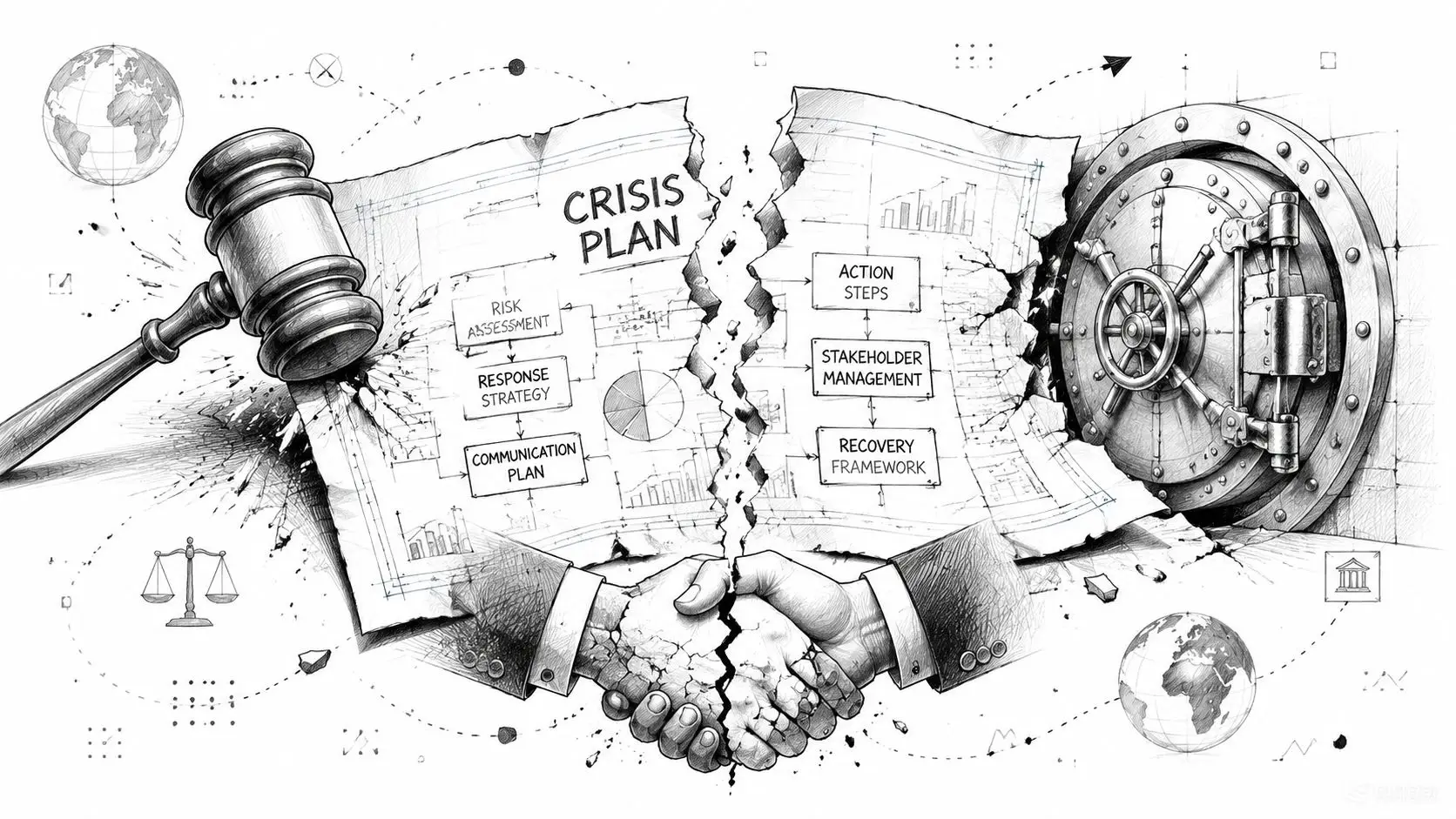
That’s the test that breaks most plans in 2026. They weren’t built for legal exposure, banking pressure, and multilingual scrutiny at the same time.
Why Your 2026 Crisis Plan Will Fail
Most crisis plans fail because they assume the crisis is public before it is contractual, regulatory, or financial. That assumption is dangerous for any company operating in Israel through local banks, distributors, franchisees, or joint venture partners.
A public-relations script can’t solve a legal choke point. If the immediate threat is a bank restriction, a compliance blockage, or a partner dispute, the first mistake is treating communications as a branding exercise instead of a control function.
Generic transparency advice breaks under legal pressure
The standard advice sounds familiar. Respond quickly. Be transparent. Use multiple channels. Show empathy. Those principles matter, but they don’t answer the hard question. What should a company say when information is still under legal review and every word may affect banking relations, counterparties, or litigation posture?
That gap becomes severe in cross-border disputes. Guidance on multilingual and cross-border crisis communication gaps notes that most coverage repeats generic advice, yet fails to provide a framework for message governance when legal exposure, media cycles, and audience expectations differ by market.
Practical rule: In a commercial crisis, the first communication objective isn’t warmth. It’s controlled credibility.
A foreign company in Israel faces a sharper version of that problem. The legal file may sit in Hebrew. The parent company may need English updates. A lender may require formal notice. A local partner may demand operational assurances now, not after a polished statement clears every internal layer.
What usually goes wrong
Three failures appear repeatedly in legal and financial crises:
- Authority is fragmented. Local management speaks first, group legal edits later, and outside advisors enter after counterparties have already formed their view.
- Messages travel without governance. The Israeli team says one thing, the regional office says another, and a translation softens or changes the legal meaning.
- Silence lasts too long. Teams wait for a complete factual record, but the market interprets delay as loss of control.
The deeper problem is structural. Many companies still build a crisis communication strategy as an extension of media relations. In high-stakes commercial disputes, it must function as part of dispute containment, cash-flow protection, and legal sequencing.
That is why the crisis playbook for a product complaint won’t survive a frozen account, a returned-check issue, or a cross-border commercial allegation. Those events demand immediate coordination between legal, finance, operations, and communications. If that architecture doesn’t exist before the event, the company won’t be managing the crisis. It will be documenting its own confusion.
Building Your Crisis Response Framework
A durable crisis communication strategy starts long before the first allegation, payment failure, or banking notice. The operating model must be designed in advance, because improvisation produces delay, contradiction, and avoidable admissions.
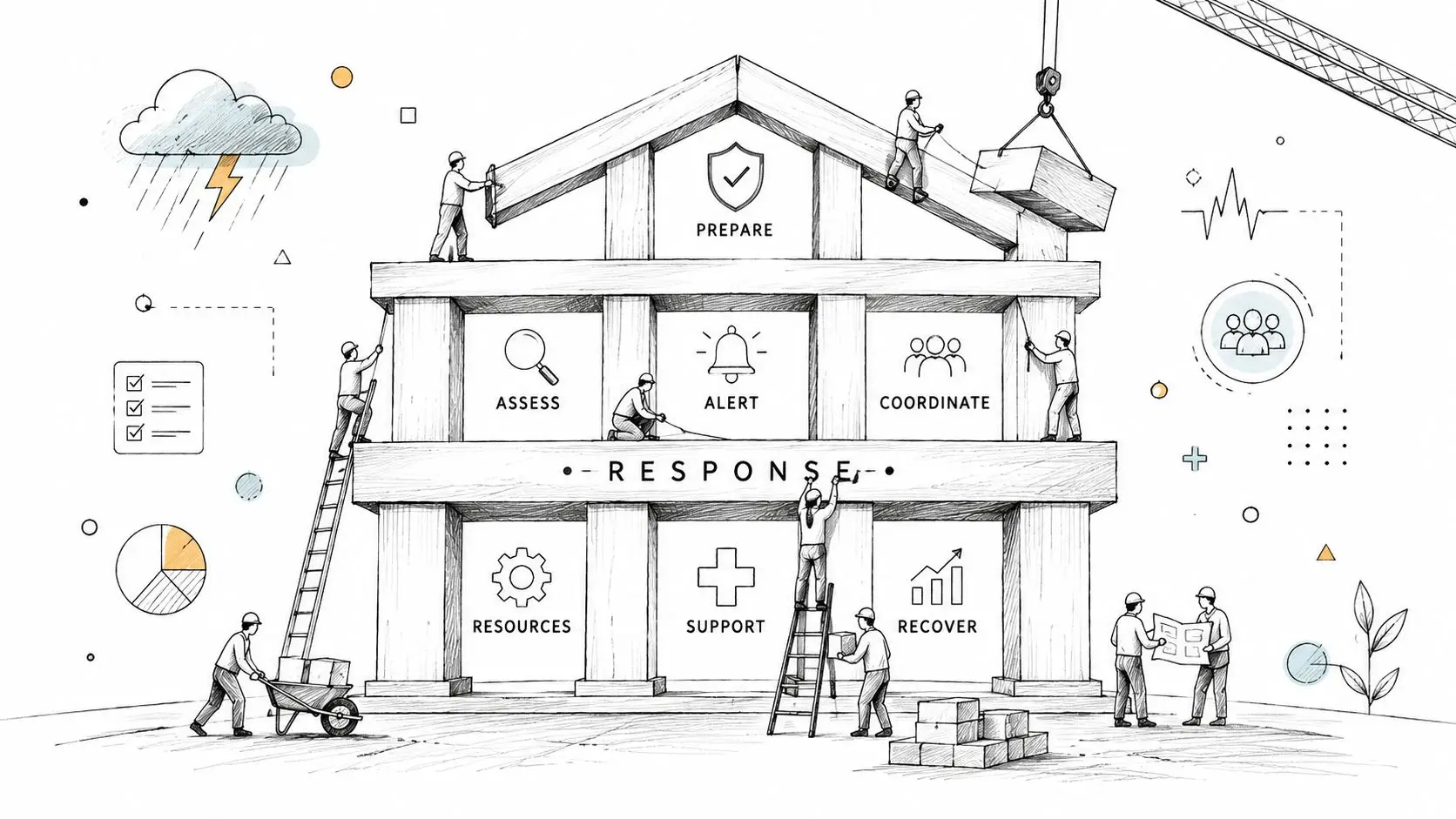
Guidance on pre-crisis communication architecture treats this as a governance function, not a press task. The core structure includes a dedicated crisis team, risk assessment, pre-approved messaging, and designated spokespersons.
Build a small team with real authority
Large committees don’t respond well under pressure. The stronger model is a small senior team that can decide fast, lock message discipline, and escalate only when needed.
That team usually needs five functions, even if one person covers more than one role:
| Function | Core task in a crisis |
|---|---|
| Legal lead | Defines what can be said, to whom, and when |
| Executive lead | Makes commercial decisions and approves trade-offs |
| Finance lead | Assesses liquidity, payment exposure, and banking impact |
| Operations lead | Confirms what the business can still deliver |
| Communications lead | Controls wording, channels, timing, and records |
The point isn’t bureaucracy. The point is command clarity.
Prepare scenarios that match commercial reality
A useful framework doesn’t start with abstract reputation threats. It starts with operational and legal scenarios that can cripple the business. For Israel-facing companies, that often includes supplier failure, franchise conflict, shareholder breakdown, account restrictions, compliance queries, and hostile legal correspondence.
The recommended strategic path is to run scenario-based assessments and pre-draft first-day language. Public guidance on two-phase crisis planning and response readiness emphasizes preparedness and response, including a small senior team, scenario planning, pre-drafted holding statements for the first day, and a monitored contact and channel plan.
The best plans don’t predict every crisis. They pre-assign authority before the facts become unstable.
A disciplined framework also identifies the documents that matter first. Those may include banking notices, board approvals, distributor agreements, payment records, internal escalation logs, and regulator correspondence. If teams don’t know where these records sit, the communications function will issue language unsupported by the file.
Pre-approve message pillars before the crisis starts
Pre-approval doesn’t mean writing the final press release in advance. It means agreeing on message pillars that can survive legal review in multiple scenarios.
Those pillars usually answer four questions:
- What is known: Confirm the narrow facts that are stable.
- What remains under review: Protect against speculation and internal contradiction.
- What action is underway: Show control through investigation, legal review, or operational steps.
- When the next update will come: Prevent silence from becoming the story.
Companies looking at effective crisis management planning often focus on escalation after the event. The harder work sits earlier. It lies in approval maps, bilingual drafting controls, contact lists that work, and rehearsed decision paths.
For broader perspective, comparative thinking on approaches to global crisis response is useful because it frames crisis execution as coordinated governance across institutions, not as isolated messaging. That view fits commercial disputes better than conventional PR playbooks.
The Financial Crisis Flashpoint in Israel
What happens when the first sign of your crisis is not a headline, but a bank restriction that cuts straight through payroll, suppliers, and board reporting?
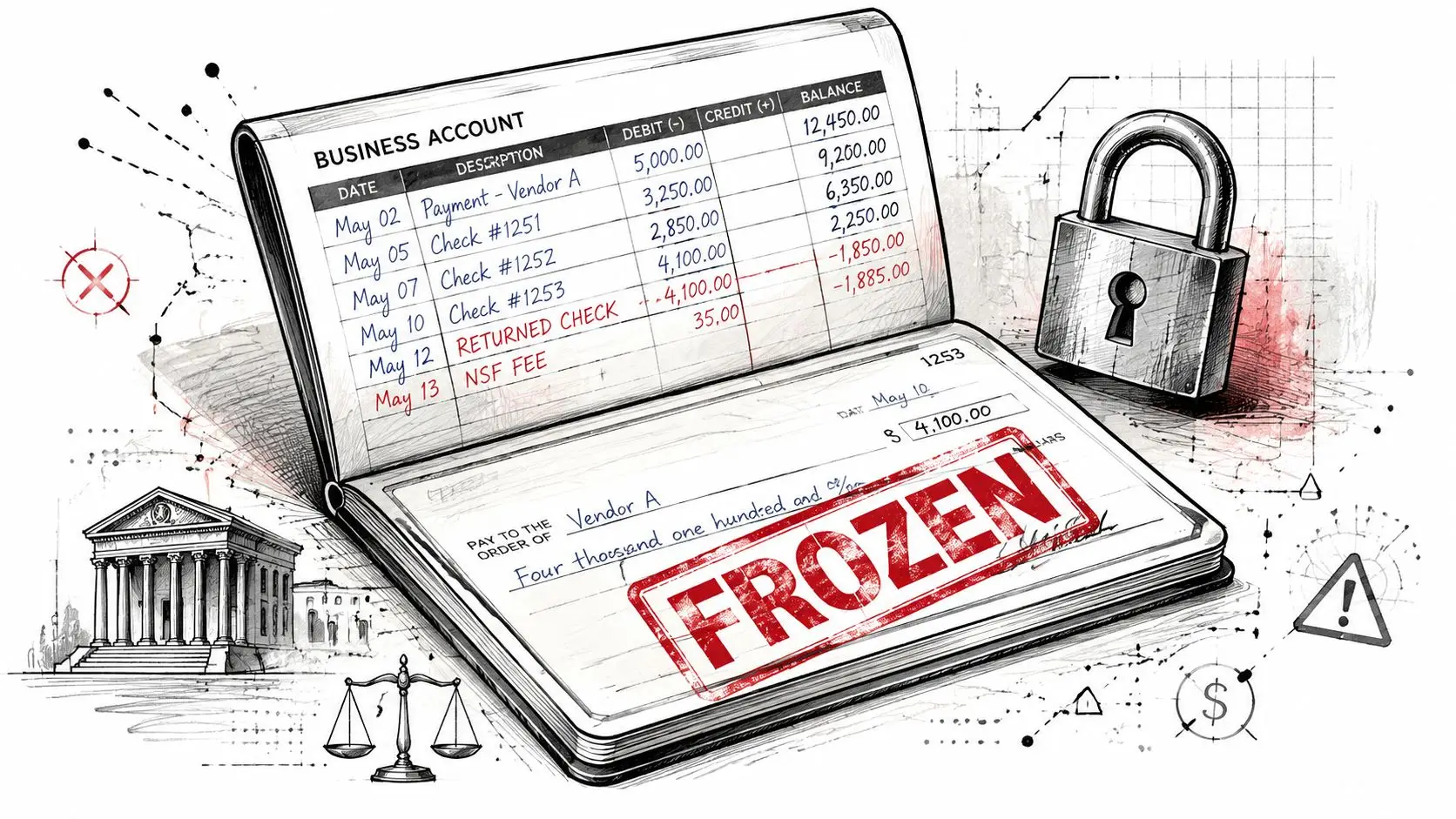
That is the point where standard crisis communication advice starts to fail. In Israel, a banking event can become the core legal and financial dispute within hours, and every public or private statement can affect later proceedings. The issue is not brand sentiment. It is control of facts, preservation of legal position, and containment of contractual fallout.
Commentary on bank-account restriction and compliance blockage crises reflects part of that problem. The communications task is tied to legal exposure from the start, so the company cannot afford loose reassurance, premature blame, or broad factual claims that the file will not support.
Why a banking event becomes a communications crisis
An account restriction is interpreted in real time by people who do not share the same facts or incentives.
Employees hear risk to salaries and reimbursements. Suppliers read delayed payment as distress. Overseas counterparties may infer sanctions exposure, fraud concerns, beneficial ownership problems, or undisclosed litigation. Lenders and landlords may start reviewing default rights before management has finished verifying what the bank did.
The legal issue is often narrower than the story that forms around it.
That gap is where damage starts. Once counterparties act on assumption rather than record, the company is no longer dealing only with the bank. It is dealing with accelerated collections, suspended deliveries, internal escalation to parent boards, and a credibility problem that can outgrow the underlying restriction.
The Israeli legal angle is operational, not theoretical
In Israel, a returned check pattern or comparable banking event can trigger consequences that move quickly from banking procedure to business interruption. Foreign-owned companies are exposed on two fronts at once. They need to address the local banking problem while explaining the event up the chain to non-Israeli directors, lenders, auditors, and group compliance teams.
The pressure points are predictable:
- Payment disruption: Payroll, vendors, taxes, rent, and ordinary operating obligations can become unstable at once.
- Cross-default risk: A missed or delayed payment may trigger review under lending, supply, lease, or shareholder arrangements.
- Evidence pressure: Parent entities, auditors, insurers, and counsel will ask for records immediately.
- Narrative loss: If management waits too long, counterparties create their own explanation.
A company with a commercial lease agreement in Israel may feel this pressure especially fast because rent obligations are visible, recurring, and often tied to default remedies that are easy for the other side to invoke.
What the first legal review should produce
The first review is not a messaging workshop. It is a fact-control exercise designed to protect strategic choices.
Start with four questions:
-
What exactly did the bank do?
Obtain the formal notice, transaction history, dates, rejected instructions, related correspondence, and any prior warning signs. Management assumptions are not a substitute for the record. -
What legal response is realistically available?
Some matters can be clarified quickly. Others require a challenge, a negotiated fix, or parallel work with banking counsel and litigators. The answer depends on the sequence of events and the documents, not internal confidence. -
Who must hear from the company before anyone else does?
Key lenders, directors, major suppliers, payroll providers, insurers, and local managers may need direct contact before a broader holding statement is issued. -
What language is off limits until review is complete?
That usually includes blame, motive, causation, accusations of bad faith, and promises that payment flows will normalize by a specific date.
In a banking crisis, one careless sentence can become an exhibit.
That is the difference between a legal-financial crisis and a conventional PR event. The company is not trying to sound reassuring in the abstract. It is trying to maintain performance and stakeholder discipline without creating admissions, inconsistencies, or avoidable exposure.
Action steps for foreign businesses operating in Israel
Foreign companies usually lose time in the same place. They treat the banking issue as technical and the communications issue as secondary. In practice, both tracks have to be run together from the first hour.
A disciplined response usually includes:
- Secure the file immediately: Collect bank notices, returned payment records, internal escalations, board messages, account instructions, and communications with finance teams before memories shift and positions harden.
- Create one approved fact sheet: Give executives, local management, and external spokespeople a short record that states only verified facts, current actions, and restricted topics.
- Map contract exposure by priority: Identify which counterparties can deepen the crisis if they suspend service, accelerate demands, or publicize the issue.
- Require legal review for all outbound language: That includes emails from business teams, investor calls, distributor explanations, and messages sent in Hebrew and English.
- Assess legal and banking response options early: Delay usually reduces strategic choices.
The hard reality is simple. In an Israeli banking event, communications do not sit beside the legal response. Communications are part of the legal response. If the company loses control of wording, timing, or audience sequence, it often loses control of the broader crisis as well.
Executing Your Cross-Border Response
What happens when the first public statement in a banking crisis creates a second legal problem?
In a cross-border financial event, response execution is an exercise in control. The company is not just issuing updates. It is setting the record, preserving legal options, and preventing local teams, counterparties, and media from defining the event first.
A widely used operating benchmark is the 15-20-60-90 crisis communication timeline. The company should acknowledge the issue and begin communicating basic verified facts within 15 minutes, provide a more developed holding position by 60 minutes, and be prepared for broader external engagement by 90 minutes. The point is not speed for its own sake. The point is to establish command before speculation hardens into a narrative that regulators, banks, or litigants later rely on.

The first 15 minutes
The initial statement should do one job well. Confirm that the company is aware of the issue, that review is underway, and that communications will come through a defined channel.
That message is short by design. In legal and financial crises, detail is expensive. A poorly chosen phrase can be treated as an admission, an assurance, or a contradiction later, especially once translations start circulating across jurisdictions.
A sound first acknowledgment usually includes:
- Confirmation that management is aware of the issue
- A statement that facts are being verified and action is underway
- A commitment to the next update at a stated time or through a stated channel
The first 60 minutes
By the one-hour mark, the company needs more than a placeholder. It needs a holding position that shows organization, discipline, and clear ownership.
Cross-border execution often breaks down. Israeli management may want a practical explanation for employees and suppliers. Headquarters may insist on narrow legal wording. Investor relations may press for reassurance. Outside counsel may block any statement that goes beyond confirmed facts. All of those pressures are real, and they do not align neatly.
The answer is one approved message core. Everything else is adaptation around that core.
Use one master message. Adjust tone by audience, but keep facts, legal posture, and commitments identical.
That rule matters more in a legal-financial event than in a standard reputation problem. If the Hebrew statement suggests a temporary banking review, while the English statement implies misconduct is under investigation, the inconsistency becomes part of the crisis file. Opposing counsel, regulators, banks, and reporters all notice gaps in wording.
The first 90 minutes
By this stage, the company should be ready for live pressure. That may include regulator contact, urgent lender calls, supplier escalation, board intervention, or concentrated media inquiry. In an Israeli account restriction or payment freeze, these channels can activate almost at once.
Preparation at this point should be strict:
| Time point | Immediate objective | Main output |
|---|---|---|
| 15 minutes | Establish control | Acknowledge the issue |
| 60 minutes | Show structured review | Detailed holding statement |
| 90 minutes | Prepare for scrutiny | Spokesperson brief and stakeholder lines |
One decision matters more than companies expect. Decide early who can speak live, who can respond only from approved written language, and who cannot communicate externally at all.
That trade-off is practical, not theoretical. Live remarks can calm a market or reassure a key counterparty. They also create the highest risk of overstatement, inconsistent phrasing, and off-script explanations that damage the legal position. In many banking disputes, the safest course is to reserve live engagement for one trained spokesperson, with counsel controlling the brief and finance teams kept off the microphone.
Strong execution comes from preparation completed before the crisis starts. A short approval chain, a translation review process, and a single source of truth allow the company to move quickly without losing control of meaning.
Managing Stakeholders Regulators and Media
A payment freeze exposes one fact immediately. Not everyone needs the same message, and equal distribution can create unequal damage.
Take a foreign-owned company with Israeli operations. The finance team discovers a banking restriction in the morning. Employees hear whispers by midday. A major supplier asks whether deliveries should continue. A regulator requests clarification. A journalist sends questions before local management has briefed headquarters.
One event, different audiences
Employees need stability. They don’t need a lecture on legal theory. The internal message should explain that management is handling the issue, define where questions go, and prohibit speculation outside approved channels.
Commercial partners need continuity language. They want to know whether invoices, supply, delivery, and service obligations remain operational. If the company can perform, it should say so precisely. If performance is under review, it should avoid false assurance and offer a process for direct follow-up.
Regulators require a different standard. They expect accuracy, responsiveness, and discipline. They don’t reward rhetorical comfort. They assess whether the company understands the issue, preserves records, and communicates through the proper channel.
Say enough to preserve confidence. Don’t say so much that you create a new dispute.
A workable stakeholder map
The recommended path is to sort audiences by legal sensitivity and operational impact, then assign a channel and approval standard to each.
- Employees: Short internal notice, manager talking points, and one escalation path for questions.
- Key counterparties: Direct private communication from a senior commercial or legal point of contact.
- Banks and lenders: Formal, precise communication aligned with the legal file.
- Regulators: Written responses or tightly managed calls, supported by records.
- Media: One spokesperson, one message base, no off-record improvisation.
This is also where legal correspondence becomes part of the communications system. A demand letter, reservation-of-rights notice, or corrective letter may do more to stabilize the situation than a public statement. Companies dealing with escalations tied to contracts, payment disputes, or allegations often need disciplined legal correspondence and demand letters before they need broader publicity.
What not to do
The recurring mistakes are predictable.
First, companies send the same language to everyone. That approach feels efficient, but it usually fails because legal, commercial, and internal audiences interpret the same sentence differently.
Second, senior executives improvise in calls with strategic partners. They try to calm the relationship, then overstate facts still under review. Opposing counsel later treats those remarks as admissions.
Third, companies let media handling outrun regulator handling. That sequence is backwards in legal-financial crises. A polished public message cannot compensate for a poorly controlled formal response.
A disciplined stakeholder strategy protects optionality. It preserves room to negotiate, challenge, cure, and continue operations while the facts stabilize.
Post-Crisis Review and Building Resilience
What did the crisis expose that your operating model still refuses to fix?
A legal or financial crisis is not resolved when calls slow down and the press loses interest. It is resolved when the company has corrected the control failures that turned a contained event into a wider threat. In cross-border matters, especially those involving Israel, the review has to examine more than messaging. It has to test legal authority, payment workflows, banking dependencies, document control, and decision speed under pressure.
That review should be uncomfortable.
If an Israeli bank account was blocked, if transfers were delayed, or if a counterparty used allegations to freeze commercial movement, the central question is simple. Did the organization preserve room to act, or did it trap itself through delay, inconsistent statements, or poorly controlled internal escalation? Standard PR reviews miss this point because they focus on tone, visibility, and sentiment. In a legal-financial event, the harder issue is whether communications protected the legal file and kept business options open.
A useful post-crisis review should capture three things:
- Decision quality: Who had authority, where approvals stalled, and whether outside counsel was brought in at the right point.
- Message integrity: Which statements held up under legal scrutiny across jurisdictions, languages, and audiences.
- Operational continuity: Which accounts, contracts, payment routes, or internal approvals failed under stress and why.
The goal is correction, not ceremony.
Strong teams convert the record into action quickly. They rewrite templates. They narrow approval chains. They update contact trees with personal numbers, local counsel, banking contacts, and translators who understand legal terminology. They also test assumptions that often go unchallenged in calmer periods, including whether finance can route payments around a blockage, whether local management understands litigation hold requirements, and whether headquarters can approve a controlled position outside normal office hours.
Resilience is built not in a presentation deck, but in revised authorities, cleaner documentation rules, and a response structure that reflects how cross-border legal pressure really unfolds.
The most expensive part of a commercial crisis often comes after the first shock. Management assumes the immediate danger has passed, then repeats the same approval confusion, the same loose language, and the same dependency on one bank, one executive, or one jurisdiction. By the time the next event arrives, the market has less patience, regulators ask harder questions, and counterparties price in your weakness.
A serious crisis communication strategy should leave the business harder to corner the second time.
Disclaimer: This article provides general information and does not constitute legal advice. The information is provided without any representations or warranties, express or implied. You must not rely on the information in this article as an alternative to legal advice from your attorney or other professional legal services provider.