
What’s the first sign that a market entry crisis has started in Israel in 2026. A headline. A lawsuit. A regulator’s letter. Often, it’s none of those.
It’s a banking notice. Payments stop. Payroll stalls. Counterparties sense weakness before the board does.
That’s why crisis management for companies can’t sit inside public relations alone. It must sit at the intersection of legal control, banking access, operational continuity, and cross-border message discipline.
For international companies, an Israeli bank account restriction is never just a banking problem. It’s a live commercial conflict with legal, financial, and reputational fronts that move at different speeds. The companies that survive it don’t improvise. They execute.
The Anatomy of a Modern Corporate Crisis
A modern corporate crisis usually begins in silence. A payment fails. A bank flags returned checks. A vendor escalates. Then the problem jumps from treasury to legal, from legal to operations, and from operations to every stakeholder who depends on certainty.

International executives often misclassify this moment. They treat it as a narrow compliance issue or a temporary banking delay. In practice, it can trigger covenant pressure, supply disruption, employee fear, and a credibility vacuum in multiple jurisdictions.
Only 49% of companies globally possess a formal crisis management plan, and fewer than 25% actively practice these plans through drills, according to PRNEWS reporting on crisis plan readiness. That gap explains why many boards discover their real crisis structure only after the first escalation has already happened.
What actually turns an incident into a crisis
The decisive factor isn’t publicity. It’s loss of control.
A restricted Israeli bank account can block supplier payments, interrupt salaries, distort internal reporting, and invite aggressive correspondence from counterparties. If the company also operates across borders, headquarters may receive inconsistent advice from local managers, finance teams, and external counsel.
That fragmentation causes avoidable damage. It also creates false priorities.
- Finance sees liquidity first: Treasury focuses on payment release, bounced obligations, and immediate cash routing.
- Legal sees exposure first: Counsel focuses on preserving rights, limiting admissions, and controlling the record.
- Operations sees continuity first: Managers focus on shipping, staffing, and customer delivery.
- Communications sees narrative first: Leadership worries about what employees, lenders, and partners will infer from silence.
A crisis starts when separate teams make correct decisions in isolation and contradictory decisions together.
The companies that handle this well identify one strategic center early. That center doesn’t replace specialist judgment. It sequences it.
Early warning signals executives often miss
Many crises announce themselves through weak signals before they become visible disputes. Those signals rarely arrive in one neat package.
A practical monitoring posture includes financial alerts, contractual friction, and digital exposure review. For cyber-linked warning signs that can spill into legal and reputational trouble, tools like dark web monitoring by GoSafe help organizations detect external indicators before a parallel communications problem develops.
A board-level checklist should ask:
| Signal | Why it matters |
|---|---|
| Repeated returned checks or payment friction | Banking action may follow faster than internal escalation |
| Sudden counterparty aggressiveness | The other side may already view the issue as leverage |
| Internal message inconsistency | Staff confusion widens legal and reputational exposure |
| Vendor or platform instability | External failures can still become your operational crisis |
A crisis isn’t defined by noise. It’s defined by compression. Time compresses. Options compress. Trust compresses. Once that happens, every move becomes part of a larger campaign.
Proactive Defense Building Your Crisis Framework
Effective crisis management for companies starts long before the first disruption. The strongest responses look calm because the architecture already exists. Roles are assigned. Escalation lines are known. Draft decisions have owners.
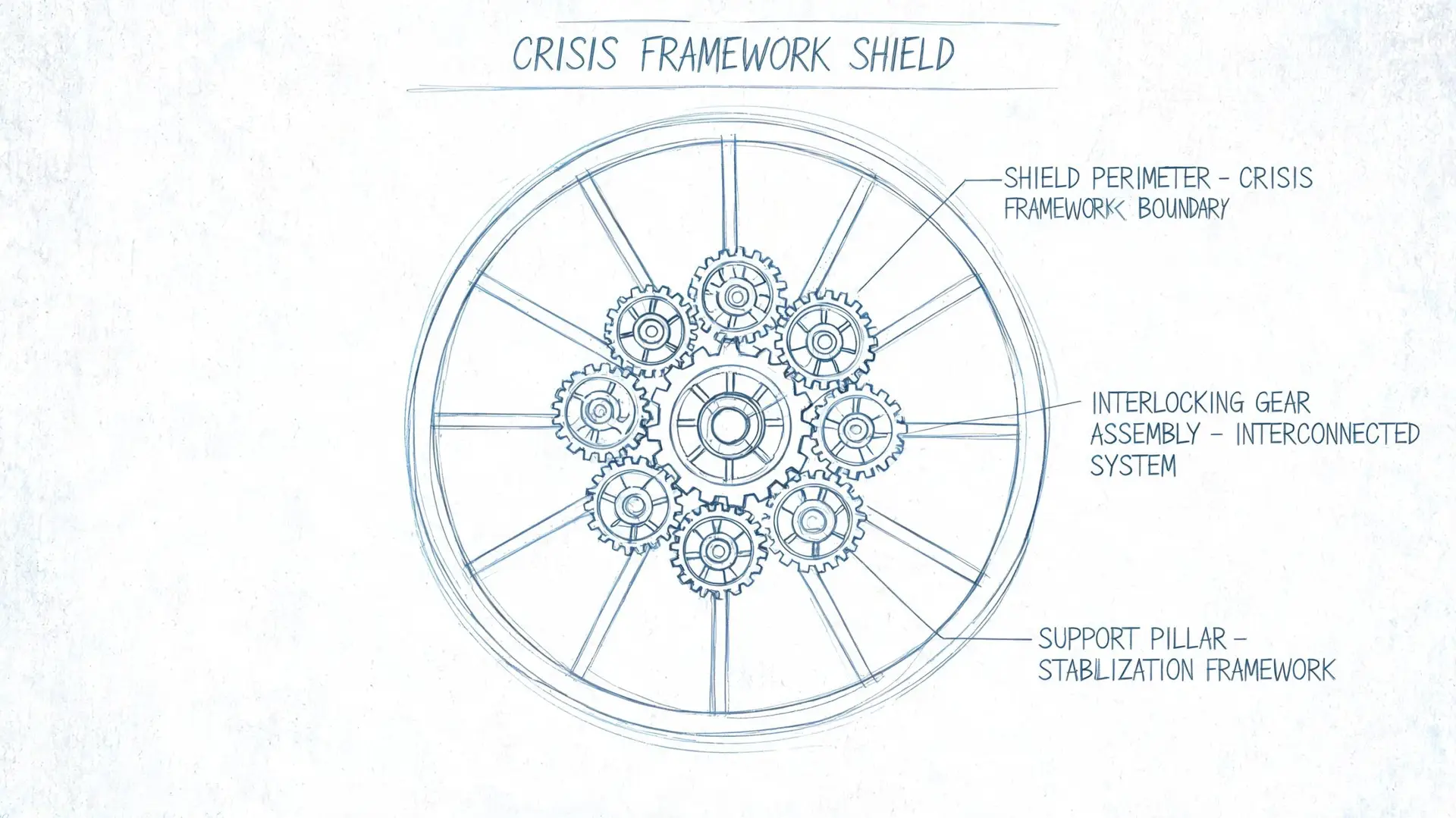
A rigorous five-stage framework anchors that architecture: Anticipate, Prepare, Respond, Recover, Learn. According to NSF’s crisis management framework summary, proactive anticipation alone can reduce the financial and reputational impact of a crisis by as much as 40%.
The framework boards should actually build
Most plans fail because they describe ideals. They don’t assign commands.
A usable framework needs a named Crisis Management Team with authority to act under pressure. For international companies operating in or through Israel, that team should include legal, finance, operations, communications, and an executive sponsor who can break deadlocks quickly.
The five stages work when translated into concrete action:
-
Anticipate
Identify triggers that could stop business, not merely irritate it. Include account restrictions, returned checks, key supplier defaults, regulatory complaints, and shareholder disputes. -
Prepare
Build contact trees, decision rights, document holds, statement protocols, and treasury contingencies. Pre-draft notices for banks, counterparties, employees, and critical commercial partners. -
Respond
Activate one command center. Freeze unapproved external messaging. Route facts through legal review before anyone “clarifies” the situation informally. -
Recover
Restore operations in the order that preserves influence. That usually means banking access, payroll certainty, key supplier continuity, then broader market reassurance. -
Learn
Convert the event into revised authorities, tighter agreement language, and cleaner escalation clauses.
The team must train together
A written plan without rehearsal is a comfort document. It isn’t a response system.
For that reason, drills matter most where departments usually collide. HR is often overlooked, yet internal stability depends on it. A useful complementary resource on this point is expert guidance on HR crisis plans, especially for companies managing employee anxiety during payment or compliance disruptions.
Operational principle: If your legal lead, finance lead, and communications lead haven’t practiced the same scenario together, they don’t have a crisis plan. They have separate opinions.
A proper exercise should test more than timing. It should test conflict.
For example, ask the team to resolve these questions under pressure:
- Who speaks first: The country manager, CFO, or outside counsel.
- What gets disclosed: Confirmed facts only, or also the company’s corrective steps.
- Which market gets the first message: Israel, headquarters, lenders, or customers.
- What payment triage applies: Payroll first, regulated obligations first, or strategic suppliers first.
Vulnerability mapping beats generic planning
International companies often enter Israel with strong commercial ambition and weak local friction mapping. That’s where a legal risk audit matters. Contract structures, signature authority, payment workflows, banking practices, and dispute ladders should align before conflict begins.
That’s also where targeted legal review adds value. Firms such as RNC Group’s commercial risk management services focus on mapping vulnerabilities in commercial structures before they become courtroom or banking emergencies.
The right framework doesn’t promise calm. It preserves maneuverability when calm disappears.
The Flashpoint Detection and Immediate Containment
The alert arrives at 08:17. The Israeli bank has restricted the company account after returned checks. The finance manager says supplier transfers are blocked. Payroll files may fail next.
At that moment, the company doesn’t need discussion. It needs command.
The time pressure is real. 41% of companies suffer lasting reputation damage if they delay a meaningful response beyond 48 hours, and 72% of consumers and business partners expect a response within 24 hours, according to Amra & Elma’s crisis response statistics.
The first hour
The first sixty minutes decide whether the event stays contained or becomes a wider dispute. The core objective is simple. Stop informational chaos before it multiplies legal and operational damage.
A disciplined first-hour sequence looks like this:
- Verify the trigger: Confirm the bank’s stated basis, the affected accounts, and the immediate operational consequences.
- Activate legal control: Route all internal fact gathering through counsel and preserve relevant records.
- Lock external messaging: No employee should “explain” the issue to vendors, customers, or media without clearance.
- Triage obligations: Separate payroll, regulated payments, mission-critical suppliers, and deferrable outflows.
- Establish one reporting line: Headquarters must receive one verified situation update, not five conflicting versions.
That sequence sounds obvious. Under pressure, it rarely happens cleanly.
The wrong instinct
Many executives call the bank first and everyone else second. That’s understandable, but incomplete.
A bank restriction can trigger chain reactions outside the banking relationship. Counterparties may declare default. Employees may panic if salaries appear uncertain. Overseas management may issue an overbroad statement that creates admissions before counsel reviews the facts.
Silence without internal control is paralysis. Noise without legal review is self-inflicted damage.
The more effective approach combines legal containment with operational substitution. Treasury explores alternative payment channels where lawful and available. Legal reviews immediate rights and notice obligations. Management identifies the smallest factual statement that can stabilize key stakeholders without surrendering position.
A specific Israeli treatment path may also require focused review of the account status itself. Companies dealing with this issue should understand the mechanics discussed in RNC Group’s analysis of bank account restrictions in Israel.
Immediate containment table
| Priority | Immediate question | Responsible lead |
|---|---|---|
| Banking | What is restricted, and on what basis | Finance with counsel |
| Legal | What notices, rights, and deadlines apply | Legal |
| Operations | Which payments must move today | COO or finance |
| Internal messaging | What do staff and managers say now | Executive lead with counsel |
| Cyber and systems | Is this linked to fraud, vendor failure, or unauthorized access | IT and security |
Some banking crises begin as financial errors. Others begin as fraud indicators, phishing events, or system compromises. That’s why an account restriction response should sit beside, not apart from, developing a proactive cyber security plan.
Containment isn’t the final objective. It buys time for strategic choices. Without it, the company loses tempo and lets others define the event.
Strategic Response Integrating Legal and Media
Most corporate crisis plans separate law from communications. That division looks tidy on paper. In live conflict, it’s dangerous.
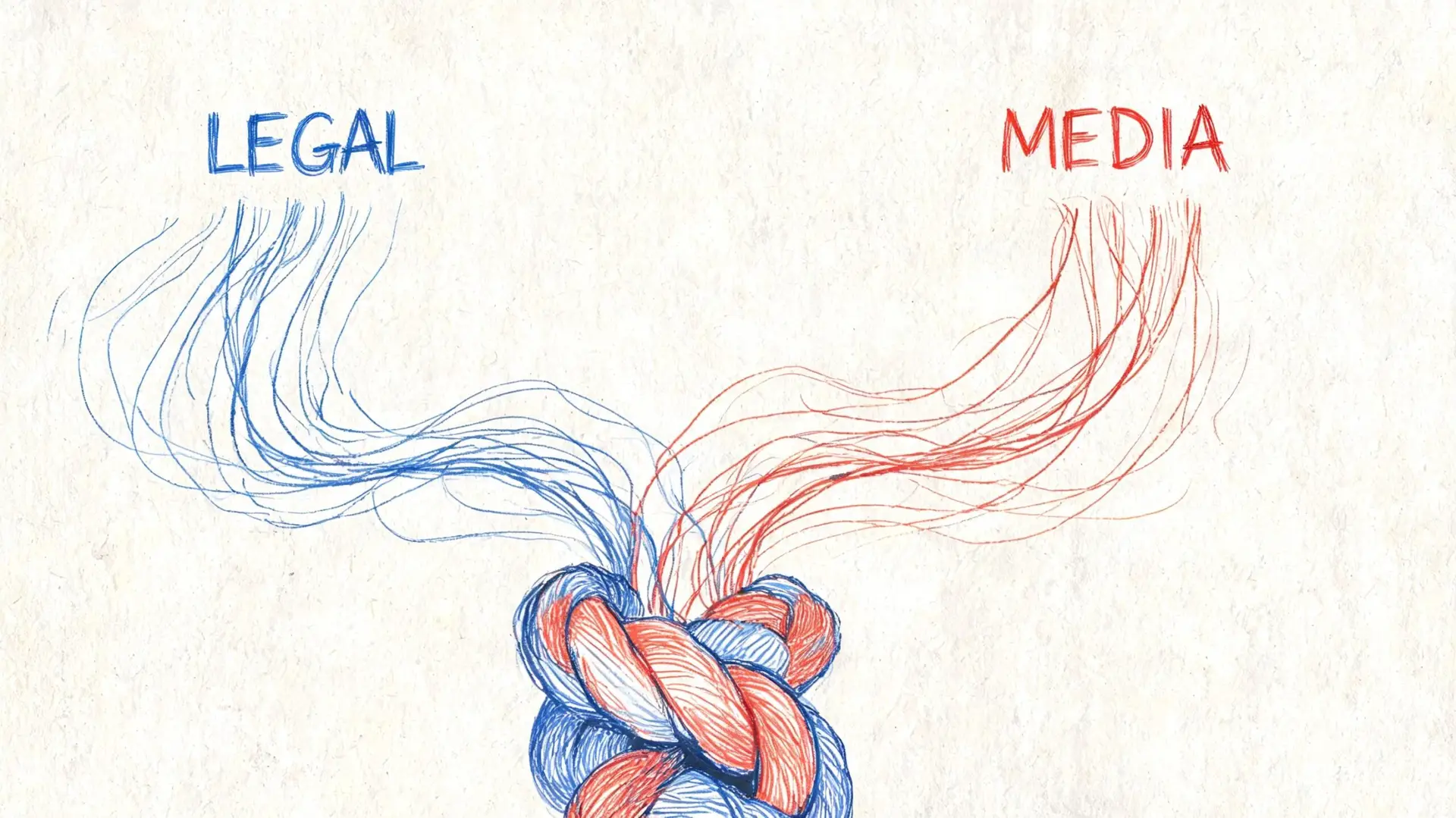
A critical underserved area in crisis planning is coordinating legal and communications strategies across multiple jurisdictions. As FGS Global’s crisis management analysis notes, conflicting disclosure requirements, different privilege rules, and divergent media environments can produce contradictions that undermine the entire response unless one strategic authority manages them.
Why legal and media conflict
Legal teams want precision. Communications teams want speed. Both instincts are rational. Neither is sufficient alone.
If Israeli counsel seeks urgent relief while headquarters issues a broad public statement in another country, the company may undercut its own legal theory. The reverse problem also appears often. Counsel freezes all communication, and stakeholders fill the silence with assumptions.
The right question isn’t which side wins. The right question is which message advances the legal and commercial position in each market.
A practical decision model asks:
- What fact is confirmed across jurisdictions
- What legal position must remain protected
- Which audience needs a statement now
- Which speaker carries authority without overcommitting
- How will today’s message read inside tomorrow’s affidavit or defense
One authority, several channels
Cross-border crises fail when each country team localizes the narrative independently. That creates small inconsistencies that later look like intentional contradictions.
A central authority should clear three things before any external statement goes out:
| Control point | Strategic question |
|---|---|
| Content | Does the statement protect legal position and operational trust |
| Timing | Does release timing support court, regulator, or counterparty strategy |
| Jurisdiction | Will this wording create problems in another market |
This doesn’t mean every market gets identical wording. It means every market gets aligned wording. The distinction matters.
The company should never let a press line outrun its legal theory, or let a legal theory ignore the audience that must keep doing business tomorrow.
How the sequence should work
In a banking crisis involving Israel and foreign parent entities, sequencing usually matters more than volume. First, verify the core facts. Second, notify the stakeholders whose immediate action affects business continuity. Third, issue only the external message needed for stability.
That message should be narrow. It should acknowledge the issue, confirm active handling, and avoid speculation. It shouldn’t assign blame too early unless the legal strategy already supports that move.
The courtroom and the media are separate arenas, but they influence each other continuously. A filing can shift coverage. Coverage can influence counterparties. Counterparty pressure can alter settlement posture. Executives should treat each public sentence as a move on the same board.
Escalation De-escalation and Strategic Resolution
A crisis doesn’t move in one direction. It expands, pauses, reframes, and sometimes retreats. Companies that only react to incoming pressure surrender control over pace and advantage.
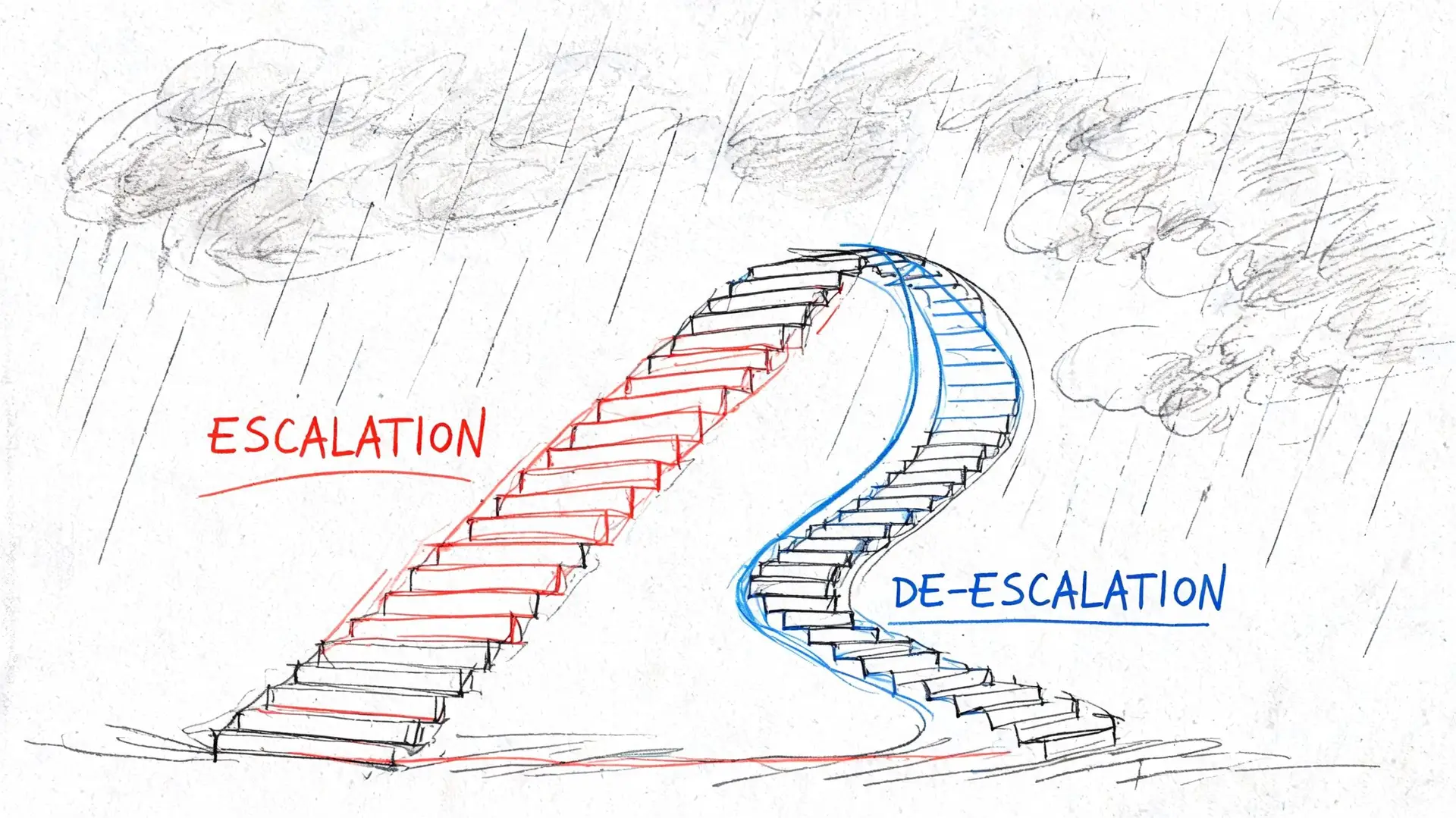
The more effective model uses phased escalation and deliberate de-escalation. That means management treats every tool, including negotiation, legal correspondence, public positioning, and litigation, as an advantage rather than identity. The aim isn’t maximum aggression. The aim is a favorable resolution on acceptable terms.
Escalation should be designed, not improvised
Most corporate damage comes from clumsy middle stages. The company delays too long, then overcorrects. It sends weak correspondence, then files prematurely. It leaks frustration before it builds a record.
A cleaner sequence often looks like this:
-
Private clarification
Test whether the issue is administrative, tactical, or hostile. Quiet resolution remains the cheapest path when it preserves rights. -
Structured legal correspondence Set out the facts, reserve rights, define deadlines, and create a disciplined paper trail. This stage often reveals whether the other side seeks settlement or an advantage.
-
Targeted pressure
Deploy banking challenges, contractual enforcement, regulator engagement, or controlled market communication where justified. -
Formal proceedings
Move to injunctions, claims, or defensive filings only when the record and objective support it. -
Negotiated exit or reset
Use the pressure created by earlier steps to secure payment, access restoration, revised terms, or separation.
De-escalation is not weakness
Some executives hear “de-escalation” and assume retreat. That’s a mistake.
Strategic de-escalation means reducing noise once an advantage has been created. It protects reputation, lowers collateral damage, and gives the opponent a viable path to comply without forcing a public fight to the finish. In commercial disputes, that often produces better economics than total victory theater.
A useful comparison is below:
| Approach | Typical result |
|---|---|
| Emotional escalation | More noise, weaker control |
| Passive delay | Lost leverage, forced concessions |
| Phased escalation | Pressure with optionality |
| Planned de-escalation | Resolution without unnecessary residue |
Prevention starts before the crisis exists
Most crisis literature focuses on response. A major blind spot remains preventative analysis during deal-making. As UniversalClass’s crisis basics discussion highlights, systematically analyzing a counterparty’s behavior, legal history, and operational red flags before a transaction can create crisis-resistant agreements and prevent later escalation.
That insight matters more than many companies admit. The seeds of account disputes, founder deadlock, franchise conflict, and payment warfare often exist inside the original agreement.
Preventative legal design should examine:
- Counterparty conduct patterns: How the other side behaves under pressure matters more than polished presentations.
- Escalation clauses: The contract should define notice, cure periods, authority levels, and dispute ladders.
- Payment architecture: Banking dependencies and trigger rights should match operational reality.
- Exit mechanics: A hard relationship needs a clean off-ramp before the first dispute appears.
For commercial structures with Israeli elements, these issues often surface in distribution, partnership, and licensing arrangements. Agreement design becomes a crisis tool long before anyone uses the word “crisis.” That’s why careful drafting in commercial agreements under Israeli law belongs inside the crisis conversation, not outside it.
Post-Crisis Fortification and Prevention
Many companies end a crisis with a memo, a board presentation, and relief. Then they drift back into the same structure that produced the event. That approach wastes the only expensive lesson the company has already paid for.
Post-crisis work should harden the enterprise. It should change authority lines, contract language, banking procedures, and reporting discipline. If those pieces stay untouched, the organization hasn’t recovered. It has merely resumed operations.
What a serious post-crisis review should change
A useful review asks where the system invited confusion. Did the finance team know when legal had to lead. Did country management understand message discipline. Did agreements give enough room to cure, suspend, or reroute performance.
The answers must become operating changes, not observations.
A disciplined fortification program should include:
- Contract revisions: Tighten notice clauses, payment terms, security mechanisms, and dispute escalation ladders.
- Banking resilience: Review account structures, signatory authority, and dependency on single channels.
- Communications control: Update who may speak, what can be said, and when legal approval is mandatory.
- Counterparty screening: Expand pre-deal review of conduct, litigation posture, and operational weaknesses.
- Simulation updates: Rebuild scenarios using the facts that caused pressure.
Recovery isn’t complete when the crisis ends. Recovery is complete when the same trigger can’t hit the company the same way twice.
The practical standard for prevention
The strongest organizations don’t aim to avoid every crisis. That isn’t realistic. They aim to prevent predictable triggers, absorb unavoidable shocks, and preserve strategic choice under pressure.
That standard matters in Israel, where banking, litigation, commercial practice, and cross-border enforcement often intersect quickly. It matters even more for foreign companies that enter the market with strong products but weak local legal architecture.
To avoid costly mistakes and transform your approach to crisis management from reactive to strategic, the recommended path is to seek expert counsel. Contact RNC Group now to build your resilient framework through the firm’s contact page.
This article addresses general issues only and doesn’t constitute legal advice. It doesn’t create an attorney-client relationship, and readers shouldn’t rely on it as a substitute for advice on specific facts, jurisdictions, contracts, or disputes.