
An unpaid invoice rarely creates the deepest problem. The true danger begins when a company handles collection as routine administration, then loses control of its advantage, timing, and jurisdiction.
For cross-border businesses dealing with Israel in 2026, that mistake can trigger far more than delayed cash flow. It can disrupt a commercial relationship, harden a negotiable dispute into litigation, and create collateral pressure around banking, counterparties, and internal reporting. A serious debt collection strategy isn’t about sending louder reminders. It’s about deciding, early, which pressure points to use, which risks to avoid, and which outcomes serve the business.
Your 2026 Debt Collection Plan A Gateway or a Trap
Many finance teams still treat collection as a back-office queue. That approach fails once the debtor sits in another country, the contract has mixed governing law clauses, and the counterparty has already started shaping a defensive narrative.
In that setting, a poorly designed collection effort becomes a trap. Staff send inconsistent messages, local agents make calls that don’t fit the jurisdiction, and legal notices go out before the file is organized. The debtor then gains time, builds procedural arguments, and reframes non-payment as a dispute over performance, set-off, or documentation.
Why routine escalation backfires
A shrewd debtor watches for operational weakness. If your team contacts the wrong entity, accepts partial explanations without verification, or threatens steps it can’t execute, the collection file stops being a receivables matter and starts becoming a credibility problem.
That risk is higher in cross-border matters involving Israel. Businesses often assume that a standard U.S. or EU credit control script will transfer cleanly. It won’t. Service rules, evidence preparation, language issues, and enforcement mechanics can all change the pressure profile.
Practical rule: The first collection move should increase control, not just increase noise.
A sound debt collection strategy therefore starts before formal enforcement. It starts with a decision about what kind of file this is. Is it a temporary liquidity delay, a managed dispute, a deteriorating credit event, or a precursor to litigation. Those aren’t accounting labels. They’re strategic categories, and each requires a different response.
What a controlled strategy looks like
A foundational shift in modern collections has been the move away from one-size-fits-all outreach and toward data-driven segmentation and prioritization. Current guidance emphasizes account scoring, behavioral analytics, and risk-based routing. It also recommends structured reminder timing at 3 to 5 days before due date, on the due date, and immediately after an invoice becomes overdue. It further stresses early flags for high-value or deteriorating accounts using payment delays and credit-utilization signals, as described in collections guidance on segmentation and reminder cadence.
That matters because the strategic question isn’t whether to apply pressure. The question is where pressure creates payment, where it creates defensiveness, and where it creates legal exposure for the creditor.
For a non-Israeli company, this distinction is decisive. The wrong communication sequence can weaken later enforcement. The right one can preserve documentary integrity, test the debtor’s real position, and narrow the dispute before formal proceedings begin.
A useful debt collection strategy doesn’t chase every shekel or every euro with equal intensity. It identifies the files worth pursuing hard, the files worth restructuring, and the files where immediate legal positioning matters more than another reminder email.
Designing Your Diagnostic and Risk Assessment Framework
Diagnosis comes first. An aged receivables report is useful, but it doesn’t tell management which debt can be recovered efficiently, which debtor is maneuvering, and which file is already drifting toward enforcement.

Start with segmented triage
A high-performance methodology begins with risk-based segmentation. FinDev Gateway’s guidance recommends classifying debtors by attitude, capacity to pay, solvency, and location, then applying different treatments to each group. Those willing and able to pay should receive simpler treatment, while debtors who are neither willing nor able may justify immediate legal escalation, as outlined in best practices in collections strategies.
That framework is valuable because it forces management to separate moral frustration from commercial judgment. Not every non-paying debtor is evasive. Some are disorganized, some are cash-constrained, and some are using delay to gain an advantage in a broader negotiation.
A practical file review should score at least the following:
- Payment behavior. Has the counterparty paid late before, or is this departure abrupt and unexplained.
- Dispute posture. Has the debtor raised a concrete operational complaint, or only vague objections after repeated reminders.
- Commercial exposure. Is more product, service, or credit still flowing to the debtor.
- Jurisdiction and asset map. Where is the legal entity, where are likely assets, and where would enforcement effectively matter.
- Document readiness. Are contracts, invoices, delivery records, and correspondence complete and internally consistent.
Build a legal risk lens into the score
Many collection systems overvalue aging and invoice size. Lawyers see different fault lines. A file with modest principal but clean documents, clear service acceptance, and identifiable assets may be stronger than a larger file built on fragmented paperwork and disputed scope.
Use a working matrix like this.
| Risk factor | Low concern | Elevated concern | Strategic implication |
|---|---|---|---|
| Liability clarity | Signed documents and accepted performance | Missing approvals or active performance dispute | Delay formal threat until evidence is consolidated |
| Solvency outlook | Ongoing business activity appears stable | Signs of distress or defensive silence | Move faster on preservation and escalation review |
| Counterparty behavior | Responsive and specific | Reactive, vague, or inconsistent | Treat communications as evidence building |
| Geographic complexity | One clear forum and one debtor entity | Multiple entities or cross-border performance chain | Validate target party before legal notice |
A collection file should answer one question early. Is non-payment the problem, or is non-payment only the symptom?
Focus resources where they matter
Modern collections guidance also favors predictive re-scoring and concentration of effort on accounts most likely to liquidate efficiently. The point isn’t more activity. The point is avoiding wasted outreach on low-probability files while stronger matters cool off.
For international creditors, that means assigning the file to the right lane:
- Soft recovery lane for debtors with payment capacity and a manageable issue.
- Negotiated pressure lane for debtors using delay tactics but still commercially reachable.
- Immediate legal preparation lane for debtors showing both resistance and weak solvency signals.
- Controlled exit lane for files where cost, proof, and enforceability don’t justify further spend.
Experienced counsel changes outcomes. The best debt collection strategy doesn’t reward the loudest internal stakeholder. It rewards disciplined prioritization.
Mastering Pre-Collection Engagement and Communication
The pre-collection phase decides whether the debtor pays voluntarily, negotiates seriously, or starts building a defense. Tone matters, but timing and channel discipline matter more.
Modern debt collection strategy has become more multichannel and consumer-centric, combining text, email, online self-service tools, and multiple payment options with empathetic dispute handling and customized repayment arrangements, as noted in guidance on digital-first debt recovery practices. In commercial matters, the same principle applies. Reduce friction first. Increase pressure only when the debtor’s conduct justifies it.
Use communication to test the file
Early messages shouldn’t read like generic accounts-receivable automation. They should do three jobs at once. They should request payment, surface the underlying objection, and create an auditable record.
A strong first sequence usually includes:
- A precise reminder that attaches the invoice set, identifies due dates, and gives a short payment path.
- A follow-up that asks specific questions if payment doesn’t arrive. Is there a documentation issue, an approval issue, a quality issue, or a cash timing issue.
- A formalized notice of concern that records non-response, reserves rights, and invites immediate commercial resolution.
This stage is where many companies lose their advantage. They either become too aggressive too early, which hardens positions, or they become too accommodating, which teaches the debtor that delay has no cost.
Pick channels that lower resistance and preserve evidence
Email remains useful because it creates a clean record. Phone contact remains useful because it reveals tone, hierarchy, and evasiveness. A self-service payment option remains useful because some debtors don’t object to the debt. They object to friction.
When customer-facing teams need practical guidance on de-escalating tense conversations without surrendering control, resources on strategies for tough customer service can help frame better interactions. The commercial collection context is different, but the communication lesson holds. Pressure works better when the counterparty feels there is still a path to solve the problem.
Keep every communication usable in court, but written to achieve payment before court.
What works and what usually fails
What works is a short, sequenced campaign with consistent authorship, fixed facts, and one clear ask per message. The debtor should never be able to say the creditor sent mixed demands, changed numbers, or ignored a genuine issue.
What fails is scattered contact from sales, finance, and external agents at the same time. That creates internal contradiction. It also invites the debtor to forum-shop within your organization for the most accommodating response.
A disciplined debt collection strategy treats pre-collection communications as controlled negotiation. It doesn’t mistake politeness for weakness, and it doesn’t confuse threats with progress.
Executing A Calibrated Escalation Plan
Escalation should feel inevitable to the debtor, but deliberate to the creditor. That requires a sequence. If pre-collection contact has clarified the file and the debtor still hasn’t paid, the next moves should increase legal pressure without wasting procedural capital.
A widely cited rule in commercial collections is the 7-7-7 rule. Contact within 7 days of delinquency, attempt 7 contacts over 7 weeks, and aim to resolve within 7 months, according to commercial collections guidance on timing and cadence. The rule isn’t magic. Its value lies in discipline. Early, structured intervention usually produces more options than late, emotional escalation.
Stage one formal demand
The formal demand letter should do more than demand payment. It should identify the contracting parties, summarize the obligation, attach or reference the documentary basis, state the breach clearly, and set a realistic deadline for response or payment.
In Israeli-related matters, this letter also serves a strategic function. It tests whether the debtor has counsel, whether the dispute position is coherent, and whether the debtor takes legal exposure seriously. A weak letter invites defiance. A precise one narrows the room for evasion.
Useful demand letters also avoid common mistakes:
- They don’t overclaim. Exaggerated allegations reduce credibility.
- They don’t threaten steps that aren’t ready. Empty threats train the debtor to wait.
- They preserve optionality. The letter should support negotiation, interim measures, or litigation.
Stage two negotiated pressure
If the debtor engages but doesn’t pay, the matter often enters a narrow window where controlled concessions can secure recovery. That may involve staged payments, partial settlement, escrow logic, document cures, or a short standstill while evidence is exchanged.
This isn’t softness. It’s strategic control.
A creditor should ask three questions before offering any concession:
- Is the debtor able to perform under the revised proposal.
- Does the concession improve recovery certainty, or only postpone default.
- Does the arrangement strengthen or weaken later enforcement if breached.
Uncontrolled escalation becomes a business crisis. Controlled escalation turns pressure into options.
In high-stakes disputes, management should treat debt recovery as part of wider corporate risk containment. The same discipline appears in commercial crisis management analysis, where legal action, negotiation, and reputational control must operate in one plan rather than in separate silos.
Stage three preservation and forum positioning
When the file shows dissipation risk, entity confusion, or strategic delay, the creditor may need to shift from persuasion to asset and forum positioning. That can include preparing for interim relief, preserving documentary evidence, identifying payment flows, and validating the right defendant or defendants.
At this point, delay is often the debtor’s weapon. The creditor’s answer is preparation. Every unresolved ambiguity around the contract chain, service acceptance, notice history, or governing law should be closed before the claim is filed.
The table below captures the logic.
| Stage | Trigger | Primary Action | Objective |
|---|---|---|---|
| Early default | Missed payment with no serious dispute | Structured reminder and file validation | Secure fast voluntary payment |
| Repeated delay | Promises without performance or vague objections | Formal demand and controlled negotiation | Test seriousness and narrow issues |
| Defensive posture | Lawyer involvement, shifting explanations, or solvency concern | Evidence consolidation and forum planning | Increase pressure while protecting enforcement options |
| Breakdown | No meaningful engagement or breach of settlement path | Litigation or enforcement filing | Convert leverage into compulsory process |
Stage four litigation as leverage, not reflex
Litigation has value beyond judgment. In the right file, it changes urgency, forces document disclosure, and interrupts the debtor’s strategy of indefinite drift. In the wrong file, it consumes time, hardens positions, and produces an unenforceable paper victory.
That is why calibrated escalation matters. The best debt collection strategy doesn’t ask whether litigation is available. It asks whether litigation improves the creditor’s position compared with a renewed commercial offer, a tighter settlement structure, or a targeted interim application.
In practice, strategic collection counsel will often prepare the litigation package before the final demand expires. That changes the quality of the final demand. The debtor can sense when a creditor is posturing and when the next move is already operational.
Navigating Cross-Border and Israeli Jurisdictional Issues
Generic debt collection playbooks often collapse when they touch Israeli facts. The issue isn’t that Israel is uniquely difficult. The issue is that cross-border creditors often underestimate how quickly procedural details become strategic obstacles.
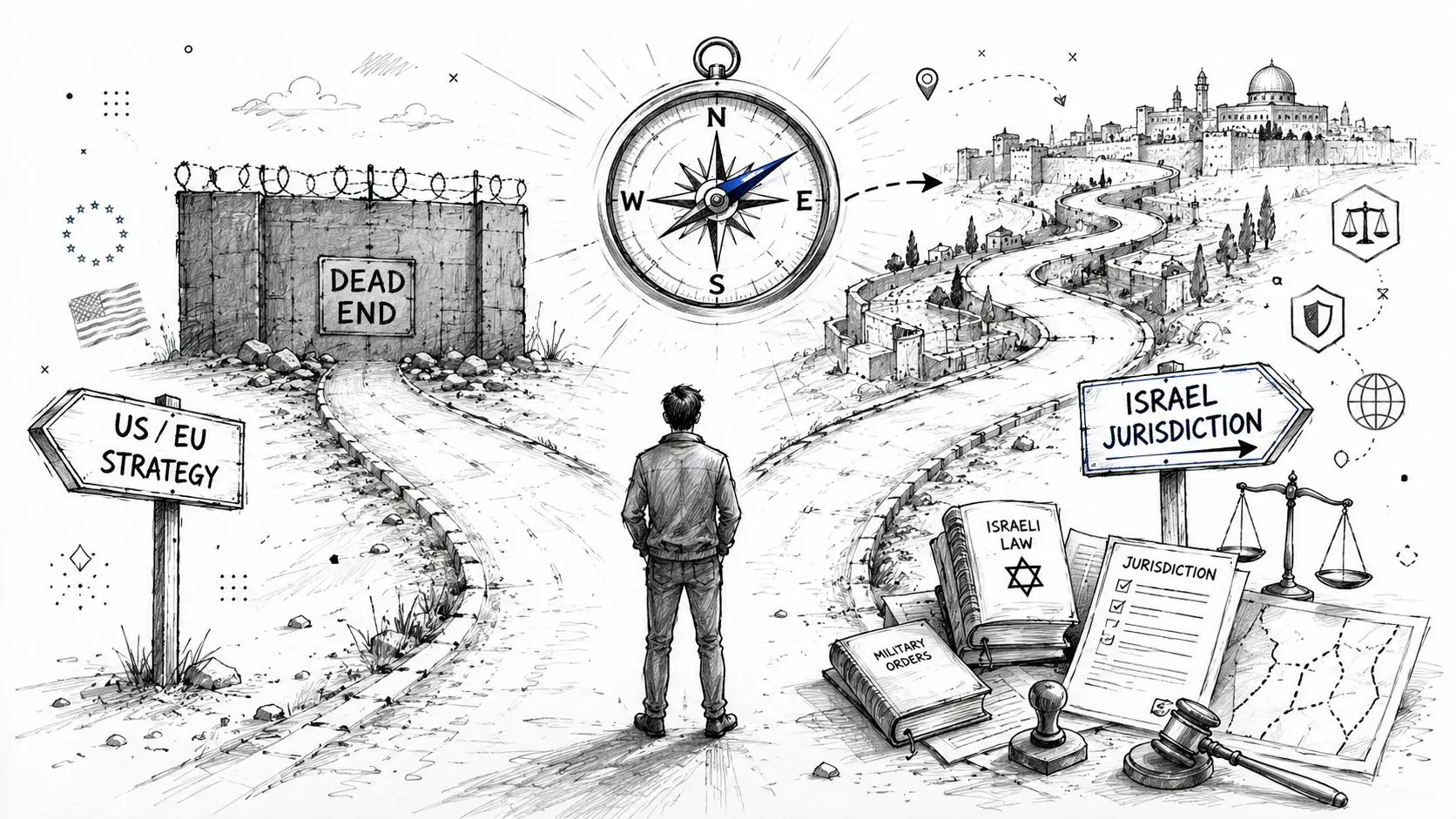
A major blind spot for international businesses is operationalizing compliance across jurisdictions. The right collection sequence in one country can be ineffective or non-compliant in another, which is why jurisdiction-specific playbooks matter more than generic best practice, as discussed in analysis of cross-border debt collection challenges.
Why foreign assumptions fail in Israel
A foreign creditor may assume that a demand letter sent from headquarters settles the notice issue. It may not. The contract may require service to a specific address or entity. The Israeli counterparty may be part of a group structure that obscures which company contracted, received goods, or holds assets.
A second failure point is enforcement planning. Some companies focus heavily on proving the debt but spend too little time mapping where pressure can lawfully bite. A collectible claim and an enforceable pathway aren’t the same thing.
Common Israeli-related friction points include:
- Entity identification. Trading names, affiliated companies, and guarantor structures often need close review.
- Notice mechanics. Improper service can delay or complicate later proceedings.
- Forum mismatch. The contract may say one thing, the performance history may suggest another, and the practical enforcement route may favor a third approach.
- Banking consequences. Collection pressure can intersect with account restrictions, returned checks, and broader commercial distress.
Banking pressure changes the dispute
Foreign creditors often miss the strategic significance of banking constraints in Israel. A counterparty facing account restrictions or repeated returned checks may not only be late. It may be entering a wider commercial crisis.
That doesn’t automatically mean the debt is unrecoverable. It means the collection file must be integrated with a broader risk assessment. If the debtor’s banking position is deteriorating, waiting for a voluntary cure may destroy recovery value.
For readers dealing with that overlap, bank account restrictions in Israel due to returned checks provides a useful legal context for how banking pressure can reshape commercial power and urgency.
Cross-border collection fails most often when the creditor exports a domestic habit into a foreign legal environment.
What sophisticated creditors do differently
They localize early. They verify the target entity before sending final notices. They align legal language with the contract and the likely forum. They also separate negotiation theater from actual enforceability.
In Israeli matters, that usually means involving local legal analysis before the file reaches crisis stage. Not because every invoice requires litigation, but because every cross-border collection strategy requires a realistic enforcement map.
That is the strategic advantage. It isn’t aggressiveness. It’s knowing which move creates lawful pressure in Israel, which move creates delay, and which move subtly damages the creditor’s own case.
Measuring Success and Concluding Action
A serious debt collection strategy measures more than cash recovered. It measures whether the company used its time, legal budget, and commercial advantage intelligently.
Use business metrics, not vanity metrics
A file can end in payment and still reflect poor strategy. If recovery came only after excessive discounting, unmanaged delay, or a breakdown with a valuable counterparty, the result may be weaker than it looks.
Management should review each file against a small set of decision criteria:
- Recovery quality. Was the amount recovered acceptable relative to the original exposure and concessions made.
- Resolution speed. Did the team move quickly enough to maintain their advantage.
- Cost discipline. Did legal and operational spend remain proportionate to likely recovery.
- Relationship impact. Is the counterparty still commercially usable, or has trust collapsed.
- Enforcement readiness. If the matter didn’t settle, is the file now stronger for compulsory action.
Define exit points early
Every collection file needs a stopping rule. Some debts justify immediate legal investment because proof is strong, assets appear reachable, and delay will only worsen the position. Others should be settled pragmatically. A smaller group should be written down after disciplined review because the likely cost of pursuit exceeds the strategic value of the claim.
That is not weakness. It is portfolio control.
The best debt collection strategy treats every unpaid obligation as a business decision under legal constraint. It uses diagnosis, communication, escalation, and jurisdictional analysis to convert uncertainty into managed options. For cross-border matters involving Israel, that discipline often determines whether a debt remains an accounting problem or becomes a commercial crisis.
Businesses that want to avoid costly mistakes in Israeli and cross-border recovery matters should consider taking advice before escalation hardens the dispute. The recommended next step is to obtain a jurisdiction-specific review of the file, the debtor, and the enforcement pathway through RNC Group.
This article provides general information only. It does not constitute legal advice, does not create an attorney-client relationship, and should not be relied on as a substitute for fact-specific legal analysis in any jurisdiction.