
Will online dispute resolution protect a cross-border commercial position in 2026, or will it leave a winning party with an unenforceable result, a confidentiality problem, and a second dispute about the first one?
That question matters for any non-Israeli company doing business with Israeli counterparties. ODR looks efficient on paper. Yet the disadvantages of online dispute resolution become sharper when the dispute involves complex contracts, valuable intellectual property, strained banking relationships, or assets spread across several jurisdictions.
In low-value consumer matters, digital processes can help. In complex commercial litigation, however, speed without control is a poor bargain. Experienced parties need enforceability, confidentiality, procedural advantage, and a forum that can manage pressure, evidence, and compliance.
The 2026 ODR Paradox for Global Business
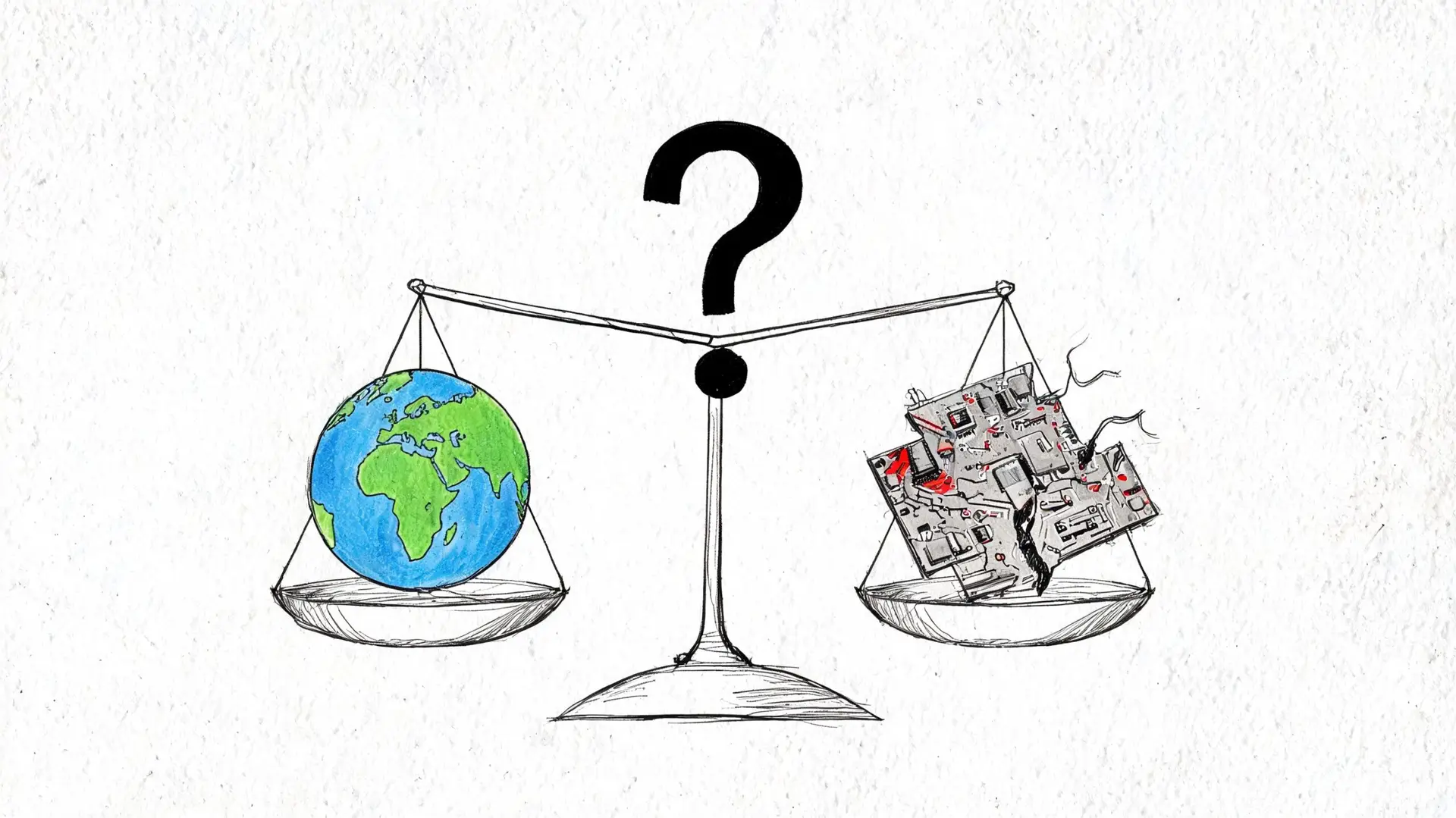
Businesses adopted digital tools to remove friction. That instinct makes sense. However, dispute resolution isn’t just another workflow.
The central problem is simple. ODR promises convenience, but complex disputes rarely fail because the parties lacked a video link. They fail because the parties fight over strategic advantage, evidence, governing law, authority, and enforcement.
For cross-border matters involving Israel, that gap becomes commercial, not academic. A company may need immediate control over payment obligations, document preservation, reputational exposure, shareholder relations, or restricted banking activity. In those moments, a platform interface doesn’t replace a coercive legal framework.
Why the promise sounds stronger than it is
ODR usually sells three ideas. It reduces travel, shortens process time, and keeps parties talking. All of that can be useful.
Yet those benefits matter only if the process also preserves strategic pressure. In high-stakes disputes, a party often needs one or more of these outcomes:
- A binding order: something a court or tribunal can recognize and enforce.
- Compulsory steps: disclosure, attendance, deadlines, or sanctions for non-compliance.
- Reliable record integrity: proof of who submitted what, when, and under what authority.
- Controlled confidentiality: not merely a platform promise, but a legally defensible structure.
Online efficiency often improves logistics. It doesn’t automatically improve legal finality.
That distinction is where many corporate clients misjudge risk. They compare ODR to the inconvenience of litigation. They should compare it to the consequences of a failed settlement pathway that reveals strategy, consumes management time, and still ends in court.
The Israeli cross-border angle
Disputes tied to Israel often involve layered legal and commercial realities. Those may include multilingual contracts, counterparties operating through several entities, urgent correspondence before suit, and the need to coordinate counsel across countries. In that setting, digital convenience can obscure legal fragmentation.
Businesses reviewing commercial litigation strategy in Israel or multilingual legal document translation usually discover the same point. Precision in language and forum selection shapes outcomes long before any hearing starts.
Understanding ODRs Illusory Promise
ODR is a broad label. It can mean a text-based negotiation portal, a mediator-led video process, an asynchronous exchange system, or an AI-assisted workflow. That breadth causes confusion because the legal weight of the result often differs from the marketing around the process.
For routine payment disagreements or narrow service complaints, that may be acceptable. For partnership breakdowns, licensing disputes, franchise conflicts, or post-acquisition claims, it often isn’t.
Where ODR works
ODR tends to work best when the dispute is structurally simple. The facts are limited, the parties want to preserve a relationship, and the amount at stake doesn’t justify a full procedural fight. In those cases, an online channel may help people reach a commercial compromise quickly.
That doesn’t make it a strong default for serious corporate conflict. Complex disputes need more than a communications layer.
Where the model breaks
Traditional litigation and formal arbitration do more than host a discussion. They create legal consequences around the discussion. That difference matters when one party delays, conceals information, contests authority, or prepares to move assets.
The disadvantages of online dispute resolution become obvious when the case requires any of the following:
- Witness credibility assessment: subtle evasions matter.
- Structured evidentiary pressure: a party must produce documents or answer clearly.
- Interim relief: delay itself may cause damage.
- Cross-border compliance: a settlement must survive scrutiny in more than one jurisdiction.
Practical rule: If the counterparty’s business conduct created the dispute, don’t assume voluntary digital compliance will resolve it.
An advanced company should also separate process from outcome. A smooth portal can create a false sense of progress. Messages are exchanged. Calendars fill. Draft terms circulate. None of that guarantees that the result can be executed against assets, defended in court, or converted into durable advantage.
In disputes over franchise agreements in Israel or partnership and founders disputes, the core problem usually isn’t whether parties can communicate online. The issue is whether the chosen path gives one side enforceable remedies if trust collapses again.
Navigating Jurisdictional Gaps and Enforcement Failures

The most serious weakness in cross-border ODR is enforcement. A result that can’t travel across borders isn’t a resolution. It’s a draft problem.
This issue becomes acute when the contract, the parties, the signatories, and the assets all sit in different places. One entity signs from Europe. Another operates from Israel. Key servers, bank accounts, or inventory sit elsewhere. In that structure, the legal value of an online outcome depends on what another court later decides about it.
The numbers that should stop any boardroom rush
A 2025 UNCITRAL report found that only 42% of ODR agreements from common platforms were enforceable across EU-Israel borders without additional litigation, compared with 78% for in-person arbitrations under New York Convention protocols. The same material states that digital signature mismatches between eIDAS and Israeli e-Signature laws contribute to a 30% higher nullification rate in Israeli court appeals, according to the Duke Law analysis cited here.
Those figures change the strategic calculation. If a company chooses ODR for speed, then needs another proceeding to validate the result, the speed advantage may disappear. Worse, the second proceeding often occurs after confidential positions and settlement ranges have already been exposed.
Why this happens in practice
Enforcement failures usually come from legal seams, not platform malfunction. Common fault lines include:
- Authority disputes: the person who clicked “agree” lacked corporate authority.
- Signature mismatch: the execution method satisfies one legal regime, not another.
- Forum uncertainty: the platform process doesn’t map neatly onto recognized enforcement routes.
- Asset location problems: a favorable result still requires local proceedings where the assets exist.
A board doesn’t need abstract digital innovation. It needs a recovery path. If the dispute concerns unpaid obligations, diverted business, breached restrictive covenants, or post-closing claims, the winner must be able to turn paper into compliance.
Better uses of pressure
Some disputes still benefit from online tools. Early-stage negotiation can narrow issues. A virtual meeting can test commercial appetite. But that is different from surrendering the main battlefield to a process with unclear jurisdictional force.
Enforceability should be evaluated before the first online session, not after the settlement falls apart.
A prudent path is to decide the order of operations before engaging. Which court has authority. Which law governs. Which signature form is acceptable. Which assets are reachable. Which interim applications may be needed if talks fail.
That discipline matters even more where the dispute intersects with urgent financial disruption, including bank account restrictions in Israel due to returned checks. In those scenarios, a company often needs immediate legal traction, not a platform outcome that invites a second fight.
Exposing Critical Data Security and Confidentiality Risks
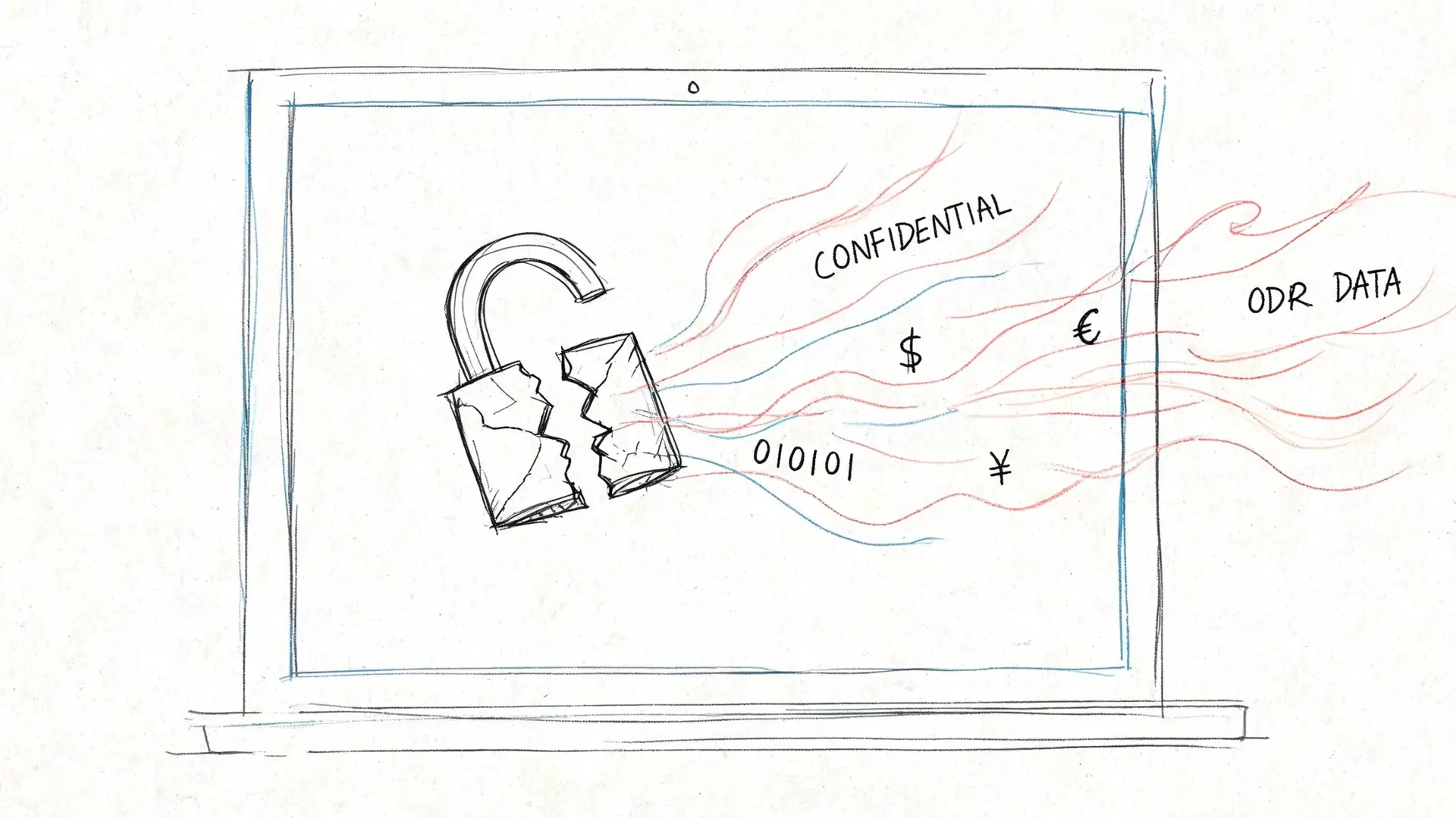
What happens if the dispute process itself becomes the point of exposure?
In serious commercial litigation, confidentiality is part of the asset base. A leaked pricing model, draft settlement position, internal investigation memo, or board communication can alter the balance of power before anyone reaches the merits. For non-Israeli companies dealing with Israel, that danger is sharper because the dispute file often includes cross-border transfers, multilingual communications, regulated financial records, and advice prepared for parallel legal risk in more than one jurisdiction.
ODR requires parties to place that material into systems they do not fully control. Documents are uploaded to cloud repositories. Hearings pass through third-party video infrastructure. Transcripts, recordings, chat logs, identity credentials, and metadata may be retained by the platform or its vendors long after the session ends. The convenience is real. So is the concentration of risk.
The exposure sits in the architecture
Security failures in online dispute processes usually do not arise from a single dramatic hack. They arise from ordinary technical dependencies that no party fully audits during a fast-moving dispute. Browser-based conferencing, outsourced hosting, weak administrator controls, permissive recording settings, shared links, and cross-border data storage create multiple points of failure.
The concern is well recognized beyond legal marketing. The United Kingdom’s National Cyber Security Centre has published guidance on video conferencing services, stressing access control, patching, authentication, and recording management because these tools routinely handle sensitive discussions. Those same vulnerabilities follow ODR platforms into mediation and settlement sessions.
For a business facing a fraud allegation, a shareholder conflict, a post-acquisition claim, or a trade secret dispute tied to Israel, that matters immediately. Once privileged analysis or commercially sensitive evidence leaks, the damage is rarely confined to the dispute. It can trigger regulatory scrutiny, internal governance fallout, reputational harm, and tactical pressure from the counterparty.
A confidentiality clause does not fix a weak system
Parties often overestimate what a confidentiality agreement can do. It creates a remedy after misuse. It does not stop screen capture, covert recording, compromised credentials, or unauthorized attendance by someone sitting off camera. Nor does it answer the harder question in cross-border matters. Where is the data stored, who can access it, and under which law will a breach be pursued?
Communication security also has to be examined at the transport layer, especially where voice traffic forms part of the dispute workflow. This overview of SIP TLS is a useful starting point for understanding how encrypted signaling reduces interception risk in voice communications. It is only one control, but it illustrates the broader point. Contract language and technical security are separate disciplines, and both must be addressed.
A platform can be covered by a confidentiality clause and still expose the dispute file to preventable technical risk.
AI features widen the risk perimeter
Many ODR systems now offer automated summarization, triage, document handling, or settlement support. That may reduce administrative burden, but it raises a separate control problem. Sensitive facts are no longer just transmitted and stored. They are processed, categorized, and sometimes reused within opaque model workflows that the parties cannot properly test.
For high-stakes cross-border disputes, that is not a minor concern. Counsel may need to explain why a Hebrew term in a notice letter does not match the English translation, why a sanctions-related payment delay should not be treated as bad faith, or why a founder’s conduct matters more than the clean wording of a board resolution. Automated systems tend to flatten that nuance at exactly the point where nuance carries value.
The right question is not whether the platform is convenient
The right question is whether the company is prepared to expose core dispute material to a third-party system during a live conflict.
Before agreeing to ODR, a prudent party should require:
- Data mapping: identify what categories of information the platform will receive, process, store, and export.
- Access control review: confirm who can join, who can invite others, and how participant identity is verified.
- Recording governance: set written rules on recording, transcription, screenshots, and downstream use.
- Retention terms: determine where data is hosted, how long it is kept, and whether deletion is real or limited by backups.
- Privilege separation: keep legal advice, litigation strategy, and negotiation material in distinct channels.
- Incident response terms: establish who must notify whom, and how quickly, if the platform suffers a security event.
In lower-value matters, that may be a manageable exercise. In complex disputes involving Israel, it often is not. Where the file includes proprietary technology, sensitive banking records, internal investigations, or board-level strategy, parties should assume that ODR increases exposure unless counsel has tested the platform, the workflow, and the data path with the same discipline applied to the underlying case.
The Digital Divide and Unfair Procedural Outcomes
ODR is often marketed as equal access. In practice, it can reward the party with better infrastructure, better hardware, better support staff, and better familiarity with digital systems. That isn’t procedural neutrality. It’s a hidden allocation of advantage.
The verified data shows that 2.7 billion people still lack reliable internet access. It also notes that poor connectivity contributes to 25-30% lower settlement rates compared with in-person meetings, and that automated systems handle only about 20% of disputes beyond simple monetary claims effectively because they struggle with emotional and cultural nuance, according to this ODR ethics analysis.
Unequal access becomes unequal persuasion
In a high-stakes negotiation, delay, distortion, and interruption change substance. The party with lagging audio misses tone. The party whose video freezes loses presence. The party with weaker translation support struggles to react in real time. None of that appears on a merits chart, yet all of it affects outcome.
This is especially relevant in cross-border disputes tied to Israel, where negotiations may move across English, Hebrew, and additional business languages. A technologically stronger party can dominate by operating more fluently within the platform.
Procedure can become a weapon
Digital friction creates opportunities for tactical behavior:
- Last-minute document drops: the other side can’t review properly on screen.
- Platform complexity: one party arrives with technical support and rehearsal.
- Connectivity objections: interruptions fragment momentum at critical moments.
- Automation overreach: systems push rigid categories onto fact patterns that resist them.
For companies building internal safeguards, a practical starting point is an essential checklist for protecting business data. That kind of operational discipline helps. It doesn’t solve the fairness problem inside the process itself.
If one side controls the technology better than the facts, the process may favor performance over merits.
A fair procedure must let both sides present clearly, review evidence properly, and respond without technical handicap. ODR can support that goal in limited disputes. In complex commercial cases, it too often undermines it.
Why ODR Fails the Human Element in High-Stakes Talks

What happens when a dispute can be settled only if someone in the room notices hesitation, tests credibility, or gives the other side a face-saving path to retreat?
That question matters more than many companies expect. In high-value cross-border disputes, settlement terms often turn on judgment that is partly verbal and partly observational. Counsel reads timing, tone, internal alignment, and risk tolerance. A mediator tests whether a principal is posturing, under pressure, or internally willing to compromise. ODR strips much of that away, and the loss is not cosmetic. It changes how parties assess bargaining power and whether a workable deal can be reached at all.
Reduced human signal weakens negotiation control
The problem is well recognized in mediation practice. The New Zealand Ministry of Business, Innovation and Employment’s report on online dispute resolution notes concerns among mediators about the loss of body language and other non-verbal cues in online processes. In straightforward consumer matters, that may be tolerable. In a dispute over control rights, failed distribution obligations, IP misuse, or a distressed joint venture, it is a serious constraint.
Clients sometimes assume video solves this. It does not. A screen narrows the field of information. Side conversations disappear. Reactions are delayed or hidden. Counsel has fewer opportunities to judge who is leading the decision, who is merely present, and who is using the process to buy time.
That distinction matters in matters involving Israeli counterparties. Negotiations may shift between English and Hebrew, with commercial nuance carried by people in different locations and with different authority levels. In person, experienced counsel can test those dynamics quickly. Online, that read is weaker, and the other side may use that opacity to preserve ambiguity over authority, settlement mandate, or internal division.
High-stakes talks need more than an exchange of positions
Complex commercial disputes do not usually settle because the parties finally trade acceptable numbers on a platform. They settle because someone identifies a structure both sides can live with under pressure. That may include revised supply terms, phased payments, standstill arrangements, governance changes, audit access, non-disparagement terms, or a controlled exit.
Those outcomes are harder to build online because the process tends to flatten the discussion into stated demands and recorded responses. It is less effective at the moments that matter most. A principal softens after hearing how a judge may view the facts. A founder accepts separation if reputation protections are handled correctly. A foreign company dealing with an Israeli partner agrees to interim business continuity because it trusts the enforcement path and the people across the table.
Those shifts often happen in the margins. ODR leaves very little margin.
Fatigue and distance increase the risk of impasse
Online sessions also drain attention in ways that affect bargaining quality. The International Bar Association’s guidance on online mediation discusses practical concerns around participant engagement, screen fatigue, and the limits of remote interaction in mediation settings. In a low-stakes matter, that may only slow progress. In a business-critical dispute, it can end the negotiation before genuine commercial options are even explored.
I have seen this pattern repeatedly in cross-border matters. By the second or third remote session, decision-makers become narrower, less patient, and more positional. They default to legal points because those are easier to articulate on screen than mixed legal and commercial solutions. The process remains active, but the room has gone cold.
The cost is highest when the dispute is hard to price
ODR is at its weakest where the dispute includes pride, reputation, continuity of operations, future market access, or internal shareholder conflict. Those cases require calibrated pressure and credible reassurance at the same time. They also require counsel who can judge whether a concession is genuine, tactical, or reversible.
For non-Israeli companies handling disputes connected to Israel, this is not a theoretical concern. Local business culture, language shifts, and decision-making structures can materially affect settlement posture. A process that limits human reading can leave foreign parties one step behind, especially when the counterparty understands the forum, the pace, and the informal signals better than they do.
The more a settlement depends on credibility, authority, timing, and face-saving compromise, the less reliable ODR becomes.
ODR can still serve a purpose. It may be useful for early case contact, narrow procedural issues, or low-value claims where voluntary compliance is likely. It is a weaker tool for crisis-driven negotiations where the core task is to control risk, test authority, and secure terms that will hold across borders.
Decision Criteria for Using or Avoiding ODR
How much control is the company prepared to surrender for speed?
That is the critical decision point. In cross-border disputes tied to Israel, ODR should be treated as a tool for limited tasks, not as the default forum for matters that can affect cash recovery, supply continuity, shareholder stability, or market position. The question is not whether an online process can start the discussion. The question is whether it can carry the dispute through the points where pressure rises, positions harden, and a binding outcome must survive outside the screen.
The better approach is a task-based analysis. Separate the dispute into functions, then assign each function to the channel that can handle it with the least strategic loss.
What ODR can handle, and what it should not control
| Dispute task | Suitable for ODR | Keep in court or formal arbitration |
|---|---|---|
| Initial contact | Yes. Opening communications and setting a timetable | No need unless immediate relief is required |
| Exchange of narrow positions | Yes. Useful where the issues are defined and documentary | Keep formal pleadings offline if framing affects jurisdiction or remedies |
| Early commercial testing | Yes. A short without-prejudice session can show whether settlement range exists | Move quickly to a formal forum if authority, timing, or asset pressure matters |
| Routine procedural matters | Yes. Scheduling, document logistics, agreed extensions | Use formal channels where non-compliance needs consequences |
| Small payment disputes | Yes, if liability is straightforward and compliance risk is low | Keep formal options ready if the counterparty has a history of delay |
| Evidence-heavy merits stage | No. The process becomes too dependent on incomplete record-building | Yes. A supervised process is usually required |
| Urgent relief strategy | No | Yes. Orders, preservation steps, and coercive remedies need a recognized forum |
| Final settlement architecture | Only for simple deals with immediate performance | Yes where releases, security, staged payments, or cross-border undertakings must hold |
A recent pattern is instructive. A foreign supplier enters a dispute with an Israeli distributor over post-termination inventory, unpaid invoices, and customer communications. The parties agree to ODR because it appears fast and commercially sensible. For two weeks, it works. Position papers are exchanged, a video session is held, and a draft business solution starts to form. Then the dispute shifts. The supplier realizes inventory may be moving, key documents sit with former employees, and the proposed settlement depends on affiliates in two jurisdictions. At that point, staying in ODR becomes expensive. The process can discuss the problem, but it cannot impose the discipline needed to contain it.
That is where many companies lose time. They do not misjudge ODR at the outset. They fail to switch forums when the dispute changes character.
A practical if-then framework
Use ODR first if the case meets most of these conditions:
- The claim is commercially meaningful but not business-critical.
- The core facts are already known.
- The proposed outcome is payment, replacement performance, or a short-form settlement.
- The decision-makers on both sides are identified and available.
- A failed ODR attempt will not prejudice a later filing strategy.
Avoid ODR as the lead process if any of these conditions are present:
- The case may require freezing steps, injunctions, or evidence preservation.
- The dispute involves several contracts, affiliates, guarantors, or signatory questions.
- The commercial solution depends on staged performance over time.
- The counterparty gains an advantage from delay.
- The company will need a judgment or award that can be used quickly against assets.
For non-Israeli clients, one further filter matters. Ask whether the online process reduces local informational asymmetry or increases it. If the Israeli counterparty knows the people, timing, and pressure points better, a remote process can magnify that advantage rather than neutralize it. Experienced counsel should design the sequence before the first session begins, including the trigger for leaving ODR and filing in a forum with real compulsion.
The strongest use of ODR is controlled, not complete
In practice, the safest model is hybrid. Use ODR to test settlement range, identify decision-makers, narrow accounting issues, and record what is agreed. Keep merits determination, interim applications, and final deal architecture in a forum that can compel performance and absorb a breakdown in cooperation.
That structure preserves flexibility without sacrificing legal position. It also fits the way serious disputes develop. Early discussions may be digital. The decisive stage rarely should be.
The recommended strategic path is to avoid costly mistakes before they become jurisdictional or evidentiary problems. For personalized guidance on cross-border commercial disputes involving Israel, contact RNC Group now.
Disclaimer: This article provides general information only and doesn’t constitute legal advice. Readers should obtain specific legal counsel before acting on any issue discussed here, and no reliance should be placed on this article as a substitute for professional advice.