

Spotting an underused office building in Tel Aviv and envisioning its potential as luxury apartments is an exciting prospect for any international real estate investor. In a market defined by a chronic housing shortage, commercial to residential conversion represents a prime opportunity to unlock significant value.
However, for investors in Israel, this is far more than a simple renovation project. It is a legal and bureaucratic marathon where a single misstep can lead to crippling financial penalties and legal jeopardy. This guide provides a clear feasibility analysis, focusing on the critical legal hurdles you must overcome for a successful and profitable conversion.
The Investor’s Guide to Property Conversion in Israel
For the sharp investor eyeing Israel’s property market, converting commercial spaces into residential units is a strategic move to meet intense housing demand. As remote work and e-commerce reshape commercial real estate, repurposing underperforming assets can yield exceptional returns. However, navigating this process without expert legal guidance is a significant risk. A deep understanding of Israeli planning and building law isn’t optional; it’s the foundation of a successful project.
Why Is This Strategy Gaining Traction?
This is a global shift. Cities worldwide are embracing adaptive reuse to solve housing crises. The office-to-residential conversion pipeline in the U.S. alone is projected to grow by over 200% by 2025, driven by high office vacancies and relentless housing demand.
In Israel, the logic is even more compelling:
- Insatiable Housing Demand: A severe shortage, especially in major cities, ensures strong property values and high demand for newly converted units.
- A New Commercial Reality: Underperforming office and retail spaces are ripe for repurposing, creating new value from dormant assets.
- Major ROI Potential: A well-executed conversion can significantly boost a property’s value, delivering a very attractive return on investment.
Mastering the Legal Labyrinth: A Feasibility Analysis
This guide breaks down the three fundamental legal and financial challenges every investor must conquer. Consider them the three pillars of your project’s feasibility—if one fails, the entire venture collapses.
- Zoning Changes & Planning Approval: Securing the legal right to change the property’s designated use.
- The Betterment Levy: Understanding and budgeting for this significant tax on the value increase created by your successful zoning change.
- Enforcement & Compliance Risks: Navigating the severe penalties for illegal conversions and ensuring full compliance with the law.
A solid legal foundation is everything. That journey begins with understanding the acquisition process itself, which we detail in our complete Buying Property in Israel Guide.
Securing Planning Approval and Navigating Zoning Changes

This is the first and most significant legal barrier. An office building is almost never located in an area zoned for residential living. This fundamental mismatch means a formal, legally sanctioned change of use is an absolute necessity. Attempting to bypass this step will kill your project before it starts.
Successfully clearing this hurdle requires a deep understanding of local municipal planning laws. The path from a commercial to a residential designation is tangled in bureaucracy and demands painstaking preparation.
The Exceptional Use Permit (Hetter Shimush Choreg)
For most investors, the most direct route is securing an Exceptional Use Permit (Hetter Shimush Choreg). This powerful legal tool allows you to use a property in a way that deviates from its official zoning plan.
However, these permits are granted under specific conditions and are temporary, typically for five years. The local Planning and Building Committee (Va’ada Mekomit LeTichnon V’Bniya) scrutinizes each application to ensure the proposed residential use won’t harm the neighborhood’s character or overload its infrastructure.
The committee’s decision hinges on key factors:
- Neighborhood Impact: Will adding apartments strain local schools, parking, or public services?
- Building Suitability: Can the existing structure be safely converted to meet residential health and safety codes?
- Public Interest: Does the project align with the city’s broader development strategy?
The application requires detailed architectural plans, engineering reports, and sometimes traffic or environmental studies. Managing this from abroad is why a legally binding Real Estate Power of Attorney is essential. It empowers your local legal team to represent you directly before planning committees, keeping the process moving forward.
The Formal Zoning Change (Shinui Taba)
A more permanent but far more complex option is applying for a formal zoning change (Shinui Taba). This process legally re-designates the land’s official purpose in the city’s master plan. While it can take years, a successful zoning change permanently secures the property’s residential status, providing greater long-term security and dramatically increasing the asset’s value. The choice between a temporary permit and a full zoning change is a critical strategic decision based on your project’s scale and timeline.
For most investors, the Exceptional Use Permit is the smarter, more agile choice, enabling a faster return on investment while ensuring full legal compliance.
Building Codes and Final Approvals
Securing a permit is a major victory, but the work is not over. The property must be brought up to residential building codes, which are far stricter than their commercial counterparts. This often requires significant upgrades to plumbing, fire safety systems, and accessibility. Every renovation requires its own permits and inspections. The final step is obtaining a valid certificate of occupancy, the official government certification that the building is safe and legal for habitation.
Don’t navigate the Israeli legal system alone. Schedule a consultation regarding your specific case.
The Betterment Levy: Implications of Increased Property Value
Securing approval to convert your property is a huge milestone, but it also triggers a major financial obligation: the Betterment Levy (Hetel Hashbacha). This is a substantial tax levied by the local municipality that can seriously impact your project’s profitability if not anticipated and managed correctly.
How The Betterment Levy is Calculated
The municipality’s logic is simple: their decision to approve your zoning change has directly “bettered” your asset, instantly increasing its market value. The levy is their way of claiming a share of that government-created value.
The calculation is handled by a formal appraisal process:
- A municipal appraiser determines the property’s market value before your conversion rights were granted.
- The appraiser then assesses the property’s new, higher value with the approved residential rights.
- The Betterment Levy is set at 50% of the difference between these two valuations.
For example, if your commercial space was valued at ₪5 million before approval and jumps to ₪8 million after, the appreciation is ₪3 million. Your levy would be 50% of that gain, resulting in a ₪1.5 million tax bill. This is a critical cost that must be factored into your financial models from day one.
The Formal Assessment and Your Right to Appeal
You will receive a formal payment demand from the municipality. Crucially, do not treat this initial assessment as final. If you suspect the valuation is inflated—which is common—you have the legal right to challenge it.
This is a structured process that begins with hiring your own licensed appraiser to conduct an independent valuation. If their report shows a lower increase in value, your attorney can file a formal appeal. This initiates a proceeding where both sides must defend their valuations. A well-executed appeal can lead to a dramatic reduction in the levy owed.
Never assume the first assessment is non-negotiable. A strategic appeal, backed by a robust counter-appraisal and skilled legal representation, is a powerful tool for protecting your investment’s bottom line.
Beyond the Levy: Other Key Financial Considerations
While the Betterment Levy is a massive hurdle, it is not the only one. A successful conversion fundamentally changes the asset class, introducing new tax implications. Once you have tenants, for example, a deep understanding of Taxation on Apartment Rentals is essential for maximizing your returns while staying compliant. Meticulous financial modeling that accounts for all costs is what separates a profitable project from a financial disappointment.
Don’t navigate the Israeli legal system alone. Schedule a consultation regarding your specific case.
Enforcement Risks: The High Cost of an Illegal Conversion
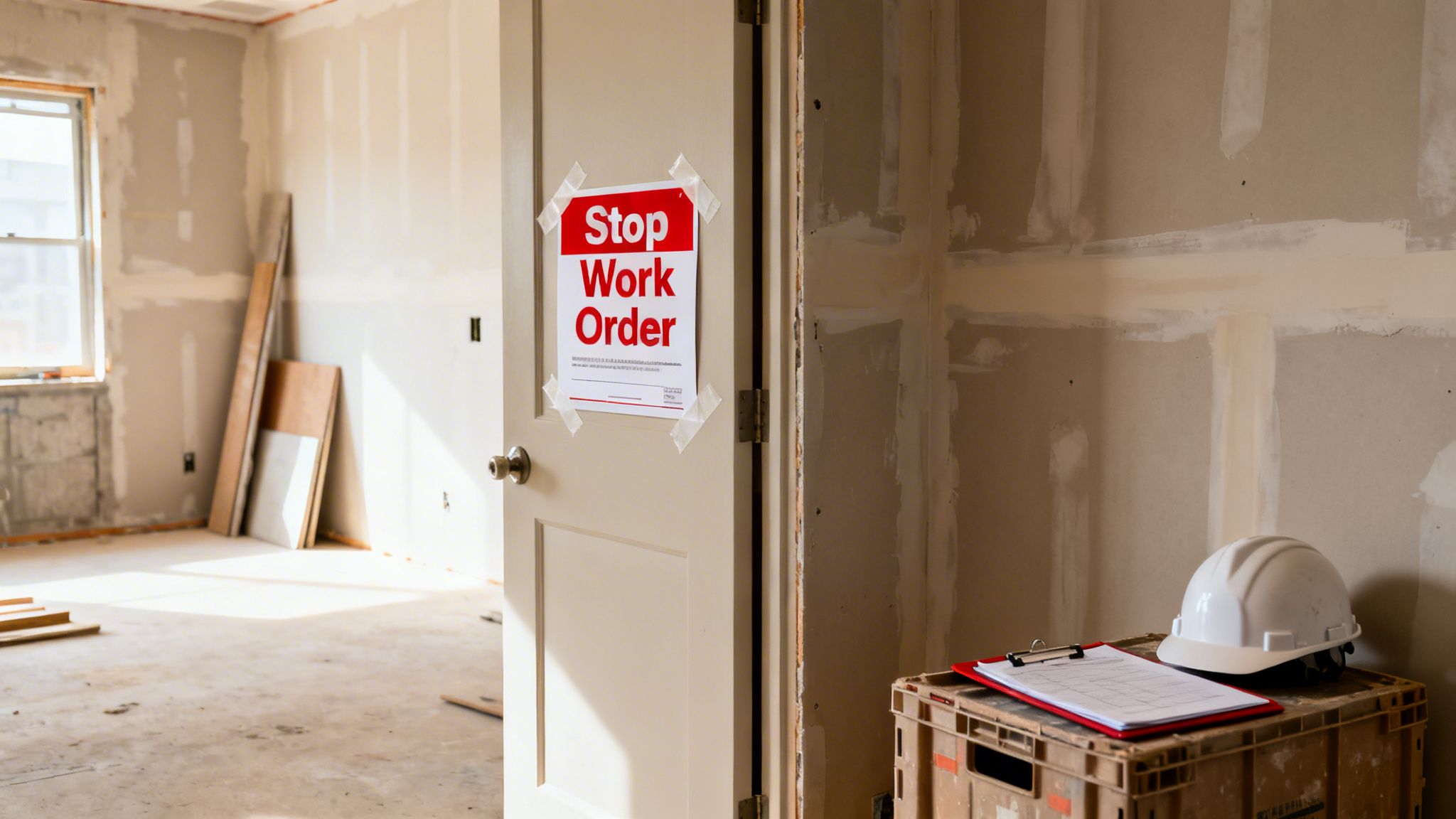
The temptation to start demolition while waiting for permits is one of the most catastrophic mistakes an investor can make in Israeli real estate. Attempting to sidestep the legal process for a commercial to residential conversion is not a minor regulatory breach; it is a high-stakes gamble with devastating consequences, including financial ruin, criminal charges, and the potential total loss of your investment.
Israeli municipalities are armed with formidable enforcement powers and do not hesitate to use them. When an illegal conversion is discovered, the response is swift and severe.
How the Enforcement Process Works
The idea of “flying under the radar” is a dangerous illusion. Unauthorized work is easily discovered, whether by a neighbor, a contractor, or a routine municipal inspection. Once flagged, the enforcement machine activates.
Here is what you can expect:
- Stop-Work Order (Tzav Hafsakat Avoda): A legal notice is posted on your property, instantly halting all construction. Ignoring it is a separate criminal offense.
- Crushing Daily Fines: The municipality will levy heavy fines for every day the illegal construction stands, designed to be financially crippling.
- Administrative Demolition Orders: In blatant cases, authorities can order the demolition of the illegal work without a lengthy court process.
- Criminal Indictments: For severe violations, the municipality can file criminal charges against the property owner and even the contractors involved.
This is not a slow bureaucratic process. It is an aggressive cascade that requires immediate, expert legal intervention—a core part of our practice in Commercial Litigation in Israel.
The “Toxic” Asset Problem
Beyond the immediate penalties, an illegal conversion creates an asset you cannot use. A property lacking a valid Certificate of Occupancy for its new residential use is effectively “toxic.”
This means you cannot:
- Legally sell it as residential units.
- Secure a mortgage or any other financing against it.
- Insure it for residential use.
You are left holding a building you cannot legally rent out or sell to recoup your investment. It becomes a financial black hole. For investors trying to manage their portfolio from another country, this is a worst-case scenario. It highlights the critical importance of having on-the-ground services like ours for Managing Property from Overseas to ensure full compliance from day one.
The cost of obtaining the proper permits is always a fraction of the cost of not obtaining them. There are no shortcuts in Israeli planning and building law.
Don’t navigate the complexities of Israeli building law on your own. Schedule a consultation to discuss your specific project.
Answering Your Key Questions About Property Conversion
When you’re looking at a commercial to residential conversion in Israel, a lot of questions come up, especially if you’re an investor who isn’t local. We get these questions all the time, so let’s tackle the most common ones head-on with some straight, practical answers.
How Long Does a Commercial to Residential Conversion Actually Take?
Let’s be realistic: this is not a quick flip. There’s no one-size-fits-all timeline because so much depends on the project’s complexity and, frankly, the municipality you’re dealing with. You need to be prepared for a multi-year commitment.
The biggest bottleneck is almost always the approvals process. Getting that Exceptional Use Permit or, even more challenging, a full zoning change is a bureaucratic marathon. Just this part of the journey can take anywhere from 6 to 18 months. And if you hit any snags, like public objections, that clock keeps ticking.
Once you clear that hurdle, you’re looking at another 12 to 24 months for the building permits and the actual construction work. Being conservative, a safe bet for the entire process—from day one to handing over the keys—is 2 to 4 years. That’s assuming things go relatively smoothly.
Can I Fight the Betterment Levy Assessment if It Seems Too High?
Not only can you, but you absolutely should. Never accept the municipality’s first assessment as the final word. Think of it as their opening offer.
Challenging the levy is a formal legal process. It starts with hiring your own independent appraiser to give you a counter-assessment on the property’s increased value. If their number is significantly lower (and it often is), your lawyer will file a formal appeal. This is exactly where our expertise in Commercial Litigation in Israel becomes a game-changer for our clients. A well-argued appeal, backed by solid data and skilled negotiation, can slash thousands off your tax bill.
What are the Biggest Mistakes I Need to Avoid?
Most projects that go off the rails do so because of mistakes made right at the start. Your best defense is obsessive, detailed planning before a single shekel is spent on construction.
Here are the critical errors we see people make over and over:
- Forgetting the Betterment Levy: This isn’t a small tax. Failing to properly budget for this 50% tax on the value increase can sink your project’s profitability before you’ve even broken ground.
- Cutting Corners on Structural Due Diligence: You have to know if the building can truly handle a residential conversion. Old plumbing, outdated electrical systems, and a lack of proper window openings can lead to nightmare cost overruns later.
- Jumping the Gun on Construction: It’s tempting, but starting any physical work before every single permit is in your hands is a catastrophic mistake. It leads to stop-work orders, massive fines, and puts your entire project in jeopardy.
For our overseas investors, having a rock-solid Real Estate Power of Attorney in place is also non-negotiable. It allows your local team to act swiftly on these details without waiting for documents to be shipped back and forth.
The single biggest mistake is not getting your team of local experts—your lawyer, architect, and appraiser—on board from the very beginning. Their experience is the most valuable asset you have.
Is It Possible to Convert Just a Portion of a Commercial Building?
Yes, and this is becoming an incredibly popular and smart strategy. Partial conversions are a great way to create dynamic, mixed-use properties that are highly sought after.
Think about converting the upper floors of an office building into high-end apartments while keeping the ground floor for retail shops or cafes. This diversifies your income streams from one asset, which is a fantastic financial move. It does, however, add complexity to your planning application and building codes, especially when it comes to things like separate entrances and utilities. It’s a key part of the service we provide for clients who are Managing Property from Overseas. Your application just needs to be crystal clear about the intended use for every square meter of the building.
Don’t navigate the Israeli legal system alone. Schedule a consultation regarding your specific case.