
Your goods are stuck. Your costs are not.
A shipment delay can tie up cash, disrupt sales and turn a profitable order into a loss. RNC helps you assess the legal position, deal with disputed obligations and protect your commercial interests in Israel. Before you accept another delay or sign away your rights, speak with us now.
 Discuss my import problem now
Tapping into the Israeli market presents a fantastic opportunity, but getting your goods across the border can feel like navigating a minefield of regulatory barriers. For international businesses, understanding the specific rules set by the Standards Institute of Israel (Machon Hatkanim) and Customs is not just good practice—it’s essential for survival. This practical guide will break down the critical processes, from securing the right certificates to dealing with inevitable delays at the ports of Ashdod and Haifa, ensuring your business avoids costly mistakes.
Decoding the Standards Institute of Israel (SII)
While the Israel Tax Authority handles the financial side of imports, the Standards Institute of Israel (SII), known locally as Machon HaTkanim, acts as the country’s ultimate quality and safety gatekeeper. Its mission is to protect Israeli consumers by ensuring that every product sold—from electronics to children’s toys—is safe and meets national standards. For many businesses, navigating the SII’s requirements is the most significant regulatory barrier to market entry.
The “Import Legality” (Chukyut Yevu) Certificate Process
The essential document you need from the SII is the Import Legality Certificate (Chukyut Yevu). This certificate confirms that your product model has been tested and complies with the relevant Israeli standard. Without it, your commercial shipment will be stopped dead in its tracks at the port.
The process involves:
- Detailed Application: You must submit a comprehensive application file for each specific product model you intend to import. A single approval does not cover your entire product line.
- Technical Documentation: The file must include technical specifications, manufacturer’s declarations, quality control reports, and any existing international certifications (like CE marking).
- Sample Testing: In most cases, the SII will require physical samples to be sent to its laboratories for rigorous testing against Israeli standards.
- Factory Inspections: For certain high-risk products or first-time importers, the SII may conduct an on-site inspection of your manufacturing facility.
A sloppy or incomplete application is the fastest way to cause delays. Ensuring your foundational business documents are in order, such as clear Founders’ Agreements, reflects the kind of meticulous approach needed for a successful import application.
Personal Import vs. Commercial Import: A Critical Distinction
The Israeli government draws a hard line between goods imported for personal use and those intended for business. Understanding this distinction is crucial, as the regulations are completely different.
- Personal Imports: These are for an individual’s own use and are not for resale. The rules are far more relaxed, with higher value thresholds for tax exemptions and fewer certification requirements. However, there are limits on quantity and frequency to prevent abuse.
- Commercial Imports: These are goods intended for any business purpose, including resale or use in manufacturing. They fall under the full scrutiny of the SII and customs, requiring a registered Israeli business entity to act as the importer of record. You cannot clear commercial goods under a personal name.
Trying to misclassify a commercial shipment as a personal one to bypass importing to israel regulations is illegal and carries severe penalties, including fines and confiscation of goods. Properly Setting Up a Company in Israel is a non-negotiable first step for any serious commercial importer.
Dealing with Customs Delays at Ashdod & Haifa Ports
Even with SII approval in hand, your shipment’s journey isn’t over. The customs clearance process at Israel’s main ports, Ashdod and Haifa, presents its own set of challenges. Delays here are not just frustrating; they are expensive, with storage and demurrage fees accumulating daily.
Common causes of delays include:
- Documentation Discrepancies: Mismatches between the commercial invoice, packing list, and bill of lading are immediate red flags for customs officials.
- Valuation Disputes: If customs believes you have undervalued your goods to pay lower taxes, they will hold the shipment pending a valuation review, which can be a lengthy process.
- Random Inspections: While some inspections are random, shipments from new importers or those with a history of compliance issues are more likely to be flagged for physical examination.
- Bureaucratic Holds: Sometimes, delays are simply due to administrative backlogs or the need for clarification from another government ministry.
Proactive communication with a reliable customs broker is your best defense. A good broker can help anticipate issues, liaise with customs authorities, and resolve problems quickly. When disputes escalate, having access to legal counsel experienced in Commercial Litigation in Israel can be invaluable. Granting a specific Real Estate Power of Attorney can also be necessary if the import process involves property-related matters.
How Recent Reforms Are Changing Israel’s Import Rules
For a long time, Israel’s approach to imports felt like navigating a maze. The country held onto its own unique, and often rigid, set of national standards. This created a protectionist environment that was slow, expensive, and frustrating for international businesses trying to enter the market.
But things are changing. Big time. Recent economic reforms are systematically tearing down these old barriers, opening up a much smoother path for foreign goods. The goal is simple: boost competition, bring down prices for Israeli consumers, and plug Israel more firmly into the global economy. At the heart of this shift is a complete change in philosophy.
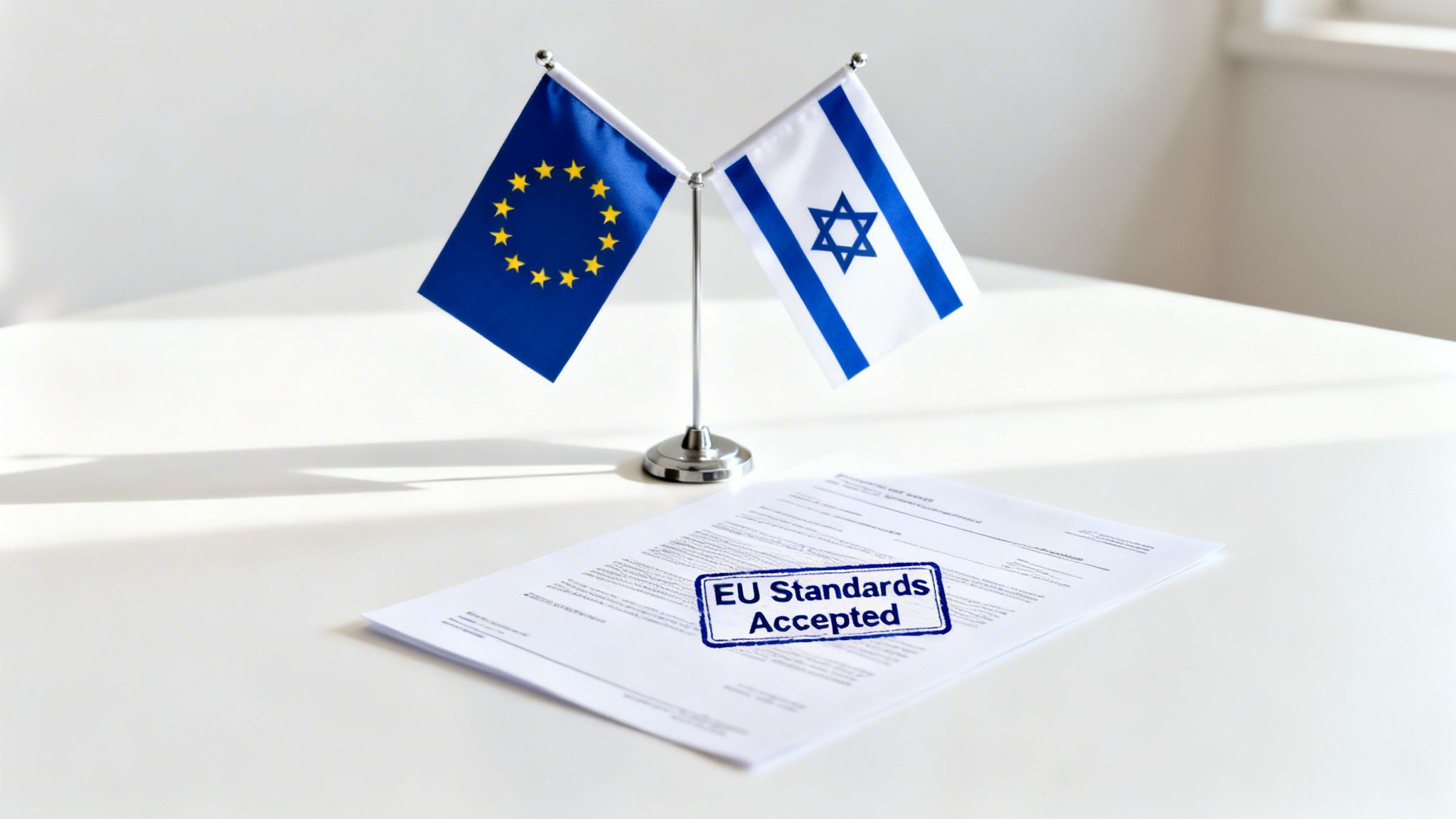
The “What’s Good for Europe is Good for Israel” Initiative
The star of the show is a policy that’s been dubbed “What’s Good for Europe is Good for Israel.” This is a game-changer. It means that if your product already meets specific European Union (EU) standards, you can bring it into the Israeli market without having to go through a second, redundant round of local testing and certification from the Standards Institute of Israel (SII).
Think about that for a moment. Instead of getting stuck in a long and costly approval pipeline with the SII, your existing EU compliance documents now act as a passport. This dramatically cuts down the time and money it takes to get products onto Israeli shelves.
For any business setting up shop here, understanding these new, faster import rules is crucial for operational planning. Quicker market access can directly influence everything from your inventory strategy to the specifics you negotiate in Commercial Lease Agreements for your warehouses and storefronts.
Practical Impact on Business Strategy
The ripple effects of this reform are huge, touching everything from sourcing and logistics to your bottom line. By aligning with EU regulations, Israel isn’t just simplifying a process; it’s inviting a much wider variety of products into the country, faster and cheaper than ever before.
The old system forced countless companies into a tough choice: create a unique “Israel-specific” version of their product or just give up on the market because the compliance costs were too high. These new reforms wipe that barrier off the map, making Israel a far more attractive playing field.
This policy shift demands a complete rethink of your import strategy.
- Sourcing Decisions: You can now confidently prioritize suppliers who are already EU-compliant, knowing it will pave a smooth road into Israel.
- Reduced Costs: For eligible products, you can just slash the entire budget line for SII testing—lab fees, consulting hours, and administrative headaches are gone.
- Faster Time-to-Market: Cutting out the traditional SII queue means your products can go from port to consumer in a fraction of the time. This lets you be nimble and responsive to market demands.
These reforms are expected to cut import red tape and associated costs by an estimated 7-11%. Thanks to the ‘What’s Good for Europe is Good for Israel’ initiative, your compliance with European standards can let you bypass some of Israel’s most cumbersome legacy regulations. You can learn more about the economic reforms reshaping Israel’s import landscape.
Don’t navigate the Israeli legal system alone. Schedule a consultation regarding your specific case.
Common Questions About Importing to Israel
Let’s be honest, navigating the fine print of importing to Israel regulations can feel like trying to solve a puzzle. To cut through the complexity, here are some clear, direct answers to the questions we hear most often from importers.
Getting these details right isn’t just about ticking boxes for compliance. It’s about building an efficient, predictable, and profitable supply chain. A little clarity upfront can save you a world of time, money, and stress down the road.
What’s Really Causing Customs Delays in Israel?
More often than not, the shipments that get stuck at Israeli ports are held up for reasons that were entirely preventable. The biggest culprits are almost always the same: incomplete or inaccurate paperwork, a major gap between the invoice value and what customs thinks the goods are worth, or failing to get that crucial pre-approval from the Standards Institute of Israel (SII) before the goods leave their port of origin.
Sure, random inspections happen, but your chances of being flagged for one shoot way up if your documents are sloppy. The best way to keep your goods moving is meticulous preparation and working with a customs broker who knows the ropes and can anticipate problems.
Do I Really Need a Special Permit for Food or Cosmetics?
Yes, you absolutely do. Bringing in regulated products like food, cosmetics, pharmaceuticals, or medical devices isn’t a standard customs job. It requires specific licenses from government bodies like the Ministry of Health, a process that is separate from—and often far tougher than—the usual SII approval.
You must have these permits in hand before your shipment is even loaded onto a vessel. Trying to import these items without the right pre-approvals will lead to a swift rejection at the border. Worst-case scenario? Your entire shipment could be destroyed, and you’ll be the one footing the bill.
A classic mistake is thinking that an SII certificate is a golden ticket. For sensitive goods, the Ministry of Health is the real gatekeeper. Their focus is public health and safety, and their standards are completely non-negotiable.
How Are Customs Duties and VAT Actually Calculated?
It all starts with the CIF value—that’s the total cost of your goods, plus insurance and freight. First, the Israel Tax Authority will apply a customs duty rate based on your product’s international Harmonized System (HS) code.
But that’s not the final number. Next, they calculate Value Added Tax (VAT), which has been 18% since 1 January 2025. Critically, the VAT is applied to the total sum of the CIF value plus the customs duty you just calculated. Even if a free trade agreement brings your duty down to zero, you’ll almost always have to pay VAT on commercial imports. If customs challenges your declared value, things can get complicated, sometimes requiring expert support for Commercial Litigation in Israel to resolve the dispute.
Can I Have a Legal Representative Handle the Import Process for Me?
Absolutely. In fact, it’s a smart and very common move for international businesses. By granting a commercial power of attorney to a trusted customs broker or law firm in Israel, you authorize them to act on your behalf. They can manage all the paperwork, deal directly with customs and the SII, and even handle tax payments for you.
This puts a local expert in your corner, which is a massive advantage if you don’t have a physical presence in Israel. It’s important to use the right tool for the job, though; this specific commercial power of attorney is entirely different from other legal documents, like a Real Estate Power of Attorney, which serves a completely different function.
What Happens if My Goods Don’t Meet Israeli Standards?
If the Standards Institute of Israel (SII) inspects your products and finds they don’t meet national standards, the door to the Israeli market slams shut. Your shipment won’t be cleared for commercial sale and will be held at the port.
From there, you’re usually left with two painful options: re-export the goods back where they came from (at your expense) or have them destroyed under customs supervision (also at your expense). This is precisely why doing your homework and securing all the right certifications before you ship is non-negotiable. The financial hit from a rejected shipment—shipping, storage fees, and the lost value of the goods—can be devastating. For any partnership, solid Founders’ Agreements that clearly define who is responsible for compliance can be a business-saver.
Importing goods into Israel?
Compliance questions are cheaper to answer before the shipment. Send us the product details and we will map the requirements.
Don’t try to navigate the Israeli legal system alone. Schedule a consultation to discuss your specific case.