
Will your next industrial asset purchase in Israel become a multi-million shekel liability? As new regulations tighten for 2026, this critical question confronts every investor. With recent changes in environmental law in Israel, acquiring property without deep environmental analysis is a high-stakes gamble; you could inherit a toxic legacy and a massive cleanup bill.
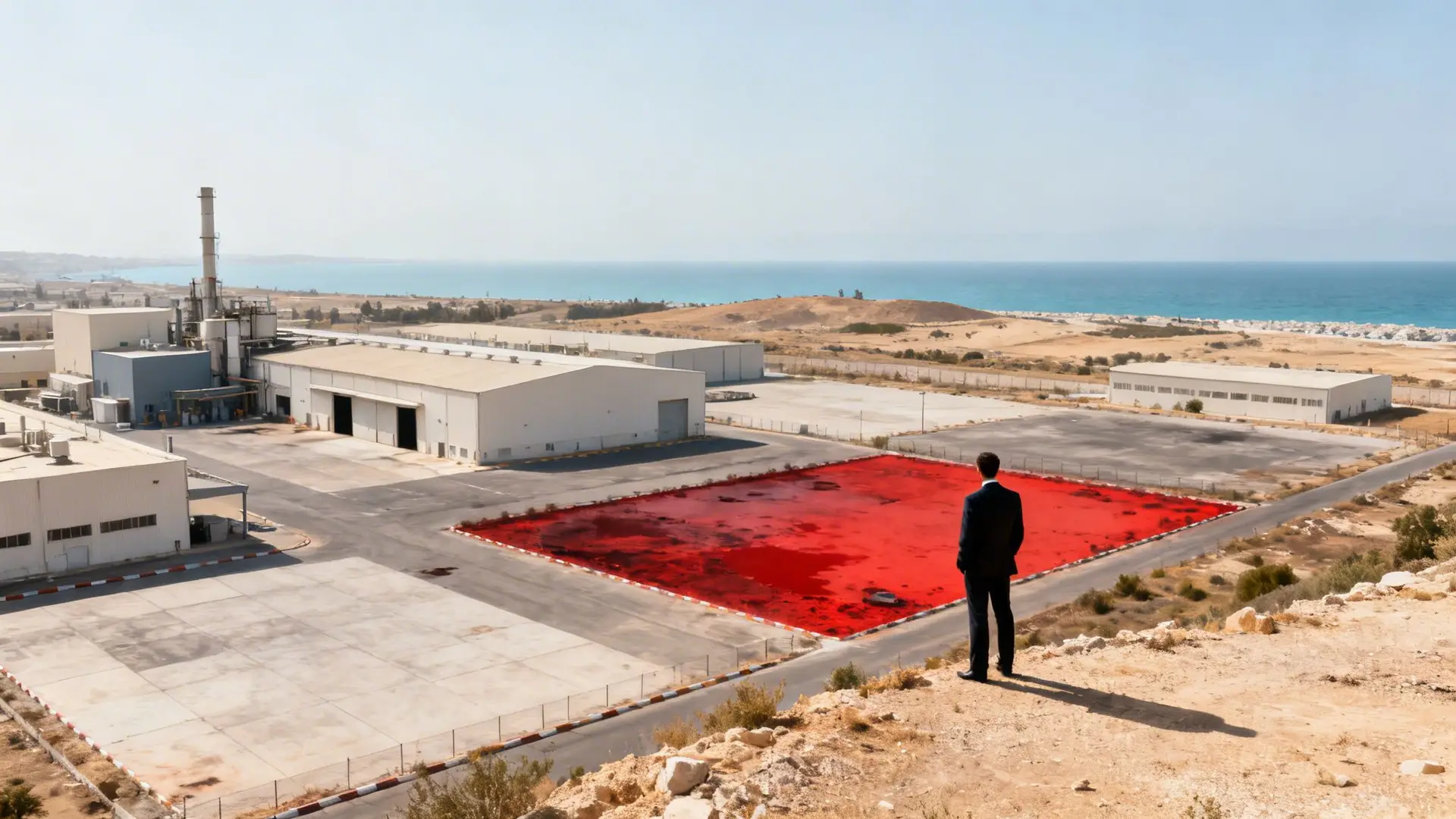
This analysis dissects the legal landscape. It also outlines the necessary steps for risk mitigation. The focus is on the risks of polluted land when buying industrial assets.
The High Stakes of Land Contamination in Israel
Could an asset purchase secretly be a massive environmental liability? This is the central question investors must confront. Acquiring industrial property without deep environmental due to diligence is exceptionally risky. The most severe financial dangers often lurk just beneath the surface.
Past industrial activity may have left behind hazardous materials. Unfortunately, these issues rarely appear in a standard real estate transaction. A new owner often discovers the problem only after the deal closes.
Understanding the ‘Polluter Pays’ Principle
Israeli environmental law uses a powerful foundation: the ‘Polluter Pays’ principle. The entity that created the pollution is responsible for funding its cleanup. This concept forces companies to internalize the environmental cost of their operations.
However, problems arise when the original polluter is gone. Israeli regulators can look to the current landowner to foot the bill. Consequently, a company could be held liable for contamination it did not create.
The recommended strategic path is to assume liability can be assigned retroactively. An asset purchase is an acquisition of its entire environmental history. It includes all potential liabilities.
Actionable Steps for Initial Risk Mitigation
To navigate the minefield of environmental law in Israel, a proactive approach is necessary. An initial risk assessment must uncover red flags before capital is invested. A wait-and-see approach is a recipe for financial disaster.
The recommended strategic path includes these essential first moves:
- Investigate the Site’s Past: Start by investigating the property’s history. Pore over public records to identify high-risk previous industrial uses. This information is vital.
- Engage Local Experts: Partner with a reputable environmental consulting firm. The firm must have experience with Israeli regulations and geology. Their knowledge is invaluable.
- Check Official Registries: Scour regulatory databases for existing notices or investigations. The government’s own concerns are often documented in these registries.
This preliminary analysis correctly frames the entire transaction. It shifts the perspective from a simple deal to a complex risk management exercise. For more professional insights, review how the ‘polluter pays’ principle can help solve complex contamination issues.
Understanding The Polluter Pays Principle in Israeli Law
The ‘Polluter Pays’ principle is at the heart of Israeli environmental law. The entity responsible for pollution must pay for its cleanup. Understanding this doctrine is essential for protecting your investment from costly surprises.

This principle forces companies to treat environmental risk as a real operational cost. It creates a strong financial incentive to prevent pollution. This concept is the bedrock of compliance obligations in Israel.
When The Original Polluter Vanishes
The situation gets complicated with historical land contamination. This is a common scenario for industrial sites sold over decades. The original polluting company might be bankrupt, dissolved, or untraceable.
In these situations, Israeli law gives regulators significant leeway. They can, and often do, assign liability down the chain of ownership. Consequently, the legal burden for remediation can land squarely on the current landowner.
The recommended strategic path is to assume that liability will be applied retroactively. An asset purchase is not just a transfer of title. It is an acquisition of the property’s entire environmental history and associated risks.
The Scope of Liability and Enforcement
The ‘Polluter Pays’ principle covers a wide scope. Liability includes direct cleanup costs, site investigations, and long-term monitoring. This comprehensive approach addresses the full environmental impact.
Enforcement is led by the Ministry of Environmental Protection (MoEP). The MoEP has the power to issue administrative orders demanding action. Failure to comply brings serious consequences, including massive fines.
A 2017 MoEP report identified over 1,200 contaminated industrial sites. Roughly 40% of cases stall in court over historical pollution liability. Therefore, pre-acquisition due diligence is absolutely non-negotiable. You can find a deeper dive by reviewing academic findings on Israeli environmental law.
Actionable Steps for Risk Mitigation
Navigating this complex legal terrain demands a structured approach. Mitigating risks tied to the ‘Polluter Pays’ principle requires objective analysis. Rock-solid documentation is also critical for protection.
The recommended strategic path for due diligence must include these actions:
- Conduct Phase I & II Assessments: Always start with a Phase I Environmental Site Assessment (ESA). If red flags appear, proceed to a Phase II ESA for physical sampling.
- Secure Contractual Protections: Insist on robust representations, warranties, and indemnities in any negotiation. These obligate the seller to cover costs for pre-existing contamination.
- Establish a Remediation Fund: Negotiate for the seller to place funds into an escrow account. This money is earmarked to cover future remediation costs, insulating you financially.
By taking these steps, due diligence becomes a powerful risk management tool. It creates a clear framework for informed investment. It also protects capital from the hidden liabilities of environmental law in Israel.
Navigating Israel’s Land Contamination Legal Framework
Could your next asset purchase harbor a multi-million shekel liability? As of 2026, land contamination regulations are tighter than ever. For investors, acquiring industrial property without rigorous due diligence is a high-stakes gamble.
Israel’s legal framework uses the ‘Polluter Pays’ principle. This means liability for historical pollution can be assigned retroactively. The dangers lurking beneath industrial land are real.
A firm grasp of the legal landscape is essential for managing risk. The framework has been built up over decades. Each piece of legislation adds another layer of authority and responsibility.
The Core Legislative Pillars
Several key laws form the bedrock of Israel’s environmental enforcement. They grant regulators power to investigate, enforce, and order remediation. Understanding their function is the first step toward effective risk management.
Here is a look at the primary laws shaping the legal landscape.
Key Israeli Environmental Laws Governing Land Contamination
A summary of primary legislation and their core functions in managing soil and groundwater pollution.
| Legislation | Year Enacted | Core Function & Relevance |
|---|---|---|
| Abatement of Environmental Nuisances Law | 1961 | This foundational law broadly defines “nuisance,” including land pollution. It also grants authorities power to issue restraining orders and pursue criminal charges. |
| Hazardous Substances Law | 1993 | This law mandates strict licensing for producing or using hazardous materials. It also imposes clear legal duties for waste handling, tightening controls. |
| Clean Land Law | 2008 | This is the most targeted legislation. It establishes a formal process for site investigation, risk assessment, and remediation based on the “Polluter Pays” principle. |
The Hazardous Substances Law of 1993 is particularly important. Much like the principles in the UK Hazardous Waste Disposal Regulations, this Israeli law creates strict legal duties. Failure to comply is not an option.
The real game-changer is the Clean Land Law of 2008. This legislation specifically targets soil contamination. It is the main weapon in the regulators’ arsenal for tackling historical contamination.
The Key Regulatory Bodies
Knowing the laws is only half the battle. You must also know the players. One agency stands out as the primary authority you will be dealing with.
The Ministry of Environmental Protection (MoEP) is the central enforcement agency. It wields significant power. Its authority includes:
- Overseeing investigations: The MoEP initiates and manages site investigations. It determines the extent of land contamination in Israel.
- Issuing remediation orders: It has the legal teeth to compel landowners to clean up a site. This applies regardless of the cost.
- Maintaining public registries: The MoEP keeps a public list of known contaminated sites. This is a vital resource for due diligence.
Other entities are also involved. Local municipalities often handle initial complaints and minor enforcement actions. The Israel Land Authority (ILA) also incorporates environmental conditions into its land agreements.
The recommended strategic path is to treat interactions with these bodies seriously. Their directives carry the full weight of the law. Proactive engagement is always better than reactive damage control.
Your Due Diligence Checklist for Mitigating Contamination Risks
Will your next industrial asset purchase become a regulatory nightmare? In Israel, effective risk management for land contamination requires serious due diligence. This is an essential investigation to uncover hidden liabilities.
A proactive, thorough approach is the only way to prevent costly litigation. This also secures your asset from future financial shocks. It protects your investment.

Think of it as a multi-phased investigation. Each step builds on the last. This is how informed decisions are made before committing capital.
Phase I Environmental Site Assessment (ESA)
Your first move should always be a Phase I Environmental Site Assessment (ESA). This is a non-intrusive investigation. It is designed to spot potential environmental red flags.
Consultants will review historical records and interview people familiar with the property. They also conduct a detailed site walk-through. The goal is to find any sign that hazardous materials might be lurking.
Evidence of old underground tanks or strange ground stains are classic warning signs. This initial assessment provides the foundation for everything that follows. It tells you whether more invasive testing is needed.
Reviewing Historical Records and Public Registries
Digging into a property’s past is critical for understanding its present risks. Historical land use records can reveal prior industrial activities. These activities are often tied to contamination.
A key part of this review is checking the MoEP’s public registries. These databases list sites with known or suspected land contamination in Israel. Finding your target property on this list is a major red flag.
Even a clean Phase I ESA report does not guarantee a clean bill of health. A diligent review of MoEP databases is a non-negotiable step. Overlooking these public records is a critical error.
Phase II Environmental Site Assessment (ESA)
If the Phase I assessment finds “recognized environmental conditions” (RECs), a Phase II ESA is next. This is an invasive investigation. It is time to collect physical samples to confirm contamination.
This means bringing in qualified environmental consultants. They will develop a sampling plan to collect soil, soil gas, and groundwater samples. These are then sent to a lab for analysis.
The results provide concrete data on what contaminants are present. This information is vital for three key reasons. It confirms if the site is officially contaminated. It helps map the contamination. Finally, it helps estimate remediation costs.
When building out a due diligence process, an ultimate due diligence checklist template can provide a solid framework. A detailed checklist ensures no critical step is missed. The goal is to build a robust process that protects your investment.
Beyond Borders: When Israeli Land Contamination Becomes a Global Dispute
Could a patch of contaminated land in Israel spark a global ESG crisis? On-the-ground environmental issues now carry serious cross-border weight. They can trigger intense scrutiny under international law and from ESG investors.
A purely domestic view of environmental compliance is dangerously outdated. Severe environmental damage in Israel can capture the attention of international stakeholders. Companies linked to contaminated sites risk divestment campaigns and reputational ruin.
The New Battlefield: ESG and International Law
Corporate liability is now viewed through the powerful lens of ESG criteria. International investors use these standards to dissect corporate behavior. A company’s association with significant land contamination will harm its ESG score.
The use of land and its environmental fallout is a major flashpoint. Critics cite discriminatory zoning and severe environmental harm in some areas. For more detail, see this fact sheet on the complexities of environmental justice in the region.
The recommended strategic path is to accept that domestic compliance is just the starting point. You must proactively measure operations against global human rights laws. This gets you ahead of international legal and reputational threats.
Ecocide and the Shadow of the Rome Statute
Ecocide—widespread environmental destruction—is gaining traction in international legal circles. Its inclusion in discussions around the Rome Statute signals a monumental shift. This legal evolution is not just an academic exercise.
It creates a pathway to hold actors accountable for extreme environmental damage. Businesses tied to regions with major environmental disputes must watch these developments. The risk is no longer just financial.
Actionable Steps for Managing Global Risk
For any company with Israeli operations, fending off cross-border risks demands a proactive strategy. Protecting your firm from litigation and reputational attacks involves non-negotiable actions. These are essential for managing global risk.
The recommended strategic path for mitigating global risk is as follows:
- Expand Your Due Diligence: Environmental assessments must include a review of potential human rights impacts. ESG red flags must also be a key focus.
- Monitor Global Legal Headwinds: Keep a close watch on legal developments concerning ecocide and the Rome Statute. Today’s distant issue could be tomorrow’s compliance nightmare.
- Audit Your Entire Supply Chain: You must ensure that every partner adheres to global ESG and human rights standards. Weakness anywhere in the chain is a weakness everywhere.
Ultimately, understanding the global blowback from land contamination in Israel is critical. A forward-thinking and globally-aware approach protects your standing. It helps your business navigate these treacherous waters.
A Strategic Path for Risk Mitigation and Compliance
How do you shield an investment from the liabilities of land contamination in Israel? A reactive approach is a guaranteed path to financial distress. An effective strategy integrates legal, financial, and operational safeguards into acquisitions.

This proactive stance begins by making environmental due diligence a core component. It must become as standard as financial auditing. This transforms due diligence from a simple check into a critical risk-assessment tool.
Securing Robust Contractual Protections
One of the most powerful tools is found within the deal’s legal architecture. Securing robust contractual protections is essential. The goal is to negotiate strong indemnification clauses holding the seller liable.
Think of these clauses as a financial shield. They legally obligate the seller to cover costs of historical pollution. This transfers a significant portion of the financial risk away from the buyer.
A critical component of this strategy is establishing a dedicated remediation fund. Negotiating for the seller to place a sum into an escrow account creates a safety net. This ensures capital is available for cleanup.
Adopting Proactive Management Systems
Real compliance does not end when the deal is signed. It extends into the long-term operational life of the asset. Adopting internationally recognized environmental management systems shows a firm commitment.
Implementing a system compliant with ISO 14001 is a powerful move. This framework provides a structured approach for managing environmental impacts. It also enhances your corporate reputation.
Recent events underscore this perspective’s importance. For example, some argue that land contamination in certain areas constitutes potential ecocide. The full analysis explores the potential for ecocide in Gaza and its implications.
Preparing for Enforcement and Litigation
Even with the best preparation, disputes can arise. The final piece of the strategic framework is being prepared for enforcement. This means having a clear plan and a dedicated legal team ready.
The recommended strategic path for a defensive playbook involves several key actions:
- Document Everything: Meticulously document every step of your due diligence. This creates an objective record that is crucial in any dispute.
- Understand Regulatory Triggers: Know what actions legally obligate you to report to the Ministry of Environmental Protection. Proactive communication is almost always better than a forced disclosure.
- Establish a Crisis Response Plan: Prepare a detailed plan for responding to an unexpected discovery. This ensures a coordinated response, not a chaotic scramble.
By following this structured approach, corporations can navigate these complexities. It is about transforming potential liabilities into manageable risks. It allows for confident investment in Israeli industrial assets.
Your Top Questions on Israeli Environmental Law Answered
When investing in Israeli industrial assets, the environmental regulations can feel complex. Below are direct answers to the most common questions from international investors. Getting these right is the first step in protecting your investment.
Can I Be Held Liable for Contamination I Didn’t Cause?
Yes, you absolutely can. Israeli environmental law uses the ‘Polluter Pays’ principle. If the original polluter cannot be found, authorities look to the current landowner.
This means you can be held legally and financially responsible for cleanup. This applies even for contamination that happened decades ago. The recommended strategic path is to assume this retroactive liability is possible.
What Is a Phase I Environmental Site Assessment (ESA)?
Think of a Phase I ESA as a historical background check on a property. It is a non-invasive investigation. It is designed to find red flags suggesting potential land contamination in Israel.
The process involves reviewing historical records and conducting a visual inspection. No soil or water samples are taken at this stage. The goal is to identify “Recognized Environmental Conditions” (RECs).
A clean Phase I ESA is not a guarantee that a property is free from contamination. It is an essential first step in a multi-layered due diligence process. Skipping it is a massive strategic error.
How Does the Ministry of Environmental Protection Enforce Cleanup?
Israel’s Ministry of Environmental Protection (MoEP) is the primary regulator. The MoEP holds significant authority to compel action on land contamination in Israel. The ministry has serious teeth.
The Ministry can issue legally binding administrative orders. These force landowners to investigate sites and carry out full-scale remediation. Ignoring these orders leads to heavy fines and potential criminal charges.
Are There Public Records of Contaminated Sites?
Yes, the MoEP keeps a public database of sites with known contamination. Checking this registry is a simple but crucial part of due diligence. This is a very important step.
Finding your target property on this list is a major red flag. However, a property not being on the list does not mean it is clean. Countless contaminated sites are still undiscovered or are in early investigation stages.
For corporations and investors navigating these complex regulations, a clear strategic path is essential. The recommended strategic path is to seek expert analysis to mitigate risks and ensure compliance in high-stakes transactions. Explore how to safeguard your investments.
Legal Notice and Disclaimer: The information provided in this strategic analysis is for general informational and educational purposes only. It does not constitute legal, financial, or professional ESG advisory services. While every effort has been made to ensure the accuracy of the 2026 regulatory data, the legal landscape is subject to rapid change. Organizations are advised to consult with qualified legal counsel or certified ESG specialists regarding specific compliance obligations under Israeli and international law. RNC Group and its affiliates assume no liability for actions taken based on the contents of this briefing.