
A law firm can deploy artificial intelligence across its practice and still leave most legal work manual. A 2026 industry report found that 85% of lawyers use AI, while 77% still say much of their work remains manual, 73% report workflows with too many steps, and only 24% say a significant portion of daily work is automated. Progress Software’s reported findings expose the central problem. Legal workflow automation succeeds only when firms redesign how matters move, not when they add another drafting tool.
For Israeli companies expanding abroad, multinational groups dealing with Israel, and overseas counsel coordinating local action, that distinction carries serious consequences. Bank-account restrictions, multilingual evidence, franchise arrangements without dedicated Israeli franchise legislation, and parallel crisis responses all punish fragmented handoffs. The recommended strategic path starts with operational architecture, then selects technology that supports it.
Why Legal Workflow Automation Defines 2026
In 2026, legal workflow automation has become a strategic capability rather than a back-office convenience. Corporate clients expect controlled response times, transparent status reporting, and reliable records across jurisdictions. Regulators, insurers, boards, and counterparties also expect firms to explain who made each decision and when.
Legal workflow automation means redesigning recurring legal processes so that intake, routing, drafting, approvals, evidence collection, compliance checks, and reporting follow defined paths. A properly designed system captures decisions, ownership, deadlines, and audit history in one instrumented environment instead of scattering them across email, shared drives, and spreadsheets.
That definition matters because digitization alone changes little. Uploading a paper form into a portal preserves the same weak questions, unclear ownership, and unmeasured delays. Automation adds decision logic, structured handoffs, escalation rules, and data that allows managers to identify the exact point where a matter slows.
Cross-border work exposes weak processes
Israeli firms often coordinate with foreign counsel, banks, regulators, translators, investigators, and commercial teams. Each participant may use a different system, language, deadline convention, and document standard. A workflow that appears manageable inside one office can fail when a counterparty, regulator, or overseas legal team enters the chain.
The risk becomes sharper during urgent matters. A bank-account restriction may require immediate document collection and client communication. A cross-border dispute may require evidence preservation, privilege review, and parallel filings. A franchise relationship may require careful contractual analysis because Israel has no dedicated franchise legislation, leaving governing law, disclosure, termination, exclusivity, and intellectual-property provisions to carry much of the allocation of risk.
Practical rule: Automate the handoff before automating the legal judgment.
A board-level operating issue
Manual coordination consumes capacity that clients still expect lawyers to devote to strategy. It also creates inconsistent records, duplicated requests, missed approvals, and uncertain accountability. Therefore, legal workflow automation should sit within the firm’s operating model, risk framework, and client-service commitments.
The strongest projects begin with a process map. They identify every trigger, decision, exception, owner, deadline, and evidence requirement. Only then should the firm determine which steps need rules, templates, artificial intelligence, human review, or external coordination.
The Efficiency Gap and the Automation Paradox
The productivity gap is operational, not merely financial. Bloomberg Law’s 2026 workflow-automation coverage reported that attorneys work an average of 49 hours per week but bill only 37 hours. The resulting 12-hour weekly spread identifies capacity that may be absorbed by coordination, administration, supervision, and other work that billing systems record differently.
The figure should not be read as proof that every unbilled hour is waste. Lawyers still spend time on business development, training, client communication, and urgent matters. It does show how much effort can remain between professional judgment and recorded client output.
Manual work persists beside AI adoption
AI adoption has not removed the queues around legal work. Lawyers use AI for drafting, research, and review, while intake, routing, approvals, status requests, and handoffs continue through email and disconnected systems. The Progress Software findings cited earlier report that 47% of lawyers say client intake takes four days or longer, although most believe it should take two to three days or less, and 94% say faster intake would improve outcomes. The same report supports the operational conclusion.
A firm can produce a faster draft while leaving the underlying request in an inbox. The result is a faster task inside a slow matter.
Time lost versus time automated
| Dimension | Surveyed reality | Automation potential |
|---|---|---|
| Weekly effort | Attorneys work 49 hours but bill 37 hours, according to Bloomberg Law as reported above | Reduce coordination, routing, document handling, and task-tracking friction |
| Manual workload | 77% of lawyers still describe much work as manual, according to Progress Software’s findings cited earlier | Convert repeatable handoffs into structured, reviewable steps |
| Workflow complexity | 73% say workflows contain too many steps, according to the same findings | Remove unnecessary approvals and define exception paths |
The practical implication is clear for cross-border work. A firm handling Israeli and international contracts, disputes, bank-account restrictions, franchise gaps, or crisis matters cannot respond to every new mandate by adding people. It needs an operating system that records ownership, preserves lawyer control, and exposes exceptions early. Automation should therefore be judged by matter flow and risk reduction, not by the number of AI features purchased.
Cross-Border Use Cases That Move the Needle
The strongest use cases coordinate dependent actions while leaving legal judgment with qualified professionals. Software creates value only when it improves the handoffs, ownership, and evidence around the work.
M&A diligence
A diligence workflow should start with structured data-room ingestion and document classification. It can index materials, identify missing categories, route issues to the correct jurisdictional team, and create a controlled issue list. Lawyers then assess significance, privilege, disclosure, and deal impact instead of reconstructing the file from scattered messages.
The workflow should connect each regulatory question to the relevant entity, asset, contract, or business line. That lets Israeli and foreign counsel separate local approvals from wider transaction risks and preserve a clear record of unresolved points. Configure jurisdictional routing first, then test the issue list against a live transaction before expanding automation.
Contract lifecycle management
Contract automation should cover intake, triage, template selection, clause-library drafting, deviation review, approvals, execution, and post-signature obligations. The ACC legal-department maturity model describes mature contract operations through repositories, standardized templates, clause libraries, version control, approval workflows, electronic signatures, reporting, audit history, obligation tracking, expiration alerts, and enterprise integrations.
Cross-border teams also need fields for governing law, language, signatory authority, local approvals, translation status, and renewal obligations. A founder considering European expansion may benefit from this explanation of the 28th regime for founders when comparing corporate and contractual structures across markets.
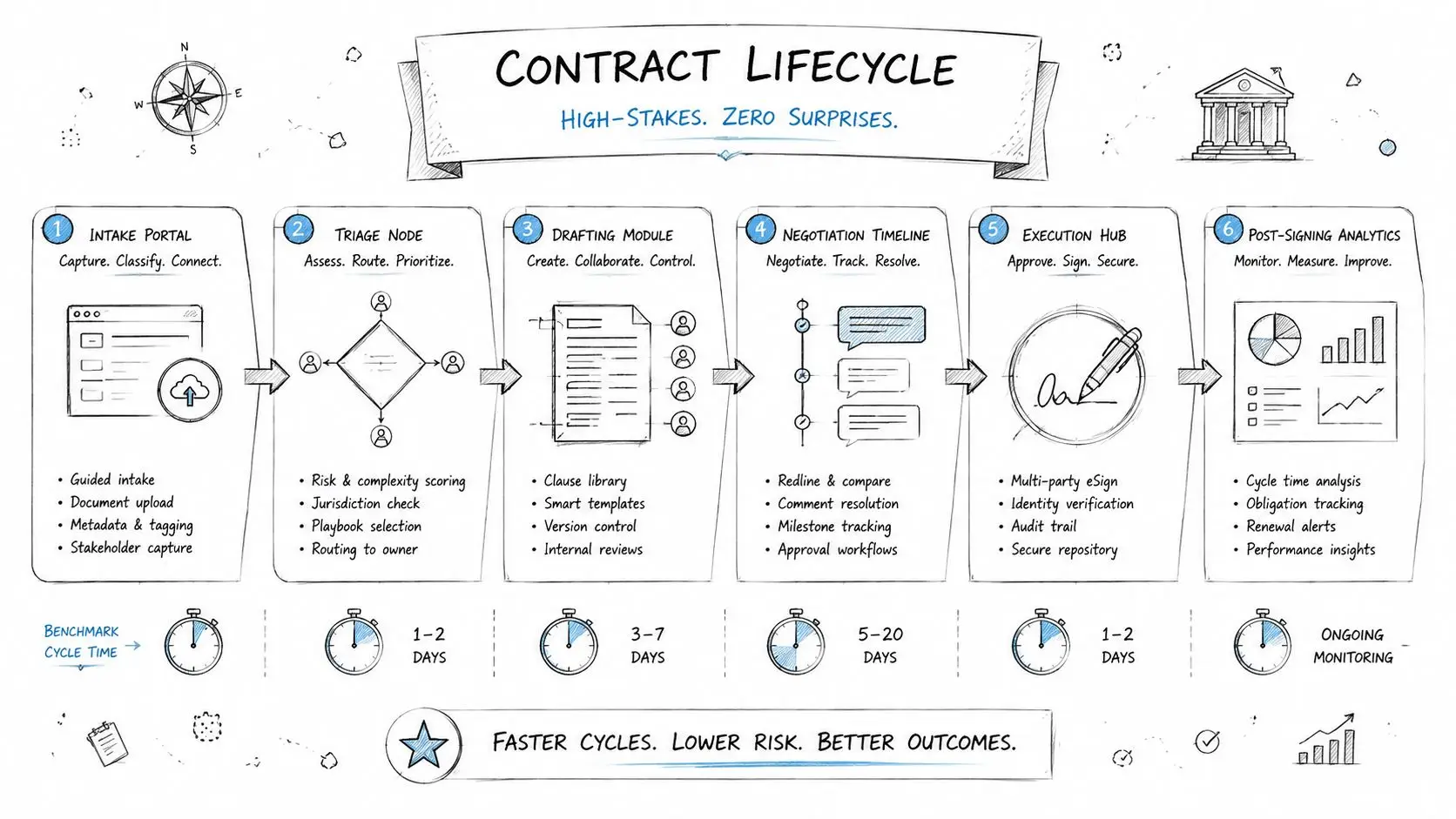
Start with one contract family, define approved positions and escalation rules, and measure whether obligations remain visible after signature.
Litigation and crisis management
A crisis playbook should trigger evidence preservation, custodian identification, regulator-notification review, translation requests, privilege controls, and filing preparation. Each jurisdiction retains its own legal decision point, while the central workflow records dependencies, deadlines, and responsible owners.
Separate factual collection from legal conclusions. Preserve source documents, translation versions, reviewer identity, and approval history so the record can support later explanations to courts, regulators, insurers, and clients. Configure parallel tracks for evidence, regulatory response, translation, and client reporting, then rehearse the handoffs before a crisis occurs.
Israeli bank-account restrictions
A returned-check alert requires controlled handling. The Bank of Israel explains that an account restriction can follow ten or more returned checks for insufficient funds within a rolling 12-month period, provided the first and tenth returned checks sit at least 15 days apart. The account holder receives a warning after five returned checks, and the restriction notice must take effect at least 15 days after dispatch.
The workflow should collect bank notices, returned-check records, account documents, signing-authority evidence, and client instructions. It should route the matter to Israeli counsel, coordinate foreign stakeholders, record communications, and generate status reports. Lawyers assess remedies and strategy. The system removes document chasing and makes ownership visible from the first alert. Set those collection and escalation rules before relying on automation in a live restriction matter.
An End-to-End Architecture for High-Stakes Matters
High-stakes legal work needs an event-driven architecture, not another document repository. A contract request starts intake. A clause deviation starts review. A counterparty response starts negotiation. Signature triggers obligation monitoring. Each event should create a defined action, owner, deadline, and exception path.
A document-driven system stores files and relies on people to remember what happens next. An event-driven design links the file to the decision, responsible owner, deadline, and evidence trail, then assigns the next task. That distinction matters in cross-border matters, where Israeli counsel, foreign stakeholders, translated evidence, and business teams may work on parallel tracks.
The stages that commonly stall
Four points repeatedly absorb coordination time:
- Clause deviation review: Compare proposed language with approved positions and route material deviations to the appropriate lawyer.
- Approval routing: Apply authority rules according to risk, value, entity, governing law, and business owner.
- Signature chasing: Identify missing signatures, monitor counterparties, and escalate without creating duplicate email chains.
- Obligation extraction: Convert agreed duties, renewal dates, reporting requirements, and termination rights into monitored obligations.
Contract cycle-time guidance defines contract cycle time as the business days between request submission and final signature. The measure becomes useful when the firm records each stage separately, including time spent with the counterparty. That visibility can show whether delay arises from legal review, business approval, negotiation, or execution.
One architecture, several matter types
The same structure can support diligence, litigation holds, and responses to Israeli bank-account restrictions. The rules differ, but every matter still needs an intake trigger, classification, ownership, document controls, decision gates, escalation logic, and closure records. For a restriction response, that may mean coordinating bank notices, Israeli counsel, foreign stakeholders, and client reporting while preserving the evidence trail.
Contract workflows also require connections to procurement, sales, supplier portals, document systems, and enterprise reporting. These integrations keep legal work connected to commercial milestones rather than isolating it in a separate system. They also expose dependencies that generic software demonstrations often miss.
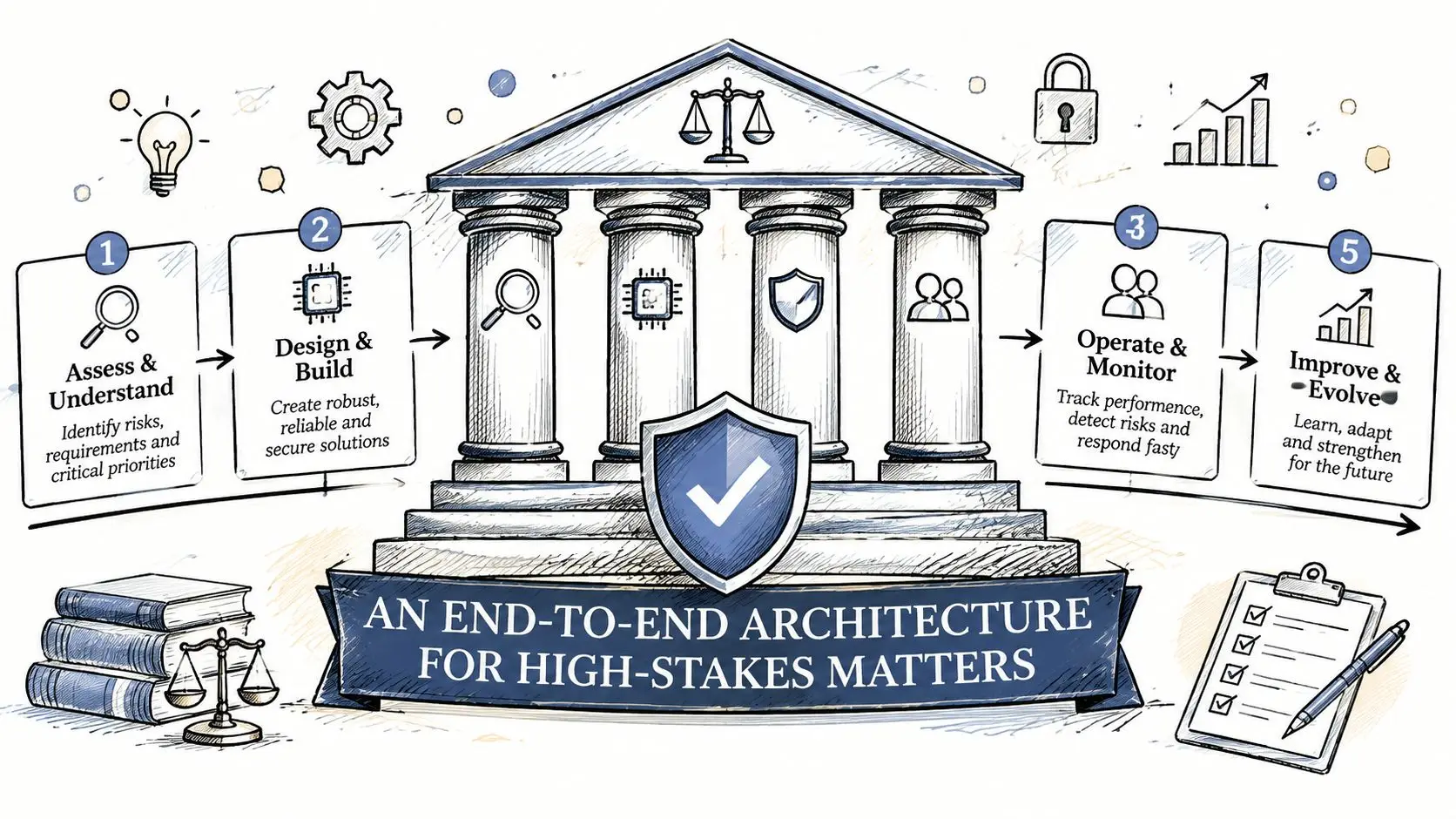
Operational test: If a workflow cannot show its current owner, next decision, deadline, and evidence trail, it is not fully automated.
The design should start with events and exceptions, then assign documents to the decisions they support. Event-driven design shifts the focus from storing documents to orchestrating decisions.
Evaluating Technology, Vendors, and Governance
Legal-technology selection is an operating-model decision, not a feature contest. A polished demonstration can conceal weak access controls, unclear data practices, limited export rights, or incomplete audit records. Evaluate whether the system supports defensible work across jurisdictions, including Israeli bank-account restrictions, franchise gaps, multilingual evidence, and parallel-track crisis response.
A practical comparison begins with the data boundary. Confirm residency, transfer mechanisms, retention, deletion, subcontractor access, and jurisdiction-specific permissions. Then test how the system handles uncertainty: human review, model transparency, confidence thresholds, approval gates, and escalation. Audit records should preserve timestamps, version history, reviewer identity, and evidence of tampering or later alteration.
Integration determines whether automation improves operations or creates another repository. Test connections with document management, identity, enterprise resource planning, communication, procurement, and reporting systems. Exit terms deserve the same scrutiny. The customer should be able to retrieve usable data, metadata, templates, workflow logic, and audit history after termination, with clear termination rights and metrics tied to matter outcomes.
For broader context on aligning technology with business operations, these enterprise technology consulting insights offer a useful reference point. Legal buyers need a stricter test because privilege, confidentiality, bank secrecy, and professional accountability operate inside the workflow.

Vendor comparisons should be conducted through evidence rather than a questionnaire alone. Ask where Israeli client data is stored and how cross-border transfers are controlled. Require a clear answer on privilege, bank secrecy, and Privacy Protection Law obligations, then establish whether customer content is used for model training and whether the contract can prohibit that use. Request an export containing prompts, outputs, approvals, changes, and access records. Test whether lawyers can approve every external transmission, filing, routing action, or matter update. Finally, run a termination exercise covering documents, metadata, audit history, templates, and workflow logic. A vendor that cannot demonstrate these controls should not receive sensitive production work.
The 2025 legal-department survey found that 60% of respondents identified distrust or output quality as the leading implementation challenge, while 57% cited data privacy. It also reported that only 7% of departments use specific KPIs to track AI value, and 40% remain unsure whether their tools justify the investment. Those findings support measuring matter-level cycle time, defects, risk outcomes, and approval quality instead of counting logins or generated documents.
A governance review should therefore rank data governance, human oversight, and auditability as high-priority criteria. Integration and portability also require testing, particularly where proprietary formats could create lock-in. ROI belongs in the same review, but only when the measure connects usage to business value. As multiple industry reports have documented, implementation stalls when ownership, evidence, and value measurement remain undefined.
A Phased Roadmap and Change-Management Playbook
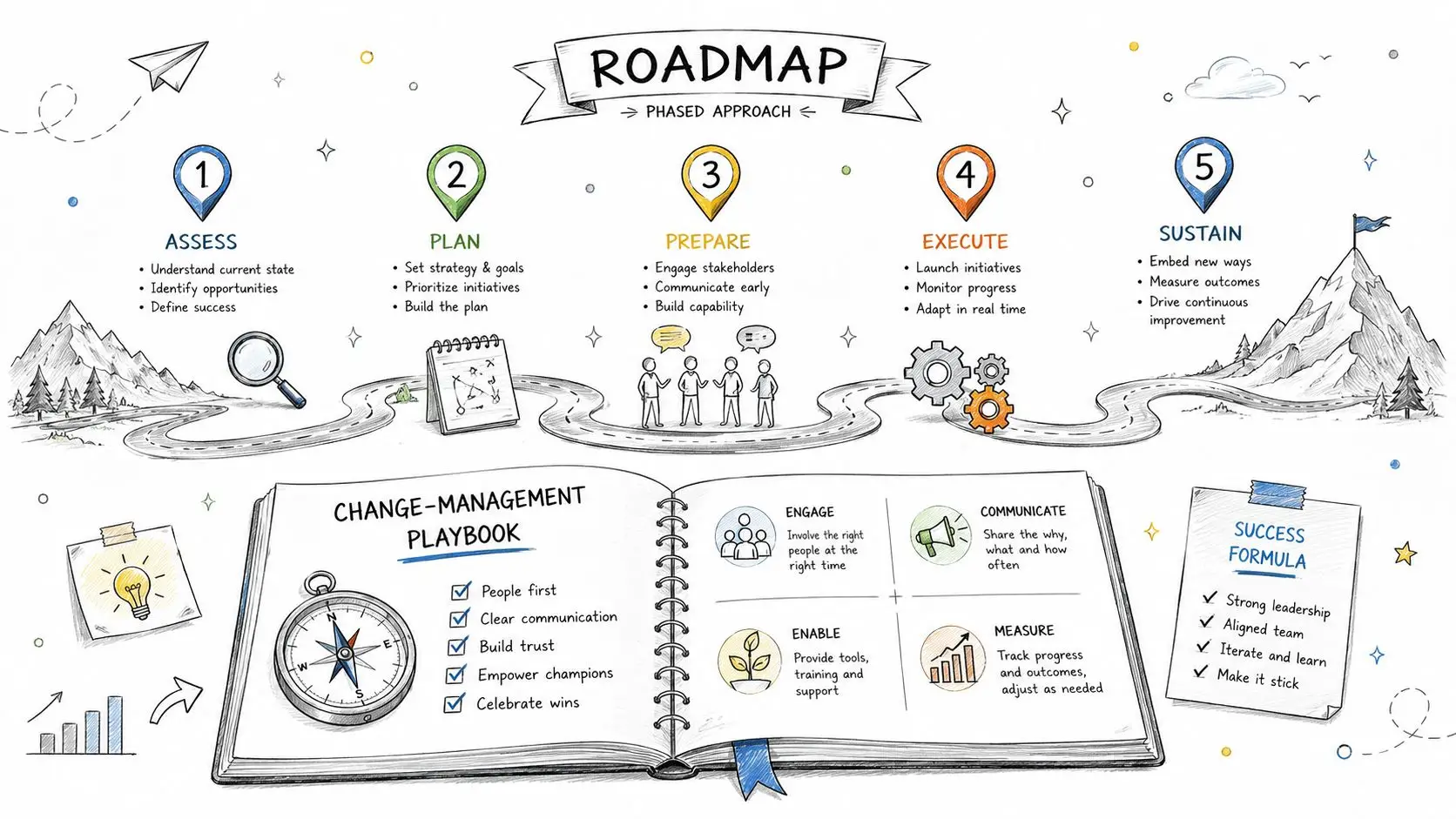
Legal workflow automation succeeds when the firm redesigns operations in controlled waves, not when it deploys software across every practice at once. Broad launches create conflicting rules, unclear ownership, and weak trust. Each phase should produce evidence that partners can review before approving the next one, including evidence from Israeli and cross-border matters where language, jurisdiction, and crisis timing affect the design.
Phase one, intake and routing
Begin with recurring request types, named owners, and a documented intake path. Deliverables include a structured request form, routing rules, and a dashboard for open matters, exceptions, and unassigned work. Pilot matters should be opt-in. Partners need visibility for supervision, not surveillance. Test whether the form captures the facts required for bank-account restrictions, franchise gaps, and urgent client requests without adding another administrative queue.
Phase two, contract automation
Contract automation requires approved templates, clause positions, authority rules, and a repository that reflects the firm’s actual negotiation practice. Start with template automation, deviation routing, and stage-level cycle-time reporting. A respected lawyer should review exceptions and refine the playbook. Reset the scope after the pilot. A successful demonstration does not prove that every contract type is ready for automation.
The checkpoint should examine decision quality as well as speed. Review whether the workflow records who approved a deviation, whether local-law issues reach the right counsel, and whether multilingual evidence or supporting correspondence remains attached to the matter.
Phase three, litigation and crisis orchestration
Use a tested matter playbook before automating litigation or crisis response. Deliverables should cover legal-hold triggers, evidence registers, coordinated notifications, and parallel workstreams for preservation, client communication, translation, and filing preparation.
Associates may fear that automation will remove billable work. Address that concern directly by assigning recovered time to judgment, strategy, and client-facing responsibility. Leaders should state how training opportunities will be preserved and how routine coordination work will be redeployed.
Phase four, cross-border compliance overlays
Add jurisdiction, language, privilege, transfer, and regulator-specific controls. The deliverables should include a jurisdiction matrix, translation and review gates, and escalation rules for cross-border matters. These controls must support parallel-track crisis work rather than force every jurisdiction into one sequence.
Adopt a written data ethics charter covering permitted and prohibited uses, human accountability, retention, and incident response. Local counsel and information-security stakeholders should test the design before the phase closes.
Phase five, enterprise integration
Connect approved workflows with ERP, document management, identity, procurement, sales, and reporting systems only after ownership is clear. Role-based access, synchronized matter data, and executive reporting are the core deliverables. Integration maps, ownership registers, and controlled interfaces reduce the security and support risks created by shadow data flows.
Review scope after each wave. This protects the program when leadership changes, budgets are reforecast, or a workflow proves unsuitable for regulated work.
RNC Group’s operating context reflects why staged design matters. The firm handles international commercial matters, crisis management, bank-account restrictions, multilingual correspondence, and cross-border litigation. Its digital service process can document legal-process delivery through WhatsApp and email. Those channels become legally useful only when the workflow preserves verification, delivery evidence, read receipts, ownership, and follow-up.
Metrics, Risk Reduction, and the Strategic Recommendation
Legal workflow automation earns support through measurable control. Boards, insurers, and regulators need evidence that redesigned processes reduce exposure, improve supervision, and produce reliable records. The dashboard should measure legal outcomes, not user counts or automated-task volume.
Track stage-level contract cycle time, recovered matter margin, audit-trail completeness, and cross-border compliance defects. Margin recovery should reflect reduced coordination and avoidable rework. Compliance defects should include missing approvals, translation failures, and uncontrolled information transfers.
Crisis readiness requires separate measures. For bank-account restrictions, record the time from trigger to initial record collection, counsel assignment, and a coordinated client-status pack. For cross-border disputes, test whether preservation, privilege, translation, and filing dependencies remain visible throughout the matter. These measures expose whether an Israeli response can run in parallel with foreign-counsel, banking, and client-communication workstreams.
KPI dashboard
| KPI | Target benchmark | Risk reduced |
|---|---|---|
| Contract stage cycle time | Reduce total cycle time by 30 percent within six months of phase two completion | Delayed signatures and missed commercial windows |
| Matter-margin recovery | Reduce coordination and avoidable rework costs by 15 percent within six months of rollout | Administrative leakage and unplanned cost |
| Audit-trail completeness | Record 100 percent of material actions, owners, and approvals from go-live | Defensibility and supervision failures |
| Cross-border compliance defects | Reduce missing approvals, translation failures, and uncontrolled transfers by 25 percent within six months | Regulatory and contractual exposure |
| Time to first crisis notice | Cut trigger-to-controlled-notification time by 30 percent within six months | Escalation delay and reputational harm |
| Time to coordinated response pack | Reduce trigger-to-pack time by 25 percent within six months, while preserving evidence and legal review | Fragmented crisis response |
The governance case remains urgent. As noted earlier, legal departments are adopting AI faster than they are redesigning workflows, roles, and delegation controls. Adoption without operational redesign creates activity without dependable control.
The recommendation is direct. Treat legal workflow automation as operating infrastructure, with continuous measurement, governance, training, and redesign. Start with one high-friction workflow, instrument every stage, preserve human decision gates, and expand only when the evidence supports it.
International companies should benchmark Israeli and cross-border workflows against these measures before selecting a platform. The decisive question is whether the organization can prove who acted, what information they used, which rule applied, and how quickly the matter moved. That standard matters when bank-account restrictions, multilingual evidence, franchise gaps, or parallel crisis tracks make a generic workflow unreliable.
RNC Group advises international businesses on Israeli commercial agreements, cross-border disputes, bank-account restrictions, crisis response, and multilingual legal coordination. To reduce workflow and escalation mistakes, contact RNC Group to discuss a matter-specific operational strategy before a deadline or restriction forces rushed action.
This article provides general information only and doesn’t constitute legal advice. Israeli and foreign law may produce different outcomes, and readers should obtain advice based on their facts, documents, jurisdictions, and applicable professional requirements.
Automating legal workflows? The tool is the easy part; the process design decides the value.
Approval chains, template governance and cross-border document flows break automation projects more than software does. Automating a broken process just breaks it faster.
We design contract and workflow processes for cross-border firms. Reach us on WhatsApp or by email.
This article does not constitute legal advice and is not a substitute for consulting with a qualified attorney. Do not rely on the contents of this article for taking or refraining from taking any action.