
A transaction can reach the signing room and still fail before anyone signs. In 2026, the decisive question isn’t whether the purchase agreement reads well. It’s whether counsel identified every regulatory gate, sequenced each approval, and protected the financing window.
That shift matters for any company buying, selling, or investing across borders. A mergers and acquisitions lawyer should operate as the transaction’s regulatory-sequencing strategist, not merely as the person marking up the SPA.
A Deal That Nearly Died at Signing
A European industrial buyer prepared to acquire a U.S. software target for $480 million in late 2025. The parties had negotiated the definitive agreement, settled the escrow terms, and booked the signing rooms.
Twenty-four hours before execution, counsel discovered that the target’s primary data architecture handled European health records. That fact triggered GDPR transfer reviews, informal CFIUS notifications, and sectoral foreign-investment screening in three EU member states.
The parties had not placed those approvals into the signing plan. The buyer then faced two choices. It could walk away, or it could accept a delay that threatened the financing window and commercial rationale.
Practical rule: A perfect SPA cannot rescue a transaction that misses its regulatory sequence.
The lesson applies beyond data-driven businesses. Antitrust review, foreign direct investment screening, national-security controls, sector approvals, and third-party consents can determine whether a deal closes at all. They can also affect the purchase price, the long-stop date, the reverse-termination fee, and the buyer’s financing conditions.
A capable M&A lawyer therefore starts with a regulatory map, not a precedent agreement. The map should identify each authority, filing trigger, expected review path, information requirement, approval dependency, and contractual consequence.
The order matters. One regulator may require transaction documents before reviewing a filing. Another may require ownership information that the buyer can only provide after signing. A third authority may coordinate with a foreign agency, creating an approval dependency that changes the closing timetable.
This is why the recommended strategic path is to engage counsel before finalizing the LOI. Early counsel can make regulatory risk visible while the parties still control price, structure, exclusivity, break fees, and conditions precedent.
What a Mergers and Acquisitions Lawyer Actually Does
Global M&A activity reached $4.6 trillion in 2025, a 49% increase from the prior year and the strongest annual level since 2021, according to Reuters’ report on the M&A legal pipeline. That environment creates pressure to move quickly, but speed without sequencing creates avoidable failure.
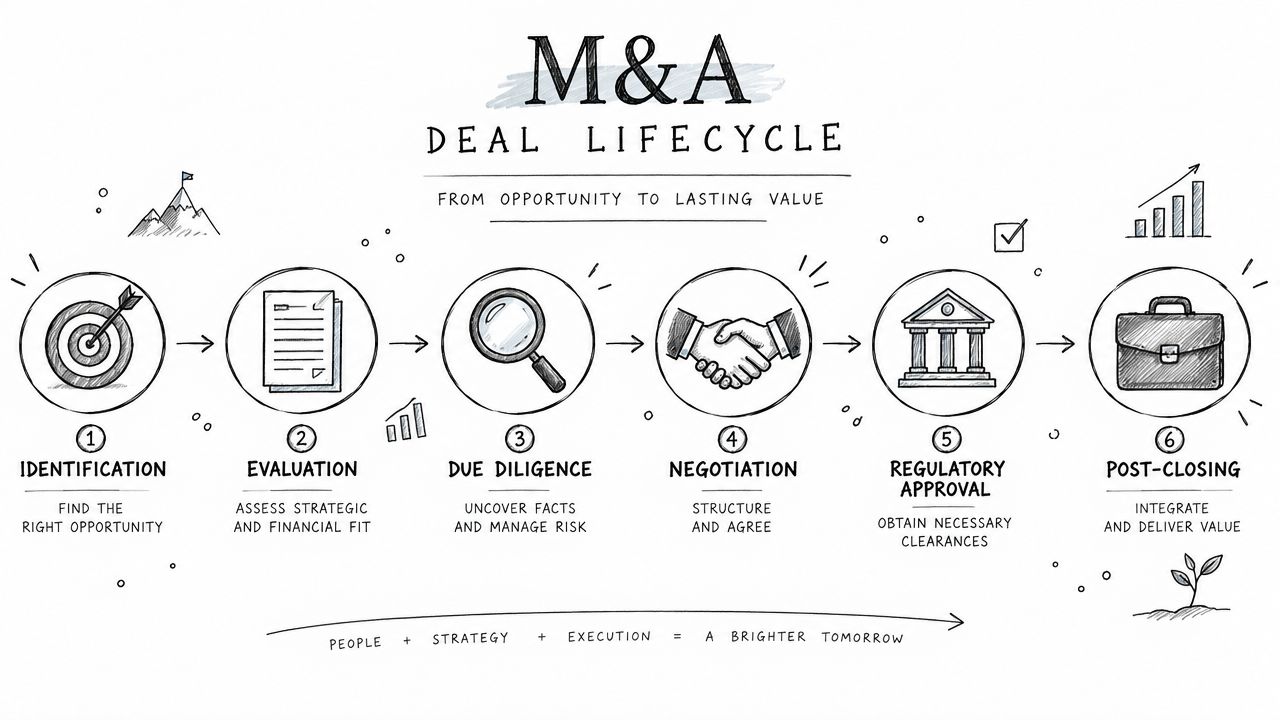
Six stages, six legal deliverables
-
Target identification: Counsel tests ownership, conflicts, structure, and preliminary regulatory exposure. The deliverable is an early risk map that prevents management from pursuing an impossible structure.
-
Term sheet and LOI: Counsel allocates exclusivity, confidentiality, access, conditions, financing risk, and termination rights. The LOI should preserve negotiating power instead of locking the client into unverified assumptions.
-
Due diligence: Counsel designs the virtual data room, issues requests, coordinates specialists, and ranks findings. The output should be a priced and prioritized risk register, not a document inventory.
-
Definitive agreement: Counsel converts verified findings into representations, covenants, indemnities, escrows, earnouts, price adjustments, and closing conditions.
-
Regulatory and third-party approvals: Counsel prepares antitrust and FDI filings, tracks sector permissions, obtains change-of-control consents, and maintains an approval calendar.
-
Post-closing integration: Counsel manages closing mechanics, transition obligations, deferred consideration, employee arrangements, and unresolved indemnity matters.
Founders also need a separate exit plan before entering negotiations. A practical overview of founder exit planning 2026 can help frame personal, governance, and liquidity objectives before the LOI fixes the commercial narrative.
The M&A lawyer owns alignment among the approval calendar, financing conditions, disclosure schedules, and closing mechanics. Counsel who treats the SPA as the main deliverable will miss dependencies that a regulatory strategist identifies at the start.
Legal Due Diligence and Its Real Cost Drivers
Legal diligence costs vary because the work varies. The principal drivers include target size, the number of jurisdictions, data-room quality, industry regulation, and the depth of the final report.
Published guidance places mid-market legal diligence around $75,000 to $250,000, while large deals commonly reach $150,000 to $500,000. Mega-deals can exceed $500,000 and sometimes reach $2 million or more, according to published guidance on due diligence costs.
| Deal Size | Typical Legal Diligence Cost | Main Cost Drivers | Main Cost Savers |
|---|---|---|---|
| Mid-market | $75,000 to $250,000 | Contract volume, IP scope, litigation, timing | Clean data room, defined scope, vendor schedules |
| Large transaction | $150,000 to $500,000 | Multiple jurisdictions, specialists, regulatory exposure | Early triage, organized disclosures, capped scope |
| Mega-deal | Above $500,000, sometimes $2 million or more | Extensive contracts, complex IP, investigations, compressed timetable | Early work allocation, risk-based review, coordinated specialists |
What counsel must actually review
The review should cover corporate records, capitalization, material contracts, intellectual-property ownership, employment arrangements, equity plans, litigation, regulatory licenses, tax structure, and data privacy compliance.
Missing contracts create unnecessary review cycles. Undisclosed affiliates raise ownership and conflict questions. Founder vesting gaps can undermine control. Government investigations can affect both valuation and closing certainty.
The recommended approach uses risk-based triage. Counsel should identify high-impact issues first, assign specialist reviewers only where the target’s profile requires them, and escalate findings that could change structure or price.
The report must feed the agreement
A binary “clean” or “unclean” conclusion rarely helps a buyer negotiate. The useful deliverable identifies the issue, estimates its commercial exposure, assesses its probability, and recommends a contractual response.
Clients should request a written scope letter, defined reporting assumptions, and clear staffing responsibilities. They should also provide organized vendor schedules and complete data-room materials before review begins.
Translating Diligence Into Deal Structure and Price
Diligence becomes valuable only when it changes the deal. A regulatory breach, uncertain IP title, or unresolved customer consent should affect price, conditions, protection, or timing.
Deal-terms research identifies purchase-price adjustments, escrows, indemnification, and earnouts as common tools for allocating post-closing uncertainty. The deal terms study from SRS Acquiom also emphasizes objective earnout milestones, including EBITDA or regulatory approvals.
| Diligence Finding | Typical Deal Mechanism | Negotiation Priority |
|---|---|---|
| Known, quantifiable liability | Purchase-price reduction | Secure value credit before signing |
| Specific unresolved claim | Specific indemnity | Define scope, duration, and recovery |
| Broad but uncertain exposure | Escrow or holdback | Match security to credible exposure |
| Performance uncertainty | Earnout | Define metrics and dispute procedures |
| Approval uncertainty | Closing condition and long-stop date | Protect financing and exit rights |
Match the mechanism to the risk
A purchase-price adjustment works best when the liability can be measured with reasonable confidence. It gives the buyer immediate economic recognition instead of forcing a later recovery process.
A specific indemnity suits a defined issue, such as a pending investigation or a known ownership defect. The agreement should identify the covered loss, survival period, control of defense, mitigation duties, and payment process.
An escrow provides security when the parties accept uncertainty but disagree about its final amount. Counsel should size it against verified exposure rather than using an arbitrary percentage.
An earnout can bridge a valuation gap, but vague drafting creates post-closing disputes. The agreement must define measurement periods, accounting rules, operational control, information rights, milestone verification, and dispute resolution.
Negotiation principle: A documented liability creates leverage. An unquantified fear usually produces a blunt price haircut.
Counsel should also connect each protection to closing certainty. A buyer may accept a capped indemnity for a manageable risk, but reject the deal if the same risk threatens regulatory approval or core operations.
Cross-Border, Israeli, and Regulatory Dimensions
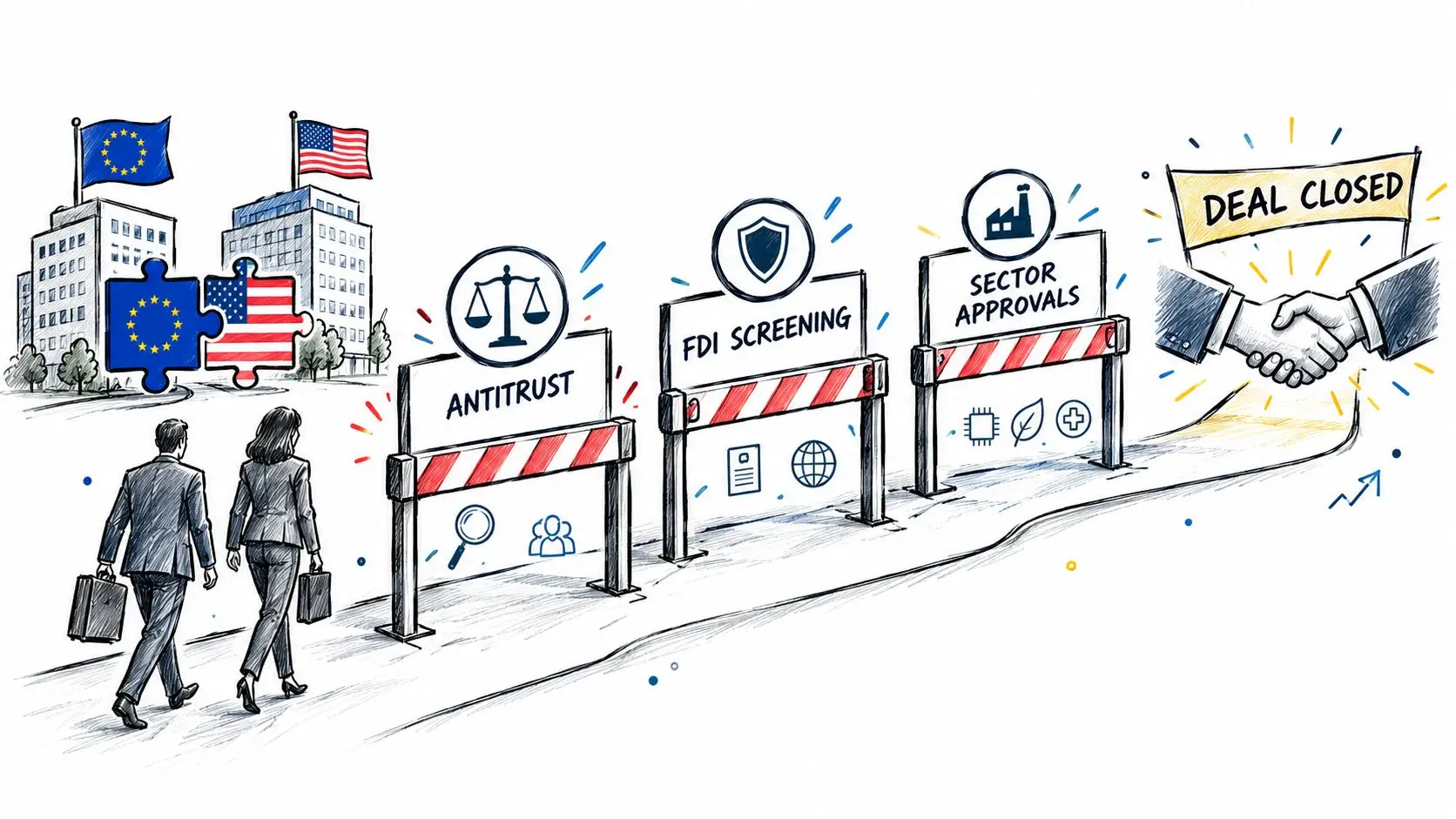
Regulatory complexity now determines deal structure earlier than contract drafting. Antitrust authorities, foreign-investment bodies, and sector regulators can impose conditions that change ownership, governance, data access, or the buyer’s ability to close.
The buyer must examine EU and U.S. merger-control exposure, UK National Security and Investment Act screening, the EU foreign-investment framework, Germany’s AWV review, and Israeli sensitive-sector controls. The analysis should also cover defense, telecommunications, finance, critical infrastructure, and technology involving sensitive data.
Israel requires local sequencing
Israeli transactions may require analysis of the Advocate General’s role, Competition Authority notification thresholds, and sector-specific approvals. The correct route depends on the target’s business, ownership, activities, and regulatory environment.
Foreign buyers should not assume that a global filing strategy automatically covers Israel. Israeli review may require different information, local coordination, and a timetable that affects the main closing condition.
Litigation systems also affect risk
Israeli commercial litigation uses pre-trial disclosure, requests for specific documents, requests to admit facts or documents, and questionnaires or interrogatories. Israeli courts don’t use pre-trial depositions, as explained in this primer on commercial litigation in Israel.
That structure differs from deposition-driven U.S. discovery. Foreign clients should adjust document preservation, witness preparation, disclosure planning, and litigation assumptions accordingly.
Sequence the closing protections
Counsel should create a jurisdiction-by-jurisdiction approval chart before signing. The chart must show filing responsibility, submission order, expected information requests, outside dates, long-stop dates, termination rights, and reverse-termination fees.
The contract should also address conduct restrictions during review. Buyers need protection against the seller taking actions that worsen antitrust or FDI exposure. Sellers need certainty that the buyer will pursue approvals diligently and accept clearly defined remedies where appropriate.
How M&A Lawyers Are Paid in 2026
Fee selection should follow transaction risk. Clients shouldn’t compare quotes only by the headline number, because a low quote can conceal thin senior involvement, narrow diligence, or uncontrolled specialist costs.
The verified market data supports a practical cost range for diligence. It doesn’t establish reliable figures for hourly partner rates, fixed-fee packages, or success-fee percentages, so those figures require a customized engagement proposal rather than a universal benchmark.
| Fee Model | Typical Range | Best Fit | Risk to Client |
|---|---|---|---|
| Hourly billing | Depends on staffing and time | Bespoke cross-border work, investigations, changing scope | Cost overruns and weak budget visibility |
| Fixed fee | Agreed after scope definition | Defined diligence and SPA work | Exclusions may shift work into extra charges |
| Success-based pricing | Negotiated case by case | Select buyer mandates or distressed transactions | Incentives may not match regulatory caution |
| Hybrid retainer | Retainer plus defined phases | Cross-border deals with uncertain approval paths | Requires precise phase and staffing controls |
Hourly billing
Hourly billing fits matters with uncertain scope, litigation exposure, or changing regulatory demands. It can also support specialist work that the parties cannot define at the outset.
The client should demand phase budgets, staffing assumptions, escalation rules, and regular variance reports. Partner review should remain visible, especially for the LOI, regulatory strategy, SPA risk allocation, and closing conditions.
Fixed fees
Fixed fees work when counsel can define the deliverables. A clean mid-market diligence and SPA phase may support this structure, provided the engagement letter addresses jurisdictions, document volume, specialist work, revisions, and filing responsibilities.
A fixed fee without a scope definition isn’t certainty. It’s a dispute waiting for the first unexpected issue.
Success and hybrid structures
Success-based pricing remains uncommon for many corporate transactions, but parties may negotiate it for selected buyer-side or distressed mandates. The engagement must address what counts as success, when payment becomes due, and whether the fee changes if regulatory conditions alter the transaction.
A hybrid structure often provides the strongest control. The client can use a fixed phase for initial diligence, hourly billing for exceptional regulatory work, and a capped budget for closing support.
A Practical Checklist for Hiring the Right Counsel
Credentials matter, but senior involvement matters more. The lawyer who wins the pitch may not be the lawyer who negotiates the SPA, manages the regulator, or answers the board at midnight.
Test ownership before signing the engagement
Ask direct questions:
- Named leadership: Will the pitching partner personally supervise diligence, negotiate principal terms, and approve the closing checklist?
- Written staffing: Will the firm identify the responsible partner, associates, tax counsel, employment counsel, IP counsel, and antitrust specialists?
- Comparable experience: Can the team provide references from transactions with similar sectors, jurisdictions, structures, and regulatory risks?
- Conflict review: Has the firm checked conflicts across the target, buyer, subsidiaries, lenders, and relevant counterparties?
- Cybersecurity controls: How does the team protect sensitive data-room information and privileged communications?
The engagement letter should state scope, fee model, assumptions, exclusions, reporting cadence, and senior-partner involvement. A vague promise of supervision doesn’t protect the client.
Use scenario questions
Ask the lawyer to explain FDI screening for a Frankfurt buyer acquiring a sensitive technology business. Then ask how the team would sequence CFIUS and Israeli Advisory Committee reviews.
A strong candidate should explain what information each authority needs, which filing can begin first, what the SPA should condition, and how the parties should protect the long-stop date.
Ask what could trigger a Phase II European Commission review. The answer should address deal-specific facts, information requirements, remedies, timing, and contractual consequences.
Demand a crisis example
Request a real example involving a late-stage compliance breach. The lawyer should explain how the team verified the breach, assessed exposure, revised closing conditions, protected financing, and communicated with the board.
RNC Group provides international commercial advice, including Israeli-law analysis, negotiation support, diligence coordination, and transaction-document assistance. Its cross-border work can fit clients that need Israeli and foreign counsel to follow one coordinated transaction strategy.
Red Flags, Common Pitfalls, and the Next Step
Deal failures repeat across markets because teams overlook the same warning signs. A corporate generalist may handle a domestic acquisition competently, yet lack the regulatory sequencing needed for a cross-border transaction.
The most serious red flags include:
- Affiliate debt: Undisclosed related-party liabilities can distort value and create repayment disputes.
- Broken IP chains: Missing assignments can leave the buyer without reliable ownership of core technology.
- Employment liabilities: Transfers may require employee consent, consultation, or restructuring steps.
- Antitrust surprises: Counsel may discover competition concerns after signing, when remedies become expensive.
- Missing FDI clearance: Foreign-investment review can block closing even after commercial terms settle.
- Weak deal specialization: A generalist may treat regulatory approvals as boilerplate instead of transaction-critical conditions.
A useful external resource on negotiation strategies for mergers can help buyers and sellers organize questions before they negotiate risk allocation.
Closing discipline: Set the regulatory map, data-room plan, staffing model, and approval timetable before the LOI becomes final.
Question any adviser who quotes a fixed fee before scoping diligence. Question any team that refuses to disclose staffing or offers no senior-partner commitment. Also question any draft that uses generic approval language without naming filings, deadlines, remedies, and termination rights.
The recommended next step is practical. Assemble the data room, identify all jurisdictions and regulated activities, lock the staffing plan, and engage counsel before finalizing the LOI.
RNC Group advises Israeli and international clients on cross-border M&A, commercial risk allocation, diligence coordination, negotiation, and transaction execution. Contact RNC Group now to avoid preventable regulatory and closing mistakes.
This article provides general information, not legal advice. Transaction outcomes depend on the facts, jurisdictions, parties, regulators, and documents involved, so readers should obtain advice from qualified counsel before relying on any information or taking action.