
In a partnership crisis, the lawyer who files first often loses ground. The more useful question in 2026 is different, does counsel know how to freeze records, preserve value, and force a workable exit before the business turns into a collection problem?
That distinction matters in the United States because partnerships sit on a very large economic base. The IRS reported about 3.7 million partnership tax returns in 2022, with more than $5.8 trillion in total income reported by partnerships, and the SBA says nearly 10% of U.S. businesses are structured as partnerships source. In other words, a partnership dispute lawyer is not a niche emergency specialist, the role sits at the center of commercial risk.
For Israeli and foreign companies, the problem gets sharper. A dispute that starts as a governance disagreement can quickly become a books-and-records fight, a valuation fight, and then an enforcement fight across borders. The right sequence matters more than courtroom theatrics, especially when bank access, authority logs, and cloud records are still in play.
The Partner Fallout Most People Misread
The first mistake is assuming a partner fight only becomes serious once a lawsuit is filed. In practice, the harm usually starts earlier, when one side stops sharing information, changes access rights, or starts describing the business as “my company” instead of “our company.” By the time a lawyer is involved, the dispute is already about control.
Where the quiet phase costs you the upper hand
A partnership breakdown often starts with soft signals. Distributions slow down, financial statements arrive late, and a partner stops answering direct questions about accounts or commitments. Then the disagreement turns loud only after one side has already built a paper trail that supports its version of events.
That is why the first thirty days matter more than the next thirty months. A partnership dispute lawyer who understands sequencing will focus first on evidence, authority, and exit options, instead of rushing into a dramatic filing. Filing too early can hand the other side time to clean up records, shift assets, or frame the story before you secure the documents that matter.
Cross-border matters move even faster because assets, witnesses, and records may sit in different places. Jurisdiction, interim relief, and later enforcement stop being technical side notes and become central decisions. For a related cross-border perspective, the practical concerns raised in legal challenges for UAE startups are a useful reminder that structure and forum can shape outcomes before the merits are ever tested.
Practical rule: if the books, bank access, or signing authority are changing, the dispute has already crossed the legal threshold.
Why Israeli-linked disputes move faster
Israeli-linked partnerships often combine operating speed with thin governance. Founders move quickly, documentation lags behind, and informal understandings carry the business until they stop carrying it. Then a dispute over trust becomes a dispute over control.
That is also why a foreign CEO should never treat the first week as a paperwork exercise. The first week is the period in which the future remedy gets set. If the wrong path hardens first, the lawyer’s job shifts from strategy to damage control.
When a Partnership Dispute Becomes a Legal Matter
A partner disagreement becomes a legal matter the moment money, access, or decision-making shifts in a way that changes legal rights. Frozen distributions, locked bank access, removed signing authority, suppressed financial statements, and missed capital calls are not just poor communication. They are warning signs that the business has moved from friction into dispute.
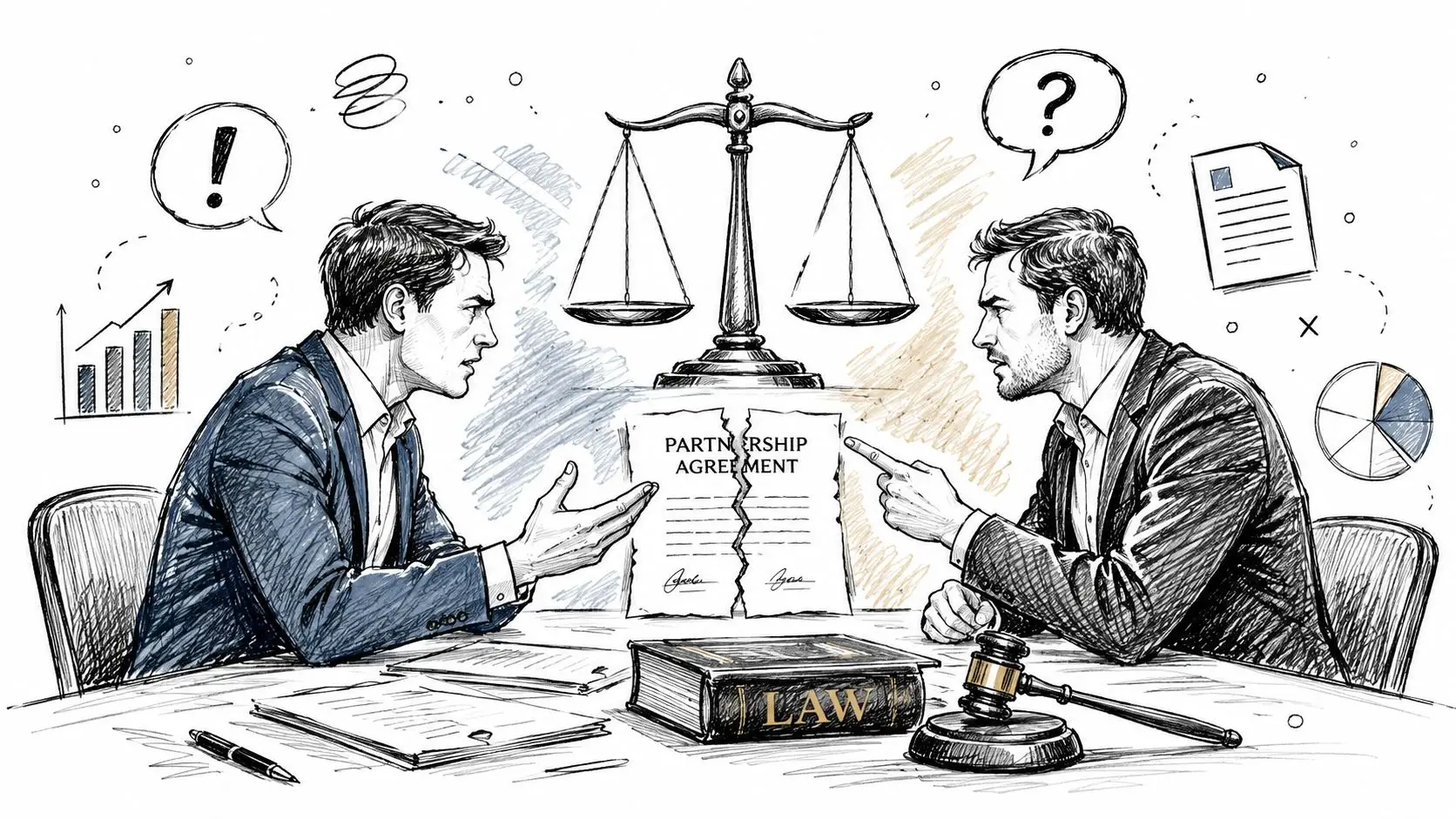
The five signals that justify calling counsel now
The first signal is frozen distributions, because money flow usually reflects who is in control. The second is restricted bank access, because a partner who can move funds can also apply pressure through timing and liquidity. The third is missing financial statements, which makes valuation, breach analysis, and any buyout discussion much harder.
The fourth is changed signing authority, especially if it happens without clear notice or board-level approval. The fifth is missed capital calls or sudden demand letters, because they often show a shift from cooperation to coercion. When two or more of these appear together, informal discussion is usually over.
Under the Uniform Partnership Act, a partnership exists only when people carry on a business in common with a view to profit, and existence is a question of fact, not a label ACCA factsheet. That means a court can recharacterize an informal collaboration as a partnership even if the parties never used that term. It also means liability can change quickly, especially where the parties acted like partners without documenting the structure.
Partners are jointly responsible for the contractual debts of the partnership, so a dispute can become a creditor-exposure problem fast.
The practical result is simple. If the facts show shared profit, common business activity, and operational control, counsel should treat the matter as a legal dispute immediately. Delaying the response because no lawsuit has been filed yet usually weakens the negotiating position. For a related cross-border perspective, the practical concerns raised in legal challenges for UAE startups are a useful reminder that structure and forum can shape outcomes before the merits are ever tested.
How to Qualify a Partnership Dispute Lawyer
The best candidate is not always the biggest firm. The right fit is the lawyer who has handled partnership breakups before and can recognize whether the fight is about valuation, fiduciary duty, or a buyout path. That judgment changes the outcome.
The four questions that actually matter
First, ask about partnership-specific experience. A good answer sounds concrete, with examples of dissolved partnerships, disputed buyouts, or internal control fights. A weak answer stays generic and shifts to “commercial litigation” without naming partnership mechanics.
Second, ask about cross-border capability. The lawyer should explain where to sue, how to preserve evidence across jurisdictions, and how to turn a judgment into recoverable assets. If the answer skips enforcement, the lawyer is thinking too locally for an international dispute.
Third, ask about crisis-management instinct. The right lawyer knows when to seek records, when to send a structured demand, and when to avoid premature escalation. The wrong lawyer treats every matter like a complaint draft.
Fourth, ask about forensic and valuation fluency. If the attorney can’t explain accounting trails, goodwill, distributions, or authority logs, the case may be under-argued from the start. A partnership dispute lawyer should work comfortably with accountants, not only with pleadings.
A strong candidate sizes up the opponent, the records, and the remedy path before discussing court dates.
For non-Israeli clients, this filter matters even more. A general commercial litigator may know procedure, but still miss how a buyout formula, partner status, or document preservation issue changes the real leverage. The best answer is the one that connects legal theory to the business ledger.
Legal Pathways, Timelines, and What They Actually Cost
A practical partnership dispute lawyer does not start with litigation. The usual sequence runs from direct negotiation to mediation, then arbitration, and only then court. That order matters because each step changes cost, speed, and settlement pressure.
What the timing usually looks like
A practice guide notes that many disputes resolve within 3–6 months when both sides engage seriously, while court cases can take 2–5 years in some jurisdictions Pollack Peacebuilding. That gap is why a rushed lawsuit can be a bad opening move. It may lock the case into the slowest lane before the facts are fully secured.
Settlement values also vary widely. One 2025 to 2026 survey-style guide places most ordinary commercial settlements between $50,000 and $500,000, while a reported partnership-related matter resolved for $26 million by settlement Yates and Anderson. The lesson is not that every case is large. The lesson is that exposure can scale sharply once breach, control of assets, or professional-liability issues are documented.
Pathway Comparison at a Glance
| Pathway | Typical Timeline | Cost Profile | Confidentiality | Enforceability |
|---|---|---|---|---|
| Direct negotiation | Usually shortest | Lowest if the deal is structured early | High | Depends on the final agreement |
| Mediation | Often short to moderate | Controlled if both sides come ready | High | Strong if documented well |
| Arbitration | Moderate | Often higher than mediation, lower than long litigation | Usually high | Strong, especially across borders |
| Litigation | Often longest | Highest when discovery and motions expand | Lowest | Strong for court judgments, but slower to collect |
The wrong remedy choice destroys negotiating power. If the agreement requires arbitration, demanding dissolution in court may waste time. If the dispute is mainly about accounting, a rushed merits fight may miss the valuation model that settles the case.
Documents to Prepare and Questions to Ask
The first 72 hours should be about preservation, not argument. If records disappear, the case becomes harder to price, harder to settle, and harder to enforce. That is where a disciplined partnership dispute lawyer earns value.
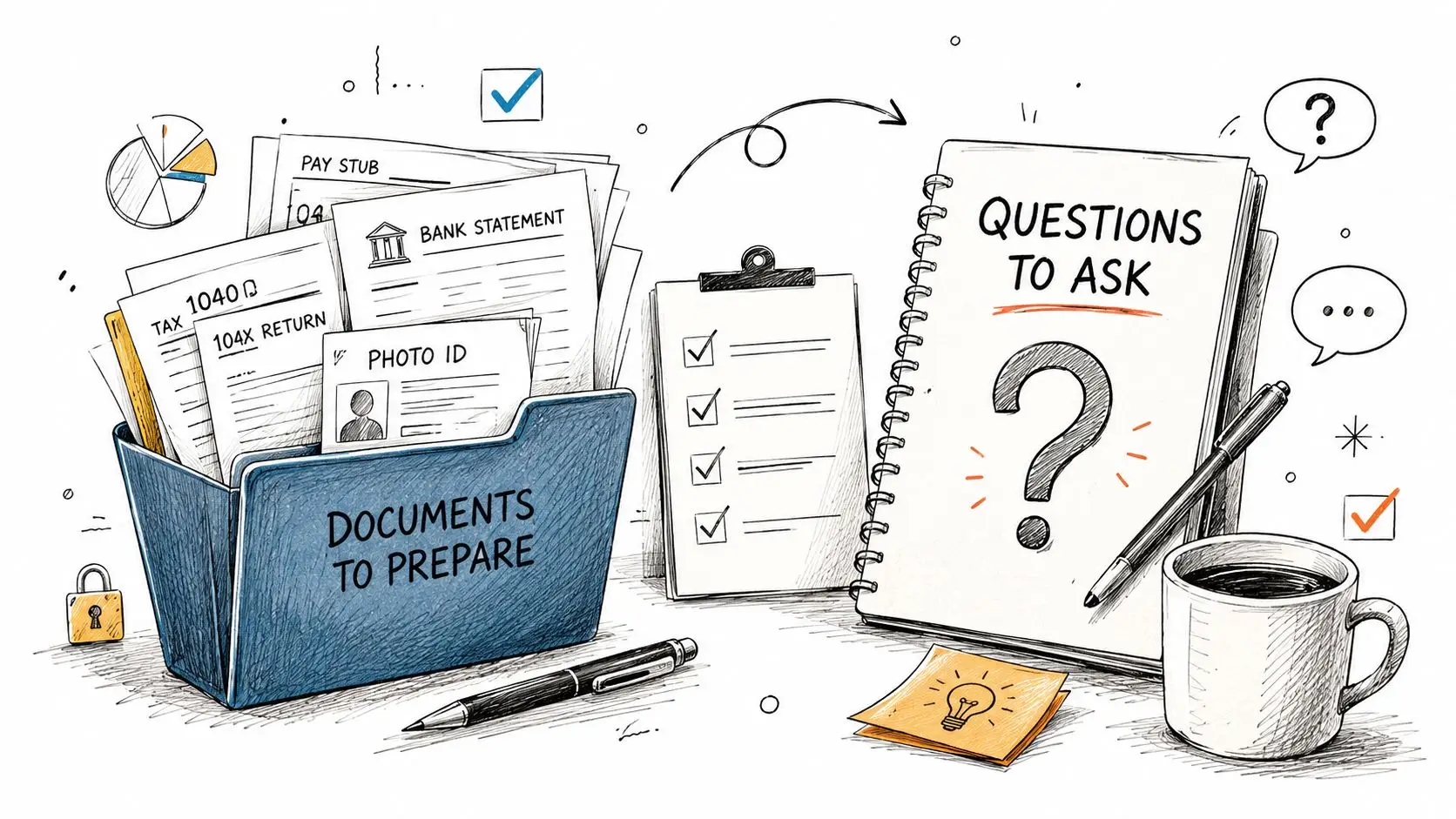
Lock down these records immediately
- Partnership agreement: It controls dispute resolution, buyout language, and exit mechanics.
- Accounting records: They show distributions, debts, and whether the numbers match the story.
- Capital-contribution history: This helps trace who funded the business and when.
- Distribution records: These reveal whether one partner received more than the agreement allows.
- Email trails: They capture shifting positions, approvals, and threats.
- Authority logs: They show who had signing power and when that power changed.
Ask these eight questions in the first meeting
- Have you handled partnership breakups before? Look for direct examples, not broad commercial work.
- How do you approach evidence preservation? The right answer starts immediately, before positions harden.
- Can you explain the likely remedy path? Good counsel should map negotiation, mediation, arbitration, and litigation.
- How do you work with forensic accountants? The answer should mention valuation, not guesswork.
- What happens if records sit in another country? Counsel should discuss jurisdiction and enforcement.
- How do you protect value while the dispute runs? Look for emergency steps, not just pleadings.
- What is the best and worst forum for this matter? The lawyer should compare options, not default to court.
- Who will run the case? You want the lawyer who will make the hard calls.
A useful comparison point for control disputes is the Bizbe, Inc. guide to minority shareholder rights, because the same record-access and influence issues often show up there too. The broader point is simple, preparation wins when paperwork alone does not.
When the Real Dispute Is Control, Records, and Value
Many partnership fights look like personality conflicts, but they behave like control disputes. The side that controls records, cash, and access usually controls the frame of the case. That is why forensic accounting and emergency relief matter so early.
Agreements decide post-breakup economics
A Pennsylvania partnership dispute over post-dissolution legal fees shows how exact agreement language can govern the economics after a breakup, including how remaining contingency-fee proceeds were split and how post-dissolution funds were divided after creditors and contributions were repaid Philadelphia Courts PDF. That kind of wording is easy to overlook and hard to repair later. A lawyer who reads only the headline terms will miss the mechanics that decide the payout.
In Gast v. Peters, the Nebraska Supreme Court applied the Uniform Partnership Act to a law-firm breakup, noted the partners had agreed to share net profits and losses equally, and affirmed a setoff of $17,620.62 between former partners over disputed fee distributions FindLaw case summary. The court also quoted the UPA rule requiring a partner to account to the partnership for profits derived without consent from transactions connected with the partnership. That is classic fiduciary accounting, not abstract doctrine.
Enforcement risk is not theoretical
A federal judgment involving Morris + D’Angelo shows how far partner liability can go. The court entered a stipulated judgment against the defendants, jointly and severally, for $3.6 million plus interest, and the record states that the firm was a general partnership under California law GovInfo PDF. Structure and partner status mattered because they supported direct liability theories.
The core lesson is that dispute often lives in the books, the bank authority, and the control of goodwill. Once that’s true, the lawyer’s job is to preserve value first and argue later. A good response may include a forensic accounting review, a preservation notice, or interim injunctive relief before the asset base erodes.
How RNC Group Approaches Partnership Disputes
RNC Group treats partnership disputes as sequencing problems. The firm’s model starts with rigorous analysis of the client, the opponent, and the commercial context, then moves into a phased escalation plan across negotiation, arbitration, litigation, and selective media use. That approach fits cross-border partner conflicts, where speed and control matter as much as legal theory.
The practice also works through multilingual correspondence and draws on the ADVOC network in 73+ countries, which helps when records, witnesses, or assets sit outside Israel. Under the firm’s crisis-management orientation, the aim is not to file first, but to preserve advantage, secure value, and prevent recurrence through revised agreements and governance.
For Israeli companies expanding abroad, and foreign companies with Israeli exposure, that is the value of counsel. It is not just argument, it is containment, enforcement planning, and exit design. Attorney Tomer C. Henryk Ryterski leads that kind of work with a practical focus on commercial outcome.
RNC Group handles partnership disputes, cross-border commercial crises, and high-stakes enforcement questions with a phased strategy that fits the facts, not the ego of the moment. If a partner conflict is threatening records, control, or collection, visit RNC Group and use the contact path before the other side fixes the terms of the fight.
Disclaimer: This article provides general information only and does not create an attorney-client relationship. Partnership disputes turn on contract language, jurisdiction, and facts, so readers should seek legal advice before acting on any point discussed here.