
A company can maintain impeccable filings and still face personal or group liability. Courts focus less on whether documents exist than on whether the parties respected corporate separateness. Empirical research covering nearly 1,600 reported decisions found veil piercing in about 40% of cases overall, with particularly strong results in contract disputes and closely held companies. The foundational empirical study shows why textbook checklists provide incomplete protection.
For Israeli and multinational businesses, the practical question isn’t whether a court can pierce the corporate veil. The central question is whether bank records, board decisions, intercompany transfers, and creditor communications tell a coherent story of independent corporate conduct.
Piercing the Corporate Veil: Current Risk Levels in 2026
Piercing claims are not a judicial lottery. Courts repeatedly examine recognizable patterns, including commingled funds, dominant shareholder control, fraud, creditor prejudice, and improper asset transfers. A later study of published cases found an overall piercing rate of 27.12%, declining to 26.80% in cases from 2000 through 2005. The historical study points to continuing exposure alongside greater judicial restraint.
The practical trade-off is clear. Limited liability protects legitimate enterprise activity, while owners who use an entity as a conduit, wallet, or escape route from an existing duty invite intervention. A subsidiary may therefore be separate in its filings yet operate as an extension of its parent or shareholder. Courts care about that operational reality, not the label attached to the structure.
Why multinational groups face sharper scrutiny
Cross-border groups generate more evidence that can cut both ways. Shared treasury systems, common branding, overlapping directors, centralized procurement, and rapid affiliate transfers may reflect efficient management. The same arrangements may suggest that a local company lacked independent judgment, particularly if approvals, pricing, and risk decisions were undocumented.
Empirical research indicates that courts pierce to reach individuals about twice as often as they pierce to reach other entities, while parent-subsidiary cases are less successful than classic small-business disputes. The comparative empirical research supports a balanced conclusion. Control alone does not make a parent liable. Control combined with abusive conduct can.
Practical rule: Treat corporate separateness as an operating discipline, not as a formation document stored in a file.
Israeli companies also face a cross-border compliance gap. A parent may satisfy Israeli standards while confronting a foreign claim governed by a different test, broader discovery rules, or a more receptive approach to group liability. The response is evidence discipline before any dispute begins. Preserve board approvals, intercompany agreements, transfer records, and creditor communications so the group can explain why each entity acted as it did.
Core Legal Doctrine and the Two-Part Test
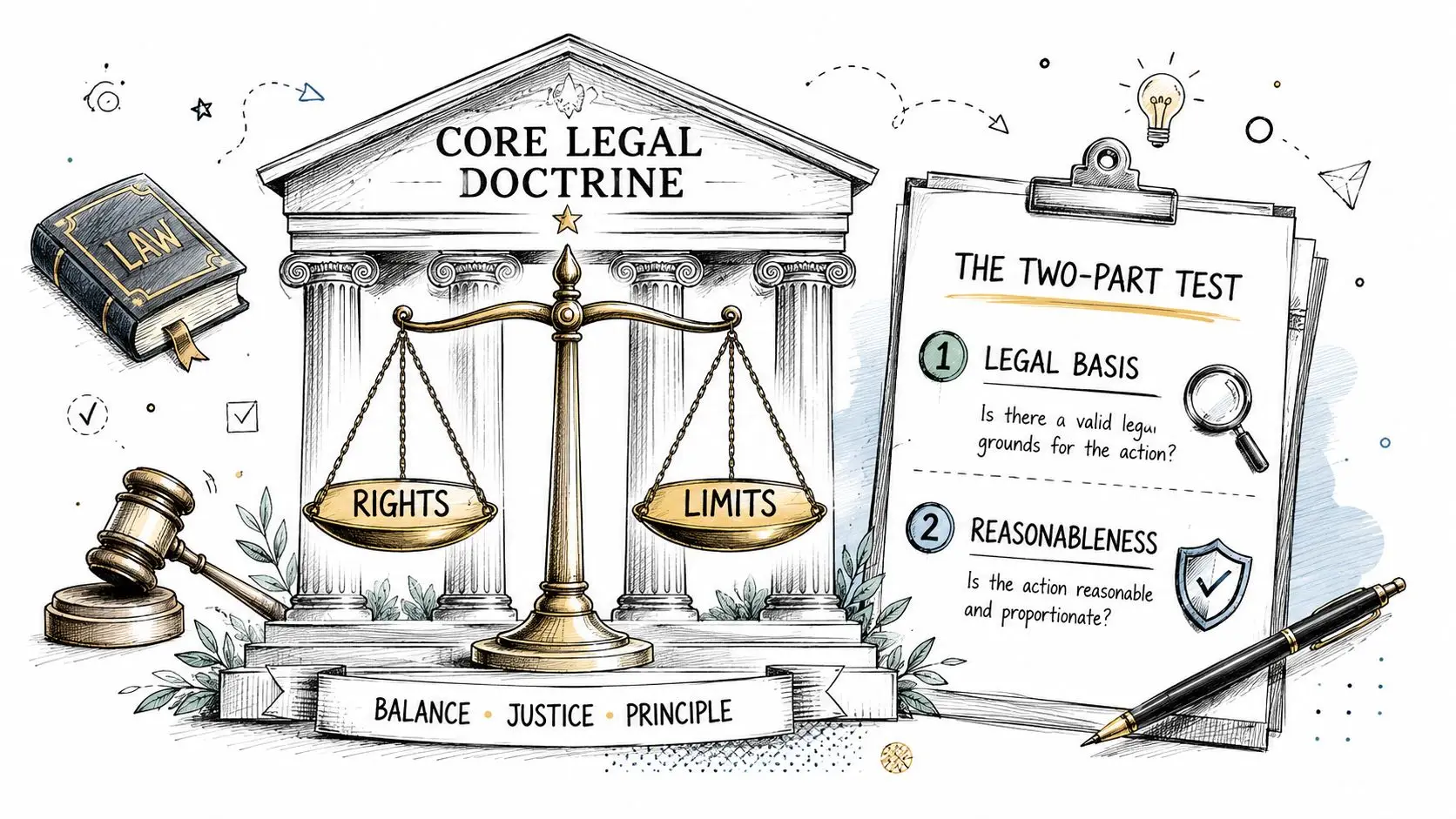
Courts in major common-law markets typically require two elements to converge. First, the claimant must show unity of interest and control, meaning the company operated as an alter ego rather than as an independent legal person. Second, the claimant must show that the controlling party used that unity to commit fraud, produce injustice, or evade a legal duty. Comparative doctrinal research identifies commingling, owner domination, and fraud as especially significant indicators.
The first question concerns genuine separateness
The alter-ego inquiry asks whether the entity makes its own decisions, maintains its own finances, and pursues its own business purpose. A company that pays personal expenses, receives undocumented shareholder withdrawals, and follows every instruction without independent review may look like a shareholder’s wallet.
Courts assess the whole relationship rather than applying a universal checklist. Relevant evidence can include:
- Financial separation: Separate bank accounts, accounting records, payment approvals, and tax documentation.
- Governance separation: Independent resolutions, properly recorded meetings, delegated authority, and meaningful director oversight.
- Operational separation: Distinct contracts, employees, premises, customers, systems, and commercial objectives.
- Transaction discipline: Written intercompany agreements, invoices, repayment terms, and commercially explainable pricing.
Formalities alone won’t save a company that behaves as an empty shell. However, consistent governance creates contemporaneous evidence that supports the legal distinction. Businesses seeking a practical governance framework can consult these best practices for governance before a dispute exposes weaknesses.
The second question concerns misuse
Even extensive control doesn’t automatically justify piercing. The claimant must connect the lack of separateness to a legally meaningful harm. The strongest cases show that the defendant used control to defeat an existing obligation, prejudice creditors, conceal assets, or shift value away from the entity that incurred the liability.
Veil piercing differs from direct agency liability. An agent may incur personal liability because that person committed an independent wrong or acted without authority. Veil piercing instead disregards the entity’s separate personality and attributes the company’s obligation to the controlling party. Enterprise liability also differs because it seeks liability across a broader corporate group, rather than relying solely on one shareholder’s domination.
The plaintiff carries the burden of proving the required facts. Courts generally won’t impose personal liability merely because a company failed, lacked ideal capitalization, or shared directors with an affiliate. The evidence must show both functional unity and misuse.
Israeli Standards Versus International Practice
Israel uses a statutory framework rather than relying only on judge-made alter-ego doctrine. Section 6 of the Companies Law 5759-1999 permits a court, in exceptional cases and for special reasons, to attribute company debts to shareholders when the company personality suffers abuse. The statute identifies conduct involving creditor fraud or prejudice, along with unreasonable risk-taking connected to the company’s ability to repay. The statutory text provides the starting point for every Israeli analysis.
Israeli law therefore sets a deliberately narrow threshold. The claimant must show more than poor administration or ordinary insolvency. The company literature describing Israel’s regime emphasizes that veil piercing remains an exceptional response to misuse of the corporate form, not a general remedy for business failure. The comparative Israeli analysis reinforces that distinction.
| Jurisdiction | Legal Basis | Key Test Elements | Plaintiff Burden | Practical Threshold |
|---|---|---|---|---|
| Israel | Section 6 of the Companies Law | Abuse, creditor prejudice, fraud, or unreasonable repayment risk | Strong proof of exceptional misuse | High |
| United States | State alter-ego and equity doctrines | Unity of interest plus fraud, injustice, or evasion | Fact-intensive proof | Varies by state and claim |
| United Kingdom | Evasion principle and restrictive precedent | Existing obligation plus deliberate interposition of a company | Focused proof of evasion | Very high |
| China | Statutory company-law provisions and judicial application | Abuse, control, commingling, and creditor harm | Increasingly formalized group-focused evidence | More receptive in some group cases |
The cross-border problem
An Israeli parent may face a lower domestic piercing risk while remaining exposed abroad. Foreign courts can examine the same transactions under different conflict-of-laws rules, jurisdictional standards, and discovery procedures. A claimant may also pursue direct claims against directors, fraudulent-transfer remedies, contractual guarantees, or agency theories without seeking veil piercing at all.
China illustrates the divergence sharply. Research on the 2023 Company Law revision reports that China codified veil piercing between companies under the same parent for the first time. The same research describes a more standardized approach and lower evidentiary thresholds in some sibling-company cases. The discussion of China’s revised doctrine demonstrates why multinational groups need jurisdiction-specific controls.
The strategic lesson is straightforward. A group should map where its entities operate, where creditors can sue, where assets sit, and which courts may examine intercompany conduct. Incorporation in Israel doesn’t neutralize exposure created by foreign operations, guarantees, representations, or asset movements.
Fact Patterns That Actually Lead Courts to Pierce
The strongest cases usually contain a narrative that connects control to creditor harm. Courts may see a shareholder moving valuable assets away from an indebted company, paying personal expenses from company accounts, or shifting revenue to an affiliate after a dispute begins. Each fact matters more when the documents show deliberate coordination.
Empirical studies also caution against exaggerated claims. One dataset found piercing in 20.56% of cases, while earlier samples reported rates ranging from approximately 35.53% to 40.18%, depending on the sample and period. The empirical analysis of veil-piercing decisions indicates that outcomes vary substantially, but it also identifies creditor deception and improper asset siphoning as recurring explanations in modern cases.
Conduct that creates real danger
- Asset stripping: A company transfers property, receivables, intellectual property, or cash without credible consideration while creditors remain unpaid.
- Commingling: Owners use company accounts for personal expenses, or affiliates treat cash pools as undocumented common property.
- Deliberate undercapitalization: The entity accepts foreseeable obligations without resources that match its business risk.
- Evasion: The company appears after an obligation arises, or an existing company becomes a vehicle for avoiding a judgment or contractual duty.
- False corporate identity: Contracts, invoices, websites, or correspondence blur the line between the operating entity and its parent.
A 2025 empirical study examining more than 300 veil-piercing decisions from the last four years found that courts could rationally identify deception of creditors or improper asset siphoning in around three-quarters of cases. That finding challenges the idea that judges decide these claims arbitrarily.
| Fact Pattern | Typical Outcome | Key Jurisdictional Notes |
|---|---|---|
| Mere parent control | Usually insufficient | Courts distinguish ownership from abuse |
| Shared directors | Usually insufficient alone | Stronger when directors ignore entity interests |
| Routine intercompany services | Usually insufficient | Written terms and market-based pricing help |
| Personal and corporate commingling | High-risk indicator | Courts examine frequency, purpose, and records |
| Asset transfers after creditor claims arise | Serious exposure | Timing and consideration often drive the narrative |
| Creditor deception or duty evasion | Stronger claim | The claimant must connect conduct to the obligation |
Israeli courts applying Section 6 demand proof of abuse and special circumstances. A claimant therefore needs more than a list of irregularities. The pleading must explain why the irregularities show misuse and how that misuse prejudiced the creditor.
Fraud investigations should preserve accounting data, communications, approvals, and transaction histories. A practical corporate fraud investigation guide can help teams think systematically about digital evidence, although legal counsel should control privilege-sensitive collection.
Building and Defending a Veil-Piercing Case
A creditor should build the case around documents, not suspicion. Bank statements, general ledgers, payment instructions, shareholder loan records, board minutes, and intercompany contracts can reveal whether the company operated independently. Witnesses then explain who made decisions, who controlled funds, and whether the entity followed instructions without meaningful judgment.
A claimant’s evidence plan
- Identify the controlling relationship. Trace ownership, voting rights, signing authority, directors, officers, and practical decision-makers.
- Reconstruct the money trail. Compare bank statements with ledgers, invoices, payroll, shareholder withdrawals, and affiliate payments.
- Test the commercial explanation. Ask whether each transfer had consideration, approval, repayment terms, and a legitimate business purpose.
- Link conduct to harm. Show how the challenged conduct reduced the debtor’s ability to satisfy the specific obligation.
- Use targeted discovery. Seek communications, internal approvals, treasury instructions, accounting-system records, and asset-transfer documents.
A pleading should identify the alleged unity, specify the misuse, and connect both to the requested remedy. General allegations that a parent “controlled” a subsidiary rarely provide enough factual force. Timing often matters as much as substance, particularly when transfers followed a demand, lawsuit, insolvency warning, or judgment.

A defendant’s response
The defense should present a coherent operational record. Separate accounts help, but the company should also show independent approvals, properly documented intercompany services, credible capitalization decisions, and contracts signed by the correct entity.
Defendants should separate veil-piercing allegations from other causes of action. A director may face personal exposure for an independent tort, breach of duty, or misleading representation even when the court rejects veil piercing. That distinction prevents the defense from treating every claim as a single corporate-personality issue.
A successful defense doesn’t merely show that formalities existed. It shows that people used those formalities to support real business independence.
Cross-border disputes add procedural complications. Parties may face parallel proceedings, competing disclosure rules, asset-preservation applications, and questions about which law governs the corporate relationship. Counsel should preserve evidence before litigation positions harden, while coordinating privilege and data-transfer decisions across jurisdictions.
Risk Management and Cross-Border Structuring
Preventive controls work when they reflect economic reality. A group should maintain separate books, bank accounts, approvals, contracts, and records for each entity. It should also document why a subsidiary receives capital, incurs debt, guarantees obligations, or transfers assets to an affiliate.
A workable governance routine
- Review entity records annually: Confirm directors, signing powers, bank mandates, contracts, and accounting ownership.
- Document board judgment: Record the commercial reasons behind financing, acquisitions, guarantees, and related-party transactions.
- Price intercompany dealings properly: Use written terms, invoices, repayment schedules, and evidence of performance.
- Train directors: Explain fiduciary duties, conflicts, solvency concerns, and the difference between group interests and entity interests.
- Prepare a crisis protocol: Freeze undocumented transfers, preserve communications, assess guarantees, and escalate creditor disputes promptly.
Layered holding structures and treaty planning may support tax, financing, or investment objectives. They won’t cure sham arrangements or undocumented asset movement. Courts can examine the group’s actual conduct despite multiple entities, shared branding, or centralized management.
The recommended strategic path is a privilege-protected governance audit that tests both local Israeli requirements and foreign litigation exposure. The review should map money flows, decision rights, guarantees, creditor-facing statements, and the documentary trail supporting each entity’s independence.
Strategic Next Steps for Businesses and Creditors
Veil piercing is manageable when businesses treat separateness as an ongoing discipline. Creditors should investigate control, commingling, asset movements, and creditor representations before extending material credit or commencing proceedings.
Multinational groups should audit intercompany flows, board governance, brand usage, and digital records across every relevant jurisdiction. The recommended strategic path is to schedule a privilege-protected governance audit and align the group’s documents with how courts assess control and abuse.
RNC Group provides Israeli and cross-border commercial litigation, governance risk analysis, multilingual correspondence, and crisis-management coordination for companies facing creditor or shareholder disputes. Businesses can review the firm’s international capabilities through RNC Group and request a targeted assessment before evidence disappears or parallel proceedings begin.
This article provides general information, not legal advice, and it doesn’t create an attorney-client relationship. Veil-piercing outcomes depend on the governing law, pleadings, evidence, procedure, and specific facts, so readers should obtain advice from qualified counsel before relying on this material or taking action.