

Investing in a preservation building in Israel—what we call a ‘Binyan Le’Shimur’—is an elite pursuit, far removed from a typical real estate transaction. For the discerning international investor, it represents a unique opportunity to acquire not just a luxury property, but a tangible piece of the nation’s rich architectural history. These properties carry immense prestige and often yield substantial long-term returns. However, they operate within a highly specialized legal and financial framework. For those navigating this high-stakes market, understanding the intricate balance of strict rules and powerful incentives is paramount.
The Allure of Israel’s Architectural Legacy
For a niche group of global investors, acquiring a preservation building in Israel is akin to purchasing a masterpiece of art. These are not merely structures; they are cultural landmarks, each possessing a unique architectural narrative. Their inherent scarcity and legally protected status have cultivated a luxury market where demand consistently outstrips supply. As a result, this is a potent formula for long-term value appreciation. This exceptional potential, however, is inextricably linked to a formidable set of responsibilities and stringent regulations that must be expertly navigated.
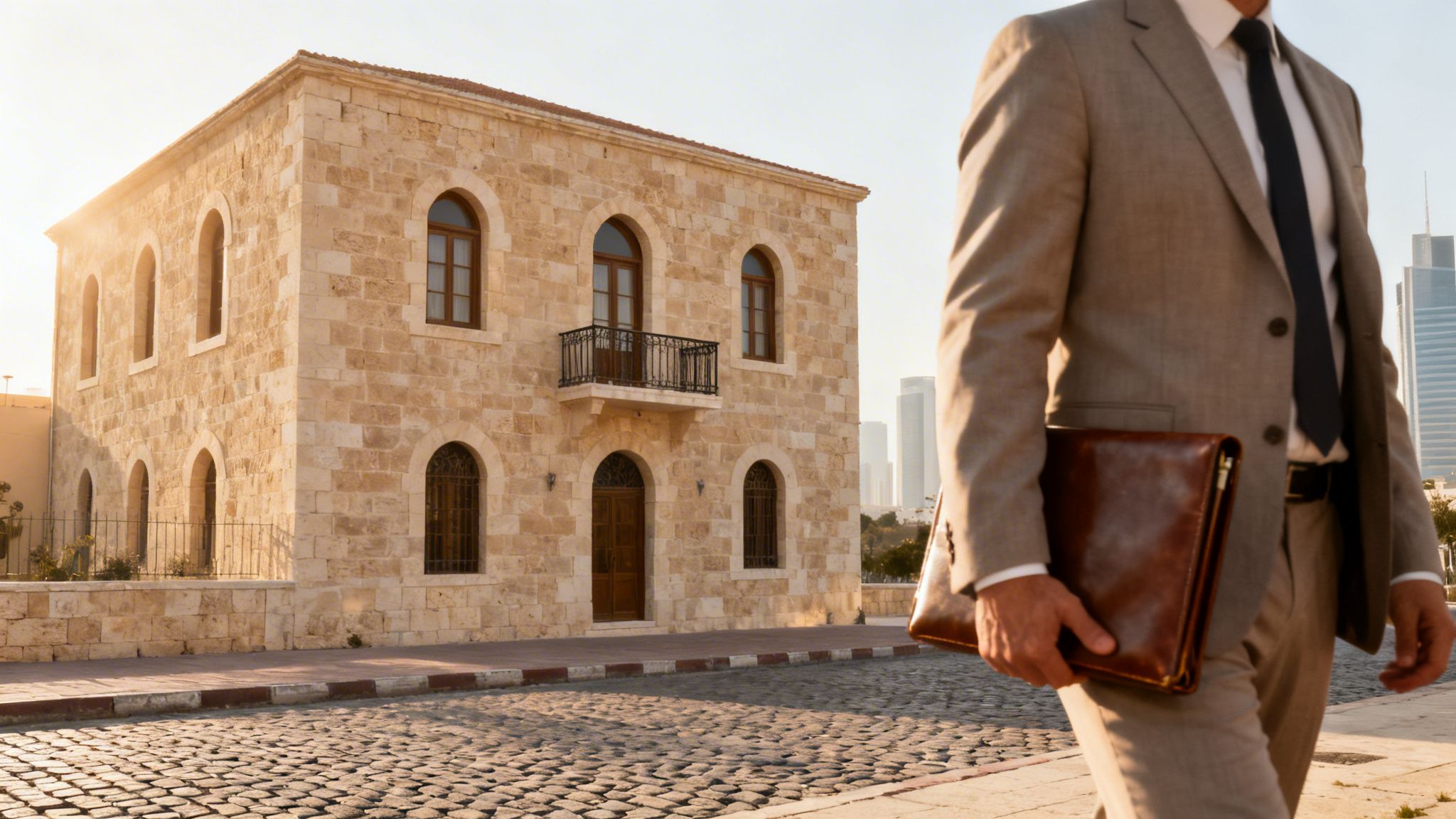
This guide is crafted to illuminate this exclusive asset class, offering a clear roadmap for the entire investment lifecycle—from identifying a premier opportunity to mastering the notoriously complex legal and financial landscape.
Understanding the Investment Landscape
Success in this rarefied market demands a sophisticated understanding of several key factors that fundamentally differ from conventional property transactions. Investors must be prepared for:
- Strict Renovation Rules: Municipal preservation committees wield absolute authority, enforcing rigid rules that dictate every external detail, from the precise type of stone used for facade protection to the historically accurate style of window frames.
- Complex Permit Processes: Securing approvals is a protracted, multi-stage marathon requiring specialized architects and legal counsel with deep, proven experience in navigating the specific demands of preservation authorities.
- High Renovation Costs: The mandatory use of historically authentic materials and master artisans means restoration expenses are significantly higher than for standard high-end construction. This is a domain where cutting corners is not an option.
- Unique Financial Incentives: To counterbalance these challenges, Israel offers a powerful mechanism to offset costs. The system of Transferable Building Rights (Nyud Zchuyot) can be a transformative financial tool, drastically improving the project’s ROI when leveraged correctly.
To provide a clearer perspective, here is a breakdown of the core investment considerations.
Preservation Building Investment At a Glance
The table below summarizes the fundamental trade-offs. The potential for immense upside is directly correlated with the ability to navigate the inherent challenges with expert precision.
| Key Consideration | Investor Implications |
|---|---|
| Prestige & Scarcity | Own a unique, non-replicable asset with significant cultural value, creating a strong foundation for long-term capital appreciation. |
| Complex Regulations | Face a web of municipal and national preservation laws that heavily restrict modifications and require specialized expertise to navigate. |
| High Renovation Costs | Budgets must account for specialized labor and authentic materials, often costing 25-50% more than standard high-end construction, driving up the initial investment. |
| Financial Incentives | Access to powerful tools like Transferable Building Rights (Nyud Zchuyot) can offset high renovation costs and unlock significant additional value, turning restrictions into a financial asset. |
| Lengthy Approvals | The permit process can be slow and unpredictable, demanding patience and a strategic approach to negotiations with authorities. |
| Strong Market Demand | The limited supply of these historic properties in prime locations like Tel Aviv and Jerusalem ensures consistent demand from a high-net-worth clientele, supporting increased property value. |
Ultimately, a successful investment hinges on a delicate and expertly managed balance.
The core of a successful ‘Shimur’ investment lies in balancing the preservation of historical integrity with modern utility and financial viability. This equilibrium is the key to unlocking the property’s true value.
For anyone serious about this path, getting familiar with the practicalities of renovating a heritage home is a great starting point. The entire journey must begin with meticulous due diligence. This is the absolute foundation for accurately forecasting your budget and returns. Think of this guide as your strategic roadmap for turning a piece of Israel’s architectural heritage into a premier investment.
What Qualifies as a Preservation Building
So, what exactly turns an old building into a prestigious ‘Binyan Le’Shimur’ (a building for preservation)? This isn’t a random label slapped on any structure with a bit of history. Think of it less like a charming old family heirloom and more like a certified historical artifact. Its status is formally documented, legally binding, and managed with serious intent by municipal authorities.
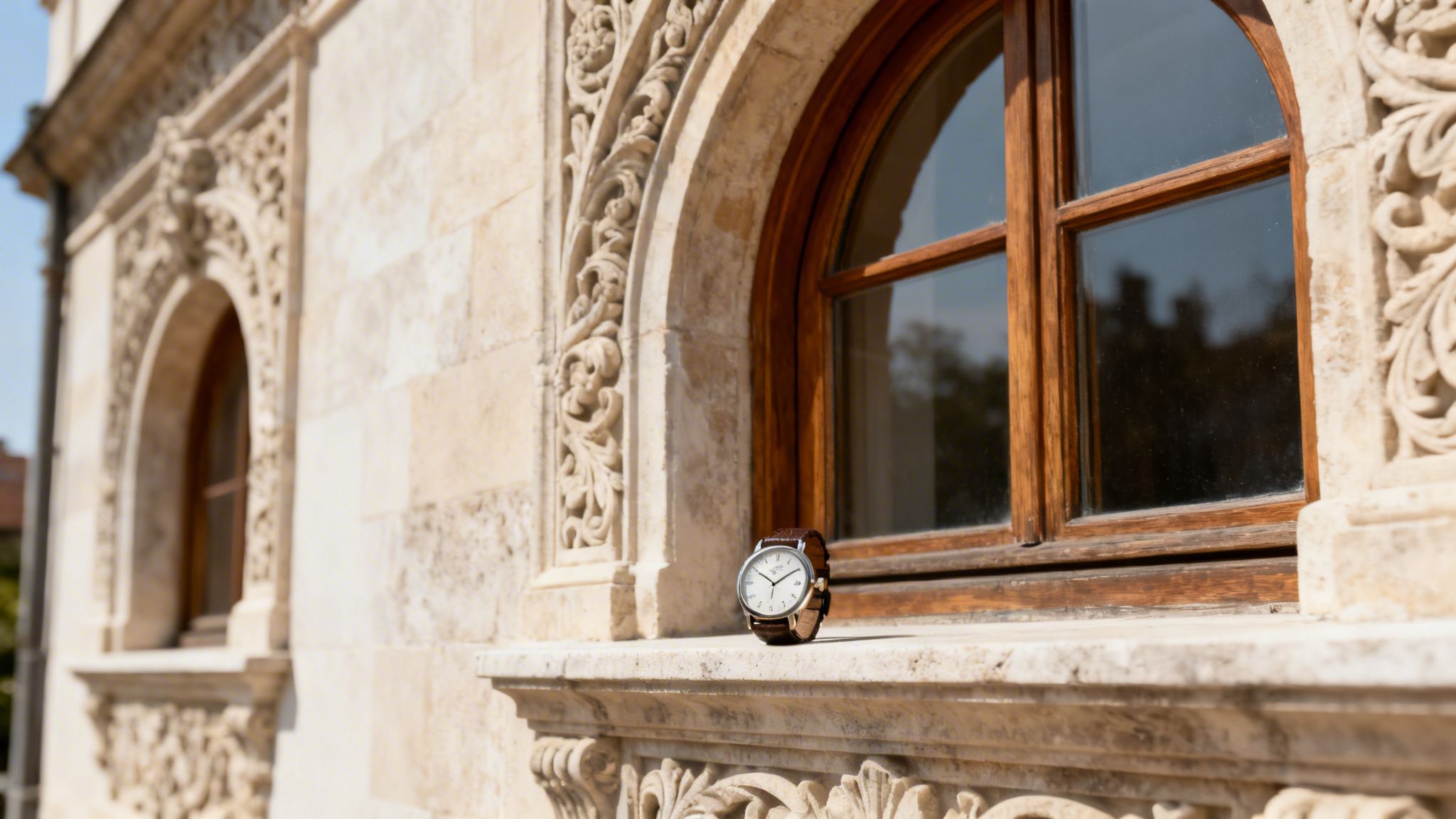
This designation is anything but arbitrary. In historically dense cities like Tel Aviv and Jerusalem, municipalities keep meticulous lists of properties earmarked for preservation. The decision to add a building to this list hinges on its unique story and physical character.
Core Criteria for Designation
A property typically makes the cut based on one or more of these key factors:
- Architectural Significance: The building is a standout example of a specific style, like the iconic Bauhaus architecture in Tel Aviv or the distinct Templer designs in Jerusalem. It physically represents a key chapter in the city’s development.
- Historical Importance: The structure is directly tied to major historical events or influential figures from Israel’s past. It serves as a tangible link to a bygone era.
- Cultural or Social Value: The property was a cornerstone of community life—perhaps a famous café where poets gathered, an artist’s home, or the first cinema in a neighborhood.
This is why a thorough Due Diligence Essentials check always starts here. Confirming a property’s official status on the municipal preservation list is the very first step, as it dictates absolutely everything that follows.
Understanding Preservation Levels
Now, here’s where it gets really interesting for an investor. Not all preservation buildings in Israel are created equal. The restrictions are tiered, reflecting the building’s specific historical value. You absolutely must know which category a property falls into before making any moves.
The level of preservation is the single most important factor driving a project’s complexity and budget. A misunderstanding here doesn’t just cause headaches—it can lead to catastrophic financial miscalculations.
The classifications generally break down into three main categories:
- Strict Preservation (‘Shimur Machmir’): This is the highest level of protection, the real museum-piece category. It often requires the complete restoration of both the exterior facade and significant interior elements. Think original floor tiles, ornate staircases, or historic murals. The goal is to bring the building back to its original glory with minimal changes.
- Facade Preservation: This is far more common and often hits the sweet spot for investors. The rules focus exclusively on preserving the building’s external appearance. You’ll need to restore the facade using historically accurate materials and techniques, but inside, you have significant freedom to completely redesign and modernize the living spaces. It offers the perfect blend of historical charm and modern luxury.
- Buildings with Preservation Values: This is a lighter, more flexible designation. The building is located within a historically significant area, but the specific rules are less rigid. Renovations might need to adhere to a certain aesthetic to maintain the neighborhood’s character, but you won’t face the strict material and element-specific demands of the higher tiers.
Getting these distinctions right is the first step in building a viable investment plan. It transforms a generic Buying Property in Israel Guide into a targeted, actionable strategy. Given the legal maze surrounding these properties, international investors often find that a Real Estate Power of Attorney is essential. This is needed to navigate the intricate approval process effectively from abroad.
Navigating Strict Renovation and Permit Rules
Owning one of Israel’s preservation buildings is a genuine privilege, but anyone who has restored one will tell you it’s a masterclass in navigating bureaucracy. This is the point where an investment vision slams into the concrete reality of Israeli preservation law.
This isn’t your typical renovation project. It’s a meticulous, multi-stage marathon governed by municipal preservation committees who operate with surgical precision and incredibly high standards.
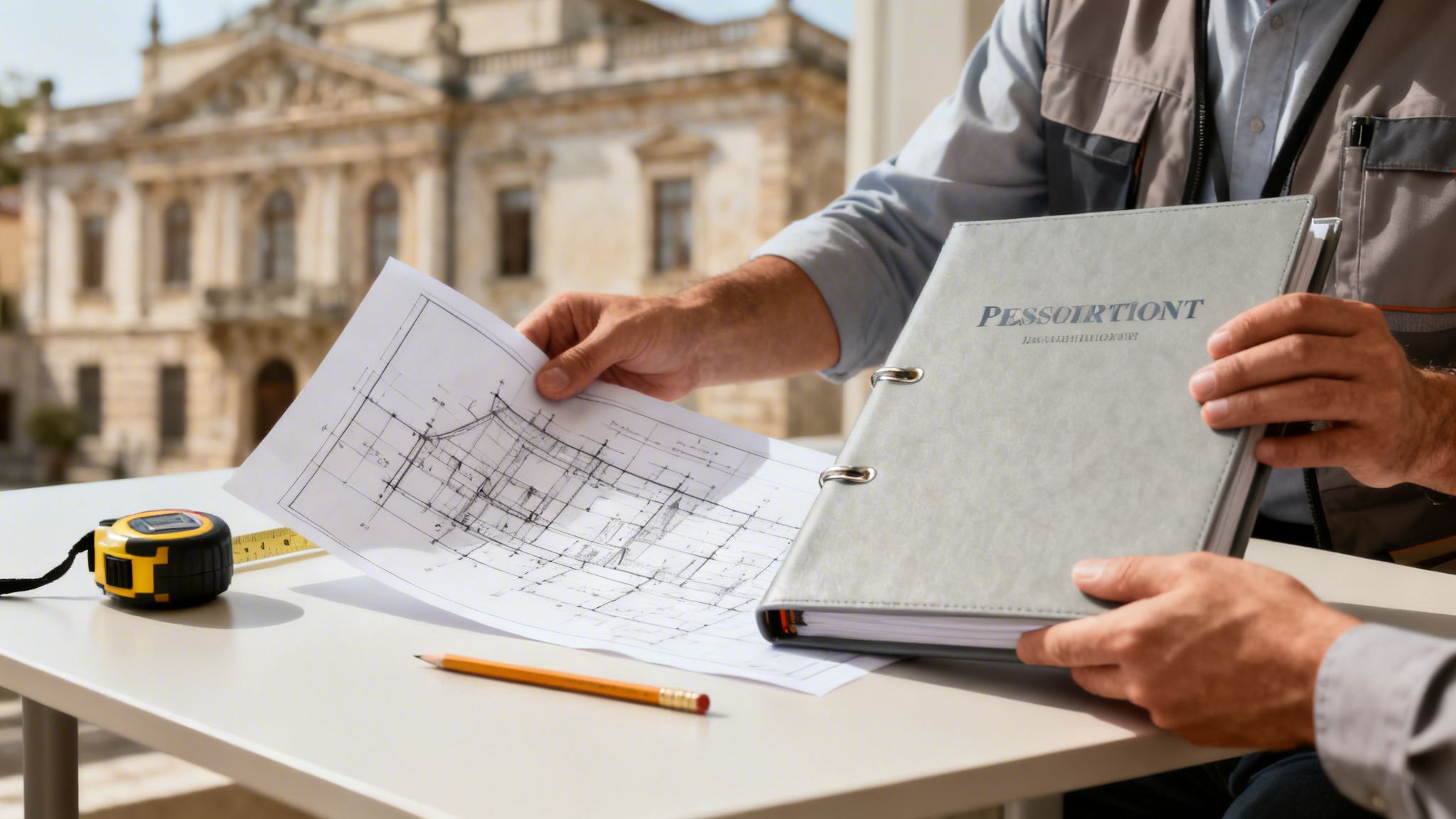
These committees dictate nearly every detail of the building’s exterior. Their goal is absolute: maintain the structure’s historical and architectural integrity, particularly the facade. You won’t be picking out a paint color from a swatch book. Instead, you’ll be sourcing a specific type of Jerusalem stone or commissioning artisans to replicate original wrought-iron railings from a century-old photograph.
The Gauntlet of Approvals
The permit process for preservation buildings in Israel is famously complex, and for a newcomer, it can feel like navigating a maze blindfolded. It demands a team of specialized architects and preservation consultants. Not to mention, there is a mountain of documentation. This is a world away from the standard permit process for new construction.
The typical workflow is a multi-step journey:
- Initial Preservation File Submission: This isn’t just a blueprint. It’s a comprehensive file containing detailed architectural plans and deep historical documentation, all submitted to the municipal preservation department.
- Committee Review and Feedback: The committee scrutinizes every line of the plans. Expect multiple rounds of revisions as they push for greater historical accuracy.
- Material and Technique Approval: Before a single worker arrives on-site, you must submit physical samples of proposed materials—from window frames to plaster finishes—for the committee’s explicit approval.
- Final Permit Issuance: Only when every condition has been met and every detail signed off is the final building permit granted. This process can easily stretch on for many months, and in some cases, even years.
For our international clients, trying to manage this from another time zone is a monumental challenge. A single delay, misunderstanding, or missed deadline can have devastating financial consequences. This is precisely why establishing a Real Estate Power of Attorney isn’t a mere convenience; it’s a strategic necessity. It empowers your local legal team to sign documents, attend critical meetings, and act decisively on your behalf, keeping the project moving forward.
Common Renovation Mandates
The rules aren’t one-size-fits-all; they are custom-tailored to each building’s unique history and architectural DNA. That said, certain requirements appear time and time again.
A core tenet of Israeli preservation is that modern additions must be clearly distinguishable from the original structure, yet harmoniously integrated. The idea is to honor the past, not create a cheap historical knock-off.
Investors should be prepared for strict regulations governing things like:
- Facade Materials: Mandates to use or restore original stone, specific stucco techniques, or decorative tiles. Facade protection is the paramount concern.
- Window and Door Styles: Requirements to repair original fixtures if possible, or install painstakingly precise replicas that match the original period’s design and materials.
- Structural Elements: Strict prohibitions on altering the building’s original footprint or key structural features visible from the street.
It’s a similar mindset to the challenges one might face when renovating a Georgian Townhouse in London. A thorough Due Diligence Essentials check is the only way to uncover the building’s specific preservation file. This gives you a clear and honest roadmap of the restrictions you’re about to face.
Balancing High Costs with Higher Property Value
Let’s cut straight to the chase: are Israel’s preservation buildings actually worth the steep price tag? For the right kind of investor—one who understands that true value is measured in decades, not fiscal quarters—the answer is a resounding yes. But it requires a mindset shift, prioritizing long-term prestige over short-term savings.
The cost of restoring a ‘Binyan Le’Shimur’ is, without a doubt, substantial. You’re not just renovating; you’re stepping into the role of a historical custodian. The high renovation costs are a defining feature of these projects and must be meticulously planned.
Deconstructing the Renovation Budget
Forget everything you know about a standard luxury renovation. The budget for a preservation project is in a completely different league. Investors must factor in costs that simply don’t exist elsewhere:
- Specialized Artisans: Finding a master craftsman who can work with historical stone masonry, intricate ironwork, or traditional plastering is both a challenge and a major expense. Their unique skills are non-negotiable to meet the preservation committee’s demanding standards.
- Authentic Materials: Sourcing historically accurate materials, whether it’s a specific type of Jerusalem stone or custom-milled wooden window frames, comes with a hefty premium compared to modern, off-the-shelf alternatives.
- Advanced Engineering: How do you integrate a modern central air conditioning system or smart home technology into a century-old structure without compromising its historical fabric? The answer involves complex, and often very expensive, engineering gymnastics.
- Extensive Consultations: Your budget must account for the fees of specialized preservation architects and consultants. They are your essential guides through the labyrinthine approval process and are worth every shekel.
This financial reality makes a rock-solid Due Diligence Essentials process an absolute necessity. It is the only way for an investor to get a realistic forecast of the true budget and potential ROI before signing on the dotted line.
The Scarcity Premium and Increased Property Value
Despite the eye-watering initial investment, the market value of a properly restored preservation building often skyrockets. This leads to a significant increase in property value. The driving force behind this is one of the most powerful principles in real estate: scarcity. There’s a finite number of these historic gems, and that number is only getting smaller. This is especially true in prime locations like Tel Aviv and Jerusalem.
In the world of high-end real estate, rarity is the ultimate currency. A beautifully restored preservation building isn’t just a property; it’s a non-replicable slice of history that commands a massive market premium over even the most luxurious new builds.
This scarcity creates an exclusive asset class that appeals to a very specific, discerning clientele. These buyers aren’t just looking for a fancy apartment; they’re searching for a property with a soul, a story, and a pedigree that a glass-and-steel tower can never replicate. As a result, these properties frequently shatter price-per-square-meter records in their neighborhoods.
It’s a fascinating paradox: the very restrictions that inflate renovation costs are precisely what safeguard the building’s long-term value, ensuring its unique character remains intact. Keeping an eye on property price forecasts helps clarify this dynamic. For more on this, check out these Israel price forecasts on sandsofwealth.com.
Ultimately, the high costs act as a barrier to entry, which in turn preserves the exclusivity and enduring value of the asset. For investors with the right combination of capital and patience, the financial returns are matched only by the immense prestige of owning a true architectural landmark in Israel. While a general Buying Property in Israel Guide provides a good foundation, these one-of-a-kind properties demand a far more specialized level of legal and financial planning.
Unlocking Value with Transferable Building Rights
The strict regulations around preservation buildings in Israel can feel like a major financial headache. But built right into the system is a brilliant, and often lucrative, financial incentive designed to flip these limitations into a valuable asset: ‘Nyud Zchuyot,’ better known as Transferable Building Rights (TBR).
For savvy investors, this mechanism is a genuine game-changer. It creates a direct path to offset the notoriously high costs of historical restoration and serves as a critical financial incentive.

Think of it as a sophisticated form of compensation from the municipality. Because you’re legally barred from adding floors or expanding your historic property’s footprint, the city recognizes you can’t use the full development potential—the “building rights”—that you technically own. The TBR program allows you to package up and sell these unused “air rights” to another developer for their project elsewhere.
How Transferable Building Rights Work
This system effectively creates a secondary market for development potential. A developer planning a new high-rise in a designated “receiving” zone can purchase your unused rights. This allows them to build higher or denser than their own plot would normally permit.
Suddenly, a purely theoretical asset—your unused development potential—is converted into immediate, tangible capital you can pour back into your project.
The sale of ‘Nyud Zchuyot’ is often the single most critical financial event in a preservation project. When executed properly, it can fund a huge slice of the renovation budget, transforming the investment from a costly passion project into a financially astute strategy.
The process, while powerful, isn’t simple. It involves a few key stages:
- Valuation: An official appraiser is brought in to calculate the precise amount of building rights your preservation property holds that can be sold.
- Market Identification: Your legal team identifies developers building in designated zones who are actively looking to acquire additional building rights.
- Negotiation and Sale: A complex legal agreement is drafted to handle the sale and the official transfer of these rights, ensuring it’s all registered correctly with the authorities.
Maximizing Your Financial Return
The value of these rights isn’t fixed; it ebbs and flows with market demand and location. In major urban centers, for instance, the relentless push for high-rise towers creates a very strong and competitive market for TBRs. You can see this dynamic playing out in the high-rise development boom across Jerusalem, which directly fuels demand.
Navigating this market successfully is not a DIY affair—it requires highly specialized expertise. Your legal counsel is absolutely critical for accurately valuing the rights, negotiating the best possible terms, and ensuring the sale is executed flawlessly according to both municipal and national laws. The process is intricate and demands precision. A small mistake here can literally cost millions.
An experienced team will also get ahead of the tax implications, like those we detail in our guide to Purchase Tax Calculator & Rates. This strategic sale turns a building restriction into a powerful financial lever, unlocking significant value that is invisible to the untrained eye and reinforcing the unique appeal of investing in Israel’s historic buildings.
Building Your Investment Strategy
Diving into Israel’s preservation building market isn’t your typical real estate play. This is a highly specialized field where history, finance, and dense municipal regulations collide. Success here is rarely accidental; it’s the direct result of a strategy built from the ground up with meticulous planning and expert legal guidance.
First things first: you need the right team. Think of it as assembling a specialist unit. This must include an architect who lives and breathes historic restoration, a preservation consultant who knows the local committees inside and out, and—most importantly—a law firm with a proven track record in this exact niche.
Their first mission is to dive deep into due diligence. They need to uncover every single restriction tied to the property and confirm its exact status on the municipal preservation list. This isn’t just a box-ticking exercise; it’s the bedrock of your entire investment. We cover this topic extensively in our Due Diligence Essentials guide.
Financial and Legal Foundations
With the property’s status confirmed, the focus shifts to the unique financial terrain. This goes way beyond just securing a loan. You’re forecasting a complex web of costs and tax implications unique to shimur projects.
Calculating your potential tax liabilities from day one is non-negotiable. For instance, the acquisition tax can have different nuances for these properties. Using a tool like our detailed Purchase Tax Calculator & Rates helps you build a realistic financial model instead of working off guesswork.
For our international clients, trying to manage this from overseas is practically impossible. A key strategic move is appointing local legal counsel with a Real Estate Power of Attorney. This empowers your team on the ground to negotiate with municipal committees, sign documents, and navigate the bureaucratic labyrinth on your behalf. It’s your essential safeguard.
The success of a ‘Shimur’ investment is determined long before the first hammer swings. It’s secured in the fine print of an ironclad legal and financial strategy that anticipates every challenge and leverages every available incentive.
An expert team doesn’t just manage the process; they structure a deal that honors the building’s soul while maximizing your financial returns. They turn what seems like an overwhelming challenge into a premier, one-of-a-kind asset.
Don’t navigate the Israeli legal system alone. Schedule a consultation regarding your specific case.
Your Questions, Answered
Venturing into Israel’s heritage property market naturally brings up a lot of questions, especially for investors from abroad. Let’s tackle some of the most common ones we hear from our clients to give you a clearer picture of what to expect.
Can Foreigners Really Get a Mortgage for a Preservation Building?
Securing a mortgage from an Israeli bank for a Binyan Le’Shimur is tough for non-residents, but not impossible. The main issue is that local banks see these projects as high-risk. Why? Because renovation timelines can be unpredictable, and budgets often swell unexpectedly.
Most of the time, investors need to show they have significant cash on hand or access to private financing. However, this is where a top-tier legal and architectural team makes all the difference. Presenting a meticulously documented and de-risked project plan can dramatically improve your standing with lenders. Of course, before any financing talks, you need a firm grasp on the tax landscape. This is why a review of the Purchase Tax Calculator & Rates is always one of our first steps.
What’s a Realistic Renovation Timeline from Start to Finish?
Forget what you know about standard luxury renovations. For a preservation building in Israel, a realistic timeline is anywhere from 24 to 36 months. Yes, that’s two to three years from the first blueprint to the final walkthrough.
What takes so long? The biggest bottleneck is the multi-stage approval process with the municipal preservation committee. This bureaucratic marathon alone can easily eat up a full year. To keep things from grinding to a halt, it’s absolutely vital to appoint a local legal representative through a Real Estate Power of Attorney who can chase down approvals and keep the project moving forward.
Are There Any Tax Breaks for Owning a Shimur Property?
This is a key difference from what many Western investors are used to. Israel doesn’t offer direct tax credits or deductions for the renovation costs themselves. The real financial genius of the system lies in the Transferable Building Rights (Nyud Zchuyot).
This is the primary financial incentive. The capital you generate from selling these rights on the open market can be massive. It often covers a huge chunk—if not all—of the restoration budget. A proper Due Diligence Essentials check is crucial here, as it will help you accurately forecast the potential value of these rights before you even make an offer.