
When you hire a professional in Israel—whether it’s an accountant, an architect, or a lawyer—you’re not just buying a service. You’re placing your financial interests, and often the fate of a major project, directly into their hands. You expect a high standard of care, a fundamental duty of care, and understanding the risks of professional negligence in Israel is crucial. For international businesses and investors, relying on local expertise is essential, making the quality of that professional advice paramount.
Professional negligence is what happens when that trust is broken. It occurs when a professional fails to meet the required standard of their field, and that failure causes you direct financial harm. This isn’t about a simple disagreement or an outcome you didn’t like; it’s a fundamental breach of professional duty that can have severe financial repercussions for your investments in Israel.
Defining Professional Negligence Under Israeli Law
For international companies and investors, engaging Israeli professionals is a daily reality. But what happens when that expert advice turns out to be substandard and leads to a significant loss? The first step in protecting your investment and seeking recourse is understanding exactly what constitutes professional negligence in the eyes of Israeli law.
At its core, negligence isn’t just about a bad result. A business venture can fail for a dozen reasons outside anyone’s control. Israeli law doesn’t focus on the outcome; it focuses on the standard of conduct.

The Captain of the Ship Analogy
Think of it like hiring an experienced sea captain to navigate your valuable cargo through treacherous waters. If a sudden, un-forecasted mega-storm damages the ship, that’s likely an unfortunate act of nature, not negligence.
But what if the captain ignored clear weather warnings, failed to use standard navigational charts, or skipped basic pre-voyage maintenance checks, and that led to the damage? That’s a failure to perform their duty to a professional standard.
This is precisely how the law sees it. A professional isn’t expected to be perfect or to guarantee success. They are, however, absolutely required to use the knowledge, tools, and diligence that any reasonable peer in their field would use.
Key Elements of a Claim
To build a successful professional negligence claim in Israel, you have to prove four key elements. Think of them as links in a chain that must connect the professional’s failure to your financial loss. If even one link is missing, the chain breaks.
Here’s what you must establish:
- A Duty of Care Existed: First, you have to show the professional owed you a legal duty to act with skill and care. This is usually the easy part, established by a signed contract or engagement letter.
- The Duty was Breached: This is the heart of the matter. You need to prove the professional’s actions (or inaction) fell below the standard of a “reasonable professional” in that specific field.
- Causation: The breach of duty must be the direct cause of the financial loss you suffered. You have to draw a straight line from their bad advice to your financial loss.
- Actual Damages: Finally, you must prove you suffered a real, quantifiable financial loss. No harm, no foul.
This framework applies across various professions, including specialized areas like clinical negligence, which is a major field of malpractice law.
The core principle in Israeli law is that professionals have specialized knowledge and skills that clients rely on. Because of this, they are held to a higher standard of care than an ordinary person. This elevated responsibility is the bedrock of any malpractice claim.
For foreign investors, proving these elements can feel like navigating a maze. Whether you’re in the middle of a complex real estate deal or are setting up a company in Israel, the quality of your professional advice is everything. Recognizing the signs of negligence early on is critical to cutting your losses and holding the right people accountable. The rest of this guide will break down each of these elements in detail, giving you a clear roadmap of your legal options.
Establishing the Professional’s Duty of Care
Every claim of professional negligence in Israel starts with one fundamental question: Did the professional actually owe you a legal “duty of care”? Before you can even begin to talk about what went wrong or how much money you lost, you first have to prove that this legal obligation existed.
This duty is the absolute bedrock of any malpractice claim. Without it, there’s no case.

Think of it as an unspoken promise. When you hire an expert—be it a lawyer, an accountant, or an architect—they are implicitly agreeing to apply their specialized skills for your benefit. They are holding themselves out as competent, and the law holds them to that promise.
How Is a Duty of Care Created?
While a signed contract is the most obvious evidence, it’s far from the only way a duty of care is formed in Israel. The courts here look at the reality of the relationship, not just the paperwork.
Typically, this duty comes into existence in a few key ways:
- Contractual Agreement: This is the cleanest and most direct route. An engagement letter, a formal service agreement—these documents explicitly map out the professional’s responsibilities. For instance, a detailed contract for buying property in Israel leaves no doubt about a lawyer’s duty to perform thorough due diligence.
- Assumption of Responsibility: Sometimes, a duty is created without a single signature. If a professional voluntarily gives you advice knowing you’ll rely on it, they’ve likely taken on that responsibility. An accountant who provides financial projections for a deal, knowing full well you’re going to act on those numbers, has created a duty of care.
- Statutory Duty: In some cases, Israeli law itself imposes the duty. Company directors, for example, have legally defined duties to the corporation and its shareholders that exist entirely separate from any individual employment contract.
The Scope of the Duty
The “duty of care” isn’t a vague, one-size-fits-all concept. It’s tailored to the specific profession and the specific task they were hired to do. What’s expected of an architect is worlds apart from what’s expected of a financial advisor.
- An Architect’s Duty: Their job is to design buildings that are safe, meet all relevant building codes, and are suitable for their intended use. If an architect designs a structure in a known seismic zone without accounting for earthquake risks, that’s a blatant breach of their duty.
- An Accountant’s Duty: Their duty revolves around accuracy—providing correct financial statements, solid tax advice, and competent audits. Overlooking major liabilities during a pre-acquisition audit would be a classic violation, something that’s critically important for any investor involved in commercial litigation in Israel.
A cornerstone of Israeli jurisprudence here is the “reliance principle.” The law recognizes that when you hire a professional, there’s an inherent power imbalance. They have the superior knowledge. You, the client, are in a vulnerable position, reasonably relying on their expertise. That’s precisely why Israeli courts impose such a strict duty of care—to protect the party placing that trust.
Extending the Duty to Third Parties
It’s also crucial to understand that this duty isn’t always confined to the person who signed the check.
In certain situations, a professional’s duty can extend to others—third parties—who were reasonably expected to rely on their work. For example, an auditor prepares a company’s financial report. They might owe a duty not only to the company but also to a specific investor they knew was going to use that very report to make a major investment. The same principle applies in property transactions where a Real Estate Power of Attorney is relied upon by multiple parties to the deal.
Successfully establishing this duty is the essential first hurdle in any negligence claim. Once that link is firmly in place, the focus shifts to the next critical question: how did the professional fall short of that standard?
Proving a Breach of the Reasonable Professional Standard
Once you’ve established that a professional owed you a duty of care, you get to the very heart of any professional negligence Israel claim: proving they actually breached that duty. This is where things often get complicated and contentious. We move from what was supposed to happen to what really did.
The core question isn’t whether the professional delivered a perfect result. Instead, Israeli courts measure their actions against an objective benchmark: the “reasonable professional” standard.

This standard isn’t about the individual’s best intentions or how hard they tried. It’s an external, objective test: What would a competent, prudent, and reasonably skilled peer in the same industry have done in a similar situation? It’s a test of competence, not of perfection.
The Role of Expert Witnesses
So, how do you actually prove what a “reasonable professional” would have done? You can’t just offer your own opinion. This is where Israeli courts lean heavily on the testimony of expert witnesses.
An expert witness is another qualified professional from the same field—like an accountant, architect, or engineer—who provides an authoritative opinion on the accepted standards of practice. Their job is to educate the court on industry norms and what’s considered standard procedure.
The expert’s report will zero in on the key questions:
- What were the accepted industry practices when the alleged negligence occurred?
- Did the defendant’s actions (or lack thereof) fall short of these standards?
- If they did, how significant was that deviation?
Let’s be clear: without a compelling expert opinion that finds the defendant’s conduct fell below the required standard, a professional negligence case is almost guaranteed to fail.
A Real-World Scenario: Due Diligence Failure
Imagine a foreign firm is looking to acquire a promising tech startup. They hire a well-regarded Tel Aviv accounting firm to perform financial due diligence—a critical step before closing the deal. This is a standard and essential part of the process when setting up a company in Israel.
The accountants dive into the books and issue a report giving the startup a clean bill of health. Trusting this professional assessment, the acquiring firm moves forward with the $10 million purchase.
Six months down the line, a nasty surprise emerges: a massive, undisclosed tax liability that the accountants completely missed. This liability torpedoes the company’s value, resulting in a direct financial loss of $2 million.
In this case, the breach isn’t that the accountants failed to predict the future. The breach is that any “reasonable accountant” conducting due diligence would have followed a standard procedure to uncover exactly these kinds of tax issues. Their failure to do so is a clear departure from the accepted professional standard, creating a classic example of a major malpractice claim. It also highlights the importance of thorough background checks, a concept with parallels in processes like buying property in Israel.
The “reasonable professional” standard is not static; it evolves with the profession. What was considered acceptable practice a decade ago may be deemed negligent today with the advent of new technologies and methodologies. Courts look at the standards that were in place at the time the professional service was rendered.
Evidence Beyond Expert Testimony
While the expert report is the main event, other evidence is crucial for building a complete and convincing case. This supporting evidence helps paint a full picture of the professional’s failure.
Key pieces of evidence often include:
- Professional Codes of Conduct: Most professions have published ethical guidelines. Showing a direct violation of these codes can be powerful evidence of a breach.
- Internal Manuals and Protocols: Sometimes, the professional’s own internal procedure manuals can be used to demonstrate they failed to follow their own rules.
- Correspondence and Documentation: Emails, memos, and meeting notes can reveal what advice was given, what crucial information was ignored, and whether the professional was cutting corners to save time or money.
Successfully proving this breach is the biggest hurdle in any professional negligence lawsuit. It takes meticulous evidence-gathering and a crystal-clear argument, all framed by a qualified expert. Once the breach is established, the next challenge is to legally connect that failure to the financial damages you suffered.
Causation: Linking Bad Advice to Your Financial Loss
Winning a professional negligence claim in Israel isn’t just about proving a professional made a mistake. That’s only the first step. Even the most obvious blunder is legally meaningless unless you can draw a direct, unbroken line from that error to the money you lost. This critical connection is called causation, and it’s often the most fiercely contested part of any lawsuit.
To succeed, you have to demonstrate that the professional’s failure wasn’t just a factor in your loss—it was the factor. Israeli courts rely on two key tests to forge this chain of causation.
The “But For” Test: The Starting Point
The first and most basic test is what lawyers call the “but for” test, or causa sine qua non. The question is straightforward but powerful: “But for” the professional’s negligent act, would the financial loss have occurred? If the answer is no—if the damage simply wouldn’t have happened without their mistake—then you’ve established what’s known as factual causation.
Let’s say an architect neglects to include proper drainage in a commercial building’s design, and the property floods after the first major rainstorm. “But for” that critical design flaw, the water damage and the hefty repair bills would have been avoided. The link is clear.
This test is essential because it filters out damages that would have happened anyway. If a business deal was already sinking due to poor market conditions, you can’t pin the entire loss on a minor error your lawyer made in the contract.
The Foreseeability Test: Was the Damage a Predictable Outcome?
Clearing the “but for” hurdle gets you in the game, but it doesn’t win it. The next step is proving the damage was a reasonably foreseeable result of the mistake. The harm can’t be too remote, bizarre, or an unpredictable consequence that no one could have anticipated.
Think of it like a chain reaction. A professional is only held responsible for the dominoes they could have reasonably expected to fall after their error.
- Direct & Foreseeable Loss: An accountant gives flawed tax advice, leading directly to fines from the tax authority. This is a classic, foreseeable outcome.
- Indirect but Foreseeable Loss: Those tax penalties trigger a cash flow crisis, causing the company to default on a crucial loan and damage its credit score. This is likely still considered a foreseeable consequence.
- Remote & Unforeseeable Loss: Two years later, that damaged credit score prevents the company from securing a once-in-a-lifetime international merger. A court would probably view this as too remote and disconnected from the original bad tax advice.
At its heart, this principle is about fairness. A professional must answer for the natural and probable consequences of their actions—not for every unlucky event that happens down the line.
Quantifying Your Damages: Showing the Court Exactly What You Lost
Once you’ve established causation, the final piece of the puzzle is to prove your exact financial damages. This isn’t about guesswork; it requires cold, hard evidence. The court’s goal is to put you back in the financial position you would have been in if the negligence had never happened.
Common types of damages you can claim include:
- Direct Costs: The money you paid to fix the immediate problem, like hiring a new engineer to correct faulty blueprints or paying for emergency structural repairs.
- Lost Profits: Verifiable business income that you lost as a direct result of the professional’s failure.
- Diminution in Value: A measurable drop in an asset’s value, such as a property that’s worth less because it was purchased based on an inaccurate appraisal.
Putting a precise number on these losses is a cornerstone of any Commercial Litigation in Israel. It demands meticulous documentation—invoices, expert financial reports, bank statements, and business records are all essential. The burden of proof is squarely on you to show the court not only that you lost money, but exactly how much.
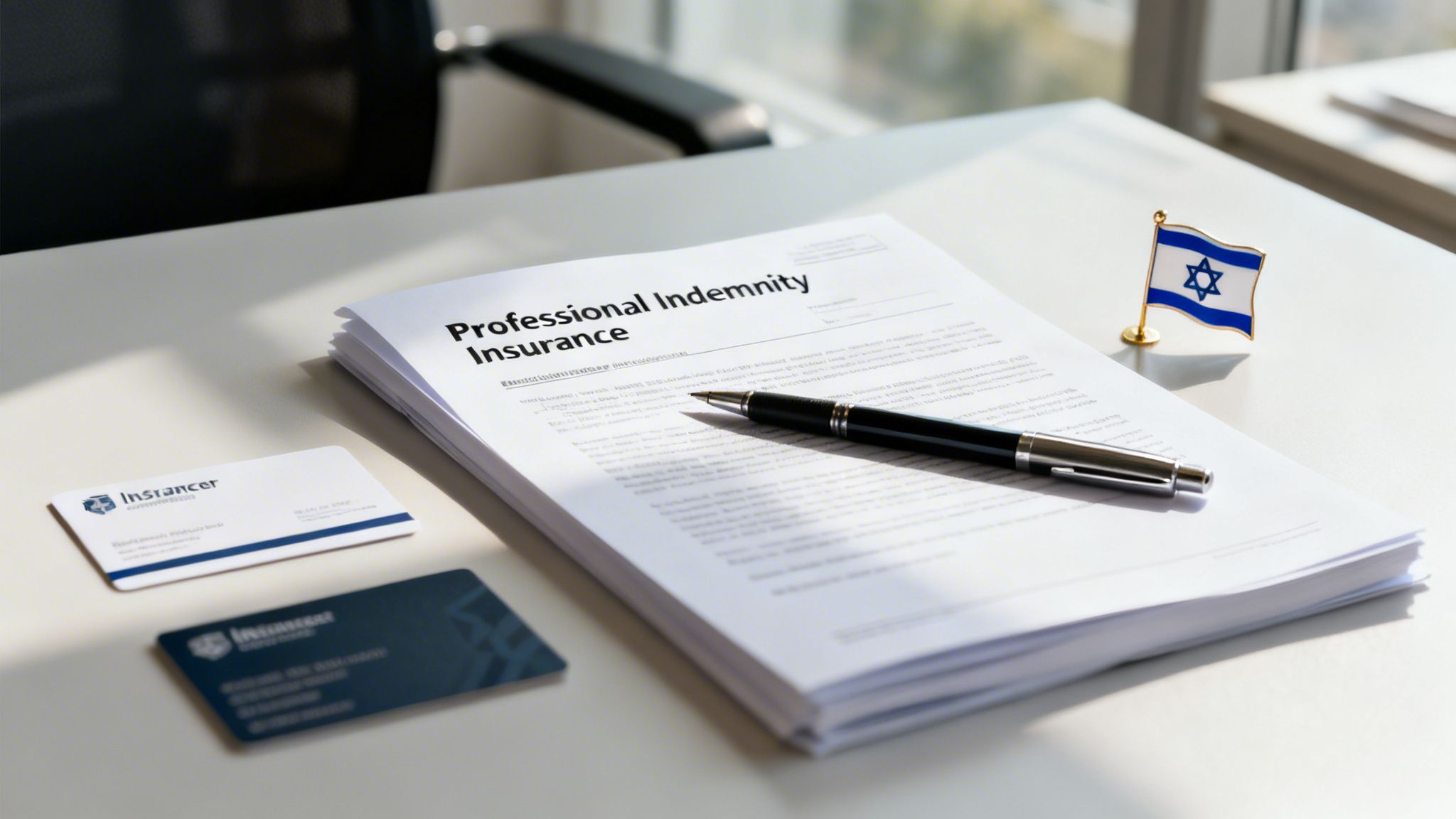
Suing their Professional Indemnity (PI) Insurance
Winning a professional negligence case in an Israeli court is a huge milestone, but it’s really only half the battle. What truly matters is recovering your financial losses, and that’s where the professional’s insurance policy becomes the centerpiece of your legal strategy.
Trying to collect damages from an individual can be a frustrating, drawn-out affair. The good news? Most licensed professionals in Israel are legally required to carry Professional Indemnity (PI) insurance.
Think of this insurance as a financial backstop, specifically designed to cover damages from malpractice and professional slip-ups. For you, the claimant, it provides a much more solid and reliable target for recovery than an individual’s personal bank account. Suddenly, you’re not chasing a person; you’re dealing with a well-funded, professional entity.
Why Targeting the Insurer is a Smart Move
Going directly after the PI insurer gives you a massive strategic edge. Insurance companies are businesses. They run on risk assessment and financial logic, not emotion. They’re often far more open to negotiating a fair settlement to avoid the runaway costs and uncertainty of a lengthy court fight.
Here are the key advantages of this approach:
- Financial Solvency: An insurer has dedicated capital to pay a major claim. An individual professional might have limited or protected assets, making recovery difficult.
- A Predictable Process: Insurance companies have established protocols for handling claims. This makes the entire process far more structured than pursuing an individual defendant.
- Motivation to Settle: Insurers want to close cases efficiently to cap their own legal fees and financial exposure. A strong, well-documented claim is a powerful incentive for them to come to the table and talk numbers.
This strategy effectively turns the recovery process into a direct financial negotiation, which shares some tactical similarities with the methods used in complex Debt Collection in Israel.
Navigating the PI Insurance Claim Process
When you make a claim against a professional’s PI insurance, there’s a specific set of steps to follow. Typically, your legal team will formally notify both the professional and their insurance company about the claim. This notice is the trigger that activates the insurer’s duty to investigate the case and defend their policyholder.
The insurance company will then bring in its own lawyers to scrutinize your case. They’ll review the evidence, assess their potential liability, and calculate the financial risk. This is the moment of truth. The strength of your evidence, especially your expert witness report, will heavily influence whether the insurer decides to fight you tooth and nail or start working toward a settlement. A solid grasp of how Professional Liability Coverage operates is fundamental here.
Potential Roadblocks and Policy Limitations
While PI insurance offers a clearer path to getting paid, it’s not a guaranteed win. Every insurance policy is a web of specific terms, conditions, and exclusions that can throw a wrench in the works.
Never forget: the insurer’s primary loyalty is to its shareholders and its policyholder—not to you. Their lawyers will scour the policy for any loophole to limit or deny your claim.
Here are a few common hurdles you might face:
- Policy Limits: The insurance will only pay out up to a certain monetary cap. If your damages are higher, you might still have to pursue the professional directly for the rest.
- Exclusions: Policies almost always exclude certain actions, like deliberate fraud or criminal behavior.
- Notification Issues: If the professional didn’t inform their insurer about a potential claim right away, the insurer might argue they breached their policy terms and try to deny coverage.
Getting through this minefield demands serious legal expertise. An experienced attorney knows how to anticipate these defenses, read the fine print, and build a strategy that forces the insurer to be accountable. Without that guidance, even a perfectly valid claim can be derailed by insurance technicalities.
Don’t navigate the Israeli legal system alone. Schedule a consultation regarding your specific case.
Common Defenses and Strategic Litigation Considerations
When you bring a professional negligence claim in Israel, you need to think like a chess player, anticipating your opponent’s moves. Professionals and their insurance companies won’t just roll over; they have a standard playbook of legal defenses they’ll use to poke holes in your case. Knowing these tactics from the get-go is the key to building a case that can withstand pressure.
At the same time, you can’t just play defense. As the plaintiff, especially if you’re managing the case from overseas, you must go on the offensive. This means locking down your evidence and taking swift legal action to ensure there are assets to collect when you win.
Common Defenses in Malpractice Claims
When a professional gets sued for negligence, their legal team will almost always raise a few key arguments. Getting ahead of these is half the battle.
-
The Clock Ran Out (Statute of Limitations): This is often the first line of defense. In Israel, you generally have seven years to file a civil claim. The defense will argue that you filed too late, counting from the moment the negligence or the damage should have been discovered. It’s a simple, powerful argument if the dates don’t line up in your favor.
-
“You’re Also to Blame” (Contributory Negligence): This is an incredibly common tactic. The professional’s lawyers will try to shift some of the responsibility back onto you. They’ll argue that your own actions—or inactions—partly caused the financial loss. If they succeed, the court can slash the amount of damages you receive, sometimes dramatically.
-
Breaking the Chain (Lack of Causation): The defendant will do everything they can to argue their mistake wasn’t the real cause of your damages. They’ll point to other factors, like an unexpected market crash or a regulatory change, and claim that was the event that truly caused the loss, not their faulty advice.
Strategic Considerations for Plaintiffs
To build a winning case, you need a disciplined, strategic approach from day one.
First, preserve everything. This isn’t optional. Every single email, contract, draft report, and scribbled meeting note becomes potential gold. This paper trail is the skeleton of your claim; without it, your case can easily fall apart.
Your single most powerful weapon is often a top-tier expert report. A truly compelling report from a respected expert, which clearly and forcefully explains how the professional breached their duty, can be a game-changer. It puts immense pressure on the professional’s insurer, often leading to a favorable settlement long before you ever see the inside of a courtroom.
If you’re an international client, the distance adds another layer of complexity. This is where smart legal tools are essential. For instance, if the case involves property, a Real Estate Power of Attorney allows a trusted local representative to manage things on the ground, cutting through red tape.
Finally, you have to protect your potential winnings. What if you win, but the defendant has moved their money or assets out of reach? If there’s any risk of this, you must act fast. Your legal team can apply for emergency court orders, such as Interim Injunctions & Freezing Orders, to lock down those assets until the case is resolved. In high-stakes Commercial Litigation in Israel, this isn’t just a smart move—it’s a critical one.
Don’t navigate the Israeli legal system alone. Schedule a consultation regarding your specific case.
Your Top Questions Answered: Navigating Malpractice Claims in Israel
When you’re dealing with professional negligence from abroad, you need straight answers. Here are the most common questions we hear from international clients facing this complex situation, along with the practical realities you need to understand.
How Much Time Do I Have to File a Claim?
In Israel, the standard clock for civil claims, including professional negligence, is set to seven years. That might sound like a long time, but the critical question is when that clock starts ticking.
Typically, it begins the day the negligent act happened. However—and this is a crucial detail—it can also start from the day you discovered the damage. Because the specifics can dramatically shift this timeline, getting immediate legal advice isn’t just a good idea; it’s essential to protect your right to even make a claim.
Can I Sue the Firm, or Just the Individual Professional?
You can—and in most cases, absolutely should—sue both. The individual professional is directly responsible for their actions, but the firm itself carries what’s known in legal terms as “vicarious liability” for the work done under its roof.
Why does this matter so much? Pursuing the firm is a major strategic advantage. Firms almost always have deeper pockets and, more importantly, carry far more comprehensive professional indemnity insurance. This dramatically increases the odds of you actually recovering the full damages you’re owed, rather than winning a judgment against an individual who simply can’t pay.
What Does a Case Like This Typically Cost?
There’s no single price tag for a professional negligence case in Israel. The total cost hinges on the case’s complexity and how far it goes—many settle early, while others proceed to a full trial.
Generally, you can expect the main expenses to fall into three buckets:
- Court Filing Fees: These are the standard administrative costs for getting the legal process started.
- Expert Witness Fees: This is often the most critical—and most significant—expense. A strong expert report is the backbone of your entire claim.
- Legal Fees: Your attorney’s fees can be structured in a few ways: an hourly rate, a fixed fee for the entire case, or a contingency basis where the fee is a percentage of the amount you recover.
A proper initial consultation will give you a much clearer, tailored estimate for your specific situation. This is a standard first step for any type of Commercial Litigation in Israel.
What’s the Most Important Piece of Evidence?
While every document helps paint the picture, some pieces of evidence do the heavy lifting. Your contract or engagement letter, along with every email and document tied to the advice you received, forms the foundation of your case.
But the single most powerful piece of evidence you can have is an expert witness report. This is where another qualified professional from the same field provides an authoritative, written opinion explaining to the court precisely how and why the defendant’s conduct fell below the accepted standard of care. It’s often what makes or breaks a case.
Don’t navigate the Israeli legal system alone. Schedule a consultation to discuss the specifics of your case.