
Is your Israeli shareholder agreement protecting the business in 2026, or setting up the next cross-border crisis?
That question matters more than most foreign investors admit. A shareholder dispute in Israel rarely stays inside the cap table. It spills into banking relationships, tender eligibility, due diligence, management control, and transaction timing. For a non-Israeli board, the primary risk isn’t the lawsuit alone. The primary risk is losing control of the commercial timetable.
That risk is sharper in 2026. Foreign bidders in Israeli government tenders must now show either an Israeli-registered entity or a nominated local representative with a verifiable Israeli address and documented authority under a signed local representative agreement and power of attorney to accept legal notices on their behalf, under the 2026 tender clarification for foreign bidders in Israel. At the same time, organizations operating in Israel must prepare for enhanced data security testing on an 18-month cycle, alongside expanded DPO obligations and stricter consent rules for data disclosure during due diligence, as outlined in the 2026 Israel data protection guide.
A domestic lens won’t solve that kind of problem. A shareholder dispute lawyer handling Israeli matters for international clients must think like a crisis manager across jurisdictions. The question isn’t only who has the better legal claim. The question is who can preserve enforceability, continuity, and strategic advantage while the dispute unfolds.
The Critical Question for Your 2026 Israeli Venture
Foreign executives often assume the main legal danger sits in the operating business. They focus on employment exposure, tax structure, and regulation. However, the deeper fault line often sits in the shareholders’ agreement, especially when it was drafted for optimism rather than conflict.
A cross-border Israeli venture can look stable right up to the day it doesn’t. One founder blocks financing. One investor challenges disclosure. One board faction questions a valuation process. Then a dispute over governance becomes a fight over cash access, signatures, notices, and transaction authority.
Why the agreement often fails under pressure
The core document usually breaks down in predictable ways. It leaves deadlock vague. It treats valuation as a future problem. It copies boilerplate dispute clauses from another jurisdiction. It also assumes that all parties share the same commercial culture once pressure rises.
That assumption doesn’t survive conflict. Israeli disputes involving foreign parties often expose differences in language, evidence practice, board process, and notice mechanics. If the agreement doesn’t address those issues clearly, each side starts litigating both the merits and the process.
Practical rule: A shareholders’ agreement should operate like a crisis manual, not a celebratory closing document.
The strongest agreements define who decides what, when a buyout can be forced, how valuation will occur, and which interim protections apply while the fight continues. They also align with the company’s real corporate behavior. An elegant document that nobody follows in practice won’t save anyone later.
The 2026 blind spot for foreign boards
The conventional view treats a shareholder dispute as a local corporate matter. That view is too narrow. In 2026, an Israeli dispute can affect tender eligibility, diligence access, and data handling at the same time. A fight over control may delay who can sign for the Israeli entity. A fight over ownership may also complicate what can be disclosed to a buyer or regulator.
For that reason, the first critical question isn’t whether a dispute exists. It’s whether the company can still function if one starts.
Consider this short diagnostic table.
| Pressure point | What executives usually ask | What they should ask instead |
|---|---|---|
| Governance | Who is right under the agreement? | Who controls decisions while the dispute is pending? |
| Valuation | What is the company worth? | What process governs valuation, and is it enforceable across borders? |
| Notices | Has counsel been informed? | Can legal notices be served validly in Israel right now? |
| Due diligence | Can data be shared? | Do current consent and privacy obligations restrict disclosure? |
The companies that handle these disputes best treat them as strategic containment exercises. They don’t wait for a statement of claim to start managing the crisis.
Understanding Shareholder Disputes in Israel
A shareholder dispute usually starts as a business complaint. Then it turns into a control problem. In Israel, that transition can happen quickly, especially in closely held companies and founder-led ventures.

Most disputes follow familiar patterns. A minority shareholder says management froze them out of information or economics. A majority bloc says the minority is obstructing a financing round or exit. A founder claims another principal diverted opportunities, misused company assets, or breached fiduciary duties. None of those disputes stays theoretical for long.
The business triggers that matter most
For executives, it helps to think in operating terms rather than legal labels.
- Deadlock over a strategic move: The board can’t agree on fundraising, sale timing, or a new market entry. Therefore, the company loses momentum exactly when speed matters.
- Information asymmetry: One side controls records, financial reporting, or customer data. As a result, the other side starts assuming concealment.
- Economic squeeze: Salaries, management fees, or related-party arrangements replace distributions. That often feels like governance on paper, but oppression in practice.
- Valuation warfare: One side calls the buyout number fair. The other side sees a forced discount designed to extract surrender.
The most damaging disputes combine several of these at once. They also worsen when the core documents exist in more than one language, or when the English version and the Hebrew version don’t align. In those cases, companies should ensure legal validity with accurate translation before conflict turns every wording gap into an advantage.
Why the agreement is still the first battlefield
A well-drafted shareholders’ agreement remains the primary mechanism for preventing disputes. Yet when that agreement is ambiguous or poorly enforced, the fallout can be severe. In reported practice, court awards in later litigation have exceeded initial company buyout offers by more than seven times, plus attorneys’ fees and other costs, according to the analysis of shareholder disputes and legal strategies.
That fact matters because it reframes the executive problem. The issue isn’t only who wins. The issue is whether early ambiguity creates a much more expensive outcome later.
A shareholder dispute often starts with a document problem and ends as a valuation crisis.
Israeli disputes also create special friction for foreign entities. Local corporate records, director conduct, and notice procedures may become central at exactly the moment an overseas parent expects to control the response. If those mechanics were never aligned in advance, the foreign parent can discover too late that ownership rights don’t automatically translate into operational control.
Your Arsenal of Legal Remedies in Israel
When a dispute hardens, the remedy isn’t just a legal form. It’s a strategic choice. Each option changes bargaining power, timing, and business continuity.
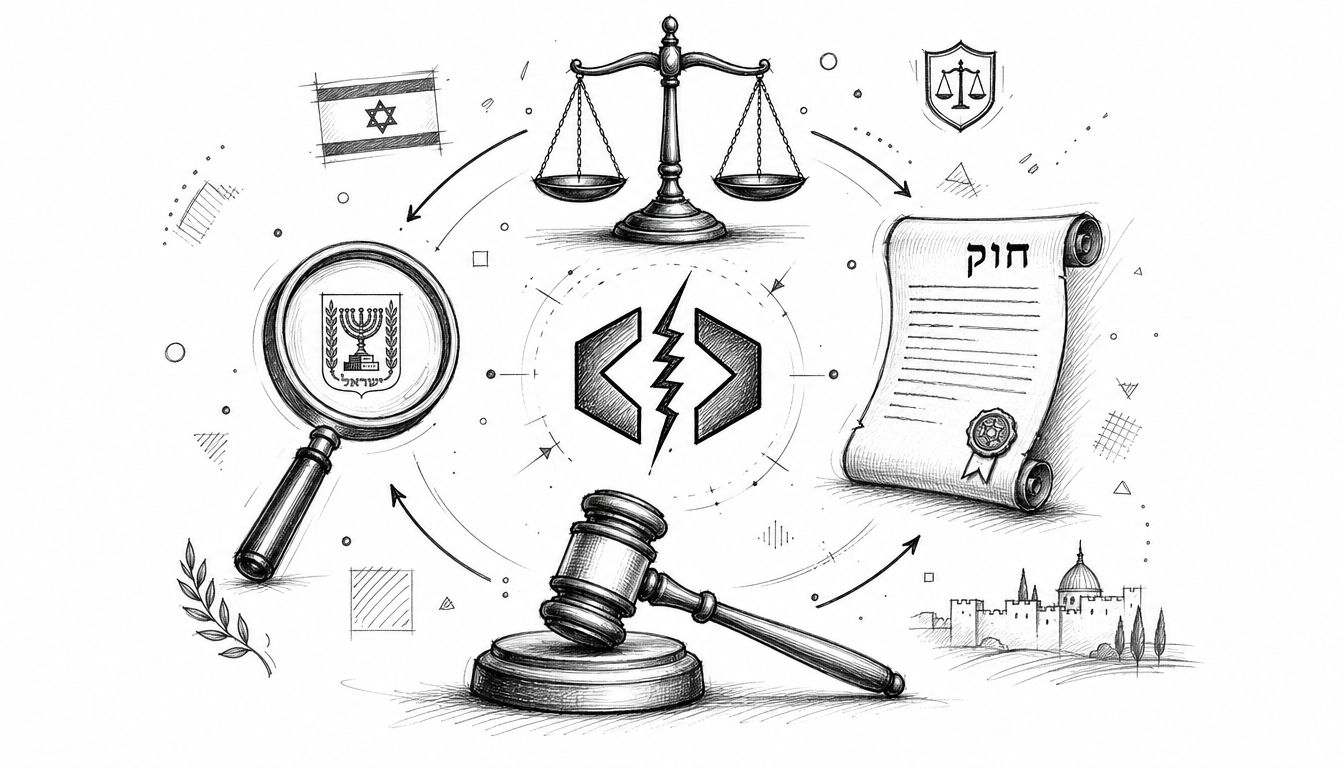
A foreign shareholder usually wants one of four outcomes. Restore transparency. Stop ongoing harm. Force a fair exit. Or preserve deal value while the parties fight. The correct remedy depends on which of those goals matters most.
Choosing the right legal tool
Some remedies aim at company harm. Others target personal shareholder harm. That distinction is not technical trivia. It drives standing, evidence, and settlement pressure.
Here is the practical view:
| Remedy path | Best use | Main upside | Main downside |
|---|---|---|---|
| Derivative claim | Misconduct harmed the company | Targets diversion, self-dealing, and fiduciary breaches | Slower and more procedural |
| Minority oppression or unfair prejudice style relief | Controllers sidelined or squeezed out a shareholder | Direct leverage around fairness and buyout dynamics | Emotion can overtake strategy |
| Injunctive relief | Immediate risk to assets, records, authority, or governance | Stops damage before it spreads | Requires fast, disciplined evidence |
| Petition to wind up or dissolve | Trust has collapsed beyond repair | Maximum pressure in deadlock cases | Can destroy enterprise value |
The strongest counsel doesn’t ask which claim sounds toughest. Counsel asks which remedy changes the negotiation field without destroying the company by accident.
M&A disputes raise the stakes sharply
This becomes even more important in transactions. In M&A deals, shareholder litigation changes both price and probability. Research shows that litigated offers are completed at a significantly lower rate than non-litigated offers. Yet among completed deals, the average takeover premium in litigated transactions is about 59%, compared with 43% in non-litigated deals, which reflects a 30% increase after controlling for other features, according to the ECGI working paper on shareholder litigation in M&A.
That creates a hard trade-off. Litigation can improve shareholder value in a completed deal. It can also kill the transaction. A serious shareholder dispute lawyer doesn’t romanticize either side of that equation.
Litigation may increase price. It may also eliminate the exit entirely.
For a multinational, that means the remedy analysis must include financing windows, regulatory exposure, integration timelines, and reputational spillover. The legal file is only one part of the decision matrix.
What doesn’t work
Reactive legal aggression often backfires. So does filing the broadest possible case before securing records, internal authority, and a coherent valuation position. In Israeli disputes with foreign parents or offshore holding structures, premature filings can also create parallel fights over forum, language, and signatory authority.
A disciplined remedy strategy starts narrower. It identifies the pressure point that matters most. Then it applies the least destructive tool that can still move the dispute.
The Phased Strategy for Dispute Resolution
The best commercial disputes aren’t resolved by choosing between passivity and war. They’re resolved by sequencing pressure. That matters even more in shareholder fights, because the parties usually need the business to survive while they negotiate.
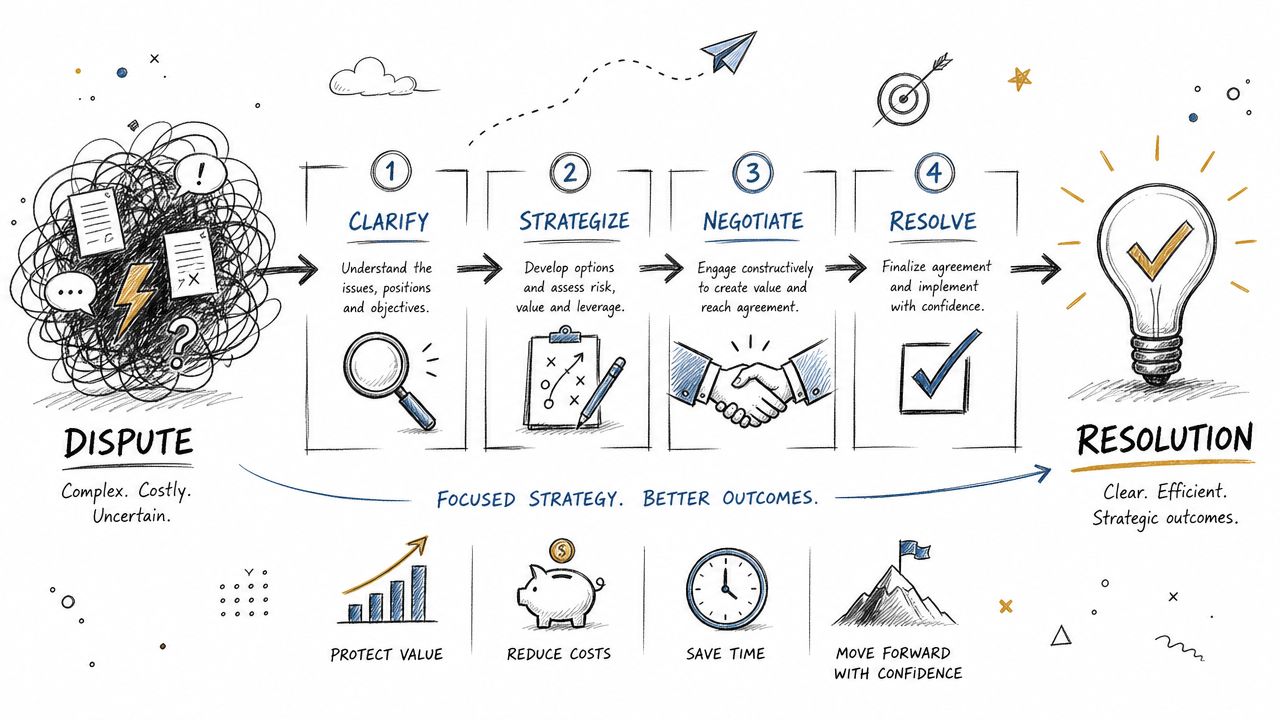
A phased approach keeps options open. It also preserves credibility with courts, counterparties, and commercial stakeholders.
Phase one begins before filing
The first phase is quiet. Counsel maps control documents, records custody, signatory power, insurance positions, and likely valuation arguments. At the same time, counsel tests whether a negotiated corridor exists.
That approach isn’t soft. It’s efficient. Agreements with clear ADR clauses can reduce litigation costs by 40–60% compared with trial, and global practice data indicates that 75% of complex commercial disputes are resolved through strategic negotiation or ADR rather than full trial, according to the international litigation and arbitration overview.
A strong first move often includes a calibrated legal letter, a records demand, and a proposal for a structured standstill. If the other side is rational, that can produce movement without public escalation.
Escalation should be intentional
Not every dispute belongs in mediation immediately. Not every dispute deserves immediate court action either. The sequence depends on active harm.
Use this framework:
- Stabilize the company: Lock down records, decision authority, and internal communications.
- Define the absolute requirements: Identify what must stop now, what can wait, and what outcome is commercially acceptable.
- Test ADR under pressure: Mediation works best when both sides face credible alternatives.
- Seek targeted relief if needed: If assets, governance, or evidence are at risk, narrow emergency applications may be necessary.
- Litigate only when the business case supports it: Trial is a tool, not a badge of seriousness.
Operating principle: Escalate only after each earlier step has either failed or produced useful intelligence.
Why phased strategy outperforms legal theatrics
Executives sometimes mistake speed for strength. In reality, undisciplined speed can damage their settlement position. It can also force the company into public positions that block commercial resolution later.
A phased model does the opposite. It gives each move a purpose. One move preserves evidence. Another reframes the valuation discussion. Another tests whether the other side wants a result or only delay.
For cross-border disputes, this method also helps coordinate foreign parent interests with Israeli entity realities. That coordination matters when local directors, offshore shareholders, lenders, and counterparties all need different messages at the same time.
Selecting Your Cross-Border Legal Counsel
Choosing a shareholder dispute lawyer for an Israeli matter isn’t a procurement exercise. It’s a strategic risk decision. The wrong lawyer may know the statute and still mishandle the crisis.
Foreign clients often overvalue courtroom style and undervalue cross-border judgment. That’s a mistake. A shareholder dispute involving Israel may require synchronized work across company law, banking, data handling, corporate records, multilingual evidence, and settlement architecture.
The capability that matters most
The decisive skill isn’t only litigating in Israel. It’s knowing when not to litigate yet, when to force a valuation process, and when to treat the matter as a multi-jurisdictional control event.
That issue becomes acute in closely held businesses. In cross-border shareholder disputes, the decision between early appraisal and pre-litigation mediation can determine the whole economics of the case. Valuation costs can exceed 15% of the dispute’s potential settlement value, according to the guidance on early shareholder dispute decisions. If counsel pushes appraisal too early, the company may spend heavily before identifying the actual grievance. If counsel delays valuation where the agreement mandates it, the dispute may harden around avoidable mistrust.
Questions sophisticated clients should ask
Ask direct questions. The answers reveal whether counsel thinks like a technician or a strategist.
- How do you decide between mediation and appraisal first? Listen for a document-driven answer, not a reflex.
- What is your emergency relief threshold? Good counsel should define what facts justify immediate court action.
- How do you manage multi-language evidence? Translation quality, witness prep, and record integrity matter.
- Who coordinates foreign counsel and local execution? Cross-border cases fail when nobody owns the whole picture.
- How do you preserve business continuity during the dispute? If counsel speaks only about claims, that’s not enough.
A strong answer should sound operational. It should address decision rights, internal messaging, counterparties, and evidence chain. It shouldn’t sound like a law school outline.
What distinguishes top-tier counsel
The best advisers treat courts and media as tools, not destinations. They also understand that many shareholder disputes settle only after one side proves it can litigate effectively while still protecting enterprise value.
That combination is rare. Domestic-only firms may know local procedure but miss the foreign parent’s commercial exposure. International firms may grasp the board-level risk but lack tactical fluency in Israeli execution. The right counsel must bridge both.
Managing the Crisis Beyond the Courtroom
By the time a shareholder dispute reaches lawyers, the legal problem is only one track. The business crisis is already moving on parallel tracks.
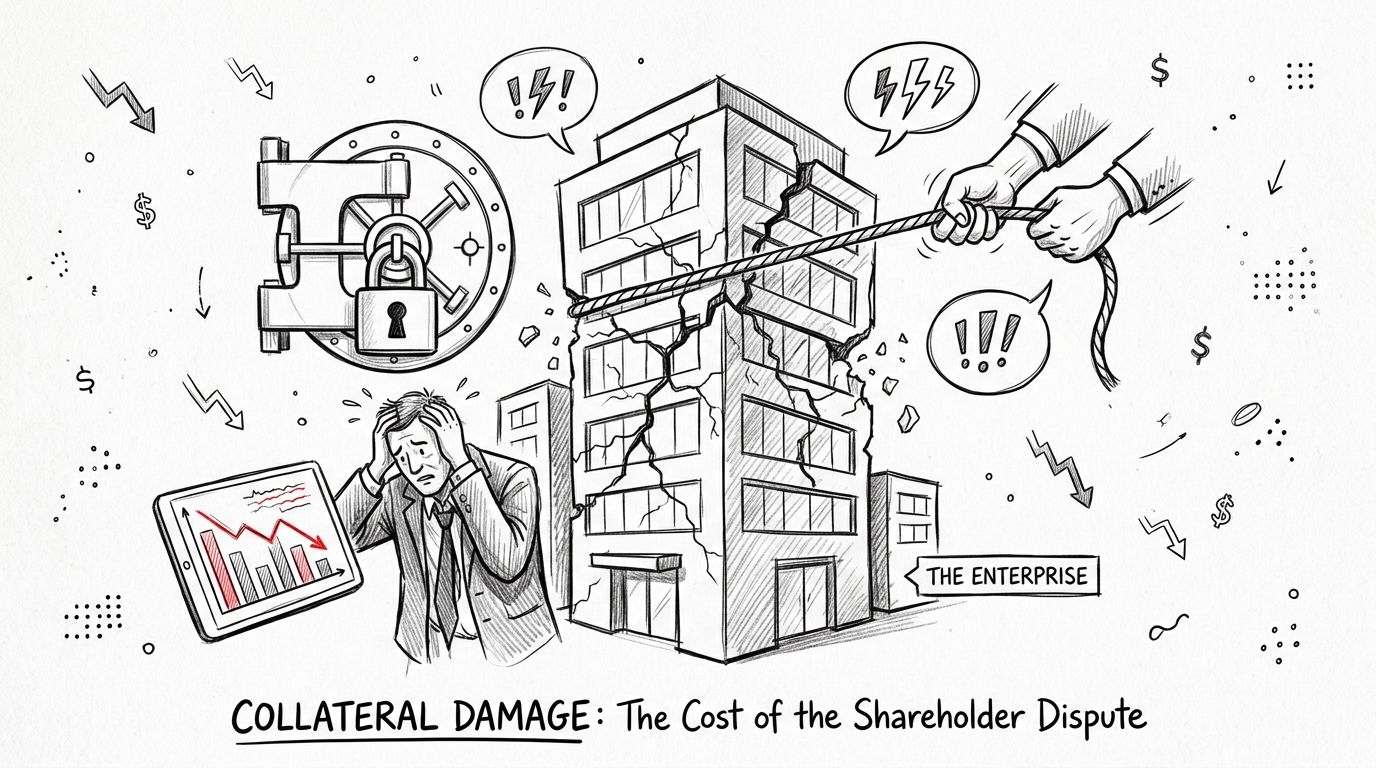
A bank receives conflicting instructions from rival directors. A major customer hears rumors about a founder split. An employee sees internal accusations copied too widely. A buyer pauses diligence because ownership authority looks unstable. None of those events waits politely for a court timetable.
The operational spillover is immediate
In practice, the first visible damage often appears outside the pleadings.
- Banking friction: Banks may become cautious when authority is contested or internal allegations escalate.
- Client uncertainty: Customers don’t like signature risk, delivery risk, or governance noise.
- Employee drift: Senior staff often assume the company is weaker than it is.
- Narrative loss: Once the other side defines the story, recovery becomes harder.
A legal strategy that ignores those fronts is incomplete. The company needs a single crisis map. It should identify who speaks to the bank, who handles counterparties, who preserves internal morale, and who approves external statements.
Tight messaging protects leverage
This isn’t a call for spin. It’s a call for disciplined communication. Every audience needs an accurate, limited message. The board needs governance clarity. The bank needs authority clarity. Customers need continuity clarity. Employees need role clarity.
The side that controls the facts, the records, and the message usually controls the pace.
For foreign-owned Israeli businesses, that coordination can be especially difficult. The parent company may want central approval for every communication, while the Israeli entity needs same-day responses. That tension should be solved early, not during a public flare-up.
A practical response often includes a restricted internal distribution list, a litigation hold, one approved chronology, and one designated business spokesperson. Those steps reduce contradiction. They also help outside counsel protect privilege and consistency.
Crisis management changes settlement power
A company that remains operational during a dispute negotiates from a stronger position. It can refuse false urgency. It can also evaluate settlement options based on value rather than panic.
That is why the best shareholder dispute lawyer doesn’t stop at pleadings. The role extends to protecting the business from self-inflicted damage while legal pressure does its work.
Your Actionable Checklist for Shareholder Disputes
Executives don’t need another abstract warning. They need a working checklist. The following actions reduce risk before a dispute, contain damage when it starts, and maintain an advantageous position throughout the conflict.
Before any dispute appears
Start with the documents and the operating reality.
- Audit the shareholders’ agreement: Check deadlock provisions, buyout triggers, notice clauses, governing language, ADR mechanics, and valuation process.
- Align practice with paper: Make sure board approvals, signatory authority, and information rights match actual behavior.
- Review multilingual records: If Hebrew and English versions exist, reconcile them before anyone weaponizes inconsistencies.
- Map cross-border dependencies: Identify which lenders, customers, regulators, and vendors could react if governance is challenged.
Useful adjacent reading can help frame these risks in a broader Israeli commercial context, especially for complex commercial litigation in Israel, commercial contracts and cross-border agreements, corporate formation and business structuring in Israel, and bank account restrictions and financial disruption.
Once a dispute begins
Speed matters, but random movement doesn’t.
- Preserve evidence immediately: Secure emails, board materials, chats, valuations, and corporate records.
- Freeze unauthorized messaging: Stop executives from improvising by email or text.
- Confirm authority lines: Identify who can instruct counsel, sign for the entity, and communicate with banks.
- Assess urgent harm: Determine whether assets, records, or control rights face immediate threat.
- Choose the first pressure point carefully: Records access, standstill terms, mediation, appraisal, or injunctive relief may each fit different fact patterns.
During the active case
The companies that endure don’t let the legal file run alone.
- Integrate legal and business planning: Litigation strategy should sit beside banking, customer, HR, and PR planning.
- Revisit settlement windows often: A strong settlement today may be smarter than a perfect claim years later.
- Track enforceability: Any resolution must work across the relevant jurisdictions, not only in principle.
- Plan for the post-dispute structure: If the same governance flaws remain, the next dispute is already forming.
A shareholder dispute lawyer adds the most value when counsel can connect all three phases. Prevention. Containment. Resolution.
Costly mistakes usually happen early, when executives underestimate how fast a local shareholder disagreement can become a cross-border control crisis. The recommended strategic path is to get a disciplined legal and operational assessment before positions harden. To discuss that assessment with RNC Group and avoid preventable damage, contact the firm now.
This article provides general information only. It does not create an attorney-client relationship, and it should not be relied on as legal advice for any specific dispute, transaction, jurisdiction, or regulatory scenario. Specific facts, governing documents, and forum considerations can materially change the correct legal strategy.