
Your empty commercial rooftop is more than just space. It is a high-yield asset. Updated 2026 solar panels regulation in Israel makes this possible. This is not about environmental trends. It is a strategic business decision. This guide will show you how to turn that dormant space into a consistent, long-term revenue stream. You will also learn how to stay compliant with Israeli law. This article focuses on generating green energy income.
Unlocking Green Income with Commercial Solar
The Israeli government created a clear path for property owners. You can now generate serious income from solar installations. The core of this opportunity rests on long-term lease agreements. It also depends on a structured process for connecting to the national grid. This process turns idle rooftops into profitable assets.
The benefits extend beyond your finances. A solar installation improves your company’s sustainability profile. It also provides a shield against rising electricity prices. This creates greater energy independence. Therefore, consider this a business plan for your roof. It will help you make informed commercial decisions.
Navigating 25-Year Roof Lease Agreements
The most common model for monetization is leasing your roof. You lease the space to a specialized solar energy developer. These are not standard rental contracts. The industry standard is a 25-year lease agreement. This is a long-term partnership. It demands rigorous legal and financial review before you sign. A poorly written contract can lead to future disputes.
A strong agreement must define every detail. It should cover both operational and financial aspects. Key points include:
- Rent Models: Will you get fixed annual payments? Or will you get a percentage of the revenue?
- Responsibilities: Who is liable for maintenance, insurance, and repairs?
- Access Rights: What are the exact terms for the solar operator to access your property?
- Exit Clauses: What happens if you sell the property or need to end the contract early?
Failing to clarify these points can risk your income. It can also create significant legal exposure. This is a specialized area of commercial law. Expert guidance is essential for success. For foreign entities, understanding the nuances of Company Registration Israel is a crucial first step to operate legally.
Grid Connection (IEC) and System Ownership
Connecting your solar system to the grid is a critical step. The Israel Electric Corporation (IEC) governs this entire process. Their technical standards are non-negotiable. Any deviation from their rules can cause costly delays. This can also lead to significant revenue loss.
You must also decide on an ownership model. Will you fund the project and own the system? Or will a third party own and operate it on your roof? Each path has different financial implications. Direct ownership requires significant upfront capital. However, it delivers all the profits. A third-party model offers passive income with no initial investment. This distinction between who owns the system versus who owns the roof is fundamental.
A critical factor for any partner is financial stability. A history of financial issues, such as having Restricted Bank Accounts, could be a major red flag. It might jeopardize the viability of a 25-year solar project.
These are complex, long-term projects. Disputes can and do happen. Understanding your options for Commercial Litigation is a key tool. It helps protect your investment if disagreements arise. Turning your roof into a solar asset is a major undertaking. It requires careful planning and legal foresight. To navigate the complexities, having the right legal support is paramount. For investors looking at property, specific guidance on Foreign Investors Real Estate is also vital.
Mastering the 25-Year Roof Lease Agreement
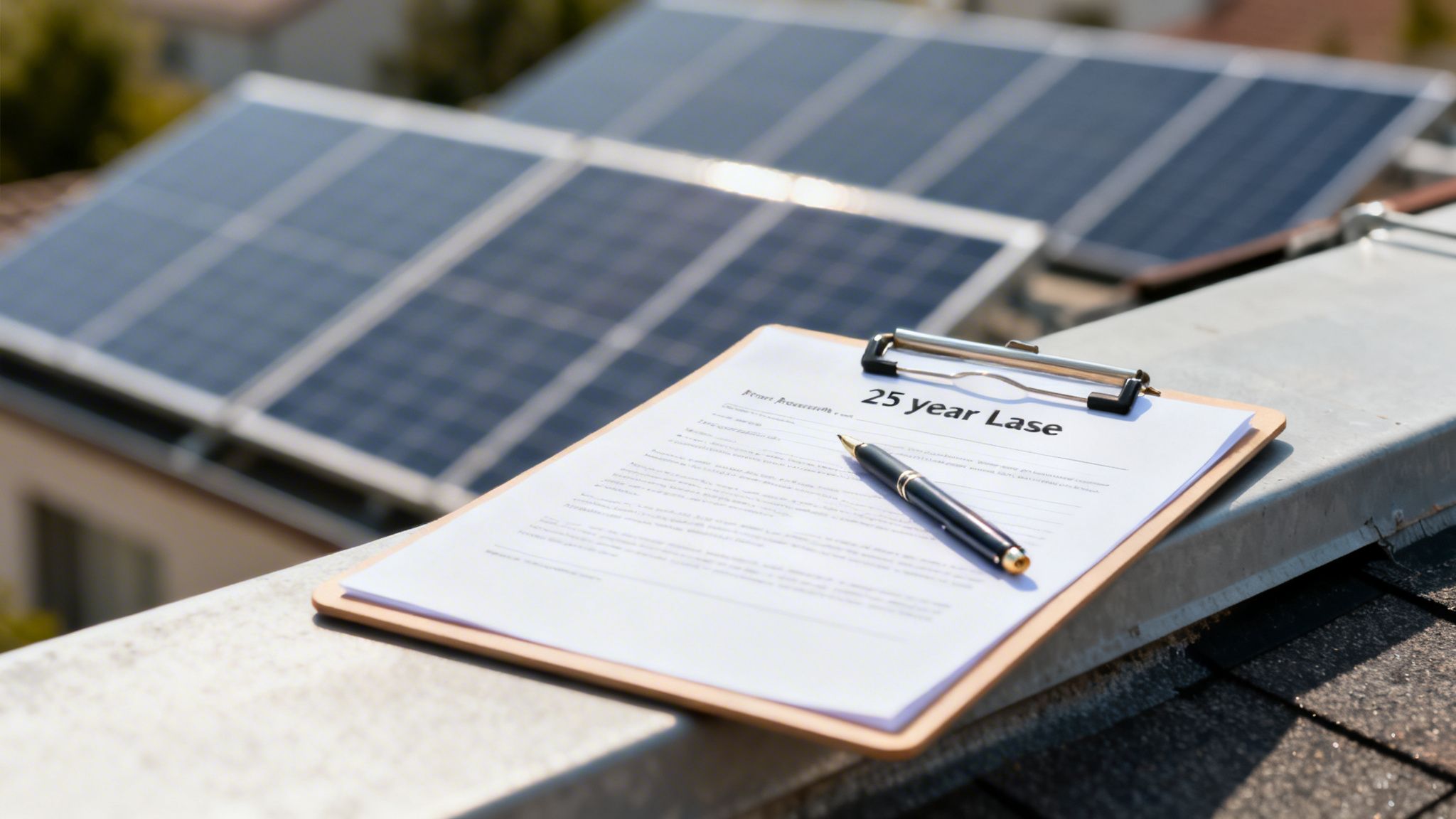
The 25-year roof lease agreement is the foundation of your commercial solar income. This is not a standard rental contract. It is a long-term commercial partnership. It dictates financial and operational rules for the project’s entire lifespan. A poorly drafted lease is a future liability. A well-negotiated one is a secure, bankable asset.
Think of it as a landlord-tenant relationship. However, you are leasing space for a power plant, not an office. This distinction introduces unique complexities. Understanding these details before you commit is vital. It is the difference between reliable income and years of legal friction.
Differentiating Ownership and Responsibility
One common friction point is the line between ownership and responsibility. Who owns the system versus who owns the roof? In most lease models, a solar developer owns the system. However, you still own the roof it sits on. This shared reality demands absolute clarity in your agreement.
The lease must define who is responsible for what. It should leave no room for interpretation. For example, the system owner repairs a failed solar panel. But what if the roof membrane underneath the panels needs work? The agreement must spell out the entire process. This includes access, costs, and liability. A potential solar panel roof replacement during the lease term is a major event. Your contract must anticipate how to manage it.
A key negotiation point is access rights. The solar operator needs guaranteed access. This is for installation, maintenance, and eventual removal. Your lease must specify notice periods and hours of operation. It should also designate access routes to minimize disruption.
Structuring Your Green Energy Income
Your income from a solar lease can be structured in a few ways. The right model depends on your risk tolerance and goals. Getting this part right is fundamental to a good deal.
Choosing a payment structure is a major decision. The three main models offer different balances of risk and reward. The table below breaks down these structures. It helps you identify which one aligns with your objectives.
Comparison Of Commercial Solar Roof Lease Payment Models
| Payment Model | Description | Best For Property Owners Who… | Key Risk |
|---|---|---|---|
| Fixed Annual Rent | A set, predictable amount paid annually, regardless of the solar system’s energy production. It is like a traditional property lease. | Prioritize stable, guaranteed income and want to minimize exposure to performance-related variables. | Income is fixed. It will not increase if energy prices rise, potentially leaving money on the table. |
| Revenue Sharing | Your income is a direct percentage of the gross revenue from the electricity sold. | Are willing to accept variability for higher potential returns, especially with rising energy prices. | Income is not guaranteed. It depends on system performance and the developer’s ability to sell the power. |
| Hybrid Model | A combination of a lower fixed base rent plus a smaller percentage of the revenue generated. | Want to balance the security of a guaranteed income floor with the potential for financial upside. | The fixed portion is lower than a pure fixed-rent model, and the revenue share is smaller than a pure revenue-share model. |
Ultimately, a revenue-sharing agreement can be more lucrative. Yet, it carries the risk of low production. If the solar developer’s business falters, it could lead to complex legal action. This might even involve suing banks to recover payments.
The lease agreement is a bankable asset for the developer. It is a secure income source for you. But this is only true if the terms are ironclad. It must cover everything from insurance to termination clauses. An expertly drafted lease protects both parties. It ensures the project is a success for decades. For guidance on securing favorable terms, Contact Us to speak with a legal expert.
Navigating Grid Connection and IEC Regulation
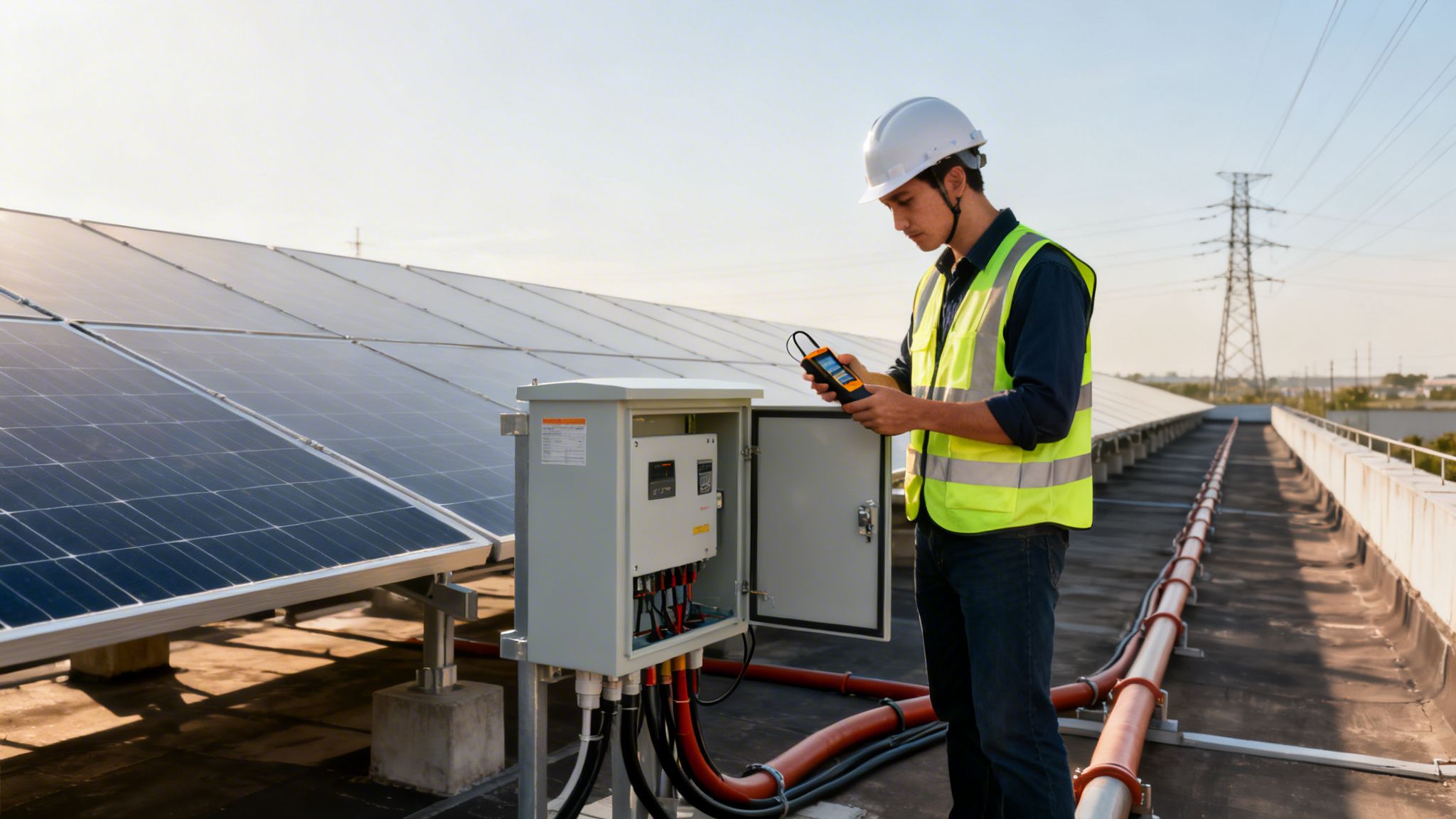
A commercial solar system is just hardware until it connects to the national grid. In Israel, the Israel Electric Corporation (IEC) controls this final step. The IEC serves as the gatekeeper for all energy production. Therefore, following solar panels regulation is crucial.
Getting your project online is a meticulous process. It is not as simple as plugging it in. Every technical detail is scrutinized. Any deviation from the IEC’s strict protocols can halt a project. This leads to significant delays and revenue loss. It all starts with the initial application. This is a comprehensive technical feasibility study. The IEC reviews it to ensure your system can integrate safely.
Meeting IEC Technical Standards
Before the IEC considers your application, your hardware must be approved. This checkpoint protects the national grid’s stability. Using uncertified equipment is an automatic dead end. The IEC maintains a precise list of approved hardware. Every major component must be on it.
The main equipment they focus on includes:
- Inverters: They must be certified to convert DC power to grid-compliant AC power.
- Safety Switches: These must automatically disconnect your system during an outage. This protects utility workers.
- Metering Equipment: The meters must be approved to accurately track power production.
A common mistake is cutting corners here. This often leads to failed inspections. It forces the replacement of expensive hardware. Consequently, it sets the project back by months.
The Inspection and Testing Phase
Once your application is approved and the system is installed, you enter the inspection phase. An IEC engineer will visit your site. They verify that the installation matches the approved plans. They also confirm it meets every safety standard.
The engineer runs a series of tests. They simulate various grid conditions like voltage spikes. They need to see that your system responds correctly. They also confirm safety protocols work flawlessly. Only when your system passes every test will the IEC grant final permission.
Navigating the IEC’s requirements is complex. Disputes over compliance or contracts can halt a project. Understanding your legal options through Commercial Litigation is a vital tool for resolving these conflicts and keeping your project on track.
Understanding Tariffs and Financials
The final piece is the money. A financial settlement dictates how you get paid. The IEC manages this through a tariff structure. It sets the rate you receive per kilowatt-hour. These rates can vary based on project size.
Both the tariff and net-metering structures are formalized through binding contracts. Any errors in this step will directly hit your project’s bottom line. Ensuring these agreements are structured correctly is essential. For foreign investors, a clean financial setup is critical. It helps avoid complications like Restricted Bank Accounts.
This article is for general information only and does not constitute legal advice. Laws and their application depend on the facts and jurisdiction and may change. Although we aim to keep this information accurate and current, we do not guarantee that it is complete or up to date. The article may contain omissions or errors. Reading this article does not create an attorney-client relationship with RNC Group. Before making a decision or taking action, seek advice from a qualified lawyer in the relevant jurisdiction.