
A downloaded startup shareholder agreement template looks cheap until a court tests it. Then it becomes one of the most expensive files in the company.
International founders entering Israel often ask the wrong question. They ask whether a template is “good enough,” when they should ask whether that document will survive a board fight, a financing reset, or a cross-border exit.
Your Template Agreement in a 2026 Court
A generic startup shareholder agreement template usually fails at the exact moment the business needs precision. It works when everyone agrees. It collapses when one founder leaves, one investor blocks a sale, or one foreign parent assumes its home jurisdiction controls the outcome.
That gap matters more in 2026, not less. Regulatory friction, investor diligence, and enforcement scrutiny keep moving toward tighter alignment between private agreements, constitutional documents, and local corporate law.
The real problem isn’t drafting. It’s enforceability.
A template from a U.S. blog may read well and still break under Israeli company law, local procedure, or cross-border enforcement pressure. Most founders don’t see the defect because the document looks familiar. Buyers, investors, and litigators do.
A serious agreement must answer hard questions in advance:
- Who controls the board: Appointment rights, removal mechanics, quorum, and reserved matters.
- Who can force an exit: Sale thresholds, drag rights, and minority protections.
- Who owns the IP: Not in principle. In signed, enforceable language.
- Who wins a deadlock: Court, arbitrator, mediator, or the shareholder with more stamina.
Practical rule: If a clause cannot be enforced quickly across borders, it is weaker than it looks on paper.
Templates fail because they assume one legal universe
Cross-border startups rarely live inside one legal system. A founder may sit in Tel Aviv, the holding company may sit elsewhere, investors may negotiate on NVCA logic, and core engineers may create value under Israeli employment and IP realities.
That structure creates conflict points that a basic startup shareholder agreement template won’t reconcile. It may also leave investors with one expectation, founders with another, and judges with a third.
The financial consequence is obvious. A weak agreement lessens your advantage when it is most crucial. It also gives the most aggressive stakeholder room to reinterpret the deal after the fact.
Beyond a Template A Strategic Control Document
A shareholder agreement isn’t an administrative attachment. It is the company’s private control architecture.

Founders often treat the document like insurance. Experienced parties treat it like infrastructure. That difference shows up in financing, governance, and crisis response.
Think of it as the operating system
The cap table is the hardware. The shareholder agreement is the operating system that tells the company how power moves, how disputes get processed, and how value gets transferred.
A buggy operating system doesn’t fail politely. It freezes during pressure. That is exactly what happens when the agreement contains vague transfer rules, thin vesting language, or board mechanics copied from another jurisdiction.
Strategic value appears before litigation
A well-built startup shareholder agreement template does more than reduce conflict. It signals disciplined governance to incoming investors, potential acquirers, and counterparties reviewing diligence.
Its strategic functions usually include:
- Capital raising discipline: It defines who approves new issuances, who gets notice, and how dilution gets managed.
- Governance clarity: It separates shareholder power from board power before personalities blur the line.
- Exit readiness: It makes a sale process cleaner because transfer rights already exist.
- Crisis containment: It creates a path when trust breaks down.
The agreement should assume future disagreement, not present harmony.
A control document must match the company’s next stage
An early-stage company doesn’t need every possible clause. It does need the right clauses for the next financing, the next founder problem, and the next jurisdictional conflict.
That is why mature counsel doesn’t start with form completion. The stronger method starts with scenario testing. What happens if a founder resigns. What happens if a lead investor demands a board seat. What happens if a buyer wants all shares, not most shares.
A smart drafting process also aligns the agreement with related instruments. The constitutional documents, IP assignments, equity grants, and financing papers must point in the same direction. If they don’t, the startup shareholder agreement template becomes a trap disguised as order.
Deconstructing Key Shareholder Agreement Clauses
Most disputes don’t start with dramatic misconduct. They start with silence inside the document.
A useful startup shareholder agreement template identifies pressure points before they become accusations. The drafting must stay commercial. Legal jargon doesn’t save a weak clause.
Vesting, IP, and transfer controls
Vesting decides whether unearned founder equity stays with the company or leaves with the individual. If the agreement ignores vesting, a departed founder may keep a blocking stake with no operating role.
IP assignment must state that the company owns the core assets clearly and completely. If the code, designs, know-how, or customer-facing materials sit with individuals, the company’s valuation becomes vulnerable. That is why cross-document alignment matters. A shareholder agreement alone won’t cure a missing assignment.
Rights of first refusal control who can buy shares before an outsider enters the cap table. They preserve internal control, but they must fit the practical financing timetable. Overbuilt restrictions can slow a transaction.
Confidentiality belongs in the agreement because shareholders often receive information outsiders don’t. If that duty is weak, commercial leakage becomes hard to police.
Drag and tag rights decide whether exits work
The most commercially important clauses often appear near the back of the document. That is a mistake.
According to the MaRS startup shareholders agreement guidance, drag-along rights typically require a 75-80% supermajority to compel a sale of 100% of the company. The same guidance notes that tag-along rights protect minority holders by letting them join a majority sale on the same terms.
That combination matters because buyers prefer clean transfers. Minority holders need protection from being stranded with a new controlling party they never chose.
A sale clause should do two jobs at once. It should make the company sellable and keep the minority from becoming collateral damage.
Essential Clause Drafting Options
| Clause | Founder-Friendly Option | Investor-Friendly Option | Strategic Consideration |
|---|---|---|---|
| Vesting | Faster vesting release on termination without cause | Longer vesting discipline and repurchase rights | Protects commitment, but overreach can poison founder retention |
| IP assignment | Narrow founder carve-outs for pre-existing materials | Broad assignment and waiver language | Every ambiguity weakens diligence |
| Right of first refusal | Short response periods and limited scope | Broad matching rights before outside transfers | Too much friction can block later liquidity |
| Confidentiality | Standard confidentiality tied to business need | Broader restrictions with survival periods | Must remain enforceable across jurisdictions |
| Drag-along | Higher trigger and sale floor protections | Lower friction once threshold is reached | Sale certainty attracts buyers |
| Tag-along | Full pro rata participation rights | Narrower participation mechanics | Minority protection supports trust and legitimacy |
Drafting choices that deserve real attention
A strong clause set usually turns on three choices.
First, define the trigger precisely. A transfer right without a clean trigger invites argument.
Second, define the process. Notice periods, response windows, and document execution rules should leave little room for tactical delay.
Third, define the economic fairness floor. If the majority can force a sale, the minority should receive the same price and terms, subject to lawful differences that are clearly stated.
The Israeli and Cross-Border Dimension
A Delaware-oriented startup shareholder agreement template can create false confidence in an Israeli-linked structure. That confidence disappears once the company faces a board dispute, an issuance challenge, or an enforcement action.
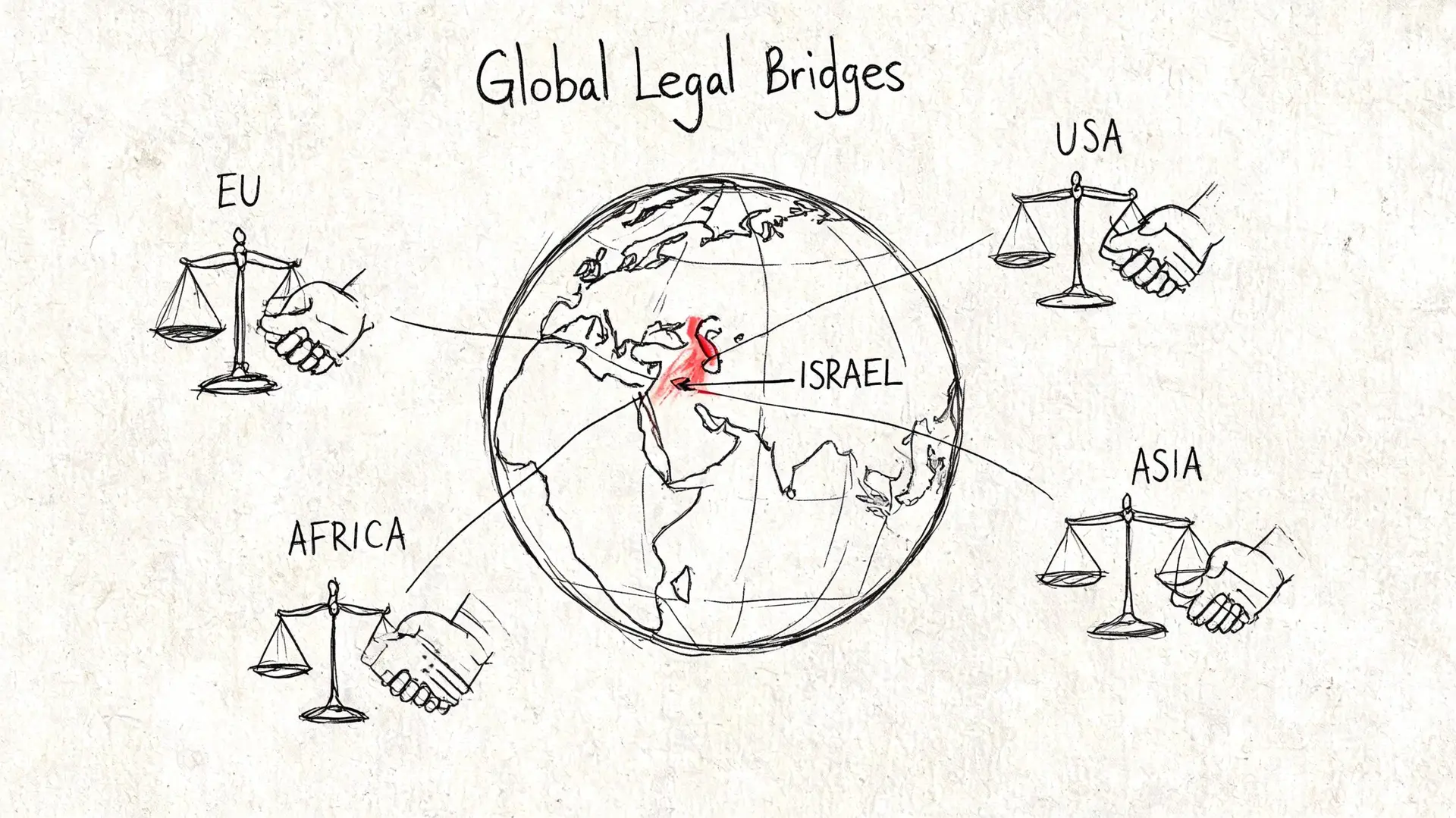
International executives need to treat Israel as a live legal environment, not a branch office footnote. The board, the shareholders, and the underlying corporate organs must fit local law.
Board mechanics must align with Israeli law
The Airtree open-source shareholders agreement template reflects common market architecture by using 3-5 directors and 75% special resolutions for major decisions. The same verified guidance also notes that Israeli law, including Companies Law §47, imposes quorum and voting rules that must be harmonized with the agreement.
That alignment issue isn’t cosmetic. A mismatch between the agreement and local corporate law is a leading cause of governance deadlock and investor disputes in cross-border startups.
For foreign decision-makers, the practical message is simple. The board clause isn’t only about seats. It’s about whether a later resolution will stand.
Cross-border enforcement needs intentional design
The legal question isn’t only which law governs. The harder question is whether the remedy can be executed fast enough to preserve value.
That requires discipline in at least four areas:
- Forum design: Court jurisdiction and arbitration language must support an actual enforcement strategy.
- Document hierarchy: The agreement, articles, and financing documents must not contradict each other.
- Quorum and consent thresholds: Local law and contract language must move together.
- Transaction planning: Exit clauses should anticipate foreign buyers, offshore holdings, and local subsidiaries.
A cross-border founder should also review the broader Israeli corporate law guide before importing a foreign template into an Israeli operating structure. That review often reveals where a “standard” clause becomes locally unstable.
The strongest agreement is the one that reads coherently in the boardroom and survives intact in two jurisdictions.
Why this matters in practice
If the company grows smoothly, these issues stay invisible. If pressure arrives, they become the case.
A board appointment fight, a rights offering, or a minority challenge can turn a minor drafting gap into an event creating bargaining power. In high-stakes deals, the party with the enforceable document usually controls the timetable. The party with the generic template usually argues about intention.
Negotiation Tactics for Founders and Investors
Most shareholder agreements fail in negotiation before they fail in court. The parties trade words instead of trading priorities.
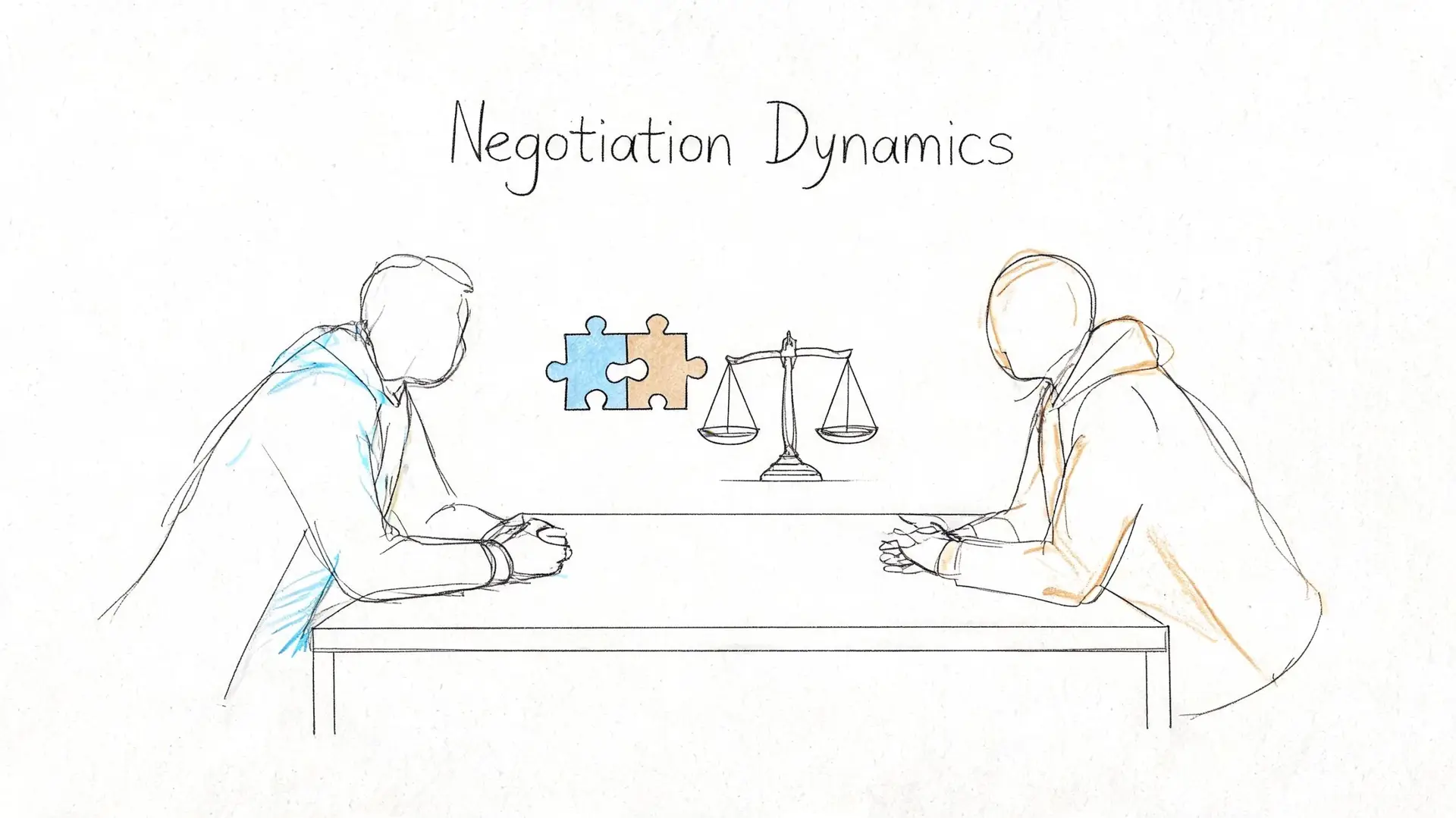
Founders usually want flexibility, board influence, and room to recover from early mistakes. Investors usually want visibility, downside protection, and a reliable route to liquidity. Neither side should pretend otherwise.
Negotiate by package, not by clause
The strongest negotiators don’t fight every clause in isolation. They build linked trades.
A founder may concede an observer right in exchange for narrower veto matters. An investor may relax transfer restrictions in exchange for stronger information rights. That approach produces a coherent deal instead of a resentful one.
Founders who study practical frameworks for securing favorable investor terms will find a useful lesson: bargaining power often comes from sequencing and framing, not from theatrics.
The best concessions reduce future warfare
Some concessions are cheap today and expensive later. Others cost little and save the company during stress.
Focus on these pressure points:
- Board seat negotiations: A seat carries more control than founders often admit. Limit the reserved matters if the board expands.
- Founder departure rules: Good leaver and bad leaver mechanics should be defined before trust deteriorates.
- Information rights: Investors need visibility, but the company should control confidentiality and competitive sensitivity.
- Dispute process: Build a staged pathway before anyone threatens proceedings.
A disciplined dispute framework also connects to the broader logic of commercial crisis management. Companies that pre-design escalation routes preserve bargaining power when a relationship turns hostile.
Negotiation insight: Trade permanent control only for durable value. Do not surrender a governance lever for cosmetic peace.
What each side should stop doing
Founders should stop assuming “market standard” means harmless. Investors should stop assuming template protection will remain enforceable after localization.
The middle ground is not softness. It is precision. A balanced agreement can still be hard-edged if the drafting identifies who decides, who pays, and who exits.
Avoiding Common and Costly Strategic Oversights
Some founders now argue that early-stage companies should skip a detailed startup shareholder agreement template and wait for institutional financing. That advice is incomplete.

The contrarian case has a point. The NY Venture Hub analysis states that 28% of seed-stage agreements were terminated pre-Series A at investor insistence. The same analysis also states that 35% of startup failures in down rounds stem from rigid, poorly drafted early agreements that froze governance during crisis.
The mistake isn’t signing early. It’s signing badly.
Those numbers don’t justify informality. They justify smarter drafting.
A thin agreement can leave founders exposed. An overbuilt agreement can trap the company before institutional capital arrives. The right answer is a disciplined, stage-appropriate document that covers core ownership, governance, transfer, and IP issues without pretending to solve every future financing scenario.
The usual failures are painfully predictable
Most strategic oversights fall into a short list.
- Wrong jurisdictional DNA: The template comes from another legal system and never gets localized.
- Weak IP chain: Founders assume ownership sits with the company when documents say otherwise. The risk becomes sharper where the business depends on code, data, or brand assets. That is why early review of IP assignment in Israel matters.
- Undefined founder commitments: Equity gets issued, but roles, time commitment, and departure consequences stay fuzzy.
- No dispute ladder: The agreement lacks a credible path from negotiation to mediation, arbitration, or court.
A practical filter for deciding what to include
If the company is still informal, include what protects ownership and control. Leave financing complexity for later rounds unless a current investor demands it now.
Use this filter:
- Will this issue affect control if one founder leaves?
- Will this issue matter in diligence by an investor or buyer?
- Will this issue become harder to fix after value increases?
If the answer is yes, the agreement should address it. Waiting rarely makes a structural defect cheaper.
The Strategic Path to a Bulletproof Agreement
A strong startup shareholder agreement template begins with commercial design, not clause harvesting. The document should reflect the company’s real power structure, its likely financing path, and the jurisdictions that will matter when things go wrong.
The essential action list
-
Define founder economics first. Fix equity, vesting logic, roles, and departure outcomes before discussing investor cosmetics.
-
Map governance with precision. Identify who appoints directors, what needs ordinary approval, what needs special approval, and what cannot proceed without unanimous consent.
-
Stress-test transfer rules. Run three scenarios. Founder exit, investor secondary sale, and full acquisition.
-
Lock the IP chain. Confirm that the company owns what creates value. Do not rely on assumptions or informal understanding.
-
Align all core documents. The shareholder agreement, constitutional documents, grant paperwork, and side letters must not conflict.
-
Design for enforcement. Choose governing law, forum, and remedy structure based on where the parties, assets, and strategic advantages sit.
The recommended strategic path is simple. Treat the agreement as a value-preservation instrument, not a template exercise.
A company can survive hard markets, difficult investors, and founder turnover. It struggles to survive avoidable ambiguity embedded in its own documents.
Costly mistakes usually start with documents that looked acceptable at signing. Businesses facing Israeli or cross-border shareholder risk should move before conflict hardens positions. The prudent next step is to contact RNC Group through its contact page for a strategic legal review specific to the actual structure, jurisdictions, and enforcement risks involved.
This article provides general information only and does not constitute legal advice, legal opinion, or a substitute for fact-specific counsel. Reliance on any part of this article without a specific legal review may expose a business to material risk, especially in cross-border or Israeli corporate structures.