
A multinational company can lose control of a critical Israeli crisis in less than three days, because an executive’s medical incapacity can trigger a court process that moves faster than many internal approval chains. In Israel, emergency personal guardianship appointments have fallen from 14 days to less than 3 days in urgent cases, according to the verified government data summarized above.
That should reset how boards, general counsel, and regional leadership view אפוטרופסות לגוף. It isn’t only a family law issue. In the wrong fact pattern, it becomes a corporate governance, continuity, confidentiality, and litigation exposure issue with direct consequences for decision-making, contractual performance, and executive oversight in Israel.
The Crisis You Are Not Prepared For
A country manager in Tel Aviv suffers a severe brain injury. The hospital needs consent for a critical procedure. The executive’s spouse is abroad, the board is in London, and HR holds no valid Israeli health mandate. At that moment, the company usually discovers that its business continuity planning never addressed the most immediate legal question: who may decide.
Why standard continuity plans fail
Most multinational continuity plans focus on signing authority, banking access, cyber controls, and media response. Those are necessary. They don’t answer who can consent to treatment, approve transfer to a facility, or coordinate daily welfare if the individual cannot decide.
Israeli law treats that question as a judicial matter, not a corporate convenience. The legal framework for personal guardianship was formally codified in the 1962 Law of Legal Capacity and Guardianship, and the Family Court must review evidence and determine necessity for the person’s welfare. Recent government reporting also states that the Office of the General Guardianship oversees approximately 15,000 active guardianship cases, with roughly 40% involving personal matters appointments.
Practical rule: If an Israeli operation depends on one person’s judgment, health incapacity is already a legal risk, not only an HR event.
Why this matters to non-Israeli companies
The trigger is often medical urgency, not family planning. Between 2018 and 2023, over 65% of all new LeGuf appointments were initiated by hospitals or medical facilities for immediate treatment decisions in severe cognitive impairment cases. The process also requires a medical certificate to reach the Family Court within 24 to 48 hours of the medical need arising.
That speed creates a mismatch. Hospitals move on medical timelines. Corporations move on governance timelines. Foreign families move on travel timelines. If nobody has prepared the right legal architecture in advance, the first legally effective decision-maker may be appointed through emergency court proceedings in Israel while the company is still arranging calls across time zones.
For high-value personnel, that gap affects more than medical care. It can stall negotiations, freeze operational judgment, complicate data access protocols, and raise questions about who may interact with service providers handling sensitive personal information.
Defining אפוטרופסות לגוף Personal Guardianship
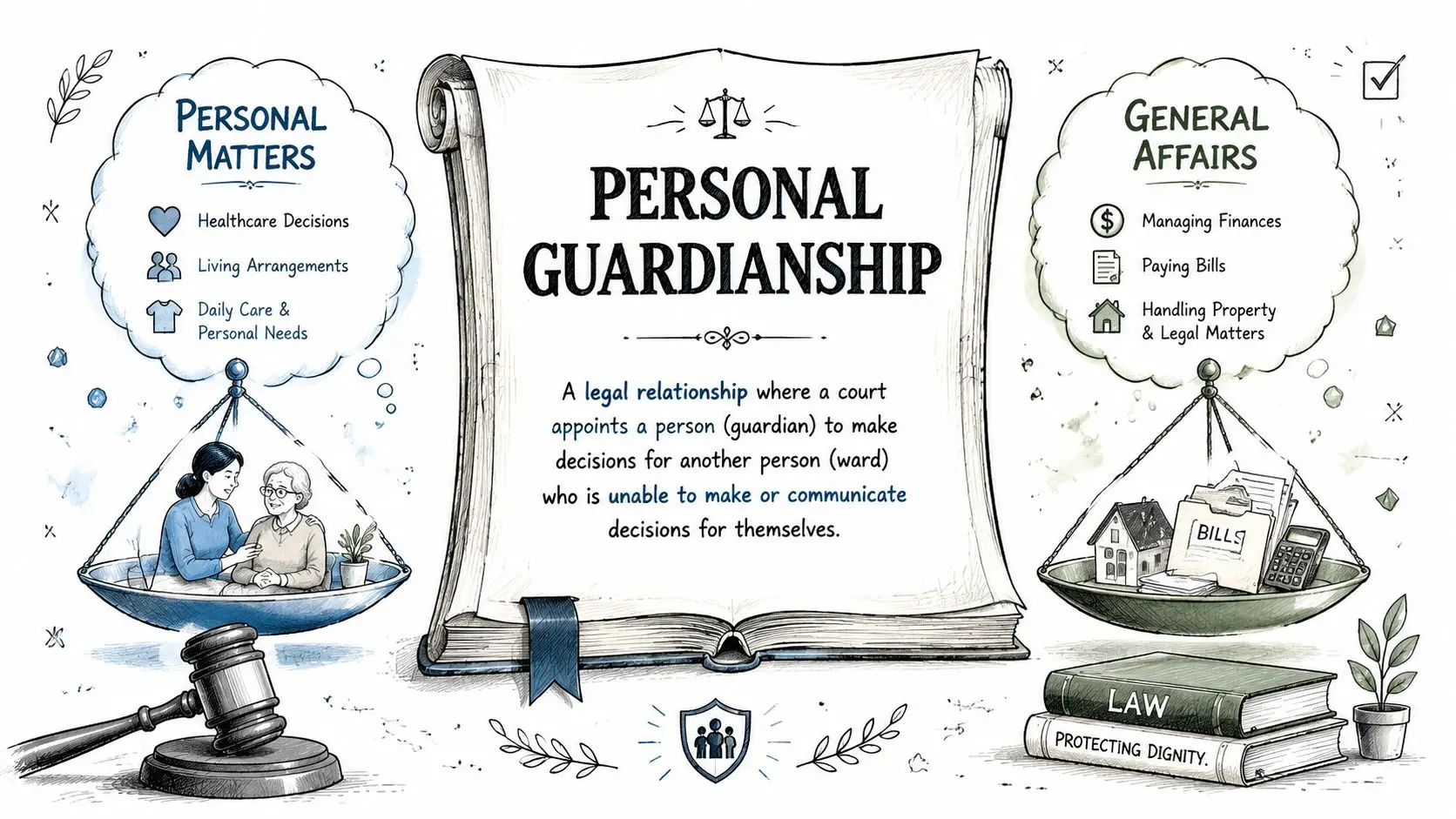
אפוטרופסות לגוף is a court-appointed mandate over a person’s personal, medical, and daily welfare decisions. It is not a general takeover of the individual’s life, and it is not a substitute for corporate authority structures.
What the Israeli court actually appoints
Under Israeli law, a court appoints a guardian for personal matters when professional medical or social evidence confirms that the individual cannot permanently or temporarily manage personal affairs because of mental illness, dementia, intellectual disability, or physical or psychological conditions preventing consent. The legal basis appears in the Capacity and Guardianship Act of 1962.
The mandate is limited to non-pecuniary decisions. It covers personal care, housing, nutrition, hygiene, medical consent, and the exercise of fundamental personal rights. The court also keeps oversight, and the appointment may be limited by scope or duration rather than granted permanently. The Israeli Ministry of Health guidance on guardianship reflects that structure.
What it does not cover
Foreign clients often make a wrong assumption; a guardian for personal matters does not automatically control bank accounts, investments, debts, or corporate equity. Israeli law distinguishes clearly between personal guardianship and property guardianship.
That distinction matters in crisis mapping. A company may face two separate tracks at once:
- Medical and welfare authority: someone must lawfully consent to treatment and residence decisions.
- Property and financial authority: a different guardian may be needed for assets.
- Corporate authority: board resolutions, shareholder documents, and delegated signatory rules remain separate again.
A useful comparative primer for non-Israeli readers is this overview of Texas guardianship and power of attorney. The jurisdictions differ, but the comparison helps foreign legal teams understand why guardianship and private authorization instruments should never be treated as the same thing.
A company can lawfully replace an executive’s signing authority internally and still have no lawful person authorized to make that executive’s medical decisions in Israel.
The key threshold many companies overlook
Israeli law only uses this form of guardianship if the person has not previously executed a durable power of attorney for health matters. That single point changes the corporate risk analysis. If the executive already created the right Israeli instrument while still capable, the crisis may stay private and structured. If not, the issue shifts into court.
The Corporate Impact of Personal Incapacity
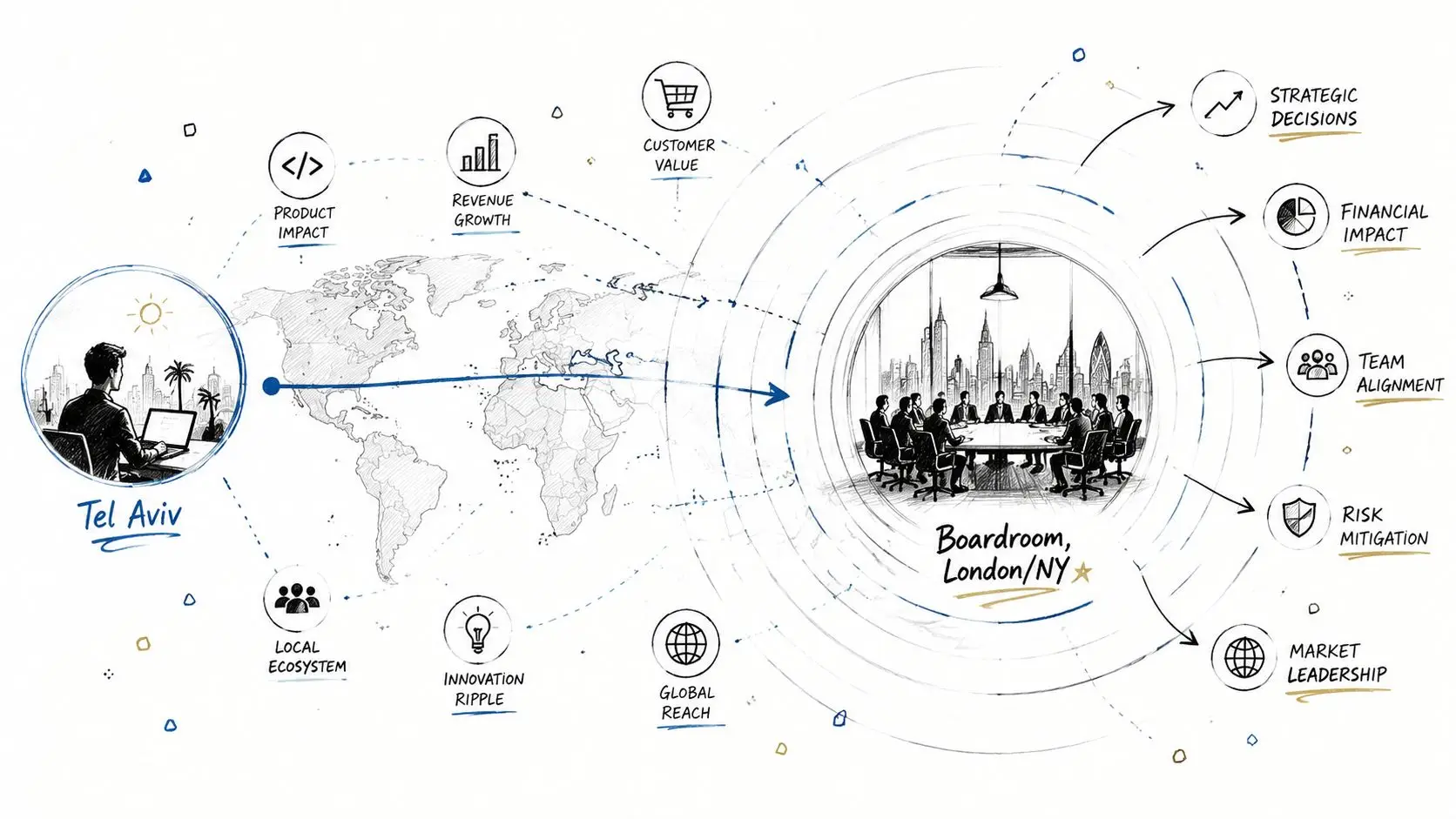
The business effect of personal incapacity rarely appears in family law guides, yet boards feel it fast. A hospital admission can become an enterprise risk event if the affected individual holds strategic knowledge, regulatory relationships, or operational control in Israel.
Where the damage starts
The first pressure point is decision latency. The executive may be the only person who understands a regulator’s pending demand, a customer concession, a clinical trial handoff, or a manufacturing deviation. If incapacity hits before authority is replicated, internal teams often hesitate to act because they fear overstepping.
The second pressure point is confidentiality. Family members, hospitals, insurers, and local managers start exchanging sensitive information. Without a disciplined legal structure, the company risks disclosing protected business information while trying to coordinate personal care around the executive.
Common corporate exposure points
A personal guardianship event can affect multiple legal and business channels at once:
- Governance disruption: board committees may need emergency delegations for matters the Israeli executive usually controls.
- Contract execution gaps: counterparties may question authority if a key signatory disappears suddenly.
- Regulatory friction: licensed sectors often depend on named function holders or responsible officers.
- Data protection issues: staff may disclose more than necessary when speaking with relatives or care providers.
- Disputes inside the family: competing relatives can pull the company into affidavits, document requests, and witness coordination.
These aren’t abstract concerns. They become sharper when the incapacitated person is central to a deal, an investigation, or a public-facing crisis. In that setting, personal incapacity can trigger parallel legal risk in labor law, privacy, shareholder disputes, and communications strategy.
The issue boards underestimate
Many companies assume key person insurance solves the core problem. It doesn’t. Insurance addresses economic loss. It doesn’t appoint a lawful medical decision-maker, align Israeli court procedure with foreign family expectations, or manage competing requests from relatives, hospitals, and internal stakeholders.
For multinationals, the smarter approach treats personal incapacity as part of crisis architecture. That means identifying critical personnel, mapping dependency on individual judgment, and deciding in advance who handles family coordination, local counsel, privilege, regulatory notices, and continuity of authority. When companies skip that work, the first week becomes improvisation under pressure.
The Court Appointment Process A Strategic Overview
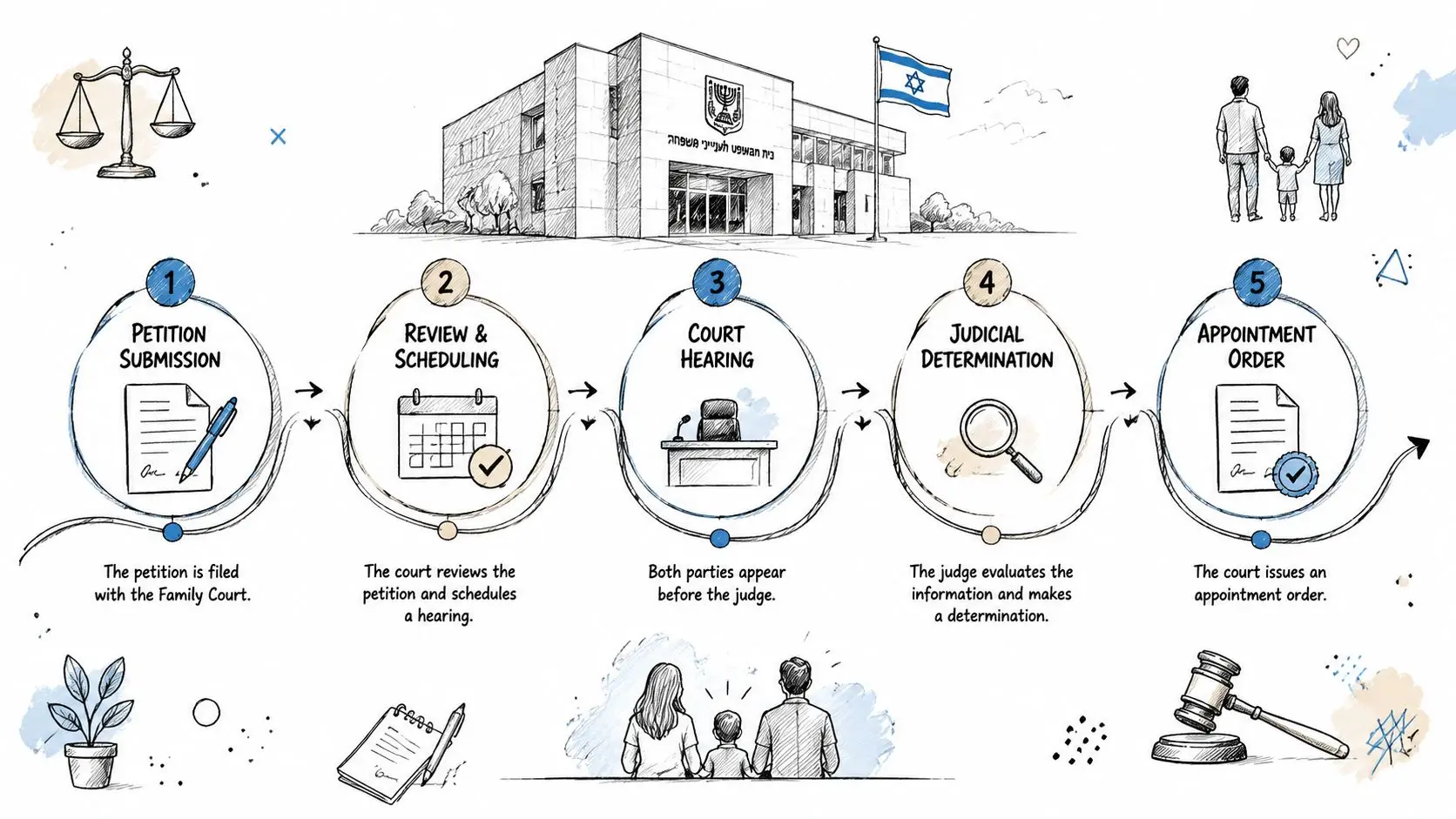
A petition for אפוטרופסות לגוף is a formal Family Court proceeding. It isn’t a hospital form and it isn’t an internal company authorization. Foreign management should treat it as a legal sequence with evidentiary thresholds, timing pressure, and reputation consequences.
The documents that drive the case
The appointment process requires submitting a written request, a sworn affidavit validated by a lawyer, a medical or social expert report, and a social welfare officer’s investigation report. The court appoints a guardian only if it decides that the individual lacks capacity to care for themselves.
That requirement matters operationally. Corporate counsel can’t replace the evidence with internal memoranda or employment records. At most, the company can help organize facts, identify family contacts, preserve decision logs, and support urgent local representation.
For broader context on managing legally sensitive events under time pressure, the framework used in high-stakes crisis management is often the right comparator.
What the court needs, and what slows it down
The strongest petitions answer four practical questions cleanly.
| Court concern | What usually works | What usually fails |
|---|---|---|
| Capacity | Recent medical evidence tied to the actual inability to decide | General statements that the person is “unwell” |
| Necessity | A clear explanation of why an appointment is needed now | Family disagreement without a decision need |
| Scope | A limited request focused on personal matters | An overbroad request that mixes property issues |
| Candidate suitability | A realistic guardian with availability and credibility | A nominee chosen only because of family status |
A badly framed petition often collapses into avoidable delay. Families may fight over who should serve. Hospitals may need immediate answers. Employers may try to facilitate without understanding the line between useful coordination and improper influence.
When a key executive is involved, the company should support process integrity, not attempt to control the personal guardianship outcome.
The role of the employer
Employers do have a legitimate role, but it must stay disciplined. The company may need to confirm employment status, explain the urgency of communication channels, identify travel and insurance contacts, and secure personal effects or devices under existing policy. It may also need to separate business continuity decisions from medical decisions with documented precision.
A practical internal response often includes:
- Appoint one legal coordinator for all inbound external requests.
- Freeze informal information sharing outside approved channels.
- Document all contacts with relatives, hospitals, and local authorities.
- Review signatory delegations immediately for Israeli operations.
- Escalate cross-border issues early if the person is a foreign national.
That combination reduces two common failures. First, management says too much to the wrong people. Second, management says too little to the right court participants.
Authority and Limits of a Personal Guardian
A personal guardian’s authority is significant, but it is not open-ended. Corporate stakeholders need that distinction because the wrong assumption can produce invalid instructions, privacy breaches, or unnecessary disputes with relatives and care providers.
What a guardian may decide
A guardian for personal matters may decide on residence placement, medical treatment consent, emergency health decisions, nutrition, clothing, and social welfare. That authority is distinct from the guardian for assets, who handles bank accounts, investments, and debts.
The practical consequence is simple. If a care facility asks where the individual should live, the personal guardian may answer. If a bank asks to move funds, the personal guardian usually isn’t the right decision-maker for that issue.
Where the boundary becomes operationally difficult
The hardest cases are not the obvious ones. They arise when personal decisions and business realities overlap. Consider an executive who needs long-term residential placement, while also holding sensitive devices, access credentials, and confidential files in the home. The guardian may decide where the executive lives. The company still needs a lawful and carefully documented path to recover business property.
A second difficulty arises in treatment decisions. Guardians may consent for non-emergency medical treatment when the patient cannot provide informed consent. However, in life-threatening emergencies, Israeli Patient Rights Law permits treatment without consent if three physicians approve it, which can override the need for guardian authorization in the crisis context, as summarized by Kol Zchut on appointment of a guardian for body matters.
The guardian matters enormously. The guardian still doesn’t replace emergency medical authority where Israeli law gives physicians immediate power.
What corporations should not do
Employers shouldn’t treat the personal guardian as a universal substitute for the employee. That mistake tends to create secondary disputes. The safer rule is issue-by-issue mapping.
- Personal care question: ask whether the guardian has authority.
- Asset or debt question: verify whether a property guardian exists.
- Employment or board role question: check corporate documents, labor rules, and resolutions.
- Emergency treatment issue: confirm whether medical staff may act under statutory emergency powers.
That discipline protects the incapacitated person and the company. It also reduces the chance that a later court will view the employer as having blurred personal welfare with financial or corporate interests.
Strategic Alternatives for Risk Mitigation
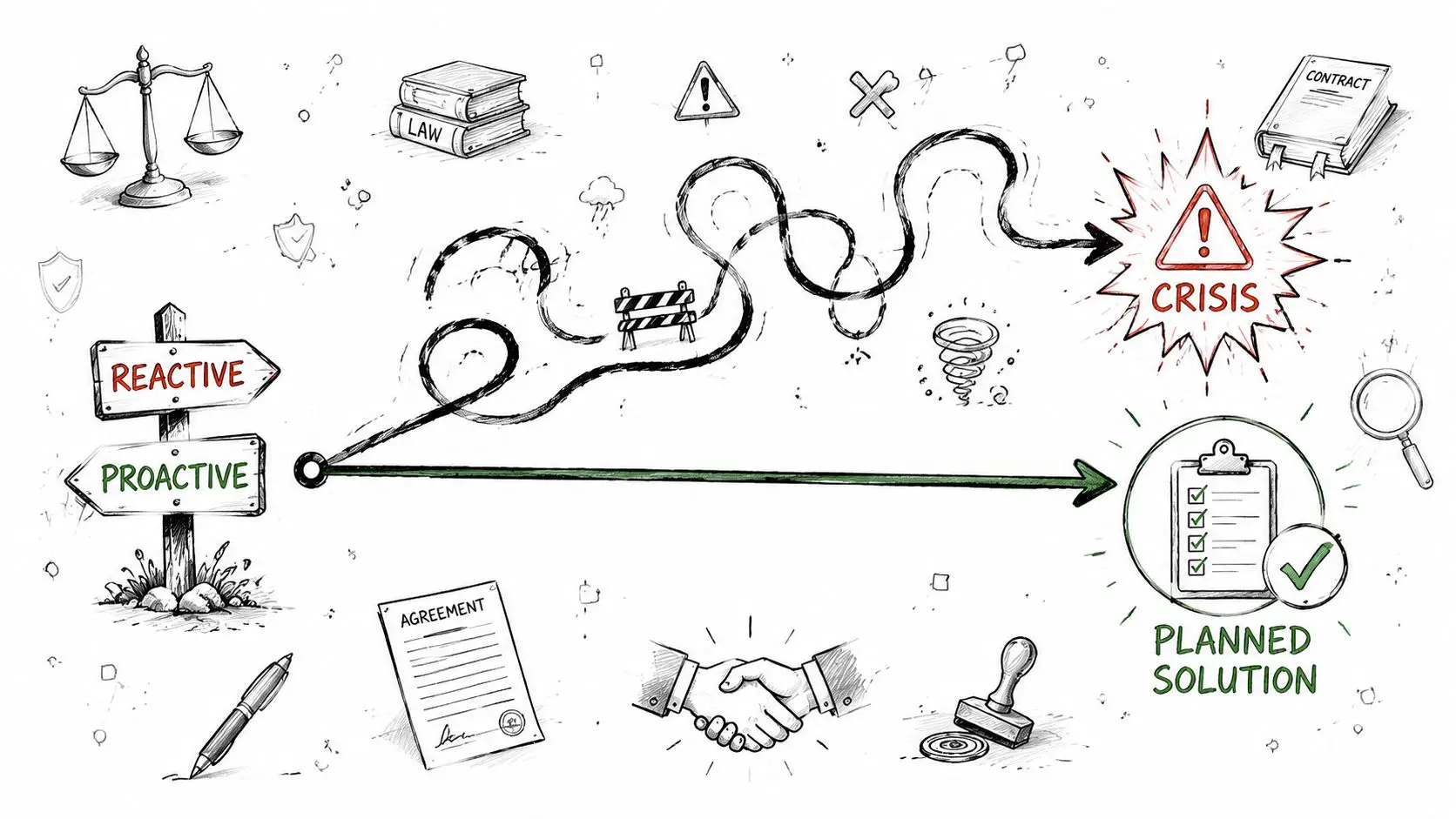
The court route is reactive. Strategic risk control starts earlier, while the executive still has capacity and while the company still has time to align legal, HR, and family expectations.
The instrument that changes the outcome
In Israel’s legal framework, personal guardianship is used only if the individual has not previously executed a durable power of attorney for health matters. That makes the durable power of attorney the most important preventive tool in this area.
For multinational employers, the governance implication is clear. If a business relies on a small number of people in Israel, it should assess whether those individuals have valid personal planning instruments under Israeli law. This is not a corporate demand for private disclosure. It’s a resilience question that belongs in executive risk governance.
What effective planning looks like
The strongest preventive approach has several moving parts:
- Durable power of attorney: this should be valid under Israeli law and specifically designed for health and personal welfare needs.
- Authority mapping: companies should know which business powers can shift internally without waiting for a personal crisis.
- Family coordination protocol: designate who communicates with relatives and what can be disclosed.
- Document location planning: if key records exist, someone must know how they can be retrieved lawfully.
- Cross-border alignment: expatriates should avoid relying on foreign documents that may not function smoothly in Israel.
Companies often understand insurance more readily than incapacity planning. For that reason, some legal teams explain the issue by analogy to broader planning concepts such as financial protection while you’re still living. The analogy isn’t legal advice, but it helps directors understand why waiting for a crisis is the expensive option.
What doesn’t work in practice
Several common shortcuts fail.
| Shortcut | Why it fails |
|---|---|
| Relying on foreign family assumptions | Israeli courts still require an Israeli legal process or valid local instrument |
| Assuming the spouse automatically decides | Hospitals and courts still need lawful authority |
| Mixing HR forms with health mandates | Employment paperwork usually doesn’t replace personal legal authority |
| Waiting for an emergency | Urgency compresses judgment and increases conflict |
For operational resilience, companies should treat incapacity planning like any other high-value legal dependency. The right time to solve it is before anyone needs an ICU decision, an urgent court filing, or a cross-border consent chain.
Navigating Cross-Border Guardianship Challenges
Cross-border cases add friction fast. The executive may be a foreign national, the closest relatives may live elsewhere, and the company may need simultaneous advice in Israel, the home country, and the place where group decisions are made.
The conflicts that appear first
Jurisdiction is rarely the only issue. Recognition is often harder. A foreign family may hold powers or court documents from another country and assume Israel will treat them as immediately operative. That assumption can be dangerous.
The company must also manage privilege, confidentiality, and translation risk. Medical records, affidavits, and identity documents often move across borders quickly. If the process lacks central legal control, inconsistency enters the record and future disputes become more likely.
The disciplined cross-border response
The recommended path is coordinated, not improvised. It usually includes:
- Local Israeli counsel to assess whether a Family Court application is necessary.
- Foreign counsel to evaluate recognition issues and home-country obligations.
- Consular coordination where nationality, travel, or identity records affect urgent decisions.
- A single factual record so the family, court, employer, and medical providers don’t work from conflicting narratives.
In sensitive matters that overlap with disputes, regulatory exposure, or internal investigations, the legal discipline used in international commercial litigation often becomes relevant even before any formal lawsuit begins. The same is true for adjacent Israeli issues such as internal authority structures, where commercial risk management can prevent secondary damage.
A multinational that handles personal incapacity well protects more than one employee. It protects board credibility, evidentiary consistency, and the company’s freedom to operate during an event that can otherwise spiral into a multi-jurisdictional legal mess.
Avoid costly mistakes by treating אפוטרופסות לגוף as part of enterprise risk, not as an afterthought. For strategic guidance in Israel-facing crises, cross-border governance conflicts, and urgent legal coordination, contact RNC Group through the firm’s contact page.
This article provides general information only. It does not create an attorney-client relationship, and it should not replace legal advice formulated for specific facts, jurisdictions, medical circumstances, or corporate governance documents.
SEO Title: Global Firms Mastering אפוטרופסות לגוף Risk in 2026
Slug: apotropsut-laguf-israel-corporate-risk-2026
Meta Description: Learn how אפוטרופסות לגוף in Israel can create corporate governance and cross-border litigation risk for multinational companies in 2026.
Focus Keyphrase: אפוטרופסות לגוף
Synonyms: personal guardianship in Israel, guardian for personal matters Israel, Israeli guardianship over the person
SEO Notes: Uses the keyphrase in the introduction, headings, and conclusion. Includes actionable guidance, short paragraphs, active voice, and relevant internal and external links.