
Can your project withstand Israel’s demanding 2026 regulatory framework? Success hinges on this critical question. Israel’s digital boom presents a massive opportunity for data center development in Israel, but understanding the legal framework is essential. However, navigating the complex legal framework for zoning and power supply is non-negotiable.
Mastering Data Center Development in Israel: Legal Framework for Zoning and Power

The path to launching a data center is paved with impending 2026 regulations. A deep understanding of the data center development in Israel: legal framework is essential. It is the fundamental requirement for project survival and success.
The opportunity is undeniable. Major government projects drive huge demand for high-capacity digital infrastructure. Consequently, this guarantees a steady flow of contracts for hyperscale providers. This growth, however, comes with significant legal and financial risks.
The High Stakes of Compliance
The regulatory ground is shifting. New laws, fully enforced by 2026, introduce tough obligations. A misstep in zoning, power grid integration, or data sovereignty can have devastating consequences. Therefore, project-killing fines and operational shutdowns are real possibilities.
The recommended strategic path is to treat regulatory compliance as the project’s foundation. Engaging the legal framework from day one effectively de-risks the investment. This is the most effective way to secure your project.
This demands a granular analysis of planning schemes. It also requires a rock-solid strategy for securing reliable power. This proactive approach separates successful data center projects from those that fail.
A Practical Roadmap for Investors
This guide provides an authoritative roadmap through this complex system. The goal is to give investors practical knowledge. They can then capitalize on Israel’s tech boom while avoiding legal traps. The critical areas to master are:
- Zoning and Power Supply: Secure correct land use permits and negotiate dependable power agreements.
- Permitting Processes: Navigate the maze of environmental and construction approvals.
- Data Sovereignty Laws: Comply with new privacy and cybersecurity mandates.
- Government Alignment: Align your project with state initiatives to unlock investment incentives.
By mastering these elements, you build a resilient foundation. Your project will not just survive 2026 regulations but thrive. The following sections provide a detailed breakdown of each critical domain.
Securing Land and Power: Zoning and Supply Regulations
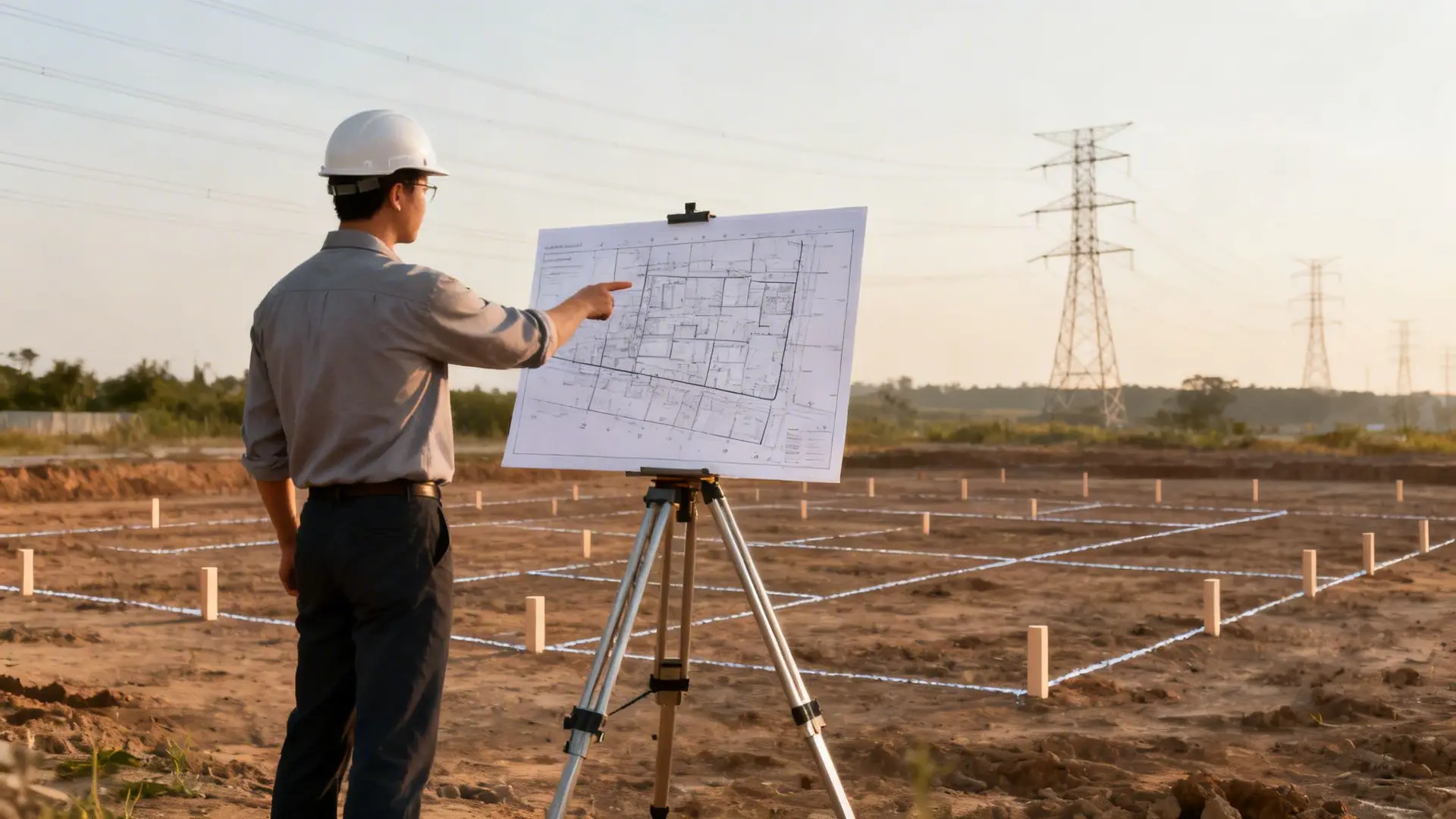
Before construction starts, your data center project’s fate is decided. Can you secure the right land? Can you get enough power? These are the twin pillars of the data center development in Israel: legal framework.
A perfectly zoned plot is worthless without a high-capacity power line. Likewise, a guaranteed power connection is useless without building rights. The only winning strategy tackles both simultaneously.
Navigating Israel’s Complex Zoning Landscape
Building a data center begins with permission from planning committees. These bodies are the gatekeepers. Their approval is the first major hurdle in site selection.
At the top sits the National Outline Plan, TAMA 35. This master plan sets the country’s high-level land-use strategy. Subsequently, local committees translate these directives into specific plot approvals.
The recommended strategic path is to use zoning analysis as a business intelligence tool. Early review of plans reveals where development is encouraged. This significantly streamlines the approval process.
For example, Tel Aviv offers great connectivity but has fierce land competition. This has pushed hyperscalers to emerging secondary zones. Rosh HaAyin and Kfar Yona allow massive 20–40 megawatt facilities.
This dynamic fuels a booming market. Israel’s data center sector was valued at USD 632.33 million in 2023. Projections show a surge at a CAGR of 8.79%, hitting USD 963.99 million by 2031. For more details, explore more detailed market analysis on Israel’s data center expansion and regional investment trends.
Choosing between primary and secondary zones involves a strategic trade-off. The following matrix breaks down the key decision factors.
Data Center Site Selection Matrix for Primary and Secondary Zones
| Factor | Tel Aviv (Primary Zone) | Rosh HaAyin / Kfar Yona (Secondary Zone) |
|---|---|---|
| Land Availability & Cost | Extremely limited and very high cost. | More available land at lower costs. |
| Connectivity & Latency | Superior fiber connectivity and lowest latency. | Excellent connectivity, with slightly higher latency to central hubs. |
| Zoning & Permitting | Complex and lengthy approval process due to density. | More streamlined process, with municipalities eager for investment. |
| Power Infrastructure | Dense, but grid upgrades are often required and difficult. | Grid requires significant new infrastructure, but planning is easier. |
| Scalability Potential | Very limited; scaling is a major challenge. | High potential for large-scale, multi-phase campus builds. |
Ultimately, the right choice depends on your project’s goals. Scale, budget, and speed-to-market are key considerations.
Securing a Stable Power Supply
Once you find a site, the next battle is securing power. Data centers are incredibly thirsty for electricity. A stable, scalable power source is therefore non-negotiable.
In Israel, this means working directly with the Israel Electric Corporation (IEC). The IEC is the national utility. Getting a commitment for tens of megawatts is a long process.
The recommended strategic path for risk mitigation is:
- Initiate Early Engagement: Start talking to the IEC while scouting sites.
- Conduct Independent Feasibility Studies: Commission third-party assessments to validate findings.
- Explore On-Site Generation: Look into backup generators and renewable energy sources.
The recommended strategic path involves securing a Power Purchase Agreement (PPA) for large-scale data facilities. These complex contracts lock in electricity supply and pricing. A well-negotiated PPA provides a powerful competitive edge.
Securing Environmental and Construction Permits
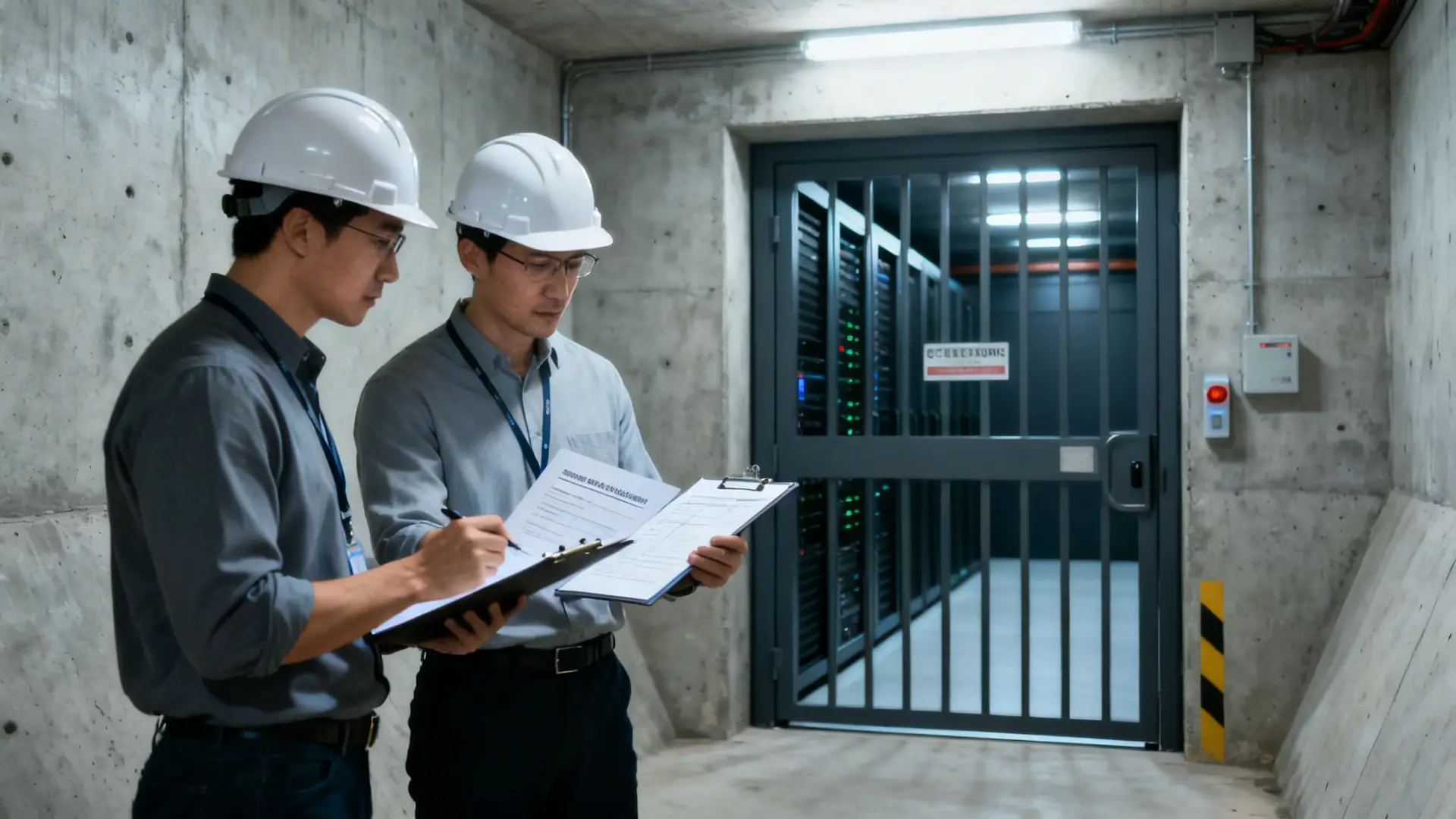
After securing land and power, your project enters a permitting maze. Navigating this phase of the data center development in Israel: legal framework requires proactive engagement. You must address specific local concerns from day one.
Developers face a multi-layered approval process. National and municipal bodies are both involved. Consequently, every aspect of your design will be scrutinized.
The Role of Environmental Regulations
The Ministry of Environmental Protection is a key gatekeeper. This agency enforces strict rules to manage industrial footprints. Your plans must prove full compliance.
For data centers, regulators focus on two areas. These are noise levels and backup generator emissions. You will need to present detailed mitigation strategies for both.
Thinking about sustainability is a strategic advantage. Understanding different methods for reducing the environmental impact of data centers is crucial. It helps secure permits and future-proofs your investment.
The recommended strategic path involves integrating solutions into the initial design. Noise abatement and clean energy must be planned early. This avoids costly retrofitting later in the process.
This forward-thinking approach signals responsibility to regulators. It also positions your facility to meet future environmental standards. This can accelerate your timeline and strengthen public standing.
Unique Construction Methods for Enhanced Security
Israel’s geopolitical environment has created specialized construction methods. Physical security is a core design requirement. It is not just an add-on.
A prime example is Oracle’s nine-floor underground data center. It is more a secure bunker than a building. This offers a level of physical protection beyond standard construction.
These methods mean a higher upfront investment. However, they also create a powerful market differentiator. Clients in sensitive industries seek this level of security.
Actionable Steps for Permit Approval
The following objective guide lists what you must do for risk mitigation. Treat permitting as a continuous, integrated part of the lifecycle. These steps are essential for effective navigation.
1. Conduct a Comprehensive Environmental Impact Assessment (EIA)
Commission a thorough EIA before submitting plans. This study must quantify potential impacts. It also must propose specific, technically sound mitigation measures.
2. Engage Regulators Early and Collaboratively
Open a dialogue early with environmental and planning authorities. This allows you to understand their concerns. You can then incorporate feedback directly.
3. Develop a Detailed Noise Abatement Plan
Your plan must tackle noise from all sources. Proposed solutions might include acoustic barriers or low-noise equipment. A robust plan is non-negotiable.
4. Plan for Emission Controls
Backup diesel generators are a necessity. Your application should detail the use of modern, low-emission generators. Also, outline strict testing and maintenance schedules.
Understanding Data Sovereignty and Cybersecurity Laws

Will your data infrastructure withstand future legal shifts? This is a core question for any data center development in Israel: legal framework. You must master Israel’s tough data sovereignty and cybersecurity laws. These rules blueprint how data is stored and shielded.
This legal landscape is not set in stone. It is constantly updated to counter modern threats. For operators, compliance must be baked into your infrastructure. This builds trust and attracts blue-chip clients.
The New Era of Data Protection: Amendment 13
A major legislative overhaul is coming. Amendment No. 13 to the Protection of Privacy Law marks a new chapter. It transforms compliance into a core business mandate.
For data center operators, the impact is massive. The law compels organizations to actively demonstrate their security measures. Therefore, your facilities must meet these higher standards from day one.
The recommended strategic path is to view Amendment 13 as a market opportunity. Facilities built to exceed these new standards will become the go-to choice. They will attract enterprises that cannot afford compliance missteps.
This new reality creates a compliance-driven market. Prospective clients will scrutinize your adherence to these rules. A data center’s ability to prove its security will be its main selling point.
Mandatory Risk Assessments and Stiff Penalties
The amendment brings several non-negotiable requirements. As of August 14, 2025, it introduces administrative fines. These can reach up to 5% of a company’s annual turnover.
Organizations managing large, sensitive databases must perform formal risk assessments. Penetration tests are also required at least every 18 months. You can discover more about Israel’s updated privacy law requirements.
These obligations create a clear risk management road map. Data centers must build these testing cycles into their procedures. This is the only way to stay compliant and safeguard client data.
Aligning with International Data Transfer Standards
Israel’s data protection laws align with global standards. This is particularly true for those of the European Economic Area (EEA). This alignment is the linchpin for cross-border data flows.
The EEA has a strict regime for transferring personal data. To receive this data, a country must prove “adequate” protection. Israel’s official adequacy status is a massive economic advantage.
To keep this status, Israel must ensure its laws stay on par with GDPR. For data center developers, this delivers two powerful benefits:
- Access to European Markets: It gives a green light to serve EU-based clients.
- A Gold Standard for Security: It signals your facility operates under a respected legal framework.
Complying with Israeli law is your passport to international business. It establishes your data center as a secure node. This positions you within the global data economy.
Actionable Steps for Cybersecurity Compliance
Navigating this legal environment demands a clear, proactive game plan. The following objective guide lists what you must do for risk mitigation. This minimizes risk and ensures compliance.
- Integrate Compliance into Design: Build security controls directly into the facility’s architecture.
- Establish a Formal Testing Cadence: Create a firm schedule for risk assessments and penetration tests.
- Appoint a Data Protection Officer (DPO): Designate a qualified DPO to oversee compliance.
- Maintain Detailed Records: Keep meticulous records of all security measures and assessments.
- Train Staff Continuously: Roll out ongoing training programs for all team members.
This guide helps ensure your data center development in Israel: legal framework strategy is sound. It transforms regulatory burdens into a competitive edge. It builds a foundation of trust.
Aligning with Government Initiatives for Investment Success
How can you guarantee your data center’s long-term success in Israel? The answer lies in actively aligning your project with key government initiatives. This transforms regulatory hurdles into a clear roadmap for securing sustained demand.
These national programs are creating the market itself. By understanding this landscape, developers can build facilities for a guaranteed client pipeline. This is a foundational strategy for thriving in Israel’s digital economy.
Tapping into Strategic Government Projects
The Israeli government is a huge potential customer. Large-scale national projects are underway to modernize public services. For a developer, these programs represent powerful anchor tenants.
Two initiatives in particular are massive demand drivers:
- Project Nimbus: This is Israel’s flagship sovereign cloud project. It mandates that government entities migrate their IT infrastructure to the cloud.
- Digital Shekel Sandbox: The Bank of Israel is exploring a central bank digital currency (CBDC). This project requires an infrastructure with ultra-low latency and exceptional security.
The recommended strategic path is to align with these national projects as a core risk mitigation strategy. Securing a government-backed anchor tenant provides a stable revenue foundation. This makes the entire investment more attractive.
This alignment also serves as a powerful market signal. It proves your facility meets the highest standards. It makes you an easy choice for other enterprise clients.
How Regulations Fuel Infrastructure Demand
Many regulations are strategically designed to create a compliance-driven market. This is a key part of the data center development in Israel: legal framework. Businesses are increasingly required by law to invest in local data processing.
Project Nimbus creates long-term public sector workloads for hyperscalers. At the same time, trial frameworks for autonomous vehicles (AVs) institutionalize strict data protection standards. To learn more, read more about nascent AI regulatory frameworks in Israel.
An Actionable Strategic Path
The most effective strategy is a proactive one. This requires deliberately designing and positioning your facility. The following objective guide lists what you must do for risk mitigation.
1. Design for Sovereign Compliance: Build your facility to exceed the specific security requirements. This includes physical security and data encryption standards.
2. Target Emerging Tech Sectors: Actively market your low-latency and high-security capabilities. Focus on companies in fintech, autonomous systems, and AI.
3. Demonstrate Regulatory Expertise: Position your team as masters of the evolving legal framework. This builds trust and shows clients you can help them navigate compliance.
By following this path, you turn government initiatives into a commercial asset. This ensures long-term success in Israel’s dynamic market.
An Actionable Checklist for Risk Mitigation
Will your data center project launch by 2026? Or will it fail due to unforeseen roadblocks? This question demands a clear, actionable plan for navigating Israel’s complex environment.
The entire data center development in Israel: legal framework can be a manageable process. Success comes down to methodically de-risking every stage. This checklist is an objective guide for international developers.
The first step is conducting deep feasibility studies. You must analyze zoning and power availability in parallel. This means verifying land use plans and opening a formal inquiry with the Israel Electric Corporation (IEC).
Comprehensive Due Diligence Actions
Bringing in specialized legal and technical experts from day one is essential. A legal team with deep experience is crucial. They can steer your project through the multi-layered permitting process.
Their expertise is also vital for structuring your commercial agreements. A smooth company registration process is another benefit. A thorough arc flash hazard analysis is also a vital but often overlooked step.
The recommended strategic path for risk mitigation is as follows:
- Conduct In-Depth Site Feasibility: You need geological surveys and connectivity studies.
- Secure Preliminary Power Commitments: You must have a formal letter of intent from the IEC.
- Develop a Robust Compliance Strategy: Your plan for Amendment 13 must be concrete.
- Structure Resilient Commercial Agreements: Every contract must be professionally reviewed to mitigate commercial litigation risks.
Building a Resilient Compliance Framework
Finally, long-term success hinges on a proactive compliance framework. Think of this as a continuous operational discipline. You must implement a system for ongoing risk assessments.
The recommended strategic path is to view compliance as a market differentiator. A facility that can prove it is secure becomes the obvious choice. This is especially true for high-value clients.
This detailed preparation does more than just minimize risk. It builds a solid foundation for managing other operational issues. By following this objective guide, developers can move with confidence.
Answering Your Key Questions on Israeli Data Center Development
Will your project meet Israel’s demanding 2026 regulations? This question keeps investors up at night. Navigating the data center development in Israel: legal framework is complex.
We have seen where even seasoned developers stumble. This section cuts through the noise. It gives direct, experience-based answers to critical questions.
What Is The Biggest Early-Stage Mistake In Site Selection?
The single costliest mistake is evaluating land and power separately. Developers find a zoned plot. They later discover the Israel Electric Corporation (IEC) cannot service it.
The only sound strategy is to conduct these two feasibility studies simultaneously. Think of it as a two-key system. You need both zoning approval and a viable power connection.
How Does Physical Security Affect The Permitting Process?
In Israel, physical security is a foundational design requirement. It is woven into the entire permitting process. Authorities expect defense-grade physical hardening.
This goes far beyond standard construction. It can mean heavily reinforced structures or underground facilities. Oracle’s nine-floor subterranean data center is a prime example.
Are There Alternatives To The Public Power Grid?
Total reliance on the public grid is a strategic vulnerability. The smart approach is a diversified energy portfolio. The recommended strategic path for large-scale facilities is to secure Power Purchase Agreements (PPAs).
On-site power generation is also essential. This includes backup diesel generators. Integrating renewable sources also strengthens your environmental permit applications.
Can Foreign Companies Own And Operate Data Centers In Israel?
Absolutely. Foreign companies can fully own and operate data centers in Israel. The legal framework is explicitly open to international investment.
However, a foreign entity must navigate the exact same regulatory maze. This includes company registration and tax compliance. It also means full compliance with all data protection laws.
Strategic analysis is needed to guide firms through Israel’s complex environment. The recommended strategic path is to de-risk your investment and ensure full compliance from site selection to launch. For a detailed consultation, professional reference points can be found by exploring expert services.
Disclaimer: The information provided in this document, including all templates, forms, and strategic analyses, is intended for informational and educational purposes only and does not constitute legal, financial, or professional advice, nor does its use establish an attorney-client relationship or any other binding contractual connection. While every effort is made to ensure the accuracy of the data, laws and regulations are subject to frequent changes; therefore, sole responsibility for any action taken based on this content rests with the user, and it is strongly recommended to consult with a qualified professional before making significant business or legal decisions.