

Data center development in Israel requires a project-specific review of planning rights, electricity connection, environmental conditions, privacy and security. There is no single blanket set of new 2026 rules that approves or prohibits every project. The applicable duties depend on the site, capacity, activities, information processed and customers served.
Mastering Data Center Development in Israel: Legal Framework for Zoning and Power

Planning and electricity requirements must be checked together. Government initiatives and proposed regulatory changes should be distinguished from enacted law, approved plans and binding connection commitments.
Government cloud procurement can create opportunities, but it does not guarantee contracts or occupancy for a particular developer. Tender eligibility, selected suppliers, customer requirements and commercial agreements must be examined separately.
The High Stakes of Compliance
A planning refusal, unavailable grid capacity or breach of an applicable privacy or permit requirement can delay or restrict a project. Enforcement powers and potential penalties depend on the particular legal provision; they should not be presented as an unspecified new 2026 regime.
Early legal and technical review can identify risks before land and construction commitments are made. It cannot eliminate approval, connection or commercial risk.
This demands a granular analysis of planning schemes. It also requires a rock-solid strategy for securing reliable power. This proactive approach separates successful data center projects from those that fail.
A Practical Roadmap for Investors
This guide identifies issues for project-specific review. It is not an approval checklist that guarantees compliance or a connection allocation. The areas to assess include:
- Zoning and Power Supply: Secure correct land use permits and negotiate dependable power agreements.
- Permitting Processes: Navigate the maze of environmental and construction approvals.
- Data Sovereignty Laws: Identify applicable privacy, transfer, security and customer-specific hosting requirements; local hosting is not a universal legal duty.
- Government Alignment: Check the actual eligibility and conditions of any procurement or incentive program rather than assuming alignment creates entitlement.
These workstreams should produce an evidence-based investment decision. No roadmap by itself guarantees that a project will obtain permits or meet a proposed delivery date.
Securing Land and Power: Zoning and Supply Regulations
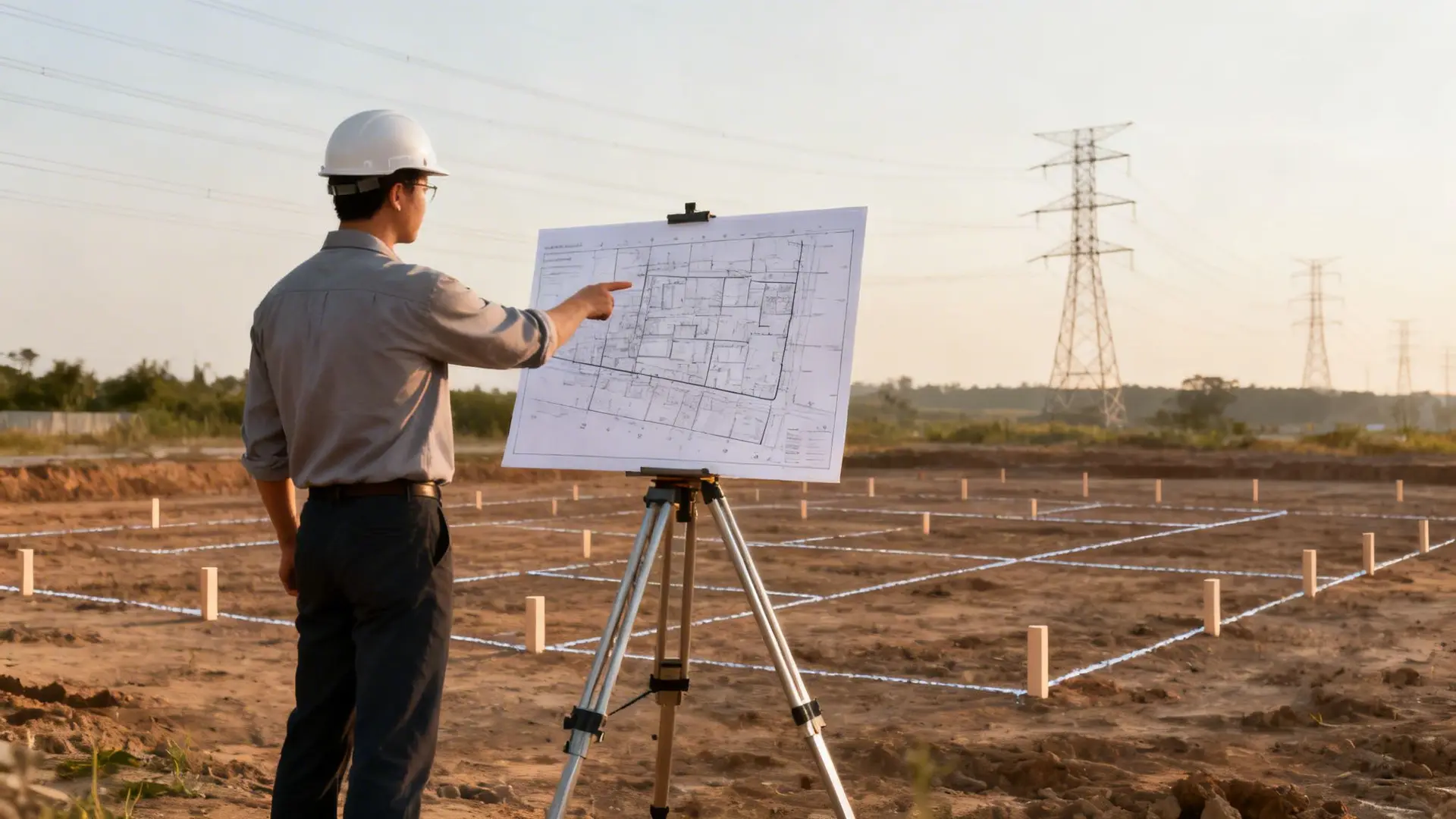
Before construction starts, your data center project’s fate is decided. Can you secure the right land? Can you get enough power? These are the twin pillars of the data center development in Israel: legal framework.
A permitted site may still lack an available electricity connection, while a power proposal does not establish building rights. Review both before committing, and distinguish preliminary feasibility from a binding approval.
Navigating Israel’s Complex Zoning Landscape
Identify the competent planning authority and the plans and permissions that apply to the parcel and proposed use. The required route may involve more than a local committee, and an existing industrial designation should not be assumed to authorize the proposed facility.
TAMA 35 is part of Israel’s national planning framework, not a plot-specific data center permit. Review the applicable national, district and detailed plans, building rights and permit conditions together. The government announced a move in February 2026 to accelerate data center infrastructure planning, but that announcement does not itself replace the operative law, applicable planning route or project approvals.
Early review can reveal planning restrictions, dependencies and the need for a new or amended plan. It does not establish that an approval will be faster or that an authority supports the project.
Compare individual sites in Tel Aviv, Rosh HaAyin, Kfar Yona and other locations on verified planning, connectivity and electricity evidence. A municipality’s name does not establish permission for a 20-40 MW facility or guarantee available capacity.
Market forecasts are not evidence of site feasibility or guaranteed demand. The linked resource invites readers to explore more detailed market analysis on Israel’s data center expansion and regional investment trends; its figures and availability should be checked against an identifiable current underlying source before investment use.
The following matrix lists questions to investigate, rather than verified conclusions about land prices, latency, permitting speed or grid capacity in each location.
Data Center Site Selection Matrix for Primary and Secondary Zones
| Factor | Tel Aviv (Primary Zone) | Rosh HaAyin / Kfar Yona (Secondary Zone) |
|---|---|---|
| Land Availability & Cost | Verify the specific parcel’s availability, rights, price and transaction costs. | Verify availability and total site costs; do not assume a lower price outside Tel Aviv. |
| Connectivity & Latency | Test carrier diversity, routes and latency for the proposed customers. | Test actual connections and latency; distance alone does not establish service quality. |
| Zoning & Permitting | Check the applicable plans, permitted use, authority and required approvals. | Apply the same checks; no faster approval route follows from the municipality alone. |
| Power Infrastructure | Obtain project-specific network feasibility, capacity and upgrade information. | Verify connection route, constraints and upgrade dependencies; do not assume easier delivery. |
| Scalability Potential | Check building rights, adjacent rights, cooling and future power requirements. | Verify that land, permits and connection capacity support each expansion phase. |
Ultimately, the right choice depends on your project’s goals. Scale, budget, and speed-to-market are key considerations.
Securing a Stable Power Supply
Once you find a site, the next battle is securing power. Data centers are incredibly thirsty for electricity. A stable, scalable power source is therefore non-negotiable.
Electricity connection and electricity supply are separate workstreams. Depending on connection level and the applicable process, the review may involve the system operator Noga, IEC or the relevant distributor and a licensed supplier. A supply agreement alone does not reserve network capacity. In 2026, the Electricity Authority suspended specified data center connection processes and published an October proposal for dedicated connection rules. Treat the proposal as a proposal, and verify the operative suspension, exceptions, final decisions and status of the particular application before relying on a connection timetable.
The recommended strategic path for risk mitigation is:
- Initiate Early Engagement: Identify the system operator or distributor responsible for the proposed connection and check the current application route while reviewing sites.
- Conduct Independent Feasibility Studies: Commission third-party assessments to validate findings.
- Explore On-Site Generation: Assess backup, generation and storage with engineers, including the permits, connection and operating conditions that apply.
A PPA or other supply agreement can allocate price, volume and delivery risks where available. It does not itself secure a grid connection, planning permission or uninterrupted supply; review connection commitments and contingency arrangements separately.
Securing Environmental and Construction Permits
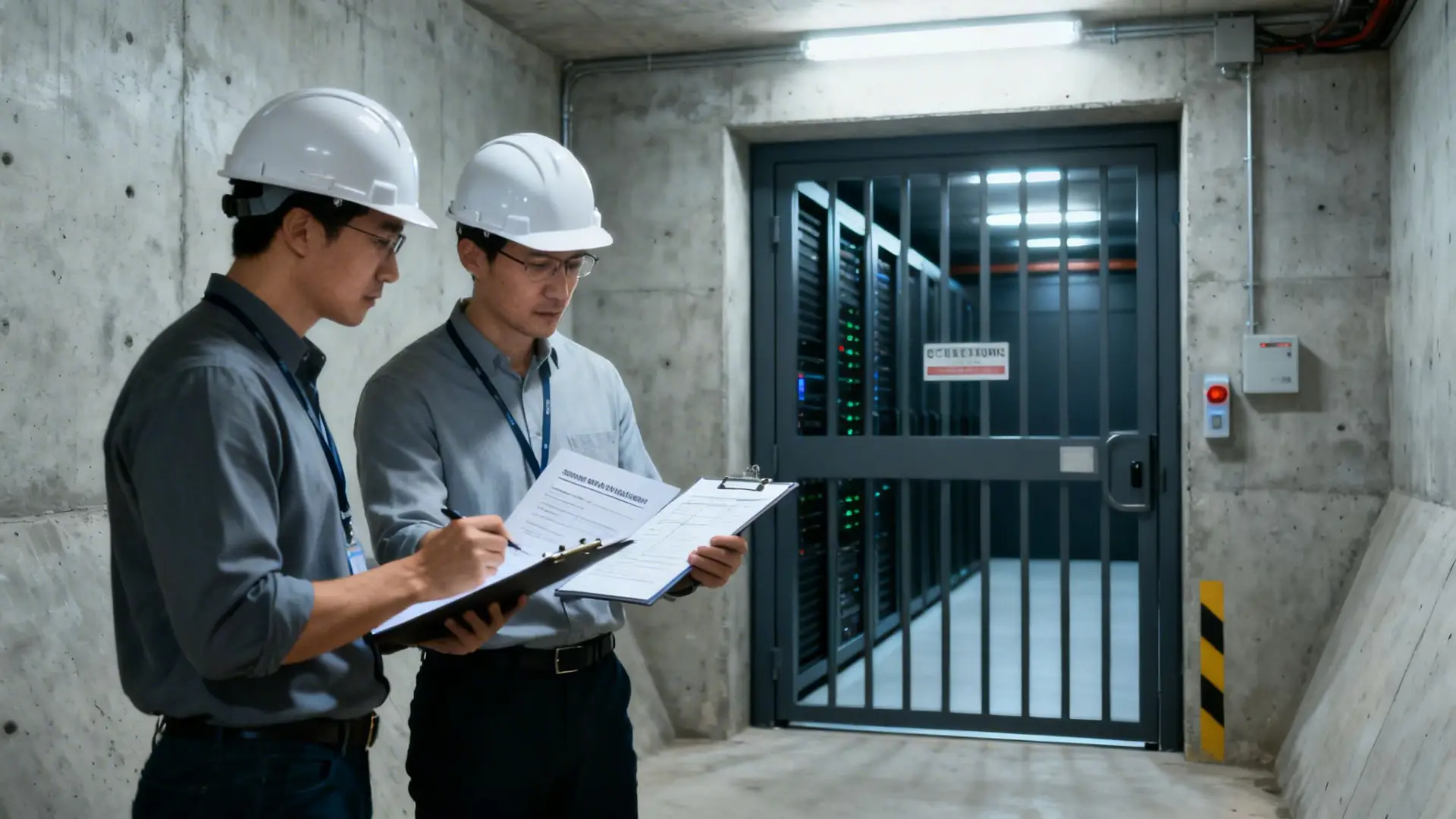
After securing land and power, your project enters a permitting maze. Navigating this phase of the data center development in Israel: legal framework requires proactive engagement. You must address specific local concerns from day one.
The required approvals depend on the site, design and activities. Identify the responsible planning, environmental, fire-safety and other authorities rather than assuming every project follows the same process.
The Role of Environmental Regulations
Check which environmental permits, approvals and conditions apply, and which authority administers them. The Ministry of Environmental Protection is relevant to environmental regulation, but not every project requires the same Ministry approval.
Noise, cooling, fuel storage and generator emissions may require assessment or mitigation. The actual obligations depend on equipment, scale, location and applicable permits; noise and emissions are not an exhaustive list.
The linked discussion of reducing the environmental impact of data centers concerns equipment lifecycle and recycling. It can inform sustainability planning, but it is not a source of Israeli permit requirements.
Evaluate noise mitigation, energy use and equipment choices during design where relevant. Technical and legal advisers should identify the measures needed for the actual project.
Early mitigation planning may help address objections or permit conditions, but it does not guarantee a shorter approval timetable or compliance with future standards.
Unique Construction Methods for Enhanced Security
Physical security and construction requirements depend on the facility, threat assessment, applicable law and customer contracts. The linked roof-rights overview is a separate property topic, not a universal requirement that every Israeli data center use a particular underground or defense-grade design.
Oracle describes its Jerusalem cloud region as being located nine floors below ground. This is a provider-specific design example, not a rule requiring all data centers to have nine underground floors or a particular level of protection.
Compare the cost and performance of security options against the actual design brief. A particular construction method does not guarantee regulatory approval or customer demand.
Actionable Steps for Permit Approval
Confirm the required studies and submissions with the competent authorities. The following points are issues to scope, not universal requirements for every facility.
1. Determine the Environmental Assessment Required: Check whether the plan requires a formal environmental impact assessment, another environmental document or specific studies. Do not assume that a full EIA is mandatory for every data center.
2. Engage Regulators Early and Collaboratively
Open a dialogue early with environmental and planning authorities. This allows you to understand their concerns. You can then incorporate feedback directly.
3. Assess Noise Controls: Identify the applicable noise limits and permit conditions, then scope an acoustic assessment and mitigation measures where required.
4. Assess Backup and Emission Controls: Determine the resilience design and approvals for any generators, fuel systems or other backup equipment. Diesel generation is not a universal legal requirement; assess emissions, testing and operating conditions for the chosen system.
Understanding Data Sovereignty and Cybersecurity Laws

Identify the privacy, security and transfer rules that apply to the operator and its services. The linked overview under cybersecurity laws addresses conflict-of-laws questions; it should not be treated as a single code of data center cybersecurity requirements.
This legal landscape is not set in stone. It is constantly updated to counter modern threats. For operators, compliance must be baked into your infrastructure. This builds trust and attracts blue-chip clients.
The New Era of Data Protection: Amendment 13
Amendment No. 13 to the Protection of Privacy Law entered into force on 14 August 2025. It is already effective, not a future reform awaiting 2026 implementation.
Assess whether the operator is a controller, a processor or another service provider for the relevant information. Amendment 13 changes definitions, registration and notification duties, DPO requirements for specified categories and enforcement; obligations depend on the actual activity and data.
The compliance plan should map the operator’s role, the customer relationship and the applicable security level. Marketing a facility as exceeding new standards is not a substitute for meeting the actual duties.
Customers may request security evidence and contractual controls. Such evidence supports due diligence but does not amount to an official certificate of compliance or guarantee a commercial advantage.
Mandatory Risk Assessments and Stiff Penalties
Amendment 13 expanded the Privacy Protection Authority’s administrative enforcement powers. Penalties are calculated under statutory provisions and the facts of the breach, with applicable adjustment or reduction rules; they should not be described as a general fine of up to 5% of annual turnover.
The 2017 Data Security Regulations, rather than a new universal Amendment 13 rule, require risk assessments and penetration tests at least every 18 months for databases subject to the high security level. Determine the applicable classification and responsibilities. Readers can discover more about Israel’s updated privacy law requirements in the linked secondary guide, while checking the official law and guidance for the operative requirements.
Set the testing and audit schedule by the applicable security classification and duties. Do not apply a single 18-month rule to every facility or assume that testing alone establishes compliance.
Aligning with International Data Transfer Standards
Cross-border personal-data transfers require a separate legal assessment. Country-level adequacy, the parties’ processing roles and contractual and security duties should not be conflated.
The European Commission currently lists Israel as providing an adequate level of protection for transfers within the scope of its decision. Adequacy can support covered EEA-to-Israel transfers without an additional Chapter V transfer safeguard; it does not certify a particular data center.
The Commission reviews adequacy decisions. For a developer, country-level adequacy has a narrower effect than the following commercial and security assumptions sometimes attributed to it:
- Access to European Markets: Adequacy may support covered data transfers, but does not waive the customer’s other GDPR duties or guarantee a contract.
- Security Review: A facility still needs its own technical, contractual and legal assessment; country adequacy is not a security certification.
Israeli-law compliance does not by itself establish compliance with every foreign law or customer requirement. Review onward transfers, processing agreements and the actual services separately.
Actionable Steps for Cybersecurity Compliance
Build a role- and risk-based privacy and security plan. The measures below should be adapted to the legal duties, information and customer arrangements rather than treated as a guarantee of compliance.
- Integrate Compliance into Design: Build security controls directly into the facility’s architecture.
- Establish the Applicable Testing Cadence: Determine the security classification and the assessments, penetration tests and audits required for the relevant databases and systems.
- Assess DPO Duties: Determine whether the operator falls within a category required to appoint a DPO under Amendment 13; do not assume the duty applies merely because it is a data center.
- Maintain Detailed Records: Keep meticulous records of all security measures and assessments.
- Train Staff Continuously: Roll out ongoing training programs for all team members.
These steps support a compliance program. They do not establish that all legal duties have been met or that future regulatory changes will have no effect.
Aligning with Government Initiatives for Investment Success
Government initiatives may create procurement opportunities or affect infrastructure policy. They do not guarantee a data center’s long-term success, occupancy or eligibility for incentives.
Assess each program’s current scope, selected providers, procurement route and customer requirements. Treat projected demand as a commercial assumption until supported by an actual commitment.
Tapping into Strategic Government Projects
Government cloud projects are a potential source of demand within their procurement frameworks. A developer should not treat a public program as an anchor tenancy without a relevant award or agreement.
Two initiatives illustrate the need to distinguish operational procurement from experimentation:
- Project Nimbus: The government cloud procurement framework selected AWS and Google to provide public cloud services. Its scope does not create an automatic tenancy or migration contract for an unrelated data center developer.
- Digital Shekel Sandbox: The Bank of Israel’s Digital Shekel Challenge was an experiment whose closing conference took place on 31 October 2024. Exploring a possible CBDC is not an issuance decision or a commitment to buy a developer’s infrastructure.
A government-related anchor tenant should be included in financing assumptions only on the basis of an actual, reviewed commitment. Alignment with a national initiative is not a substitute for procurement eligibility or a signed agreement.
A public-sector contract may carry particular requirements. Participation should not be represented as certification that every facility standard has been met or that other clients will follow.
How Regulations Fuel Infrastructure Demand
A decision to invest in local data processing involves property and infrastructure issues of the kind addressed in the linked real-estate discussion. It does not establish a general legal requirement for businesses to process all data locally; identify the actual sectoral, contractual or transfer rule before asserting localization.
Nimbus and sectoral experimentation should be assessed on their own terms. The linked article invites readers to read more about nascent AI regulatory frameworks in Israel; it discusses emerging sandbox approaches rather than a universal AI law or guaranteed data center workload.
An Actionable Strategic Path
The most effective strategy is a proactive one. This requires deliberately designing and positioning your facility. The following objective guide lists what you must do for risk mitigation.
1. Identify Applicable Hosting and Security Requirements: Map the actual legal, tender and customer conditions, then assess physical security, encryption and transfer arrangements against those conditions.
2. Target Emerging Tech Sectors: Actively market your low-latency and high-security capabilities. Focus on companies in fintech, autonomous systems, and AI.
3. Demonstrate Regulatory Expertise: Position your team as masters of the evolving legal framework. This builds trust and shows clients you can help them navigate compliance.
These steps can inform a commercial strategy, but they cannot guarantee success or public-sector demand.
An Actionable Checklist for Risk Mitigation
Assess whether the project can meet its proposed launch date on the basis of actual approvals, connection milestones and construction dependencies, not a generic 2026 regulatory deadline.
A staged review can identify risks and decision points. It cannot remove approval uncertainty, infrastructure constraints or the need to update the analysis as the project changes.
Review land use and electricity availability in parallel. Identify whether Noga, IEC or another relevant distributor handles the proposed connection, and distinguish a feasibility inquiry from a binding commitment.
Comprehensive Due Diligence Actions
Bringing in specialized legal and technical experts from day one is essential. A legal team with deep experience is crucial. They can steer your project through the multi-layered permitting process.
Legal advisers can review commercial agreements and company registration requirements. Electrical engineers should determine the appropriate safety studies; the linked arc flash hazard analysis guide discusses engineering methods and foreign standards, not an automatic Israeli permit condition.
The recommended strategic path for risk mitigation is as follows:
- Conduct In-Depth Site Feasibility: You need geological surveys and connectivity studies.
- Secure the Relevant Connection Evidence: Obtain the operator’s or distributor’s actual feasibility response, conditions and any commitment. A preliminary letter of intent alone does not establish available capacity or an unconditional right to connect, particularly where a suspension or transitional process applies.
- Develop a Role-Specific Privacy Strategy: Map Amendment 13 and the Data Security Regulations to the actual processing and security classification.
- Structure Resilient Commercial Agreements: Every contract must be professionally reviewed to mitigate commercial litigation risks.
Building a Resilient Compliance Framework
Finally, long-term success hinges on a proactive compliance framework. Think of this as a continuous operational discipline. You must implement a system for ongoing risk assessments.
Documented controls can support customer due diligence. They do not guarantee that a customer will select the facility or that all regulatory requirements are satisfied.
This detailed preparation does more than just minimize risk. It builds a solid foundation for managing other operational issues. By following this objective guide, developers can move with confidence.
Answering Your Key Questions on Israeli Data Center Development
A project’s legal requirements depend on its site and services. Verify the current law, planning status and electricity process rather than assuming a uniform set of demanding 2026 regulations.
The following questions identify recurring due-diligence issues. They are not statements about a particular project’s approval prospects or a claim of specific past client outcomes.
What Is The Biggest Early-Stage Mistake In Site Selection?
Evaluating land without checking power can leave a developer with a site that cannot obtain the required connection on the proposed terms or timetable. Contact the responsible network bodies, which may include the Israel Electric Corporation (IEC), rather than relying on a general description of the area.
Review both workstreams together and retain the evidence and conditions for each. Neither a planning approval nor preliminary connection feasibility substitutes for the other.
How Does Physical Security Affect The Permitting Process?
Determine the applicable physical-security requirements from the law, permits, customer contracts and risk assessment. A defense-grade or underground build is not a universal permitting requirement.
Some providers choose heavily protected or underground designs. Oracle describes its Jerusalem facility as nine floors below ground; that example does not establish the construction requirements for another project.
Are There Alternatives To The Public Power Grid?
Review supply contracts, connection conditions, backup and operating contingencies together. A PPA can address commercial supply risks but is not itself an alternative physical connection or an assurance of uninterrupted power.
Assess whether on-site generation, storage or other backup is appropriate and permitted. Renewable energy or diesel generators do not automatically secure environmental approval, and each design has its own technical and regulatory conditions.
Can Foreign Companies Own And Operate Data Centers In Israel?
Foreign investment in a data center should be assessed through the chosen corporate and ownership structure, land rights, permits and any sectoral, customer or security restrictions. There is no project-wide approval merely because a foreign investor can establish a business in Israel.
Check company or foreign-company registration, tax and operating requirements for the actual structure, as well as privacy duties arising from the services. The relevant checks depend on the entity and activity, not a claim that every foreign and local structure follows an identical route.
Legal and technical review can identify investment risks from site selection through launch. For a detailed consultation, information about the firm’s services is available through the linked pages; no review can guarantee approval or full compliance in advance.
Developing a Data Center in Israel?
Permits, land and energy requirements decide whether a data center project holds or stalls.
We advise on data center and infrastructure projects in Israel, from regulation to contracts. Describe your project and we will outline the legal path.
This article is for general information only and does not constitute legal advice. Laws and their application depend on the facts and jurisdiction and may change. Although we aim to keep this information accurate and current, we do not guarantee that it is complete or up to date. The article may contain omissions or errors. Reading this article does not create an attorney-client relationship with RNC Group. Before making a decision or taking action, seek advice from a qualified lawyer in the relevant jurisdiction.